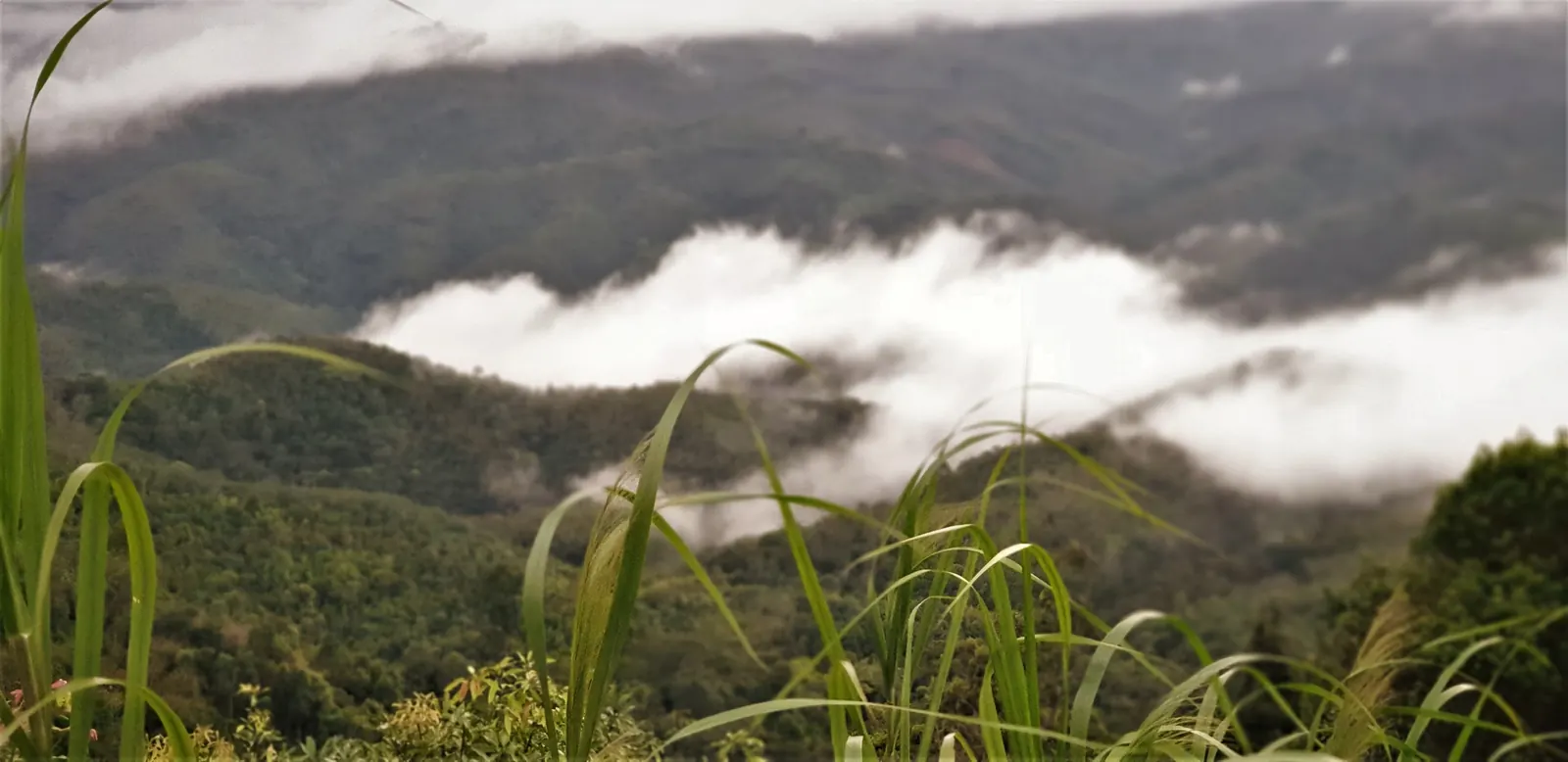
At half past five on a December Saturday, the road along the Khao Kho ridge in Phetchabun has a traffic jam. Not a figurative one: headlights nose-to-tail up Route 2258, pickups with Bangkok plates parked on both verges, families in matching fleeces carrying flasks to a hilltop in the dark. They are there for the sea of mist, the white flood that fills the Pasak valley on a still, cold morning and leaves the peaks standing out of it like islands. When it turns up, it is one of the best free shows in Thailand. When it does not, you have driven up a mountain at 5am to look at a car park.
The short version: worth a weekend, ideally a midweek one, between November and February, with your own wheels. Come for three things: a mist viewpoint at dawn, Wat Pha Sorn Kaew with its five white Buddhas and its walls of broken crockery, and a night on Phu Thap Boek among the cabbages. The temple and the main viewpoint are free; budget ฿1,000–1,800 a day for a hire car, ฿1,200–2,500 for a room with a view on a weekday, and double that on a cool-season Saturday. Check any quote against our Thailand price index. The province overview is in our Phetchabun travel guide and on the Phetchabun province page; this is the close-up on the mountain.
What Khao Kho actually is, and why Bangkok calls it Little Switzerland
Khao Kho is a district and a ridge on the western wall of the Phetchabun valley, roughly 800 to 1,100 metres up, strung along Routes 12, 2196 and 2258 between Lom Sak and Phetchabun town. It is not one summit but a long, crumpled line of hills with resorts, strawberry farms, cafés and wind turbines dotted along it, and it is cool most of the year and properly cold on a January night. Thai marketing calls it Little Switzerland, which is nonsense; Switzerland does not do dawn like this, and it does not serve som tam at the viewpoint.
The history is less cosy. Through the late 1960s and 1970s these hills were a shooting war between the Thai army and the Communist Party of Thailand’s insurgents, and the fighting did not end until the early 1980s. The Khao Kho memorial on the hilltop, the weapons museum and the old army roads are what is left of it, which gives the windmill-and-chalet photo parks a strange edge: you are drinking a strawberry smoothie on a battlefield within living memory.
Wat Pha Sorn Kaew: is the mosaic temple with five white Buddhas worth the hype?
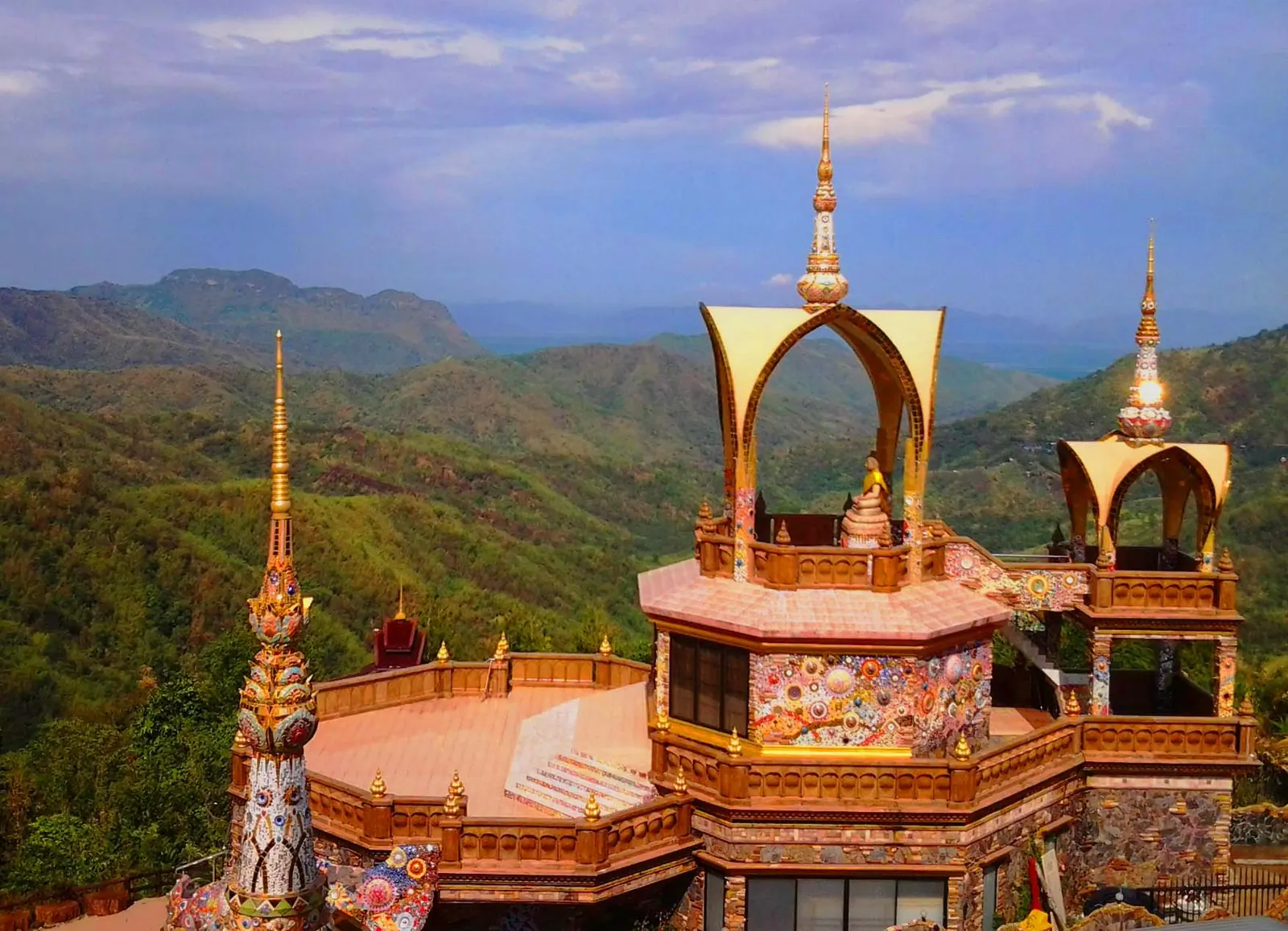
Yes, which is not something we say often about a temple that went viral. Wat Phra That Pha Sorn Kaew sits at about 830 metres in Khaem Son subdistrict, a working monastery and meditation centre begun in 2004, and its centrepiece is a chedi and terrace covered, every square centimetre, in tiles, ceramic plates, bowls, glass and pottery fragments, more than five million pieces by the usual count. Above it, five white Buddhas sit in a stepped row facing out over the valley. On a misty morning they appear to be floating on the cloud, which is the photograph you have seen; at noon in March they are five white statues in heat haze, which is the one nobody posts.
Entry is free; there is a donation box and a car park, around ฿30 a car, though you can park on the road outside and walk. Hours are roughly 7am or 8am to 5pm on weekdays and from about 6am to 6pm at weekends, as of November 2026; ask your resort, because they move. It is a working temple, so shoulders and knees covered and shoes off inside the chedi; our Thai temple etiquette guide covers the rest. Go at opening time or after 4pm. Between ten and three on a cool-season weekend the coach parties and the selfie queue for the Buddha terrace turn a quiet place into a photocall.
Verdict: Do it, early. An hour is enough; the interior of the chedi, with its mosaic ceilings and its relic hall, is the part most people rush and the part worth slowing down for.

The Khao Kho sea of mist: which viewpoint, what time, and what the odds really are
The mist is weather, not a show, and no resort can promise it. It forms when a clear, still, cold night traps damp air in the valley, and it usually sits there from first light to about 7am before the sun burns it off. The best odds run from late in the rainy season to February; November to January is the peak for both mist and crowds. A clear sky and a cold evening the night before is the forecast you want. A windy or cloudy night usually means a grey morning. Plan two nights, not one, so a blank dawn is not the whole trip.
| Viewpoint | Cost | Best for | Verdict |
|---|---|---|---|
| Khao Takhian Ngo, off Route 2258 | Free; camping extra | The classic 360-degree mist view; you can drive to the top | Worth it, before 5.30am; the road is steep and narrow and full on weekends |
| Wind turbine field | Around ฿30 parking plus ฿40–60 for the tram up | Turbines over the mist, a distant view of Wat Pha Sorn Kaew | Fine: more photo stop than viewpoint, better at sunset |
| Khao Kho memorial hilltop | Free | Mist with the war memorial in the foreground | Do it, for the view and the history together |
| Pha Sorn Kaew side viewpoints | Free | Ridges layered towards Phu Thap Boek and Phu Hin Rong Kla | Do it, combined with the temple at opening |
| Your resort balcony | The room rate | Mist without the 5am drive | Worth paying for on one of your two nights |
Bring a proper jacket. Dawn on the ridge in December and January is around 8–12°C and windy, and the person in shorts and flip-flops at Khao Takhian Ngo is always a foreigner; what to pack for Thailand is written for beaches, and this is the exception. Drive up with headlights on and do not stop on the road to photograph the mist, because the car behind cannot see you in it.
Phu Thap Boek: the cabbage mountain an hour up the road, and the night worth sleeping cold for
Phu Thap Boek is not Khao Kho, and it is the better mountain. It is the highest point in Phetchabun at about 1,768 metres, in Lom Kao district north of Lom Sak, farmed by Hmong families who grow cabbages on slopes so steep they look painted on. From Khao Kho it is roughly 85 kilometres and two hours, the last stretch one of the steepest roads in the country. There is no entrance fee to the area; you pay for parking, camping or a room. Sunrise over the terraced cabbage rows, with the mist below and the ridges going blue towards Loei, is the picture that justifies the trip to Phetchabun. Khao Kho’s dawn is the crowd-pleaser; this is the real one.
The summit is camping country. Community and private campsites along the ridge rent pitched tents with bedding, typically around ฿1,000 a tent for two in cool season, and there is a growing line of glass cabins, domes and A-frame “glamping” units from around ฿1,500 a night. Nights in January drop to single figures, so take every blanket offered. The toilets are shared and the stars are worth it. If your hire car is a small 1.2-litre hatchback, think hard about the last few kilometres: plenty of people park lower down and pay a local pickup to take them up. Agree the price before you get in.
Verdict: Worth it, as a night, not a detour. One evening, one sunrise, down by 9am. If you are carrying on north to Loei for Phu Kradueng and Phu Ruea or the river at Chiang Khan, Phu Thap Boek is on the way.

How to get to Khao Kho: fly to Phitsanulok and hire a car, or bus to Lom Sak
Khao Kho has no railway, no working airport and almost no public transport on the mountain itself, and the sights are spread across 30 kilometres of ridge plus an 85-kilometre hop to Phu Thap Boek. You need wheels. The question is only where you pick them up. Prices are as of November 2026; treat the car-hire and charter figures as ranges.
| How | Time | Cost | Verdict | Book |
|---|---|---|---|---|
| Fly Don Mueang to Phitsanulok, hire a car at the airport | About 1 hour flying, then around 2 hours driving east on Route 12 | Flights from around ฿1,000–1,800; car ฿1,000–1,800 a day plus fuel | Do it: the smartest route, and Phitsanulok is worth a night | 12Go |
| Bus Mo Chit 2 to Lom Sak, then hire or charter | 5–6 hours | From about ฿390 on the Transport Co. bus | Fine on a budget; Lom Sak is the foot of the mountain | 12Go |
| Bus Mo Chit 2 to Phetchabun town | 5–6 hours | From about ฿340 | Fine if Si Thep is also on the list | 12Go |
| Self-drive from Bangkok | 5–6 hours | Hire ฿1,000–1,800 a day plus around ฿1,500 fuel each way | Do it midweek; Friday evening and Sunday afternoon in cool season are a crawl | Hire desks at Don Mueang |
| Private car and driver from Bangkok | 5–6 hours each way | Several thousand baht a day; quotes vary widely | Worth it for a group of four that does not want to drive | GetYourGuide |
The Phitsanulok route is the one we would take: Thai AirAsia and Thai Lion Air fly from Don Mueang, the hire desks are in the arrivals hall, and Route 12 east climbs straight onto the ridge past Thung Salaeng Luang National Park. Sleep a night there on the way; our Phitsanulok guide has the town, and Sukhothai is an hour west. If you come by bus, Phitsanulok to Lom Sak on 12Go joins the two. In Lom Sak or Phetchabun, ask your resort to arrange a car or a driver for the day; Grab is thin on the ground in town and absent on the mountain. A scooter on Khao Kho is fine for a confident rider in daylight; on the Phu Thap Boek climb, or in fog at dawn, it is not.
The rest of the ridge: cafés, flower farms, the war memorial and the photo parks to skip
Once the mist and the temple are done, Khao Kho’s main activity is driving between cafés, and it is honest about that. The good ones sit on the edge of the ridge with the valley below; coffee runs about ฿60–120, more than Bangkok street coffee and less than Bangkok café coffee. Pino Latte, near Wat Pha Sorn Kaew, is the best known: café, garden and resort in one, busy all day, and the view is real. Fine for an hour; it is a photo stop that serves cake.
- Khao Kho memorial and weapons museum: Do it. The memorial to the soldiers, police and civilians killed in the insurgency is free, on a hilltop reached by a narrow one-way road; the weapons museum is around ฿10 and has the captured guns and the army’s version of events. Forty minutes, and the only stop on the ridge that explains why the roads are here at all.
- Strawberry farms, roughly November to March: Fine. Pick-your-own at a few farms on the ridge, around ฿20 entry with a café discount at Rai GB.
- Flower terraces: Fine, in season. Verbena, marigolds and whatever is planted for the cool months, around ฿20–60 to walk in, usually with a café attached. Prettiest from November to January; brown by April.
- Sri Dit waterfall: Skip unless passing. A pleasant 30-metre fall a short walk from the road, but the fee for foreigners is reported at national-park rates that are far above the Thai price, and it is a trickle by March.
- The Euro photo parks: Skip it. Plaster sheep, fibreglass chalets, a windmill that has never milled, ฿50–100 to stand in front of them. They exist because the mist has no ticket booth. You are on a real mountain; look at it.

When to go to Khao Kho: cool season, Thai weekends and the New Year trap
November to February is the season: cold nights, the best chance of mist, the strawberries, the flowers, and dry roads. It is also when every Bangkok family with a pickup decides to be cold, so the weekends and especially the New Year week are a different place. Rooms that cost ฿1,200 on a Tuesday cost ฿2,500 or more on a Saturday and sell out two to three months ahead for December and January; the road to Khao Takhian Ngo backs up before dawn; the temple queues by mid-morning. Come Sunday to Thursday and you share the ridge with a handful of couples. Our Thailand in December and Thailand in January guides cover the national picture.
The rainy season, roughly June to October, is green, cheap and wet, with mist in patches and the mountain roads slick; Fine for a quiet, discounted weekend if you like fog. March and April are the dud: hot by day, hazy with agricultural smoke, no mist worth the alarm. Best time to visit Thailand has the month-by-month; for Khao Kho, the answer is a midweek night in December or January, and for the coldest, clearest version of the same idea in the north, see the Aiyerweng sea of mist at Betong or Doi Inthanon.
Where to stay on Khao Kho: resorts with the valley view, and where to camp
Stay on the ridge, not in Lom Sak or Phetchabun town; the point is waking up already above the mist. Resorts are strung along Routes 2196 and 2258, and what you are paying for is the direction your balcony faces. Ask for a valley-view room and check the photos, because “mountain view” on Khao Kho can mean the car park. Rates below are weekday starting points as of November 2026; weekends in cool season roughly double.
| Place | What it is | From around | Best for | Book |
|---|---|---|---|---|
| Imperial Phukaew Hill Resort | The long-standing big resort in Khaem Son, on the Phitsanulok–Lom Sak road | ฿1,500 | Families who want a pool, a restaurant and no surprises | Agoda |
| Pino Latte Khaokho | Café-resort with gardens and a wide view, near Wat Pha Sorn Kaew | ฿1,800 | Couples who want the temple at opening time | Agoda |
| Khao Kho Overview Resort | Hillside rooms in Ban Dong Long, Khaem Son | ฿1,200 | A mist-from-the-balcony room for less | Agoda |
| Grand Kokkod Khao Kho Resort | Rooms stepped down the slope in Khao Kho subdistrict | ฿1,500 | Groups and a view from every floor | Agoda |
| Phu Thap Boek campsites and cabins | Pitched tents with bedding, or glass cabins and domes on the ridge | ฿1,000 a tent; cabins ฿1,500 | The sunrise; book cabins ahead for December | Direct, or walk in midweek |
Is Khao Kho worth it? The verdict by traveller type
- Couples and photographers: Worth it. Two midweek nights in cool season, one dawn at Khao Takhian Ngo, the temple at opening, one night on Phu Thap Boek. The best mountain weekend within a day’s drive of Bangkok.
- Families: Do it, with a car and a resort pool. Children like the cold, the strawberries and the turbines; nobody under twelve likes a 5am start twice. Pick one dawn.
- First-timers on a two-week trip: Skip it. It is five or six hours each way for a mountain that Chiang Mai does with a temple city attached. Do the north first; see our two-week itinerary.
- Expats and repeat visitors: Worth it. This is Thailand doing a holiday for itself: Thai food, Thai prices midweek, and almost no English menus. Combine with Phitsanulok and Sukhothai or carry on to Loei.
- Anyone without wheels: Skip it, or pay for a driver. The bus gets you to the bottom; everything good is at the top.
Khao Kho is sold as a Swiss fantasy and is actually a Thai mountain with a war history, a very good temple and the occasional spectacular morning. Taken on those terms, midweek, with a car, it is one of the best-value cool-season weekends in the country. Taken on a December Saturday by bus, it is a long way to queue for a statue.
Khao Kho and Wat Pha Sorn Kaew: your questions, answered
How much does it cost to visit Wat Pha Sorn Kaew?
Nothing to enter. There is a donation box, and the temple car park charges around ฿30 a car, though you can park on the road and walk in. Hours are roughly 7am or 8am to 5pm on weekdays and from about 6am to 6pm at weekends, as of November 2026. Cover shoulders and knees, take shoes off inside the chedi, and arrive at opening time to beat the coach parties.
When is the best time to see the sea of mist at Khao Kho?
Between November and February, from first light to about 7am, after a clear, still, cold night. The mist can appear from late in the rainy season too, but it is never guaranteed, so book two nights rather than one. Khao Takhian Ngo off Route 2258 is the classic free viewpoint; get there before 5.30am on weekends, because the narrow road and the summit fill up fast.
Can you visit Khao Kho without a car?
Only just. Buses from Bangkok’s Mo Chit 2 reach Lom Sak or Phetchabun town in five to six hours from around ฿340–390, but nothing scheduled runs along the ridge. You would need a driver hired through your resort for the day, which costs more than a hire car. The easiest plan is to fly Don Mueang to Phitsanulok and collect a car at the airport, about two hours’ drive from the ridge.
How many days do you need for Khao Kho and Phu Thap Boek?
Three days and two nights. Night one on Khao Kho for a dawn viewpoint and Wat Pha Sorn Kaew at opening, the memorial and a café; night two camping or in a cabin on Phu Thap Boek for the sunrise over the cabbage terraces, about two hours’ drive on. With only a weekend, pick one dawn and skip Phu Thap Boek rather than rushing it.
How cold does Khao Kho get?
Cold enough to need a real jacket. On cool-season mornings the ridge is typically around 8–12°C at dawn, windier at the viewpoints, while Phu Thap Boek, at about 1,768 metres, drops into single figures on January nights. Afternoons warm up to the mid-twenties. Bring a fleece, long trousers and closed shoes; the stalls at the viewpoints sell hats and gloves to everyone who did not.
Related guides
- Phetchabun: Khao Kho, a Temple Made of Mosaics and Thailand’s Cool-Air Economy
- Phitsanulok: The Logistics Hub for Sukhothai and the Buddha Most Thais Consider the Most Beautiful
- Loei Province Travel Guide 2026: Thailand’s Coolest Corner Nobody Warned You About
Book the trip
Some links in this guide are affiliate links. If you book through them we may earn a small commission at no extra cost to you — it helps keep Destination Thailand independent.
Hotels: the ridge resorts are on Agoda’s Khao Kho page; filter for a valley view and book December weekends by October. Tours/Boats: drivers and private trips are on GetYourGuide’s Khao Kho listings; read the newest reviews. Getting there: flights and buses to Phitsanulok and Phetchabun are on 12Go, and the onward routes are in our Phitsanulok guide. Not sure the mountains are your Thailand at all? Our Where to Go in Thailand matcher will tell you in about a minute.