Sukhothai is the answer to a question most travellers never ask: where did Thailand actually start? Long before Bangkok existed, the Thai people built their first kingdom here in 1238 and ran it for a hundred and forty years. Then the capital moved south, the city was abandoned to the jungle, and Sukhothai spent six centuries quietly being one of the most important archaeological sites in Southeast Asia while almost nobody visited. Most travellers still blast past it on the night bus between Bangkok and Chiang Mai. Below, the things to do in Sukhothai that justify breaking that journey for two or three nights.
Sukhothai Historical Park — the actual ruins
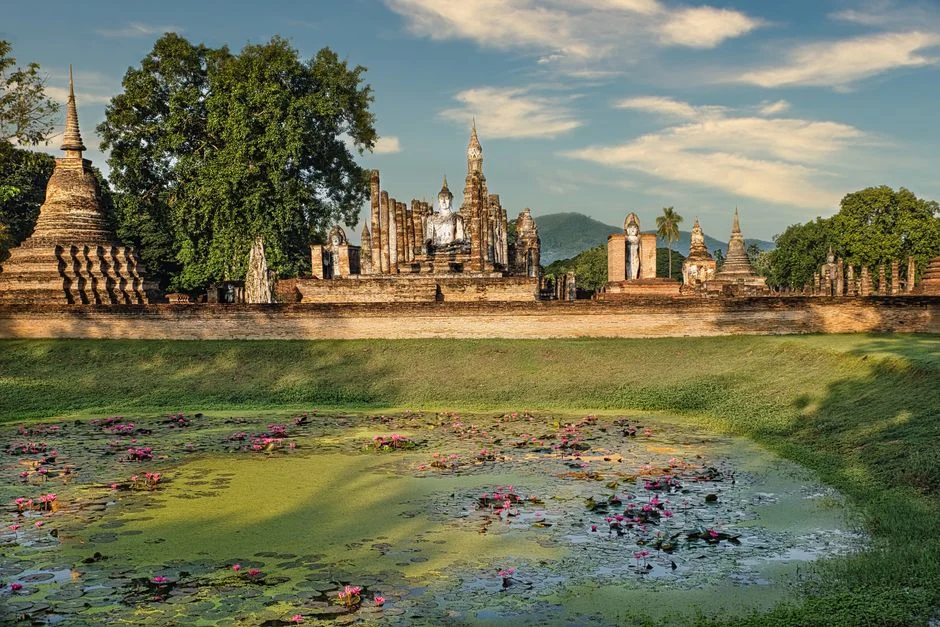
This is why you came. The park sits 12 km west of New Sukhothai, spread across roughly 70 square km of ruins, walled cities and weather-worn Buddha images. UNESCO listed it in 1991 and it’s well-maintained without being theme-park sanitised.
Five zones; most people only visit the Central Zone — Wat Mahathat with its lotus-bud chedi, Wat Sa Si on its island, the seated Buddha at Wat Si Sawai. Entry 100 THB foreigners (20 THB Thais). Rent a bicycle outside the gate for 30–50 THB/day; the site is too big to walk.
The North Zone (Wat Si Chum’s huge seated Buddha) and West Zone (jungle ruins, almost empty) are separate 100 THB tickets each. Half-day: Central + North. Full day: add West.
Open 06:30–18:00. Go at sunrise.
Things to do in Sukhothai after dark — Loy Krathong
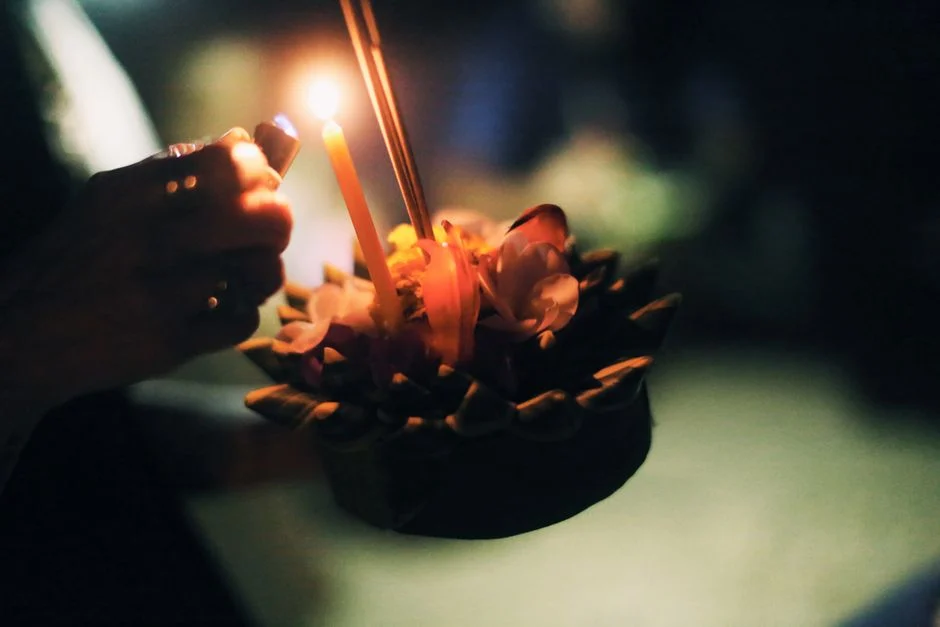
Sukhothai claims to be the birthplace of Loy Krathong, the November full-moon festival where Thais release banana-leaf floats covered in flowers and candles into rivers. The claim is half-historical, half-marketing, but the festival here is the country’s biggest, set against the floodlit ruins with light shows, traditional dance and fireworks. If you can time your visit for the full moon of the 12th lunar month, do it. Book accommodation two months ahead.
Si Satchanalai — the second historical park nobody visits
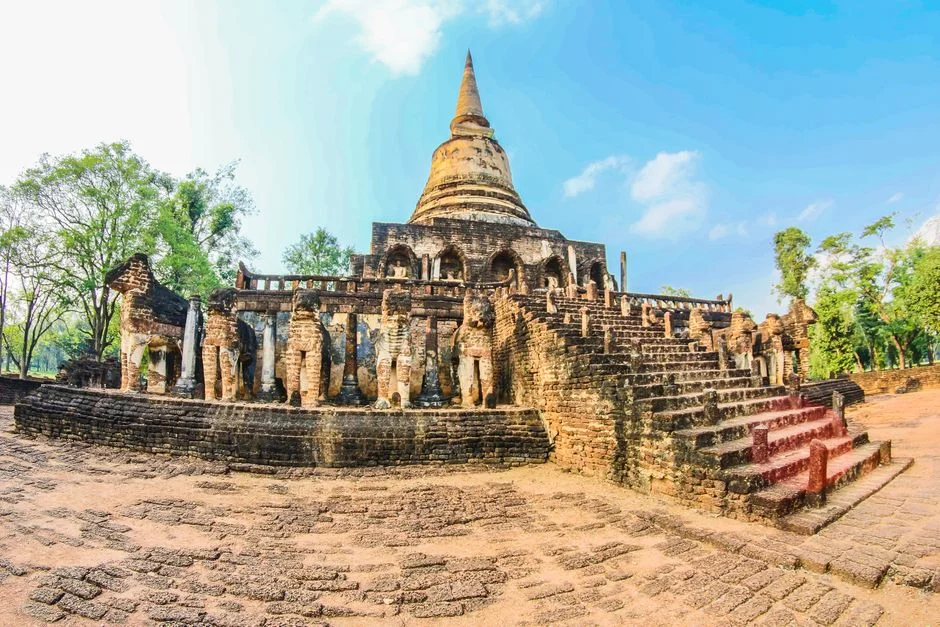
About 55 km north of Sukhothai sits Si Satchanalai Historical Park, the kingdom’s secondary capital and effectively the same era of ruins minus 95% of the visitors. If you found the main park too crowded (you won’t, but humour me), Si Satchanalai is its quieter cousin: rolling terrain, kiln sites where the famous Sukhothai ceramics were fired, and a giant chedi at Wat Chang Lom surrounded by sculpted elephants holding the structure up.
Entry 100 THB, open 08:00–17:00. Get there by hiring a driver for the day (around 1,500–2,000 THB round trip from New Sukhothai) or by songthaew from the bus station (much slower, much cheaper). A scooter only if you’ve ridden Thai rural roads before.
Eat the noodle the town is named for

Kuay tiew Sukhothai is the dish: thin rice noodles in clear pork-bone broth, sliced green beans, peanuts, dried chilli, palm sugar, fish sauce, lime, slivers of pork. Sweet-sour-salty-spicy balance is the whole point. Outsiders try to recreate it elsewhere and fail.
Where to get the real version:
- Jay Hae (old town near Wat Saphan Hin) — the legend. 50 THB.
- Ta Pui (New Sukhothai) — locals’ breakfast choice. 45 THB.
- The night market on Ratchathani Road runs nightly. Pick the stall with a queue.
Don’t leave without eating it twice.
Best time to visit Sukhothai
- November to February: Cool, dry, the sweet spot. Daytime 28°C, mornings 18–20°C. Loy Krathong in November is the headline event.
- March to May: Hot. 38–40°C at midday. The ruins offer almost no shade. Bring water, start early, finish by 10am, retreat to your hotel.
- June to October: Green season. Heavy afternoon rain. The park is dramatically pretty when wet, but bring waterproofs. Fewer visitors, cheaper rooms.
Where to stay
New Sukhothai (bus station side) and Old Sukhothai (park side) are 12 km apart:
- Old Sukhothai — wake up next to the ruins. Orchid Hibiscus Guesthouse 1,500–2,500 THB.
- New Sukhothai — town life, more food. Le Charme Sukhothai 1,800–2,800 THB.
- Budget — guesthouses on Jarot Withithong Road, 500–800 THB.
A Thailand itinerary 7 days fits Sukhothai as a two-night stop between Bangkok and Chiang Mai. The pillar page /province/sukhothai/ has more transport detail.
The historical-park side wins for sunrise at the ruins — compare Sukhothai hotels on Agoda (affiliate link — same price for you).
Final thoughts on things to do in Sukhothai
The things to do in Sukhothai add up to three days, not the one most travellers give them. One day for the main historical park done properly. One day for Si Satchanalai. One day for the noodle, the night markets, and a slow morning at Wat Si Chum. Stay longer than the night-bus-passes-through itinerary, and you’ll come away understanding why this matters — not just to Thai history but to what Thai cities have looked like ever since.
FAQ
Is Sukhothai worth visiting?
Yes — especially if you have any interest in Thai history, architecture, or want a slower travel pace than Bangkok or Chiang Mai offer. Skip it if your Thailand trip is under 8 days and you’ve prioritised beaches.
How many days do you need in Sukhothai?
Two to three days. One for the Central + North zones of the historical park, one for Si Satchanalai, plus a half-day in town for food and shopping.
How do I get from Bangkok to Sukhothai?
Overnight bus (7 hours, 400–600 THB) or fly Bangkok Airways (1,500–2,500 THB). No direct train — closest station is Phitsanulok, then a 60 km transfer.
Old or New Sukhothai for accommodation?
Old Sukhothai for temple-side calm, New Sukhothai for food and transport. 12 km apart, songthaews run 30 THB each way.
Is Sukhothai safe?
Very. One of the safer Thai provinces. Standard travel sense applies.
Related guides
- Lop Buri: The City Invaded by Monkeys
- One-Day Trip to Ratchaburi: Floating Markets, Temples & Countryside Escape
- Things to Do in Kanchanaburi: Erawan Falls, the Death Railway, and a 2-Day Loop
Tours & tickets
Some links below are affiliate links. If you book through them we may earn a small commission at no extra cost to you.
Explore the old capital: Browse Sukhothai tours on GetYourGuide — historical-park bike tours and guided day trips.