Most travellers to Thailand never make it inland. They do beaches, Bangkok, maybe a temple loop in the north, and leave. Which means they miss the place Bangkokers themselves drive out to every weekend: Khao Yai National Park, 200 kilometres north-east of the city, the third-largest national park in Thailand and the easiest place in the country to actually see wild elephants. The park sits across four provinces but the main entrance and most visitor infrastructure are in Nakhon Ratchasima (locally just called Korat). Below, the honest version of how Khao Yai National Park works — what you can see, when to go, what it costs, and why the 2-day weekend version beats the rushed day trip every time.
What Khao Yai actually is
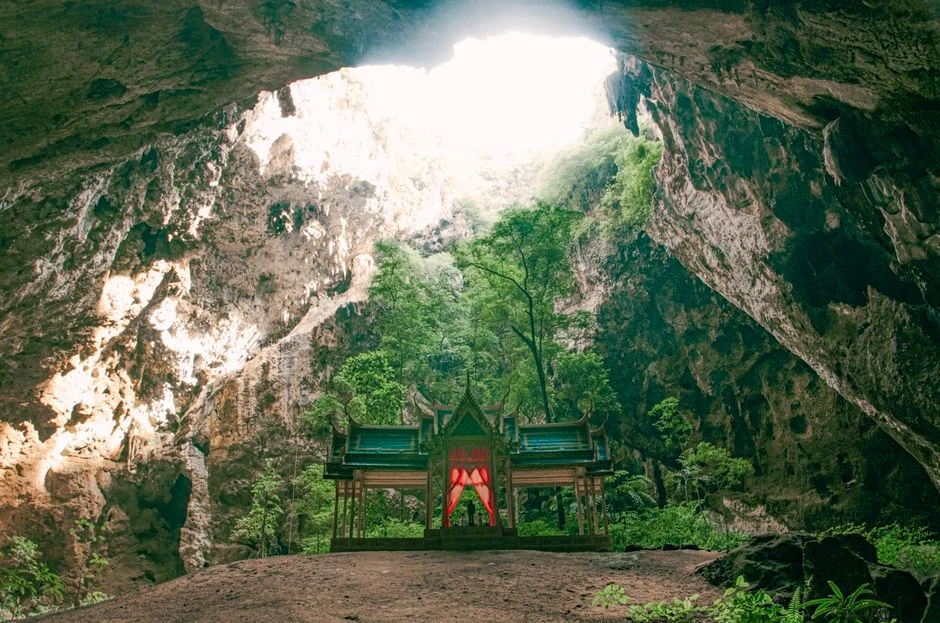
Khao Yai means “Big Mountain” — the park covers 2,168 km² of mostly-forested hills and grasslands, rising from 100 to 1,350 metres above sea level. UNESCO listed it as part of the Dong Phayayen-Khao Yai Forest Complex in 2005, in recognition of which it’s home to about 70 wild elephants, gibbons, hornbills, gaur (the world’s largest wild cattle), Asiatic black bears, and a healthy resident leopard population that almost nobody ever sees.
It was Thailand’s first national park (founded 1962), set up specifically to stop the illegal logging that was levelling the forest. Today the perimeter is heavily protected, the inside has paved roads, hiking trails, salt licks, and a campground, and the surrounding lowlands have evolved into a strange mix of vineyards, alpaca farms, Tuscany-themed resorts and a couple of legitimately good restaurants. It’s a weekend destination first and a serious national park second — for hardcore wildlife, Kaeng Krachan further south is better. But for the easiest-to-visit, easiest-to-photograph wildlife park in the country, Khao Yai National Park is the obvious answer.
Getting to Khao Yai from Bangkok
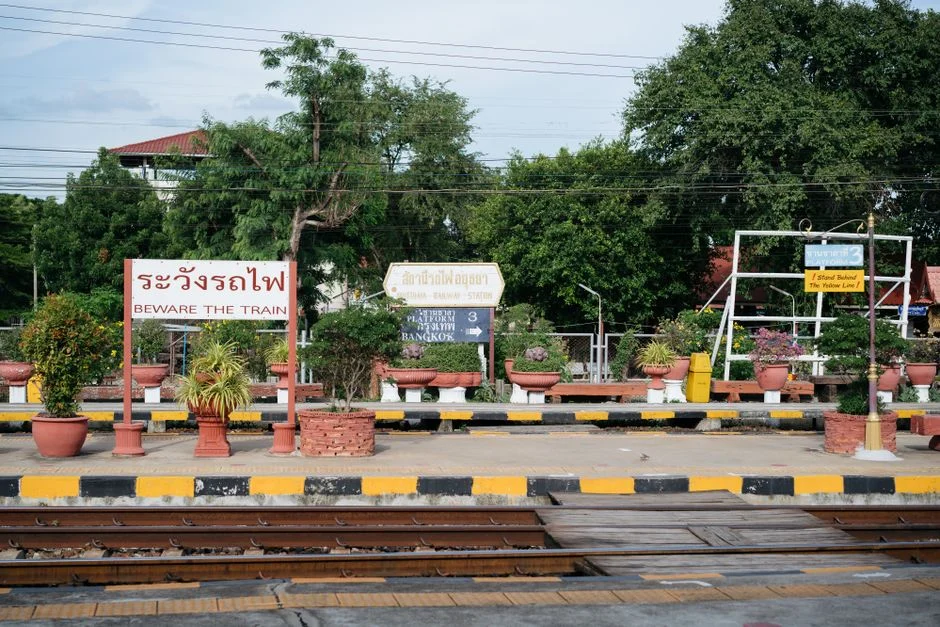
- Private car / Grab: 2–3 hours, depending on traffic on the Mittraphap Highway (Route 2). The fastest way. About 1,500–2,500 THB one-way for Grab; rental cars around 1,000 THB/day from Bangkok suburbs.
- Bus: From Mo Chit terminal to Pak Chong town (the park’s southern gateway). 180–220 THB, 3 hours. From Pak Chong, songthaews and tuk-tuks run to the park’s southern gate.
- Train: Bangkok Hua Lamphong → Pak Chong, 3.5 hours, 60–120 THB depending on class. Slower but cheaper.
Once at the park: there’s no public transport inside. You need a car, a hired songthaew (1,500–2,500 THB for a day with driver), or a guided tour.
The 2-day Khao Yai National Park version
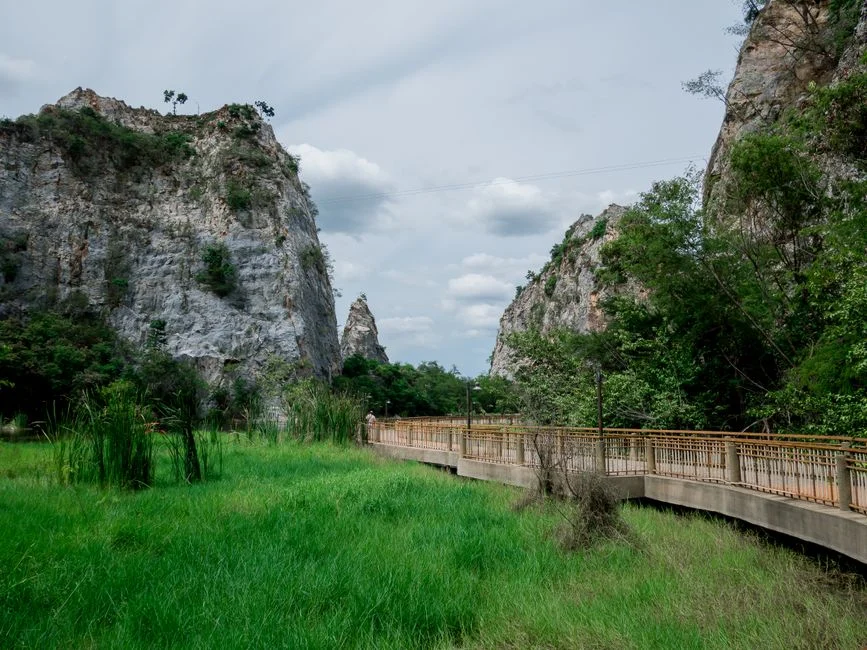
This is the version that fills a weekend and lets you actually see what the park is famous for.
Day 1 — drive in, waterfalls, dusk elephants
- Morning: Leave Bangkok early, arrive Pak Chong by 10:00. Quick breakfast at a highway rest stop.
- Midday: Park entry 400 THB foreigner, 40 THB Thais. Drive to Heo Suwat Waterfall (the one from The Beach — yes really). 20-metre cascade, busy weekends, 60 minutes.
- Afternoon: Pha Diew Dai viewpoint at 1,335 m — 360° forest views, often misted in by late afternoon. 30 minutes.
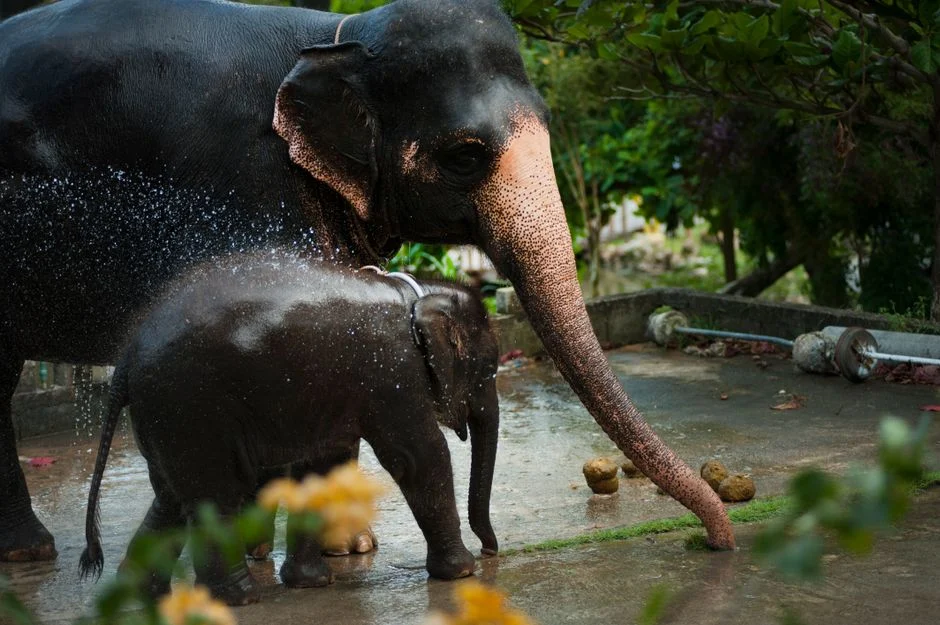
- Dusk: Drive the main park road slowly between 17:00 and 19:00 — the 22-km stretch from visitor centre to southern gate where elephants are most often seen. Pull over, kill the engine, wait. Do not approach within 50 m of any elephant — they kill more people in Thailand than any other wild animal.
- Evening: Exit before 18:30 (gates close). Dinner at Kruakhao Yai or Khao Yai Naew Kao on Route 2090 — proper Thai at honest prices (200–400 THB per person).
Day 2 — gibbons, hiking, vineyards on the way home
- Early morning: This is when the gibbons sing. Be inside the park by 06:30 and walk one of the shorter trails (Kong Kaeo trail, 1.2 km loop near the visitor centre is good). Listen for the gibbon song through the canopy — it’s loud, atonal, and one of the most haunting wildlife sounds in Asia.
- Mid-morning: Drive to Haew Narok Waterfall, the park’s largest cascade — three tiers totalling 150 m. The hike in is 1 km return on a paved trail. Beautiful even outside rainy season.
- Lunch: Inside the park there’s a basic canteen at the visitor centre (80–150 THB), or exit the southern gate and eat at one of the Khao Yai dairy farms — Chokchai Farm does Thai dairy products and Western-style steaks (300–600 THB).
- Afternoon (on the way home): Stop at one of the Khao Yai vineyards before driving back to Bangkok. The wine region is real — high-altitude vineyards producing genuinely drinkable Tempranillo, Shiraz and Chenin Blanc. GranMonte and PB Valley both do public tours and tastings, 200–500 THB per person. The wine isn’t world-beating, but the setting is and the surprise factor is high.
- Back to Bangkok by 19:00. Avoid leaving the area after 16:00 on a Sunday — Mittraphap Highway gets brutal.
When to visit Khao Yai National Park
- November to February: Cool and dry, 18–28°C, the best window for both wildlife (animals come to salt licks) and hiking. Reserve accommodation 2–3 weeks ahead — this is peak.
- March to May: Hot (32–38°C). Wildlife still active in early morning and late afternoon but midday is brutal. Cheaper, less crowded.
- June to October: Green season. Heavy afternoon rain, waterfalls at maximum flow, leeches on trails. Park sometimes closes individual trails for safety. The forest is at its most beautiful but you need rain gear and a willingness to get wet.
The wildlife peak is November–January when herds gather near salt licks and the vegetation is thinner.
Wildlife you actually have a chance of seeing
- Wild Asian elephants — 70 individuals in the park. Sightings are common at dawn and dusk on the main road; rough odds 60–70% over a 2-day visit.
- White-handed gibbons — heard reliably at dawn from the visitor centre area; seen with patience.
- Hornbills — three species, particularly the Great Hornbill, often in the canopy near fruiting trees. Bring binoculars.
- Sambar deer and barking deer — common in grassy clearings.
- Macaques and pig-tailed macaques — common, sometimes a nuisance near the visitor centre. Do not feed them.
- Gaur — much rarer than elephants but spotted occasionally on the main road.
- Leopards, sun bears, Asiatic black bears, dholes — present but extremely rarely seen. Don’t plan on it.
Where to stay near Khao Yai National Park
The park itself has a campground (200–400 THB for tent rentals, 800–1,500 THB for park bungalows), but most visitors stay just outside the southern gate on or near Route 2090.
- Budget: Greenleaf Guesthouse, Hotel des Artists Khao Yai — 800–1,500 THB.
- Mid-range: Lala Mukha Tented Resort (safari-style canvas tents on platforms), Atta Lakeside Resort — 2,500–4,500 THB.
- Upscale: Muthi Maya Forest Pool Villa, Botanica Khao Yai — 5,500–9,500 THB. Both have private pools and proper jungle settings.
A Thailand itinerary 7 days easily folds in a Khao Yai weekend after Bangkok before heading north. See our Bangkok province guide for the wider context.
Compare Khao Yai hotels and resorts on Agoda (affiliate link — same price for you) — the park-edge places fill up fast on Thai long weekends.
Khao Yai National Park practical details
- Entry fee: 400 THB foreigner, 40 THB Thai. Cars 50 THB extra. Pay at the southern gate.
- Park hours: 06:00–18:30. Gates close strictly at 18:30 — overstaying gets you fined.
- Mobile signal: Patchy. Solid 4G near the visitor centre, none on the main forest roads.
- What to bring: Long trousers (for leeches in green season), insect repellent (mosquitoes and ticks), proper closed shoes, sunscreen, drinking water, binoculars if you have them.
- Guides: Optional but recommended for first-timers. Half-day guided tours (4 hours, English-speaking, wildlife-focused) run 1,500–2,500 THB per person. Book through Greenleaf Guesthouse or via the visitor centre.
- Combine with: A side trip to Phimai (Khmer temple ruins, 90 km north-east of Pak Chong) makes the drive worthwhile if you have a third day.
Khao Yai National Park for kids and families
Genuinely family-friendly compared to most Thai national parks:
- Heo Suwat Waterfall — easy paved access, swimming below the falls in dry season.
- Chokchai Farm — petting zoo, ice cream, horse riding. Kids love it.
- Salt lick observation tower (Nong Phak Chi tower) — 1.5 km walk in, then sit and wait for animals. Bring snacks.
- Camping in the campground — properly safe, but bring earplugs (the gibbons start at dawn).
Final thoughts on Khao Yai National Park
Khao Yai National Park is the trip Bangkok-based foreigners take after they’ve lived in the city long enough to need a break, and the trip Thai families have been taking for decades. It’s accessible, the wildlife is real (especially the elephants), the vineyards are a strange but enjoyable surprise, and the weekend pace lets you actually see the place rather than tick it off. Two days, your own car or driver, an early start on day 2 for the gibbons — that’s the formula. If you’re spending more than a week in Thailand and you only do beaches and Bangkok, you’re missing what the locals do every weekend.
FAQ
How far is Khao Yai National Park from Bangkok?
About 200 km north-east. 2–3 hours by car depending on Mittraphap Highway traffic. Bus to Pak Chong is 3 hours, train is 3.5 hours.
Can you see wild elephants in Khao Yai National Park?
Yes. About 70 wild elephants live in the park. Best sightings between 17:00 and 19:00 on the main park road. Rough odds 60–70% over a 2-day visit, much lower for day-trippers.
How much does it cost to enter Khao Yai National Park?
400 THB foreigner, 40 THB Thai. Cars 50 THB extra. One ticket covers a single day’s entry.
Is Khao Yai worth visiting?
Yes — for any traveller with more than a week in Thailand who wants to see wildlife and forest rather than just beaches and cities. Best as a 2-day weekend trip from Bangkok rather than a day trip.
What’s the best time to visit Khao Yai National Park?
November to February — cool, dry, peak wildlife. Reserve accommodation 2–3 weeks ahead.
Are there elephants you can ride at Khao Yai?
No — this is a national park, not an elephant camp. All elephants here are genuinely wild. Riding or interaction is not allowed.
Do I need a guide for Khao Yai National Park?
Not strictly required — you can drive in and explore independently. But for first-timers, a half-day guide (1,500–2,500 THB) makes wildlife sightings much more likely.
Related guides
- Things to Do in Kanchanaburi: Erawan Falls, the Death Railway, and a 2-Day Loop
- One-Day Trip to Ratchaburi: Floating Markets, Temples & Countryside Escape
- Temples in Ayutthaya: A Half-Day Cycle Through the Ruined Capital
Tours & day trips
Some links below are affiliate links. If you book through them we may earn a small commission at no extra cost to you.
Into the park: Browse Khao Yai tours on GetYourGuide — wildlife safaris, waterfalls and vineyard visits from Bangkok.