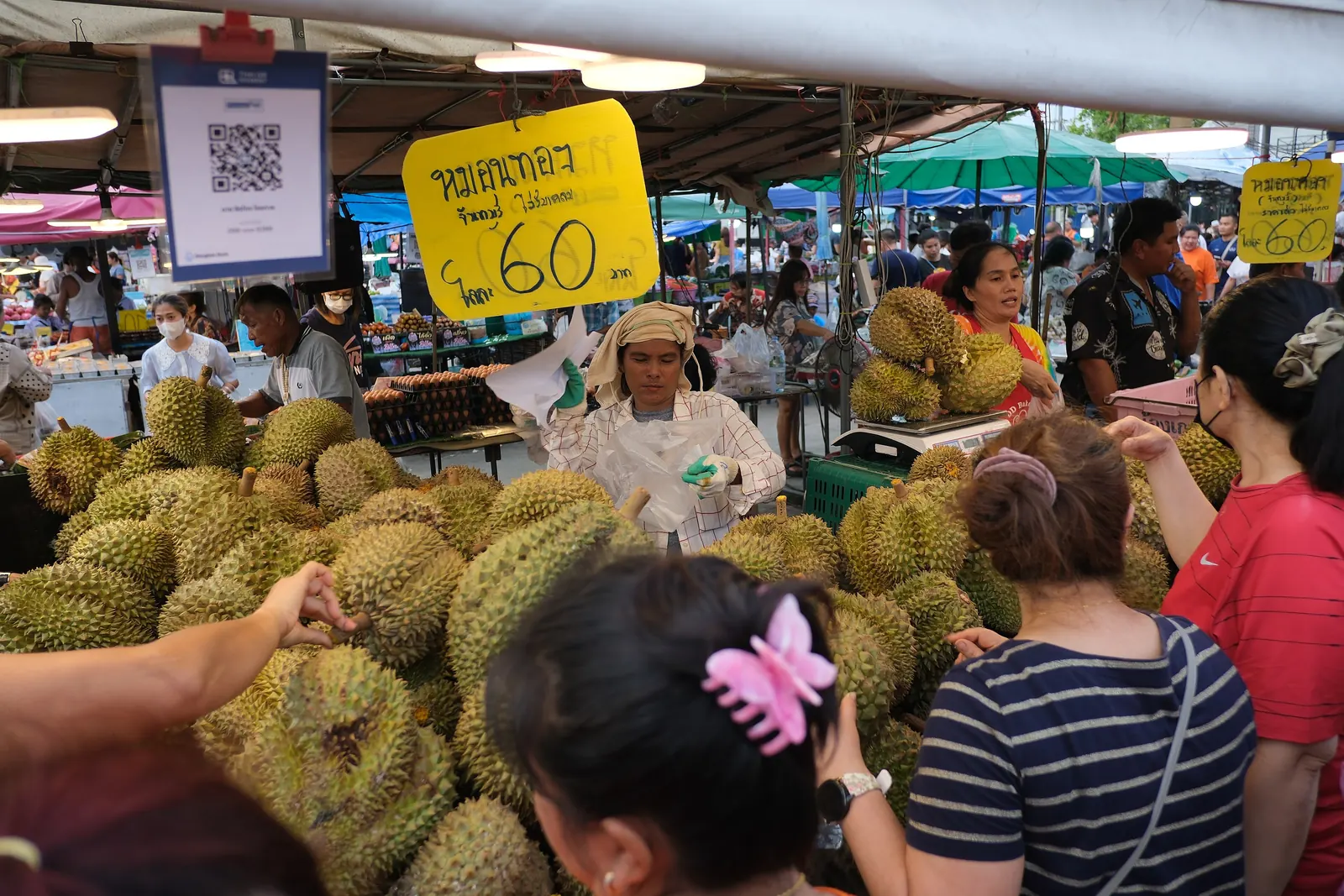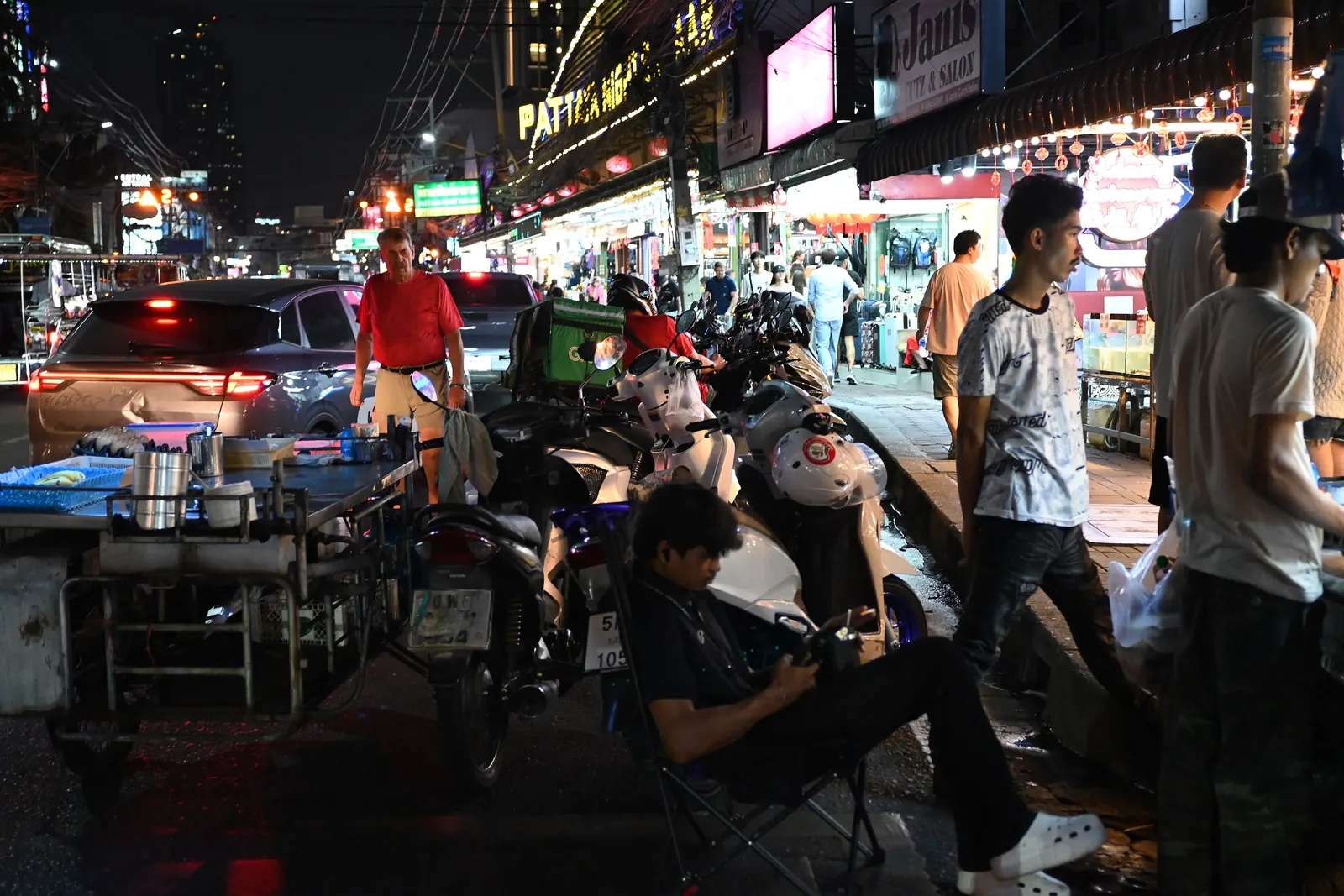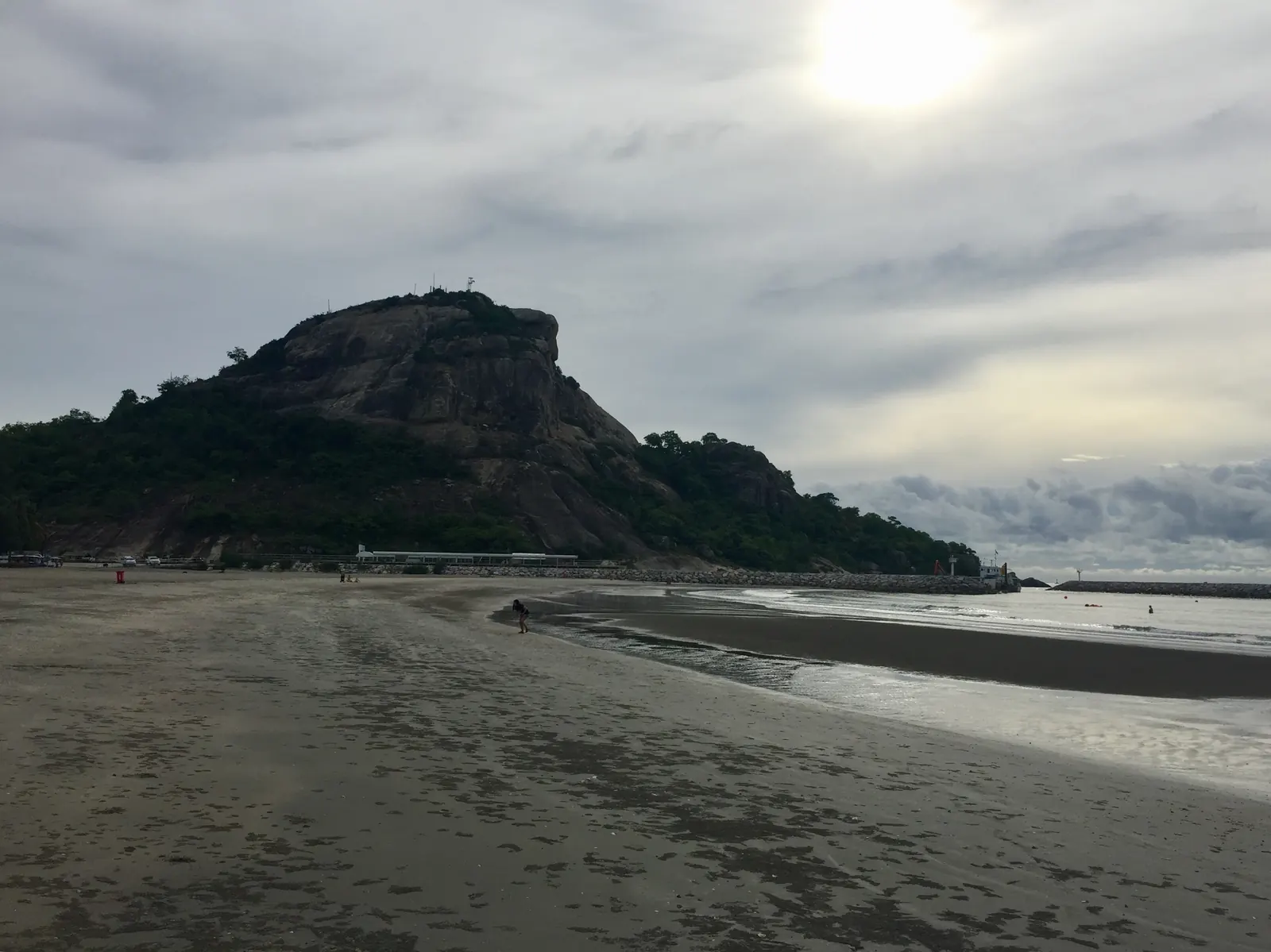
Things to do in Hua Hin is a shorter list than the brochures suggest, and a better one. The town’s whole pitch is that it is Bangkok’s beach: two and a half hours down the Phetkasem road, royal since the 1920s, low-rise by law and run at the speed of a Sunday lunch. The beach itself is fine rather than famous. The reasons to come sit around it: a teak palace on stilts, a cave with a pavilion inside it that is the best single sight on this coast, a national park of limestone and marsh, wind you can learn to kitesurf on, and more golf than anywhere else in the country.
This is the pillar the other Hua Hin guides hang off. The two-day plan is in Hua Hin weekend; the markets are argued over in Hua Hin night market; the base question is where to stay in Hua Hin; the journey down is Bangkok to Hua Hin. Here: eighteen things, each with a verdict and an October 2026 price in baht, plus a section on what to skip, because Hua Hin still has attractions on itineraries that closed years ago.
The short version: do Phraya Nakhon Cave early on a weekday, the palace on any day but Wednesday, Khao Takiab at sunset and Tamarind for dinner, and treat the main beach as somewhere to walk rather than swim. Give the vineyard a shrug and the water park to the children. The wider province is in our Prachuap Khiri Khan profile.
How Hua Hin works, and how to get around it
Hua Hin is a long town on a north–south road. The centre — station, clock tower, Dechanuchit night market, fishing pier — sits at the northern end of a five-kilometre beach. Khao Takiab, the monkey headland, closes the southern end seven kilometres from the clock tower, with the calmer bay, the Cicada and Tamarind markets and the big resorts strung along the way. North past the palace grounds it is 25 kilometres to Cha-am, a different town in a different province. South, forty minutes, are Pranburi and the karst of Khao Sam Roi Yot. Inland: the golf courses, the water parks and the vineyard. Nothing on this list is more than ninety minutes from the clock tower.
Getting around: the green songthaews run the Phetkasem–beach-road loop to Khao Takiab for ฿10–20 by day and thin out after 8pm. Grab and Bolt both work: ฿100–150 within town, ฿250–350 to the palace, ฿300–400 to Cha-am. Tuk-tuks at the market open at ฿200–300 and settle at ฿150. A scooter is ฿250–300 a day, and the checkpoint on Phetkasem wants a motorcycle licence plus an International Driving Permit. A hire car is ฿900–1,500 a day and the sensible tool for Sam Roi Yot and Pala-U, which no songthaew reaches; a car and driver for a full day is ฿2,000–2,500, about what two people pay for an organised tour without the coach-park timing. Sort a SIM before you leave Bangkok — our eSIM guide.
Getting here: the 07:30 railcar from Krung Thep Aphiwat is around ฿330 and walks you into the middle of town; minivans from Sai Tai Mai, Mo Chit 2 or Ekkamai are ฿200–320; straight off a flight, the Suvarnabhumi coach is ฿361–425. Bangkok to Hua Hin on 12Go lists the trains and vans, and the airport coach separately. Every option is costed in Bangkok to Hua Hin.
How this list of things to do in Hua Hin works
Each entry ends with a verdict — Do it, Fine or Skip it — and the foreigner price, because the national parks charge dual rates and it is better to know than to feel ambushed at the gate. Prices are October 2026, checked against our Thailand Price Index; anything marked “around” is an estimate. Remember that Hua Hin is Bangkok’s weekend, so Friday and Saturday add 20–50 per cent to rooms — compare Hua Hin rates on Agoda for a Sunday-to-Thursday stay. Nothing here was comped.
Things to do in Hua Hin town: the beach, the station and the hill
1. Hua Hin Beach
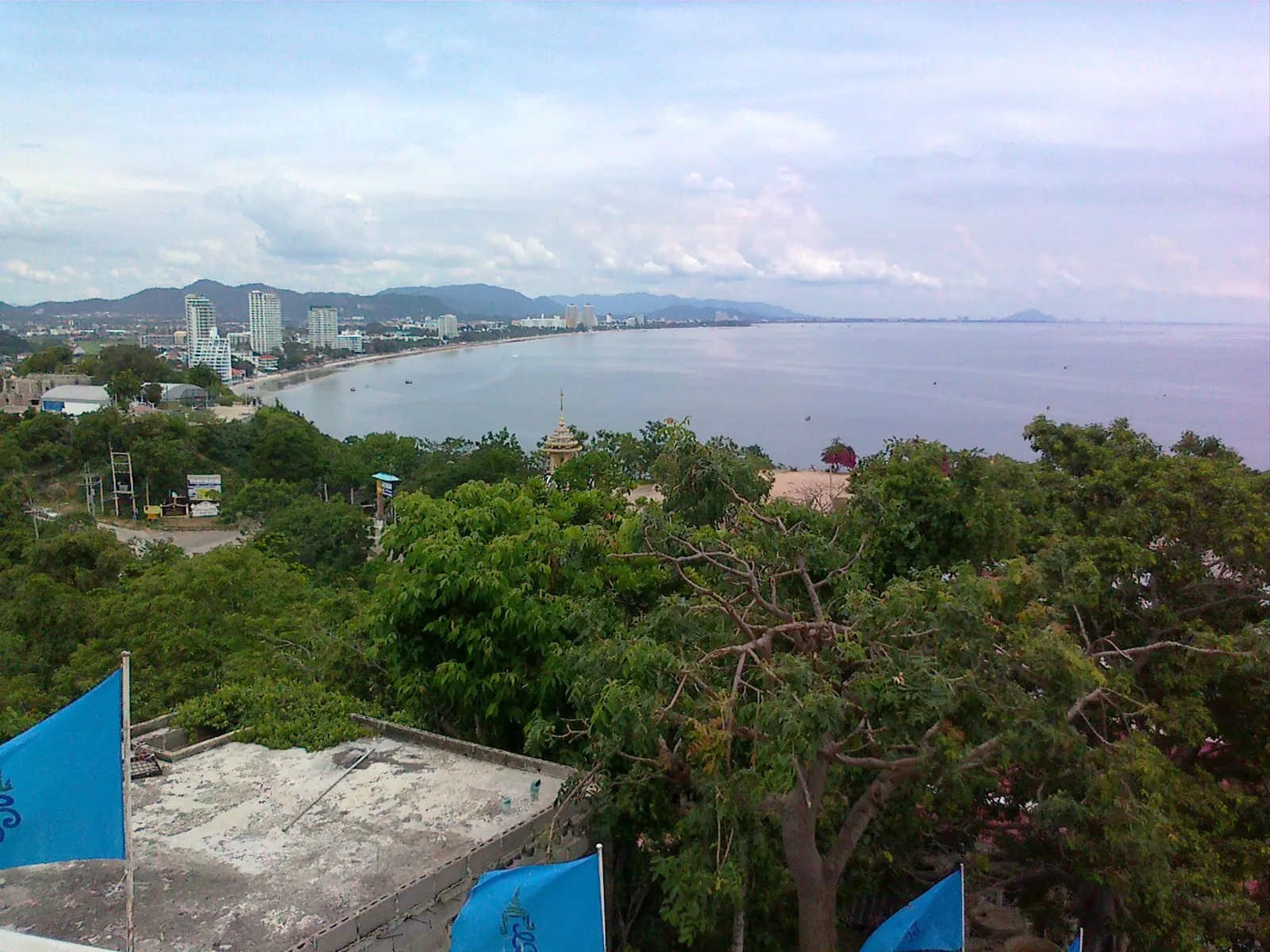
Five kilometres of tan sand from the palace grounds to Khao Takiab, and the honest description is: a Gulf beach. Not the Andaman. The sea is calm and swimmable from November to April and browner after rain, and twice a day the tide goes out far enough that the central stretch below the Hilton becomes a pony track — the horse handlers quote ฿300–500 for a short ride and are the nearest thing to a hustle on the sand. Loungers under a hotel’s umbrellas are ฿100–150 if you buy a drink. Walk north for space, south for a swim. Jet-skis are the one thing to refuse outright; the damage-claim routine in our scams guide runs here too.
Verdict: Fine. Walk it at low tide before breakfast; swim at Khao Takiab or Suan Son instead.
2. Hua Hin Railway Station
The 1911 timber station with its red-and-cream royal waiting room is the most photographed building in town and, since the elevated double-track station opened beside it in 2023, no longer a working one: it is kept as a museum piece with the new platforms behind. Ten minutes, a photograph, free, five minutes’ walk from the clock tower. Across the road is the Royal Hua Hin Golf Course, laid out in 1924 and the oldest in the country, and beside it the Centara Grand Beach Resort, the Railway Hotel of 1923 — teak verandas, topiary elephants, from around ฿6,000 a night and the one hotel in town where the history is the point.
Verdict: Do it, for twenty minutes on the way to the market.
3. Khao Takiab and the monkeys
Chopstick Hill, the headland at the south end of the beach: a temple, a standing Buddha some twenty metres tall facing the sea, a viewpoint back along the whole bay, and a troop of long-tailed macaques who have worked out that a tourist is a vending machine. Zip the bag, carry nothing edible, and do not smile at them with your teeth. Free; the songthaew drops you at the village for ฿10–20 and the climb is ten minutes. Sunset is the hour. The bay under the hill is the calm, swimmable end of Hua Hin, which is why the family resorts are here — the Hyatt Regency Hua Hin, with its lazy-river pool complex, from around ฿5,500. The seafood row at the foot of the hill is where the night markets get their ideas.
Verdict: Do it, at sunset, then eat below.
4. The night markets: Dechanuchit, Cicada and Tamarind
Hua Hin’s evening is its markets, and the whole case is argued in our night market guide: Dechanuchit Road nightly for the grilled squid and the lobster theatre (watch the scales), Cicada on Friday to Sunday for ceramics and jazz, Tamarind next door from Thursday to Sunday for the best plate of food in town under ฿400 a head. Songthaews get you to Khao Takiab for ฿15 but not back; budget ฿100–150 for the Grab home.
Verdict: Do it. Tamarind first, Dechanuchit once, Cicada for an hour.
Hua Hin’s palaces: which one you can actually visit
5. Maruekhathaiyawan Palace
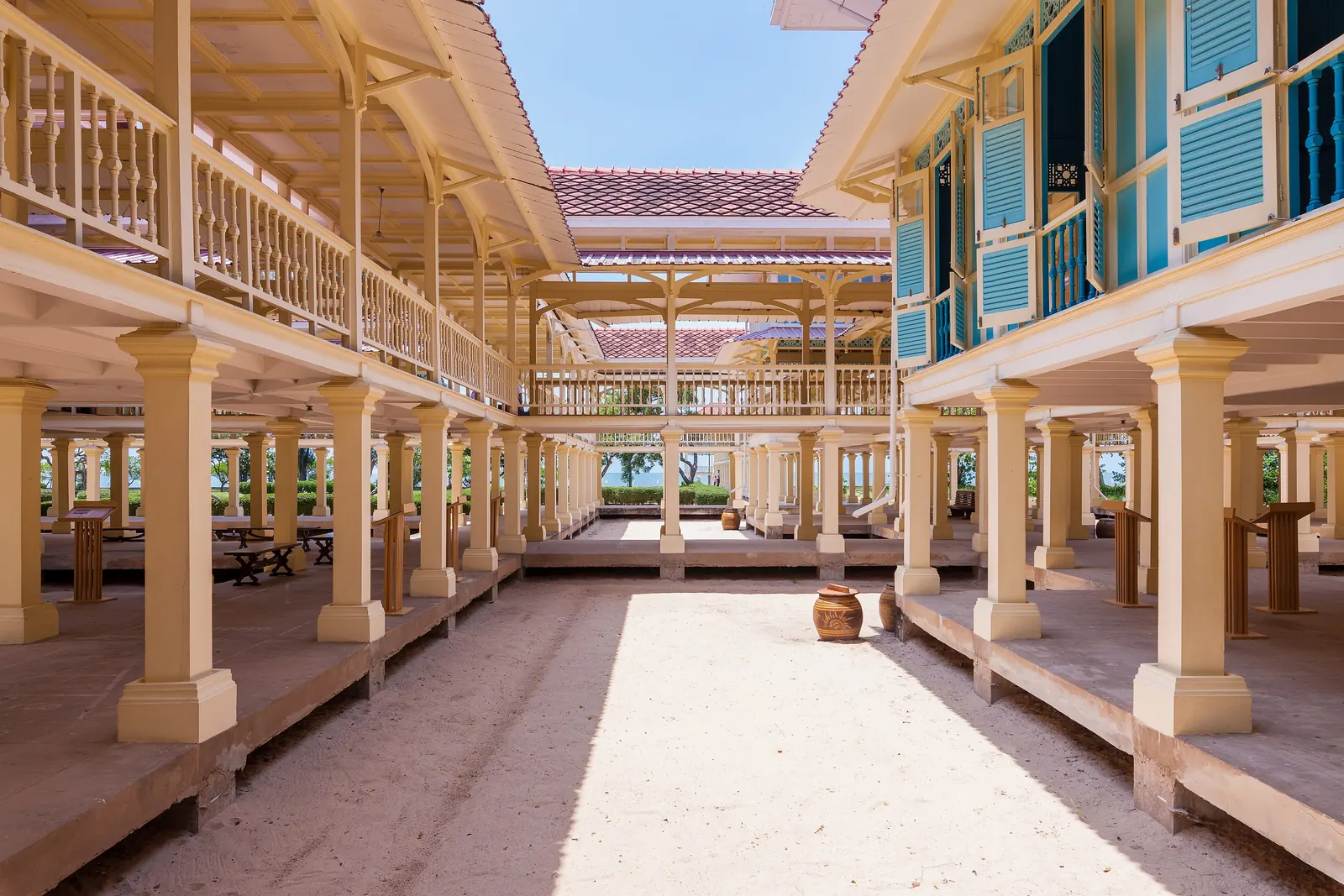
The summer palace Rama VI had built in 1923–24, sixteen kilometres north of town on the Cha-am road, also spelt Mrigadayavan: three groups of golden-teak pavilions raised on more than a thousand concrete columns, joined by long covered walkways that run down to the sea, with a breeze through every room and hardly a wall to speak of. It is the most graceful building on the Gulf coast and most people in Hua Hin never go. It sits inside the Rama VI army camp, so the gate wants to see ID. Foreign adults pay ฿60 as of October 2026; it is closed on Wednesdays and open roughly 8am to 4pm otherwise; knees and shoulders covered, sarongs for hire against a deposit, shoes off upstairs, no photographs inside the rooms. Grab is ฿250–350 each way from the centre, or ask the driver to wait. Go early; by eleven the walkways are hot. Half-day tours pair it with the town — compare Hua Hin palace tours — but a Grab and an hour is all it needs.
Verdict: Do it. The most underrated ฿60 in the province.
6. Klai Kangwon Palace
The other palace, at the north end of the beach — Rama VII’s “Far From Worries” of 1926, still a working royal residence — was for years half-open to visitors when the family was away. As of October 2026 it is not: the guards on the gate will tell you it is closed to the public, and we are bringing our earlier Hua Hin pieces into line. You can see the wall and the gatehouse from Phetkasem Road, and that is the visit.
Verdict: Skip it, because it is not a choice you get to make.
7. Plearn Wan and the Sam Phan Nam floating market
Plearn Wan, the 1950s retro village on Phetkasem between Soi 38 and Soi 40, closed for good on 31 January 2020 and is still on half the itineraries in circulation; anything recommending it was written before then or copied from something that was. Sam Phan Nam Floating Market, fifteen kilometres inland at Thap Tai, reopened in November 2024 with free entry, daily 8am to 8pm: souvenir stalls, ฿40 boat rides, ฿100 pedalos, and a ฿250–350 Grab each way to reach a canal that was dug for the purpose.
Verdict: Skip both — Plearn Wan because it does not exist, Sam Phan Nam unless you have children under ten and a hire car.
Day trips from Hua Hin: Khao Sam Roi Yot, Pranburi and Pala-U
8. Phraya Nakhon Cave
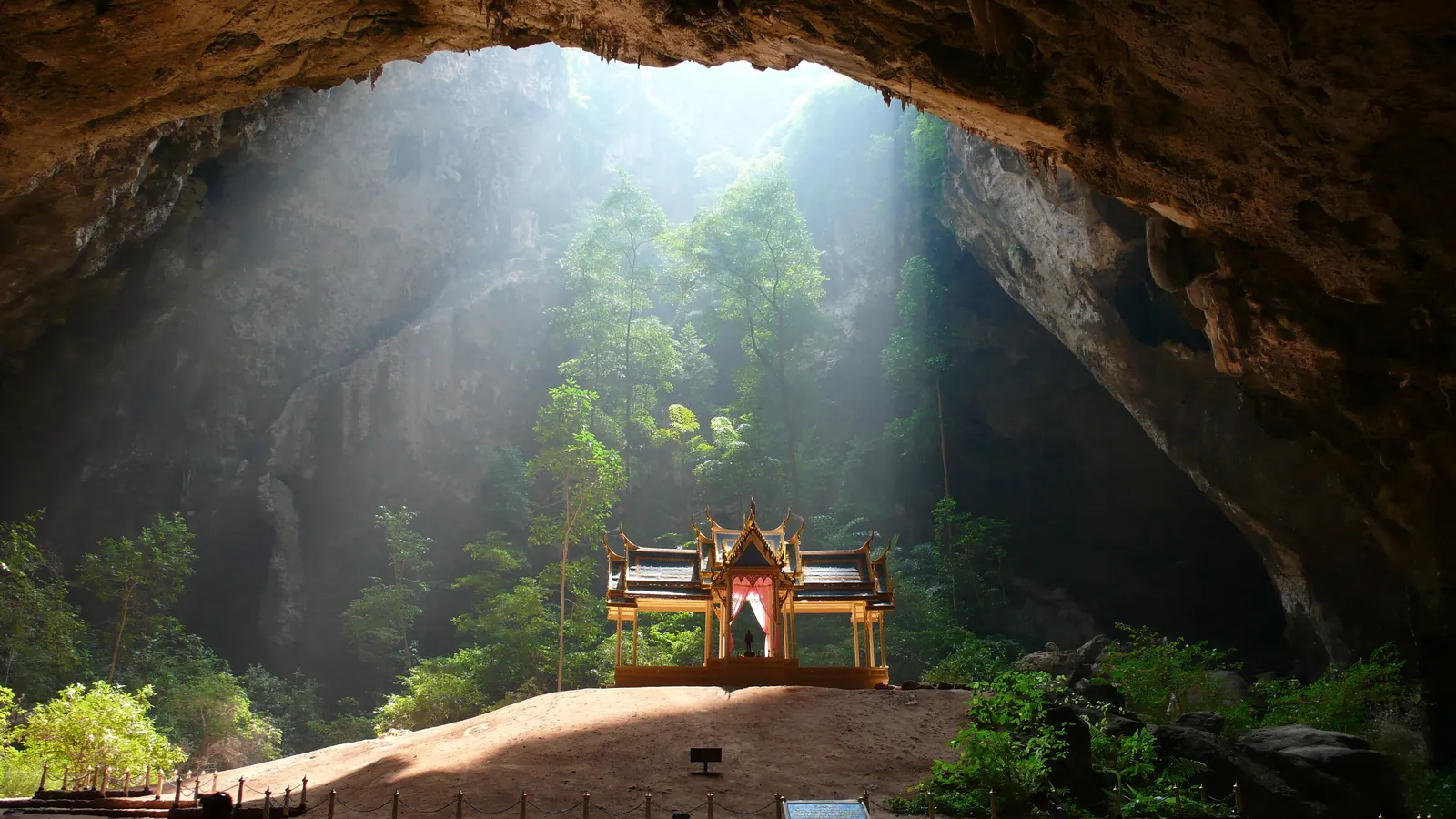
Sixty kilometres south in Khao Sam Roi Yot National Park is the sight this coast should be known for: a sinkhole cave where the roof has fallen in, a forest growing in the light, and on a rise in the middle a small green-and-gold pavilion, the Kuha Karuhas, built in 1890 for a visit by Rama V. In late morning the sun comes through the hole and lights it like a stage, strongest in the cool season. Getting there is the point and the price. From Bang Pu village you either take a longtail round the headland to Laem Sala beach — around ฿400 return for the boat, or ฿150–200 a head when shared — or walk over it in thirty sweaty minutes. From the beach the trail climbs 430 metres of steep rock steps, twenty to thirty minutes, then drops into the cave. Foreign adults pay ฿200 and children ฿100 at the park gate, cash; Thais pay ฿40, which is the dual pricing every national park runs. The cave is open about 8am to 3pm with the last boats around 3.30pm, so leave Hua Hin by 8am with water and real shoes. A hire car is an hour each way; a car and driver ฿2,000–2,500; organised half-days with a guide run ฿1,500–2,500 and tend to arrive at the busiest hour — compare Phraya Nakhon Cave trips and take the earliest start.
Verdict: Do it. The best single thing on the Gulf coast between Bangkok and Chumphon.
9. The rest of Khao Sam Roi Yot: Khao Daeng, the marsh and the beaches
Your ฿200 covers the whole park for the day, so use it. Khao Daeng viewpoint, by the headquarters, is a thirty-minute scramble up a limestone hill for the view of the karst towers — the “three hundred peaks” of the name — standing in flat paddy and shrimp ponds; dawn if you are sleeping nearby. Bueng Bua, the freshwater marsh in the park’s south, has a long boardwalk through lotus and reed with egrets, jacanas and, on a good morning, a purple heron; it is included in the ticket, and a rowing boat on the marsh is priced per boat, not per head. Sam Phraya beach below the karst is empty and swimmable. Sleep beside the park at Dolphin Bay Beach Resort, from around ฿1,800, and the cave becomes a 7am walk instead of a day trip.
Verdict: Do it, with the cave, on the same ticket.
10. Pranburi Forest Park and Pak Nam Pran
Thirty kilometres south, at the mouth of the Pranburi River, a kilometre or so of boardwalk through replanted mangrove: mudskippers, fiddler crabs, kingfishers, a watchtower, and the sort of quiet Hua Hin’s beach never manages. Free as far as we can establish, daylight hours. Pak Nam Pran, the fishing village beside it, has squid boats, a row of seafood shacks cheaper than anything in town — a whole grilled fish around ฿250–350 — and the long, empty beach the boutique resorts sell as the coast’s quiet end.
Verdict: Do it, for an hour, on the way to or from Sam Roi Yot.
11. Pala-U Waterfall
Sixty kilometres west in Kaeng Krachan National Park, which is Phetchaburi’s rather than ours — see our Phetchaburi guide: sixteen tiers of falls in forest towards the Burmese border, the first four reached on a stone path, fish in every pool, leeches in the wet months. Foreign adults ฿300, children ฿200, ฿30 for the car; a hire car or a driver at ฿2,000–2,500, ninety minutes each way past the pineapple fields. The honest note is the calendar: from June to November it is a proper waterfall; from February to April it is a series of damp rocks with a ฿300 ticket. The road out passes the elephant “villages” that sell rides and bathing — say no. Our ethical elephant sanctuaries guide explains why, and none of the real ones is here.
Verdict: Fine, in the wet season; skip it from February to April.
12. Wat Huay Mongkol
Fifteen kilometres inland at Thap Tai, a temple built around a twelve-metre statue of Luang Pu Thuat, the southern monk whose amulet hangs from half the rear-view mirrors in Thailand: Thai families, incense, ฿20 garlands, and a pair of carved wooden elephants you walk under for luck. Free, thirty minutes, and it pairs with the vineyard because the same road passes both.
Verdict: Fine. Stop if you are passing; do not drive out for it.
Paid-for afternoons in Hua Hin: water parks, kitesurfing, golf and the vineyard
13. Vana Nava Water Jungle
Hua Hin’s big water park, at the southern end of Phetkasem: nineteen slides including a looping one you would not build yourself, a wave pool, a lazy river, a lot of shade and a hotel attached. It is a good water park, and priced like one. Reckon on around ฿1,200–1,400 for an adult at the gate and ฿1,000 or so booked online at least two days ahead, children by height; then ฿150 for a locker, ฿100 for a towel, ฿380 for the lunch buffet and ฿1,400 for a cabana. A family of four is ฿5,000 before the ice cream. Compare Vana Nava ticket prices against the park’s own booking page before you pay at the gate.
Verdict: Do it, with children, on the wet afternoon Hua Hin will eventually give you; skip it as a couple.
14. Black Mountain Water Park
Ten kilometres inland at Hin Lek Fai, the smaller, cheaper cousin: ฿600 for adults over 140 centimetres, ฿300 for children between 110 and 140, the smallest free, and around ฿500 booked online. Fewer slides, a wave pool, a decent lazy river, and green hills behind. If the point is a pool with slides rather than a theme park, the ฿600 is the better spend. Black Mountain day passes are sold online with a small discount.
Verdict: Fine. The sensible one for under-tens.
15. Kitesurfing
Hua Hin is Thailand’s kitesurfing town, and the reason is the wind: the north-east monsoon blows side-onshore along the beach from about November to April, warm, over shallow water and a sandy bottom, which is the textbook set-up for learning; a second, gustier season from May to October moves the schools down the coast to Pak Nam Pran. The schools cluster at the southern end of the beach around Soi 75. Prices as of October 2026: a two- to three-hour taster around ฿4,000; a three-day IKO beginner course ฿10,000–12,000, which is what it takes to actually ride; private tuition ฿1,500–2,200 an hour. Book a week or two ahead in January, when the wind and the Scandinavians both arrive. Compare Hua Hin kitesurfing lessons by hours of water time, not by price.
Verdict: Do it, if you have ever thought about it; few good places on earth teach it this cheaply.
16. Golf
More championship courses within half an hour than anywhere in Thailand — ten or so, with Black Mountain the one visiting professionals talk about — and priced accordingly: a high-season green fee of around ฿4,400 as of October 2026, plus ฿350 for the compulsory caddie and ฿750 for the compulsory cart, so ฿5,500 before a beer, and around ฿2,500 in the green season. Banyan is in the same bracket. The Royal Hua Hin opposite the station, 1924 and charming, is around ฿2,000–3,000 for a flat round with monkeys on the fairways; Springfield and Sea Pines are cheaper still. Twilight rates after 2pm take about a third off everywhere.
Verdict: Do it, if you golf; after the cave, this is the coast’s one world-class thing.
17. Monsoon Valley Vineyard (Hua Hin Hills)
Forty-five minutes inland, a vineyard on a former elephant corral making “new latitude” wine on a hillside that looks, from the restaurant terrace, like Tuscany with palms. Entry is ฿200 a head, handed back as a coupon for food or wine, and includes the shuttle from the Hua Hin Hills Wine Cellar in town at set times; a tasting of three wines is ฿290; the restaurant does a fair lunch at around ฿300–500 a plate. The Colombard is drinkable; the view is the reason. Skip the elephant ride they sell in the vines. Half-day tours with a stop at Wat Huay Mongkol run about ฿2,250 — compare Monsoon Valley tours — which is a lot for a coupon and a shuttle.
Verdict: Fine. Go for the terrace at four o’clock; do not go for the wine.
The beaches near Hua Hin that beat Hua Hin’s
18. Suan Son Pradipat and Cha-am
Three kilometres past Khao Takiab, Suan Son Pradipat is the army’s beach: a kilometre of casuarina pines, deckchairs, a properly swimmable sea with no horses and no jet-skis, Thai families under the trees, and a food court where a plate is ฿60–80. Free on foot as of our last pass, with a small gate fee for cars. Cha-am, twenty-five kilometres north and in Phetchaburi, is the Thai family weekend: a long straight beach under casuarinas, deckchairs and banana boats, seafood shacks a third cheaper than Hua Hin, hardly a foreigner, and nothing open after 10pm. It is fine, and it is a ฿300–400 Grab each way. On this coast the sea is at its clearest from November to April and roughest in October; the month-by-month pattern is in our best time to visit Thailand guide.
Verdict: Suan Son, Do it — the swim Hua Hin beach owes you. Cha-am, Fine — eat there if you are sleeping there, skip it otherwise.
Things to skip in Hua Hin
Elephant camps and “safaris” on the Pala-U road — Skip it. Rides, bathing and chains between customers, sold as jungle. Nothing on this coast passes the test in our sanctuaries guide.
Jet-skis and parasailing on the main beach — Skip it. The pre-existing-scratch routine is older than the Hilton. If you must, photograph every panel first, and read the scams guide before you hand over a passport.
The Cha-am theme parks — Skip it unless you have under-tens and a car. A fake Greek village and a fake camel farm on the Phetkasem, built for Bangkok weekenders with small children. As of our last pass they are still trading; nobody over the age of nine needs them.
What each day out from Hua Hin costs
| Day out | Foreigner price, Oct 2026 | Verdict | Book |
|---|---|---|---|
| Phraya Nakhon Cave and Khao Sam Roi Yot | ฿200 adult, ฿100 child; boat around ฿400 per boat return; car and driver ฿2,000–2,500 | Do it | Sam Roi Yot trips |
| Maruekhathaiyawan Palace | ฿60; Grab ฿250–350 each way; closed Wednesday | Do it | Turn up with ID; cash at the gate |
| Pala-U Waterfall (Kaeng Krachan) | ฿300 adult, ฿200 child, ฿30 car | Fine, Jun–Nov | Pala-U day trips |
| Vana Nava Water Jungle | around ฿1,200–1,400 gate, ฿1,000 online; locker ฿150 | Do it, with children | Vana Nava tickets |
| Black Mountain Water Park | ฿600 adult, ฿300 child; around ฿500 online | Fine | Day passes |
| Kitesurfing taster / 3-day course | around ฿4,000 / ฿10,000–12,000, Nov–Apr | Do it | Lessons |
| Golf at Black Mountain | around ฿4,400 high season + ฿350 caddie + ฿750 cart | Do it if you golf | Book the tee time direct |
| Monsoon Valley Vineyard | ฿200 entry (coupon) + ฿290 tasting; tours ฿2,250 | Fine | Vineyard tours |
| Cha-am beach | Free; Grab ฿300–400 each way | Fine | No booking |
Things to do in Hua Hin: your questions, answered
How many days do you need in Hua Hin?
Two nights covers the town: the beach walk, the station, Khao Takiab at sunset and two markets. Three adds the day that matters, Phraya Nakhon Cave and Khao Sam Roi Yot, with the palace on the way back another morning. Beyond four you are golfing, learning to kitesurf, or quietly turning into one of the retirees, all of which are reasonable.
Is Hua Hin beach good for swimming?
The central beach is average: tidal, busy with horses and vendors, and a long walk to the water at low tide. It is calm and clean enough from November to April, murkier after rain. For a proper swim go to the bay under Khao Takiab, Suan Son Pradipat’s pine beach three kilometres further south, or Pak Nam Pran’s empty sand near Pranburi.
What is the best day trip from Hua Hin?
Phraya Nakhon Cave in Khao Sam Roi Yot National Park, sixty kilometres south: a boat or a headland walk, 430 metres of steep steps and a royal pavilion lit by a hole in the cave roof. Foreigners pay ฿200 for the park, around ฿400 return for a boat and ฿2,000–2,500 for a car and driver. Leave by 8am; the light and the quiet are both gone by noon.
Is Hua Hin good for families with children?
Very, which is why Bangkok’s families own it at weekends. Khao Takiab’s calm bay and the resort pools handle the beach question, Vana Nava (around ฿1,200–1,400 an adult) and Black Mountain (฿600) cover rainy afternoons, the monkeys and the marsh boardwalk at Sam Roi Yot entertain for free, and Tamarind market feeds everyone for under ฿400 a head. Book Sunday to Thursday for the prices.
When is the best time to visit Hua Hin for things to do?
November to March: cool, dry, calm sea, the kitesurfing wind on, the cave lit, and every market open. February is the sweet spot. Unusually, May to August works here too, mostly sunny with an afternoon shower and a full waterfall at Pala-U. September to October is the wet trough, when the beach is the thing to avoid and the water parks earn their keep.
Related guides
- Hua Hin Weekend: Royal Beach, Night Market, and the Cicada
- Hua Hin Night Market, Cicada or Tamarind: Which Is Worth It?
- Where to Stay in Hua Hin: Best Areas by Traveller Type
Book the trip
Some links in this guide are affiliate links. If you book through them we may earn a small commission at no extra cost to you — it helps keep Destination Thailand independent.
Hotels: pick your end of the beach first, then compare Hua Hin and Cha-am hotels on Agoda, and remember Sunday to Thursday is the cheap week. Tours/Boats: the cave, the vineyard, a kitesurf taster — browse Hua Hin trips on GetYourGuide and read the newest reviews before you commit. Getting there: it is a train or a van, not a flight — book the Bangkok to Hua Hin leg on 12Go, with every option costed in our transport guide. Not sure Hua Hin is your Thailand at all? Our Where to Go in Thailand matcher scores all 77 provinces against your month, your crowd tolerance and what you actually want from the trip.