Phetchaburi is the best town in Thailand that almost nobody stops in. Every weekend, thousands of cars pour down Phetkasem Road towards Hua Hin, straight past a province with three royal palaces, a cave shrine lit by a single shaft of sunlight, the biggest national park in the country and a UNESCO Creative City of Gastronomy title. Barely anyone lifts a foot off the accelerator. This is collective madness, and it works entirely in your favour.
Because Phetchaburi — Phetburi to locals — has stayed what most Thai towns were thirty years ago: a working provincial capital with sugar palms on its fringes, wooden shophouses along its river, and desserts that were quite literally developed for kings. It sits two to three hours from Bangkok and costs next to nothing.
This guide covers the palace hill, the cave, the food and Kaeng Krachan — plus the one thing you should drive past without slowing down. For quick facts and a map, see our Phetchaburi province profile.
What Phetchaburi really is
One of the oldest continuously lived-in towns in Thailand. There was a Khmer settlement here when Angkor still ran this part of the world — the laterite towers of Wat Kamphaeng Laeng still stand in the middle of town — and by the nineteenth century the province had become the royal family’s favourite out-of-town project. Rama IV built a palace-observatory on a hilltop in the 1850s. Rama V commissioned a European mansion from a German architect. Rama VI put up a golden teak summer palace by the sea at Cha-am. Three consecutive kings, three palaces, one modest province.
Around all that royalty is an ordinary, unbothered river town whose economy still partly runs on sugar palms — the spindly, top-heavy trees are everywhere — and the sugar tapped from them underpins the dessert culture that earned Phetchaburi its UNESCO Creative City of Gastronomy listing in 2021. The town is not preserved or gentrified. It is simply carrying on.
Why go to Phetchaburi
Because it delivers the sights of a headline destination at the prices and crowds of nowhere at all. Entry fees run in the tens and low hundreds of baht, a proper bowl of noodles is ฿50-60, and you can stand alone in a nineteenth-century royal observatory at 9am on a Saturday. Try that at the Grand Palace. A hilltop palace, a spine-tingling cave shrine, Khmer ruins, a quiet beach and nearly 3,000 square kilometres of rainforest — all on a ฿50 train ticket.
Getting to Phetchaburi
Train: Phetchaburi is on the southern line. Services leave Bangkok’s Krung Thep Aphiwat Central Terminal and take around three hours; third-class ordinary tickets start from about ฿40, an air-conditioned second-class seat costs a couple of hundred baht. The station is a short motorbike-taxi hop from the centre.
Minivan: From Bangkok’s Southern Bus Terminal roughly every hour — about two hours when the traffic behaves, ฿120-180, dropping you near the centre.
Driving: About 160km via Rama II Road and the Phetkasem Highway, two to two-and-a-half hours. From Hua Hin it is 45 minutes to an hour by local train, minivan or car, well under ฿100 on public transport. There is no meaningful airport; fly into Bangkok and come down by land.
Where to stay
The old town is the obvious base: riverside lanes within walking distance of Khao Wang, the markets and the best temples. Family-run guesthouses charge ฿400-800 for a clean room; a handful of restored shophouse places sit in the ฿1,000-1,800 band. Nothing needs booking months ahead.
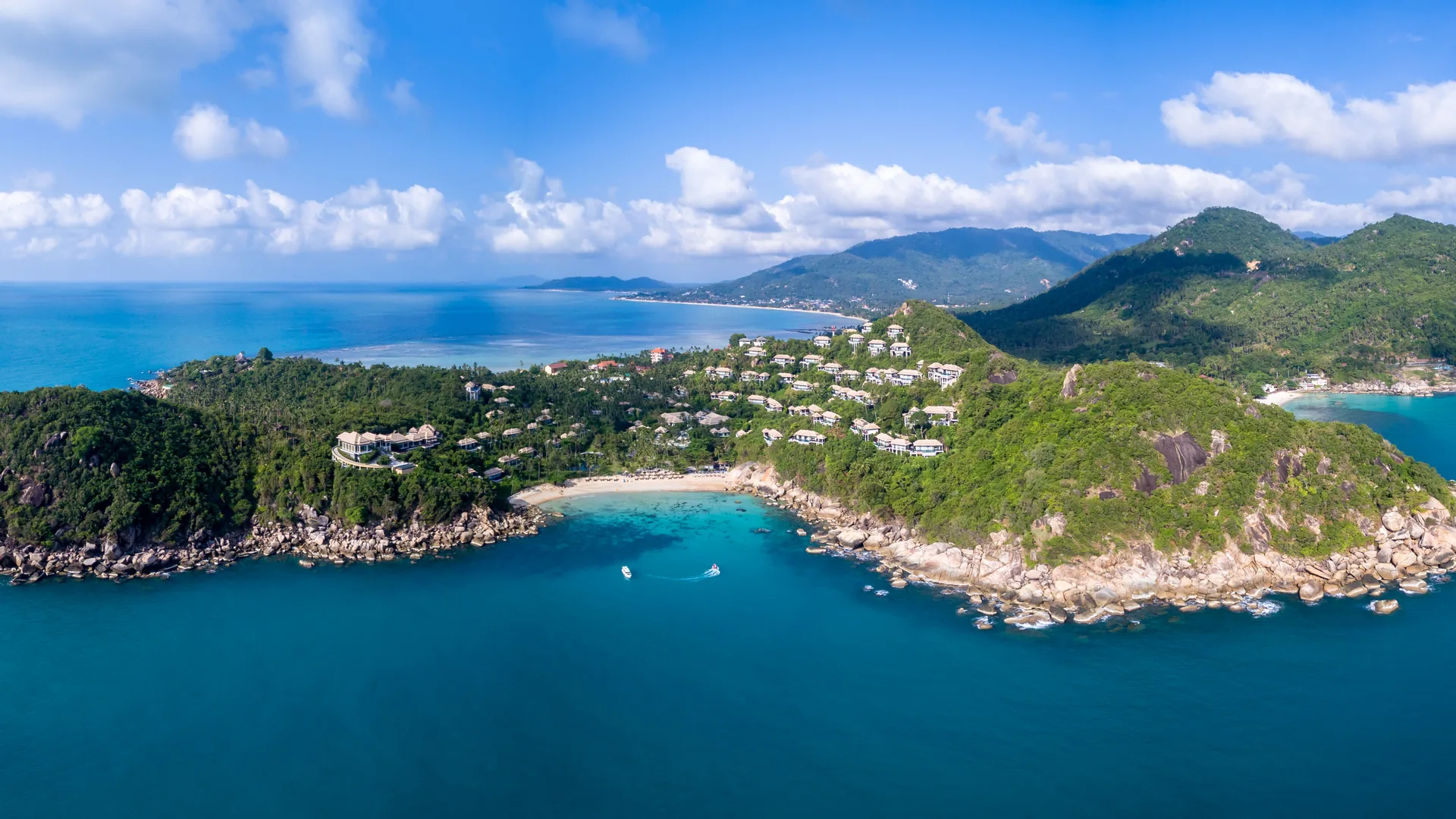
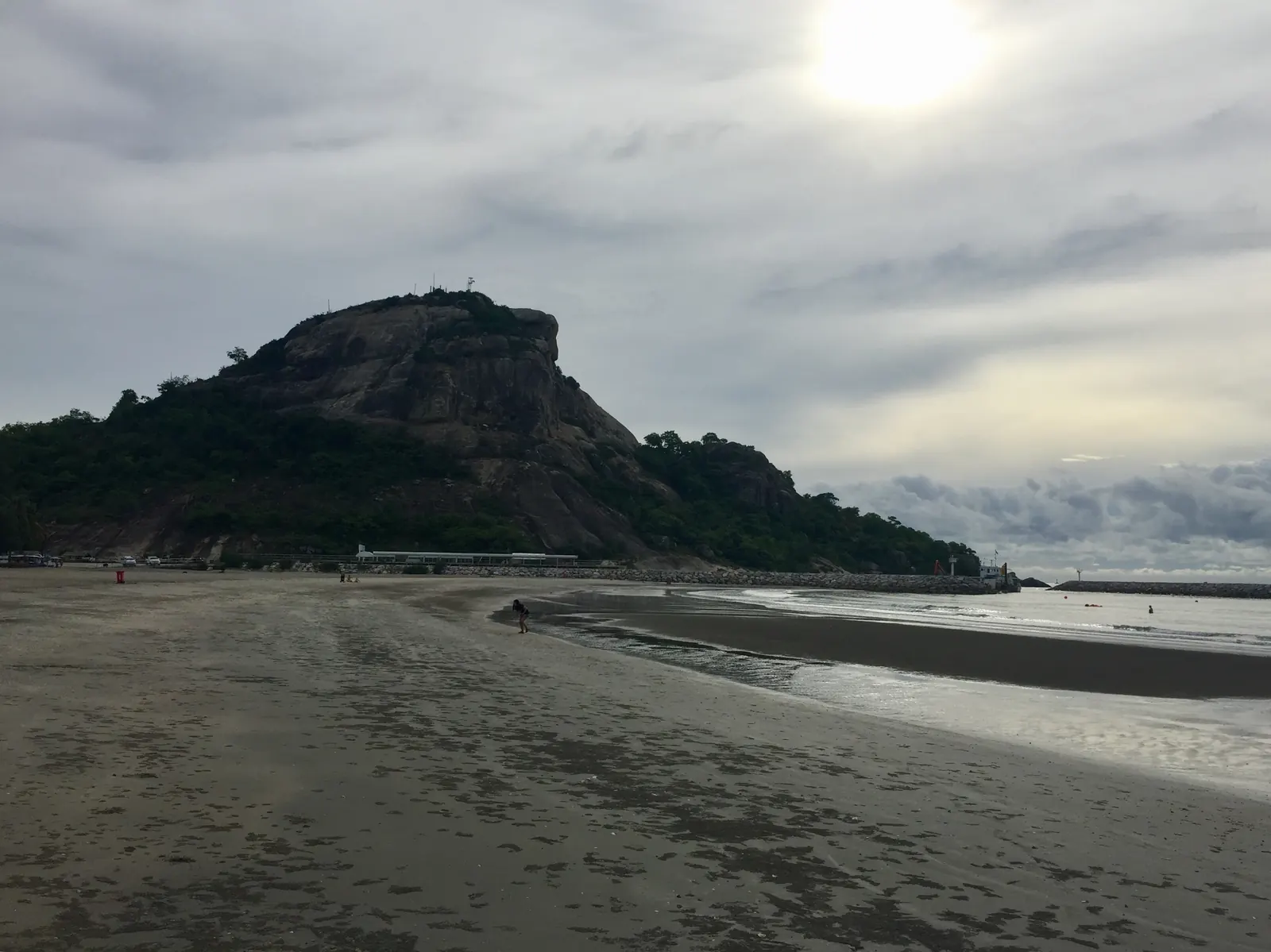
Hat Chao Samran, about 15km east, is the beach Thais keep for themselves — casuarina trees, seafood shacks, mid-range resorts at ฿1,200-2,500. Cha-am, further south in the same province, is the full resort strip at ฿1,500-3,500. For Kaeng Krachan, lakeside camps and raft-house resorts run ฿800-2,000, and park campsites cost pocket change.
What to eat in Phetchaburi
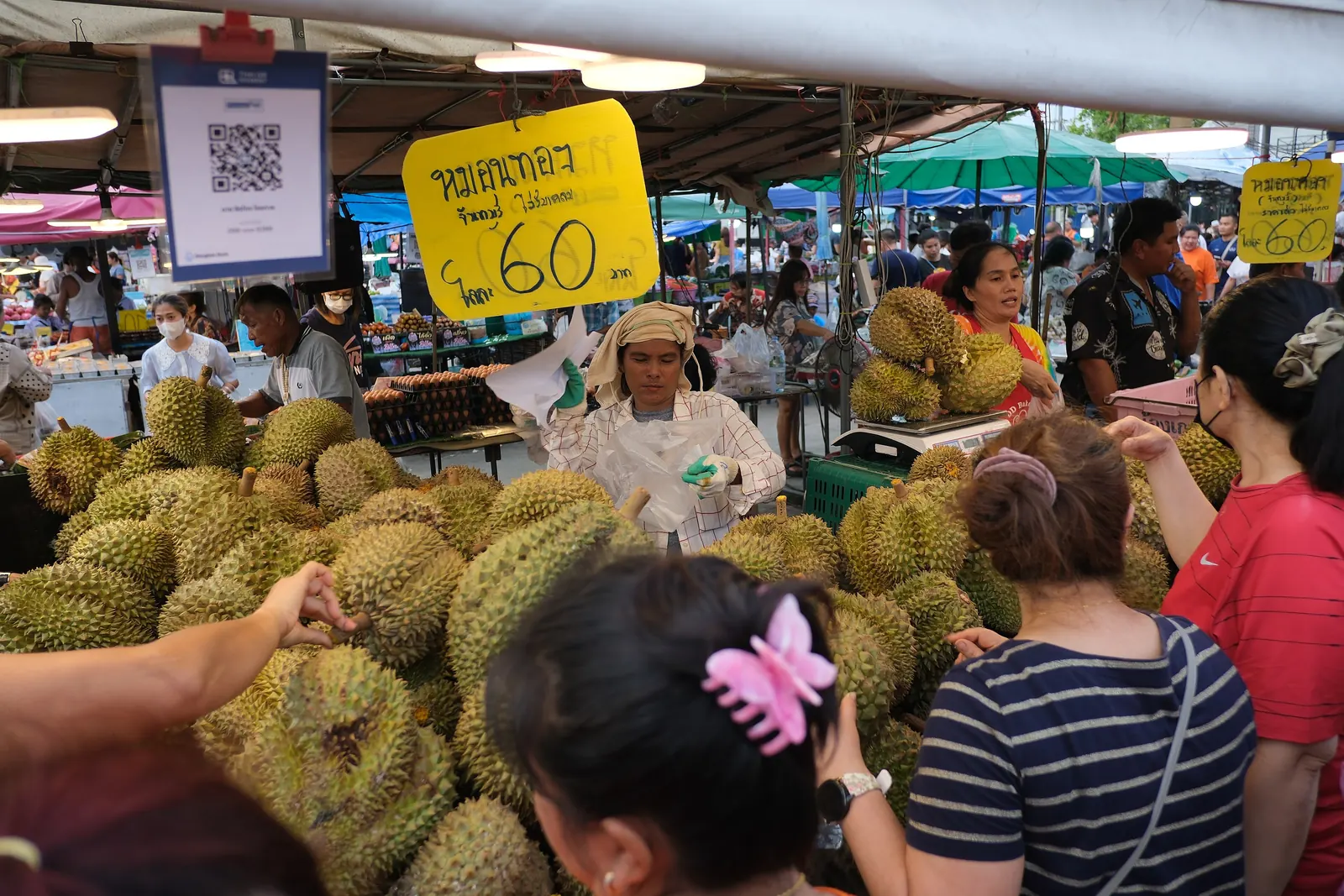
Start with khanom mo kaeng, the baked mung-bean custard that is to this town what pizza is to Naples: dense, eggy, caramelised on top, sold in foil trays for roughly ฿40-80 from the dessert shops lining the Phetkasem Highway — entire businesses built on motorists who stop for custard but not for the town.
The reason it all tastes better here is palm sugar. Phetchaburi’s toddy palm sugar is the benchmark the rest of Thailand measures itself against — smoky, fudgy, nothing like the white stuff — sold in tubs at the town markets and easily the best edible souvenir in the country. The royal connection shows in the golden egg-yolk desserts — thong yip, thong yot, foi thong — sold by weight at the morning markets.
On the savoury side, this is the spiritual home of khao chae: rice in chilled, jasmine-scented water with fiddly fried accompaniments, a hot-season dish done better here than anywhere. Otherwise eat at the evening market in the town centre — noodle and rice-curry stalls at ฿40-70 a plate — or the row of beachfront seafood places at Hat Chao Samran.
Top things to do in Phetchaburi
1. Climb Phra Nakhon Khiri, the palace on the hill
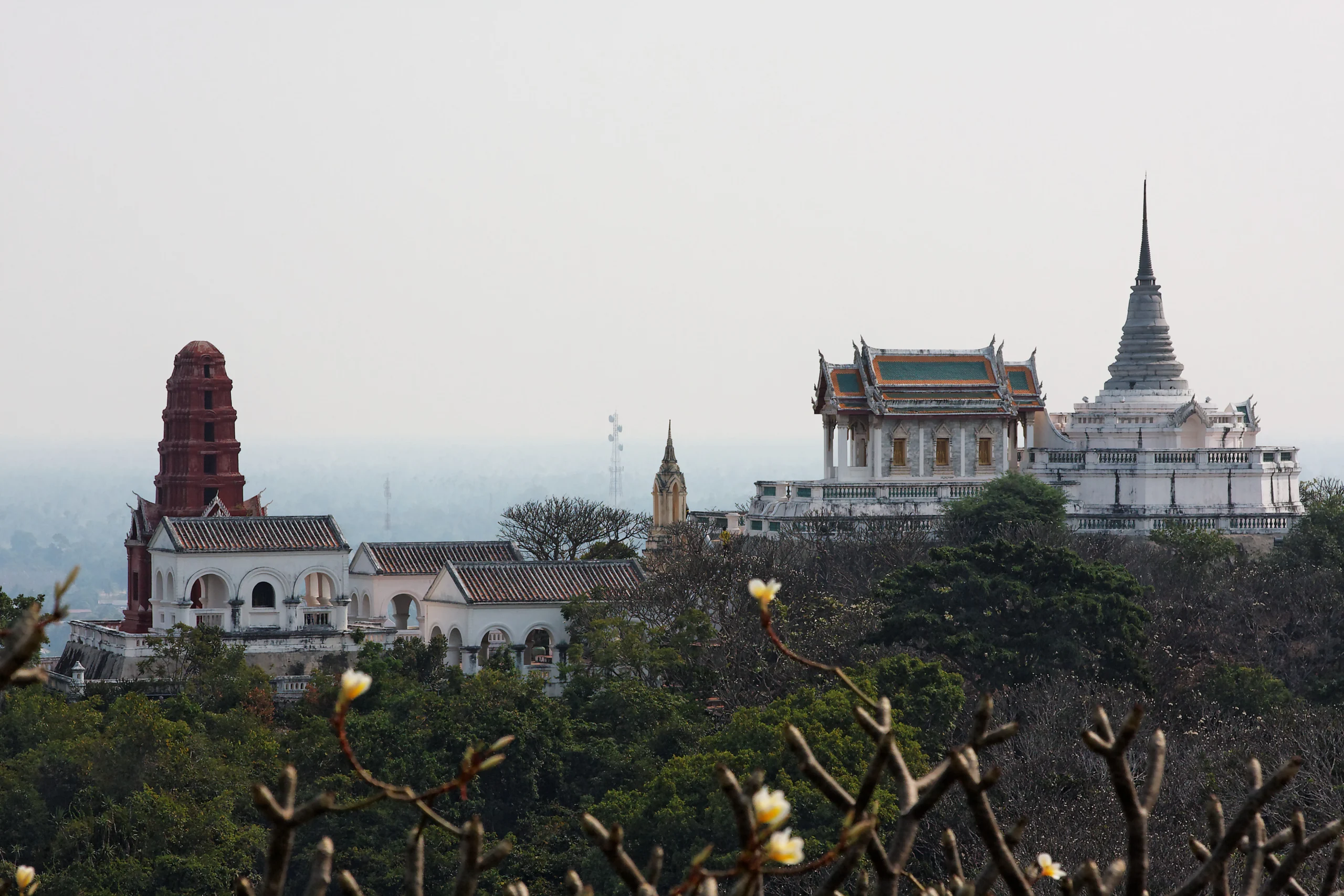
Khao Wang — Palace Hill — looms over the town, and on top sits Phra Nakhon Khiri, the palace-observatory Rama IV built in the 1850s. The king was a serious astronomer, and the white halls, chedis and observatory tower spread across three peaks feel more Mediterranean hill town than Thai. Views run from temple roofs across sugar-palm country to the gulf. Sweat up the stairs or take the cable car on the western side; the foreigner ticket is about ฿150. Go early for the light, and watch the macaques — there are hundreds, they are organised, and they will have your sunglasses before the second landing.
2. Stand in the sunbeam at Tham Khao Luang cave
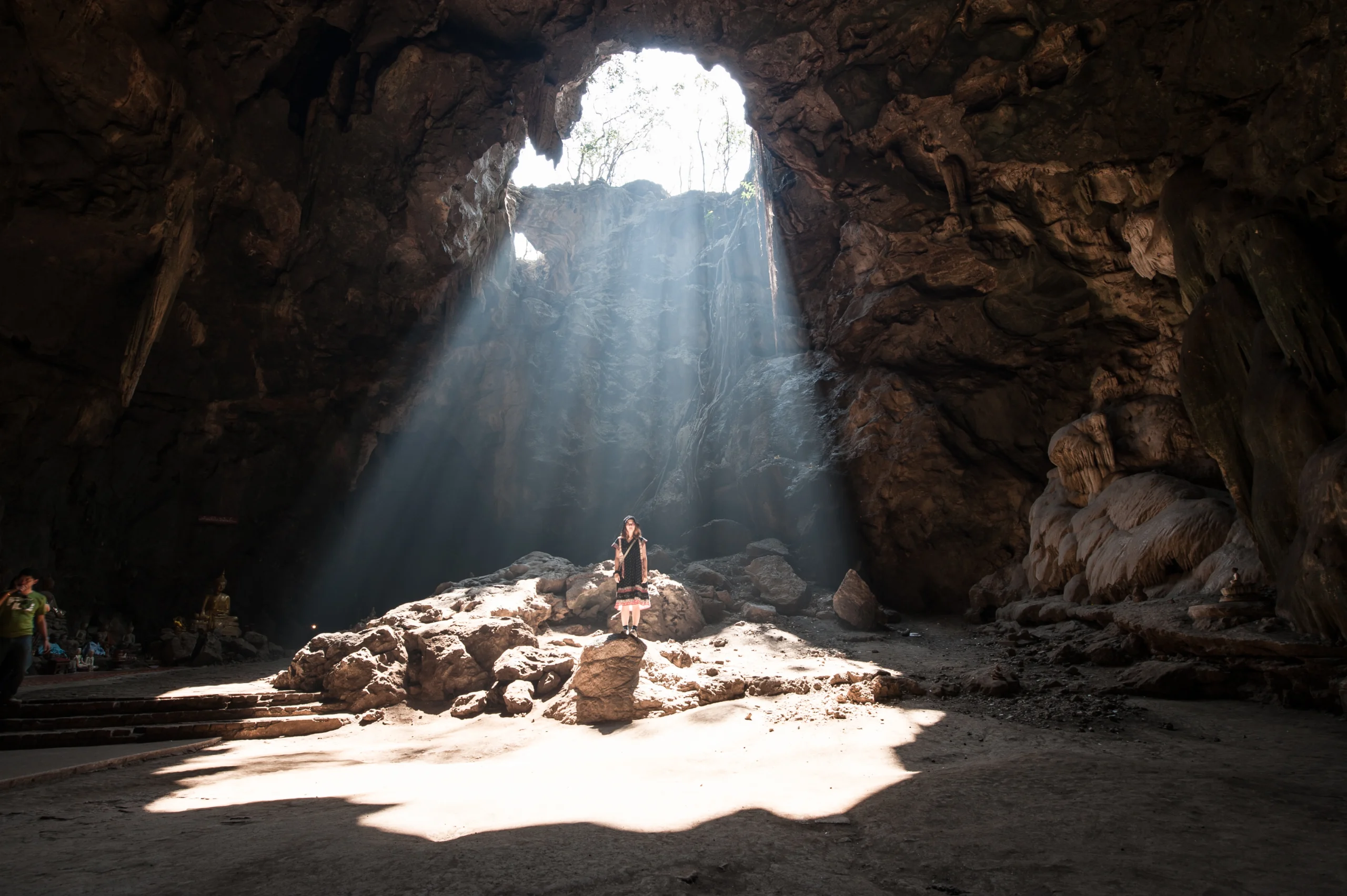
A few kilometres north of town, Tham Khao Luang is the single best cave shrine in Thailand, and it is not close. A steep staircase drops into a vast chamber where a collapsed section of roof acts as a natural skylight, and on a clear late morning a solid column of sunlight falls through the incense smoke onto rows of royally commissioned Buddha images. Photographs make it look staged. It is not. Entry is free with a donation box. Time it between mid-morning and midday and hope for blue sky; the sunbeam is the whole event.
3. Eat your way through a UNESCO City of Gastronomy
Phetchaburi joined the UNESCO Creative Cities Network for gastronomy in 2021, and it got there on custard and palm sugar rather than lobbying. Treat the food as a sight in its own right: the morning market for egg-yolk sweets, the highway shops for mo kaeng, a tub of palm sugar, khao chae in the hot season. Half a day of deliberate eating costs under ฿500.
4. Go into Kaeng Krachan, Thailand’s biggest national park
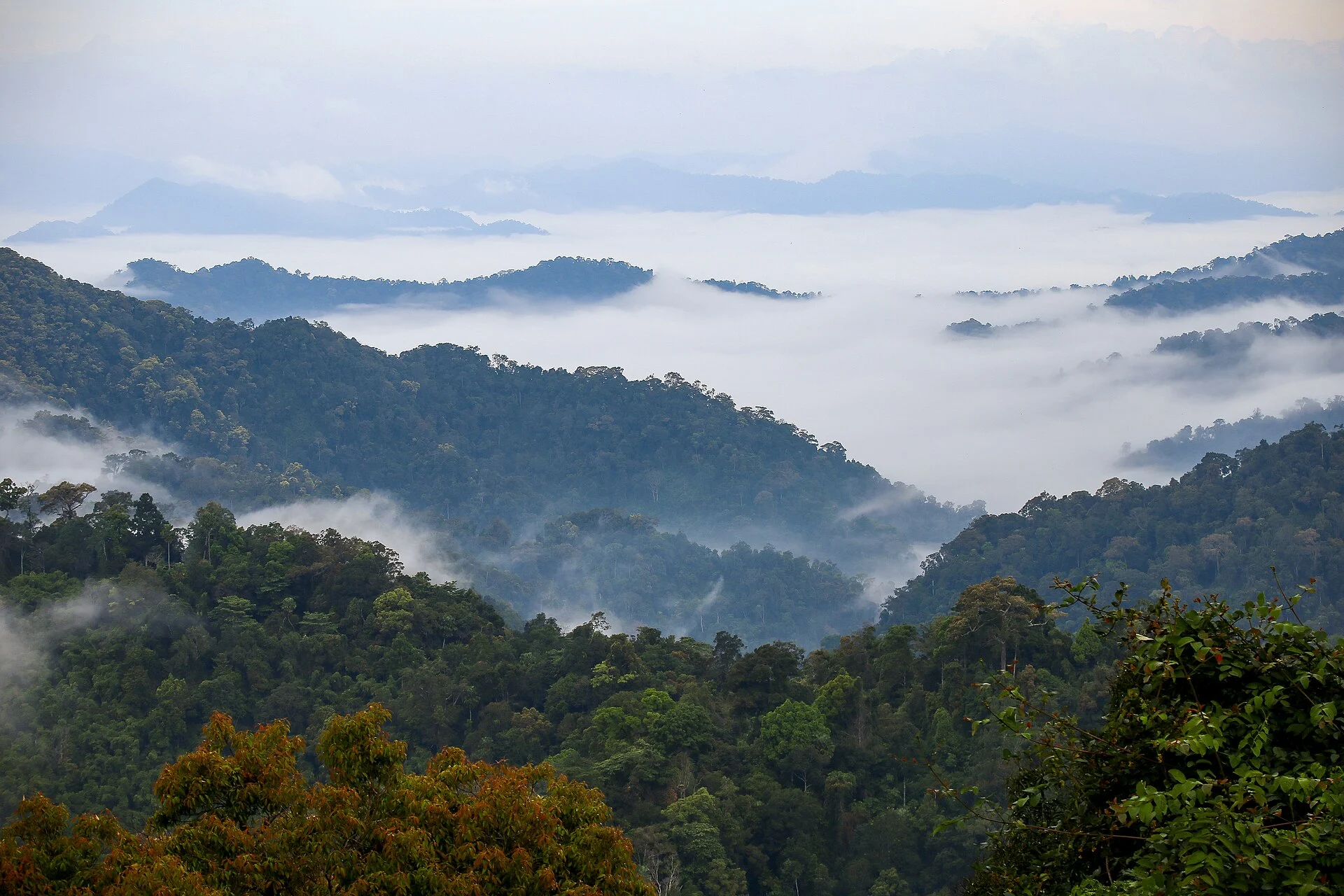
An hour west of town, Kaeng Krachan is the largest national park in Thailand — nearly 3,000 square kilometres of rainforest running to the Myanmar border, part of a forest complex World Heritage-listed in 2021. This is proper wilderness: great hornbills whooshing overhead, gibbons calling at dawn, wild elephants, leopards for the very lucky. The set-piece is Phanoen Thung, where in the cool season you look down at dawn onto a sea of mist filling the valleys. The upper road is 4WD-only — take a park vehicle or tour, not a rented Yaris — and closes roughly August to October. Foreigner entry is about ฿300. You need your own transport, which is precisely why it is still full of animals.
5. See the other two palaces
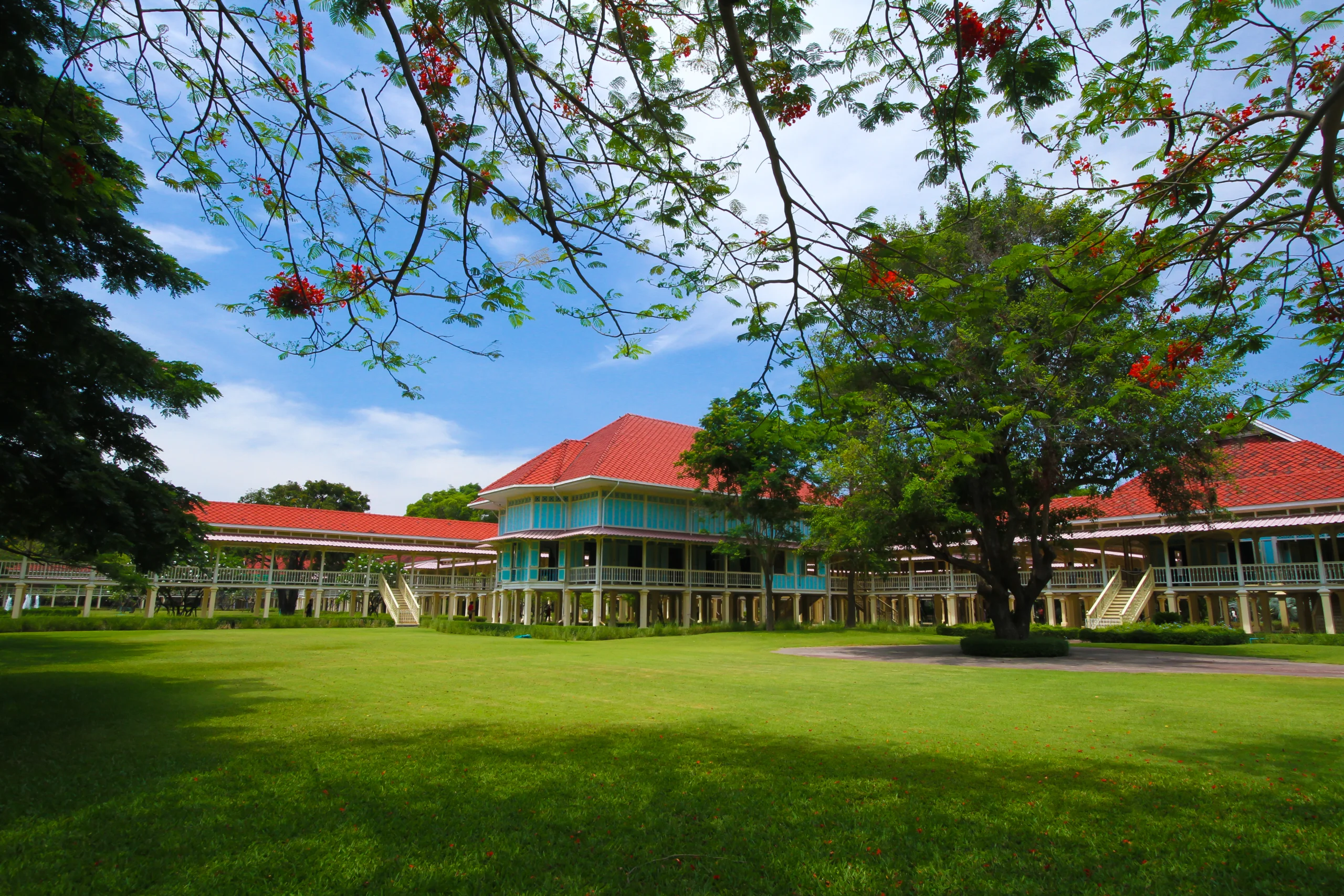
Rama IV’s hill gets the fame, but his son and grandson built here too. Phra Ram Ratchaniwet, inside an army camp on the southern edge of town, is Rama V’s art nouveau fever dream — a German-designed mansion of curved staircases and glazed tiles that would look at home in Baden-Baden, for about ฿50 and usually not another visitor in sight. Down the coast past Cha-am, Mrigadayavan Palace is Rama VI’s 1920s summer residence: long golden-teak pavilions on stilts, open to the sea breeze. Cover knees and shoulders. Both embarrass far more expensive attractions elsewhere.
6. Walk the old town temples
Give the town an unhurried half day. Wat Mahathat Worawihan’s five white prangs anchor the skyline, covered in the stucco work Phetchaburi’s craftsmen are famous for. Wat Yai Suwannaram has an Ayutthaya-era teak hall and murals going back three centuries. Wat Kamphaeng Laeng is the Khmer leftover — twelfth-century laterite towers behind a school fence. All are free or donation-based, and at none of them will you queue.
What to skip
Santorini Park in Cha-am. Someone looked at one of the most photogenic islands in Greece and decided what Thailand needed was a shopping-mall replica of it beside an eight-lane highway — blue domes, windmill, ferris wheel, outlet stores. It exists so people can photograph themselves pretending to be somewhere they are not, in a province stuffed with real things worth photographing. You are twenty minutes from a twelfth-century Khmer temple. Drive past.
Phetchaburi travel: practical info
When to go: November to February is best — cooler air for the hill climb, blue skies for the cave sunbeam, prime sea-of-mist season at Kaeng Krachan. March to May is furnace-hot but is khao chae season, which is a fair trade.
How long: One full day covers Khao Wang, Tham Khao Luang and the food. Two days adds the other palaces and a beach evening at Hat Chao Samran. Three lets you do Kaeng Krachan properly. As a day trip from Hua Hin it works, but you will wish you had stayed the night.
Getting around: The centre is walkable, songthaews and motorbike taxis fill the gaps, and guesthouses can arrange a motorbike for about ฿250-300 a day. Onward, you are 45 minutes from Hua Hin, an hour from Amphawa’s floating market, and on the rail line south to Prachuap Khiri Khan.
Planning the specifics? The Tourism Authority of Thailand’s official Phetchaburi page and its things-to-do list carry current opening hours and cable-car times, and Wikipedia has the historical background.
FAQ
Is Phetchaburi worth visiting?
Yes — arguably the best-value historic town within three hours of Bangkok: royal palaces, a spectacular cave shrine, UNESCO-listed food, almost no crowds. Skip it only if your trip is strictly beaches and nightlife; the town goes quiet by 9pm.
How do I get from Bangkok to Phetchaburi without a car?
Take the southern-line train from Krung Thep Aphiwat (around three hours, from about ฿40 in third class) or a minivan from the Southern Bus Terminal (about two hours, ฿120-180). The train is slower but far more pleasant.
What food is Phetchaburi famous for?
Khanom mo kaeng (baked mung-bean custard), toddy palm sugar, golden egg-yolk palace desserts and khao chae, the chilled hot-season rice dish. The dessert tradition earned the town UNESCO Creative City of Gastronomy status in 2021.
Can I visit Phetchaburi as a day trip from Hua Hin?
Easily — it is 45 minutes to an hour north. Do Khao Wang early, Tham Khao Luang late morning for the sunbeam, then lunch and dessert shopping in town. Kaeng Krachan needs its own day.
When can you see the sea of mist at Phanoen Thung?
At dawn in the cool season, roughly November to February, from the viewpoint in Kaeng Krachan National Park. The 4WD-only access road closes for part of the rainy season, around August to October, so do not plan a mist trip then.