Western · Thailand
Ratchaburi · ราชบุรี
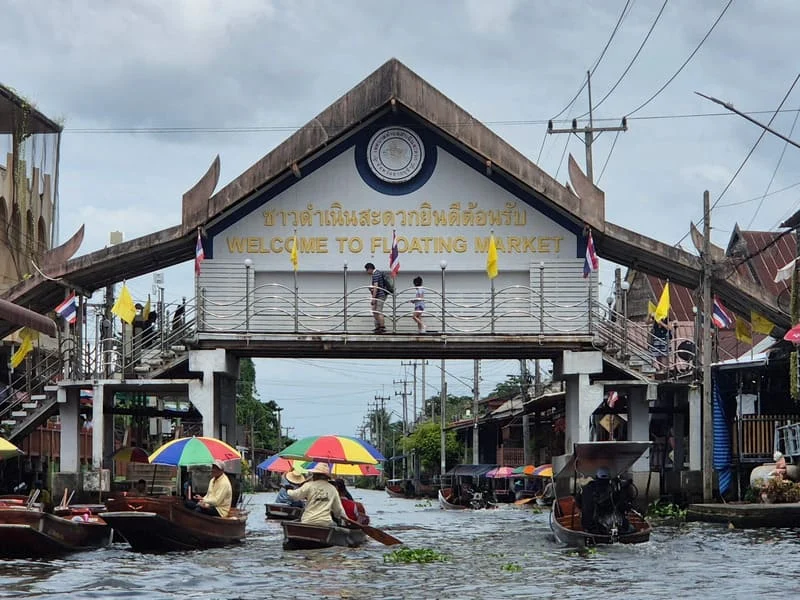
Damnoen Saduak floating market, potter-famous jars, caves and karsts.
- Region
- Western
- Population
- 866,000
- Area
- 5,196 km²
- Stories filed
- 1
About Ratchaburi
History
Ratchaburi has been inhabited since the Dvaravati Mon period, its position on the Mae Klong giving it command of agricultural produce flowing down from Kanchanaburi. Wat Mahathat in the old town preserves a Dvaravati-era chedi capped by a later Ayutthayan prang — the two eras stacked into one tower. The province entered modern consciousness in 1866 when King Rama IV ordered the Damnoen Saduak canal dug between the Mae Klong and Samut Sakhon, creating what became Thailand's most photographed floating market. Its large Teochew-Chinese community gave rise to the Ratchaburi dragon-jar ceramics industry, centred on the Tao Hong Tai factory still in production today.
Landscape & geography
The eastern half is flat central-plain rice country on the Mae Klong delta; the western half climbs the Tenasserim Range toward Myanmar, with Suan Phueng's highland valleys offering hill-tribe villages and natural hot springs. Limestone karst towers punctuate the middle ground at Khao Ngu Stone Park, where sculpted outcrops and painted cave-mouths line a short walking trail.
Why visit
Damnoen Saduak is Thailand's iconic floating market — arrive before 7 a.m. and take a paddled khlong boat rather than a motorised one. Khao Ngu Stone Park's bizarre limestone formations and Khao Bin Cave's resident bat colony make an unusual morning. Suan Phueng's hill-tribe markets and hot springs reward the extra drive west. Wat Khanon's shadow-puppet workshops demonstrate one of Thailand's most delicate folk arts; the town's dragon-jar pottery appears on café shelves from Bangkok to Chiang Mai.
Stories from Ratchaburi
Articles, reviews, and itineraries tagged to this province.