There is a queue at Suvarnabhumi arrivals that I find quietly fascinating. Not immigration — the telecom counters, where people who have just crossed the planet stand for another forty minutes to buy a thing they could have sorted from the sofa a week earlier. Nearly every Thailand SIM card tourist guide promises “easy airport pickup”, and it is easy, mostly. But in 2026 there are three genuinely different ways to get your phone working here, they cost different money, and one of them involves no queue at all. I have walked enough arriving friends through all three to hold firm opinions.
The short version: if your phone supports eSIM, buy one before you fly and land already connected — these days that can even include a Thai phone number. If your phone predates eSIM, the official AIS and True counters in the arrivals hall will sort you in about ten minutes for ฿300–800, passport in hand. Your handset must be unlocked either way. Ignore the unofficial resellers loitering nearby, and ignore your home network’s roaming bundle unless you enjoy paying minibar prices for maps.
Thailand SIM card options for tourists: the three real routes
Route one: an eSIM installed before you fly. This is what I set up for anyone whose phone was made after about 2020. You buy online, scan a QR code at home while you still have decent wifi, and data switches on the moment the wheels touch the runway. That matters more than it used to, because Thailand now front-loads its admin: your digital arrival card wants filing before you land, and the first thing you will do after customs is summon a Grab. We partner with Simbye — links to them earn this site a commission, so read the recommendation knowing the arrangement — and the reason is specific: alongside the usual data-only plans, Simbye sells a Thailand eSIM with a real +66 number, calls and SMS included, on the TrueMove H network. That is the one thing that used to send eSIM people to the counter queue anyway. Readers get 15% off any plan with the code DESTTHAI15. If you only need data, take the cheaper data-only plan: your WhatsApp number stays your WhatsApp number, and hotels stopped phoning people years ago.
Route two: the airport counter. A physical tourist SIM with a Thai phone number, sold by staff who handle the registration for you. The right call if your phone predates eSIM, if you want a local number for delivery apps and restaurant bookings, or if you simply want a human to make it all work while you watch.
Route three: a 7-Eleven or phone shop in town. Cheapest of the lot, and how Thais actually buy SIMs — but you will be doing passport registration at a till where the English sometimes runs out before the paperwork does. Fine for repeat visitors who know the packages; a faff on day one with jet lag. (There is technically a fourth route, roaming on your home plan, but I assume you like money.)
Consider this guide the umbrella over the whole business — plastic, digital, and the rules around both.
Buying a tourist SIM card at a Thailand airport counter
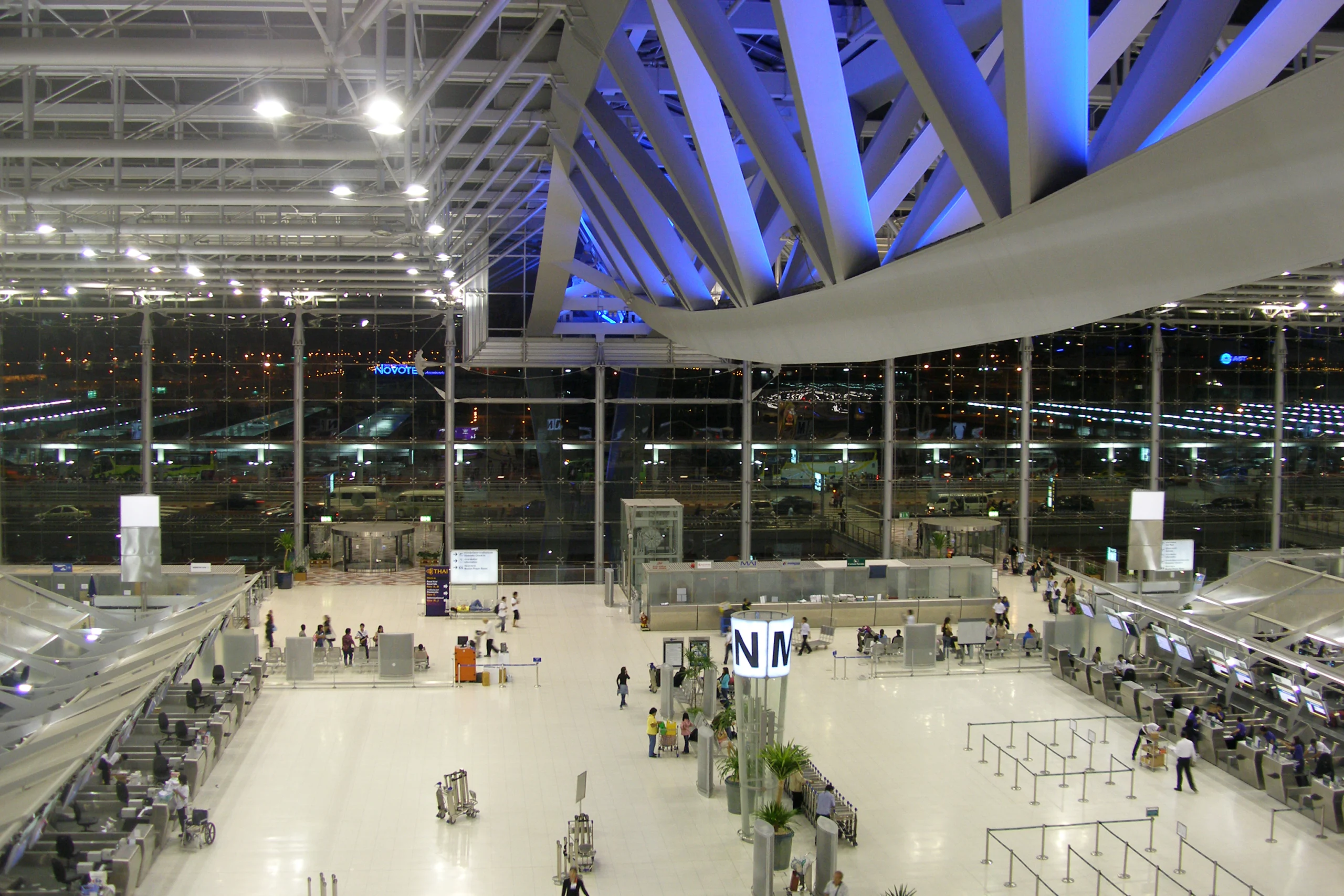
At Suvarnabhumi the AIS and True counters sit in the arrivals hall and run 24 hours — you cannot miss them, because they are the ones with proper branding and proper queues. Don Mueang, Phuket and Chiang Mai have their own counters in arrivals, though hours there track the flight schedule. The process: hand over your passport, pick a package, let the staff photograph the passport and your face, and walk off connected, usually inside ten minutes. In high season — December through January, when everyone arrives at once — budget half an hour and tell your hotel pickup to expect you late.
Numbers, as of August 2026: AIS’s 8-day tourist package runs about ฿449, and its tourist range stretches from ฿399 to ฿1,699 depending on days and data. True’s tourist packs start around ฿349 for 10 days and ฿699 for 15, topping out near ฿1,199 for 30-day unlimited. Broadly, airport tourist SIMs sit in the ฿299–799 band. Promotions shuffle these figures monthly, so treat them as the shape of the market rather than gospel — the counter boards have today’s truth, and the official AIS tourist page lists current packs if you like your numbers confirmed before you fly. Most people overbuy data, incidentally: Thai packages are generous, hotel wifi exists, and the enormous allowance you agonised over will mostly die unused.
One warning in bold, because it keeps happening: buy only from the official carrier counters. The independent kiosks between them sell the same SIMs at three or four times the price to people too jet-lagged to notice. If the signage does not say AIS or True in large letters, keep walking.

Thailand SIM card registration rules for tourists in 2026
Thailand takes SIM registration seriously now, part of the same anti-scam tightening we track in our 2026 travel rules guide. Every SIM sold in the kingdom must be registered against identity — for you, a passport, photographed by the seller and uploaded to the telecom regulator’s database. The NBTC has also capped foreigners at three SIMs per operator — the number as of August 2026 — a rule aimed squarely at the scam-centre industry on the borders rather than at anyone reading this. The practical upshot: there is no legal anonymous SIM in Thailand, and the market-stall vendor offering one that “needs no passport” is selling you someone else’s problem.
Tourist packages are also built strictly for short stays — expect a validity ceiling of around 60 days, without extension options. Staying longer, on a DTV or another long-stay visa? Skip the tourist pack entirely and register an ordinary prepaid SIM instead, which tops up indefinitely and costs less per month anyway.
Carrier eSIMs get the same scrutiny, just digitally: buy an AIS or True eSIM online and you will complete eKYC before activation — a photo of your passport data page plus a selfie, squinting into your front camera at midnight. It works, but it is precisely the admin you were trying to dodge. A travel eSIM from an international provider sidesteps Thai registration entirely, because you are not buying from a Thai operator — which is, frankly, most of its appeal.
Thailand tourist SIM card prices: eSIM vs physical, honestly compared
Here is the comparison with the marketing stripped out, at August 2026 prices:
| Option | Typical cost | Thai number | Set-up |
|---|---|---|---|
| AIS tourist SIM (airport counter) | ~฿449 for 8 days | Yes | Passport and queue, ~10 minutes |
| True tourist SIM (airport counter) | ~฿349 for 10 days; ~฿699 for 15 | Yes | Passport and queue, ~10 minutes |
| AIS tourist eSIM (online) | ฿399–1,699 for 5–30 days | Yes | eKYC: passport photo plus selfie |
| Simbye travel eSIM | data from about $2 (1GB, 7 days); unlimited from about $20 for 7 days (October 2026) | Optional — the +66 plan adds a Thai number, calls and SMS | QR scan at home; 15% off with code DESTTHAI15 |
| Home-network roaming | a small mortgage | Your own | None, which is its sole virtue |
The verdict cuts both ways, which is exactly why you can trust it. On raw baht per gigabyte, the physical AIS or True SIM from the counter wins, full stop — Thai carriers sell data absurdly cheaply by European standards, and a local number comes free. Where Simbye wins is everything around the data: you are online before immigration, there is no counter queue and no passport handover, small packs fit a five-day trip better than an 8-day bundle does, and the +66 plan means wanting a Thai number no longer sends you to the counter. Know the fine print on any “unlimited” plan, theirs included: Simbye’s +66 plan runs 50GB at full speed, then drops to 1 Mbps — ample for maps, uploads and video calls, wrong for torrenting your way around the Gulf. So: short trip, modern phone — eSIM before you fly, with the +66 plan if you want a local number. Older phone, long stay or heavy data — airport counter. That is the entire decision, and neither answer is wrong.
Using your Thailand tourist SIM: top-ups, tethering and island coverage
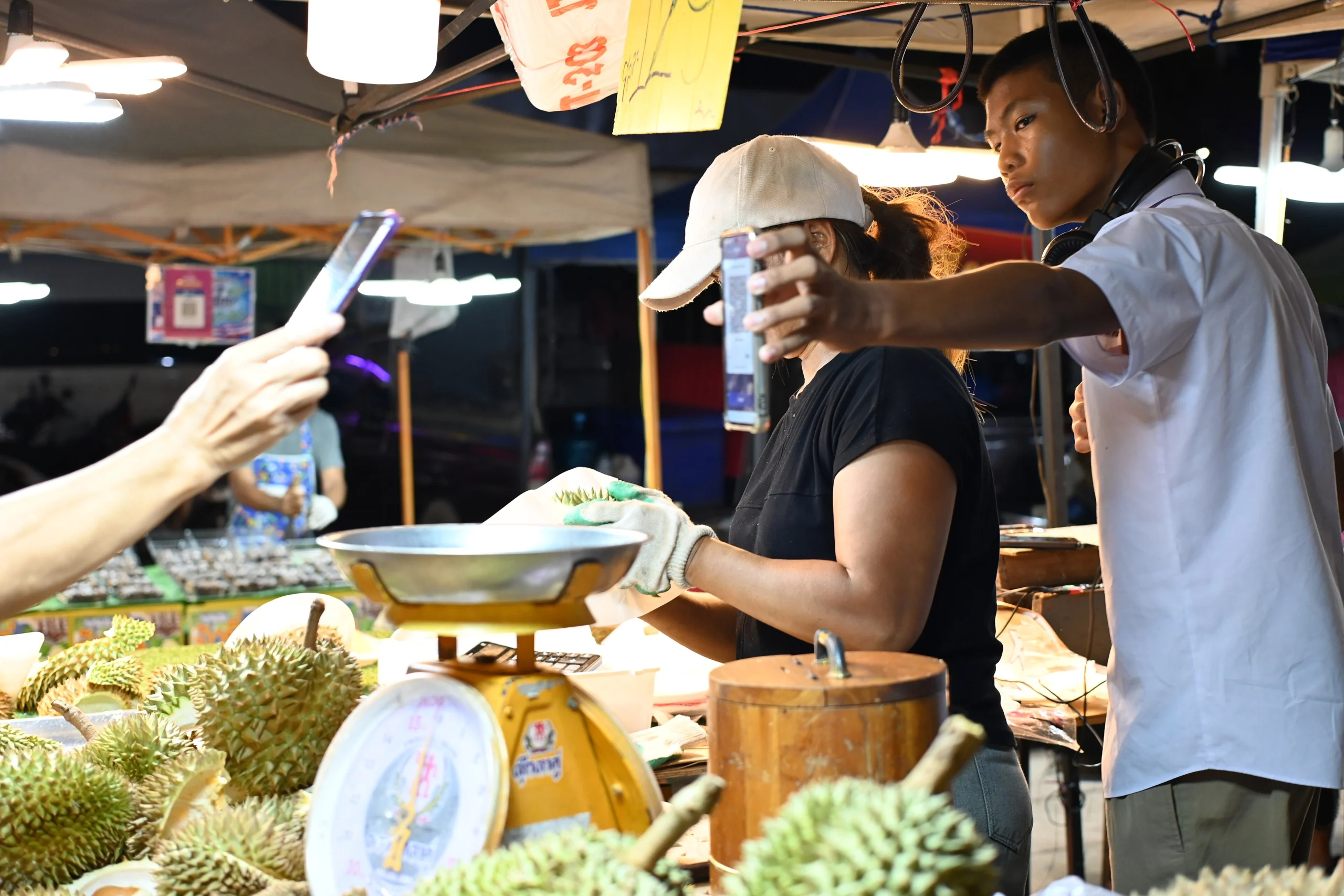
Top-ups happen at any 7-Eleven — quote your number at the till, hand over cash, done — or inside the myAIS and True apps, both of which speak English. Given 7-Eleven’s density in this country, you are never more than a short walk from more data anywhere urban.
If you went the eSIM route and land to silence, check one setting before you panic: travel eSIMs usually need Data Roaming switched on for that line. It feels wrong, costs nothing extra, and fixes the problem nine times out of ten.
Coverage will embarrass your network back home. Bangkok and the big tourist towns run quick 5G; the ferries and major islands hold solid 4G, so you can stream on a longtail if you must. Between dives on Koh Tao your uploads will move faster than they do in most of Europe. You will lose signal deep in the national parks, as you should. Tethering is allowed on carrier SIMs and travel eSIMs alike, so hotspotting a laptop in a beach café is standard practice, fair-use caps permitting.
Last one, learned the hard way by other people: keep your home SIM active on dual-SIM, data off, calls on. Bank OTPs still go to that number, and every season someone gets locked out of their own bank because the verification text went to a SIM in a drawer back home.
Sorted before you fly: Simbye’s Thailand eSIM — data from about $2, or unlimited with a Thai +66 number; code DESTTHAI15 takes 15% off.
Some links in this guide earn us a small commission at no extra cost to you — it is how the site stays independent. Full disclosure.
Thailand tourist SIM card FAQ
Should I get an eSIM or a physical SIM card for Thailand?
An eSIM, if your phone supports one and you mainly need data: it is instant, there is no queue and no Thai paperwork. Choose a physical SIM if your handset is older or you are staying past the roughly 60-day tourist-pack ceiling. Want a Thai phone number on a modern phone? An eSIM with a +66 number, such as Simbye’s, now covers that too.
Do I need my passport to buy a SIM card in Thailand?
Yes. Registration against your passport is required by law for every SIM sold in Thailand — airport, phone shop or 7-Eleven — and carrier eSIMs require the digital version, a passport photo plus a selfie. An international travel eSIM installed before you fly is the one route with no Thai registration at all.
How much does a tourist SIM card cost in Thailand in 2026?
Roughly ฿300–800 at the official airport counters: AIS around ฿449 for 8 days, True from about ฿349 for 10 days, and near ฿1,199 for 30-day unlimited. Prices move with promotions, so read the counter board — and never buy from the unofficial resellers between the counters.
Is there mobile coverage on the Thai islands?
Yes — Phuket, Samui, Phangan, Tao, Chang and the Krabi coast all carry fast 4G and increasingly 5G, and the main ferry routes mostly hold signal. It thins out in national parks and the emptiest bays. Download offline maps before a national-park day, whichever SIM you carry.
Can I use my Thai SIM as a hotspot?
Yes. Tethering is standard on Thai carrier SIMs and permitted on travel eSIMs, Simbye included. “Unlimited” plans always carry a fair-use cap — Simbye’s +66 plan gives 50GB at full speed, then 1 Mbps — fine for laptop work and streaming, wrong for downloading a game library.