Chiang Mai has three-hundred-odd temples and, on a bad night, one tuk-tuk driver who knows where your hotel is. It’s not a big city — you can walk across the Old City in twenty minutes — but the neighbourhood you pick shapes the trip more than the hotel does. Sleep inside the moat and you’re in temple-bell territory. Sleep in Nimman and you’re in flat-white territory. Sleep on the river and you’ll barely notice either exists.
This guide carves the city into its five real areas (plus the mountain escape), matches them to how you actually travel, and ends with the hotels we’d book — from ฿400 dorm beds to the full Four Seasons production. Still deciding whether Chiang Mai makes the itinerary at all? Start with our Chiang Mai province profile.
How Chiang Mai is laid out
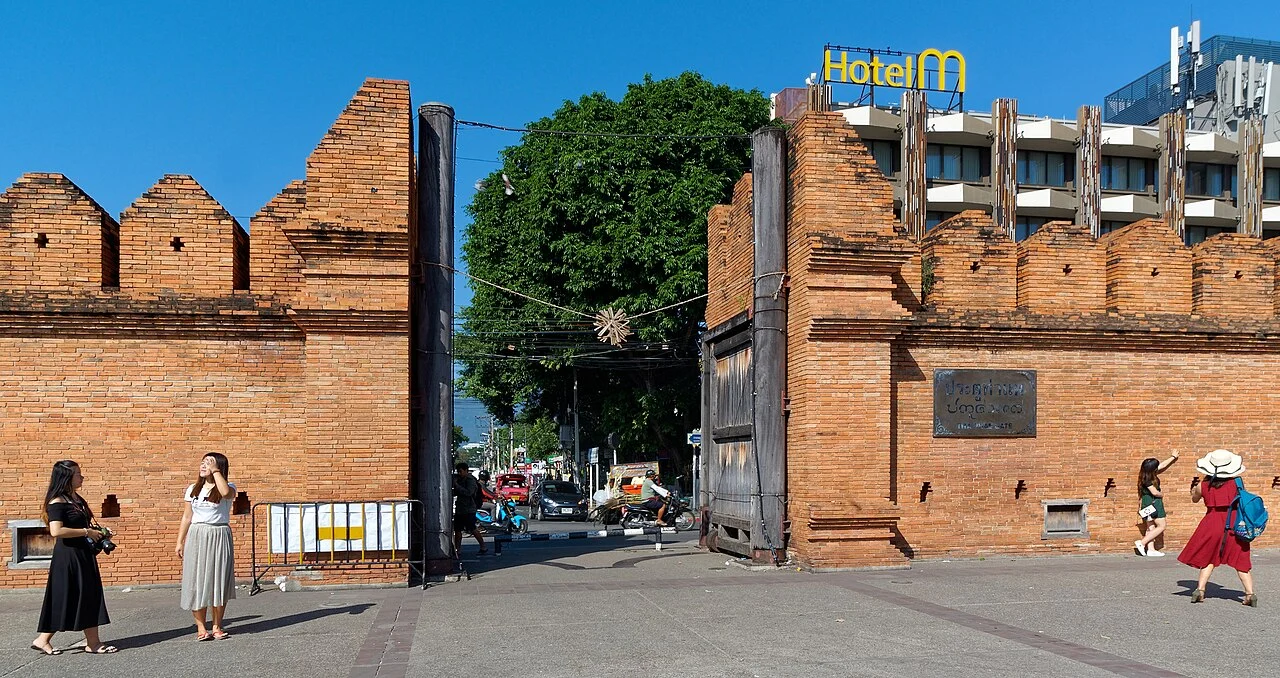
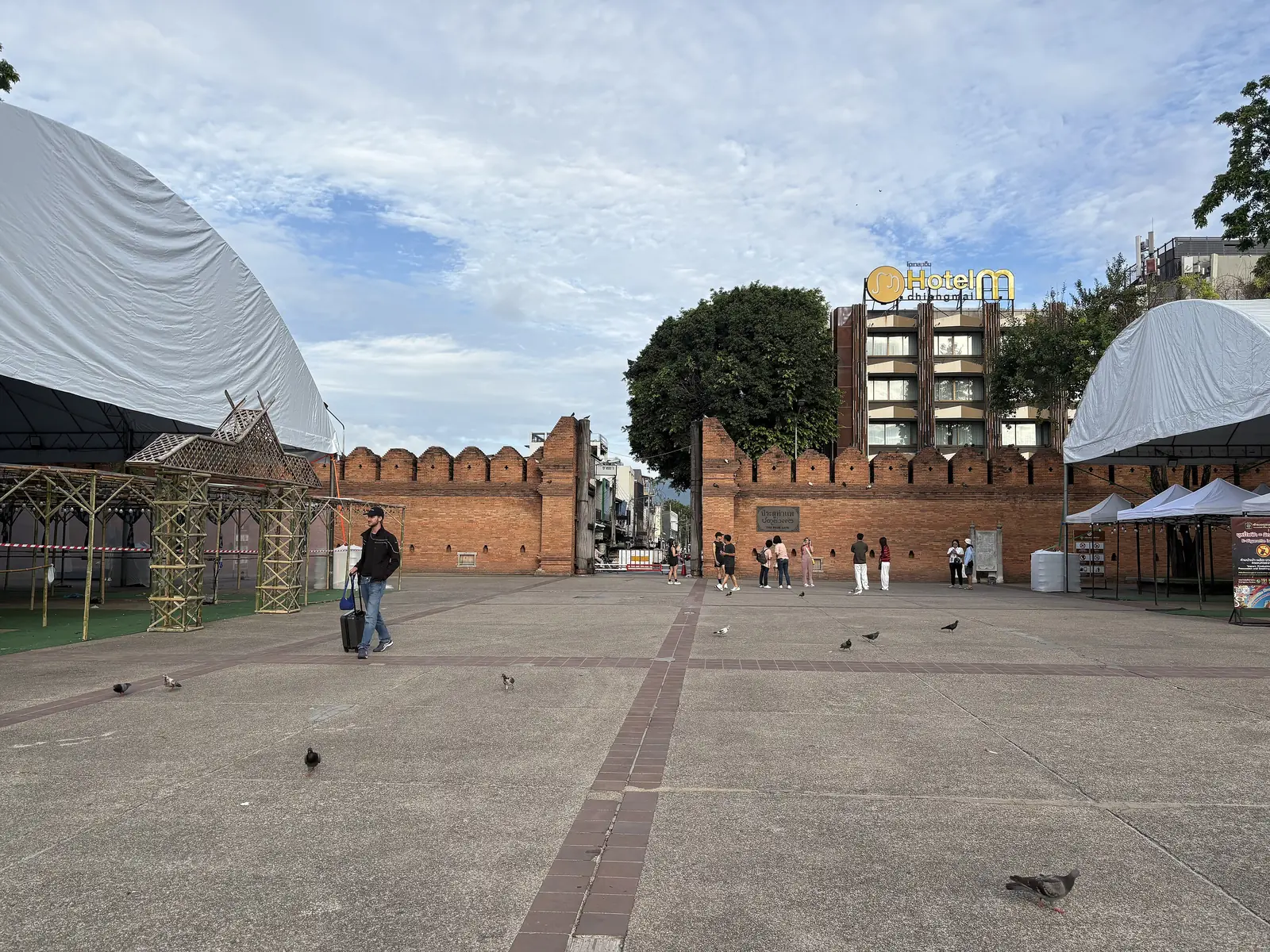
The mental map is a square. The Old City sits inside a moat roughly 1.5 kilometres a side, with Tha Phae Gate on the east wall as kilometre zero for visitors. West of the square, past the university, is Nimmanhaemin — Nimman to everyone — the café-and-condo district where the laptops live. East of the square the land slopes through the Night Bazaar strip down to the Ping River and Wat Ket, the old teak-merchant quarter that supplies most of the city’s riverside romance. North of the moat, Santitham is the low-rise local neighbourhood that does Nimman’s life at two-thirds of Nimman’s prices. And half an hour north of everything, the Mae Rim valley is where the resort estates hide behind rice paddies.
Doi Suthep, the temple-topped mountain, hangs over the west side of town — if your room faces anything worth facing, it’s that. Distances are small: Old City to Nimman is a ฿70–120 Grab ride. But Chiang Mai traffic at 5pm can make three kilometres feel like an achievement, so pick your area for the life you want on foot.
Where to stay in Chiang Mai by traveller type
First-timers: the Old City
Book inside the moat, ideally the quieter western half near Wat Phra Singh. You get temples before breakfast, khao soi at lunchtime, a massage shop every fifty metres, and the Sunday Walking Street on your doorstep — our Chiang Mai breakfast guide is essentially a walking tour of this square. The trade-offs: the east side around Tha Phae Gate and Loi Kroh runs louder and more touristy, guesthouse rooms in old teak buildings can be charming-but-creaky, and nothing inside the moat has a view. You’re here for the streets, not the skyline.
Digital nomads: Nimman, then Santitham
Nimman is the reason Chiang Mai keeps topping remote-work rankings: coworking spaces, serious coffee, One Nimman’s boutiques and a food scene that runs from ฿60 noodles to natural wine. It is also a construction site with good lighting — room rates are the city’s highest, the main road is a traffic sluice, and the soi you pick matters more than the hotel. If the prices annoy you, Santitham next door does the same life cheaper with more Thai and less English. A month here explains why so many people never leave.
Couples: Riverside and Wat Ket
The Ping River is where Chiang Mai goes quiet. The Wat Ket bank keeps its teak trading houses, riverside dinner decks and a string of boutique hotels built into old compounds — romance with history rather than rose petals. You’ll taxi to the temples, but it’s ten minutes and it buys you the only part of central Chiang Mai where the view from the room is part of the point.
Families: the Night Bazaar strip
The blocks between the moat and the river are big-hotel territory: proper pools, family rooms, lifts, and driveways a minibus can actually pull into — none of which the Old City’s lanes can offer. The Night Bazaar itself is an evening’s entertainment on the doorstep, and you’re walkable to both the river and Tha Phae Gate. The trade-off is charm: this is the least lovely walking in central Chiang Mai, all traffic and tour agencies, and you’ll use Grab more than you planned.
Budget: Old City lanes and Santitham
Chiang Mai is one of the cheapest places in Asia to sleep well. Dorm beds inside the moat run ฿300–450, decent private rooms start under ฿1,000, and the standard is high because the competition is brutal. Party hostels cluster around the Ratvithi Road bar strip — Zoe in Yellow, you’ll hear it before you see it — while the quiet ones sit south near Chiang Mai Gate. Santitham is the graduate option: apartment-style rooms at long-stay prices. Calibrate all of it against our Thailand Price Index before you overpay for a songthaew, a smoothie or anything else.
Luxury: the river, or the Mae Rim valley
Chiang Mai luxury splits in two. In town it lives on the river: colonial-teak heritage suites, lawns down to the water, gin at sunset. Out of town it lives in Mae Rim, where the resort estates sit in rice paddies with mountain views and monastic calm — at the price of a half-hour drive every time the city calls. Decide whether the resort is the holiday or the base for it; that one decision picks your property for you. For what each of these actually costs across the seasons — all-in, ++ tax included — see our Thailand luxury hotel price guide.
The hotels we’d actually shortlist
Rough cool-season (November–February) “from” rates — the rest of the year knocks 30–40% off. Hotel links go to Agoda; they’re affiliate links (same price for you, a small commission keeps this site independent).
Old City: Stamps Backpackers (from around ฿400 for a dorm bed) is the sociable-but-sane hostel pick — you’ll make friends without joining a stag do. Tamarind Village (from around ฿4,500) hides Lanna courtyards behind a bamboo-tunnel entrance mid-moat — the classic Old City address. The Inside House (from around ฿9,000) is the square’s genuine splurge: Sino-colonial suites with private plunge pools in Wat Phra Singh’s shadow.
Nimman: Kantary Hills (from around ฿2,500) is serviced-apartment sanity — big desks, kitchenettes, half of it seemingly booked by returning nomads. U Nimman (from around ฿3,500) is the polished option on the One Nimman corner, rooftop pool included. (Hunting for Akyra Manor? It now trades as AMANOR Hotel — same corner, new sign.)
Riverside: Na Nirand (from around ฿5,500) does teak, frangipani and a giant old rain tree on the bank — the honeymoon one. Anantara Chiang Mai (from around ฿9,000) is the serene design resort — lawns, dark timber, a spa that means it. 137 Pillars House (from around ฿14,000) is the restored 19th-century Borneo Company homestead: verandah suites and colonial theatre done properly.
Night Bazaar: Shangri-La Chiang Mai (from around ฿4,000) is a full five-star machine — huge pool, kids’ club, breakfast the length of a runway — at what this city charges for four stars. Families, start here.
The escape: Raya Heritage (from around ฿12,000) sits upriver fifteen minutes north of town — handwoven, hand-thrown, quietly spectacular craft-luxury. Four Seasons Resort Chiang Mai (from around ฿25,000) is the Mae Rim rice-terrace stage set from every luxury-travel feature you’ve ever scrolled past. Yes, it looks like that. No, you won’t want to leave, which is rather the point of Mae Rim.
Honest warnings before you book
Burning season is real. From roughly February to April, crop-stubble fires across the north fill the valley with smoke — March is reliably the worst, the mountain disappears, and air quality hits numbers that make Bangkok look alpine. This should change when you book, not just what you pack: November to January is the sweet spot, early February is a gamble, March is a no unless you have no choice. If you must come then, book somewhere with sealed air-conditioned rooms and don’t build the trip around viewpoints you may never see.
Sunday Walking Street eats its own neighbourhood. From about 4pm every Sunday, Ratchadamnoen Road becomes a slow river of people the full width of the Old City. Wonderful market; terrible doorstep. If your hotel sits on it, taxis can’t reach you and “popping back to the room” becomes an expedition. Stay a lane or two off the route and you get the market without living in it.
There’s no metro, and that’s fine. You’ll move by red songthaew (shared pick-up trucks, ฿30–50 a hop — state your destination before you get in), by Grab or Bolt (cheap, reliable, surge in rain), or by rented scooter if you’re licensed and honest with yourself about your skills. The moat roads are one-way, so your driver looping away from your hotel isn’t cheating you; the city is just built that way.
Noise chooses differently in each area. Old City noise is roosters, temple bells and — around the Ratvithi bar cluster — bass until the small hours; check the map before booking the north-central lanes. Nimman noise is traffic and construction, and it starts earlier than you do. A quiet room at the back beats a view almost everywhere in this city; ask for one.
Chiang Mai stays: your questions, answered
Is it better to stay in the Old City or Nimman?
First trip: Old City — the temples, markets and food you came for are all on foot. Working remotely or staying longer than a week: Nimman, for the cafés and coworking. They’re a ten-minute, ฿100-ish Grab ride apart, so you’re choosing a daily rhythm rather than locking a door. Plenty of people split a longer stay and do both.
How many nights do you need in Chiang Mai?
Three nights covers the Old City, Doi Suthep and a proper market evening without sprinting. Four or five adds a cooking class, an ethical elephant sanctuary and a Mae Rim day. Digital nomads should think in months, not nights — that’s the ecosystem here, and monthly rates drop sharply.
When is burning season, and should you avoid it?
Roughly February to April, with March dependably the worst month. If your dates are flexible, don’t book it — November to January gives you cool air, clear skies and the city at its best. If your dates aren’t flexible, come anyway but manage expectations: air purifiers, pool time, food, massages — and skip the viewpoints.
Do you need to rent a scooter?
No. Grab, Bolt and songthaews cover the city for pocket change, and most of what you came for sits within the moat anyway. A scooter earns its keep for Doi Suthep, Mae Rim and the Samoeng loop — but only ride if you hold a proper licence and your travel insurance agrees, because Thai roads are unforgiving practice space.
Where should you stay for Yi Peng, the lantern festival?
Inside the moat or on the river near Nawarat Bridge — the releases and processions happen around both. The catch: the city books out weeks ahead and prices climb steeply, so reserve as early as you can. Dates, release sites and the paid-event question are all covered in our Yi Peng 2026 guide.
Related guides
- Bangkok to Chiang Mai: Every Way to Make the Journey
- Chiang Mai Breakfast: What Locals Actually Eat
- Yi Peng in Chiang Mai 2026: The Lantern Festival, Honestly
Book the trip
Some links in this guide are affiliate links. If you book through them we may earn a small commission at no extra cost to you — it helps keep Destination Thailand independent.
Hotels: once you’ve picked your neighbourhood, see what’s actually available for your dates — compare Chiang Mai hotels on Agoda and filter by Old City, Nimman or Riverside rather than searching the whole city.
Tours: Doi Suthep at sunrise, cooking classes, ethical elephant sanctuaries — browse Chiang Mai tours on GetYourGuide and read the recent reviews before you commit.
Getting there: the overnight sleeper from Bangkok is still one of Thailand’s great journeys — we compare it with flights and buses in our Bangkok to Chiang Mai guide, and you can book trains, buses and flights on 12Go.
Not sure Chiang Mai is your Thailand at all? Our Where to Go in Thailand matcher scores all 77 provinces against your month, your crowd tolerance and what you actually want from the trip — honest ratings included.