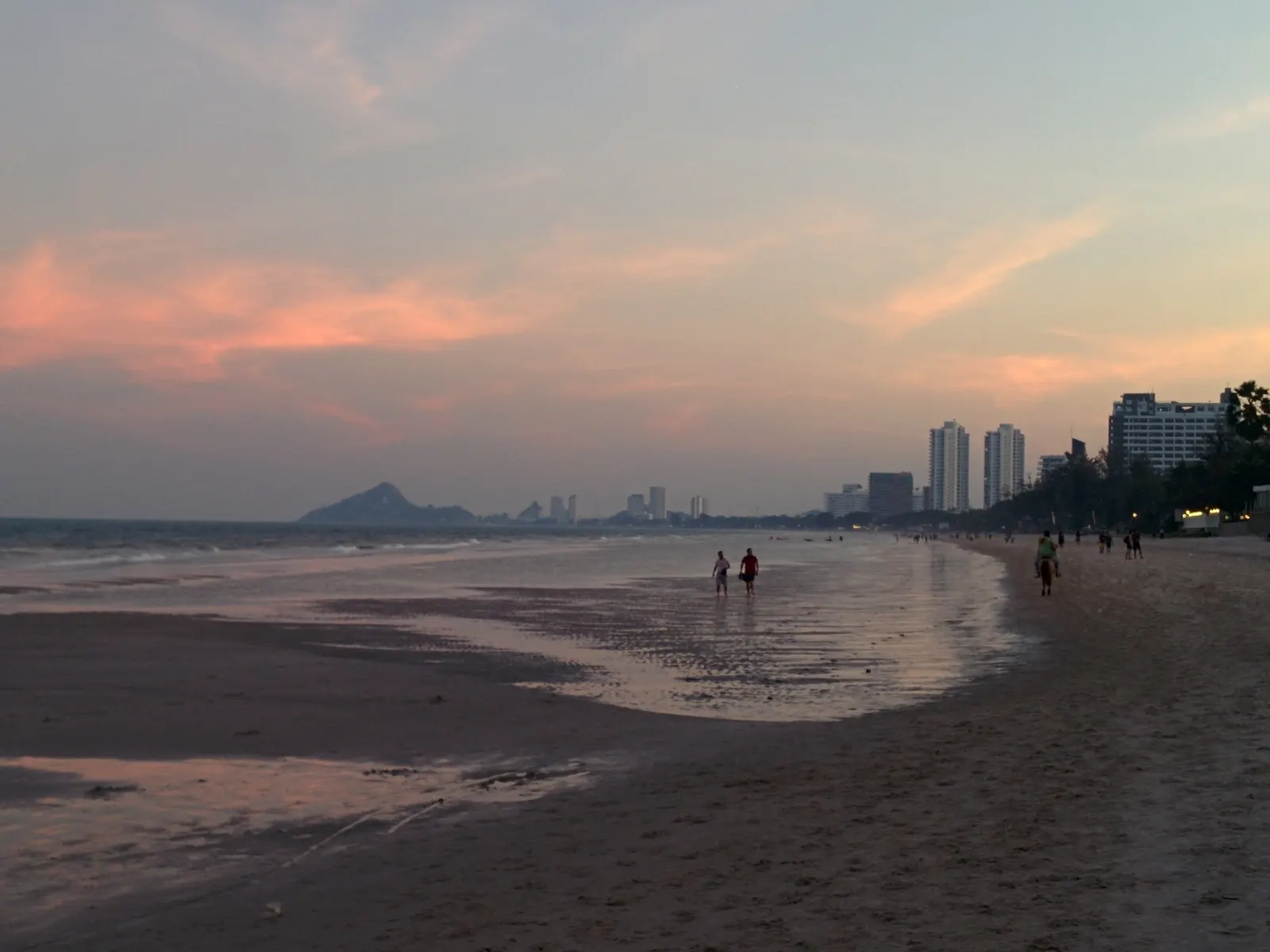
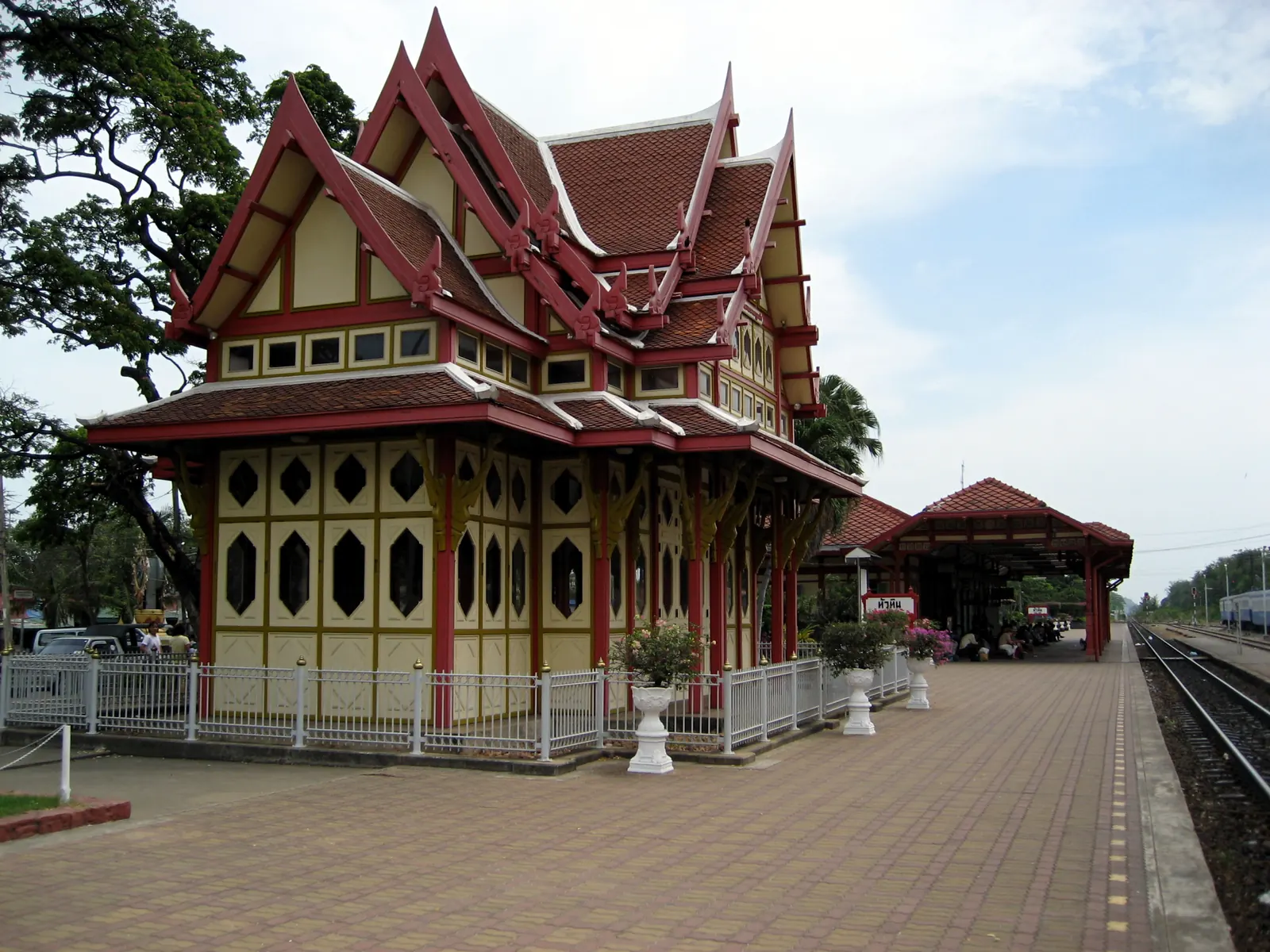
Hua Hin is where Bangkok goes when Bangkok wants a beach by lunchtime. Two and a half hours down the Phetkasem road, the capital’s oldest resort town has a royal palace, a railway station that looks like a temple, a five-kilometre beach that a king decided was the right one a century ago, and — this is the part the brochures skip — a tide table that turns that beach into a horse-ride strip twice a day. It is also a genuine town, with a night market, a fishing pier and ten thousand retirees who chose it over every island in the country. The place rewards staying in the right stretch of it and punishes the wrong one with a taxi meter.
This guide splits the coast into its five real areas, matches them to how you actually travel, and ends with the hotels we’d book — from a ฿1,200 double in the old town to the wellness resort that costs more per night than a flight to Europe. Still weighing Hua Hin against the islands? Start with our Prachuap Khiri Khan province profile or the two-day Hua Hin weekend.
How Hua Hin is laid out
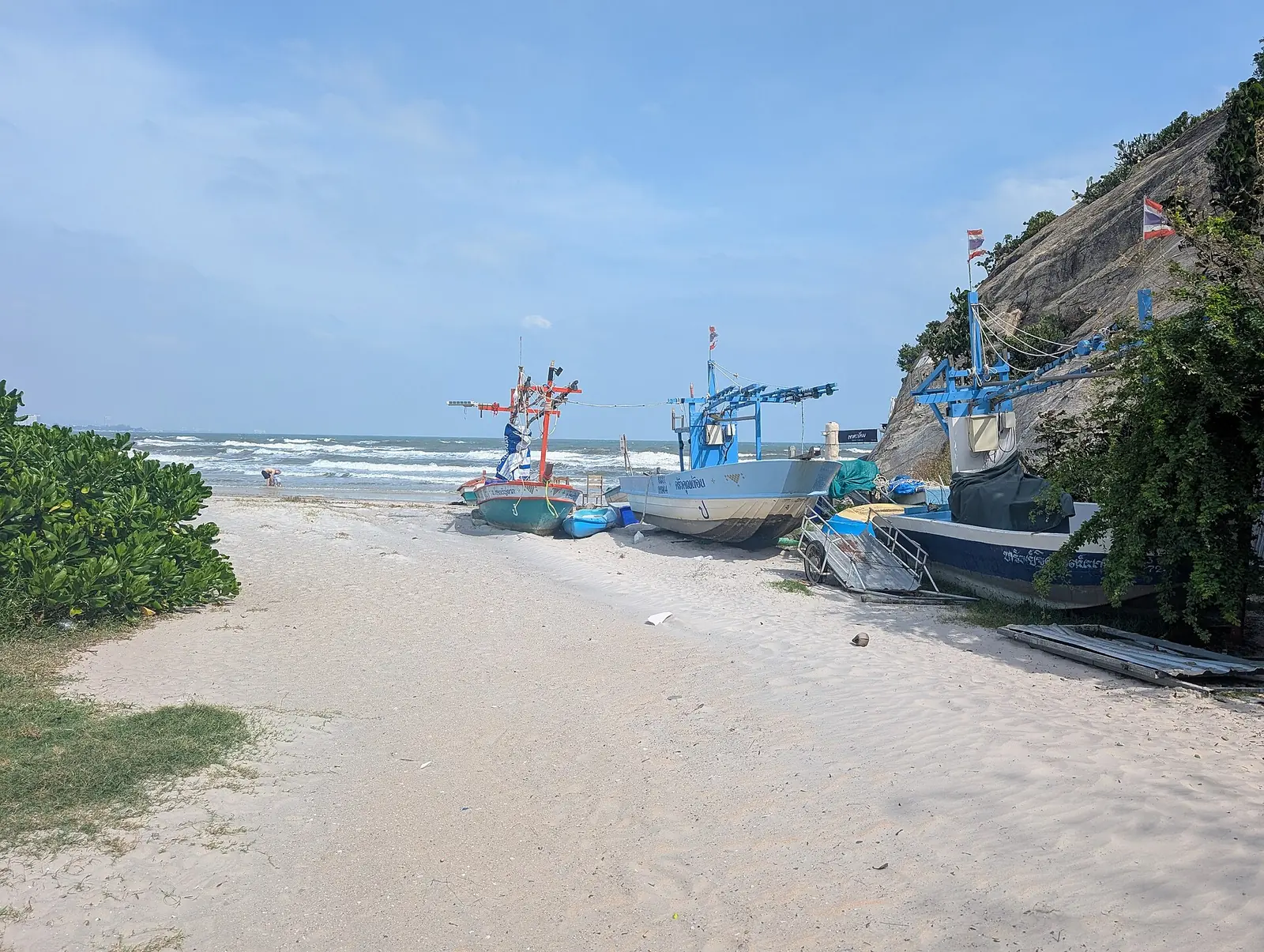
Hua Hin town and the main beach is the centre: the railway station, the night market on Dechanuchit, the fishing pier, the Hilton tower as the landmark, and the beach access lanes between the old fishermen’s houses on Naresdamri Road. Everything is walkable and so are the crowds. The northern beach — the Soi 51 to Soi 19 stretch towards the Klai Kangwon palace — is quieter, the sand is wider, and the boutique hotels are here. Khao Takiab, five kilometres south, is the swimmable end: a calmer bay under the monkey-temple headland, the Cicada weekend market, Bluport mall, and the big-brand resorts lined up along the way. Cha-am, twenty minutes north, is a separate town and a more Thai one — weekending families, cheap seafood under the casuarinas, and large resorts at the Hua Hin end of its long beach. Pranburi and Pak Nam Pran, thirty to forty-five minutes south, is where the boutique crowd went to escape everyone above: empty beach, Khao Sam Roi Yot’s limestone behind it, nothing open after ten. Inland, the golf courses and hill estates around Black Mountain explain half the long-stay population.
Where to stay in Hua Hin by traveller type
First-timers: the town centre, a lane back from the beach
Stay within a short walk of the night market and the pier and Hua Hin works the way it’s meant to: beach in the morning, seafood on stilts in the evening, the station for the obligatory photograph, and songthaews to Khao Takiab for ฿20 when you want proper swimming. The trade-off is that the central beach is the busiest and the most tidal — at low water you walk a long way to the sea, and the horse touts know it.
Families: Khao Takiab or the Cha-am resort strip
Khao Takiab has the calm water, the shallow entry and the kids’-club resorts, with the Cicada market and a mall within a songthaew ride. Cha-am’s big resorts add space — enormous pools, lawns, kids’ pools that are actual pools — and Thai-family energy at weekends, which is either the charm or the reason to go midweek. Either beats the town centre for anyone under ten.
Couples: the northern beach, or Pranburi
The northern beach gives you colonial teak houses turned boutique hotels, a wide quiet sand and dinner in town ten minutes away by taxi. Pranburi gives you the honeymoon version — villas with the beach to yourselves, the national park next door, and the decision, every evening, between the hotel restaurant and the one other restaurant. Pranburi is for three nights of nothing; the northern beach is for a long weekend that still includes the night market.
Golfers and long-stayers: the hills and the town’s western sois
Hua Hin has more championship courses within half an hour than anywhere in Thailand, and the serviced flats and villas around Black Mountain and the Soi 88–112 grid are why the expat population stays. If you’re here a month, forget the beachfront: the western sois get you a pool villa for the price of a resort weekend, a car, and Makro. Ask buildings directly — monthly rates never appear on booking sites.
Budget: the old-town lanes around the night market
Hua Hin’s budget tier is guesthouses rather than hostels — clean doubles from ฿700 in the lanes off Dechanuchit and Poonsuk, a five-minute walk to both the market and the sea. Cha-am’s guesthouses are cheaper still. The honest caveat: budget Hua Hin is a weekday price; Friday and Saturday nights can double, because the whole of Bangkok has had the same idea.
Luxury: the heritage beachfront, the wellness estate, or Pranburi’s villas
Hua Hin’s top end has three distinct flavours: the 1920s railway hotel that invented the town (teak, topiary, afternoon tea), the big-brand beach resorts that do pools and space properly, and a wellness estate that pioneered the whole category in Asia and still charges accordingly. Pranburi’s boutique villas are the fourth, for anyone whose luxury is silence. For what each actually costs across the seasons — all-in, ++ tax included — see our Thailand luxury hotel price guide.
The hotels we’d actually shortlist
Rough cool-season (November–February) “from” rates, Sunday to Thursday — weekends add 20–50% here, and the green season (May–October) knocks 25–35% off. Hotel links go to Agoda; they’re affiliate links (same price for you, a small commission keeps this site independent).
Town centre and main beach: Hua Hin Grand Hotel & Plaza (from around ฿1,200) is the old-school, well-located double two minutes from the night market — tired in places, unbeatable on price and position. Baan Bayan (from around ฿4,200) is a 1920s colonial beach house with a lawn running onto the sand — the Hua Hin of the postcards, twenty rooms, no tower. Hilton Hua Hin Resort & Spa (from around ฿4,800) is the centre’s big glossy machine: the beach, the pool and the night market all within five minutes of the lift. Centara Grand Beach Resort Hua Hin (from around ฿7,500) is the original Railway Hotel of 1923 — topiary elephants, long teak verandas, and the only hotel in town where the history is the point. InterContinental Hua Hin Resort (from around ฿8,000) is the modern beachfront luxury pick at the south end of the centre, beside the Market Village mall.
The northern beach: Putahracsa Hua Hin (from around ฿4,300) is the whitewashed boutique with the rooftop pool across the road from its own beach club. Anantara Hua Hin Resort (from around ฿6,500) is the lagoon-and-lotus-pond resort on the quiet sand north of town — the grown-up garden option. Cape Nidhra (from around ฿8,500) is the all-pool-suite boutique where every room has its own plunge pool and the beach is thirty paces away.
Khao Takiab: Amari Hua Hin (from around ฿3,800) is the reliable mid-range block a short walk from the headland, with a pool that works for families. Let’s Sea Hua Hin Al Fresco Resort (from around ฿4,800) runs a 200-metre pool past every ground-floor room’s terrace — swim to breakfast, then cross the lane to the calm bay. Hyatt Regency Hua Hin (from around ฿5,500) is the family-scale resort on the Takiab road with the lazy-river pool complex and a beach that’s actually swimmable.
Cha-am: The Regent Cha-Am Beach Resort (from around ฿2,800) is the big, slightly faded, excellent-value family resort with more pool than you can use. Dusit Thani Hua Hin (from around ฿5,800) — despite the name, on Cha-am beach — is the grand Thai-style resort with the palace-scale lawns, a favourite of Bangkok families for thirty years. SO/ Sofitel Hua Hin (from around ฿6,800) is the design-hotel counterweight: four themed wings, a beach club, and the best pool party on the coast at weekends.
Pranburi and Sam Roi Yot: Dolphin Bay Beach Resort (from around ฿1,800) is the family-run, family-friendly bungalow resort on the empty bay below Khao Sam Roi Yot — kayaks, a big pool, and the national park’s caves a ten-minute drive away. Aleenta Hua Hin – Pranburi (from around ฿9,500) is the adults-leaning boutique with oceanfront pool suites and the coast’s quietest breakfast table.
The wellness outlier: Chiva-Som (from around ฿35,000, all-inclusive of treatments and meals) is not a hotel so much as a programme — Asia’s original destination spa, just south of the centre, with a minimum stay and a price that makes sense only if you’ve come for the week-long reset rather than the beach.
Honest warnings before you book
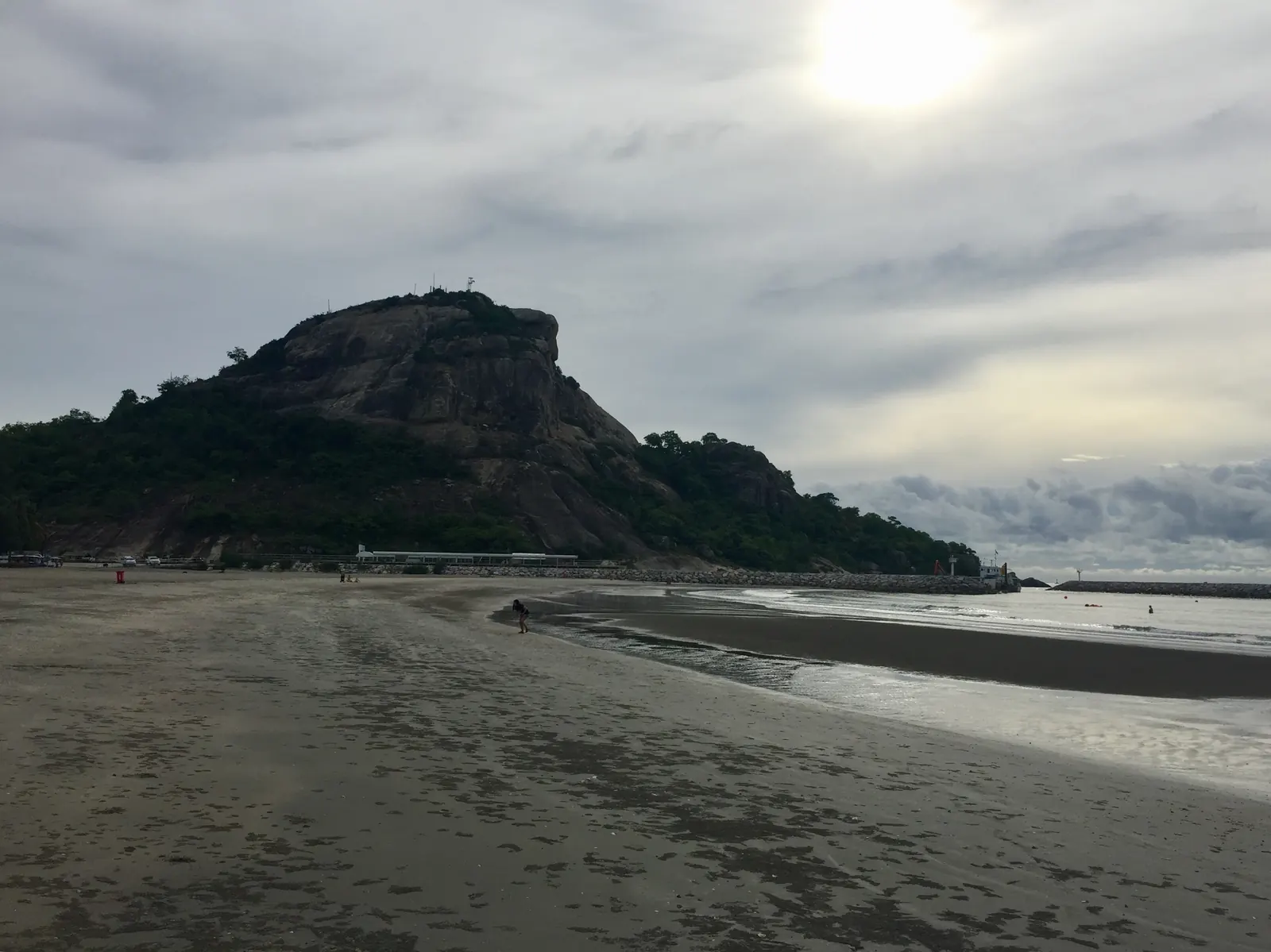
The main beach is tidal and busy. Twice a day the sea retreats a long way out, the sand turns into a pony track, and the central stretch is better for walking than swimming — Khao Takiab, Suan Son and the northern beach are the swimming beaches. Weekends are a different price list. Hua Hin is Bangkok’s weekend, so Friday and Saturday rates jump 20–50% and every long weekend or Thai holiday sells out; arrive Sunday, leave Thursday and the whole town gets cheaper and calmer. The rain comes late here: unlike the Andaman, Hua Hin’s wettest weeks are September to early November; May to August is mostly sunny with afternoon showers, which is why the green-season discount is a bargain on this coast. Jellyfish appear some years in the wet months — ask the hotel, and swim where the locals are swimming. Getting here is a drive, not a flight: the airport is tiny with almost no service, so you’re looking at two and a half to three hours by van, car or the improved train from Bangkok — plan the first and last day around it. And the macaques on Khao Takiab are bolder than the ones in the brochure; zipped bags, no snacks on display.
Hua Hin stays: your questions, answered
Is it better to stay in Hua Hin or Cha-am?
Hua Hin for a walkable town, the night market, the station and restaurant choice. Cha-am for bigger resorts, cheaper rooms, a longer beach and a more Thai, more family weekend atmosphere. They’re twenty minutes apart, so most people sleep in one and eat in the other at least once.
How many nights do you need in Hua Hin?
Two nights covers the beach, the night market, the station and a Khao Takiab afternoon. Three adds Khao Sam Roi Yot’s caves or a vineyard lunch in the hills. Longer than four and you’re either golfing, at a wellness resort, or quietly becoming one of the retirees — all three are valid.
Is Hua Hin beach good for swimming?
The central beach, honestly, is average — tidal, busy with horses and vendors, and a long walk to the water at low tide. Khao Takiab’s bay, the northern beach and Suan Son are the proper swimming spots, and Pranburi’s are empty. Most hotels are built around their pools for exactly this reason.
How do you get from Bangkok to Hua Hin?
Minivan or bus from Sai Tai Mai (the Southern Bus Terminal) or the airport in about three hours; a private car or Grab in two and a half; or the train from Krung Thep Aphiwat, which is slower but arrives at the prettiest station in Thailand. Don’t plan on flying — the airport barely operates. Where you sleep at the Bangkok end is covered in our Bangkok stay guide.
When is the best time to stay in Hua Hin?
November to March for the classic dry, cooler weather — February is the sweet spot. Unusually for Thailand, May to August is also a good bet here, with mostly sunny days, lower rates and an afternoon shower you can set a watch by. Avoid late September to October if the beach is the point. The coast-by-coast calendar is in our best time to visit Thailand guide.
Related guides
- The 2-Day Hua Hin Weekend
- Where to Stay in Bangkok: Every Area, Honestly Ranked
- Thailand Luxury Hotel Prices (2026): What a Night Really Costs
Book the trip
Some links in this guide are affiliate links. If you book through them we may earn a small commission at no extra cost to you — it helps keep Destination Thailand independent.
Hotels: once you’ve picked your stretch of coast, see what’s actually available for your dates — compare Hua Hin and Cha-am hotels on Agoda and filter by Khao Takiab, the town centre or Pranburi rather than searching the whole coast — and remember Sunday-to-Thursday is the cheap week here.
Tours: the Sam Roi Yot caves, a Monsoon Valley vineyard lunch, a Thai cooking morning — browse Hua Hin tours on GetYourGuide and read the recent reviews before you commit.
Getting there: it’s a drive or a train, not a flight — compare vans, buses and rail from Bangkok and book the Bangkok to Hua Hin leg on 12Go.
Not sure Hua Hin is your Thailand at all? Our Where to Go in Thailand matcher scores all 77 provinces against your month, your crowd tolerance and what you actually want from the trip — honest ratings included.