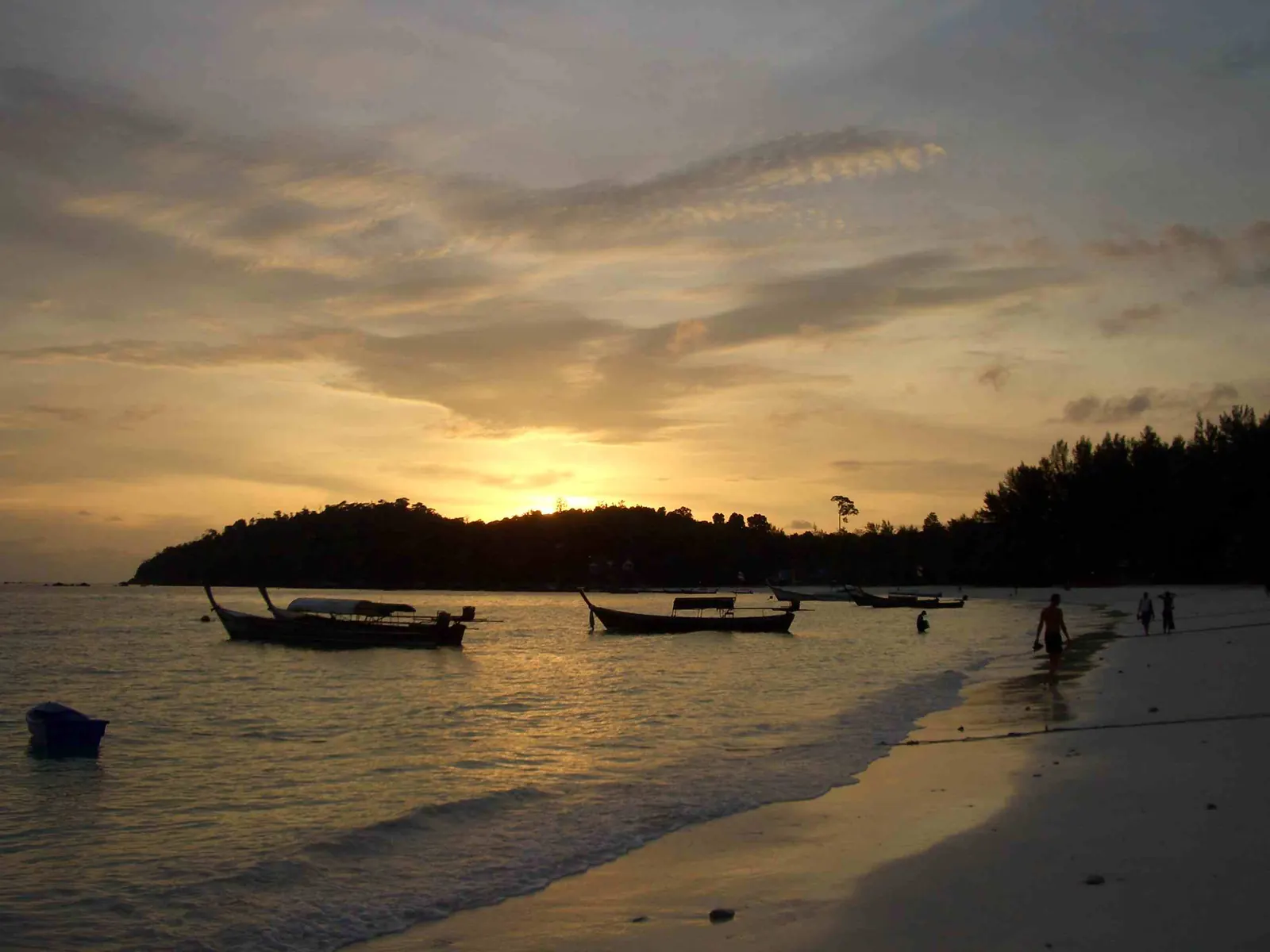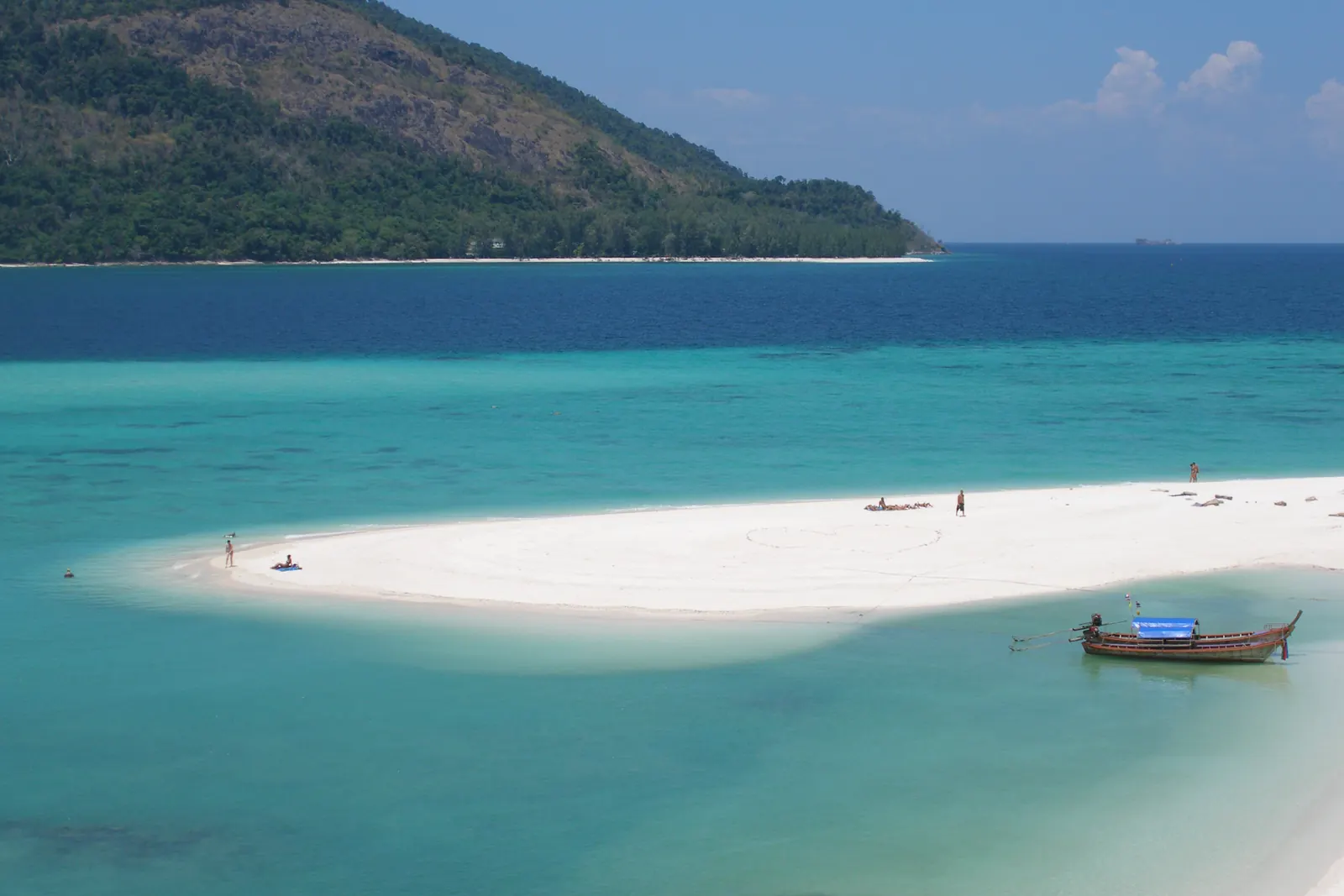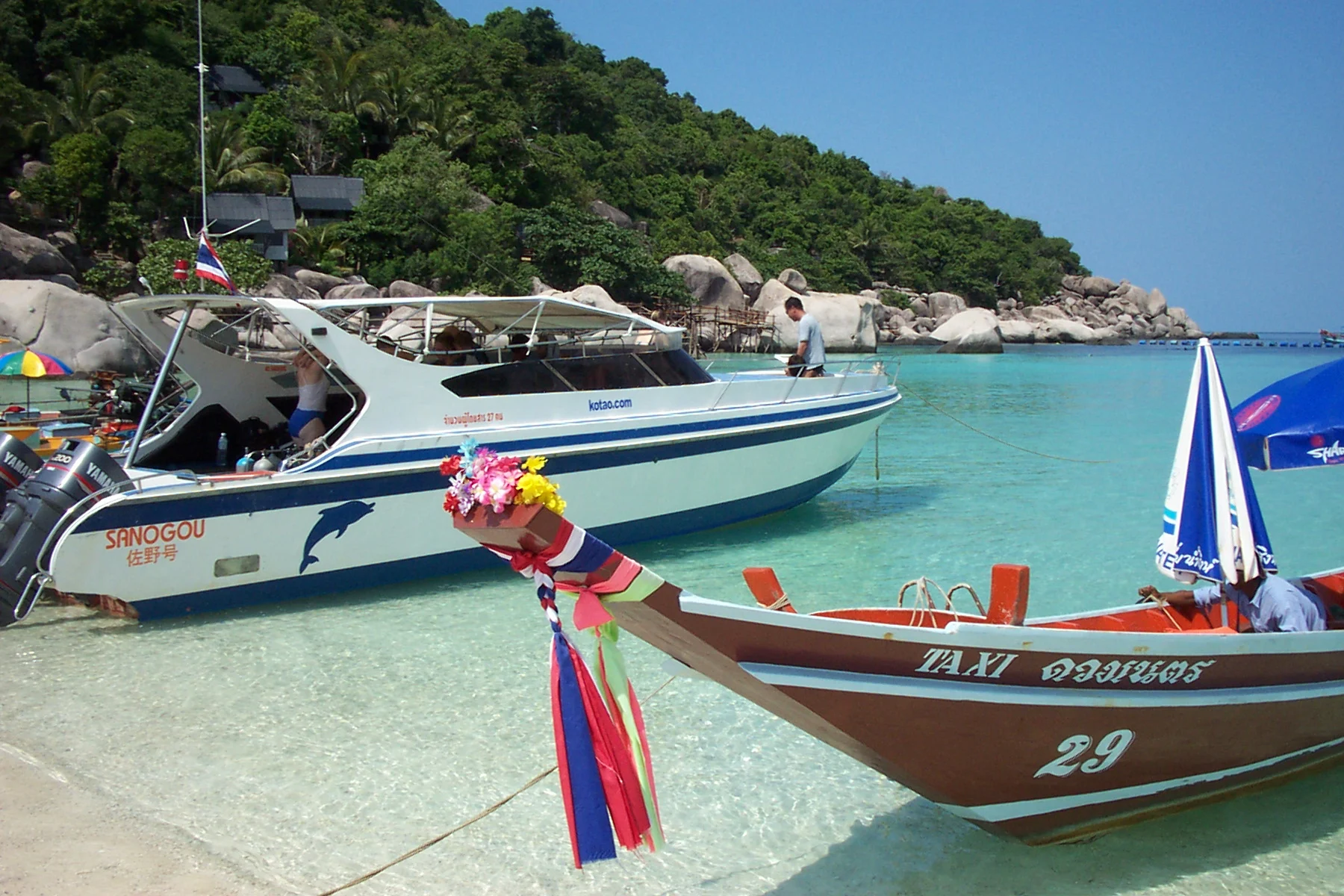
By day three on this island you notice everyone has the same walk — part sunburn, part exhaustion — and half of them are carrying logbooks. Koh Tao diving is the entire economy of twenty-one square kilometres of granite in the Gulf of Thailand: the noticeboards advertise instructor jobs, the cafés set breakfast hours around the morning boats, and every shop repeats the same boast: only Cairns, Australia certifies more new divers than this little island. Nobody independently audits that, but watch Mae Haad pier disgorge a morning ferry and you will stop arguing. Cairns is attached to a continent. Koh Tao is a dot you can only reach by boat.
The short version: as of August 2026, an Open Water course on Koh Tao costs around ฿9,900–13,000 (roughly US$300–400), takes three to four days, and includes theory, pool training, four open-water dives, all equipment, boat trips and the certification card — often with a basic room thrown in. That is about half what the same qualification costs in Australia or Europe, which is why the world flies here to learn.
Why is Koh Tao diving so cheap?
Not because anyone is filling your tank with optimism. It is volume economics, and once you see the machine working, the price makes complete sense.
Somewhere north of fifty dive operations are squeezed into three small villages. The dive sites sit ten to twenty minutes offshore, so a school can run morning, afternoon and night boats on a dribble of fuel while a Phuket liveaboard is still steaming towards the Similans. Instructors queue up to work here because living on Koh Tao beats an office, which keeps wages modest. And because every school sits next door to six competitors, nobody can quietly pad the bill. Chiang Mai does this with cooking classes; Koh Tao does it with regulators.
What does the money actually buy? A properly run Open Water course includes the theory (mostly e-learning now, finished before or during day one), confined-water skills in a pool or a calm bay, four open-water dives to a maximum depth of eighteen metres, full rental kit, boat trips, insurance at most schools, and the certification fee. Many places still throw in a free fan room — a hangover from the era when a bed was the bait that got you through the door.
| What | Typical price (August 2026) | Notes |
|---|---|---|
| Open Water course, 3–4 days | ฿9,900–13,000 | SSI schools at the cheap end, premium PADI outfits at the top; all-inclusive |
| Fun dive, certified divers | ฿800–1,100 per dive | Ten-dive packages run around ฿10,000 |
| Night dive | ฿1,200–1,800 | White Rock is the usual suspect |
| Try dive, no licence needed | expect ฿2,000–3,500 | One shallow dive, instructor within arm’s reach |
The honest caveat: at these margins, schools make money on throughput. Good ones manage that with more boats and more instructors. Bad ones manage it with bigger groups and a rushed pool session. Price is not the warning sign — the student-to-instructor ratio is, and we are coming to that.
SSI or PADI for your Koh Tao diving course?
Divers argue about this online the way football fans argue about referees, and it matters roughly as much. Both agencies certify to the same ISO standard. The skills are identical, the eighteen-metre limit is identical, and both cards are accepted at every dive shop from Cozumel to the Red Sea. In years of island-hopping I have never once seen anyone squint at an SSI card and turn its owner away.
The real differences are small and practical. SSI courses on Koh Tao usually come in ฿1,000–2,000 cheaper, because the digital materials cost schools less. PADI has the brand your mother has heard of, and its e-learning app is a touch slicker. That is genuinely the whole argument, minus the forum religion.
So pick the school and the instructor, then take whichever agency that school happens to teach. A patient instructor teaching SSI beats a bored one teaching PADI every day of the week, and the fish cannot read logos.
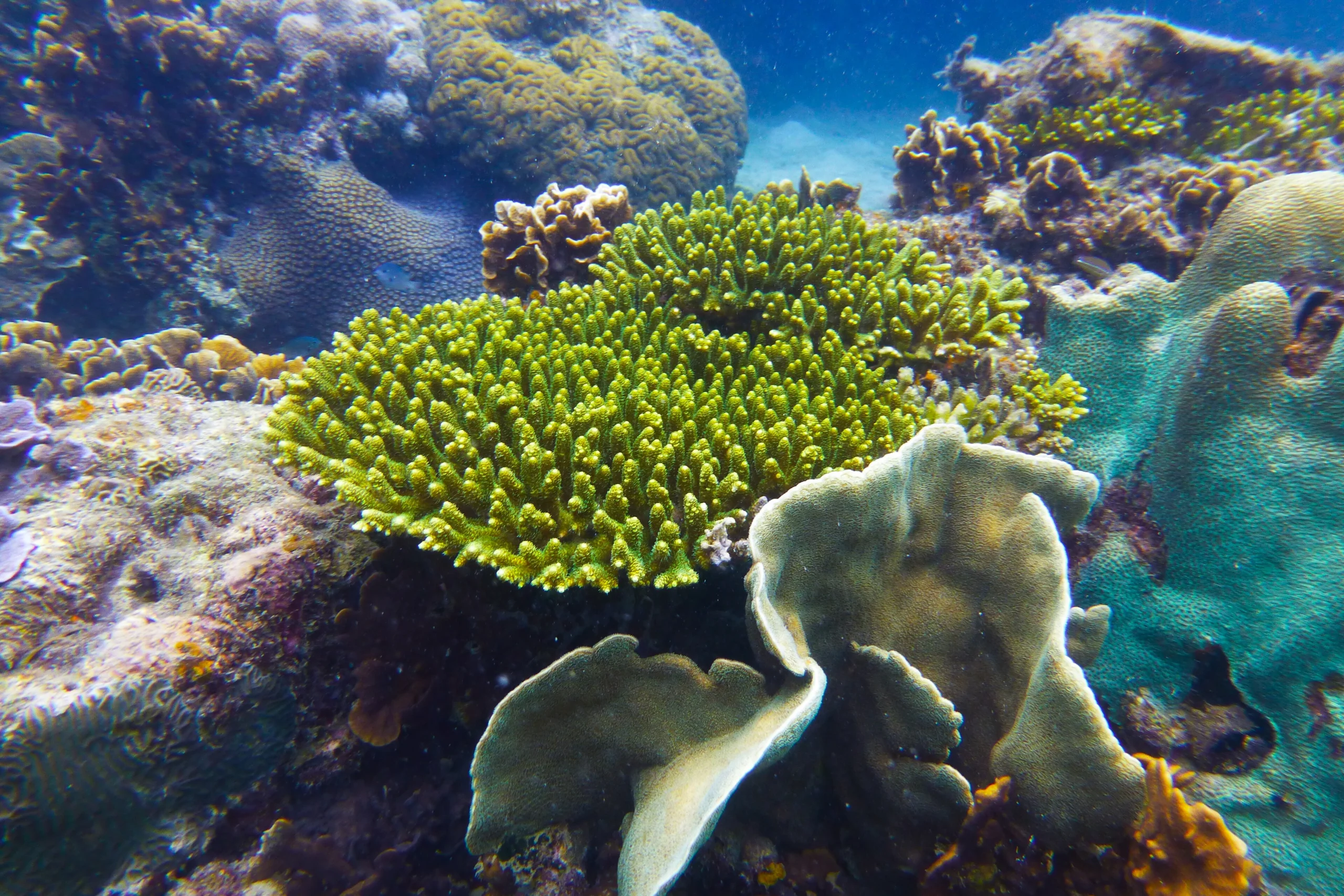
How to choose a Koh Tao diving school
This decision, not the agency, determines whether you fall in love with diving or quietly decide it is not for you. Every school on the island has 4.9 stars, so ignore the review arms race and interrogate four things in person.
- Group size. Agency standards allow up to eight students per instructor. Good schools cap it at four. Ask for the number outright — if the answer begins with “it depends”, it is eight.
- Your actual instructor. Meet the human before you pay, not the salesperson out front. You are about to trust this person with your breathing; five minutes of conversation tells you whether they are patient or on autopilot.
- The boat. Some schools run triple-decker boats carrying sixty divers, others take twenty. Fewer bodies means calmer kitting up and a briefing you can actually hear.
- The rental room. Have a look at the kit. Perished mouthpieces and cloudy gauges tell you exactly where maintenance sits on the priority list.
Culture counts too. Sairee schools skew party — a few have a bar attached, with free shots when the logbooks get signed. Chalok, on the south coast, is calmer, cheaper to sleep in, and dinner is khao man gai rather than Jägerbombs. Most schools will bundle a cheap room, but if you would rather sleep somewhere the bar crawl is not, compare Sairee vs Chalok stays yourself and walk five minutes to class instead.
One more thing: do not book months ahead from your sofa. Arrive, walk into two or three shops, ask your four questions, start the next morning. Outside Christmas and the August peak there is always a spot, and schools save their best behaviour for people standing in front of them.
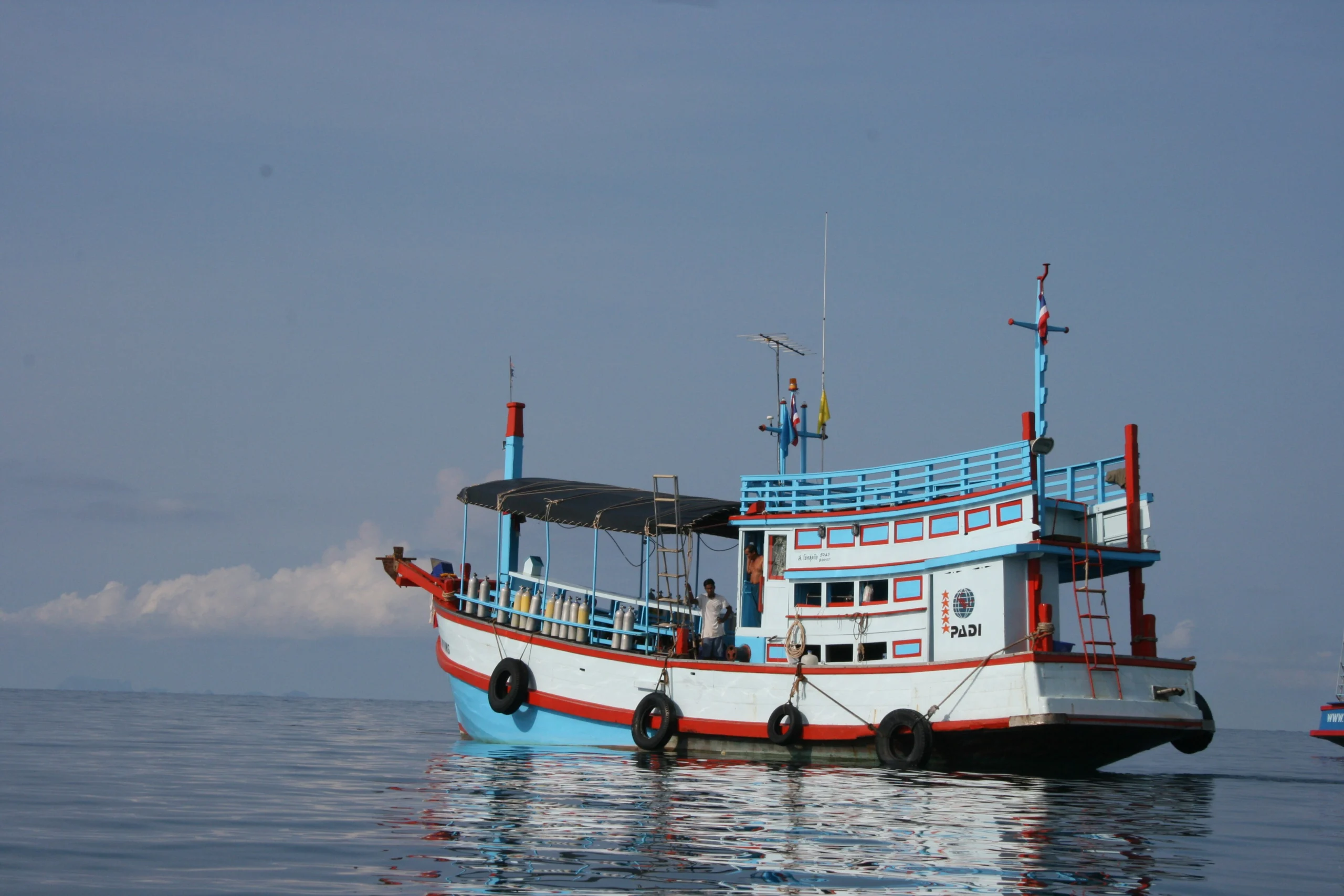
The best Koh Tao diving sites — and the whale shark lottery
Your course dives happen at the gentle sites — Twins, White Rock, the Japanese Gardens off Koh Nang Yuan — which are shallow, forgiving and thick with butterflyfish. The famous stuff starts once the card is in your hand.
Chumphon Pinnacle is the serious one: a granite tower to the northwest whose top sits around fourteen metres down, carpeted in anemones and circled by chevron barracuda and batfish the size of bin lids. Southwest Pinnacle is its slightly quieter sibling. Sail Rock — technically nearer Koh Phangan but sold as a day trip from both islands — is the Gulf’s best dive, a pinnacle with a natural vertical chimney you swim up through before exiting into a wall of trevally. If you would rather dive it from the other side, sort your base with our Koh Phangan stays guide.
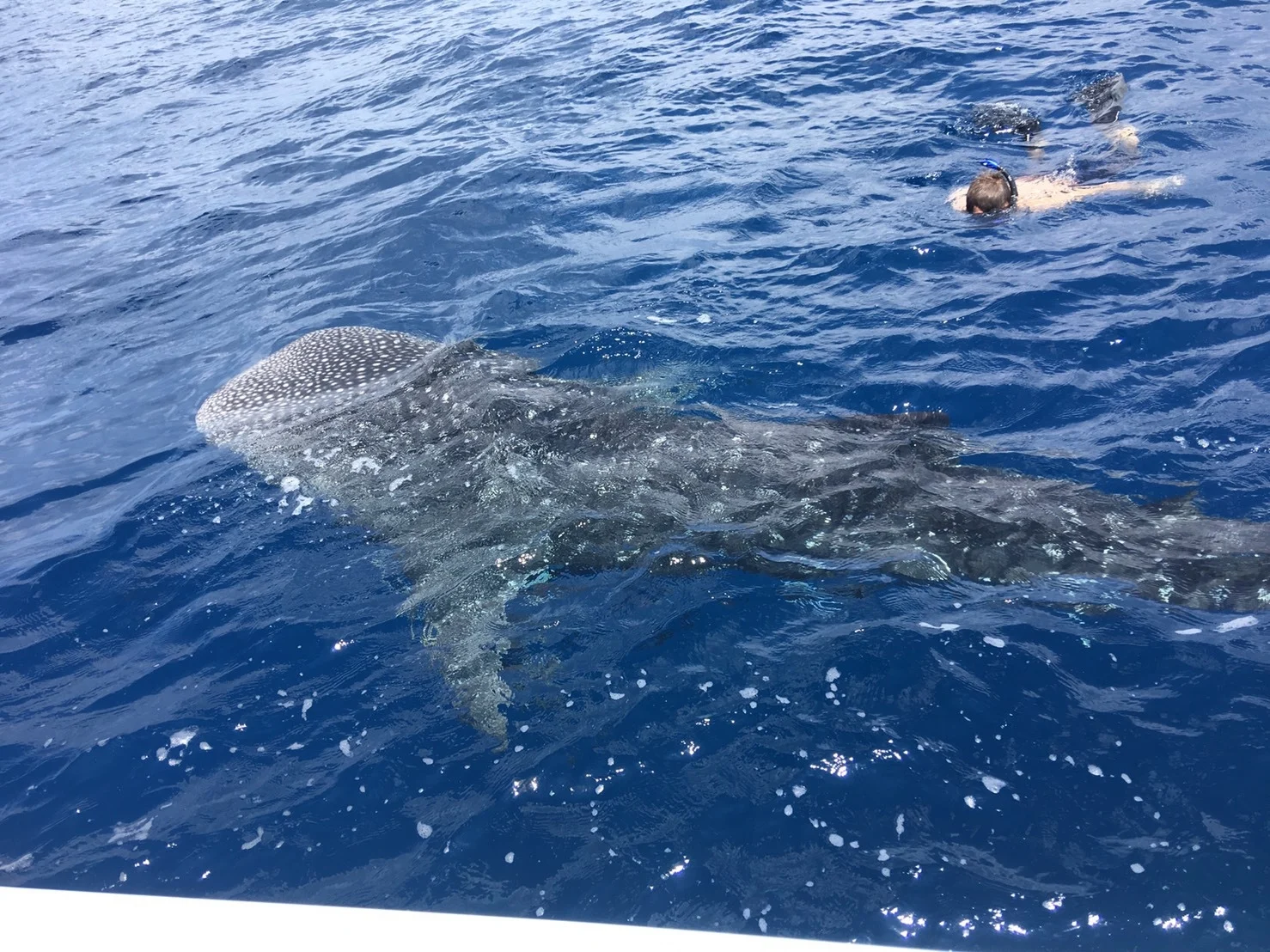
Then there is the lottery. Whale sharks turn up at these pinnacles when the plankton blooms, typically in two windows — March to May, then again September to October — though the Gulf reads no calendar and lucky Augusts happen. Nobody serious will guarantee you one. Treat a sighting as a jackpot rather than a deliverable, and be suspicious of any shop that sells it as a promise.
Travelling with someone who refuses to breathe underwater? Shark Bay’s blacktip reef sharks can be snorkelled from the beach, and the boats running snorkel or try-dive day trips loop the island’s prettiest bays while you do proper dives. Everyone reconvenes at sunset feeling superior in different ways.
Koh Tao diving logistics: getting there, when to come, what to budget
Koh Tao has no airport, which is half the reason it stayed cheap. Three sensible ways in — every boat, pier and fare compared in our Gulf ferries guide:
- From Bangkok: the coach-and-catamaran combo runs from the Khao San area to Mae Haad pier via Chumphon in roughly nine to twelve hours; expect around ฿1,300–1,800 for bus+catamaran combo tickets. The overnight train to Chumphon plus the morning boat is the more civilised version of the same idea.
- Via Koh Samui: fly in, then ride the catamaran north through Koh Phangan — about two hours on the water. Landing late? Our Koh Samui stays guide covers the one-night stopover.
- Via Surat Thani: the cheapest flights from Bangkok land here, followed by the longest boat ride. It works fine if you are patient — Surat Thani as a base explains the moving parts, and the wider province is on our Surat Thani page.
Timing is the Gulf’s party trick: it runs on the opposite calendar to Phuket. June to August, while the Andaman coast is being lashed, is typically flat and clear here; visibility tends to be at its best from around April to September; and the only stretch to genuinely avoid is November to mid-December, when the monsoon parks on top of the island and the boats stop. The full picture is in our month-by-month Thailand guide, and if you are slotting a course into a longer route, the two-week itinerary shows where Koh Tao fits without doubling back on yourself.
Money: bring cash. Most schools take cards with a small surcharge, island ATMs charge the standard Thai foreign-card fee of ฿220 a withdrawal, and a modest deposit holds your course spot. At reputable shops there are no ambush extras — the quoted price really is the whole price. For the official line on the island itself, the TAT Ko Tao page covers the basics, and watch Thai public holidays: the boats fill with Bangkok escapees like me on every long weekend.
Some links in this guide earn us a small commission at no extra cost to you — it is how the site stays independent. Full disclosure.
Koh Tao diving FAQ
How much does a Koh Tao Open Water course cost in 2026?
Between ฿9,900 and ฿13,000 all-in, with SSI schools at the bottom of the range and premium PADI outfits at the top. That covers gear, boats, theory, four open-water dives and the certification card. Anything dramatically cheaper usually means corners — most often in group size.
How many days do I need for a Koh Tao diving course?
Three to four days for Open Water: a half day of theory and pool work, then two days of boat dives is the usual rhythm. Give yourself five or six on the island, because you will want fun dives at Chumphon Pinnacle afterwards — and you should not fly within 18–24 hours of your last dive anyway.
Should I choose PADI or SSI on Koh Tao?
They are functionally identical — same skills, same eighteen-metre limit, both recognised at dive shops worldwide. SSI usually runs ฿1,000–2,000 cheaper; PADI has the bigger brand name. Choose the school and instructor you trust and take whichever agency they teach.
When is the best season for Koh Tao diving?
The island dives nearly year-round. Visibility is typically best from around April to September, and whale shark sightings cluster in March–May and September–October. The one window to skip is November to mid-December, when the Gulf monsoon shuts the boats down.
Can I learn to dive on Koh Tao if I am a weak swimmer?
To certify you must complete a 200-metre swim — any stroke, no time limit — and a ten-minute float. That is agency standard, not school policy, and no honest shop will waive it. If that sounds ambitious, book a try dive instead: no swim test, an instructor within arm’s reach, and it is how plenty of people discover the underwater part is the easy bit.