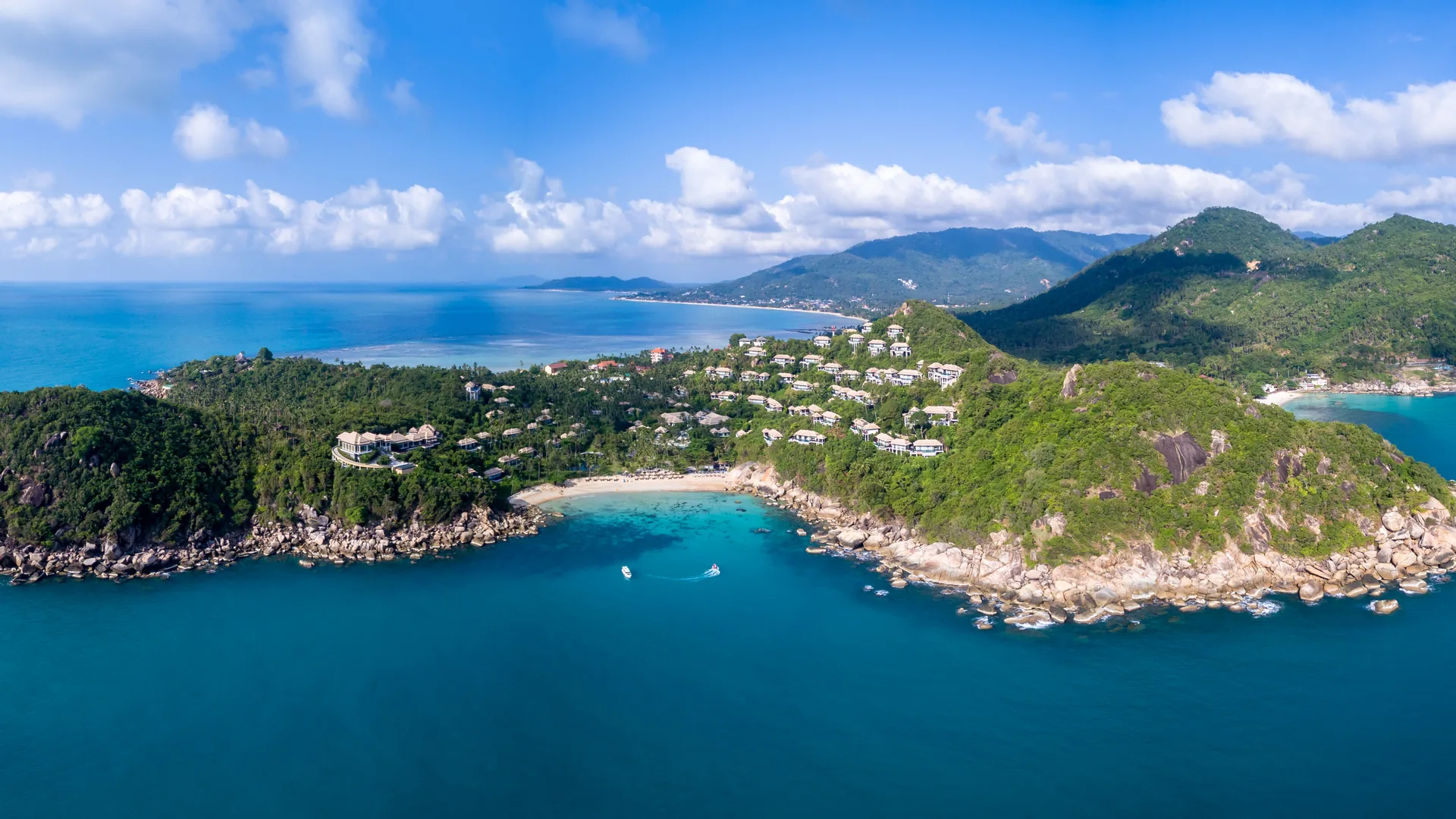
Most travellers experience Surat Thani as a blur seen through a bus window between Bangkok and the ferry pier. They land at the airport or the train station, get on a transfer bus, board a ferry to Koh Samui, and never look back. Which is fine — that’s exactly what the town has set itself up to do — but it sells the place short. Surat Thani sits on the mouth of the Tapi River where the deep south of the mainland meets the Gulf islands. It’s a real working town with proper southern Thai food, river boats that have run for a century, and one of the country’s most underrated old wats. Treated as a base instead of a transit point, it gives you an extra night on the mainland that costs a tenth of an island night and lets you actually pick the right ferry instead of being herded onto whichever one the agent gets the biggest commission for. Below, the honest Surat Thani version.
What Surat Thani is

Surat Thani (often shortened to “Surat”) is a province on the eastern side of southern Thailand, plus its capital city of the same name. The province covers about 13,000 km², most of it forest, plantation, and the three big Gulf islands offshore — Koh Samui, Koh Pha Ngan (home of the Full Moon Party) and Koh Tao (the cheapest place in the world to get scuba-certified). Surat Thani town itself is on the mainland, 35 km inland from the Gulf, on the Tapi River.
The name means “city of good people” in Sanskrit. It’s been a port since at least the 8th century when it was part of the Srivijaya kingdom — the same kingdom that built Borobudur in Java. Today it’s a small administrative town of about 130,000 people, anchored by the Tapi riverfront, a couple of decent night markets, and the absolute best wat in the southern lowlands at Chaiya (40 km north).
The town exists today mostly because it’s the transport hub for the Gulf islands. That’s not a bad thing for the visitor — it means every ferry, bus, train and flight you might need is here, often.
Getting to Surat Thani
- Plane. Surat Thani Airport (URT) has direct flights from Bangkok Don Mueang (AirAsia, Nok) and Bangkok Suvarnabhumi (Thai Airways), 75 minutes, 900–1,800 THB one way. Cheapest and fastest if you book ahead.
- Train. Bangkok Hua Lamphong → Surat Thani, 9–12 hours, 250–1,300 THB depending on class. The overnight sleeper (departs Bangkok 18:30, arrives Surat 06:30) is the genuine traveller experience and means you don’t lose a day to transit.
- Bus. Bangkok Sai Tai Mai → Surat Thani, 11 hours, 400–700 THB. Avoid unless price is your only filter.
From the airport, train station or bus terminal, every transit point has shared minibus transfers (100–150 THB) to the ferry piers — Don Sak (for Samui and Pha Ngan) or Donsak Lipa Noi (for Koh Tao via Chumphon).
Why use Surat Thani as your base for the islands
Three reasons it’s worth a night on the mainland before the islands:
- Honest ferry choices. From Surat Thani town you walk into multiple ferry-company offices and compare. From an airport transfer or a Bangkok train you’re stuck with whichever company the agent kicked back to. The difference between a 4-hour Lomprayah catamaran and a 7-hour Raja vehicle ferry is your whole afternoon.
- Mainland prices. A clean mid-range hotel room in Surat Thani town is 600–1,200 THB. The same standard on Koh Samui is 2,500–4,500 THB. If you’re arriving late or have a sunrise ferry, the saving is real.
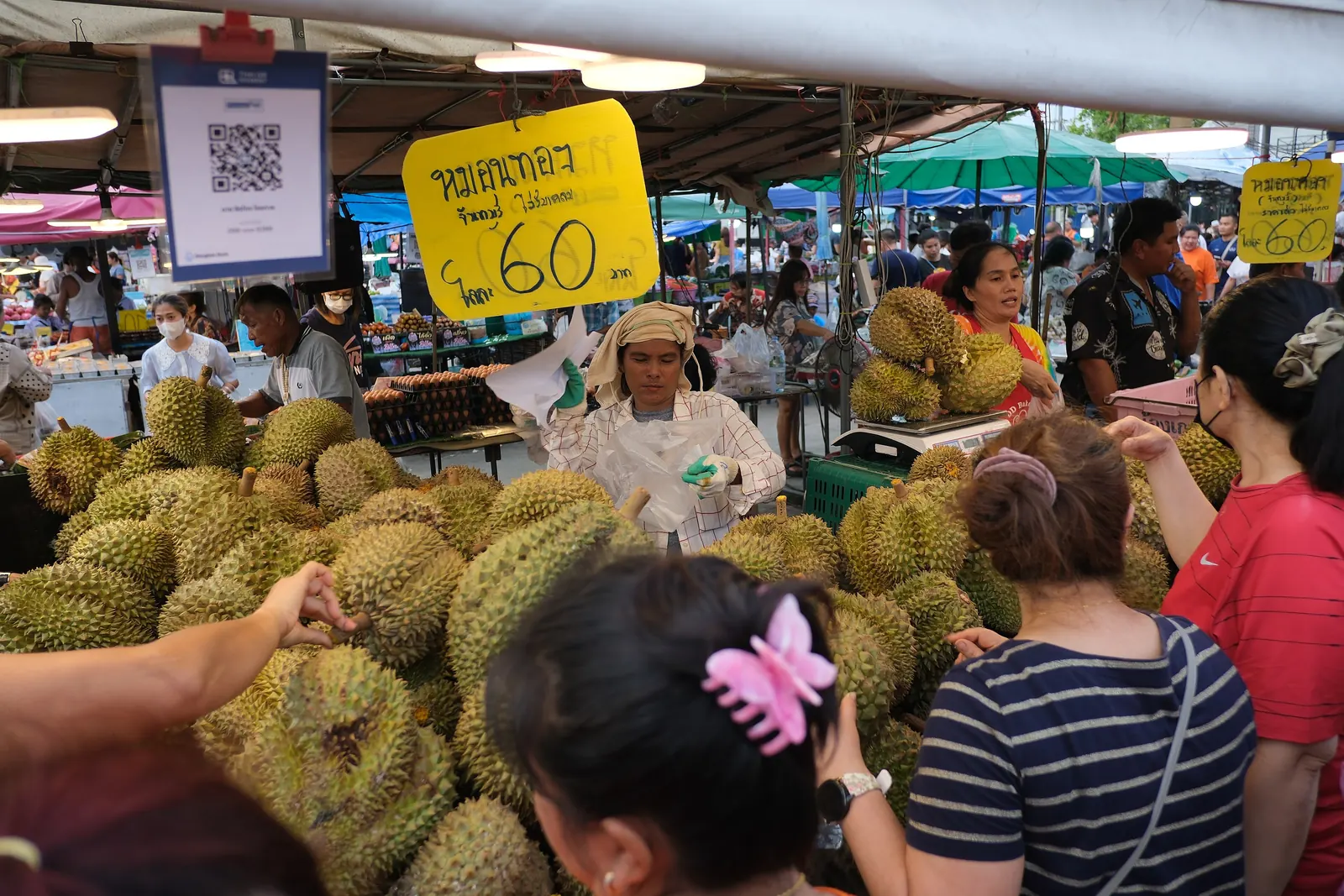
- Real southern Thai food. The riverside night market, the day markets, and a couple of restaurants the islands don’t have. Once you eat khanom jeen nam ya (rice noodles in fish curry) at a Surat Thani stall, the Koh Samui hotel buffet looks worse.
Ferry options from Surat Thani to the islands

This is the practical bit nobody explains clearly. There are two main piers:
- Don Sak Pier — 60 km south-east of Surat Thani town, the most-used pier. Both vehicle ferries and passenger catamarans run from here. Combined bus + ferry tickets from Surat Thani town: 350–550 THB to Samui, 450–700 THB to Pha Ngan.
- Tapi River Pier in town — for the older overnight ferry to Koh Samui (cheap, slow, only run by 1–2 companies, mostly for trucks and locals).
The catamaran companies (Lomprayah, Seatran Discovery, Songserm) run multiple daily departures, 1.5–2 hours to Samui, 2–3 hours to Pha Ngan, 3–4 hours to Koh Tao (which always involves transferring at Pha Ngan or Chumphon). Lomprayah is the most reliable and slightly more expensive.
The vehicle ferries (Raja, Seatran) are slower (3 hours to Samui), cheaper, and worth it if you’re bringing a car. Otherwise the catamaran is the obvious choice.
What to actually do in Surat Thani town for a night
For one evening + morning before your ferry, this is the version:
- Late afternoon arrival → check in, riverfront walk. The Tapi River promenade is genuinely pleasant at golden hour. Long-tail boats running between the city centre and the river-mouth villages.
- Dinner at the Sunday Night Market (every night despite the name, on Ban Don Road, 17:00–22:00). The single best food experience in Surat Thani town. Try the kanom jeen, the southern-style gaeng tai pla (fermented-fish curry) if you’re brave, and the river prawns grilled over charcoal. Budget 200–300 THB.
- River boat at night (optional). 30-minute river cruise from the central pier, 100 THB. Atmospheric but skippable.
- Morning before ferry. Quick visit to Wat Phra Borommathat Chaiya if you have a few hours — 40 km north, 1,200-year-old Srivijaya-period chedi, free entry, one of the oldest standing structures in the south. Takes a couple of hours by Grab return; absolutely worth it for anyone with even a passing interest in Thai history.
For the islands you can have breakfast on the riverfront, take the 09:00 bus + ferry combo, and be on Koh Samui beach by 12:30.
Where to stay in Surat Thani town
- Budget: Wangtai Hotel (right on the river, old-school, 500–800 THB), My Place @ Surat (modern hostel, 350–500 THB).
- Mid-range: Wangtai Hotel deluxe rooms 900–1,400 THB; Diamond Plaza Hotel 1,000–1,600 THB.
- Upscale: Bandon Riverside Hotel (the best in town, modern, river-facing, infinity pool), 1,800–3,000 THB.
For comparison, the same nights on Koh Samui:
- Budget: 800–1,500 THB
- Mid-range: 2,000–4,000 THB
- Upscale: 6,000–15,000 THB
A Thailand itinerary 7 days folds Surat Thani in as the launching point for the Gulf islands. See our Bangkok province guide for the wider context.
If you do stay the night, compare Surat Thani hotels on Agoda (affiliate link — same price for you) — town beds run about half of island prices.
A few more reasons to spend time in Surat Thani province
The town is the centre but the province has real depth:
- Wat Phra Borommathat Chaiya (40 km north) — the best historical site in southern Thailand. Free.
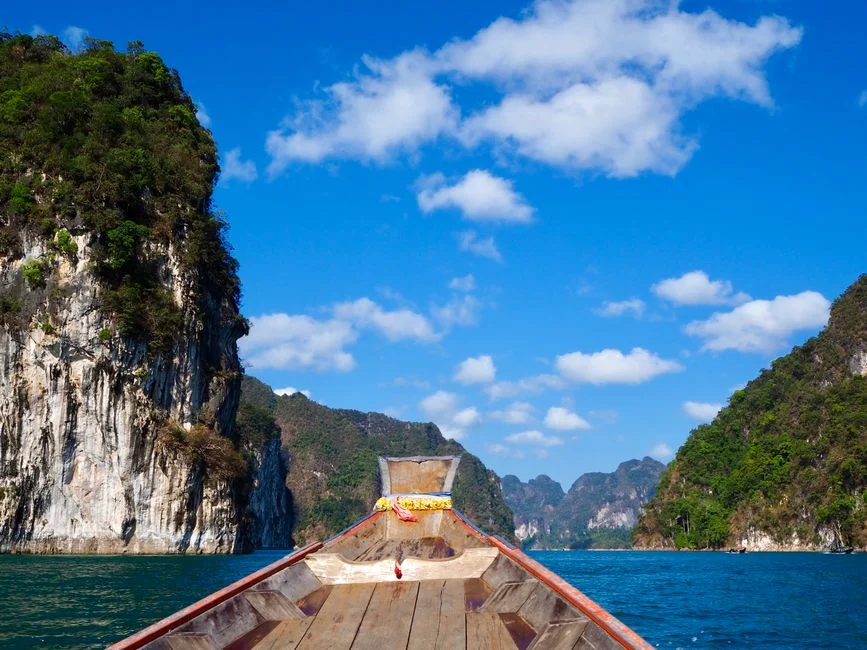
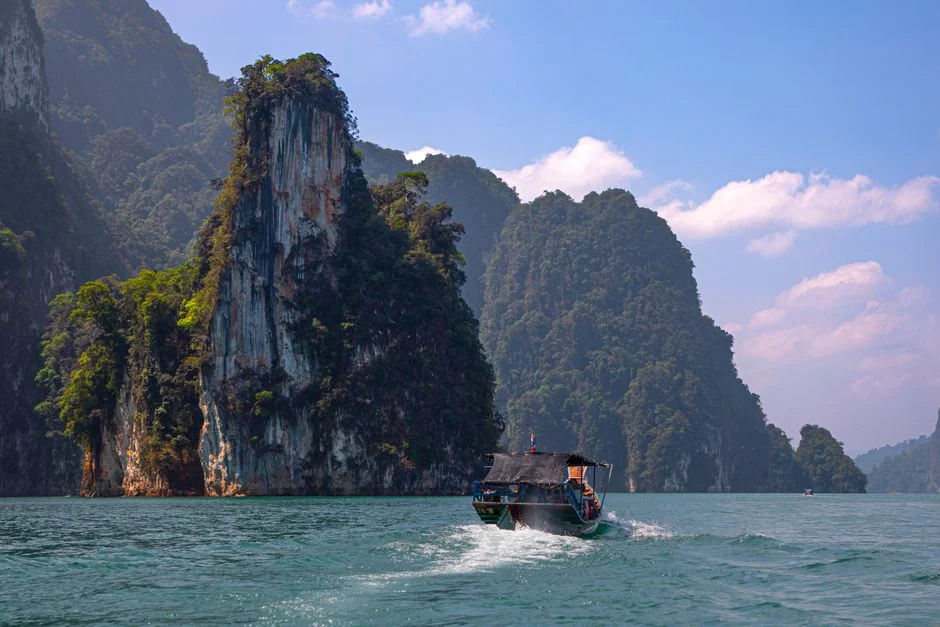
- Khao Sok National Park (160 km west, half a day’s drive) — limestone karsts rising from the Cheow Lan Lake, floating bungalows on the lake, leeches and gibbons in the jungle. The province’s wilderness side; deserves 2–3 days of its own.
- Ang Thong Marine Park (offshore from Koh Samui, but reachable from Surat) — 42 islands of turquoise lagoons and limestone cliffs. Day-trip boats 1,500–2,500 THB.
- Khanom (just over the border in Nakhon Si Thammarat but accessible from Surat Thani) — the underrated mainland beach with pink dolphins.
If you have an extra 2–3 days in the area, give them to Khao Sok rather than to a third Samui day.
Practicalities for Surat Thani
- ATMs / 7-Eleven: Abundant in town. Sparse at the piers.
- Mobile signal: Solid 4G across town. Weaker at Don Sak. Patchy at Khao Sok.
- Best time of year: December to April — dry, cool nights, calm ferry crossings. May to November is wet (Surat Thani gets more rain than most of Thailand because of its mountain backdrop), and rough Gulf crossings sometimes cancel ferries to Koh Tao.
- Climate quirk: The province has two rainy seasons (south-west monsoon May–October, north-east monsoon November) — practical implication is the islands are dry from December to April, wet otherwise.
- Local food worth ordering: khanom jeen nam ya, gaeng tai pla, gaeng som, river prawns. The southern Thai food here is some of the best in the country.
Final thoughts on Surat Thani
Surat Thani is the gateway most travellers refuse to acknowledge as a destination — they see it only as the place between Bangkok and Koh Samui. Treated as a 24-hour stopover, it gives you cheaper sleep, better food than you’ll have on the islands, the option to comparison-shop your ferry properly, and a quick look at a real southern Thai working town. For the same price as one Samui hotel night you can have a Surat Thani night, a Wat Phra Borommathat morning, and arrive at the islands rested. The locals already knew this; now you do.
FAQ
Is Surat Thani worth visiting?
As a destination on its own, not really — it’s a working town, not a tourist site. As a 24-hour base before catching a ferry to Koh Samui, Pha Ngan or Tao, yes. Cheaper hotels, better food, more ferry options.
How do I get from Surat Thani to Koh Samui?
Combined bus + ferry tickets (350–550 THB) from Surat Thani town to Don Sak Pier, then catamaran or vehicle ferry to Koh Samui. Catamaran takes 1.5–2 hours total transit time once you’re on the water.
How do I get from Surat Thani to Koh Pha Ngan?
Same as Samui — bus + ferry combination from town to Don Sak (450–700 THB), then 2–3 hours by catamaran.
How do I get from Surat Thani to Koh Tao?
Catamaran via Pha Ngan, 3–4 hours total. Note: in stormy weather the Koh Tao crossing can be cancelled. Have a backup plan.
What’s the best time to visit Surat Thani?
December to April — dry, calm seas, predictable ferries. Avoid October–November for the heaviest rain.
Where should I eat in Surat Thani?
The Sunday Night Market (Ban Don Road, daily 17:00–22:00) for proper southern Thai food at 30–80 THB per dish. Riverfront restaurants for grilled river prawns and seafood.
Fly or train to Surat Thani?
Fly if time matters — 75 minutes vs 9–12 hours. Train for the overnight sleeper experience and to save a hotel night.
Related guides
- Where to Stay in Phuket: The Complete 2026 Guide
- The slow road to Koh Lanta — quiet beaches, long-tail boats, and a week without a watch
- Nakhon Si Thammarat Night Market: The Southern Thai Food Scene Tourists Keep Missing
Getting to the islands
Some links below are affiliate links. If you book through them we may earn a small commission at no extra cost to you — it helps keep Destination Thailand independent.
Book your transport: Reserve ferries, buses and the Bangkok–Surat Thani train on 12Go so you land with your onward seats to Koh Samui, Koh Pha Ngan and Koh Tao already locked in.