Every September the same email arrives: “We’ve booked Koh Samui for November because everyone says Thailand’s rainy season ends in October. Is that right?” No. It is right for Phuket, Krabi and the whole Andaman side, which is where most of the internet’s Thailand weather advice was written. Samui sits in the Gulf, on the other side of the peninsula, and the Koh Samui rainy season runs on a different clock: the wettest months are October to December, November worst of all, and the months when Phuket is being rained on are, on Samui, perfectly decent. People get this backwards constantly, then arrive in a swimming costume in the one month the sea is closed.
I live here and I am not going to tell you November is secretly lovely. What follows is when it rains, what that rain looks like, what still runs, what it costs, and when to quietly move the booking to the other coast.
The short version: Samui’s rainy season is roughly mid-October to mid-December, peaking in November, driven by the north-east monsoon. May to September is the island’s shoulder and is far better than the Andaman in the same months; February to April is the dry, calm peak. October usually pays off, November usually doesn’t, and early December is a coin toss that clears into the best weather of the year by Christmas. Rain-month hotel rates drop hard, mainland ferries mostly run, Koh Tao ferries often don’t, and nothing closes. If the trip is about the beach, read our honest beach ranking and, if the dates are November, run the Where to Go matcher before you book.
Koh Samui weather month by month: the table
The figures are rounded from the Thai Meteorological Department’s climate normals for the Samui station (1991–2010 series, via the WMO): the long-run shape, not a promise about any given fortnight. “Rain days” means days with measurable rain, which here is often a twenty-minute dump at 4pm rather than a lost day. The sea column is the east coast, which takes the monsoon head-on; the west coast is usually a notch calmer.
| Month | Rain days (approx) | Rain mm (approx) | Sea (east coast) | Verdict |
|---|---|---|---|---|
| January | 8–9 | ~130 | Choppy early, settling | Good; monsoon tail early |
| February | 4–5 | ~65 | Calm, clear | Best month of the year |
| March | 4–5 | ~115 | Calm, clear | Excellent; hot |
| April | 6 | ~85 | Calm | Very good; hottest month |
| May | 11 | ~130 | Calm, afternoon squalls | Good; rain is short and warm |
| June | 10 | ~135 | Calm | Good; cheap-and-sunny shoulder |
| July | 10–11 | ~115 | Calm | Good; European school holidays |
| August | 10–11 | ~100 | Calm | Good; while Phuket is under water |
| September | 10–11 | ~120 | Calm, first chop late | Good; quietest good month |
| October | 15–16 | ~295 | Rougher from mid-month | Gamble; first half usually fine |
| November | 16–17 | ~445 | Rough, red flags common | The wet month; go elsewhere for a beach trip |
| December | 11–12 | ~265 | Rough early, easing | Coin toss to mid-month, then peak season |
About two metres of rain a year, and roughly 60 percent of it in three months. Phuket’s wettest month (September, typically 300–400mm) looks like a mild Samui October; our best time to visit Thailand guide has the Andaman tables to line up against this one.
Why the best time to visit Koh Samui is the wrong way round
Thailand has two monsoons. The south-west monsoon blows in off the Indian Ocean from roughly May to October and hits the Andaman coast first; the peninsula’s mountains wring most of it out before it reaches the Gulf, so Samui, Phangan and Tao sit in a rain shadow. Around October the wind swings. The north-east monsoon comes down the Gulf of Thailand over a long fetch of open water and drops its load on the first land it meets: the east coast of Samui and the Surat Thani mainland. The Andaman, now sheltered, dries out and opens its high season.
So “when is the best time to visit Koh Samui” has two honest answers. For guaranteed weather: February to April. For the best mix of weather, price and space: June to September, when the rest of the country is in low season, Samui hotels price accordingly, and the island still delivers 20-plus dry days a month. The rainy season proper, mid-October to mid-December, is the period people book by mistake.
What “rain” actually means on Samui, and the exceptions
There are two kinds of rain here, and the difference is the whole game. From May through September, and much of October, rain is convective: heat builds all day, cloud piles up over the hills after lunch, and somewhere between three and six it dumps for twenty minutes to an hour, then stops. Beach in the morning, a massage through the dump, night market after.
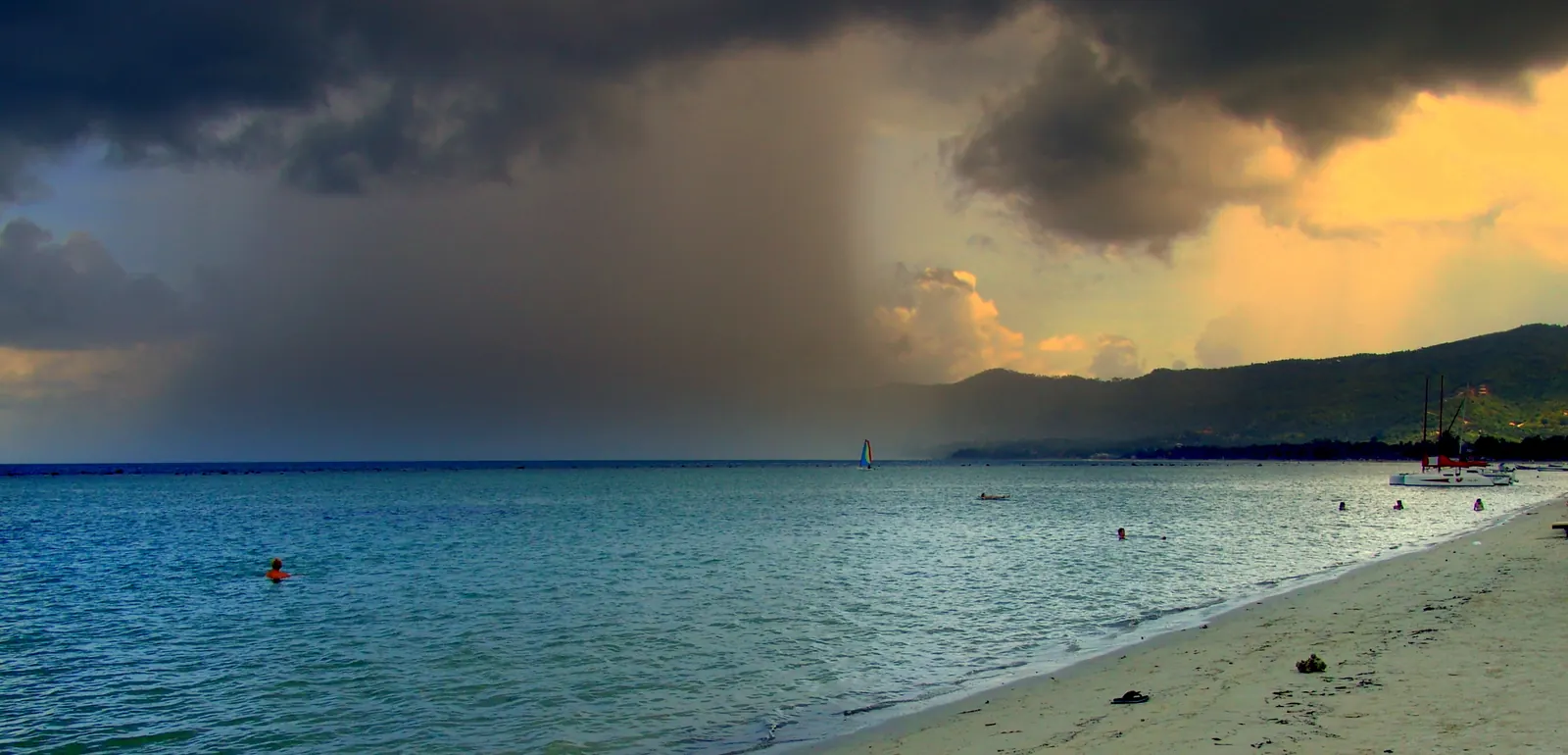
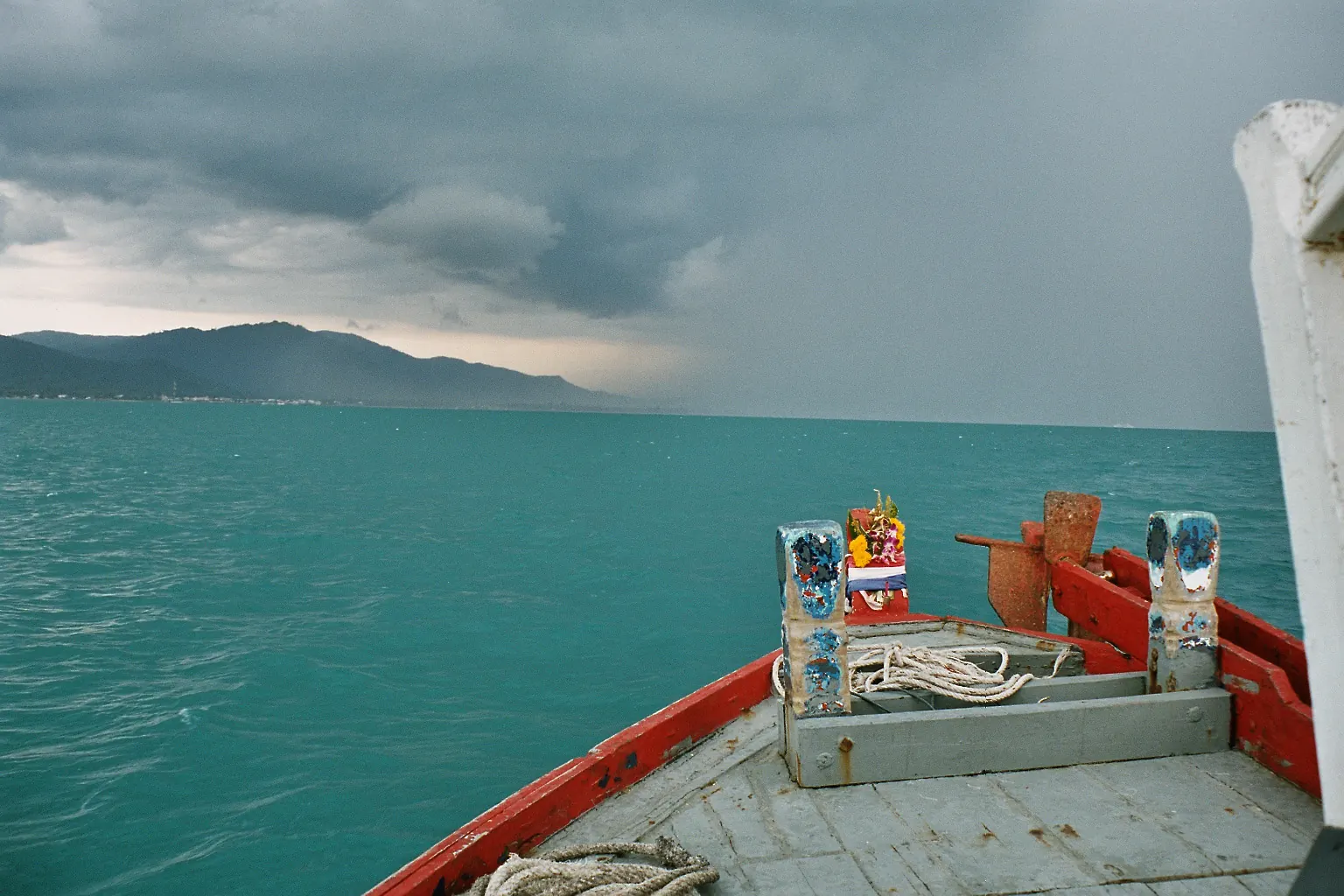
November rain is a different animal. The north-east monsoon arrives as systems, not showers: a trough parks over the lower Gulf and it rains for two, three, sometimes five days more or less continuously, grey and sideways, with a swell that shuts the east-coast beaches and keeps the small boats tied up. A typical November has two or three of these with decent days between; it is not forty days of rain, but you cannot schedule around a system, and a five-night trip can lose three to one.
Then the exceptions, which is what the news reports are about. In early December 2016 a week of near-continuous rain put Chaweng, Bang Rak, Lamai and the Nathon road under water, dive boats stopped, flights were delayed and the island was declared a disaster zone. Comparable events returned around 2020–21 and in the third week of November 2025, when Surat Thani to Koh Tao sailings were suspended for days. These are once-every-few-years floods, not the annual pattern; but they land in exactly the weeks people book because the Phuket calendar said October was the end of it. An average November is manageable, a bad one is not, and you find out which about five days before you fly.
Koh Samui weather in October and November: swimming and ferries
Swimming first. The east coast, where most hotels are, goes from a bathtub in September to a red-flag beach by mid-November. Chaweng and Lamai have a genuine undertow when the swell is up, the lifeguards raise the flags, and every year somebody ignores them. The north coast (Bophut, Maenam, Bang Po) takes the wind but less swell and is usually swimmable on the calmer days; the west coast around Lipa Noi and Taling Ngam is the sheltered side, though the water is browner and shallower. Pools do the heavy lifting in November, which is the argument for a resort with a good one; the rain-season villa deals are the ones to look at in our where to stay guide. Snorkel trips run on a weather basis, and the Ang Thong marine park usually closes to boats from the start of November to mid-December.
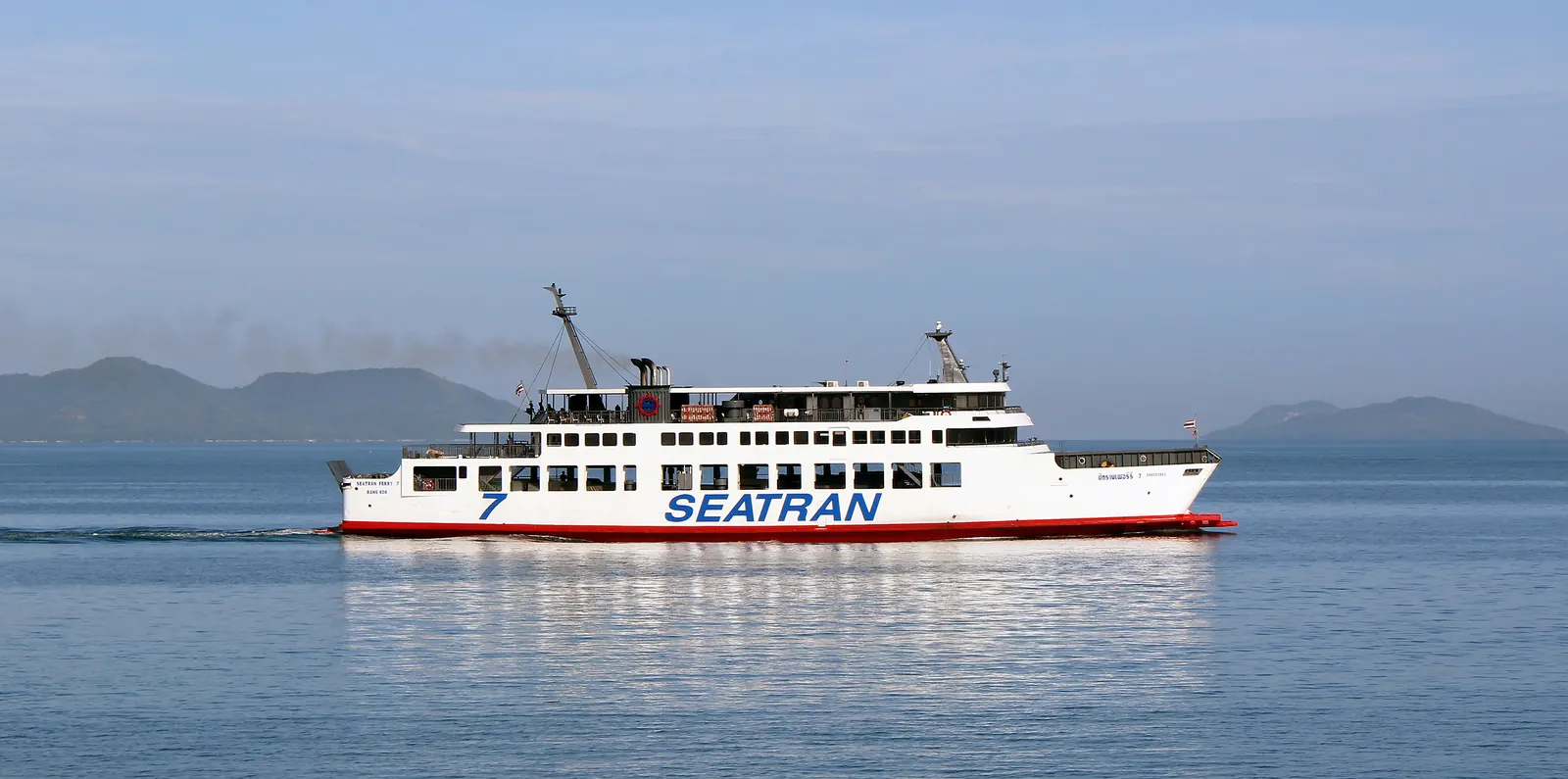
Ferries are the part that surprises people. The big Donsak crossings to the mainland (Seatran and Raja, plus Lomprayah’s Surat Thani and Chumphon routes) run through most of the monsoon; even in the 2016 floods they kept sailing. What gets cancelled is the exposed water. Koh Tao is the long leg, the catamarans are fast and light, and in November Lomprayah and Seatran hold or cancel the Samui and Phangan to Tao sailings whenever the harbour master calls it. Samui to Phangan is a shorter hop and runs more often than not, though the Haad Rin longtails stop well before the big operators. Build slack into any November plan involving Koh Tao (visibility is poor then anyway, per our Koh Tao diving guide), and never book a non-refundable flight out for the morning after a Tao crossing. Routes and timings are in the Samui–Phangan–Tao ferry guide; the fly-versus-ferry maths is in Bangkok to Koh Samui. Flights are the reliable bit: the airport delays in heavy rain and closes for hours on the worst days, but rarely loses a whole day; the airport arrival guide covers what to do if it does.
What stays open, and what it costs in the rain
Samui does not shut. This is the biggest difference from the Andaman islands: Lanta and Lipe more or less close from May to October, whereas Samui has an airport, a Central mall, a hospital and a hotel industry that never got the memo about low season. The night markets run under tarpaulins, the Fisherman’s Village Friday walking street is wetter and thinner but happens (our night markets guide has the nights), the Muay Thai stadiums fight, the cooking schools cook. What stops is the stuff that floats: snorkel boats, Ang Thong tours, jet skis, kayaks, and some beach clubs pull their loungers in.
The compensation is the price. Rates fall roughly 30–50 percent from their December–February peaks in late October and November, and the top end falls hardest in baht: a beachfront five-star asking ฿15,000–20,000 a night at Christmas is often ฿8,000–11,000 in mid-November, and mid-range pool hotels at ฿3,000–4,500 in peak drift to ฿1,500–2,500. Check the Koh Samui rates on Agoda for the same hotel in November and February; the gap is not subtle. A serious pool, a covered restaurant and a spa on site are the three things you’ll actually use. Anantara Bophut has all three and a lagoon pool you can spend a grey day in; the Conrad on the south-west tip is on the sheltered coast with a pool per villa, the most sensible way to spend a wet November here short of not coming. Our luxury hotel price guide tracks what the top end actually charges by month.

What to do on Koh Samui on a wet day
A November day here is not lost, it is indoors. The cooking class is the standard move, better here than most places because the good schools start at the Lamai or Bophut market. The temples are the best wet-weather sight: Wat Plai Laem, the Big Buddha at Bang Rak and the mummified monk at Wat Khunaram look dramatically better under a black sky than in flat noon sun. The five-star day pass is the sleeper option if you’re in a cheap guesthouse: most big resorts sell one for ฿1,500–3,500 a head, usually returned in full as food and drink credit, which buys a day at a ฿15,000-a-night pool for the price of lunch. Our things to do in Koh Samui list marks which work in rain.
| Wet-day option | Where | Cost (approx) | Book |
|---|---|---|---|
| Thai cooking class, half day with market visit | Lamai, Bophut, Maenam | ฿1,200–2,000 | Cooking classes on GetYourGuide |
| Spa afternoon (resort) or Thai massage (shophouse) | Island-wide; Lamai road for the cheap ones | ฿300–400 / ฿3,000–5,000 | Spa packages on GetYourGuide |
| Temple loop: Wat Plai Laem, Big Buddha, Wat Khunaram | North-east corner, Lamai road | Free–฿50 donation; ฿300–500 songthaew charter | No booking; songthaew or scooter |
| Five-star pool day pass | Chaweng, Bophut, Taling Ngam resorts | ฿1,500–3,500, usually as F&B credit | Direct with the hotel; see the luxury price guide |
| Fisherman’s Village, Bophut (Friday walking street) | Bophut | Free; ฿60–150 a plate | Walk up; night markets guide |
The honest bit: when to go to the other coast instead
If the point of the trip is the beach and the sea, November on Koh Samui is the wrong month, and no resort discount fixes that. Go to the Andaman: Phuket, Krabi, Lanta and Lipe are opening up in November and close to their best by the second half of the month. Our Where to Go in Thailand matcher scores all 77 provinces against your travel month; put in November and Surat Thani will not come out on top, which is the correct answer. If the trip is a resort, a wedding, a spa week, a cooking course or a cheap week somewhere warm with a pool, Samui in November is rational and you’ll pay half. Pack for it: a light rain jacket over an umbrella, quick-dry everything, a dry bag for the phone; the rest is in our packing guide. Everyday prices are in the price index; the mainland side of the province, which floods worse than the island, is on the Surat Thani page.
On 2026 specifically: nobody can forecast a monsoon season in September. The pattern is the pattern: the swing in the second half of October, the wet core in November with two or three multi-day systems, an unsettled first half of December and proper high season from around the 15th. If you must book November, book refundable, book a pool, and check the Thai Meteorological Department’s Gulf outlook a week out.
Koh Samui rainy season: your questions, answered
When is the rainy season in Koh Samui?
Roughly mid-October to mid-December, peaking in November, when the north-east monsoon crosses the Gulf of Thailand. November averages around 445mm and 16–17 rain days; October and December around 265–295mm each. May to September has short afternoon showers and is not what locals mean by the rainy season.
Is Koh Samui worth visiting in November?
For a resort, spa or cooking-class trip at 30–50 percent off, yes, with the caveat that you may lose days to a multi-day system and the east-coast beaches are often red-flagged. For a beach-and-sea holiday, no; the Andaman coast is opening up in November and is the better choice.
Do the ferries run during the Koh Samui rainy season?
The large Donsak–Samui mainland ferries run through almost all of it. The exposed Samui and Phangan to Koh Tao catamarans are cancelled whenever the harbour master calls rough seas, as in late November 2025. Samui to Phangan runs more often than not; flights delay but rarely lose a whole day.
What is the best month to visit Koh Samui?
February for guaranteed weather, with March close behind. For value, June to September: the island sits in the rain shadow of the south-west monsoon, so it is drier than Phuket while the rest of the country is in low season.
Can you swim in Koh Samui in the rainy season?
On the calm days between systems, yes, and the west coast around Lipa Noi and the north coast at Bophut and Maenam are usually possible when Chaweng and Lamai are not. Respect the red flags: the undertow at Chaweng and Lamai in November is real and people drown in it most years.
Related guides
- Koh Samui Beaches, Ranked Honestly (2026)
- Where to Stay in Koh Samui: Chaweng, Lamai, Bophut or Maenam
- Best Time to Visit Thailand: Month by Month, Coast by Coast
Book the trip
Some links in this guide are affiliate links. If you book through them we may earn a small commission at no extra cost to you — it helps keep Destination Thailand independent.
The stay: pay for the pool and the sheltered coast; Santiburi at Maenam is the classic big-garden, big-pool answer and discounts properly in November; the Anantara and Conrad above are the other two we’d pick. Book refundable. Getting there: Bangkok to Koh Samui on 12Go compares the direct flight against the bus-and-ferry route that runs in all weather, and Koh Samui to Koh Phangan is the island hop that still sails most days in November. Our Where to Go in Thailand matcher scores all 77 provinces against your month and what you actually want from the trip.