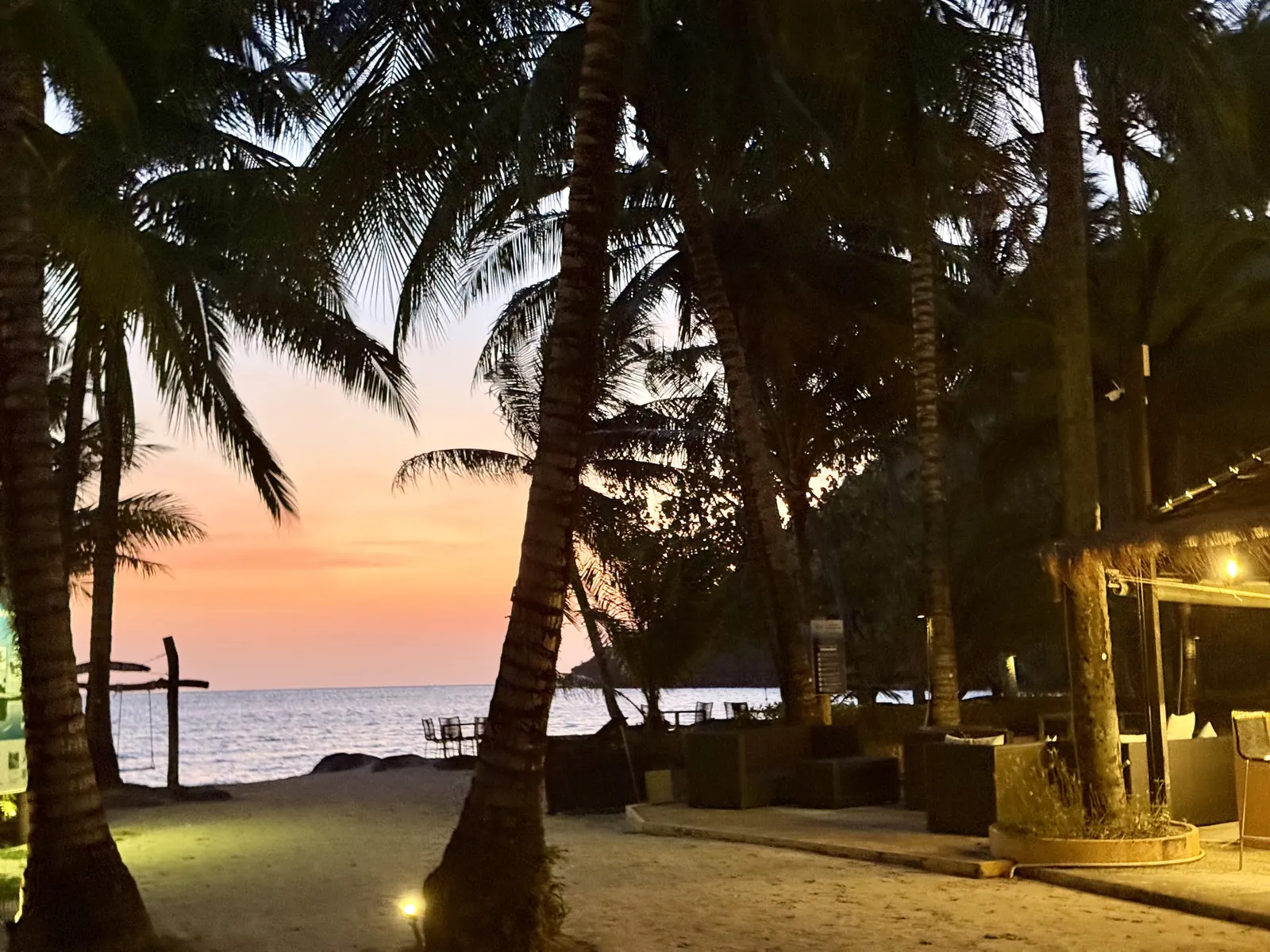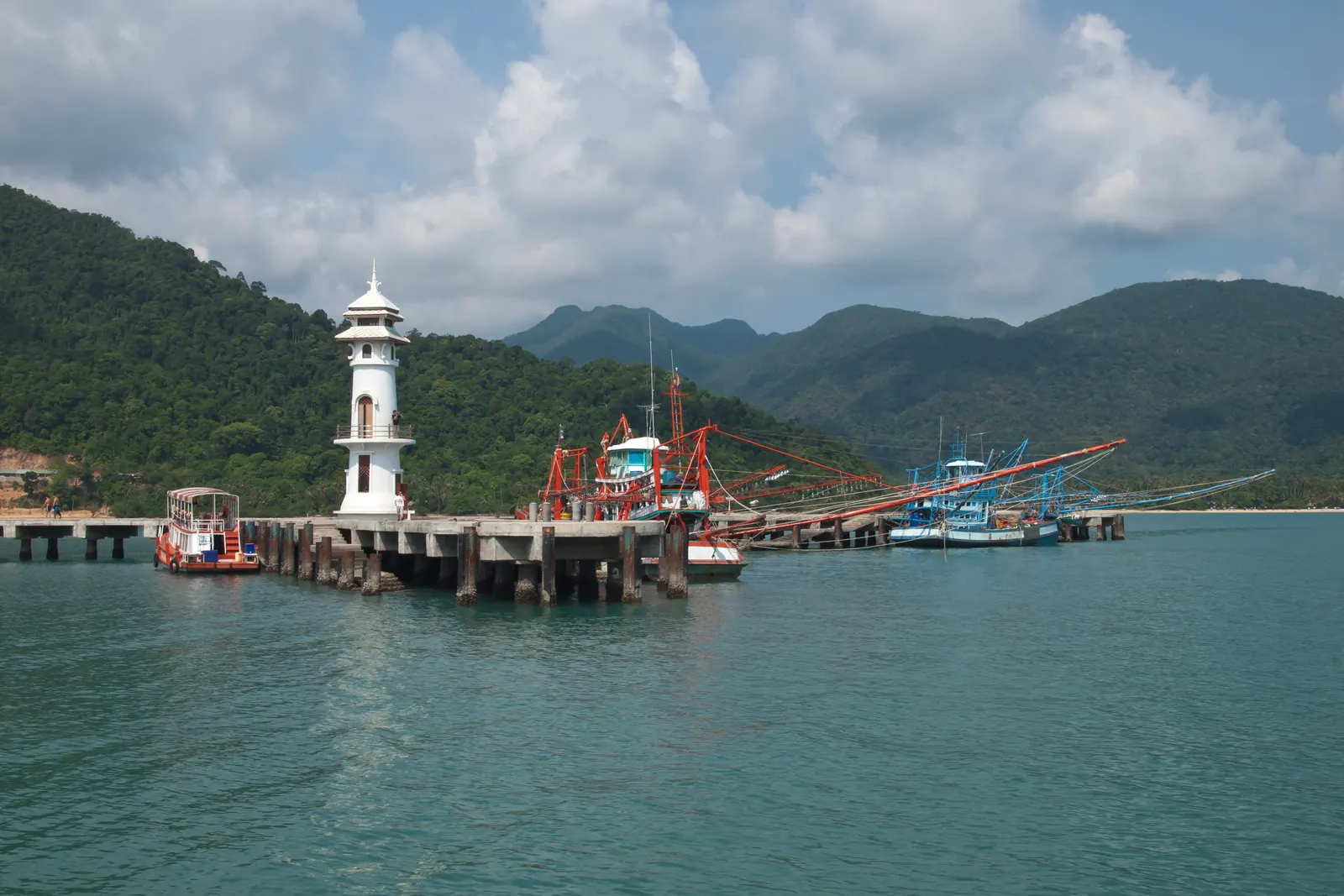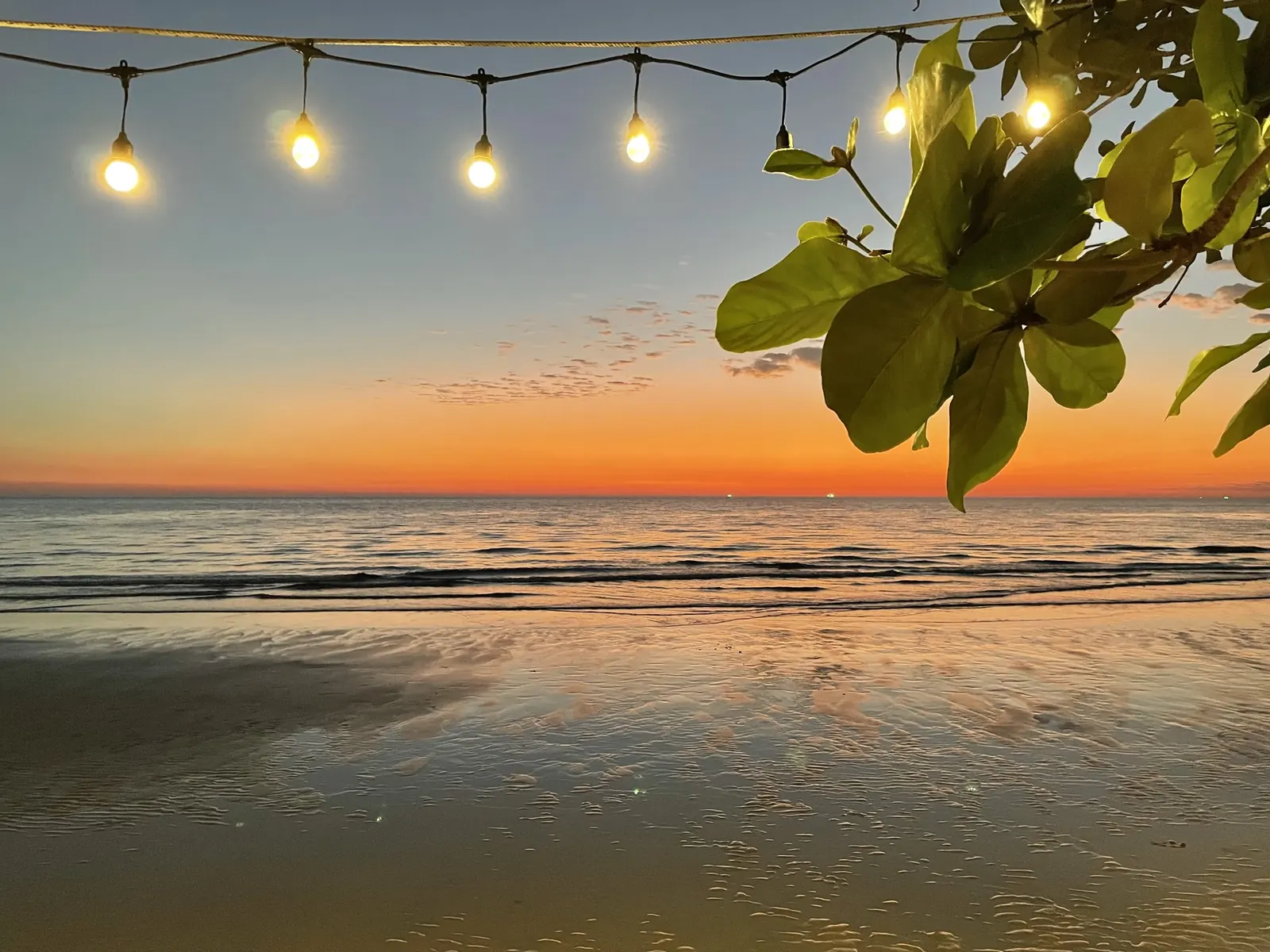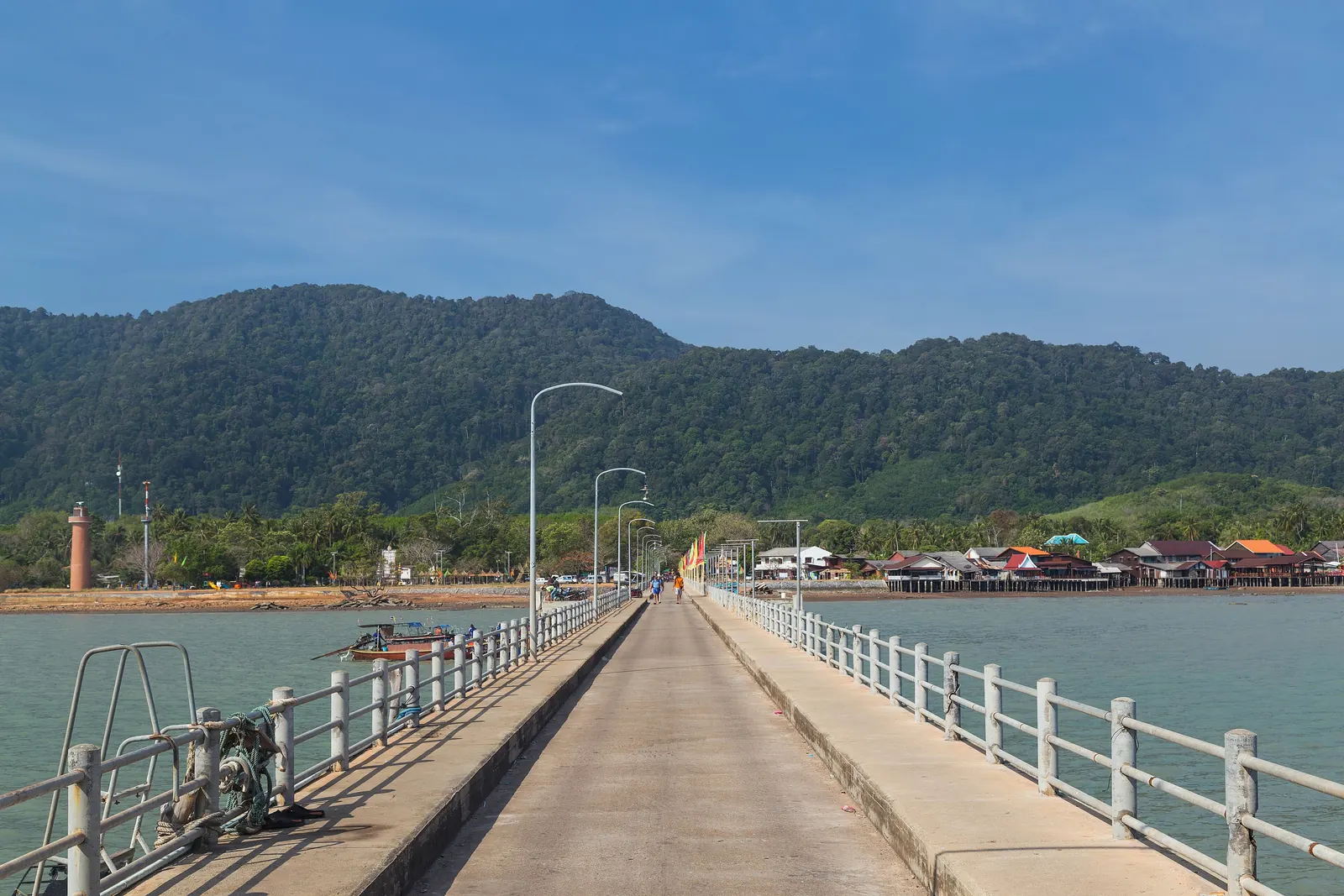
At about four in the afternoon the tide comes back under Lanta Old Town, and you can hear it. Sit at a table on one of the piers and the sound arrives before the water does: a slap and a suck against the stilts, then a longtail coming in under the restaurant with the engine cut. Nobody looks up. It has been happening here for a century.
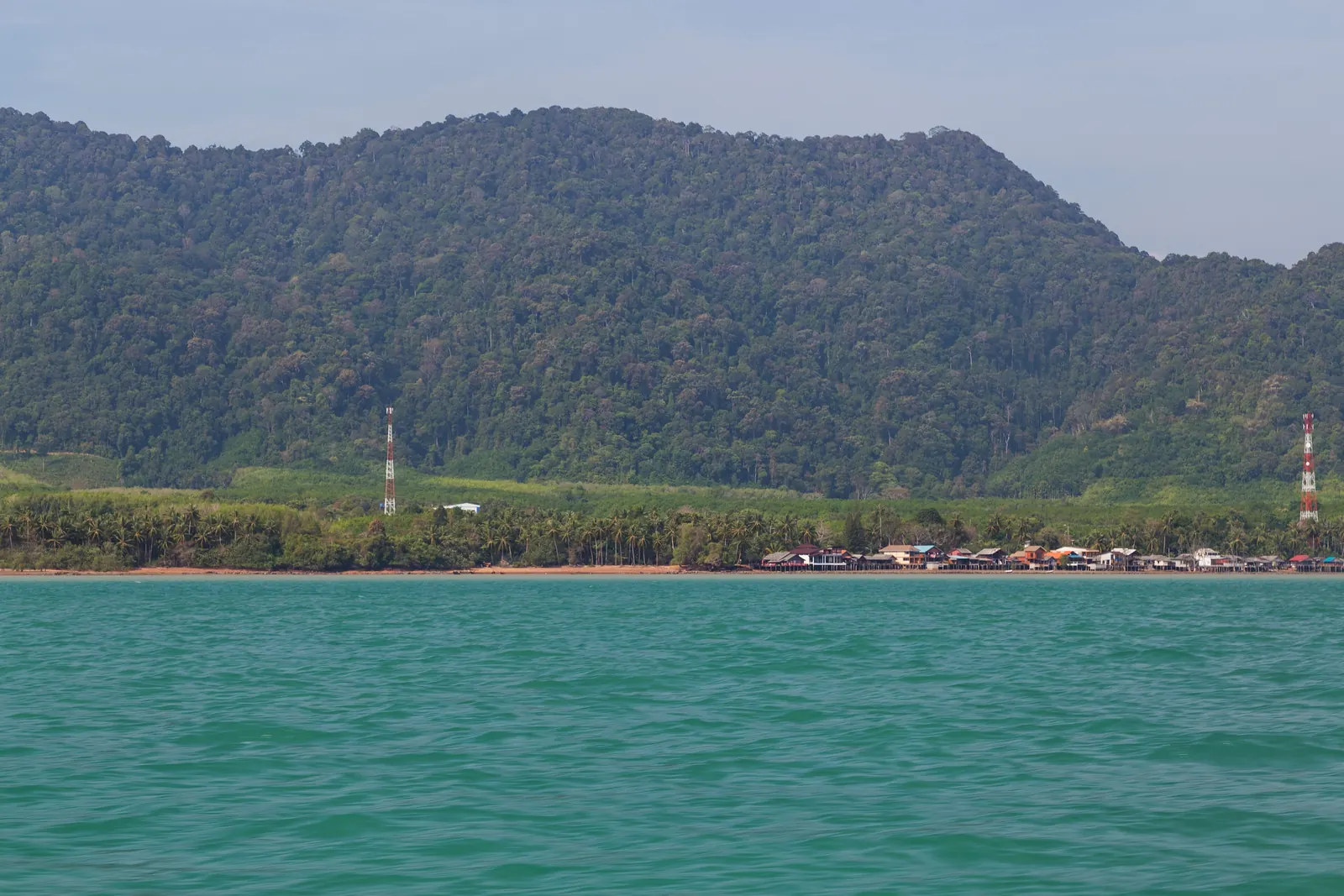
Lanta Old Town, Ban Si Raya on the maps and in Thai, sits on the east coast of Koh Lanta Yai facing the mainland rather than the sea, which is why it has no beach and why it still exists. One street of wooden shophouses, a Chinese shrine, a pier, half a dozen restaurants over the water, and a sea-people community at the far end that was here before any of it. It is the only place on the island a person who dislikes beaches would cross the road for.
The short version: ride or taxi across the island for an afternoon, walk the street slowly, eat crab on a pier with the tide under the boards, and stay for the light going amber on the karst across the bay. Make it a Sunday morning between November and April if you want the market. Do not make it your base unless you are the sort of traveller who reads our Koh Lanta slow road essay and nods; everyone else sleeps on the west coast, picks the beach with where to stay in Koh Lanta, and visits.
What Lanta Old Town actually is
Before there was a road on Koh Lanta there was a port, and this was it. Ban Si Raya sits on the sheltered channel between Lanta Yai and the mainland, out of the south-west monsoon, the natural stop for Chinese junks working the coast between Phuket and Penang. Hokkien merchants built the shophouses, mostly in the early twentieth century, on stilts so boats could unload straight into the back room. Muslim traders from the mainland ran the fishing. The Urak Lawoi, the sea people who had anchored here for generations before anyone built, settled at Sang Ga U at the south end of the bay and sold their catch to the Chinese. Three communities, one street, no wall between them; our ethnic groups of Thailand guide has the wider picture.
For most of the twentieth century this was the island’s administrative centre. Then the car ferry and the west-coast road turned Saladan into the front door, the district office moved, and the Old Town was left with its shophouses and its piers, and without the money to knock any of it down. It was preserved by being ignored. Today it is a single street of perhaps 600 metres of roughly 100-year-old hardwood shophouses, some restored into guesthouses and cafés, some still lived in by the families that built them. The view from the restaurants’ back tables, across the channel to the limestone stacks of the Krabi mainland, is the view the merchants had while they counted their money.
How to get to Lanta Old Town from the beaches
From Long Beach (Phra Ae) or Klong Dao, ride south on the west-coast road to the junction past Klong Khong, turn inland, and follow the concrete over the spine of the island through rubber plantations until it drops to the sea: about 12 kilometres and 20 to 25 minutes from Long Beach, 15 from Klong Khong or Klong Nin. Scooters are ฿250 to ฿300 a day and are the right tool, because you will want to go on to Sang Ga U afterwards. If you do not ride, a tuk-tuk or pickup taxi from Long Beach is ฿300 to ฿400 return with an hour or two of waiting built in; agree the total and the waiting time before you get in, and do not rely on Grab, which as of September 2026 barely reaches the east side.
From the mainland everything arrives via Saladan, covered in how to get to Koh Lanta; book the Krabi van and ferry on 12Go and ask the driver for Ban Si Raya; most will drop you at Saladan and point at a tuk-tuk.
Things to do in Lanta Old Town
Walk the street. This is the activity. Shrine to pier is ten minutes if you march, an hour if you go into the shops. Hammock House, midway, sells hammocks hand-woven by the Mlabri people of northern Thailand at ฿1,500 to ฿4,000: the one souvenir shop on Koh Lanta not selling elephant trousers.
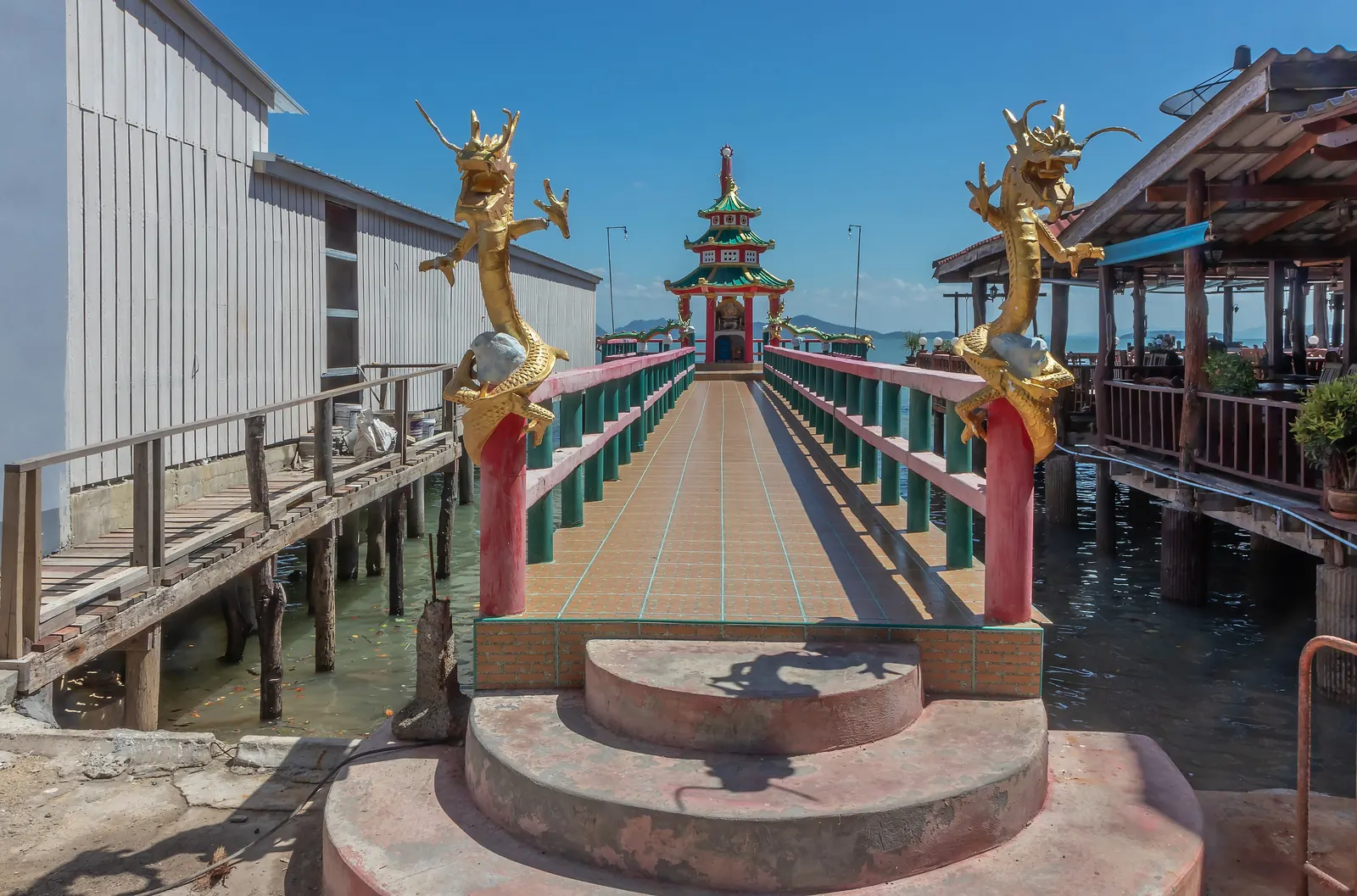
The Chinese shrine. The small red-and-gold shrine at the top of the street is the Hokkien community’s and still used daily. Shoes off past the threshold, knees covered, nobody photographed mid-prayer; our Thai temple etiquette guide covers the rest.
The Lanta Community Museum. In the old district office at the shrine end, opened in 2007 with boats, fishing gear and a room on each of the island’s communities. Free with a donation box and, as of September 2026, unreliable: the sign says 9am to 5pm daily and it is locked as often as not. Try the door.
The pier at sunset. The sun sets in the west and this is the east coast; what you get instead is the mainland karst going amber and the longtails coming home. Take a beer to the end of the pier at about 5.30pm.
The Sunday market. From roughly November to April the Old Town runs a small Sunday morning market along the street: local food, some crafts, a few clothes stalls. It winds down by late morning, it is not a night market, and it stops in the green season; confirm the day with your guesthouse.
The Laanta Lanta Festival. Three days in late March, the street shut to traffic, food stalls the length of it, two stages of Urak Lawoi rong ngeng, Thai dance, reggae and lion dancers: the island’s one party. The 2026 edition ran 27 to 29 March; check the Tourism Authority’s Krabi page in February for 2027, because the date moves. Free by day, a small charge for the evening concerts.
The mangroves. The channel to Lanta Noi, ten minutes north, is best seen by kayak: ฿900 to ฿1,300 for a half-day with pickup on GetYourGuide’s Lanta mangrove kayak trips, some with an Old Town lunch. Everything else on the island is ranked in things to do in Koh Lanta.
Where to eat in Lanta Old Town
The pier restaurants are the real thing: family kitchens in century-old buildings, seafood from the boats beneath the deck, prices set for Thai weekenders rather than resort guests. Expect ฿250 to ฿450 a head for a seafood lunch with a beer, against ฿400 to ฿700 on Long Beach. Order the crab, in yellow curry or with black pepper; skip the “king prawns”, which are farmed. Our southern Thai cuisine guide explains the turmeric and the chilli.
| Place | What it is | Order | Price | Verdict |
|---|---|---|---|---|
| Beautiful Restaurant | The classic pier deck, mid-street | Crab in yellow curry, steamed grouper | ฿150–350 a dish; ฿300–450 a head | Do it, for lunch with the tide in |
| Apsara | Century-old shophouse, deck at the back | Whole grilled snapper, tom yum | ฿200–300 a head | Do it, for dinner |
| Fresh Restaurant | Thai and seafood on the water; open all year | Pad cha squid, crab fried rice | ฿120–280 a dish | Do it, especially May to October |
| Caoutchouc | Café in a former rubber trader’s house | Breakfast, coffee, a late Thai lunch | ฿90–220 | Do it, for the building |
| Mango House | Café-bar in a restored shophouse over the water | Flat white, burgers, sundowners | Coffee ฿70–90; mains ฿200–320 | Do it, for the coffee and the view |
| Roti carts and noodle shops | Roadside; roti from 4pm, noodles mornings | Roti with egg and banana; khao mok gai | ฿30–60 | Do it, the cheapest meal on the island |
Most pier restaurants open about 10am to 9pm in high season and close early, or entirely, in the green season; in July, Fresh may be the only deck with a light on. The roti carts, Muslim families folding an egg and a banana into a ฿40 roti, are among the best on the Andaman coast; is Thai street food safe applies, and the queue of schoolchildren is your quality control.
Where to stay in Lanta Old Town if you want the east coast
Sleeping in the Old Town is a specific choice: no beach, no bars, nowhere to go after nine, and a bedroom in a hundred-year-old wooden building with the water under the floorboards and the boats starting up at five. Some people read that list and book immediately. Rooms are cheaper than the west coast and you get the town at 7am, its best hour. Two nights is the natural length; prices are cool-season estimates.
| Place | What it is | From around | Best for | Book |
|---|---|---|---|---|
| Mango House Seafront Suites | Three suites above the café, decks over the water | ฿2,500 | Couples | Agoda |
| Sriraya Guesthouse | Century-old family shophouse, fan and air-con rooms | ฿700 | Budget travellers | Agoda |
| Villa Sri Raya | The same family’s newer villa rooms: more comfort, less creak | ฿1,800 | The location without the 1920s plumbing | Agoda |
| Old Town guesthouses generally | Rooms above cafés and shops along the street | ฿500 | Walk-ins | Walk in |
The honest bit
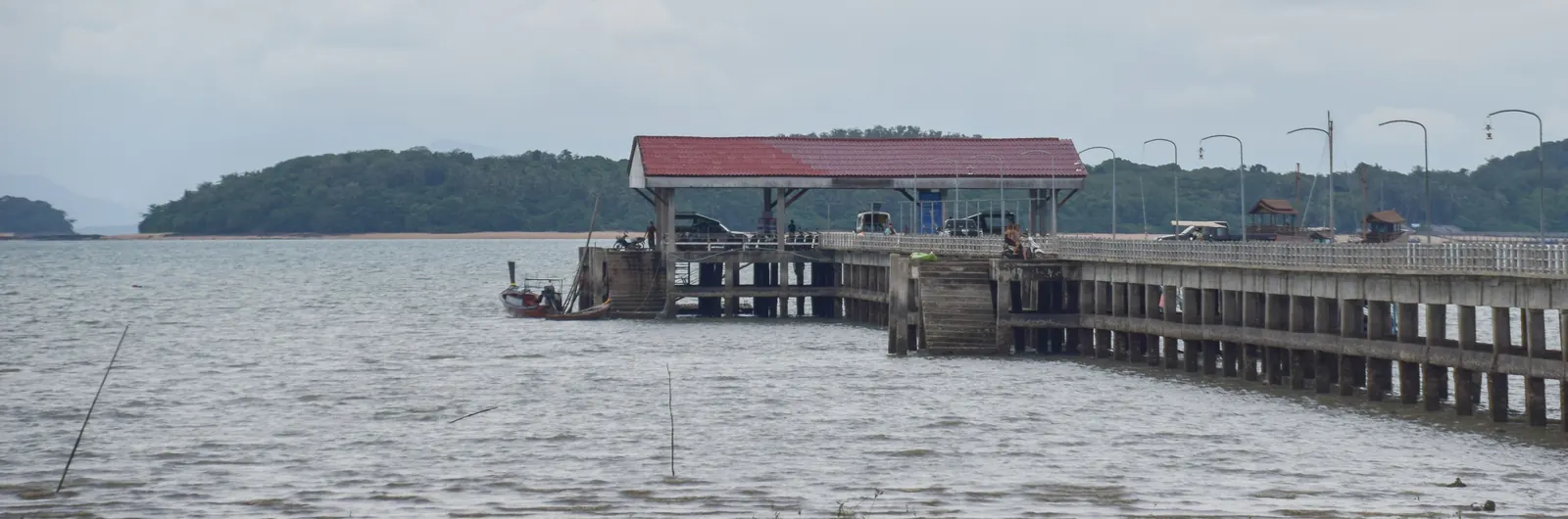
There is no beach. The shore is mud and mangrove and nobody swims. If your holiday is a beach holiday, Lanta Old Town is a half-day, and a very good one, but a half-day: arrive by 11am, walk, eat, sit on the pier until the light goes, ride back in the dark. It is small; in an hour you have walked it twice, and the charm is in the pace, not the inventory. And it half-closes in the green season: from May to October most of the pier restaurants pull their shutters, the market stops, and what you get is the shophouses, the shrine, the roti cart and a lot of dogs asleep in the road. Still a nice hour; check best time to visit Thailand before building a day around a Sunday market in August. If a pier quotes ฿700 a head, walk two doors down.
The Urak Lawoi: Sang Ga U and the Loi Rua ceremony
The Urak Lawoi, whom every brochure calls sea gypsies, are the island’s oldest residents and its least visible. About four kilometres south of the Old Town along the coast road is Sang Ga U, their main village on Lanta: longtails on the shore, a shrine to To Kiri, the ancestor said to have led the people here, and a cemetery by the sea. Koh Lanta is Satak in their language, their first settlement and their centre; the communities on Phi Phi, Lipe and Phuket trace back to here. They have spent thirty years being pushed off the shoreline by land titles they were never offered; visit knowing that.
Twice a year, at the full moons of the sixth and eleventh lunar months, usually May and November, the village holds Loi Rua, the boat-floating ceremony, over three days. On the first, the community honours To Kiri at the shrine with food, music and dancing. On the second, the men build a miniature boat, the plajak, and carve wooden figures of the villagers to ride in it. At dawn on the third, the to mor chants on the beach, people put clippings of hair and nail into the boat to carry away the year’s bad luck, and it is floated out on the tide. It is the most important thing that happens on Koh Lanta and almost no visitor has heard of it.
You can go; nobody sells tickets and nobody stops you watching from a distance. Ask before photographing anyone, by holding up the camera and waiting for the nod. Do not photograph the to mor during the chanting or the boat as it is floated, do not touch the plajak, dress as you would for a temple, bring no alcohol. If you are offered nothing, that is not rudeness; you are watching a family occasion from the gate. On an ordinary Tuesday the village is a place where people live, not a thing to do; the difference between a welcome visitor and a nuisance is how slowly you walk and whether you say hello first.
Lanta Old Town: your questions, answered
Is Lanta Old Town worth visiting?
Yes, for half a day. It is the only part of Koh Lanta with visible history, the pier restaurants are the best-value seafood on the island, and the evening light across the channel beats most west-coast sunsets. No beach, so make it a day out from a west-coast base.
How do I get from Long Beach to Lanta Old Town?
Ride south on the west-coast road, turn inland past Klong Khong and follow the cross-island road over the hill: about 12 kilometres and 20 to 25 minutes on a scooter (฿250–300 a day). A tuk-tuk or pickup taxi is ฿300–400 return including waiting; agree the total first and do not count on Grab for the return.
What day is the Lanta Old Town market?
Sunday mornings, from roughly November to April. A small local market along the main street with food, crafts and a few clothes stalls, winding down by late morning; not a night market. It stops in the green season; confirm the day with your guesthouse.
Where should I eat in Lanta Old Town?
On a pier. Beautiful Restaurant and Fresh are the classic decks for crab curry and steamed fish at ฿250–450 a head; Apsara does dinner in a century-old shophouse for ฿200–300; Caoutchouc and Mango House cover breakfast and coffee. The roti carts from 4pm are ฿40 and among the best on the coast.
Can I visit the sea gypsy village at Sang Ga U?
Yes, quietly; there is no ticket and no tour, which is the point. Ask before photographing anyone, dress as you would for a temple, and remember it is a working fishing village. At the full moon in May or November you may see the three-day Loi Rua boat-floating ceremony; watch from a distance and do not photograph the ritual leader or the boat as it is floated.
Related guides
- Things to do in Koh Lanta: the set pieces, ranked
- Where to stay in Koh Lanta: beach by beach
- Thailand price index: what things should cost in 2026
Book the trip
Some links in this guide are affiliate links. If you book through them we may earn a small commission at no extra cost to you — it helps keep Destination Thailand independent.
Rooms on both coasts, including the Old Town shophouses, are on Agoda’s Koh Lanta page; the van-and-ferry from Krabi is on 12Go. Not sure Koh Lanta, or an island at all, is the right call? Our Where to Go in Thailand matcher will tell you in about a minute.