Here is the thing about the Similan Islands that nobody prints on the brochure: the park is only open seven months a year, from 15 October to 15 May, and the best boats for the opening weeks sell out while it is still raining. Every September the same message lands in my inbox — “we arrive in Khao Lak on the 20th, which liveaboard should we book?” — and every September the honest answer is: the one you should have booked in July. The Similans run on a hard closure calendar, a daily visitor cap and a small fleet of genuinely good boats, and that arithmetic punishes anyone who wings it.
The short version first. The Similan Islands are a marine national park about 60 km off the Phang Nga coast, open 15 October to 15 May only. Foreigners currently pay 500 baht entry (250 baht for children aged 3–14) plus 200 baht a day to dive. Nobody sleeps on the islands — camping and bungalows were scrapped in 2018 — so you either take a speedboat day trip from Khao Lak or sleep aboard a liveaboard. Day trips cost around 2,000–3,500 baht; liveaboards start near 11,000 baht for two days and climb fast.
Similan Islands day trip or liveaboard: decide this before anything else
Everything else — where you stay, what you spend, whether you come home raving or shrugging — hangs on this one choice, so make it first.
A day trip means a speedboat from Thap Lamu pier near Khao Lak: roughly 70 minutes of thumping across open water, then four or five hours split between snorkel stops and the two islands you can actually land on — Koh Similan (island 8, home of Donald Duck Bay and the Sail Rock viewpoint) and Koh Miang (island 4, two calm beaches and the park office). Lunch is a buffet under the trees; you are back on the mainland by five. A good day out — and a production line, as I will explain below. Compare Similan day trips from Khao Lak before buying from a beach tout, because the same boat is routinely sold at three different prices.
A liveaboard is the grown-up option. You sleep on the boat, dive Elephant Head Rock at seven in the morning before the day fleet turns up, and reach the sites speedboats never touch — Koh Bon and Koh Tachai in the north of the park, plus Richelieu Rock beyond it. If you dive, this is not a close call: four dives a day, night dives, dawn light on granite boulders the size of apartment blocks. The good mid-range boats vanish first, so if you are eyeing October or November, look at liveaboard berths for the opening weeks now rather than in September.
My rule: snorkellers and families, day trip. Certified divers, liveaboard, even a short two-day one. Doing the Similans as a day-tripping diver is like going to a steakhouse for the bread.

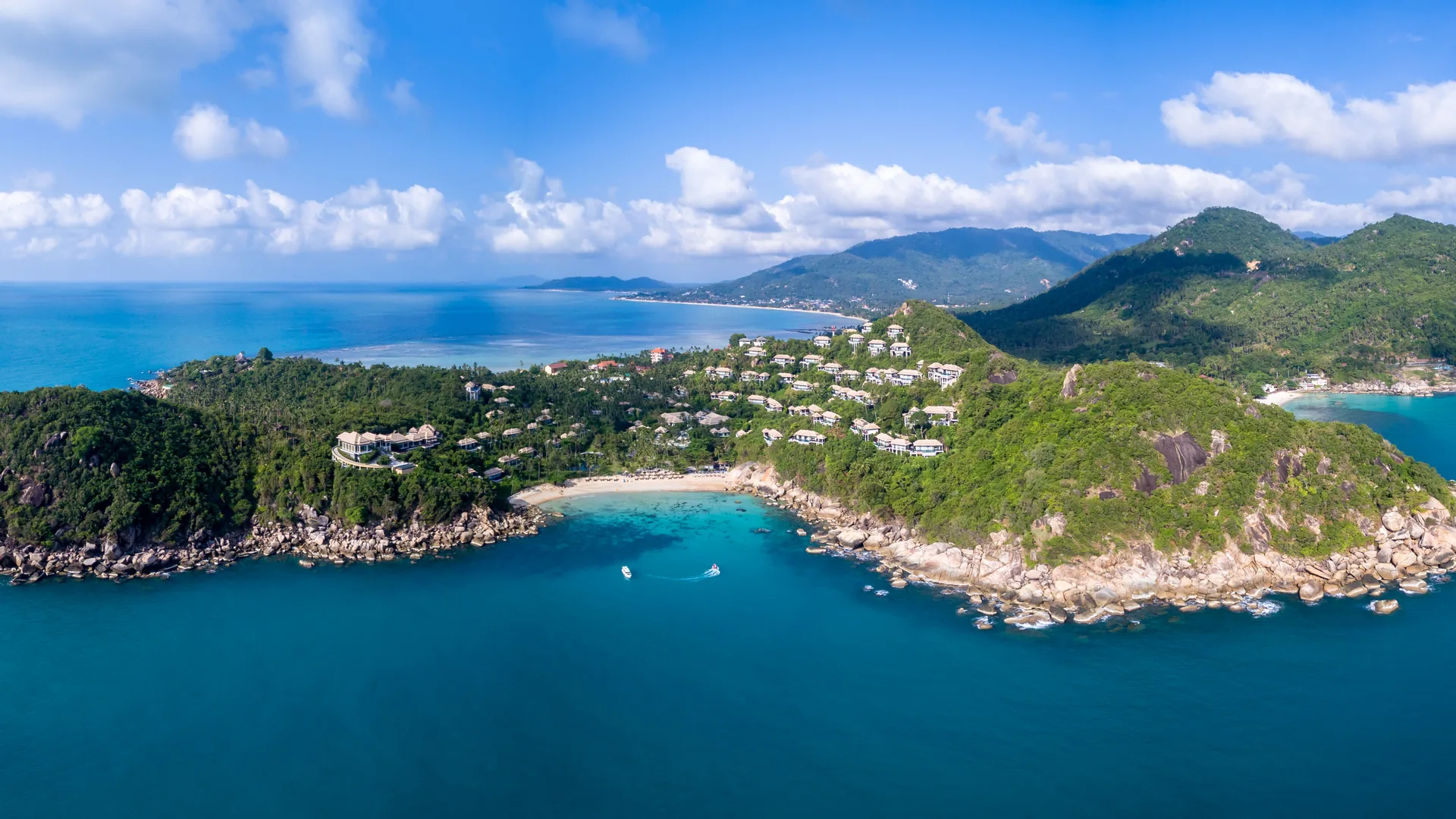
What the Similan Islands actually look like at 10am
The drone shots are doing a lot of lifting, so let me be straight with you. The water genuinely is that colour — a pale, lit-from-below turquoise you do not quite believe until the boat slows — and the granite boulder stacks are properly beautiful. But the park admits around 3,325 visitors a day (the cap has bounced between 3,325 and 3,850 since 2018), and nearly all of them arrive on the same schedule.
So Donald Duck Bay at 10am is thirty-odd speedboats moored in a line, a queue for the Sail Rock photo, and fins slapping in every direction. By 2pm the crowd drains away and the beach looks like the brochure again — which is precisely when the day boats leave. Liveaboard guests get the bay at seven in the morning, sharing it with hermit crabs. That is the Similan crowding economy in one line: everyone pays the same 500 baht, but the people who sleep at sea get the empty version.
None of this makes a day trip a mistake. Pick a small-group operator, or one running the standard route in reverse, and you dodge the worst of the scrum.
Snorkelling and diving the Similan Islands — and where Richelieu Rock actually is
Underwater, the park has two personalities. The west side is boulder chaos — swim-throughs, gullies and current channels at sites like Elephant Head Rock — while the east side slopes away in gentle hard-coral reef, which is where snorkellers get their money’s worth: parrotfish, the odd turtle off Koh Miang, clouds of fusiliers in five metres of ridiculous visibility.
The big animals live north. Koh Bon and Koh Tachai — both inside the national park, both liveaboard territory — are Thailand’s most dependable manta stations when season and luck cooperate, historically best from about February to April. And then there is Richelieu Rock, which everyone files under “Similan diving” and which is not in the Similans at all. It is a limestone pinnacle inside Mu Ko Surin National Park, roughly 18 km east of the Surin Islands, bolted onto Similan liveaboard routes because it is one of the best dive sites in Southeast Asia: purple soft coral, seahorses, barracuda tornadoes, and the occasional whale shark drifting past like a bus. If an itinerary includes Richelieu, that is the itinerary.
Plenty of us learned to dive on Koh Tao, where the courses are cheap; the Similans are the trip you take once you know what you are looking at. Landings are tightly limited: islands 1 to 3 stay closed for turtle nesting, and Koh Tachai’s beach has been shut since 2016. The park is strict because a decade ago it was being loved to death.

Similan Islands park fees, opening dates and the closure calendar
The dates barely move: open 15 October, shut 15 May, every year. For the 2026–27 season that means gates open on 15 October 2026 and close again on 15 May 2027, after which the whole archipelago is off-limits for the monsoon — no “secret tours”, whatever a Phuket agent whispers. The Department of National Parks is the source of truth on rules and fees, with the TAT’s Similan page as a readable backup.
| Item | Cost (as of August 2026) |
|---|---|
| Park entry, foreign adult | 500 baht |
| Park entry, child aged 3–14 | 250 baht |
| Diving fee | 200 baht per day |
| Speedboat day trip from Khao Lak | expect around 2,000–3,500 baht |
| Liveaboard, 2 days/1 night | from roughly 11,000–12,000 baht |
Two catches. Some operators fold the park fee into the price and plenty do not — read the inclusions line and carry 500–700 baht in cash per person. And the cap means the opening fortnight and Christmas–New Year genuinely sell out: arithmetic, not booking-site theatre. The weather sweet spot runs December to April; October can still be lumpy. For the wider seasonal picture, see when to visit Thailand.
Why Khao Lak is the smart base for the Similan Islands
The boats leave from Thap Lamu pier, about twenty minutes south of Khao Lak’s hotel strip. Phuket sells more Similan tours than anywhere else, and every single one bolts a 90-minute minivan ride onto each end of the same boat — a 5am hotel pickup versus Khao Lak’s civilised half past seven. Same islands, two extra hours of van, usually a higher price. I cannot construct an argument for it beyond “I was already in Phuket”.
Khao Lak itself is what this coast was before the beach clubs arrived: a long, low-rise string of beaches — Nang Thong, Bang Niang, Khuk Khak — with dive shops, night markets and resorts charging half of what the equivalent costs further south. Base here for two or three nights, do the islands properly, and browse Khao Lak hotels around Nang Thong and Bang Niang to see what I mean about value. If your trip is anchored to Phuket anyway, fair enough — my Phuket area guide covers the sensible corners, and there are plenty of ways to fill the week down there. For the Similans, though, Khao Lak wins on everything except nightlife.

How to get to the Similan Islands without a 4am start
Fly into Phuket — the Bangkok to Phuket run is cheap and constant — then head north overland. The airport sits at the top of the island, so Khao Lak is only about an hour and a quarter away by road; book a Phuket to Khao Lak transfer in advance and you can be at a beachfront guesthouse ninety minutes after baggage claim. Minivans, shared shuttles and private cars all run the route daily.
From Khao Lak, tours collect you around 7:30–8am; boats clear Thap Lamu by half eight and reach the park in about 70 minutes. The Similans slot neatly into a seven-day Andaman coast itinerary, and the quiet far-north route — Khuraburi for the Surin Islands, then Ranong — carries on where tour buses give up. The park belongs to Phang Nga province, which hosts half the best things on this coast and takes credit for none.
Practical details for the Similan Islands nobody tells you
- Cash, not cards. Park fees are collected in baht, in cash. There is no ATM sixty kilometres out to sea.
- Plastic and sunscreen rules. Single-use plastics are banned in Thai national parks, and sunscreens containing oxybenzone and other reef-harming chemicals have been banned in marine parks since 2021. Enforcement is patchy; buy reef-safe anyway.
- Seasickness is real. If ferries wobble you, take the tablet an hour before departure and sit near the back, where the bouncing is gentler.
- Expect no signal. Coverage dies past the coast — download offline maps; even the best Thai SIM or eSIM cannot help you out there.
- Book the boat before the room. Khao Lak has thousands of beds; the good boats have dozens of berths. Secure the trip first, then build the hotel around it.
Some links in this guide earn us a small commission at no extra cost to you — it is how the site stays independent. Full disclosure.
Plan · Book · Go
Book your Khao Lak trip
Some links below are affiliate links — if you book through them we may earn a small commission at no extra cost to you. It keeps our guides free and independent. Full disclosure.
Season decides this trip — and most others. Our Where to Go in Thailand matcher scores all 77 provinces against your month, your crowd tolerance and what you actually want from the trip — honest ratings included.
Similan Islands FAQ
When do the Similan Islands open for 2026–27?
The park opens on 15 October 2026 and closes on 15 May 2027 — the same window every year. During the monsoon closure there are no legal tours of any kind.
Is a day trip or a liveaboard better?
If you dive, a liveaboard, and it is not close — dawn dives, empty moorings, and the northern sites including Richelieu Rock. If you snorkel or travel with children, a speedboat day trip from Khao Lak delivers the beaches and the famous viewpoint in one long day.
How much are the Similan Islands park fees?
As of August 2026: 500 baht for foreign adults, 250 baht for children aged 3–14, plus a 200 baht per day diving fee. Fees are paid in cash and are sometimes, but not always, included in tour prices — check the inclusions before you book.
Can you stay overnight on the Similan Islands?
No. Camping and bungalow stays were abolished in 2018 and every visitor must leave the islands in the afternoon. The only way to sleep in the neighbourhood is a liveaboard boat anchored offshore — which is also the best thing about liveaboards.
Are the Similan Islands worth it for snorkellers?
Yes, with expectations set correctly. The east-side reefs put real fish life within five metres of the surface, and the beaches alone justify the ride. The mantas and whale sharks, though, mostly show up on deeper dive sites — snorkellers wanting shallow-reef perfection should look at the Surin Islands as well.