Culture · Etiquette
In this guide
- 1. Dress before you arrive
- 2. Remove your shoes
- 3. Never point your feet at a Buddha image
- 4. Monks and nuns: the interaction rules
- 5. Photography: where the line is
- 6. Merit-making and donations
- 7. Behaviour inside the buildings
- 8. The best time to visit
- Which temples are worth visiting
- Frequently asked questions
There are roughly forty thousand Buddhist temples in Thailand. They are working religious sites, not photo opportunities, and the country is generous about visitors getting it slightly wrong. But there are eight things worth knowing before you push through the first set of teak doors — and knowing them makes you a more observant guest in one of the world’s most visually extraordinary sacred spaces.
1. Dress before you arrive
The rule is consistent: shoulders covered, legs covered to at least mid-calf, no see-through fabrics, no sleeveless tops. Most large temples — the Grand Palace and Wat Pho in Bangkok, Doi Suthep in Chiang Mai, Wat Phra Kaew anywhere — will lend a sarong at the entrance for a small donation or token deposit. Wear it without resentment. The Grand Palace turns away thousands of underdressed visitors a year. Several will be refused entry and directed to a nearby shop that sells overpriced cover-ups. Wearing long trousers and a shirt with sleeves costs nothing and communicates that you came prepared.
2. Remove your shoes
Shoes come off before entering any building that contains a Buddha image — the main ordination hall (ubosot), the assembly hall (viharn), and most smaller chapels. Look for a pile of shoes at the entrance; if shoes are there, yours go there too. Slip-on shoes or sandals with simple buckles make this straightforward. Complex laces in a large temple with six buildings get old quickly. The floors of temple halls are genuinely clean — monks sweep them multiple times a day — so the concern is not hygiene but respect for the sacred space.
3. Never point your feet at a Buddha image
Feet are considered the lowest and least sacred part of the body in Thai culture. Pointing them at a person, a monk, or a Buddha image is genuinely offensive — equivalent to pointing a finger in someone’s face. When sitting on the floor inside a temple, tuck your feet behind you or sit cross-legged with feet pointing away from the altar. The prayer posture (wai) — palms together, fingers pointing upward — is the respectful orientation when facing a Buddha image. Observing how Thai visitors sit and orient themselves in a temple hall is the best real-time guide.
4. Monks and nuns: the interaction rules
Buddhist monks in Thailand are bound by the Vinaya — a code of monastic rules that, among other things, prohibits physical contact with women. A female visitor who reaches out to shake a monk’s hand, hands him an object directly, or sits next to him on a bus is inadvertently causing him to violate his vows. If you want to hand something to a monk, place it on a cloth or surface and allow him to pick it up. On public transport, women should avoid sitting in the seat directly next to a monk if alternatives exist. These are not hostile rules — most monks will gently indicate what they need — but knowing them in advance avoids the awkwardness.
Male visitors may interact with monks more freely. If a monk approaches you for conversation — and this happens regularly, as young monks often practice their English with foreign visitors — it is fine to chat, ask about temple life, and accept blessings. Photography with monks is generally acceptable if you ask first.
5. Photography: where the line is
Photographing temple exteriors, courtyards, and most outdoor areas is universally acceptable. The interior of ordination halls and chapels is usually permitted but look for signs or follow the local lead — some meditation halls and highly revered image chambers ask visitors not to photograph. The rule of thumb: if someone is praying in front of an image, do not photograph the image. Wait, step back, or move to a different angle that does not place a camera in a worshipper’s face. Never climb onto a Buddha image or statue for a photograph — this will cause genuine offence and can result in a fine or arrest under Thailand’s lèse-majesté and religious protection laws.
6. Merit-making and donations
Most temples have donation boxes near the entrance and at the base of principal Buddha images. Small donations are welcome and appreciated — 20 or 40 baht is standard. The ubiquitous gold-leaf kits for sale near major Buddha images (thin sheets of hammered gold that devotees press onto the image) are an active merit-making practice; visitors are welcome to participate. Many temples also sell small bowls of flower offerings, incense, and candles for a few baht to light at the shrine. Joining these small rituals with genuine respect — rather than as a photo opportunity — is the most natural way to experience a wat as a living place rather than a monument.
7. Behaviour inside the buildings
Lower your voice inside temple halls. Remove hats. Do not sit with your back to the main Buddha image when others are present. Do not lean against columns or walls in a casual way — Thais do not. If a ceremony or chanting session is in progress, either stand or sit quietly at the back, do not walk through the middle of it, and do not photograph it unless it is clearly an open, public event. The distinction between a ceremony open to visitors and a private religious occasion is usually obvious from context — a dozen monks in orange robes chanting sutras for a family gathered around offerings is a private occasion.
8. The best time to visit
Major temples in Bangkok — Wat Pho, Wat Arun, the Grand Palace compound — are busiest between 09:00 and 14:00, particularly on weekends and during Chinese New Year. Arriving at opening time (usually 08:00 or 08:30) adds a quality of light and atmosphere that midday never has. For temples in Chiang Mai, the same principle applies — Doi Suthep at sunrise, before the tour groups arrive, is a different experience from Doi Suthep at noon. On Buddhist holy days (Wan Phra, which occur roughly every two weeks on the lunar calendar), temples are busiest with Thai worshippers and the atmosphere is most authentic — these are not days to avoid but rather days to go deliberately.
Which temples are worth visiting
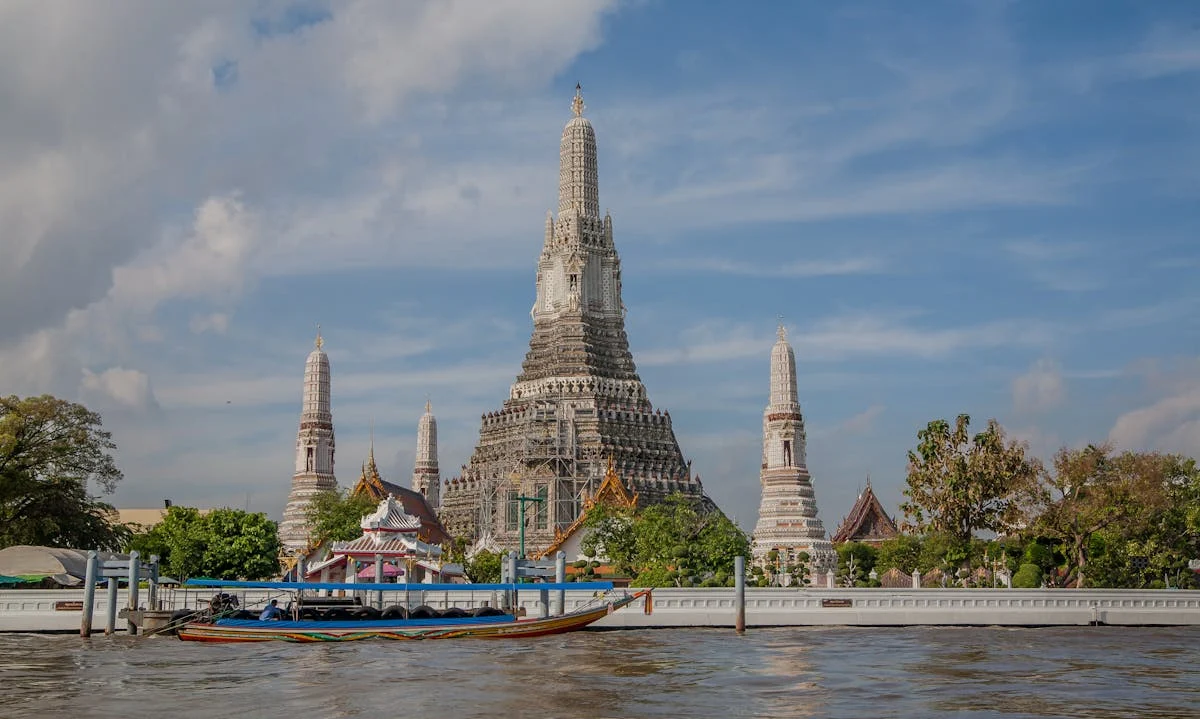
In Bangkok: Wat Pho for the reclining Buddha and the best traditional massage school in the city; Wat Arun for the riverside setting and the Khmer-influenced prang; Wat Suthat for the giant swing in front and the undervisited interior. In Chiang Mai: Doi Suthep for the views and the white elephants in the courtyard; Wat Chedi Luang in the Old City for the scale of the ruined chedi; Wat Sri Suphan (the Silver Temple) in the artisan quarter of Wualai for its entirely silver ordination hall. In the northeast: Wat Phra That Phanom in Nakhon Phanom, one of the most revered pilgrimage sites in the region and nearly unknown to foreign visitors.
Frequently asked questions
Do I have to pay to enter Thai temples? Many working temples are free. Major tourist temples charge an admission fee — the Grand Palace/Wat Phra Kaew compound costs 500 baht, Wat Pho is 200 baht, Wat Arun is 100 baht. Community temples off the tourist circuit are always free.
What should women do if they want to speak to a monk? Speak normally but avoid direct physical contact. If handing something to a monk, place it on a surface rather than directly into his hands. There is no need to be stilted — a smile and a wai are always appropriate.
Are there any temples in Thailand where women cannot enter? Most temples are open to all visitors. Some highly venerated ubosot (ordination halls) are restricted to ordained monks, but this applies equally to all non-monks regardless of gender.
Is it disrespectful to visit a temple as a non-Buddhist? No. Thai Buddhism is generally welcoming to curious visitors of any background. Observing the dress code, removing shoes, and behaving respectfully are all that is required. You do not need to participate in any ritual, though doing so with genuine curiosity is fine.
Getting around to see them: If you’re temple-hopping in Bangkok, the river and canal network is far faster than road traffic. See our guide to using Bangkok’s water taxis like a local for routes that connect Wat Pho, Wat Arun, and the Grand Palace precinct without the gridlock.
Frequently Asked Questions
Do I have to pay to enter Thai temples?
Many working temples are free. Major tourist temples charge admission — the Grand Palace/Wat Phra Kaew compound costs 500 baht, Wat Pho is 200 baht, Wat Arun is 100 baht.
What should women do if they want to speak to a monk?
Speak normally but avoid direct physical contact. If handing something to a monk, place it on a surface rather than directly into his hands.
Is it disrespectful to visit a temple as a non-Buddhist?
No. Thai Buddhism is welcoming to curious visitors of any background. Observing the dress code, removing shoes, and behaving respectfully is all that is required.
Related guides
- From Siam to Thailand: The Name Change That Redefined a Nation
- Temples in Ayutthaya: A Half-Day Cycle Through the Ruined Capital
- Top 5 temples in Ubon Ratchatani
Go deeper
Some links below are affiliate links. If you book through them we may earn a small commission at no extra cost to you — it helps keep Destination Thailand independent.
Want the stories too? The etiquette is the easy part; the history is what you’ll miss on your own. A guided temple walk on GetYourGuide covers both.