Food & Drink · Markets
In this guide
There is a stretch of Bangkok market — Or Tor Kor, on a Wednesday morning — where you can stand still and count thirty kinds of fruit you have never tasted. Most travellers walk past, intimidated by the prickles and the prices and the names they cannot pronounce. Here is the short list of what to try, when to try it, and what to say at the stall.
In season — March to August
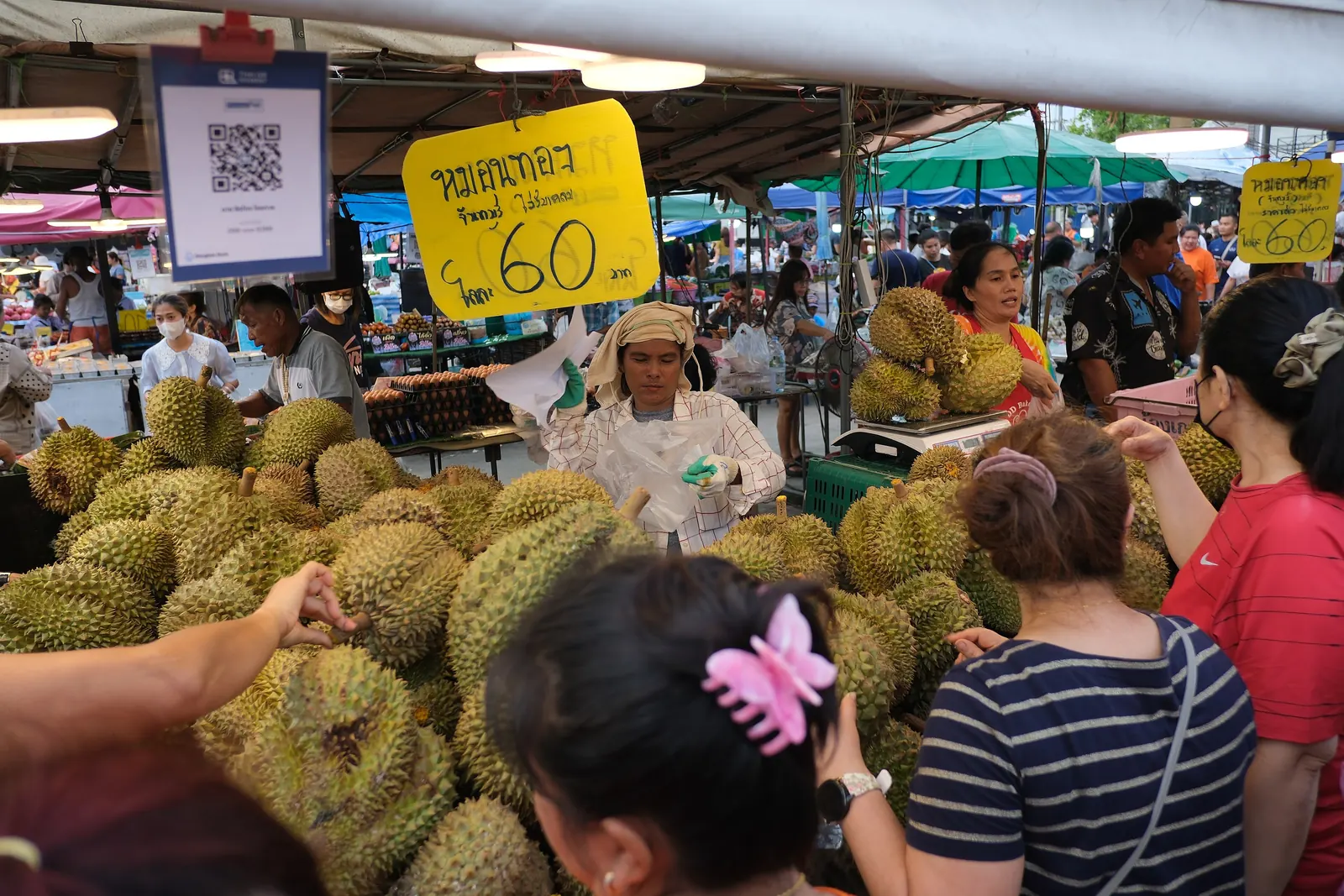
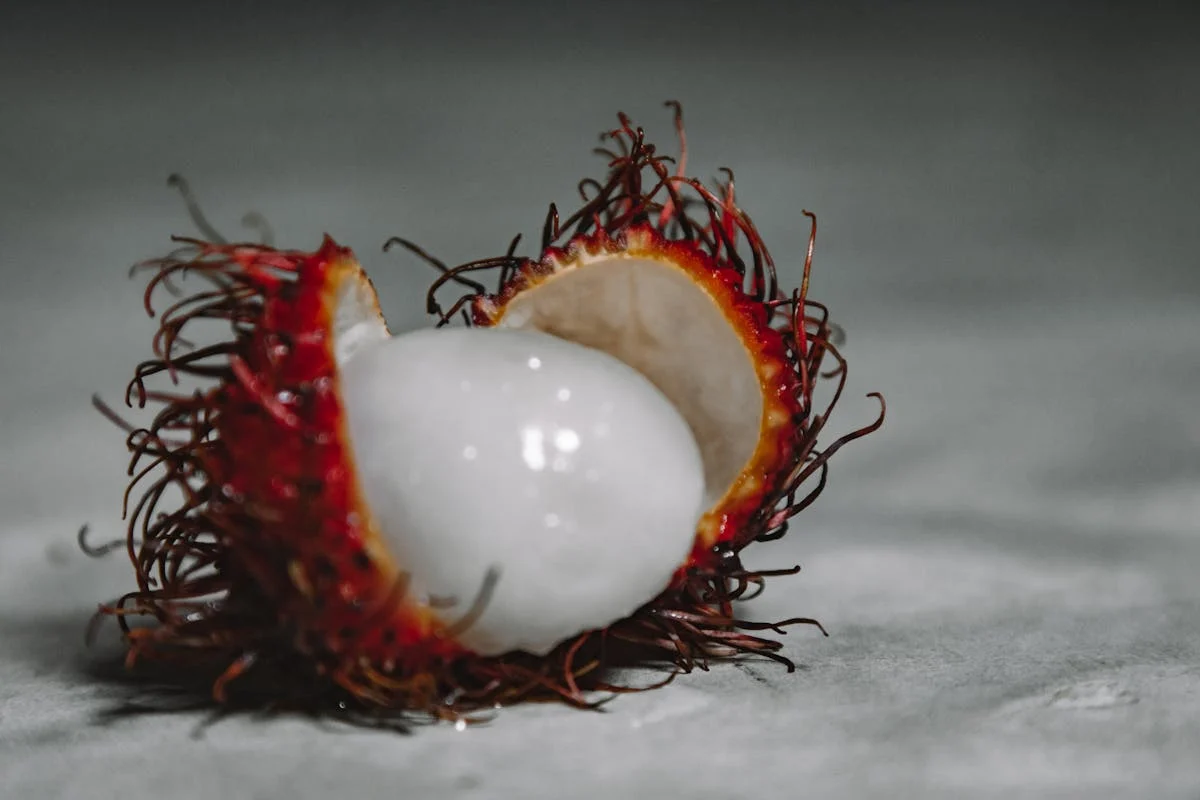
Mangosteen (mang-koot) is the queen and the easy win — purple shell, white segments, flavour somewhere between lychee and apricot. Rambutan (ngor) is the hairy one; bite the shell, twist, eat the eyeball. Durian (too-rian) is the famous one; smells like a mistake, tastes like custard, divides marriages. Try it once. You will know.
How to order without looking lost
Point. Hold up the number of fingers you want. Smile. The vendor will tell you the price; if it sounds high, say lot dai mai? — can you reduce it? Half the time they will. The other half, you have just paid three times what a Thai would, which is still less than a coffee back home. Pay it and move on.

The twelve fruits worth seeking out
Mangosteen (mangkhut) — The queen of tropical fruit. A deep purple shell conceals snow-white segments that taste like lychee crossed with peach, with none of either fruit’s cloying excess. Available April to September in the south. Buy when the shell gives slightly under pressure; too hard means underripe.
Rambutan (ngoh) — Red hairy shell, translucent white flesh around a central seed. The flavour is mild and sweet, closer to lychee than anything else. The word ngoh is common in markets; the fruit is available most of the year in the south. Peel the shell with your thumbs — it splits easily.
Sala (salak) — Brown, scale-covered exterior that makes it look reptilian. The flesh inside is white to yellow, dry, and astringent — an acquired taste that some visitors love and others do not. Most common in the north. Worth trying once.
Rose apple (chomphu) — Bell-shaped, pale pink or red, with a flavour that is mild, watery, and faintly floral. More texture than taste. Sold by the bag at roadside stalls throughout the central and eastern regions from March to June. Excellent eaten cold.
Jackfruit (khanun) — Thailand’s largest tree fruit, sold in pre-cut sections at every market in the country. The ripe fruit is bright yellow, fibrous, and intensely sweet. The unripe fruit (khanun orn) is cooked as a vegetable in curries, with a texture remarkably similar to pulled meat.
Pomelo (som oh) — The largest citrus fruit, with thick spongy pith and pale yellow or pink flesh that is less acidic than grapefruit. A northern Thai breakfast staple. The skin is laborious to remove; market vendors will prepare it for you. Nakhon Si Thammarat and Chai Nat provinces produce the best pomelo in the country.
Longan (lamyai) — Small, brown-shelled, and intensely sweet — the northern Thai equivalent of the lychee. Chiang Mai’s Lamphun province is famous for its longan orchards, and the Lamyai festival in August coincides with harvest season. Available dried year-round; fresh only July to September in the north.
Dragon fruit (kaew mangkorn) — Pink exterior, white or red flesh, black seeds throughout. Mild and refreshing rather than sweet. The red-fleshed variety is significantly more flavourful than the white. Available year-round and universally sold at breakfast buffets — which is not where it’s at its best. Buy it fresh from a morning market and eat it cold.

Durian: the only fruit with its own section
Durian requires separate treatment because the experience is unlike any other. The smell — a combination of ripe cheese, custard, and something harder to categorise — is intense enough to be banned from many hotels, trains, and public spaces. The taste, for those who get past the smell, is rich, custardy, and sweet, with different varieties offering entirely different flavour profiles. Monthong (golden pillow) is the most widely available and the least challenging; Chanee (gibbon) is smaller and more complex; Musang King, now widely cultivated in Thailand after being imported from Malaysia, is for experienced durian eaters only.
The best durian in Thailand comes from Chanthaburi province in the east (harvested April to June) and from Nonthaburi, where century-old orchards still produce small quantities of heritage varieties. For a first experience, buy a small section at a market stall rather than committing to a whole fruit. The vendor will open it for you.
How to buy fruit at a Thai market
Fruit is sold by weight (per kilogram) or by portion at most markets. Point at what you want, indicate the quantity with fingers (one kilo, half a kilo), and the vendor will bag it. Pre-cut fruit on a stick or in a bag typically costs 10–30 baht and is prepared with a standard condiment packet of sugar, salt, and dried chilli — a combination that sounds wrong and tastes right on everything from green mango to pineapple. For whole fruits like durian, mangosteen, or pomelo, vendors at larger markets will open the fruit for you on request. Asking “aroi mai?” (is it sweet?) often prompts an offered sample.
The fruit calendar, month by month
Thai fruit runs to a strict calendar, and it is worth checking before you plan a market morning — arrive in the wrong month and the stall that should be a wall of mangosteen is imported apples. The broad shape: March to June is peak season, when durian, mango, mangosteen, rambutan and lychee overlap; July to September carries the longan, salak and late southern harvests; October to February is the tropical off-season, when northern temperate fruit — Doi Inthanon strawberries, Chiang Rai mandarins — fills the gap.
| Fruit | Best season |
|---|---|
| Mango | March to June, some varieties into July |
| Durian | April to August, best May to July |
| Mangosteen | May to September |
| Rambutan | May to September |
| Lychee | April to June (the north) |
| Longan | June to September |
| Langsat / longkong | June to September |
| Salak | May to September |
| Pomelo | August to November |
| Rose apple | November to February |
| Jackfruit | January to May |
| Pineapple | Year-round, best March to July |
Not everything is seasonal. Banana, papaya, coconut, guava and dragon fruit are on the stalls all year, which keeps a fruit habit affordable even in the cool-season gap — though size, flavour and price still drift with the weather.
Wondering what all of this should cost at a stall? The Thailand Price Index tracks 58 real prices across the country — what is fair, what is official, and what tourists get quoted — checked and dated.
Thai fruit: your questions, answered
What is the best fruit to try in Thailand?
Mangosteen and fresh longan are consistently cited by visitors as the most revelatory Thai fruit experiences. Durian divides opinion sharply — worth trying once, but pick a mild variety (Monthong) for a first attempt.
When is mango season in Thailand?
Thai mangoes are at their peak from March to June. The most prized variety for eating fresh is Nam Dok Mai — pale yellow, fibreless, and very sweet. Green unripe mango eaten with the sweet-salty-spicy condiment is available year-round and is one of Thailand’s definitive street snacks.
Is Thai fruit safe to eat?
Yes. Pre-cut fruit from market stalls has a strong safety record. Fruit with its own intact skin (mangosteen, rambutan, longan) carries negligible risk. For fresh-cut fruit on sticks in smaller towns, buying from busy stalls with high turnover reduces any risk from heat exposure.
From fruit to dessert: Many of Thailand’s iconic sweet dishes are built on the same fruits covered here — sticky rice and mango, tub tim grob with water chestnut, and the coconut milk base that runs through almost everything. Our guide to Thai desserts beyond mango sticky rice picks up where the fruit ends.