It’s the question every first-timer asks, usually quietly, usually after they’ve already booked the flight: is the street food going to make me sick? The short answer is no — with judgment. The longer answer is more interesting, because the things that actually put travellers in a Thai pharmacy are mostly not the things they were warned about, and the food everyone was warned about is mostly the safest thing on the street.
We eat this food every day. Here’s the honest version.
The queue is the hygiene certificate
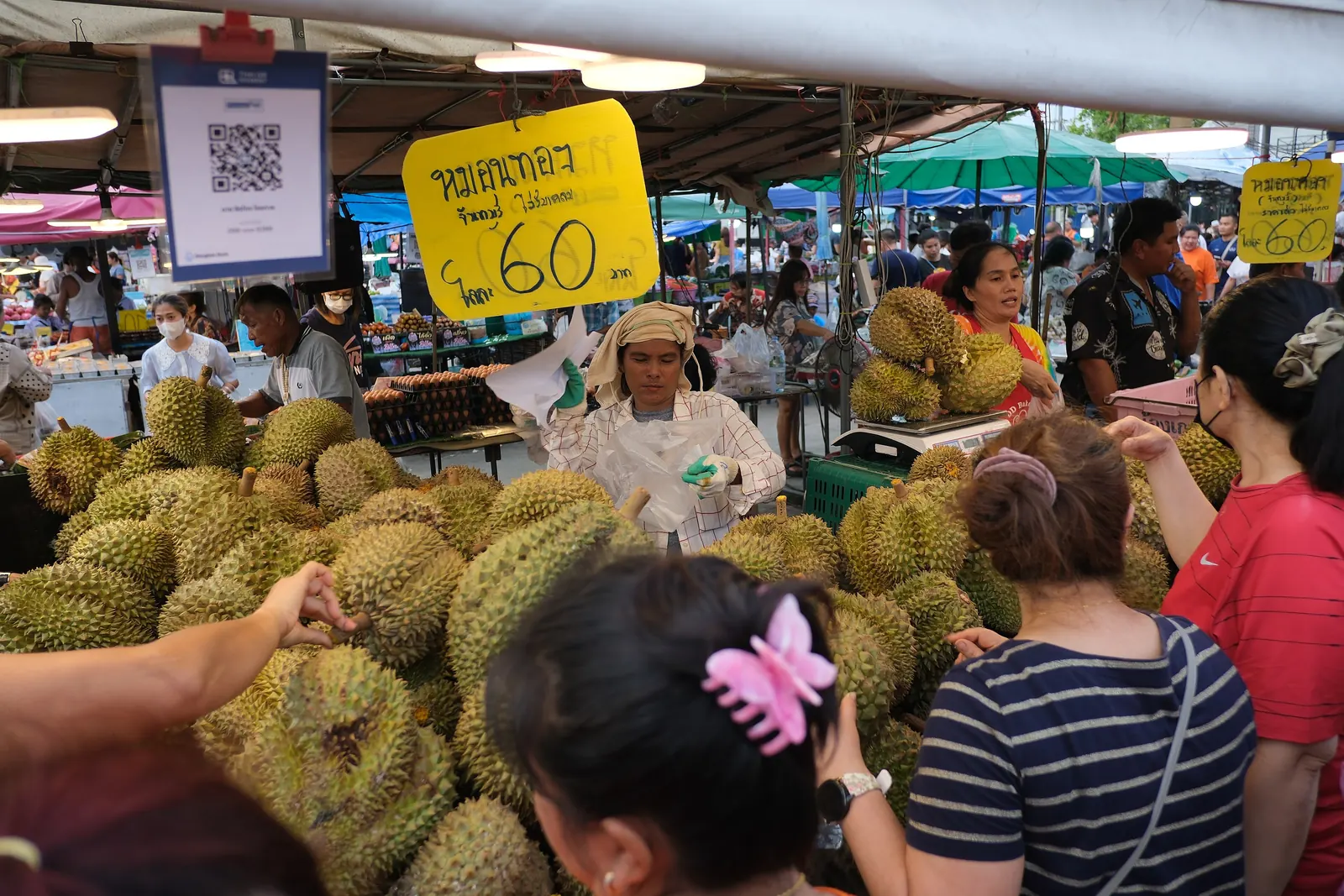
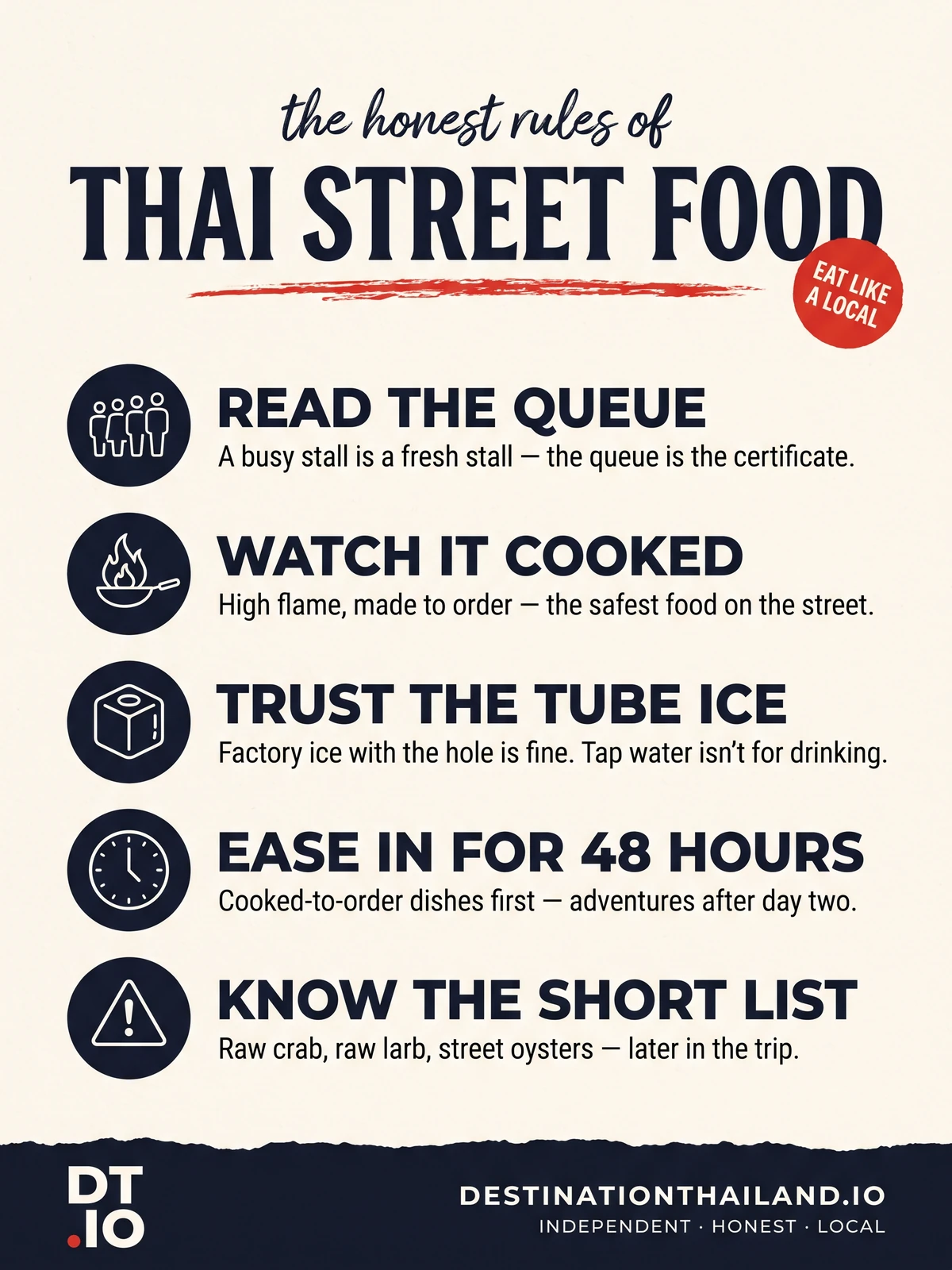
Forget trying to inspect a cart like a health officer. The single most reliable signal is turnover: a stall that’s busy at meal times sells everything fresh because nothing has time to sit. The noodle cart with a line of office workers at 12:15 turns its stock over every hour. The quiet cart next to it, with the same dishes, might be selling you this morning’s leftovers at 4pm. Same street, same ingredients, completely different risk.
This is also why the intimidating-looking places — the khao gaeng trays, the boat-noodle stalls doing forty bowls an hour — are safer than they photograph. Cooked this morning, gone by two. The rule scales everywhere: eat where locals are eating, at the hour locals are eating, and most of the risk evaporates.
What actually gets travellers sick
Ask around any expat table and the same culprits come up, and carts are rarely on the list. Hotel breakfast buffets — eggs and fried rice holding at “warm” for three hours — do more damage than any som tam stall. Seafood displayed on melting ice through a hot afternoon at a tourist market. The all-you-can-eat mookata barbecue where raw chicken and cooked chicken share a plate and the tongs never change. Pre-cut fruit in stagnant tourist zones (whole fruit you peel yourself is a different matter — our fruit guide covers what to buy and when).
And two impostors that get blamed on food: dehydration — a day in 35°C heat with two small waters produces nausea, headache and misery that gets misdiagnosed as food poisoning constantly — and the fourth bucket of Chang, whose consequences the som tam takes the fall for the next morning. Drink more water than feels necessary. It’s the cheapest health advice in Thailand.
The ice question, settled
The cylindrical ice with a hole through the middle — which is nearly all ice you’ll be served — is factory-made from filtered water and delivered in sealed bags. It’s fine. It has been fine for decades. Thais don’t drink tap water and neither should you (bottled is ฿10–15, refill stations are everywhere, brushing your teeth with tap is a non-issue), but the idea that iced drinks are Thailand’s hidden danger is a travel-forum fossil. Your cha yen is safe. Enjoy it.
An honest risk ladder
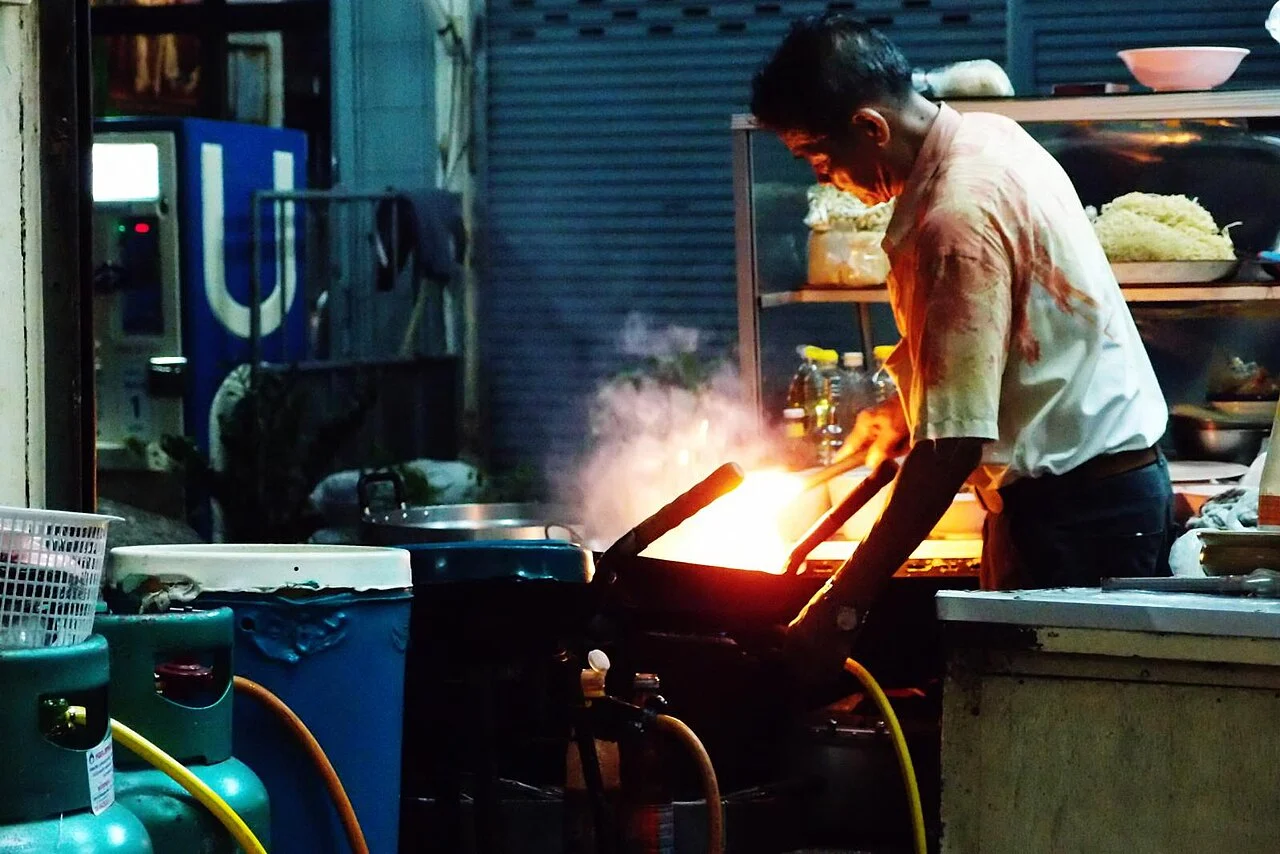
Not all street food carries the same risk, and pretending otherwise helps nobody. At the safe end: anything cooked to order in a screaming-hot wok in front of you — pad krapao, pad thai, fried rice — plus grilled-over-charcoal skewers and anything deep-fried. High heat, zero holding time. This is 80% of street food and it’s safer than most Western salad bars.
Mid-ladder: curries and pre-cooked trays (fine at busy places, see the turnover rule), noodle soups (the broth never stops boiling), raw-vegetable garnishes. Top of the ladder, genuinely higher-risk and worth knowing by name: som tam poo pla ra — papaya salad with raw fermented fish and field crab, a dish locals themselves treat as a calculated risk — raw-beef larb in the northeast, and raw oysters anywhere the display doesn’t convince you. None of these will ambush you; they’re specific orders you’d have to point at. First trip, first week: skip them, eat everything else.
Give your gut a 48-hour runway
Most “Bangkok belly” in the first two days isn’t contamination — it’s an unfamiliar bacterial neighbourhood, jet lag, heat, chilli and lemongrass hitting a digestive system that’s been eating supermarket food its whole life. Ease in: cooked-to-order dishes the first day or two, then go wherever your nose points. This isn’t because Thailand is dirty. It’s because you’re new. Locals visiting Europe go through the same adjustment in reverse.
If it goes wrong anyway
It usually passes in 24 hours. Every 7-Eleven sells electrolyte powder (look for Royal-D, ~฿10 a sachet) and every green-cross pharmacy — there’s one per block — stocks oral rehydration salts and activated charcoal, with pharmacists who handle this request daily and speak enough English for it. Rehydrate aggressively, eat plain rice porridge (jok — conveniently, a delicious breakfast in its own right), skip the Imodium unless you have a bus to survive. See a doctor for blood, high fever, or anything still going strong after 48 hours — Thai private hospitals and clinics are excellent and walk-in friendly. If you’re planning the trip and want the full arrival picture, our first-timer’s guide covers the practical stack.
Street food safety: your questions, answered
Can I eat street food on my first day in Thailand?
Yes — start with cooked-to-order dishes from busy stalls (wok-fried, grilled, deep-fried) and you’re taking less risk than at a hotel buffet. Save the raw and fermented specialities for later in the trip once your gut has adjusted.
Is the ice in Thailand safe?
Yes. The tube ice with a hole in the middle is factory-produced from filtered water and delivered sealed. Iced coffee, cha yen and fruit shakes are fine. Tap water is for washing, not drinking — bottled water costs ฿10–15.
What about meat hanging at room temperature?
The moo ping skewers you see out in the morning were marinated overnight and hit charcoal within hours — turnover, again, is the protection. Be more sceptical of cooked food holding warm for hours (buffets) than raw food moving fast toward a grill.
Is 7-Eleven food safe? Is it even real food?
Safe, yes — cold-chain controlled and date-stamped. And culturally, absolutely real: the toastie, the ฿45 microwave gaprao, the 2am instant-noodle bar are a genuine part of how Thailand eats. No one will revoke your traveller card.
Which street foods should a first-timer actually avoid?
A short, specific list: som tam with pla ra and raw crab, raw-beef larb, raw oysters from unrefrigerated displays, and pre-cut fruit in slow tourist zones. That’s roughly it. The other 95% of the street is safer than its reputation and better than most of what you’ll eat indoors — see our guide to what you’re actually tasting. Where to actually eat it, neighbourhood by neighbourhood: our Bangkok street food guide.