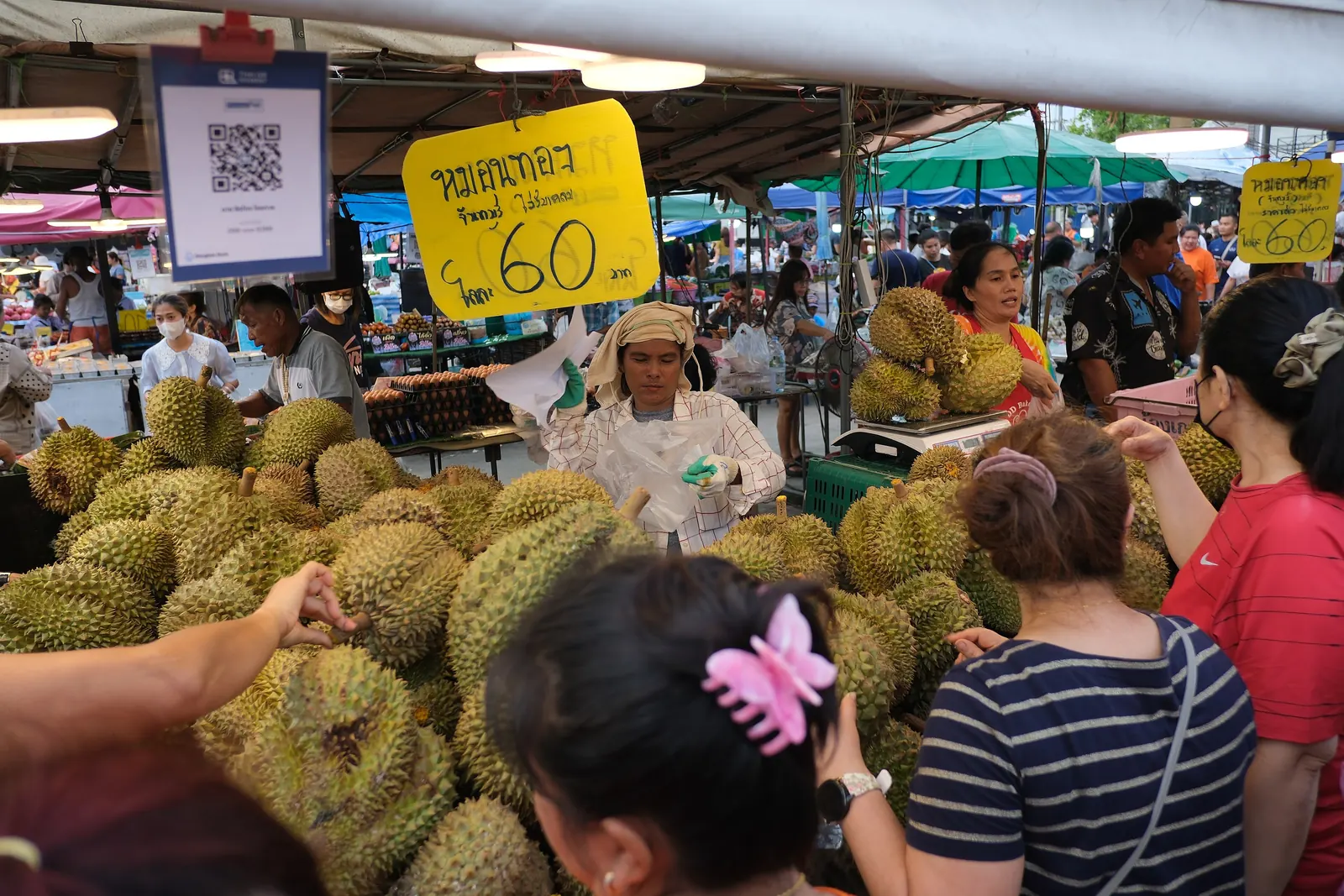
Most cuisines balance two or three flavours. French food is built on fat and acid, sometimes sweetness. Italian food leans salt, acid, and umami. Japanese food revolves around umami and salt with judicious sweetness. Thai food does something more ambitious. A properly made Thai dish runs all five fundamental tastes — sweet, sour, salty, spicy, and bitter — through the same spoon. Not in sequence. Simultaneously. You taste them as a single complicated note that resolves into one of those flavour experiences that wrecks every other meal you’ll have that week. Understanding the five tastes of Thai cuisine — what each one does, where it comes from, which dish demonstrates it best — is the difference between eating Thai food and actually understanding it. Below, the system, dish by dish.
Sweet — the tone the whole cuisine sets against
Sweet (waan in Thai) is the load-bearing flavour of the Thai palate. It runs underneath almost everything: curries, salads, noodle soups, even savoury dishes. The sweetness doesn’t come from refined sugar — that’s a 20th-century import. The traditional source is palm sugar (nam tan piip), made from the boiled-down sap of sugar palms, sold in dense brown discs at every market. It tastes nothing like white sugar: there’s a smoky, caramelised, almost butterscotch depth to it. The other source is coconut milk, which carries a natural lactose-style sweetness even before any sugar is added.
The iconic sweet-forward dishes:
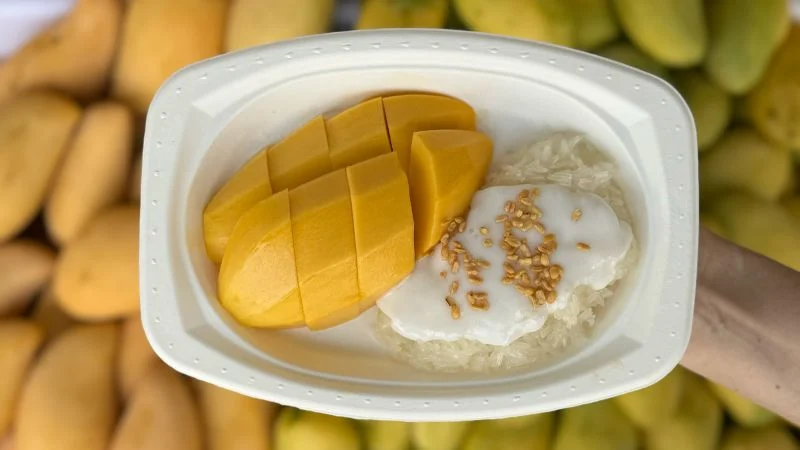
- **Mango sticky rice (khao niao mamuang)** — the obvious answer. Ripe yellow Nam Dok Mai mangoes, sticky rice steamed in coconut milk and palm sugar, finished with salted coconut cream. The sweetness is balanced by salt and the natural acidity of the mango. 80–150 THB at any Bangkok street stall.
- Pad Thai — yes, really. A proper pad Thai is dominated by sweetness from palm sugar and tamarind, with salt from fish sauce as the counterweight. The chilli is decorative. If your pad Thai isn’t sweet, you’re eating a tourist version.
- Khanom krok — coconut-rice pancakes from northern Thailand, slightly burnt on the bottom, with a custard centre that’s almost candy-sweet from coconut cream and palm sugar. 30 THB for a tray of six.
Sour — the flavour that does the heavy lifting
Sour (priao) is the flavour that prevents Thai food from collapsing under its own sweetness. The traditional sources are lime juice (squeezed at the last second, never cooked) and tamarind pulp (which carries a deeper, more caramelised sourness than citrus). In the south, budu (fermented anchovy sauce) and makok (Thai olive) add other layers of sour. In Isan, fermented rice noodles (khanom jeen) and pickled bamboo (nor mai dong) carry the flavour.
The dishes where sour does the lifting:
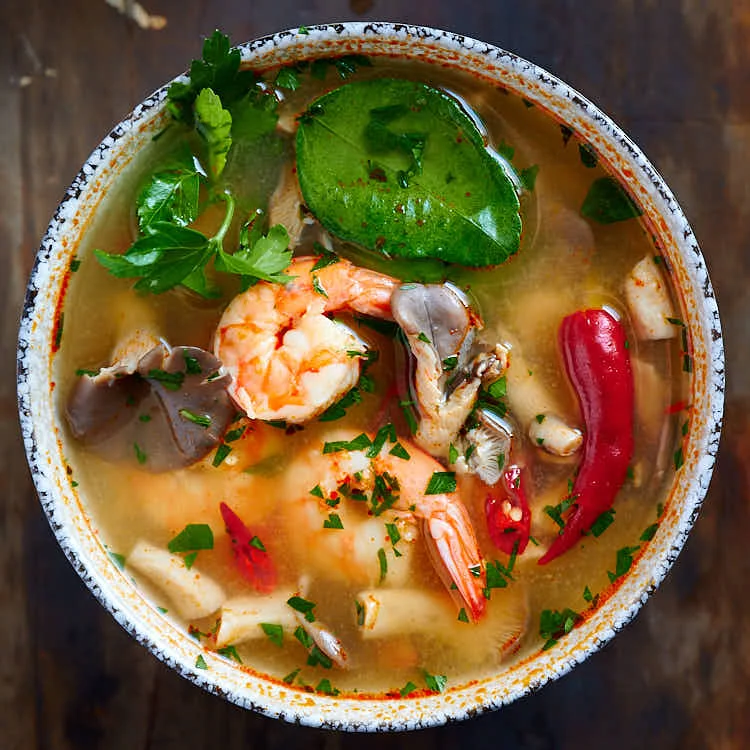
- Tom yum — the prototypical sour soup. Lemongrass, galangal, kaffir lime leaves, lime juice, fish sauce, chilli, prawns. The lime is added off-heat at the last second so it doesn’t go bitter. 120–180 THB at any restaurant; the seafood version (tom yum talay) is the upgrade.
- Som tam — green papaya salad. The Isan-style (som tam Lao) uses fermented fish sauce (pla ra) and lime; the Bangkok-style (som tam Thai) uses regular fish sauce and tamarind. Either way, the sour is the engine. 50–80 THB at any street stall.
- Tom kha gai — the coconut milk cousin to tom yum. Galangal-heavy, less sour but still acid-forward, with the coconut milk softening everything. Easier on the palate if tom yum’s too much.
Salty — the structural backbone
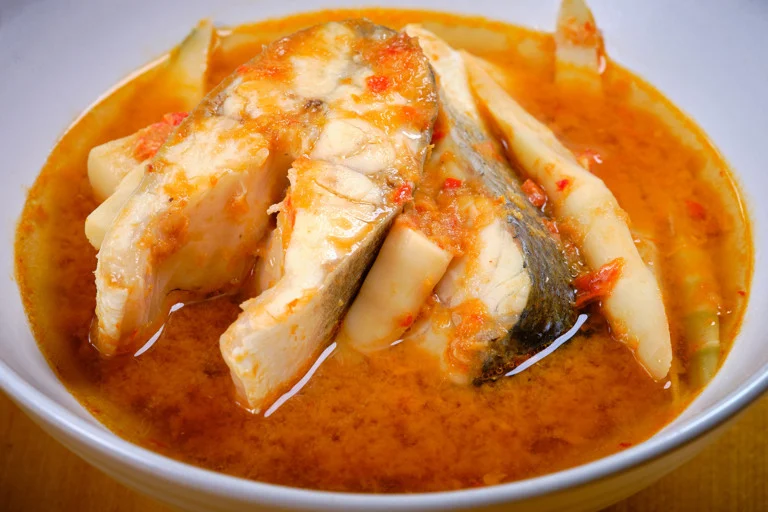
Salt (kem) in Thai cuisine doesn’t come from a salt cellar. It comes from fish sauce (nam pla), the all-purpose seasoning made from fermented anchovies; from shrimp paste (gapi), a denser, funkier paste used in curry pastes and dipping sauces; and from soy sauce in dishes with Chinese-Thai influence. The salt does two jobs: it carries the other flavours forward and it amplifies sweetness through contrast.
The dishes where salt is the spine:
- Gaeng som — the Thai sour curry, dominated by tamarind sourness but built on the salty foundation of shrimp paste and fish sauce. Common in the south with mackerel and stink beans (sator). 150–250 THB for a bowl.
- Khao kluk gapi — rice fried with shrimp paste, served with sweet pork, raw vegetables, dried shrimp, and a fried egg. You build each bite at the table. The shrimp paste is so dense with salt and umami it tastes like the bottom of the sea. 80–120 THB.
- Most curry pastes — green, red, massaman, panang, jungle curry. Open one up and you’ll find shrimp paste and dried chillies as the base. Salt is the structure they’re built on.
Spicy — the flavour that gets all the attention
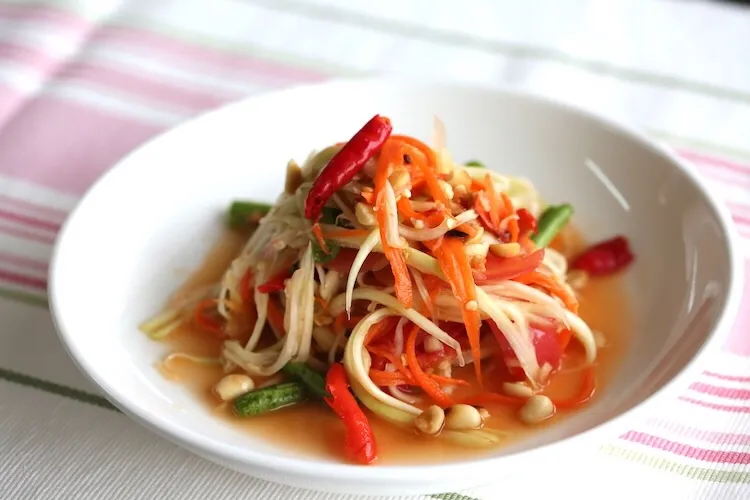
Hot (phet) is the loudest of the five tastes of Thai cuisine, the one Western diners remember, and also the most often misunderstood. The heat in Thai food comes mostly from fresh bird’s-eye chillies (phrik kee nu) — small, green or red, very hot — and from dried chillies used in curry pastes. Black pepper plays a smaller role (originally the heat source before chillies arrived from the Americas in the 16th century via Portuguese trade).
The chilli’s job isn’t to dominate. It’s to vibrate against the other four flavours and make them louder. A well-made Thai dish is hot in a way that fades quickly, leaving the other tastes intact.
The dishes where heat is allowed to lead:
- **Larb (laap)** — the Isan minced-meat salad. Pork, beef, chicken, or duck, minced and tossed with toasted rice powder, mint, shallots, fish sauce, lime, and a serious dose of chilli. Often eaten with sticky rice to mediate the heat. 100–150 THB.
- Gaeng tai pla — southern Thai fermented-fish curry. The dish that scares tourists and converts everyone else. Eye-watering chilli levels balanced by the funk of fermented fish guts and the sweetness of palm sugar. 80–130 THB in the south; harder to find in Bangkok.
- Pad krapao — minced pork (or chicken) stir-fried with holy basil, bird’s-eye chillies, and a fried egg. The default lunch dish for working Bangkokers. 60–90 THB at any rice shop.
Bitter — the missing fifth taste
Bitter (khom) is the most overlooked of the five tastes of Thai cuisine because it’s underplayed in tourist-facing dishes and absent from anything you’ll find at an airport food court. But it’s structurally important — bitterness is what stops the other four tastes from collapsing into a sugar-and-salt monotone. The sources are bitter melon (mara), wing beans (tua pluu), acacia leaves (cha-om), liang leaves (bai liang, used in Phuket), and bitter herbs like sawtooth coriander (pak chee farang).
The dishes where bitter is allowed to show:
- Gaeng om — Isan herb-heavy soup with bitter wild leaves, fermented fish, and chunks of buffalo, fish, or chicken. The bitterness is the point; tourists usually don’t see this dish on English menus. 120–180 THB at proper Isan restaurants.
- Mara yat sai — bitter melon stuffed with minced pork, simmered in clear broth. Common at homestay kitchens. 80–120 THB.
- Stir-fried liang leaves with egg — Phuket and southern speciality. The leaves taste like a cross between spinach and a mild aspirin. With the egg they’re addictive in a way you don’t expect. 100–150 THB.
How the five tastes of Thai cuisine work together
Thai cooks build dishes the way a sound engineer builds a mix: each taste is a separate channel, and the cook adjusts levels until the whole thing locks into balance. A good tom yum is sour-led with salt structure, sweetness softening the edges, heat keeping it alive, and faint bitterness from kaffir lime leaves stopping the broth going one-note. Pull any channel and the dish collapses.
This is why much Thai food eaten outside Thailand tastes flat: chefs balancing two or three tastes don’t know how to manage five. Sweetness gets cranked because Western diners like it. Sourness gets cut because lime is expensive. Bitterness gets eliminated. What’s left is sweet-salty-with-chilli — fine, but not actually Thai.
Where to taste all five in one meal in Bangkok
Three places do it well:
- Raan Jay Fai (Mahachai Road) — Michelin-starred crab-omelette joint. Reservations effectively impossible. The drunken noodles are masterclasses in balance. 500–1,500 THB per dish.
- Krua Apsorn — Bangkok’s reliably brilliant Thai-Bangkok cuisine. Try the salted-crab fried rice and the gaeng som. 200–400 THB per dish.
- Or Tor Kor Market (next to Chatuchak) — premium produce market. Walk the stalls and sample everything in this article in 90 minutes for under 500 THB.
A Thailand itinerary 7 days easily folds a Bangkok food day in. See our Bangkok province guide for the wider context.
Final thoughts on the five tastes of Thai cuisine
The five tastes of Thai cuisine aren’t a flavour wheel — they’re a working grammar. Every Thai cook has internalised the system below conscious thought. Pay attention to all five next time you eat. That’s when the cuisine opens up.
FAQ
What are the five basic tastes in Thai food?
Sweet, sour, salty, spicy, and bitter. Thai cooks balance all five within most dishes — including ones tourists think of as single-note, like pad Thai or tom yum.
Is umami a sixth taste in Thai cuisine?
Umami is present (especially via fish sauce and shrimp paste) but Thai culinary tradition counts it under “salty” rather than as a separate taste. Western chefs trained to think in terms of umami often re-categorise it.
What’s the most spicy Thai dish?
Gaeng tai pla (southern fermented-fish curry) and larb Lao (Isan-style raw minced meat salad with fermented fish) are usually the hottest. Both routinely make Thais sweat.
Why does pad Thai taste sweet?
Because real pad Thai is built on palm sugar and tamarind. The sweetness is the dominant note, balanced by salt from fish sauce. If your pad Thai isn’t sweet, it’s been adjusted for foreign palates.
Where can I find bitter Thai dishes?
Isan restaurants (for gaeng om and bitter-herb stir-fries) and Phuket old town (for liang leaves and acacia dishes). Most central Bangkok tourist menus don’t include them; you have to seek them out.
Is Thai food healthier than Western food?
It can be — the heavy use of fresh herbs, vegetables, lime, and chilli is genuinely good for you. But Thai food also contains a lot of palm sugar, coconut cream, and salt. Balance matters here too.
Related guides
- Chiang Mai mornings — six places to breakfast like a local
- Ancient Thai Recipes: Ahan Boran, Its Origins and Its Future
- Best Thai Desserts Beyond Mango Sticky Rice
Still hungry?
Some links below are affiliate links. If you book through them we may earn a small commission at no extra cost to you — it helps keep Destination Thailand independent.
Taste the theory: the quickest way to understand the five tastes is to balance them yourself, wok in hand — book a Thai cooking class on GetYourGuide.