Bangkok food bloggers will tell you Isan food starts and ends with the Bangkok Isan restaurants — Som Tam Nua on Siam Square, Soul Food Mahanakorn, the Anthony Bourdain stops. Which is fine. But the actual home of Isan cuisine is the north-east of Thailand, and the unofficial capital of the north-east is Khon Kaen. The city has 230,000 people, a university with 40,000 students, a railway station, two airports’ worth of inland flights, and — most importantly for the visitor — multiple night markets that haven’t been polished for tourist Instagram. The Khon Kaen night market scene is where you eat the proper Isan version of every dish you’ve already had a watered-down version of in Bangkok. Below, the honest guide.
What Khon Kaen is and why the food matters
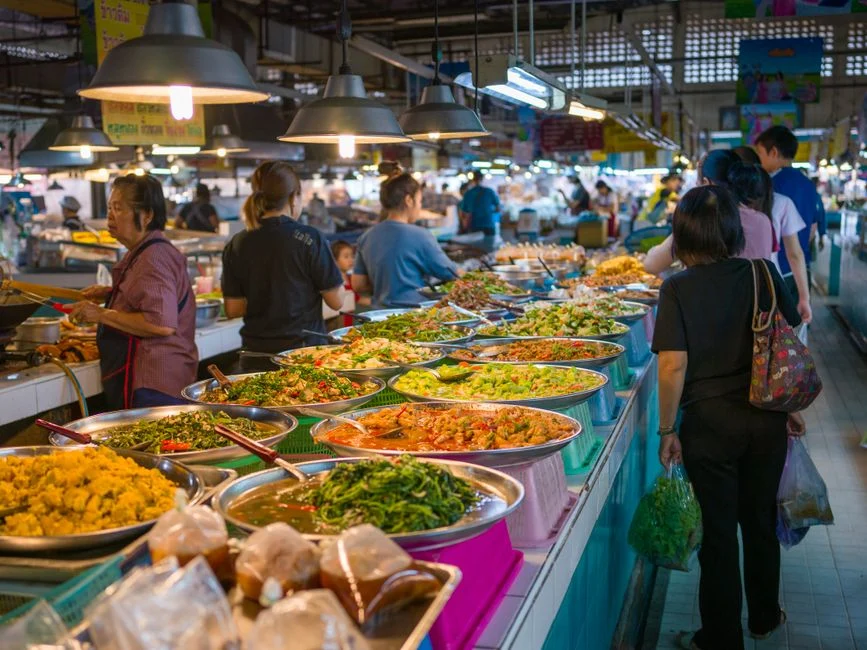
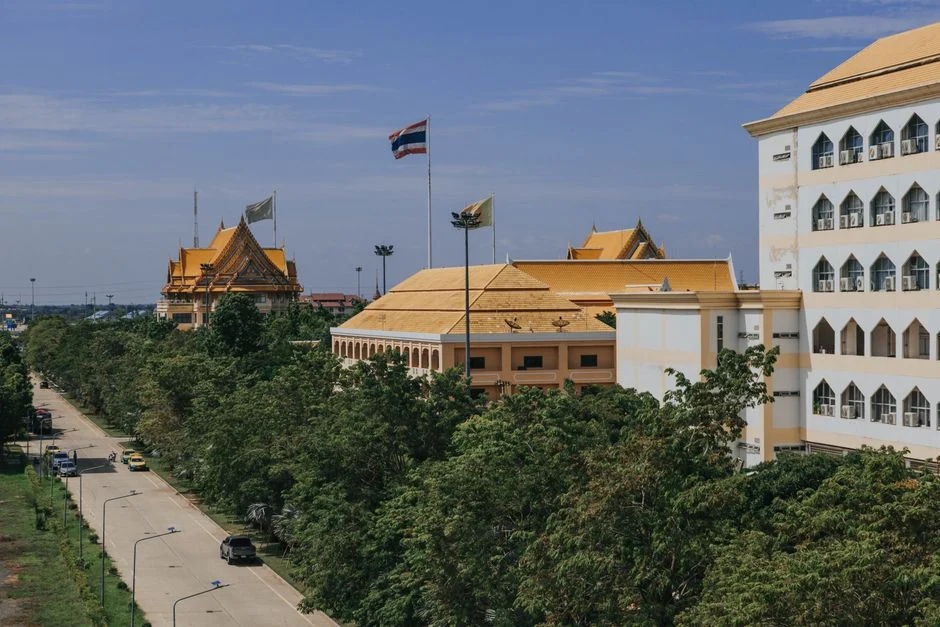
Khon Kaen sits in the centre of Isan (the north-east region), about 450 km north-east of Bangkok and 200 km south of the Lao border at Nong Khai. The city was a sleepy provincial capital until Khon Kaen University opened in 1964 — since then it’s grown into Isan’s intellectual and commercial hub. There’s a small skyline now, a couple of decent malls, a craft-beer scene catching up to Bangkok’s, and the four main night markets that feed the working population.
What makes the Khon Kaen night market scene worth the trip is the food. Isan cuisine — som tam, larb, gai yang, kor moo yang, sticky rice, fermented fish — is the country’s most distinctive regional cuisine and the one that’s hardest to find executed properly in Bangkok. In Khon Kaen, every stall does it for locals, not for tourists, which means the chillies don’t get dialled back and the fish sauce doesn’t get traded down for soy.
If you can only do one Isan city, do this one. Ubon Ratchathani is bigger and historically more important but less accessible; Udon Thani is closer to the Mekong but feels more transitional. Khon Kaen is the Isan capital in everything but name.
Getting to Khon Kaen
- Plane. Bangkok DMK (Don Mueang) or BKK (Suvarnabhumi) → Khon Kaen Airport (KKC). 70 minutes, 800–1,800 THB one way. Thai Airways and Vietjet fly from BKK; AirAsia and Thai Lion Air fly from DMK, several times a day between them.
- Train. Bangkok Krung Thep Aphiwat (Bang Sue) → Khon Kaen, 8–10 hours, 250–800 THB. Long-distance trains no longer leave from Hua Lamphong. Two daily sleeper trains; the 20:00 from Bangkok arrives Khon Kaen at 06:00, saving you a hotel night.
- Bus. Bangkok Mo Chit → Khon Kaen, 7 hours, 350–550 THB. Modern overnight VIP buses with 24-seat layout.
Khon Kaen Airport is 6 km from the city centre; taxi 150 THB or Grab 80–120 THB. Buses and the train station both drop in the centre.
The four night markets — which one when
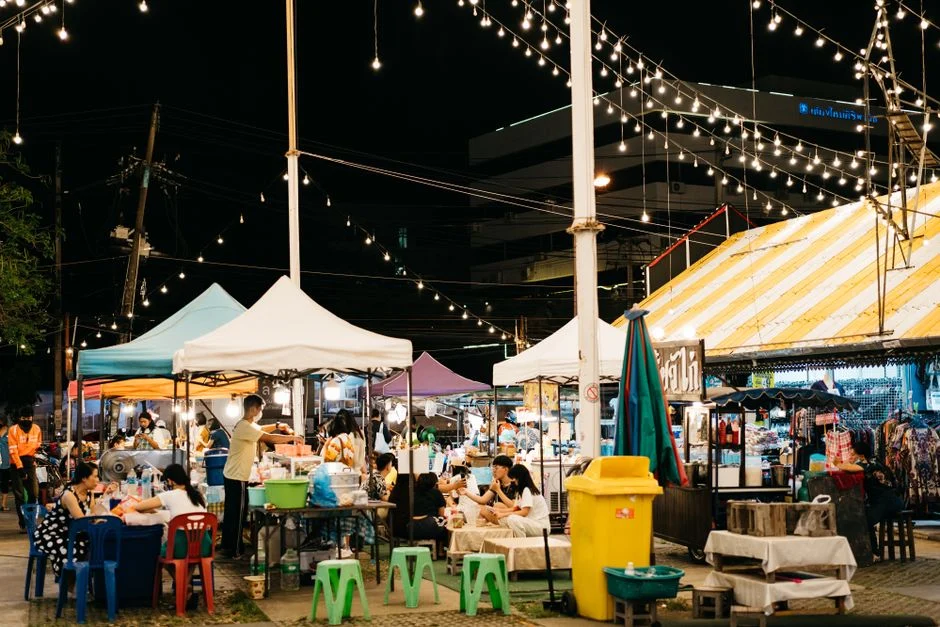
There isn’t one Khon Kaen night market — there are four, each with its own personality and operating hours. Visit one or two per evening; do them all over a 3-day stay.
1. Ton Tann Night Market (most tourist-friendly)
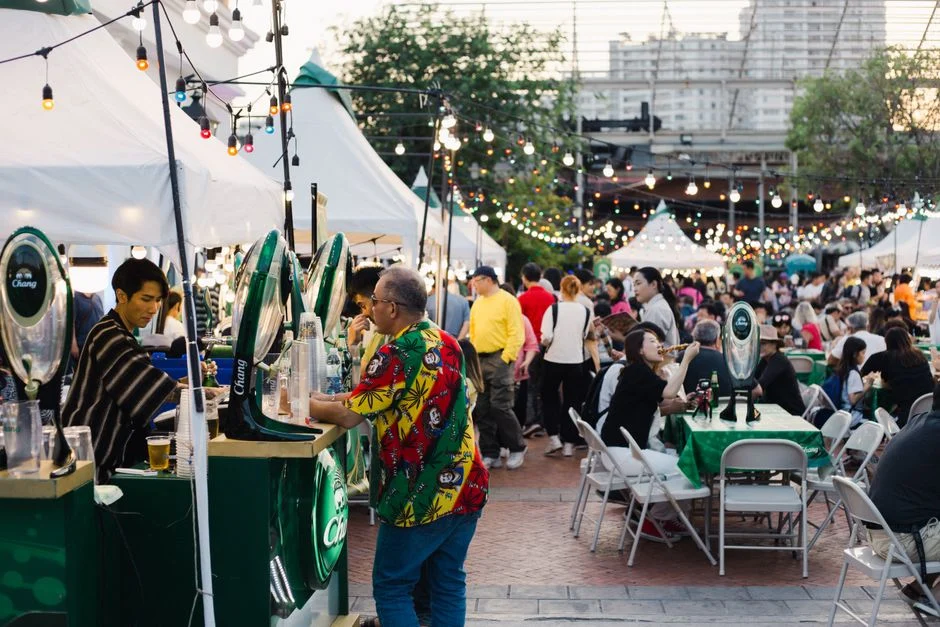
The biggest and most polished. Opens 17:00–23:00 daily on the western edge of town near Khon Kaen Lake. About 200 stalls, organised in rows, decent toilets, live music on a small stage Friday and Saturday. Eclectic mix — local Isan food (som tam Lao, sticky rice, gai yang charcoal-grilled chicken), Thai sweets, Western items (burgers, pizza), craft beer, and a small handicrafts section selling Isan textiles.
Best for: first-night orientation, dinner with international visitors, people who want a manageable controlled environment. Worst for: anyone hunting for the most authentic Isan food.
What to order:
- Gai yang + sticky rice + papaya salad — the classic Isan combo, 80–150 THB total.
- Sai krok Isan (fermented pork sausage), 30 THB per stick.
- Craft beer from local brewery Khon Kaen Brewing Co. — 120–180 THB.
2. The University Night Market (most authentic, cheapest)
The other side of the spectrum: a working market next to the Khon Kaen University campus, feeding 40,000 students. Opens 17:00–22:00, closed mid-semester breaks. About 100 stalls, no organisation, plastic stools, fluorescent lights, no English signs. This is where the cheap-and-correct Isan food is.
What to order:
- Som tam Lao (fermented-fish papaya salad, the original Isan version), 40 THB.
- Larb pet (duck larb), 60 THB.
- Kor moo yang (grilled pork neck), 80 THB.
- Khanom jeen nam ya (rice noodles in fish curry) for breakfast leftover, 35 THB.
- Iced milk tea, 25 THB.
A serious dinner here costs 150–250 THB and leaves you full and hungry to come back.
3. The Walking Street (Saturday night only)
Officially called Khon Kaen Walking Street (in front of the Provincial Hall on Na Soon Ratchakan Road, every Saturday 17:00–22:00). The vibe is Chiang Mai’s Sunday Walking Street — pedestrianised, mixed food + handicrafts + buskers. Less commercialised than Chiang Mai’s but still touristy-ish.
What to order:
- Isan-style nam ngiao (a northern-Isan hybrid noodle soup specific to this area), 50 THB.
- Khao niao mamuang (mango sticky rice) when in season (March–June), 60 THB.
- Mark Phra Lao craft beer from the on-site bar, 150 THB.
Best for: Saturday evening drift if you happen to be there that night.
4. The Boat-Noodle Stall Rows on Mittraphap Road (late-night)
Not a single market but a series of kuay tiew rua (boat noodle) stalls along Mittraphap Road near the train station, opening 20:00–02:00. This is where students go after the campus market closes. The stalls don’t have names, the menus are in Thai, and the noodle bowls cost 15–30 THB each. Order three bowls, drink a Singha, walk back to your hotel.
What to order:
- Kuay tiew rua (boat noodles, beef or pork), 20 THB per small bowl.
- Pad krapao moo (pork stir-fried with holy basil), 50 THB.
Dishes you won’t get in Bangkok
- Sai krok Isan — fermented pork sausage with sticky rice inside. Sour, addictive. 30 THB/stick.
- Pla raa — fermented fish sauce that defines Isan food’s character. You’ll smell it everywhere.
- Tom saep — Isan tom yum: sour-spicy broth with offal. 80 THB.
- Khao tom mat — sweet sticky rice with banana in banana leaf. 20 THB.
- Mok pla — fish steamed in banana leaves with curry paste. 80–120 THB.
Daytime — what to do between markets
- Wat Nong Wang — nine-storey temple in the city centre, free, climb for 360° Isan-flat views. 90 minutes.
- Khon Kaen National Museum — small but good Isan archaeology + the Ban Chiang Bronze Age site. 100 THB.
- Phu Wiang National Park (90 km west) — Thailand’s dinosaur fossil capital. Real footprints, dedicated museum. Half-day with a hired car.
Two days in the city + one day at Phu Wiang is the right shape.
When to visit Khon Kaen
- November to February: Cool, dry, the best window. 22–30°C. Night markets at their busiest.
- March to May: Hot, 35–40°C, but most of the evening eating is outdoors, so still workable.
- June to October: Wet season, occasional storms can shut markets early. Cheaper, less crowded.
The food doesn’t change seasonally. The atmosphere does.
Where to stay in Khon Kaen
The city centre is the obvious base — every night market is within a 15-minute Grab from a central hotel.
- Budget: Phupha Mansion (700–1,200 THB), Glur Hostel (350–600 THB).
- Mid-range: Pullman Khon Kaen Raja Orchid (1,800–2,800 THB, modernist hotel with a rooftop pool), Bayasita @ Nimman (1,200–1,800 THB).
- Upscale: Avani Khon Kaen (3,500–5,500 THB), the city’s only proper international-brand 5-star.
A Thailand itinerary 7 days can easily fold in Khon Kaen as a 2-night Isan stop. See our Bangkok province guide for the wider context.
Practicalities for the Khon Kaen night market scene
- Cash: Most night-market stalls don’t take card. Withdraw 1,500–2,000 THB before going.
- Language: Almost no English at the university market and Mittraphap noodle row. Pointing and Google Translate work.
- Heat tolerance: Khon Kaen som tam Lao is properly spicy. “Phet nit noi” (a little spicy) is the safe word.
- Vegetarianism: Manageable but limited — most Isan food is meat-heavy. Som tam jay (vegetarian papaya salad with no shrimp paste) is doable. Otherwise, head to Ton Tann’s broader Western options.
- Allergies: Soy sauce, fish sauce, peanuts and shrimp paste are everywhere. Communicate clearly and double-check.
Final thoughts on the Khon Kaen night market scene
Visit Khon Kaen for the food and stay for the proof that Isan is a real cuisine, not just a section of a Bangkok restaurant menu. Three nights, four markets, a couple of dinosaur footprints and a temple climb — that’s the right shape of a Khon Kaen trip. The Khon Kaen night market scene won’t show up in most Western Thailand guides because the city doesn’t sell itself, but Bangkok foodies have been quietly flying up here for years. Do what they do.
FAQ
What is the most famous Khon Kaen night market?
Ton Tann Night Market is the largest and most tourist-friendly. The University Market is the most authentic. The Saturday Walking Street is the most atmospheric.
When is Khon Kaen Walking Street?
Saturday evenings only, 17:00–22:00, on Na Soon Ratchakan Road in front of the Provincial Hall.
What should I eat at the Khon Kaen night market?
The Isan classics: gai yang (grilled chicken) with sticky rice and som tam Lao (fermented-fish papaya salad). Then larb pet (duck larb), kor moo yang (grilled pork neck), and sai krok Isan (fermented pork sausage).
Is Khon Kaen worth visiting?
Yes — particularly for travellers interested in real Isan food and willing to spend 2–3 nights off the standard Bangkok-Chiang Mai-beaches circuit. Skip if your trip is under 8 days and you’ve prioritised beaches.
How do I get from Bangkok to Khon Kaen?
Fastest is fly (75 minutes, 800–1,800 THB). Cheapest is overnight train (8–10 hours, 250–800 THB) which doubles as accommodation. Bus is 7 hours, 350–550 THB.
Is Khon Kaen safe at night?
Yes. The city is one of the safest in Thailand — university town, well-policed, quiet outside the bar areas. Standard travel sense applies in the night markets (watch your bag, agree on Grab fares).
Khon Kaen vs Ubon Ratchathani for Isan food?
Both are real Isan cities. Khon Kaen is bigger with better transport and a deeper food scene thanks to the university population. Ubon is closer to Laos/Cambodia and a bit more traditional. If only one, Khon Kaen.
Related guides
- Nakhon Si Thammarat Night Market: The Southern Thai Food Scene Tourists Keep Missing
- The Five Tastes of Thai Cuisine: A Practical Guide to What You’re Actually Eating
- Sala Keoku: The Surrealist Sculpture Park on the Mekong at Nong Khai
Book the trip
Some links below are affiliate links. If you book through them we may earn a small commission at no extra cost to you — it helps keep Destination Thailand independent.
Getting here: Khon Kaen is Isan’s crossroads, so getting in is the easy part — compare flights, trains and buses on 12Go and pick whatever lands you in town by early evening.