There is a place in Thailand where a self-taught Lao mystic spent thirty years building concrete sculptures up to 25 metres tall — Buddhas, Hindu gods, multi-armed bodhisattvas, a six-headed naga eating its own tail, and a hooded skeleton driving a vintage motorcycle. The complex sits on the Thai bank of the Mekong River at the edge of Nong Khai, the country’s most underrated border town, and it has almost no foreign visitors despite being one of the strangest open-air art collections in Southeast Asia. The site is called Sala Keoku, sometimes Sala Kaew Ku, sometimes Wat Khaek. Below, the honest guide to it — and to Nong Khai itself, which deserves more than the half-day passing-through it usually gets.
What Sala Keoku is, and why it exists
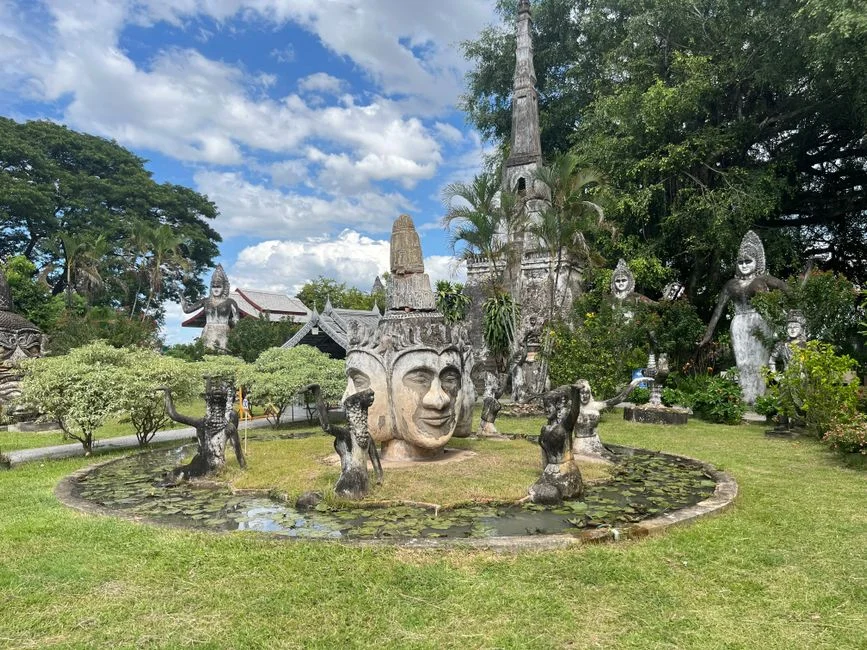
Sala Keoku is a 30-acre sculpture park built between 1978 and 1996 by Bunleua Sulilat (1932–1996), a Lao mystic-monk who claimed to have fallen into a cave as a young man and emerged with religious visions and the impulse to render them in concrete. He had no formal art or architecture training. He began his first sculpture garden across the river in Vientiane, Laos, in the 1950s — that one is called Xieng Khuan, still standing. When the communist Pathet Lao took power in 1975 he fled to Thailand, settled in Nong Khai, and started a second sculpture garden — this one, Sala Keoku.
The works are syncretic. Bunleua wasn’t a strict Buddhist or Hindu — he combined Theravada Buddhist iconography, Hindu deities (Vishnu, Shiva, Ganesha), local animist spirits, and his own visions. Some sculptures are immediately recognisable (a giant seated Buddha, an 8-metre naga). Others are not (a tableau called The Wheel of Life with figures aging from baby to corpse in a 12-metre arc; an entire scene of a man being eaten by a sea monster as a metaphor for desire). All are made from rebar-and-concrete by hand, with no architectural drawings — the artisans worked from Bunleua’s verbal descriptions.
The result is something unique in Asia. It’s not quite folk art, not quite outsider art, not quite religious sculpture, not quite kitsch. It’s all four. And it works because the scale is overwhelming — you walk among 30-metre figures with the Mekong River as backdrop, and the strangeness sinks in slowly.
Getting to Sala Keoku
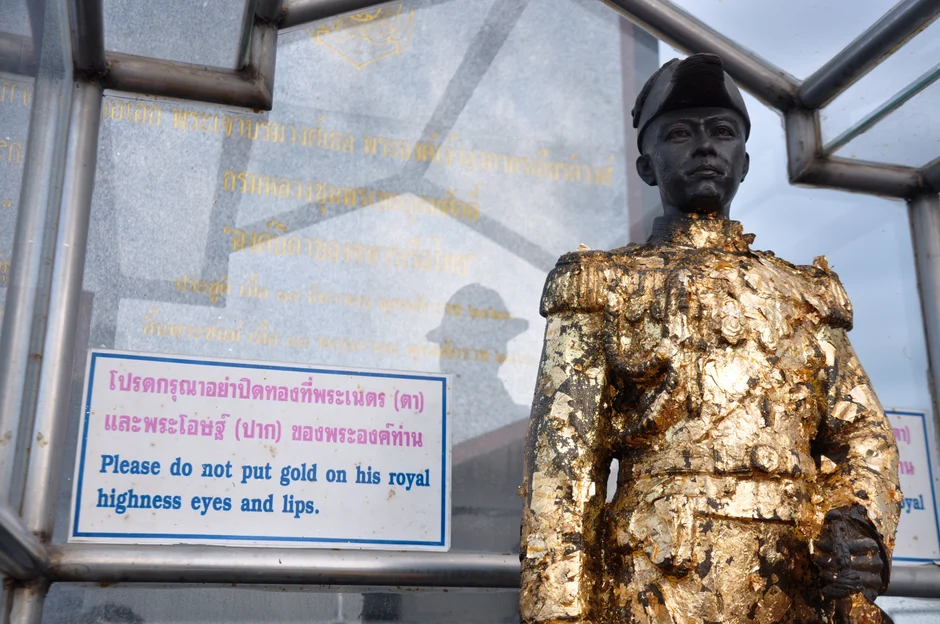
Sala Keoku is 5 km east of central Nong Khai, on the river road towards the Laos border crossing.
- From Nong Khai town: songthaew (shared pickup) 30 THB, or tuk-tuk 80–120 THB round trip including waiting. About 15 minutes.
- By bike: if you’ve rented a bicycle in town (~50 THB/day), the ride is flat and pleasant along the riverside road. 20 minutes each way.
Entry is 40 THB. Open daily 08:00–18:00. There’s a small museum inside the grounds with a reclining Bunleua Sulilat (his actual mummified body, in a glass case, sitting cross-legged) — open during the same hours.
What to actually look for inside Sala Keoku
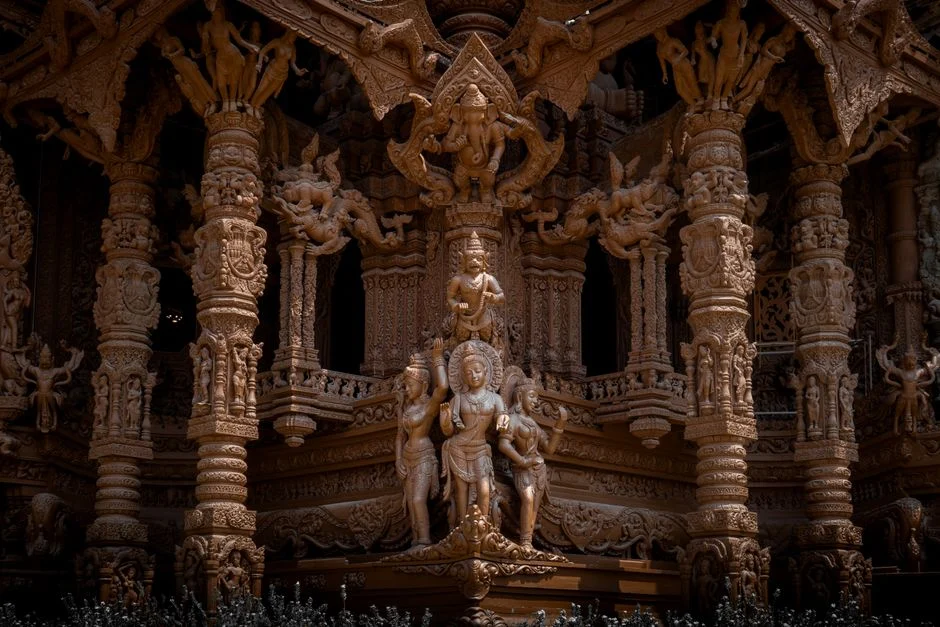
The park is unmapped — you wander. Allow 90 minutes minimum, 2 hours if you photograph. The standout pieces:
- The Buddha and the seven-headed Naga (the most photographed) — a 25-metre seated Buddha sheltered by a multi-headed naga’s hood arc, with the snake’s body curving down behind. The centrepiece, visible from the river road.
- The Wheel of Life — a 12-metre circular tableau showing the eight stages of human existence: baby, child, youth, adult, old person, sick person, dead person, then the cycle restarting. Reading the figures around the wheel is one of the better moments in the park.
- The Tantric Couple — a 15-metre embracing figure derived from Vajrayana Buddhist imagery. Surprisingly explicit.
- Ganesha — the elephant-headed Hindu god, six arms, riding a mouse. ~10 metres.
- Skeletons on motorcycles — yes really. Five life-size concrete skeletons riding 1970s-style motorcycles. Bunleua’s interpretation of death as just another stage of existence.
- The Mummified Bunleua — inside the small museum. The Lao mystic himself, sitting in lotus, with offerings of incense and orange juice. Confronting.
Late afternoon (16:00–17:30) turns the concrete from grey to warm cream — the right time to photograph.
Nong Khai — why it deserves more than half a day
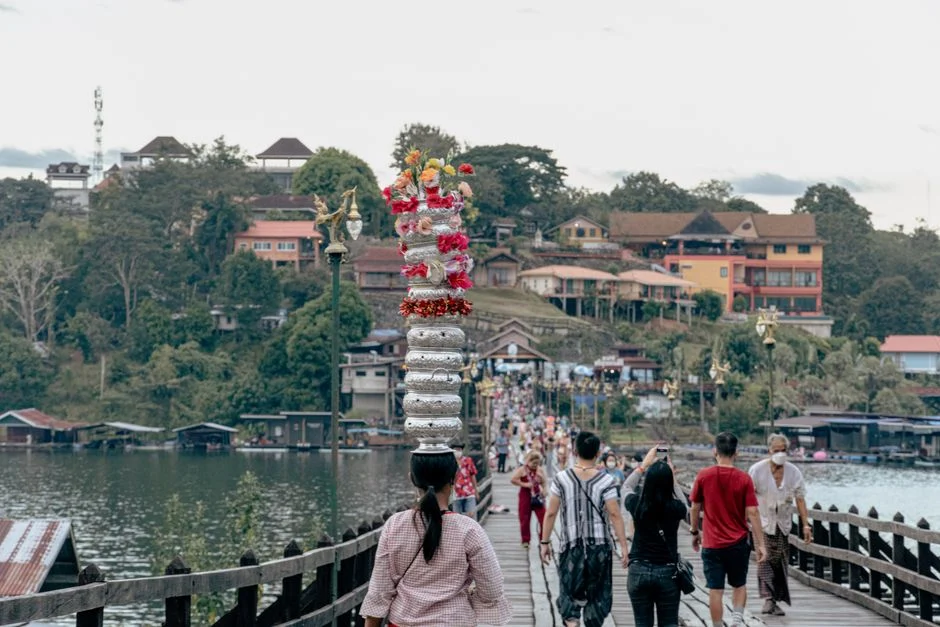
Most travellers see Nong Khai as the place you cross into Laos. They take the Friendship Bridge to Vientiane, never stopping. Which is a waste, because Nong Khai is one of the most pleasant small Thai towns to spend a couple of nights in.
The town sits on the south bank of the Mekong, with Vientiane visible across the water. The promenade is paved, shaded by tamarinds, and lined with riverside restaurants for an hour either side of sunset. The night market is small but proper. The food is Isan with strong Lao influences (red sticky rice, river fish, fermented sauces). And the pace is — for once on a Thailand trip — actually slow.
A 2-day Nong Khai itinerary:
- Day 1 afternoon: Arrive, check in, ride along the Mekong promenade by bicycle (rental 50 THB), watch sunset from one of the riverside restaurants.
- Day 1 evening: Dinner at the Tha Sadet Indochina Market — open daily 10:00–22:00, the riverfront market with mostly Lao and Vietnamese imports plus food stalls.
- Day 2 morning: Sala Keoku.
- Day 2 lunch: Mekong river fish (pla beuk, the giant catfish, in season) at a riverside restaurant. 400–600 THB for a whole grilled fish to share.
- Day 2 afternoon: Wat Pho Chai — small but ornate temple with a famous Buddha image, free. 30 minutes.
- Day 2 evening: Walk the Friendship Bridge approach (you can’t cross without a visa, but you can walk to the toll booth). Sunset from the bridge area is the photo.
A day trip to Vientiane (Laos) from Nong Khai
If you have an extra day, Vientiane is genuinely worth a visit. The Lao capital is 25 km north across the Friendship Bridge.
- Visa: Most nationalities can get a Lao visa on arrival at the bridge — 30 USD or 1,500 THB, takes 15 minutes.
- Crossing: The Thai-Lao Friendship Bridge has a shuttle bus across (20 THB) since you can’t walk. Plus a Thai exit + Lao entry stamp, total time door-to-door 90 minutes from Nong Khai centre to Vientiane centre.
- What’s worth seeing in Vientiane: That Luang (the gold stupa, the national symbol), Patuxai (the Lao Arc de Triomphe), Wat Si Saket. Plus baguettes — Laos was a French colony, the bread is properly good.
If you do day-trip across, take your passport, leave by 09:00, return by 18:00 to avoid bridge closures.
When to visit Nong Khai
- November to February: Cool, dry, the Mekong is calm and at low water level. 18–28°C. The right window.
- March to May: Hot, 35–40°C. The river fish are at their best (low-water concentration).
- June to October: Wet season, Mekong rises 5–10 metres, river crossings can be limited. The town stays open but loses some atmosphere.
The Mekong’s water level varies massively across the year — in dry season the river is half its width and you can see sandbanks; in wet season it’s a brown surging mass. Both are beautiful, differently.
Where to stay in Nong Khai
- Budget: Mut Mee Garden Guesthouse (riverside, garden, the classic backpacker favourite — 400–800 THB), Khiangkhong Guest House (350–600 THB).
- Mid-range: Pantawee Hotel (riverside, 1,000–1,500 THB), Royal Mekong Nong Khai (1,500–2,500 THB).
- Upscale: Amanta Hotel Nong Khai (2,500–4,000 THB), the only proper modern hotel in town.
A Thailand itinerary 7 days can fit Nong Khai as a 2-night Isan stop if you’re routing through the north-east before crossing to Laos. See our Bangkok province guide for the wider context.
Practical details for Sala Keoku and Nong Khai
- Getting to Nong Khai from Bangkok: Train (Bangkok Hua Lamphong → Nong Khai, 9–11 hours, 350–950 THB, with overnight sleeper option) or bus (10 hours, 450–650 THB) or fly to nearby Udon Thani (60 minutes, then taxi 60 km north for 600–900 THB).
- Mobile signal: Solid 4G across town. Patchy at Sala Keoku — they have wi-fi at the entrance kiosk.
- Currency: Bring Thai baht. ATMs in town centre; Sala Keoku doesn’t take card.
- Bicycle is the right way to get around: Town is flat, traffic is moderate, the river road is a pleasure. Rentals from Mut Mee (50 THB/day) or any guesthouse.
- Dress code for Sala Keoku: No formal code — it’s not a working temple. Hats and sunscreen recommended (the sculptures are all outdoors with no shade).
Final thoughts on visiting Sala Keoku
Sala Keoku is the kind of place that doesn’t quite fit into any standard Thailand itinerary, which is exactly why it should be on yours. A self-taught mystic spent thirty years building a concrete cosmos on the Mekong, and a country that’s saturated with Buddhist iconography produced this one place where the imagery becomes genuinely strange and personal. Combined with two slow nights in Nong Khai, an evening crossing into Laos, and a couple of riverside dinners, it makes for one of the more memorable corners of an Isan trip. Skip it if you’re chasing beach efficiency; otherwise, the journey to Nong Khai is the reward as much as the destination.
FAQ
What is Sala Keoku?
A 30-acre sculpture park on the Thai bank of the Mekong at Nong Khai, built 1978–1996 by Lao mystic Bunleua Sulilat. Around 100 monumental concrete sculptures up to 25 metres tall, combining Buddhist, Hindu and animist imagery.
How do I get to Sala Keoku from Nong Khai town?
5 km east on the river road. Songthaew 30 THB, tuk-tuk 80–120 THB round trip, or bike 20 minutes each way.
How much is entry to Sala Keoku?
40 THB. Open daily 08:00–18:00.
Is Sala Keoku worth visiting?
Yes — unique anywhere in Asia. Allow 90 minutes minimum to walk the grounds. Combined with a 2-night Nong Khai stay it’s worth the trip; as a standalone half-day from elsewhere, maybe not.
Can I see Sala Keoku and visit Laos in the same day?
Possible but rushed. Better to give Sala Keoku one day and Vientiane a separate day.
Is Nong Khai worth visiting?
Yes — for the slower pace, the Mekong, the Lao-Thai food fusion, and Sala Keoku. Most travellers under-budget time here.
Best time of year for Nong Khai?
November to February — dry, cool, calm crossings to Laos. Avoid October for the wettest weeks.
Related guides
- Khon Kaen Night Market: Isan’s Real Capital After Dark
- Best Parks for Running in Udon Thani
- Loei Province Travel Guide 2026: Thailand’s Coolest Corner Nobody Warned You About
Explore the Mekong provinces
Book the trip
Some links below are affiliate links. If you book through them we may earn a small commission at no extra cost to you — it helps keep Destination Thailand independent.
Getting here: the sleeper train from Bangkok to Nong Khai is half the point — you wake up on the Mekong, twenty minutes from Sala Keoku. Book berths on 12Go a few days ahead.