Thailand is one of the safest countries in the world to travel in and one of the easiest to be gently fleeced in, and the two facts are not in tension. Nobody is going to hurt you. Somebody is very likely going to tell you the palace is closed, rent you a scooter with a pre-existing scratch, or quote you ฿300 for a ฿60 tuk-tuk ride. The scams below are the ones still running in 2026 — not the 2009 list every site copies — ranked roughly by how often visitors actually fall for them, with what each one costs and the one sentence that ends it.
A framing that helps: almost every Thai scam is a sales funnel, not a theft. The aim is a commission — from a gem shop, a tailor, a repair garage — and the only lever is your politeness. The moment you stop being polite to the wrong person, it’s over. The straight answer on safety covers the genuinely rare bad stuff; this is the everyday stuff.
The twelve that still work
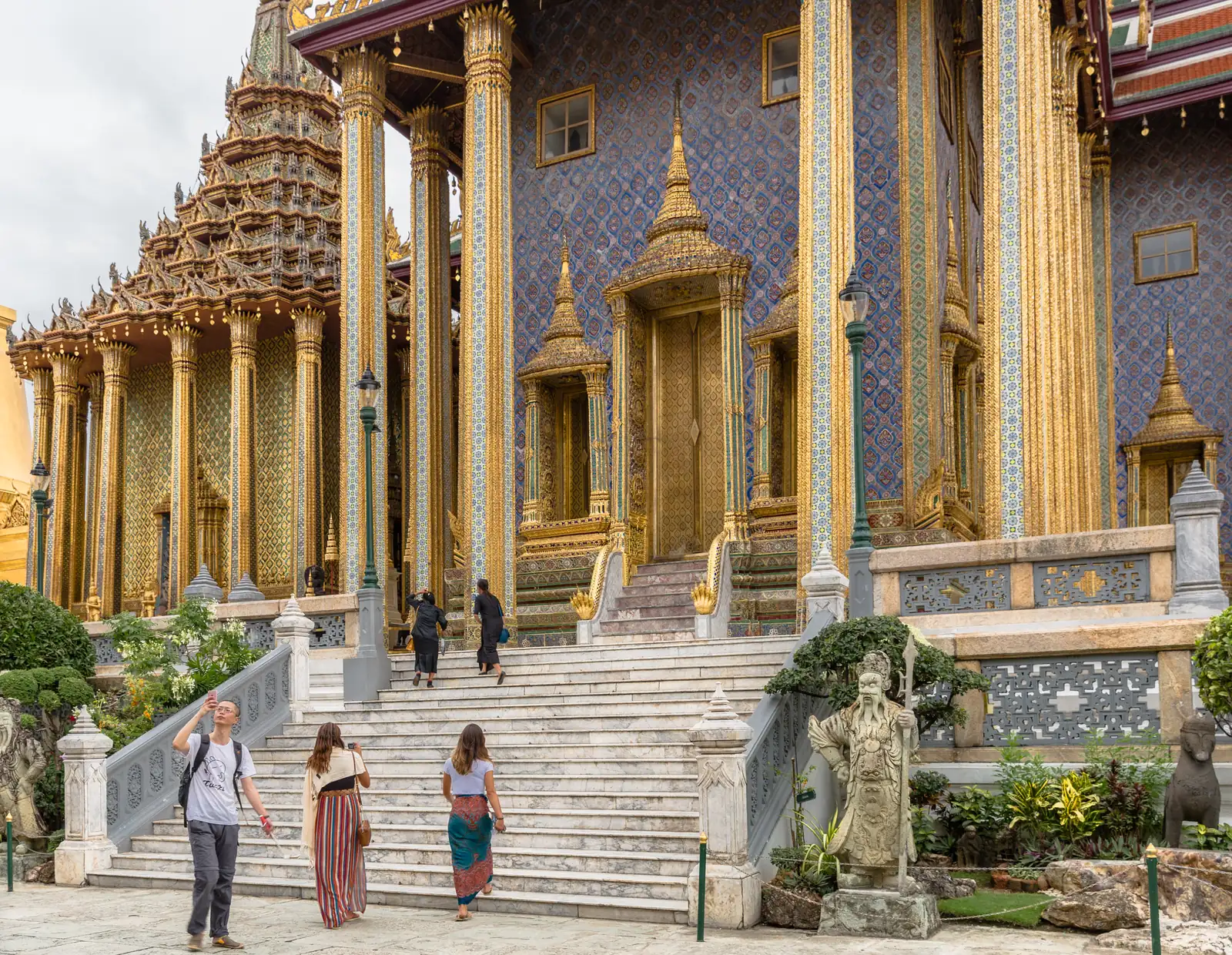
1. “The Grand Palace is closed today.” A well-dressed, friendly man near the palace, Wat Pho or Wat Arun tells you it’s shut for a Buddhist holiday or a royal ceremony, but luckily a tuk-tuk can take you to three other temples for ฿20. The ride ends at a gem shop, then a tailor, then a travel agent, each of which pays the driver. Cost: your afternoon, and ฿30,000 if you buy the “investment sapphires”. The sentence: “It’s open.” The Grand Palace opens every day of the year; our Bangkok worth-it list has the opening hours and the real ฿500 ticket.
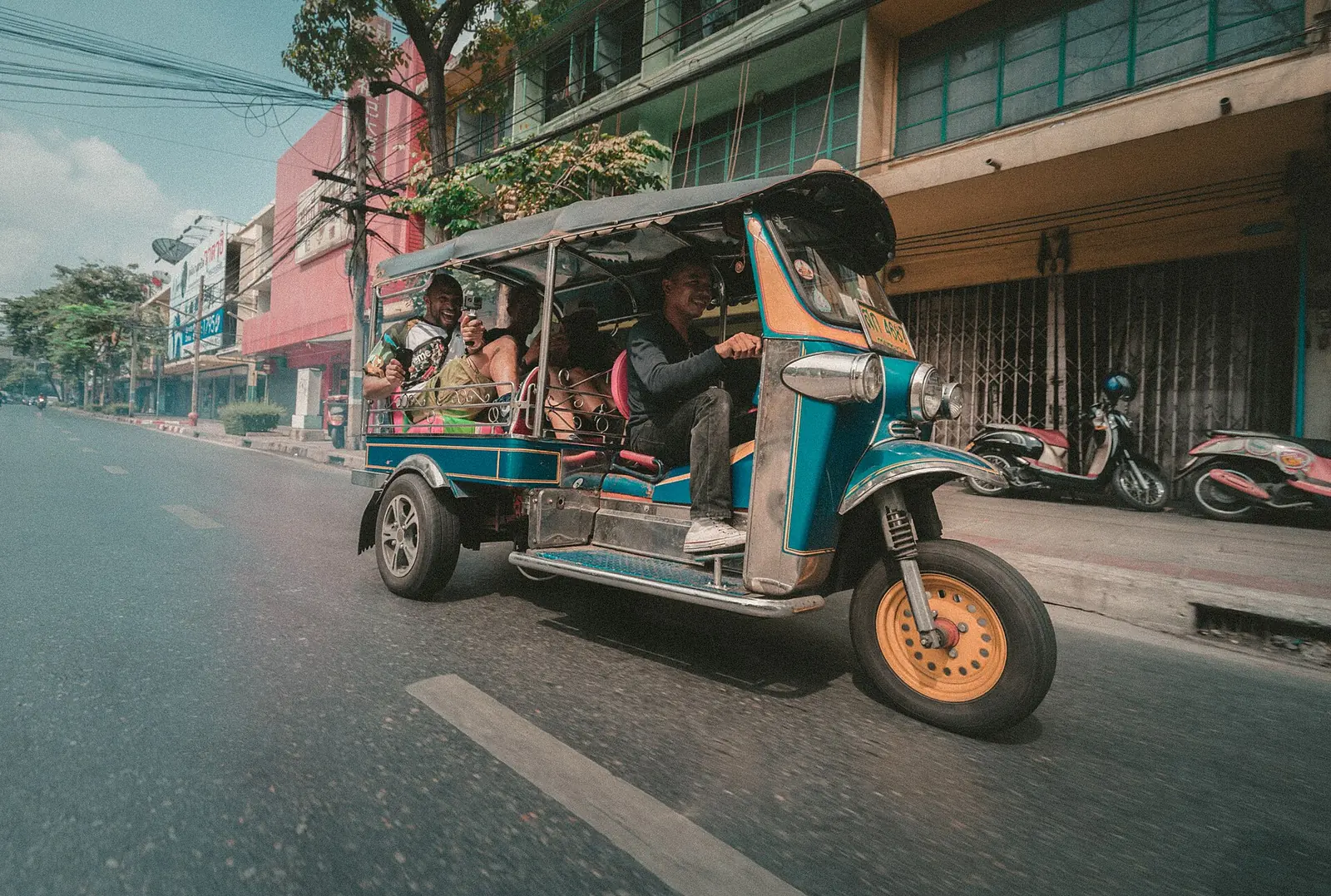
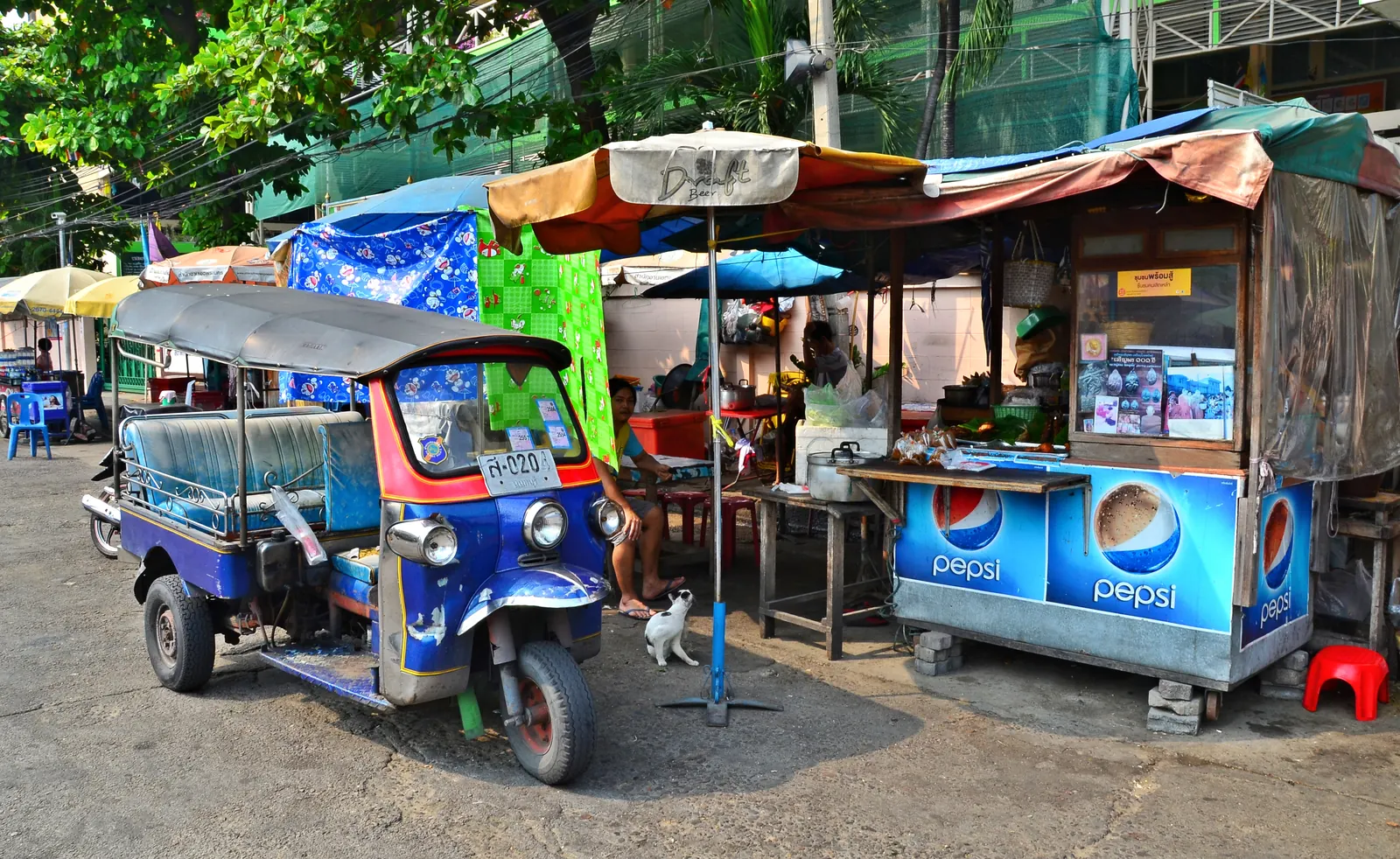
2. The ฿20 tuk-tuk tour. The same funnel without the closed-palace opener: a tuk-tuk offers a “city tour” or a ride across town for ฿20 or ฿50 — a price that doesn’t cover the petrol. It’s paid for by the shops you’ll be delivered to. Cost: time, pressure, possibly a suit you didn’t want. The sentence: “No stops.” A fair tuk-tuk hop is ฿60–100 per our Price Index; agree the price and the destination before you sit, and if the driver suggests “a quick visit”, get out.
3. The jet-ski damage bill. Pattaya, Phuket and some Samui beaches. You rent a jet ski, bring it back, and the operator discovers a scratch or crack — often already there, under the waterline — and demands ฿5,000 to ฿50,000, sometimes with large friends and a local policeman who recommends you pay. Cost: genuinely painful. The move: don’t rent jet skis from beach operators at all; if you must, photograph and video every panel with the operator watching before you leave, and never hand over your passport as a deposit.
4. The motorbike rental scratch. The jet-ski scam on wheels, everywhere there are tourists: the bike comes back, a scratch is “found”, the deposit or passport is held until you pay. Cost: ฿2,000–20,000, or a trip to the police station to retrieve a passport. The move: rent from shops attached to your hotel or with real reviews, do the walk-around video, pay a cash deposit and never leave your passport (a photocopy is normal; the original is not), and wear the helmet — the ฿500 no-helmet fine at checkpoints is real and legal, not a scam.
5. The taxi that “doesn’t use the meter”. Bangkok taxis are cheap and metered by law — ฿35 flagfall — and a handful outside hotels, malls and bars will quote ฿300 for a ฿90 ride “because traffic”. The airport version: touts in the arrivals hall steering you to an unmetered car for ฿1,000+. Cost: ฿200–800 a time. The sentence: “Meter, please” — and walk if the answer is no; the next one will. At Suvarnabhumi use the official taxi rank on level 1 (metered, plus the legal ฿50 airport surcharge and tolls), or Grab.
6. The Patpong “free show”. A tout promises a ping-pong show with no cover charge; upstairs, the drinks turn out to be ฿1,000 each and the bill arrives with a large man beside it. Cost: ฿3,000–10,000 and an unpleasant ten minutes. The move: don’t go upstairs. The night market downstairs is fine; Silom soi 4 around the corner is a better night anyway.
7. The bird-seed and bracelet hustle. Near temples and on Khao San: someone puts seed in your hand for the pigeons, or ties a “friendship” bracelet on your wrist, then demands ฿100–300. Close cousin: the fake monk with an alms bowl asking for cash — real monks don’t ask, and don’t collect in the afternoon. Cost: small, annoying. The move: hands in pockets, keep walking, “mai ao krap/ka” (don’t want).
8. The Khao San travel agent. Too-cheap bus tickets to the islands sold by agencies that pack you into a minivan, transfer you to a worse bus, stop at a commission shop, and — historically — let bags be rifled in the hold overnight. Cost: a bad night and sometimes a missing camera. The move: book named operators on 12Go or at the real terminals, keep valuables on you on any night bus, and see our route guides (Bangkok to Koh Samui, Bangkok to Phuket) for what the honest fares are.
9. The ATM conversion trap and the card terminal that “helps”. Not a con artist, a button: the ATM or card machine offers to charge you in your home currency at a rate 3–8% worse than your bank’s. Cost: ฿500–1,500 over a trip, silently. The move: always pay and withdraw in baht; our money guide has the whole ATM playbook including the ฿220 fee.
10. The longtail that costs triple. Tha Chang and Sathorn piers in Bangkok, Ao Nang and Railay in Krabi, Maya Bay anywhere: the freelancer on the sand quotes double or triple the fixed-rate counter ten metres away, or adds a “national park fee” or “boat tax” on the water. Cost: ฿500–2,000. The move: use the counters (Bangkok canal charters ฿1,000–1,500 an hour for the boat; Ao Nang–Railay ฿150 a head), agree the route, or book a fixed-price canal tour and skip the negotiation entirely.
11. The tailor’s “free” fitting. A tout — often in an Indian-run tailor strip in Bangkok, Phuket or Pattaya — offers a free drink and a look; two hours later you own three suits “hand-made” overnight in fabric that won’t survive a wash. Cost: ฿8,000–30,000. The move: Thailand has excellent tailors; they don’t have touts. If a stranger brought you there, leave.
12. The bucket and the “special” drink. Full Moon parties, some Khao San and Pattaya bars: buckets or shots laced with cheap methanol-heavy spirits or worse, and occasionally drinks spiked to separate you from your phone and cards. Cost: a night, a phone, in rare cases a hospital. The move: buy sealed bottles or watch the pour, keep your hand over your glass, go to the party with the people you came with, and treat a stranger’s “free” drink as the most expensive one on the beach.
Three that aren’t scams (even though they feel like it)
Dual pricing at national parks and sights — ฿500 for you, ฿50 for a Thai citizen at the Grand Palace; ฿200–300 at national parks — is official policy, posted on the board, and not negotiable; budget for it. The ฿220 ATM fee is a fee, not a con, and the fix is withdrawing big. “++” on hotel and restaurant bills — 7% VAT plus 10% service — is legal and printed on the menu, which is why our luxury hotel price guide quotes everything all-in. Knowing which charges are real stops you bristling at the honest ones and saves the energy for the tuk-tuk.
The three habits that beat all twelve
Know the real price before you need it. Most scams are just a number that’s wrong — and the Price Index has 58 real ones. Let unsolicited helpfulness bounce off. Thai people are genuinely kind, and the kind ones are busy; the man who approaches you outside a famous sight with perfect English and a plan is working. Keep the passport. No deposit, no rental, no hotel needs the original for longer than a photocopy takes; if a transaction requires you to hand it over and walk away, the transaction is wrong. If something does go badly, the Tourist Police (1155, English-speaking) exist for exactly this and are generally useful — a report to them usually ends a jet-ski or rental dispute faster than arguing on the sand.
Thailand scams: your questions, answered
What are the most common scams in Thailand?
The “closed palace” tuk-tuk gem-shop funnel in Bangkok, motorbike and jet-ski damage claims on the coast, unmetered taxis, and the currency-conversion button at ATMs and card machines. All of them are avoidable with the three habits above; none of them are dangerous.
Is Thailand safe from scams for solo travellers?
Yes — solo travellers are approached more often, not hurt more often. The scams are sales pitches aimed at politeness; a firm “no thank you” and walking on ends every one of them. Our safety guide covers the rest, including for solo women.
What do I do if a rental shop keeps my passport or demands damage money?
Don’t pay on the spot. Call the Tourist Police on 1155, show your pre-rental photos and video, and ask them to attend; most disputes evaporate when the uniform arrives. Avoid it entirely by never leaving the original passport and always doing the walk-around video.
Are tuk-tuks a scam in Bangkok?
No — a tuk-tuk at a fair agreed price (฿60–100 for a short hop) is a fine way to cross the Old Town. The scam is the ฿20 “tour” with shop stops and the driver who won’t name a price. Agree the fare and the destination first, refuse stops, and you’re fine.
Is the Grand Palace ever actually closed?
Very rarely, for royal ceremonies — and when it is, it’s announced at the gate, not by a man on the pavement. Every day of a normal year it opens at 8:30. If someone outside tells you otherwise, that’s the scam’s opening line.
Related guides
- Is Thailand Safe in 2026? A Straight Answer
- Money in Thailand: ATMs, Cards and the ฿220 Fee
- The Thailand Price Index: 58 Real Prices, Checked and Dated
Before you go
Some links in this guide are affiliate links. If you book through them we may earn a small commission at no extra cost to you — it helps keep Destination Thailand independent.
The simplest scam insurance is booking the things that get scammed through channels with a price on them: named bus, ferry and train operators on 12Go, fixed-price tours with recent reviews on GetYourGuide, and hotels you’ve compared on Agoda rather than ones a driver recommends. Then go and enjoy the kindest country you’ll ever be overcharged in.