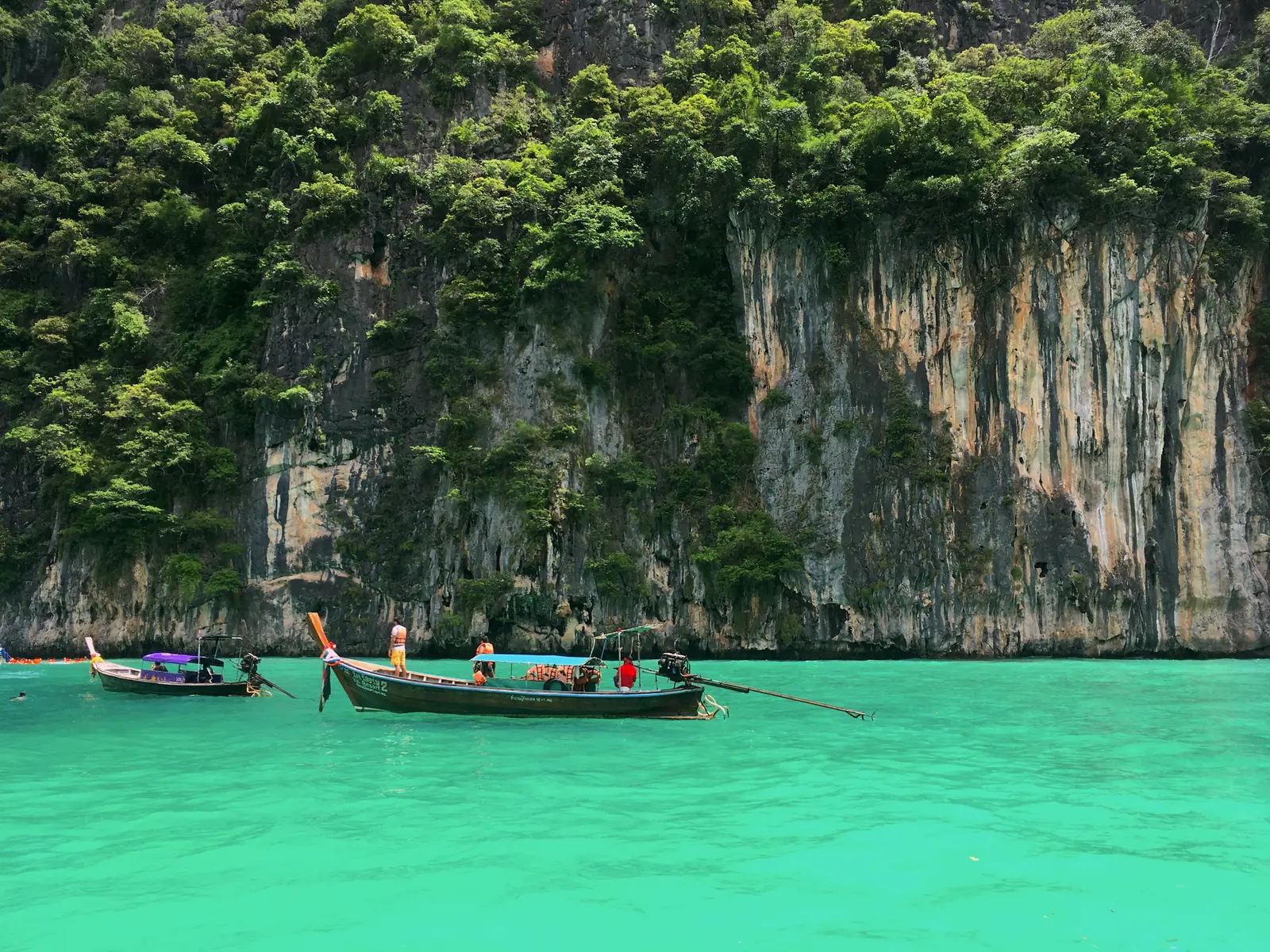
Nobody asks whether Koh Lanta is worth it. People ask about Phi Phi, and they ask in a particular tone — the one that means “I’ve seen the photos of Maya Bay and I’ve also seen the photos of Tonsai at two in the afternoon, and I can’t tell which one I’d be buying.” Both are true. Phi Phi Leh, the smaller uninhabited island, has the most dramatic scenery in Thai waters: sheer walls of limestone dropping into water the colour of a swimming pool, a lagoon you enter through a slot in the rock, and the bay that a film made so famous the government had to shut it for three years to let the coral grow back. Phi Phi Don, the one you sleep on, has a village with no roads, bars that sell alcohol by the bucket, a sewage problem that surfaces in the wrong season, and some of the highest room rates per star on the Andaman coast. Whether Phi Phi is worth it depends entirely on which of those two islands your trip is built around, and for how long.
The short answer: yes, if you stay two nights and treat Phi Phi Leh as the reason — it lets you reach Maya Bay and Pileh Lagoon at seven in the morning, before the Phuket speedboats arrive, which is a different experience from the one most people have. No, if it’s a day trip from Phuket — that’s a ten-hour, eight-stop boat ride with a queue at every stop, and the Andaman has better ways to spend ฿2,500. And if the part that appeals is the party, Haad Rin does it bigger and Tonsai does it louder; go in with open eyes. Where Phi Phi sits against the rest of the coast is in our seven-day Andaman itinerary.
Two islands, one name
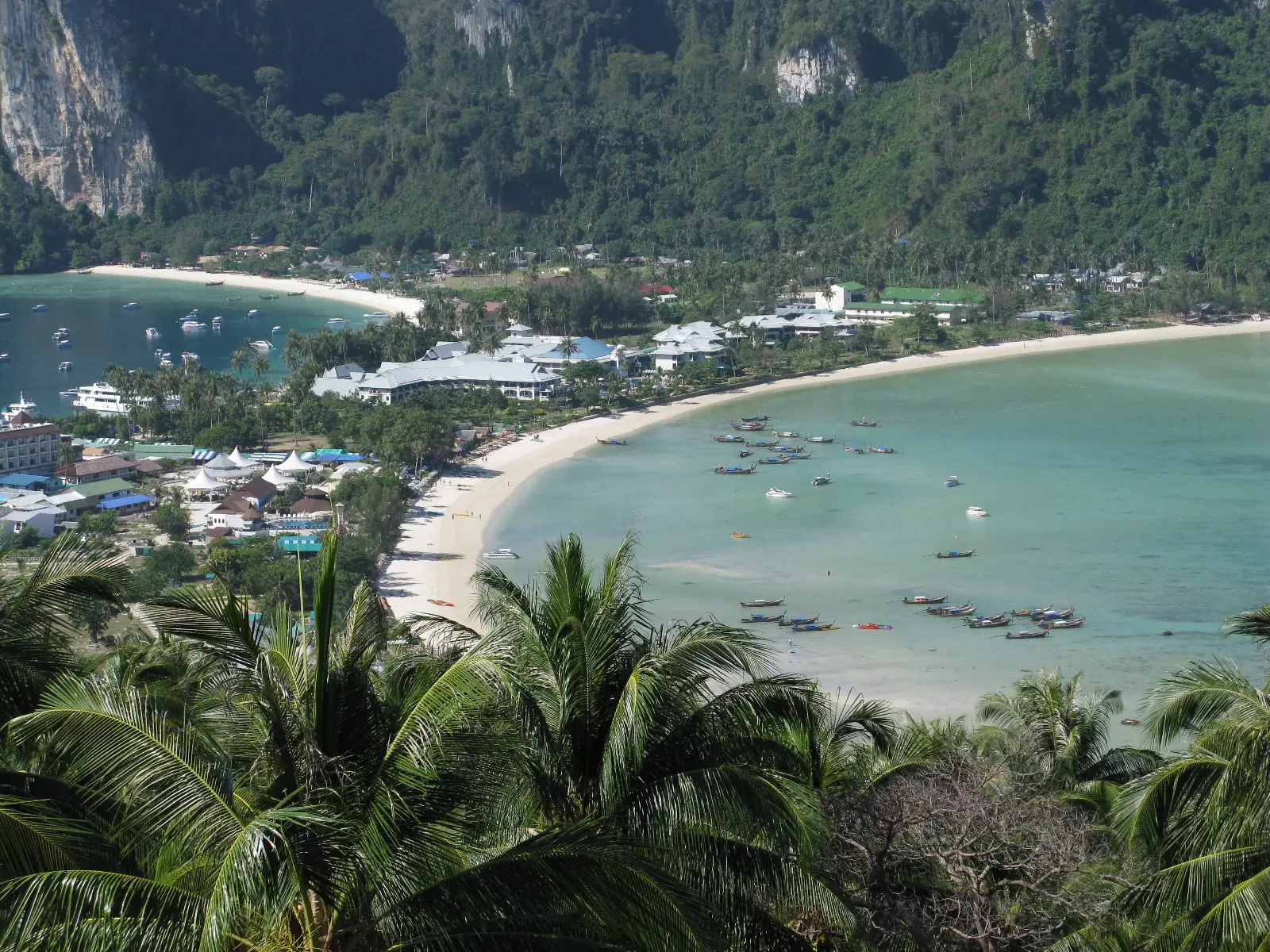
Phi Phi Don is the inhabited island, shaped like a squashed H: the village of Tonsai sits on the sandy bar in the middle with the ferry pier on one side and Loh Dalum — the party beach, a tidal bay that empties to mud in the afternoon — on the other. The arms of the H hold the quieter beaches: Long Beach (Hat Yao) ten minutes south by longtail, Loh Ba Gao and Laem Tong up the north-east coast where the resorts are, reached by boat only. Phi Phi Leh, a few kilometres south, is a national park island nobody lives on: Maya Bay on the west, Pileh Lagoon on the east, Viking Cave and its swift-nest collectors on the cliff between. Everything worth photographing is on Leh. Everything you’ll pay for is on Don.
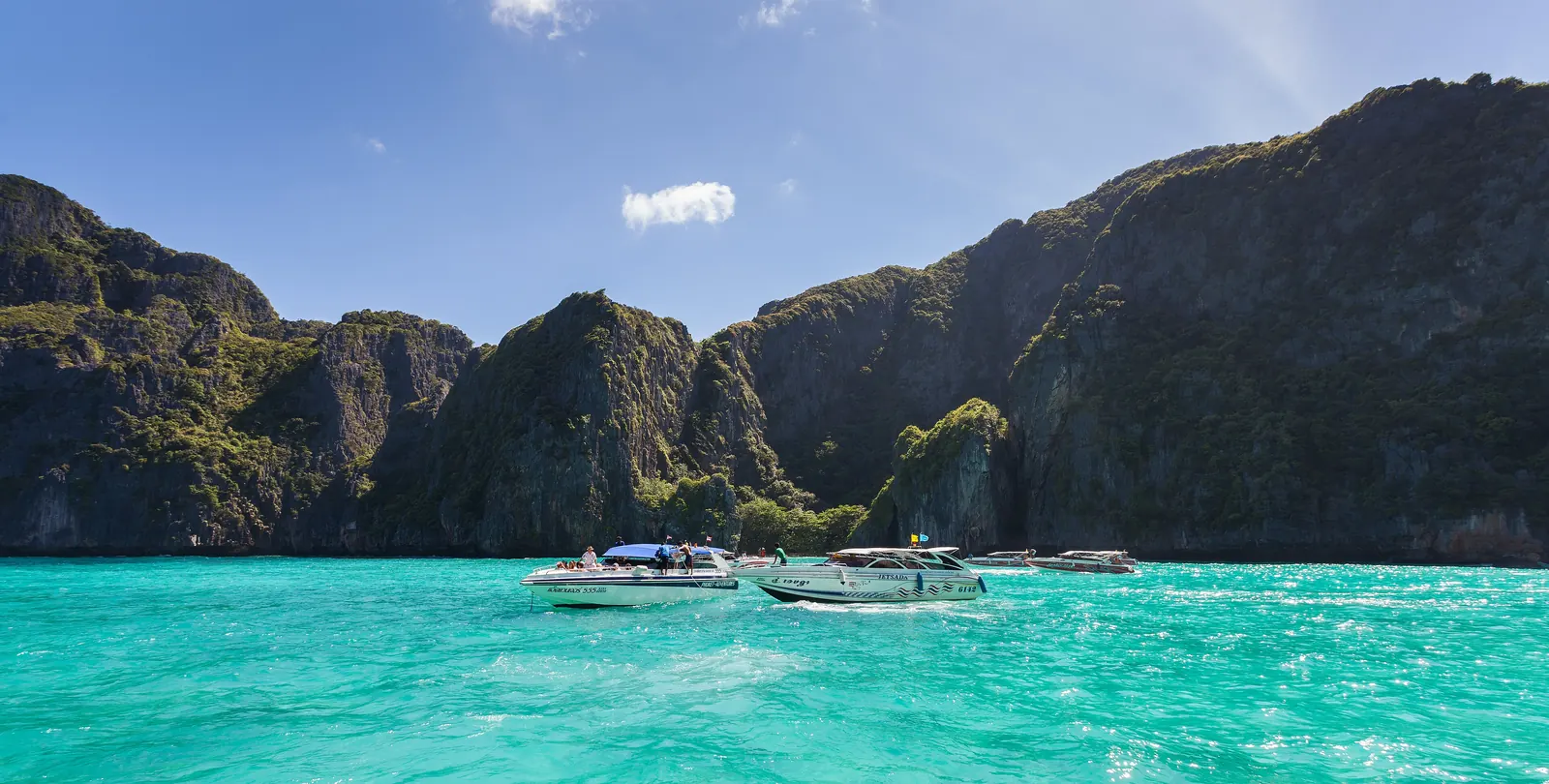
Maya Bay in 2026: what you actually get
Maya Bay reopened in 2022 with rules, and the rules are the whole point of going now. Boats no longer enter the bay at all: you’re dropped at a floating pier at Loh Samah on the back of the island and walk a five-to-ten-minute boardwalk through the forest to the beach. No swimming — you can wade to your knees, and the blacktip reef sharks that have come back to the shallows are the reward for that — around an hour on the sand, a cap of a few hundred people at a time, hours roughly 7am to 6pm, and the ฿400 foreigner national park fee (฿200 for children, cash) that covers the whole Phi Phi park for the day. It closes every year for the green season — 1 August to 30 September in 2026, reopening 1 October — so an August or September trip sees the bay from the water only. Is it still beautiful? Enormously. Is it a swim? No. Go knowing that, at 7am, and it’s one of the best hours on the coast; go at 11am off a speedboat and it’s a car park of bows with a queue for the boardwalk.
How this list works
Each entry gets a verdict — Do it, Do it, with a caveat, or Skip it — with the foreigner price and the timing that changes the answer. Prices are August 2026, cross-checked against our Thailand Price Index. Nothing here was comped.
Worth the ferry
Phi Phi Leh by private longtail at dawn — Do it; this is the trip. Hire a longtail from Tonsai the evening before (฿2,500–3,500 for the boat, half a day, four to six people) and leave at 6.30am: Maya Bay when it opens, Pileh Lagoon while the water is glass and yours, a drift past Viking Cave, a snorkel at Loh Samah, back for a late breakfast as the speedboats from Phuket arrive. The ฿400 park fee is on top, per person. Nothing else on Phi Phi comes close, and it’s the reason to sleep on the island rather than visit it. Early-morning Maya Bay trips can be booked ahead; the boatmen on the Tonsai beach will also sell you the same thing in person.
Pileh Lagoon — Do it, early or late. The slot in Phi Phi Leh’s east wall opens into an enclosed lagoon of absurdly green water under 100-metre cliffs. You can swim here. At 8am it’s a cathedral; at noon it has forty boats in it and the swim is dodging propellers. It’s included in every Leh trip — the only variable is the hour.
The viewpoints — Do it, at sunrise or late afternoon. A steep twenty-to-thirty-minute climb from the Tonsai side to Viewpoint 1, then 2 and 3 (about ฿30 collected on the path), to the photograph you already know: both bays meeting at the sandy neck with the village between them. Morning is cooler and clearer; late afternoon gives you the light. Bring water and real shoes.
Diving — Do it if you dive; Phi Phi is the Andaman’s best-known site cluster. Bida Nok and Bida Nai, the King Cruiser wreck, reef sharks and the occasional leopard shark: two-tank day trips ฿2,500–3,500, Open Water courses ฿12,000–14,000 — pricier than Koh Tao, with better walls and worse visibility in green season. The shops on Tonsai are well-established; pick on group size and recent reviews rather than price.
Long Beach and the sharks — Do it. Ten minutes from Tonsai by longtail (฿100–150 a head, or a 30–40-minute scramble over the headland at low tide), Hat Yao is the beach most people wish Tonsai was: long, clean, quieter, facing Phi Phi Leh. Swim out from the rocks at the southern end in the early morning and you’ll very likely see blacktip reef sharks, small and uninterested in you. Stay here rather than in the village if sleep matters.
Bamboo Island — Do it, with a caveat. A flat, white-sand islet north of Don with good snorkelling off the east side; ฿1,200–1,800 on a shared half-day longtail, ฿2,500–3,500 private, plus the park fee if you haven’t paid it that day. The caveat is the same as everywhere: by eleven it’s every boat on the coast. Go first thing, or pair it with the Leh trip as the second half of a long day.
Skip it, or sidestep it
The Phuket day trip — Skip it, or do the smaller version. The standard product is a speedboat from Phuket at 8am, eight stops, a buffet lunch on Phi Phi Don, back by 5pm, ฿1,500–2,500 plus the ฿400 fee, and it’s how most visitors “do” Phi Phi — which is why they come home saying it’s ruined. You arrive everywhere at peak hour, you see Maya Bay for its busiest forty minutes, and the crossing is rough enough in the shoulder months that the back seats are a misery. If a day is genuinely all you have, pick an “early bird” or small-group departure that leaves Phuket before 7am; the first two hours justify the ticket. Otherwise, stay the night.
Monkey Beach — Skip it. A small beach on the Loh Dalum side with a troop of macaques who have learnt that boats mean food; they bite, they steal, and feeding them is why. Most Leh trips tack it on. Ask the boatman to go past rather than stop.
Tonsai nightlife — Do it only if it’s you. Fire shows, buckets, beach bars along Loh Dalum until 2am, a crowd that skews early-twenties and a soundtrack that reaches every guesthouse in the village. It’s genuinely fun for the people it’s for and genuinely punishing for everyone else. The fix is geography: sleep on Long Beach, Loh Ba Gao or Laem Tong and visit Tonsai for dinner.
The Tonsai “tour counters” — Sidestep them. Every second shop in the village sells the same boats. Prices are not fixed and the first quote is the tourist one — the longtail pricing game in our scams guide applies. Ask three, agree the itinerary and the hours in writing, and pay at the end.
Getting there, and from where
Phi Phi has no airport; every route ends on a ferry to Tonsai pier. From Phuket (Rassada pier): around two hours, ฿500–800 one way, several departures a day — Phuket to Phi Phi ferries on 12Go. From Krabi (Klong Jilad pier): 90 minutes to two hours, ฿450–600 — Krabi to Phi Phi; boats also leave from Ao Nang and Railay. From Koh Lanta: about an hour, ฿450–700, mainly November to April — Lanta to Phi Phi. The combined tickets from Bangkok (flight or night bus to Phuket or Krabi, then the ferry) book as one — Bangkok to Phi Phi on 12Go. Expect a ฿20 island fee at the pier for the clean-up fund, and in green season expect fewer sailings and a lumpy crossing; the Bangkok-to-the-coast leg itself is costed in Bangkok to Phuket and the Krabi province profile.
Where to sleep, and what it costs
Phi Phi charges Andaman-premium rates for island-basic rooms; budget for 30–50% more than the equivalent on Lanta or in Ao Nang. Rough cool-season “from” rates. Long Beach (quiet, swimmable, ten minutes from the village): Phi Phi The Beach Resort (from around ฿3,500, hillside bungalows facing Leh) and Paradise Pearl Bungalow (from around ฿1,800, old-school beach huts, the value pick). Laem Tong and Loh Ba Gao (boat-only, resort quiet): Zeavola (from around ฿9,000, teak villas in the trees and the island’s one serious luxury address), SAii Phi Phi Island Village (from around ฿6,000, the big-bay resort with the house reef) and Phi Phi Natural Resort (from around ฿2,500, the sensible mid-range on Laem Tong). Tonsai and Loh Dalum (walk to everything, hear everything): Phi Phi Banyan Villa (from around ฿2,500, pool, central) and Phi Phi Cliff Beach Resort (from around ฿2,800, up the hill at the quiet end of Loh Dalum); hostel beds in the village run ฿400–700. The quiet outlier: Viking Nature Resort (from around ฿1,500) on its own cove south of Tonsai — rustic, and that’s the appeal.
Honest warnings before you book
Water. Cheap rooms in the village run on brackish or desalinated water; showers are salty and the supply is thin in March and April. Rubbish and sewage. Phi Phi’s infrastructure was built for a fraction of its visitors; Loh Dalum after a busy night in low tide is not a swim. Noise. Covered above — choose your beach, not your hotel. Season. May to October brings rougher ferries, cancelled Leh trips on bad days and the Maya Bay closure — but also 30–50% off rooms and an island that breathes; our month-by-month guide has the coast-by-coast call. Cash. ATMs exist in Tonsai and charge the ฿220 fee like everywhere; outlying resorts take cards, boatmen don’t. The comparison. If what you want is limestone-and-turquoise without the village, Railay has the cliffs without the ferry and Koh Lanta has the calm without the price — both can do Phi Phi Leh as a day trip, and Lanta’s leaves earlier.
Koh Phi Phi: your questions, answered
Is Koh Phi Phi worth visiting in 2026?
Yes, if you stay at least two nights and do Phi Phi Leh by longtail at dawn — Maya Bay, Pileh Lagoon and the reef sharks off Long Beach are genuinely among the best things on the Andaman coast. As a one-day speedboat trip from Phuket it is crowded, rushed and usually disappointing.
Is Maya Bay open?
For most of the year, yes, from about 7am to 6pm with no swimming, a time limit on the sand and a ฿400 park fee. It closes every green season — in 2026 from 1 August to 30 September, reopening 1 October — when boats can only view it from the water.
How many days do you need on Phi Phi?
Two nights is the sweet spot: one early-morning Leh trip, one day for the viewpoint, Long Beach and a swim. Three if you dive. One is a ferry schedule, not a visit.
How much does a Phi Phi trip cost?
Ferry ฿450–800 each way, ฿20 island fee, ฿400 park fee per day you visit Leh or Bamboo Island, ฿2,500–3,500 for a private half-day longtail (split between the boat), and rooms from about ฿1,500 in a simple bungalow to ฿6,000–9,000 at the north-east resorts. Food and drink run 20–40% above the mainland.
Is Phi Phi better than Railay or Koh Lanta?
Different answers to different questions. Phi Phi has the most spectacular scenery and the most crowded village; Railay has the cliffs and the calm on a peninsula you can walk; Lanta has space, long beaches and lower prices. Many good trips do two of the three and visit Phi Phi Leh from whichever base they choose.
Related guides
- Railay Beach: The Peninsula That Thinks It’s an Island
- Seven Days on the Andaman Coast: An Island-Hopper’s Itinerary
- Where to Stay in Phuket: Every Area, Honestly Ranked
Book the trip
Some links in this guide are affiliate links. If you book through them we may earn a small commission at no extra cost to you — it helps keep Destination Thailand independent.
Ferries: Phuket, Krabi, Ao Nang, Railay and Lanta departures with the seat class shown — book Phi Phi ferries on 12Go. Hotels: pick the beach first, then compare Phi Phi hotels on Agoda. Trips: dawn Maya Bay, Bamboo Island and dive days — browse Phi Phi tours on GetYourGuide and read the newest reviews before you commit. Still deciding which coast? Our Where to Go in Thailand matcher scores all 77 provinces against your month, your crowd tolerance and what you actually want from the trip.