Thailand is a cash country that takes cards, which is a confusing thing to be. You can tap a phone for a ฿45 coffee at a Bangkok chain and then be unable to pay for a ฿400 dinner three streets away; the ATM outside will give you ฿20,000 in crisp notes and charge you ฿220 for the privilege, every single time, and then offer — helpfully — to convert the withdrawal into your own currency at a rate that costs you another ฿800. None of this is hard once you know the rules. Here they are, as of August 2026.
The short version: withdraw big and rarely, always decline the machine’s offer to convert, carry ฿2,000–3,000 in small notes at any given time, change cash at a downtown exchange booth rather than the arrivals hall, and expect cards to work in hotels, malls and anywhere with air-conditioning and a printed menu — and not much beyond that. Daily budgets and what things actually cost are on our money hub and in the Thailand Price Index; this is the mechanics.
The ฿220 ATM fee, and how to pay it less often
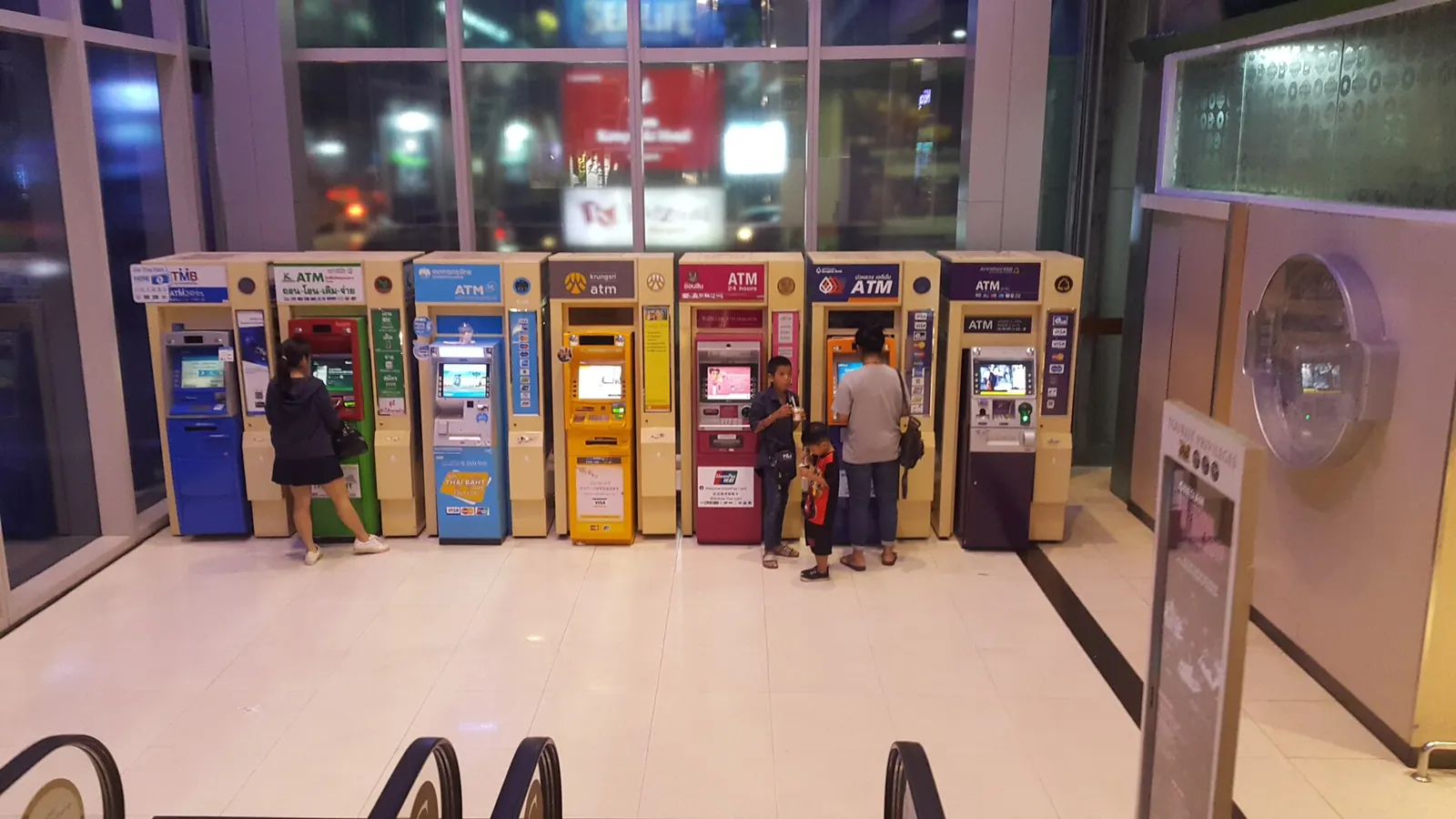
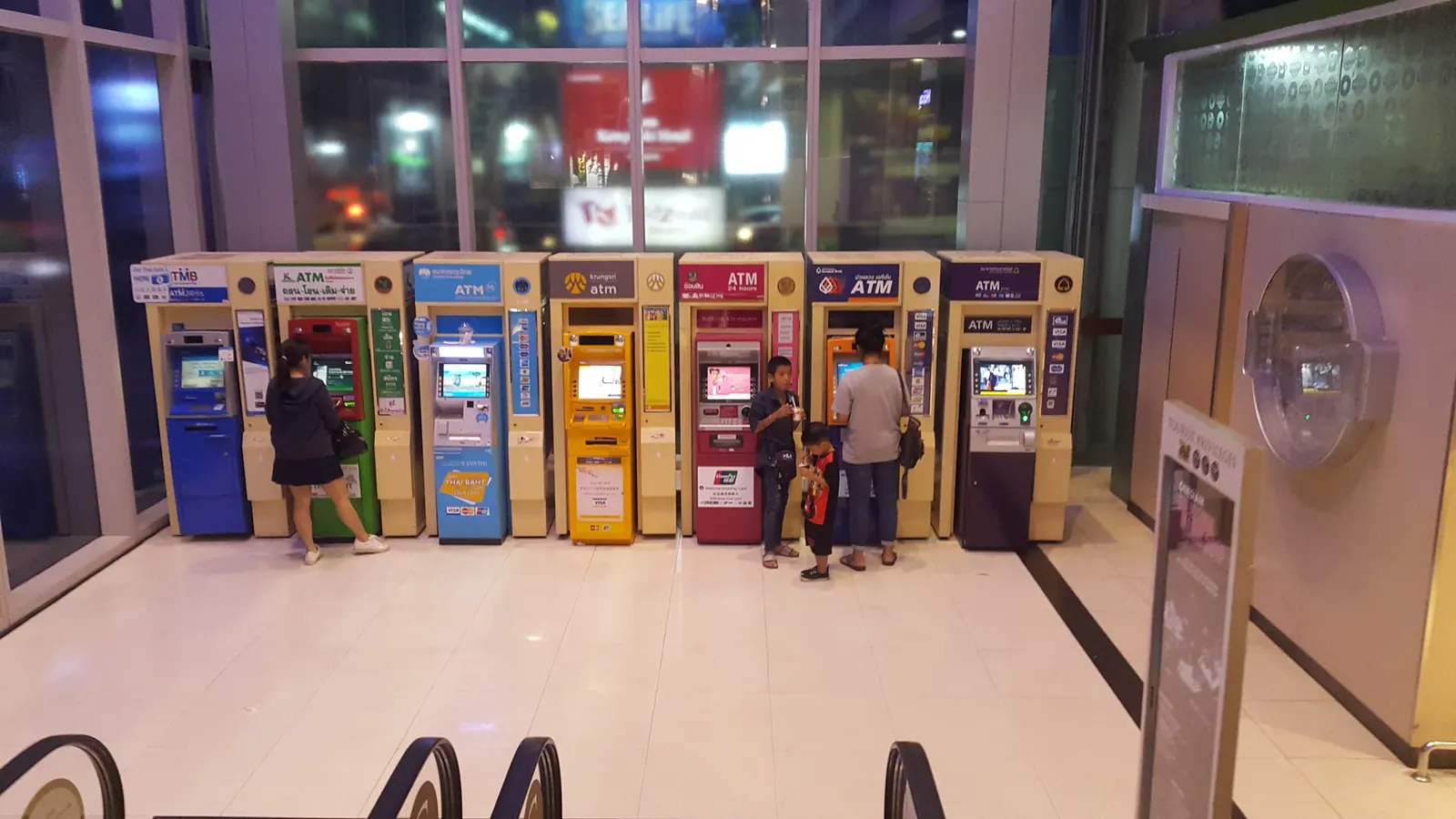
Almost every Thai bank — Bangkok Bank, Kasikorn, SCB, Krungsri, Krung Thai, TTB and the rest — charges ฿220 per withdrawal on a foreign card, on top of whatever your own bank charges for overseas ATM use and currency conversion. It’s a flat fee, so the maths is simple: take the maximum each time. Machines dispense ฿20,000–30,000 per transaction depending on the bank (Krungsri’s yellow machines are usually the most generous), and your home bank’s daily limit is the real ceiling. Ten ฿2,000 withdrawals cost you ฿2,200 in fees; two ฿10,000 ones cost ฿440.
Decline the conversion. After you enter the amount, the screen will offer to charge you in your home currency — dollars, pounds, euros — “for your convenience”. This is dynamic currency conversion, and the rate baked into it is typically 3–8% worse than what your card would get. Choose “Without conversion”, “Continue in THB”, or whichever button keeps the transaction in baht; the wording changes by bank, the answer doesn’t. Card terminals in shops do the same trick — always pay in baht.
The fee-free workaround: walk into a bank branch with your card and passport and ask for a cash advance or over-the-counter withdrawal. Bangkok Bank and Kasikorn branches do this routinely, there’s no ฿220, the amount can be larger than the ATM limit, and the only cost is whatever your card issuer charges for a cash advance (debit cards usually nothing; credit cards sometimes a fee plus interest from day one — check). It takes ten minutes and a form. AEON’s machines, found in some Big C and Tesco-Lotus stores, have charged less than the others in the past; check the screen before you commit.
Two habits: use machines attached to bank branches or inside malls and 7-Elevens rather than free-standing ones on dark sois (skimmers exist, rarely), and remember that Thai ATMs return your card before the cash — take both.
Cards: where they work and where they don’t
Visa and Mastercard work almost everywhere that has a till and a receipt printer: hotels, malls, supermarkets, chain restaurants, pharmacies, Grab, the airlines, 12Go, the dive shops, the good massage spas. Many 7-Elevens take cards for purchases of ฿200 or more; below that, cash. American Express is patchy outside big hotels. Contactless is normal. Where cards stop: street food, markets, most family restaurants, songthaews and tuk-tuks, longtail boats, small guesthouses, temple donations, the lady with the mango cart — in other words, most of the things worth spending money on. Budget for half your daily spend in cash on a normal day and nearly all of it on an island or in the provinces.
Watch for the 3% surcharge. Smaller hotels, tour agencies, dive schools and some restaurants add 3% for card payments, legally and openly; when they do, cash is the cheaper answer. And your own bank’s foreign transaction fee — typically 1–3% unless you carry a travel card — applies to every tap. A multi-currency travel card (Wise, Revolut and their cousins) removes that markup and gives you the mid-market rate on card spending; it does not remove the ฿220, which is the Thai bank’s fee at the machine, so the withdraw-big rule still stands.
Changing cash: where to get the good rate
Bring some of your own currency — it’s the cheapest baht you’ll buy if you change it in the right place. The arrivals-hall kiosks at both Bangkok airports give poor rates (several per cent off); at Suvarnabhumi, go down to the basement level by the Airport Rail Link, where the downtown exchange chains run counters at close to their city rates. In Bangkok, SuperRich (the orange and green ones are different companies; both are good), Vasu and the other booths around Ratchadamri, Pratunam and Silom give the best rates in the country — better than banks, better than anything on an island. Rules of the trade: big, clean, new notes get the best rate (a US$100 bill beats five twenties; torn or written-on notes get refused), bring your passport, and don’t change money at home before you fly — you’ll lose 5–10% to your own bank’s tourist rate.
QR codes, PromptPay, and why your banking app doesn’t work (yet)
Thais pay for everything — a ฿10 bag of pineapple, a taxi, the temple donation box — by scanning a PromptPay QR code with a Thai banking app. It’s brilliant and, for most visitors, locked: you need a Thai bank account. Some Asian wallets work through cross-border QR links (several Singaporean, Malaysian, Chinese and other regional apps can scan Thai QR codes at participating merchants); most Western apps can’t. If you’re staying months, a Thai account is the single biggest quality-of-life upgrade — our expat guide to opening one is coming. For a holiday, accept that cash does what QR does here, and carry it.
How much cash to carry, and in what notes
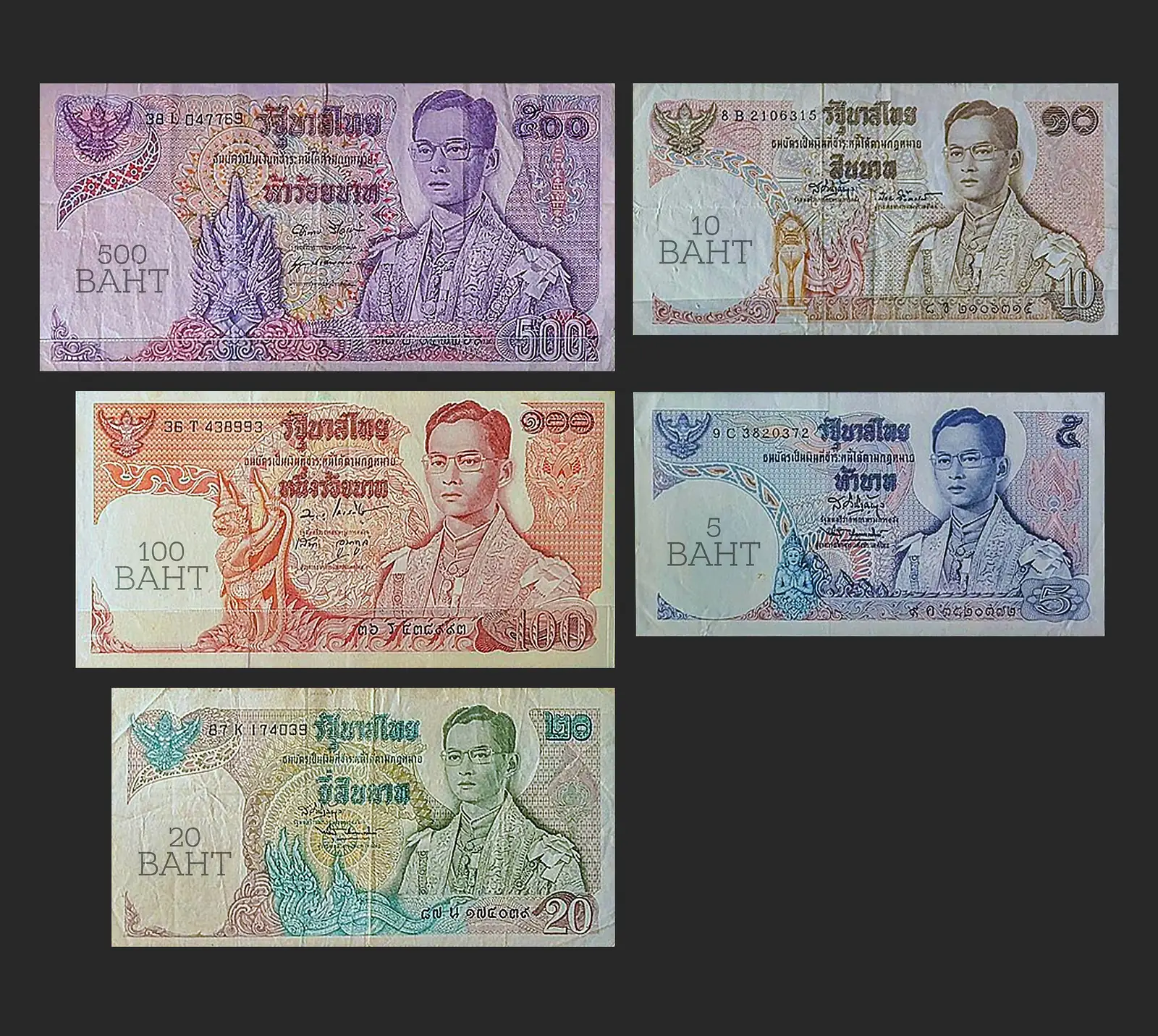
Land with ฿3,000–5,000 — change US$100 in the airport basement or make one ATM withdrawal in arrivals, then go. After that, a comfortable traveller carries ฿2,000–3,000 in their wallet at a time and the rest in the hotel safe. The notes are ฿20, ฿50, ฿100, ฿500 and ฿1,000, and the catch is that ATMs pay out in ฿1,000s while the country runs on ฿20s and ฿100s. Break big notes at 7-Eleven, in a mall or at your hotel; handing a ฿1,000 to a ฿40 noodle stall is the fastest way to watch a vendor’s face fall. Coins — ฿1, ฿2, ฿5, ฿10 — matter for songthaews, water, the boat.
The small leaks: tips, rounding, service charges
Thailand is not a tipping culture and it won’t think less of you for not tipping; it is a rounding culture. Leave the ฿20 note from the change at a restaurant, round the taxi meter up, give ฿50–100 after a good massage, ฿100 a day to a guide you liked. Restaurants with a printed “10% service charge” have already tipped themselves; add nothing. More detail on our money hub. The other leaks are the ones above — conversion offers, small withdrawals, airport exchange — and between them they cost the average two-week visitor a few thousand baht they’d rather have spent on dinner.
Money in Thailand: your questions, answered
How much is the ATM fee in Thailand?
฿220 per withdrawal on foreign cards at almost every Thai bank’s machines, plus your own bank’s fees. Withdraw the maximum (฿20,000–30,000 depending on the bank) as rarely as possible, or do an over-the-counter withdrawal inside a branch with your passport to avoid it entirely.
Should I bring cash or use ATMs in Thailand?
Both. Bring some clean large-denomination notes of your own currency to change at a downtown booth (the best rate), use ATMs for the rest in big infrequent withdrawals, and pay by card where it’s accepted without a surcharge. Don’t change money at home — your own bank’s tourist rate is the worst one.
Are credit cards widely accepted in Thailand?
In hotels, malls, chains and tourist restaurants, yes; in street food, markets, transport and small guesthouses, no. Plan on cash for roughly half of what you spend, and more on islands. Watch for 3% surcharges at smaller businesses and always choose to pay in baht, not your home currency.
Where is the best place to exchange money in Bangkok?
The downtown exchange booths — SuperRich and its competitors around Ratchadamri, Pratunam and Silom — and their counters in the Suvarnabhumi basement by the Airport Rail Link. Avoid the arrivals-hall kiosks, hotel desks and island exchanges, which are several per cent worse.
Can tourists use PromptPay or QR payments in Thailand?
Only with a Thai bank account or one of the regional Asian wallets that have cross-border QR agreements. Most Western banking apps can’t scan Thai QR codes yet, so for a holiday, cash fills the gap; for a long stay, opening a Thai account is the fix.
Related guides
- Money in Thailand: Daily Budgets, Tipping and What Things Cost
- The Thailand Price Index: 58 Real Prices, Checked and Dated
- SIMs & eSIMs in Thailand: 10 Minutes at the Airport, Sorted
Before you go
Sort the SIM at the same counter you sort the cash (our SIM guide), read the straight answer on safety for the scams that touch your wallet, and if you’re still choosing where in Thailand the money goes, our Where to Go in Thailand matcher scores all 77 provinces against your budget, your month and what you actually want from the trip.