Railay is not an island. It only behaves like one. A wall of limestone cuts the peninsula off from the Krabi mainland so completely that the only way in is a longtail boat, there are no roads and no cars, and the whole place — four beaches, a few hundred hotel rooms, a climbing scene and a colony of opportunistic monkeys — can be walked end to end in twenty minutes. That geography is the entire appeal, and it’s also why Railay gets oversold: it is gorgeous, it is small, and most people see it for the four hours between the 11am boat and the 3pm boat, which is precisely the window in which it is least itself. Here’s the peninsula as we’d explain it to a friend — what’s worth the boat fare, what to skip, what it costs a foreigner in 2026, and how to do it so you’re still there when the day-trippers leave.
The short version: Phra Nang is the beach, Railay West is the sunset, Railay East is the cheap bed and the mangrove, Tonsai is the climbers’ annexe, and the viewpoint is worth the mud while the lagoon beneath it usually isn’t. Stay one to three nights if you can; if you can only day-trip, come on the first boat. Getting to Krabi in the first place is covered in our Krabi province profile, and the wider coast in the seven-day Andaman itinerary. The practical pair: Bangkok to Krabi for getting down, where to stay in Krabi for the bed when you land.
How Railay works: four beaches, no roads
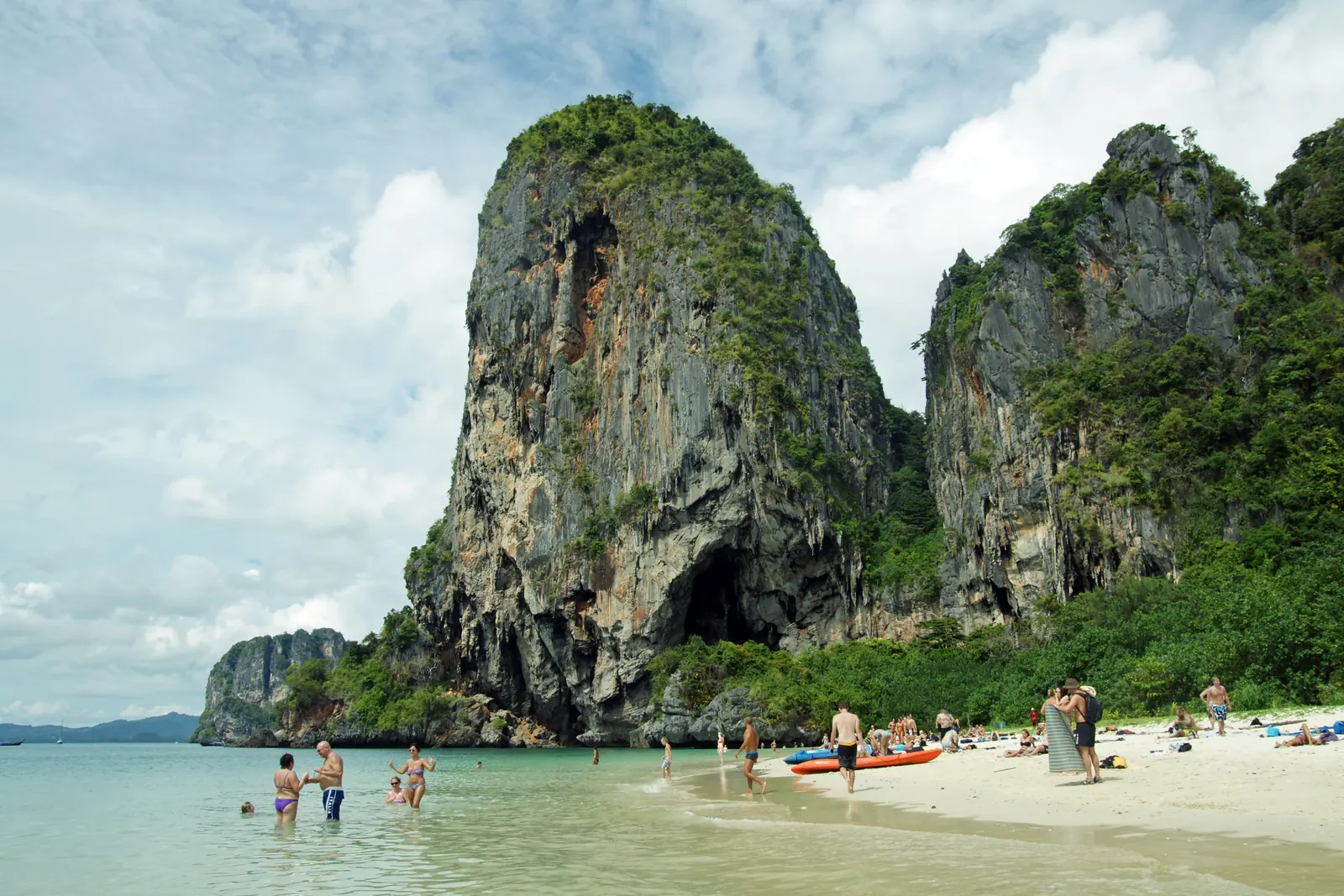
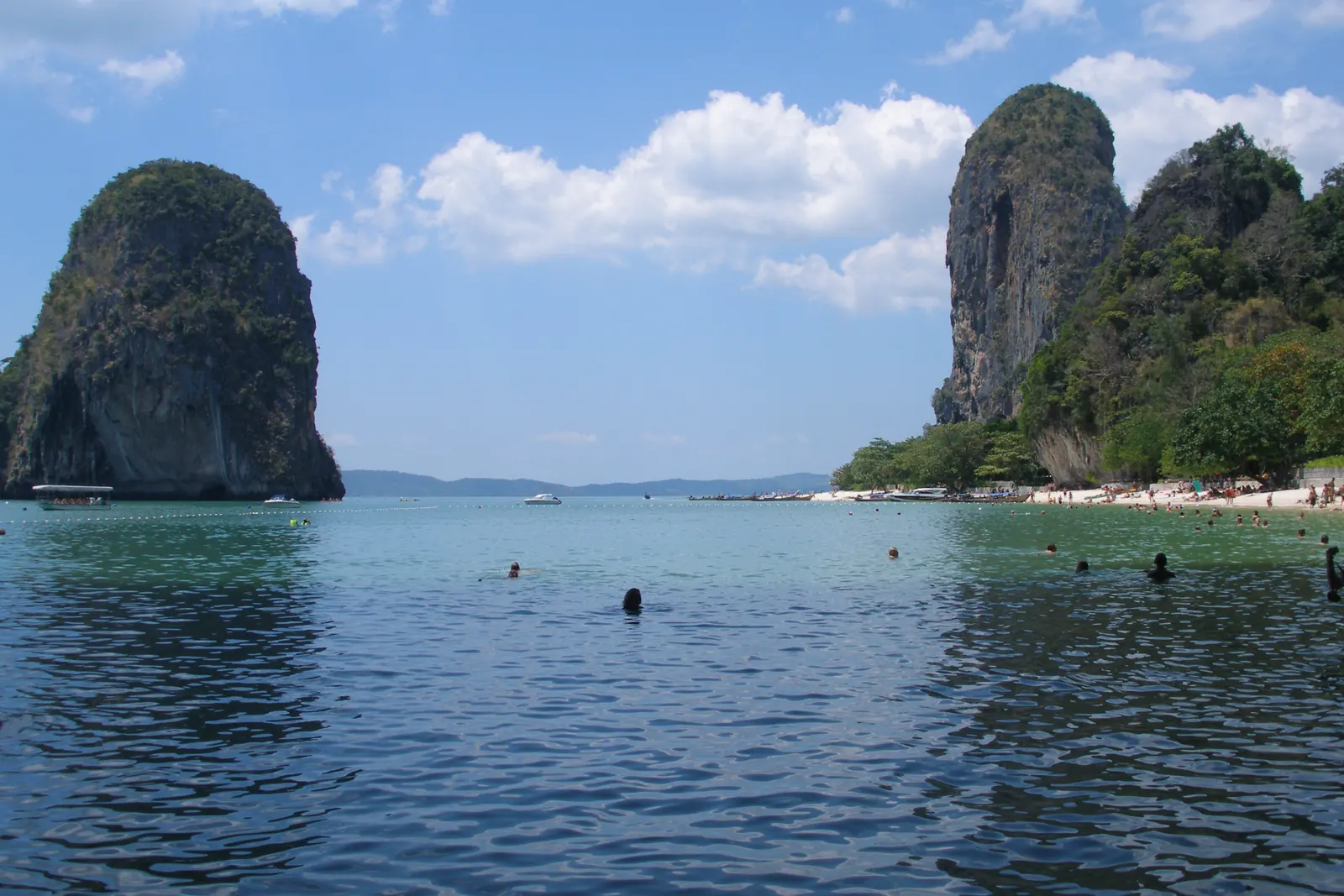
Railay West is the postcard — a wide, soft, west-facing beach with the resorts set back behind the trees, boats from Ao Nang landing straight onto the sand, and the sunset that sells the place. Railay East is a ten-minute walk across the neck of the peninsula: mangroves, a mudflat at low tide, the “walking street” of bars, the cheaper guesthouses, and the pier where boats from Krabi Town and Ao Nam Mao arrive. Phra Nang is the beach at the southern tip, reached by a shaded path from East under the cliffs — it’s the best beach of the four by a distance, with the Princess Cave at one end and Rayavadee’s lawns behind it. Tonsai is the next bay north of West, separated by a headland: the climbers’ village, scruffier and cheaper, reached by a jungle path (15–20 minutes) or around the rocks at low tide. Everything is on foot. Nothing is far.
Getting to Railay
From Ao Nang — the usual way. Longtails leave from the beach at the eastern end of Ao Nang’s strip and land on Railay West in 10–15 minutes: ฿100 per person by day, ฿150 after about 6pm, and the boat goes when it has eight passengers or when somebody pays for the empty seats (฿800 charters the whole thing). From Ao Nam Mao, a small pier east of Ao Nang near the Shell Cemetery, boats go to Railay East for ฿100 — this is the route the boats switch to in the wet season when the West beach landing gets rough. From Krabi Town, longtails leave Chao Fah pier for Railay East, 45 minutes, around ฿150, most reliably in the morning. From the airport, the ฿150 shared van to Ao Nang then a boat is the simplest chain; you can be on the sand three hours after landing. Every route in from Bangkok — the 80-minute flight, the night bus, the train-and-bus — is costed on 12Go: Bangkok to Krabi tickets, or the Bangkok to Ao Nang page if you want the van included.
The arrival that catches people: the boats stop around dusk, and landing on Railay West means stepping off the bow into knee- or waist-deep water with your bag held high. Arrive in daylight, pack the electronics in a dry bag, and wear shoes you can get wet. Luggage with wheels is a liability here — there’s sand, then a path, then stairs.
How this list works
Each entry gets a verdict — Do it, Do it, with a caveat, or Skip it — with the foreigner price where there is one (Thailand dual-prices its parks and caves) and the practical detail that makes the difference. Prices are August 2026, cross-checked against our Thailand Price Index. Nothing here was comped.
Worth the boat fare
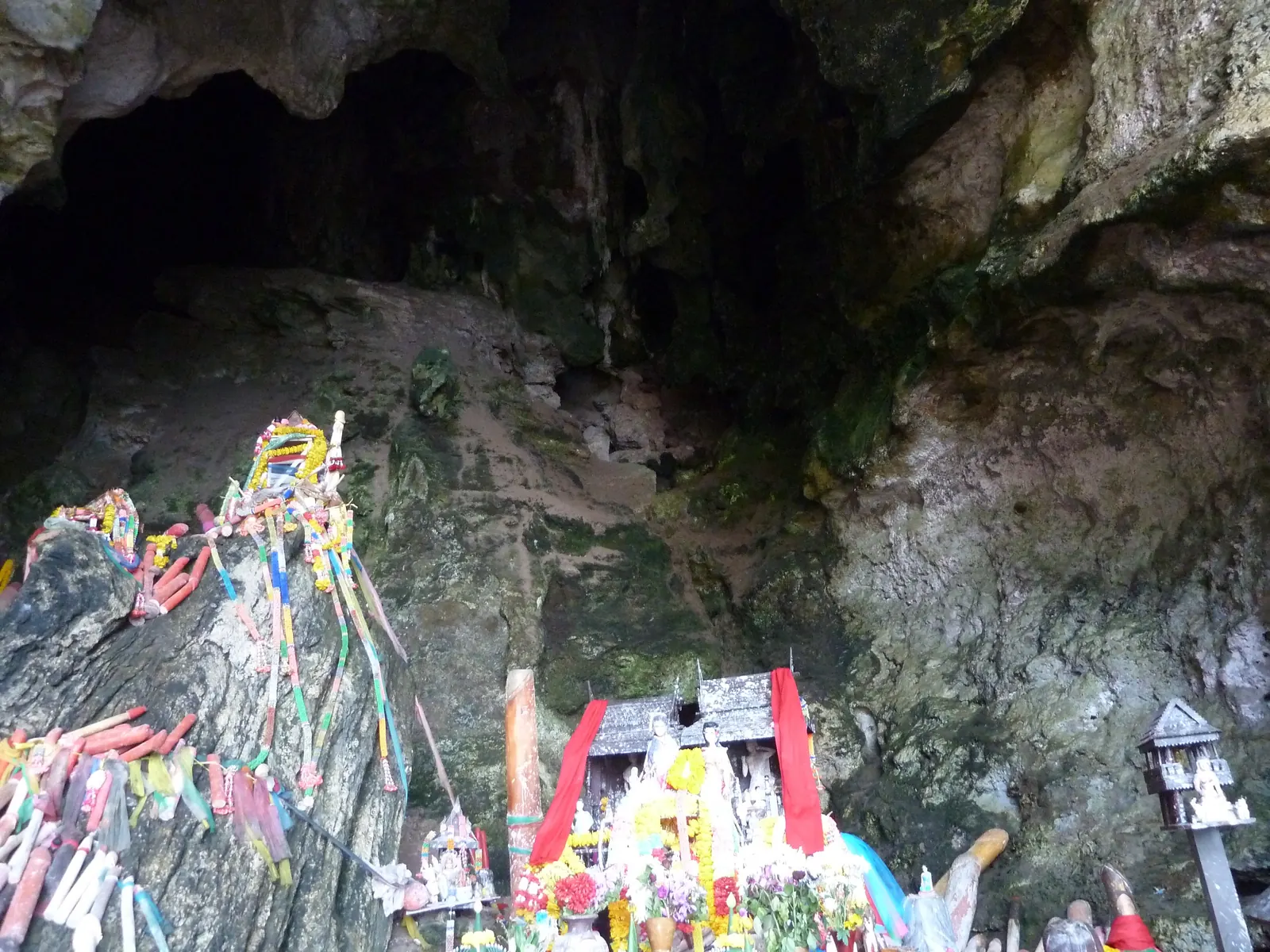
Phra Nang Beach — Do it; it’s the reason to come. A short, shaded walk from Railay East under overhanging cliffs ends at a beach that is routinely on “best in Thailand” lists and, unusually, deserves it: clean sand, calm water, karst stacks offshore you can swim to, and a cliff face behind you that climbers are working while you float. It’s free. Go before 10am or after 3pm — in between it hosts every longtail and speedboat on the coast. The Princess Cave (Tham Phra Nang) at the eastern end is a shrine full of carved wooden phalluses left by fishermen for a sea princess spirit, which surprises people who haven’t read about it; it is a working shrine, so photograph respectfully and don’t climb on the offerings. Lunch is a longtail kitchen-boat parked on the sand selling pad thai and fruit shakes at ฿80–150 — more than Ao Nang, fair for a beach with no road.
The Railay viewpoint — Do it, with a caveat. Signed off the path between East and Phra Nang, it’s a twenty-minute scramble up red clay and tree roots with fixed ropes to a ledge over both beaches at once. The caveat is the surface: it’s steep, it’s slippery when wet, and flip-flops have ended a lot of holidays here. Wear shoes with grip, go in the morning before the heat, and accept that you’ll arrive at the top the colour of the path. Free.
Climbing — Do it, even if you never have. Railay and Tonsai are one of the best-known limestone climbing areas on earth, with several hundred bolted routes and schools that have been teaching beginners for thirty years. A half-day introductory course runs about ฿1,000–1,500, a full day ฿1,800–2,500, and a three-day course ฿6,000 or so — the half day gets a complete novice up real rock with the sea behind them, which is the point. In high season, deep-water soloing trips (climb unroped, fall into the sea) go out by boat for ฿1,500–2,000. Compare Railay climbing courses by group size; four or fewer per instructor is the number to look for.
A kayak around the headlands — Do it. Rentals on West and East are ฿200 an hour or ฿500–800 for a half day. Paddle round to Phra Nang and Tonsai, poke into the sea caves at the base of the cliffs at high tide, and you’ve had the best two hours of the trip for the price of a cocktail. Morning, before the wind and the speedboats.
The Four Islands by longtail — Do it, with a caveat. Chicken Island, Tup, Poda and Phra Nang on one half-day loop: shared longtail from Railay or Ao Nang ฿600–900 per person, private boat ฿2,500–3,500, plus the ฿200 national park fee collected on the islands. The caveat is the crowd — Tup’s sandbar at midday is a car park of boats — and the fix is a private longtail that leaves at 8am and does the loop backwards. The speedboat version is faster and worse. Longtail four-islands trips are the ones to filter for.
Hong Island — Do it if you have a second day. A separate national park to the north with a lagoon you enter through a gap in the rock; ฿1,200–1,800 by shared longtail or speedboat plus its own ฿300 park fee. Quieter than the Four Islands, better snorkelling, and the reason people extend their Railay stay by a night. Hong Island trips from Krabi pick up from Railay West.
Sunset on Railay West, sunrise from East — Do both. The west beach faces straight into it; bring a mat and a ฿60 7-Eleven beer rather than paying ฿200 at the beach bars for the same view. Sunrise is the mangrove side and Phra Nang, where you’ll have the sand to yourself. These two hours are the whole argument for staying overnight.
Skip it, or sidestep it
The lagoon under the viewpoint — Skip it unless you climb. The path continues down from the viewpoint into a sinkhole lagoon through three near-vertical rope descents on mud. It’s a genuinely hazardous forty minutes, the lagoon is a brown puddle at low tide, and Krabi’s clinics see the results every week. Climbers with dry weather and proper shoes enjoy it; everyone else should turn round at the ledge and feel no shame.
Diamond Cave (Tham Phra Nang Nai) — Skip it, probably. A short walkway through a cave on the East side, ฿200 for foreigners. It’s fine. It is not ฿200 of fine when the free cliffs, caves and beaches outside are better, and “it’s quite small” is the most common honest review. Worth it only if it’s pouring with rain and you’ve done everything else.
The midday day trip — Sidestep it. If you can only do Railay as a day, come on a boat before 9am and leave on the last one, not the 11-to-3 shuttle that most Ao Nang hotels sell. You’ll see Phra Nang before the boats, the viewpoint before the heat, and the beaches emptying rather than filling.
Feeding the monkeys — Skip it, for your own sake. Railay has long-tailed macaques and the gentler dusky langurs. The macaques open bags, steal phones and bite; the langurs just watch. Keep food zipped away on the Phra Nang path and don’t hand anything over, however photogenic.
Where to sleep on the peninsula
Railay has a narrow range: a handful of resorts on West, cheaper rooms on East and Tonsai, and one of Thailand’s most famous luxury hotels behind Phra Nang. Rough cool-season “from” rates: Railay Bay Resort & Spa (from around ฿3,500, the West-beach stalwart that spans the peninsula to East); Sand Sea Resort (from around ฿2,500, beachfront West, the sensible mid-range pick); Railay Princess Resort & Spa (from around ฿1,800, on the East side, a pool and a short walk to everything); Tonsai Bay Resort (from around ฿1,500, the climbers’ bay with the better price); and Rayavadee (from around ฿20,000, the pavilions in the coconut grove behind Phra Nang — the one property here that belongs in our luxury price hub). Fan rooms and dorm-style beds on East and Tonsai go for ฿500–900. Book ahead December to February; in green season everything is 30–50% cheaper and the West beach boats move to the East pier.
Honest warnings before you go
Cash. There are a couple of ATMs on the peninsula and they run dry over holidays; withdraw on the mainland (the ฿220 fee applies wherever you do it) and bring enough for boats and beach lunches. Prices. Food and beer are ฿30–50 over Ao Nang for the same thing — boats carry everything in. Tides. Railay East is a mudflat at low tide and the Phra Nang swim is best at high; check a tide table and plan the beach hours around it. Season. May to October brings afternoon storms, cancelled island trips and a rougher crossing — but also empty beaches and half-price rooms; our month-by-month guide has the coast-by-coast detail. The boatmen. The longtail counters at Ao Nang are fixed-price and fair; the “special price” from a man on the beach is not — the Thailand scams guide covers longtail pricing. Scooters. None, which is the best thing about the place.
Railay: your questions, answered
Is Railay Beach worth visiting?
Yes — for the cliffs, Phra Nang Beach and the no-roads calm, especially if you stay a night or two. As a midday day trip from Ao Nang it is still pretty, but you’ll share it with every boat on the coast and miss the hours it’s best.
How do you get to Railay Beach?
By longtail boat only. From Ao Nang it’s 10–15 minutes for ฿100 (฿150 in the evening); from Krabi Town’s Chao Fah pier about 45 minutes for around ฿150; from Ao Nam Mao pier ฿100 to Railay East. From Krabi airport, take the ฿150 shared van to Ao Nang first.
How many days do you need in Railay?
One full day covers the beaches and the viewpoint; two lets you climb or kayak and take an island trip; three is for people who’ve decided the lack of roads is the point. More than that and most people move on to Koh Lanta or Phi Phi.
Can you swim at Railay?
Yes, at Railay West and especially at Phra Nang, which is calm and clean at high tide. Railay East is mangrove and mud, not a swimming beach. Watch for longtails when you swim off the West beach — the boats land right on the sand.
Is Railay or Ao Nang better to stay in?
Railay for scenery, quiet and the sunrise-to-sunset hours; Ao Nang for price, choice, restaurants, pharmacies and easy onward transport. Many people do two nights on Railay and the rest in Ao Nang or Krabi Town, which is the combination we’d book.
Related guides
- Seven Days on the Andaman Coast: An Island-Hopper’s Itinerary
- Koh Lanta: The Slow Road
- Things to Do in Phuket: Worth It vs Skip It
Book the trip
Some links in this guide are affiliate links. If you book through them we may earn a small commission at no extra cost to you — it helps keep Destination Thailand independent.
Hotels: the peninsula’s beds sell out first in high season — compare Railay and Krabi hotels on Agoda and filter by Railay East, Railay West or Ao Nang. Activities: climbing courses, the Four Islands and Hong Island by longtail — browse Krabi and Railay tours on GetYourGuide and read the newest reviews before you commit. Getting there: flights, night buses and the train-plus-bus from Bangkok — book Bangkok to Krabi on 12Go. Not sure the Andaman is your coast at all? Our Where to Go in Thailand matcher scores all 77 provinces against your month, your crowd tolerance and what you actually want from the trip.