Every Thai province has a slogan and most are forgettable. Mae Hong Son’s is a number: 1,864 bends, the count of curves on the roads that circle the province from Chiang Mai and back. The Mae Hong Son Loop is that circuit — roughly 600 km of Highways 1095 and 108 through Pai, Soppong, Mae Hong Son town, Khun Yuam and Mae Sariang — and it is the best road trip in the country that is still mostly empty. It is also the one that fills the Pai hospital. So here it is costed for November 2026 — every segment in kilometres, hours and baht, by motorbike, car, minivan or the one-way flight that came back this year, with a verdict on each stop and the licence honesty the rental shops leave off the sign. Small prices live in our Thailand Price Index.
The short version: four days minimum, six is right; anticlockwise if you ride, clockwise if you are on vans. Budget ฿650–1,000 in minivan fares, ฿2,500–4,500 in scooter hire and fuel, or ฿12,000–18,000 for a car and driver. Go between November and February, never in March or April, never on a car licence. Either end is in the Mae Hong Son province profile and the Chiang Mai province profile.
The Mae Hong Son Loop segment by segment: kilometres, hours and baht for November 2026
Road kilometres between town centres; moving time for a competent rider, a hire car and a Prempracha minivan. Fuel is one 125cc scooter at around ฿38 a litre as of November 2026 — a 250cc uses half as much again, a small car two and a half times. Van fares are one adult, one way, at the counter.
| Segment | Road | Km | Bike / car / van | Fuel (scooter) / van fare | Road notes | Book |
|---|---|---|---|---|---|---|
| Chiang Mai → Pai | 107, 1095 | 135 | 3.5 h / 3 h / 3–3.5 h | ฿120 / ฿150–250 | The 762 bends; blind hairpins, vans overtaking on corners, gravel on the inside line | Chiang Mai to Pai on 12Go |
| Pai → Soppong → Mae Hong Son | 1095 | 110 | 3 h / 2.5 h / 3 h | ฿95 / ฿150–260 | Steeper and quieter; Tham Lod turn 9 km past Soppong; fog until 09:00 in the cool season | Pai to Mae Hong Son on 12Go |
| Mae Hong Son → Khun Yuam → Mae Sariang | 108 | 165 | 3.5 h / 3 h / 3.5–4 h | ฿140 / ฿150–250 | The empty half: sweepers through teak, fuel in Khun Yuam, sunflower hills in November | Mae Hong Son to Chiang Mai on 12Go |
| Mae Sariang → Hot → Chiang Mai | 108 | 190 | 3.5 h / 3 h / 4–4.5 h | ฿160 / ฿200–335 | Fast and dull after Hot; Ob Luang gorge is the only reason to slow down | Mae Sariang to Chiang Mai on 12Go |
| Khun Yuam → Mae Chaem → Doi Inthanon → Chiang Mai (alternative home leg) | 1263, 1088, 1192, 1009 | 215 | 5.5 h / 5 h / no van | ฿190 / — | The best riding on the loop and the hardest: 20 per cent grades, no fuel for 90 km, park fee | Doi Inthanon day trips on GetYourGuide |
| Chiang Mai → Mae Hong Son direct | 108 | 355 | — / 7 h / 8–9 h | — / ฿250–400 | Only sensible if you fly the other leg | Chiang Mai to Mae Hong Son on 12Go |
Around 600 km, ฿500–600 in scooter fuel or ฿650–1,000 in van fares: the real cost of the loop is not transport but four to six nights of beds and the beer at the end of each leg.
Clockwise or anticlockwise, and is four days on the Mae Hong Son Loop enough?
Clockwise means Pai first, the way almost everyone goes because Pai is three hours away and the vans are hourly. Anticlockwise means the long run down Highway 108 to Mae Sariang on day one and Pai last. If you ride, go anticlockwise: you take the 762 bends on day four with 450 km of mountain practice behind you rather than on day one with a bike you met at breakfast, and Pai is the reward rather than the hangover. If you are on vans, go clockwise: the Chiang Mai–Pai–Mae Hong Son services are roughly hourly and let you hop, while the 108 side is a handful of departures a day and works best as one long, pre-booked ride home.
Four days — Chiang Mai to Pai, Pai to Mae Hong Son via Tham Lod, Mae Hong Son to Mae Sariang, Mae Sariang to Chiang Mai — is the honest minimum, seen through a visor. Six days is right: two nights in Pai (filled by Things to Do in Pai), two in Mae Hong Son so Ban Rak Thai and the bamboo bridge each get a morning, one in Mae Sariang, and the Mae Chaem–Doi Inthanon detour home. The three-day organised loop tours on GetYourGuide are three days in a minivan: for people who cannot ride and will not plan, and nobody else.
Riding the Mae Hong Son Loop by motorbike: the licence, the bike, the checkpoint and the hospital
Start with what the rental shop will not say. Thai law requires a motorcycle licence, and a foreign one counts only with a motorcycle category and an International Driving Permit (the 1949 and 1968 convention versions are both recognised). A car licence, or a car-only IDP, makes you an unlicensed rider, and that bites twice. At the checkpoint — a semi-permanent police stop on the edge of Pai, regular ones on the Chiang Mai exits — the fine is up to ฿1,000 for no licence and ฿2,000 for no helmet. With your insurer, far more expensively: nearly every travel policy excludes riding without a licence valid for the class, and many exclude anything over 125cc. Shops will hand you a bike for a passport and a smile; the Pai hospital will hand you a ฿50,000–200,000 bill for a broken leg, and the policy will not pay it. The damage-claim trick on return is in the scams guide.
If you are licensed and ride at home, this is one of the great weeks of your life and the choice is the bike. A 125cc automatic — Honda Click or Scoopy, ฿200–300 a day in Chiang Mai — will do the loop and thousands do; it is slow on the Inthanon grades and a liability two-up. A 150–160cc PCX or NMAX at ฿300–450 a day is the sweet spot. A Honda CRF250 at around ฿700–1,200 a day is the bike for the Mae Chaem detour, and the one insurers like least. Full-face helmet, jacket, gloves, closed shoes, a rain layer even in January. Photograph every scratch, leave a cash deposit (฿3,000–5,000) rather than your passport, and fill up at every town — the 1088 has no fuel at all. The rest is in the packing list. Thailand loses roughly 18,000 people a year on its roads and three-quarters are on two wheels; ride it like a mountain road, because that is what it is.
Verdict: the loop by motorbike is the best way to do it and the only way that can end a holiday. Licensed, experienced, in the dry, on a PCX or a CRF with a real helmet: do it. On a car licence or for the first time: take the van, and rent a scooter in Pai for the valley roads.
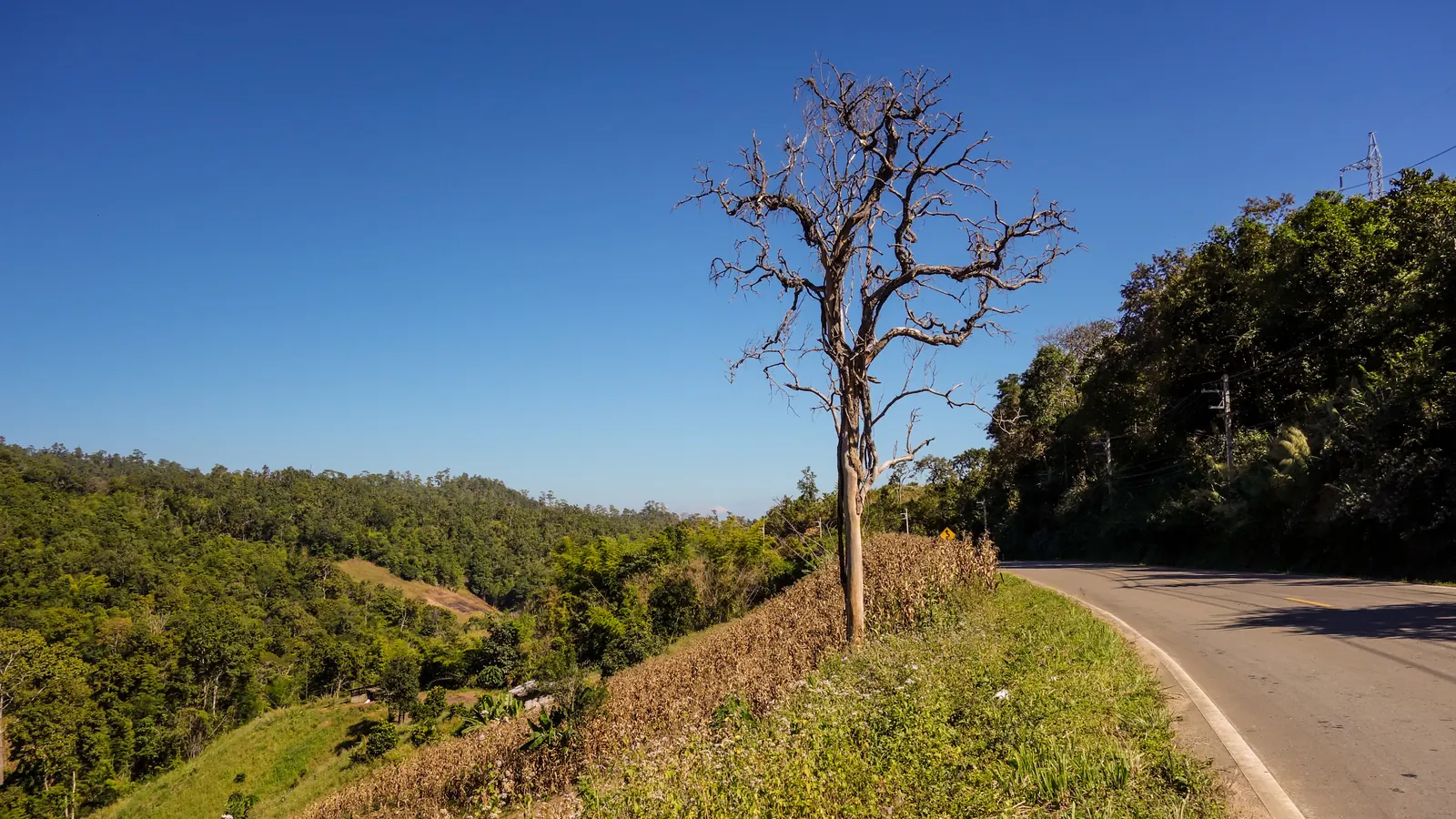
Car, driver, minivan or plane: how to do the Mae Hong Son Loop without a motorbike
A self-drive car is the underrated answer: a small automatic from the Chiang Mai airport desks is ฿1,000–1,500 a day with basic insurance, petrol for the loop around ฿2,000, and the hairpins become an air-conditioned afternoon with a boot (car licence plus IDP, and the Inthanon descent cooks brakes). A car and driver is ฿2,500–3,500 a day plus the driver’s bed and food, so four days for three people is roughly ฿12,000–18,000 before hotels: more than the vans, less than two scooters and a cast.
Public transport does the loop surprisingly well, because one company, Prempracha, runs almost all of it from Chiang Mai Bus Terminal 2 (Arcade). Chiang Mai to Pai is ฿150–250 at the counter, roughly hourly from about 06:30 to 17:30, and sells out a day ahead from November to February — our Chiang Mai to Pai guide has the motion-sickness plan, which you will want. Pai to Mae Hong Son is ฿150–260 and three hours (ask to be dropped at the Soppong junction for Tham Lod); Mae Hong Son to Mae Sariang ฿150–250 and up to four hours; Mae Sariang to Chiang Mai ฿200–335 and four and a half. Nothing public crosses the Mae Chaem–Inthanon road. Book the legs on Chiang Mai to Pai, Pai to Mae Hong Son, Chiang Mai to Mae Sariang for the anticlockwise start, and Pai to Chiang Mai for the day you give up early. Getting to Chiang Mai at all is Bangkok to Chiang Mai, four ways (tickets on 12Go), then the Chiang Mai airport arrival guide.
Then the plane, which changes the maths. Flights from Chiang Mai to Mae Hong Son vanished for several years; as of its October 2026 schedule, EZY Airlines runs two a day each way between Chiang Mai and Mae Hong Son (about 50 minutes) and one a day to Pai (about 45), on small turboprops. Fares were not published and we have seen ฿1,500–2,500 one way quoted, so treat that as a range to check. What it buys is a half-loop: fly to Mae Hong Son, ride or van back via Pai over two or three days, skip the 108. Bangkok Airways’ Mae Hong Son service has lately run from Lampang three days a week, no use from Chiang Mai. Confirm operating days before building a trip around a flight; small Thai regional routes appear and vanish with the season.
Verdict: self-drive car for couples and families; vans for solo budget travellers, clockwise, booked a day ahead; the one-way flight for anyone with four days who wants the 1095 but not the 108.
Pai to Mae Hong Son: Pai Canyon, Tham Lod cave and what is worth stopping for on the 1095
Pai is a hippy town with a hospital, and the opinions about it are more tiring than the bends; ours is in why Pai is still worth the winding road. For loop purposes it is a bed, a mechanic, a scooter shop for the valley roads (฿150–250 a day) and a walking street for dinner. Pai Canyon, 8 km south, is free, a red-earth ridge with sheer drops and no railings, and at sunset holds every tourist in Pai: do it at 07:00 for the mist and nobody, skip it at 18:00. Verdict: one night on a four-day loop, two on six.
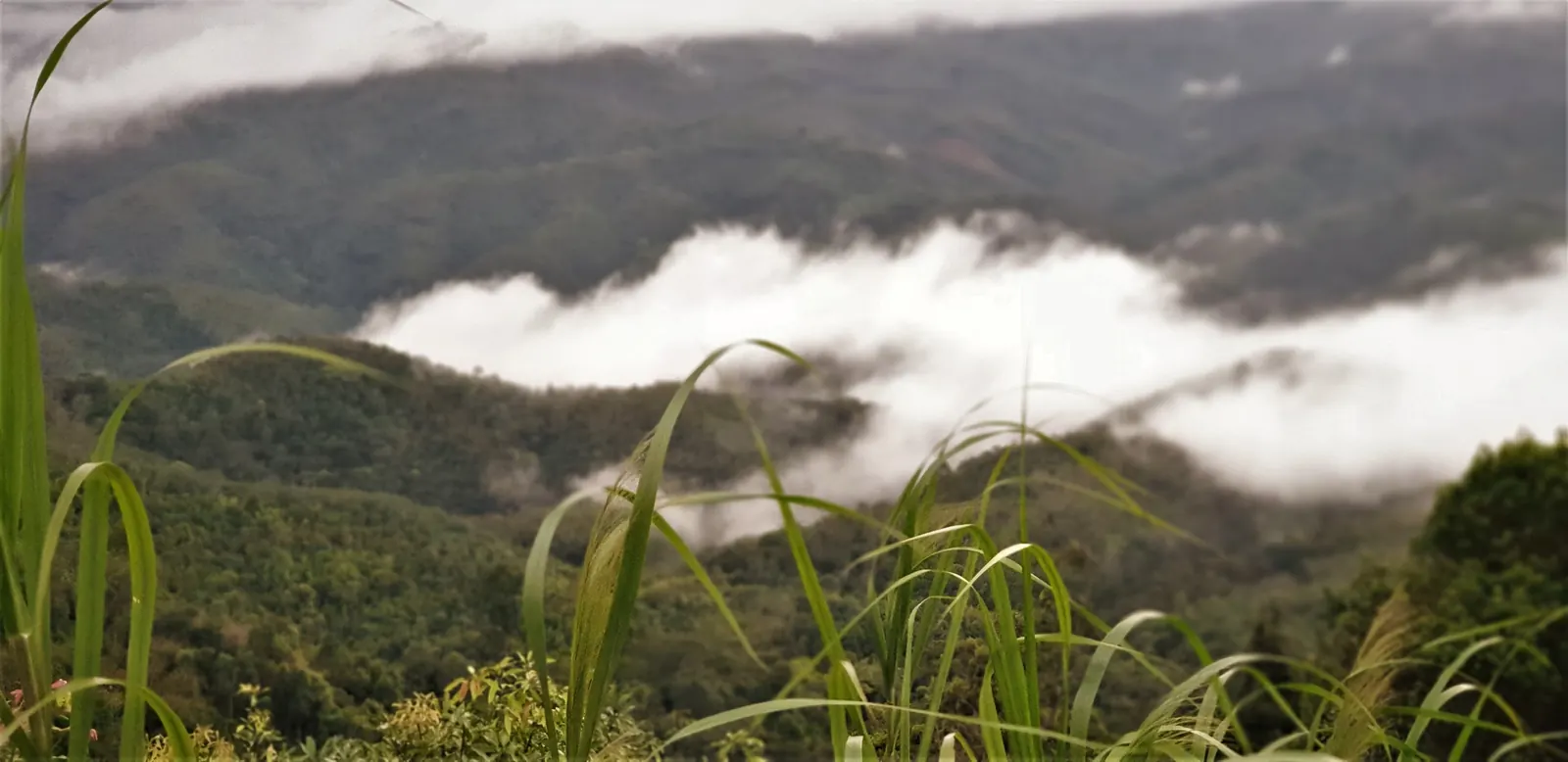
Tham Lod is the one stop on the loop nobody regrets. Nine kilometres off the 1095 from Soppong, it is a 1.6 km river cave with three chambers reached by bamboo raft and wooden ladders, 2,000-year-old teak coffins on the ledges, and at dusk a few hundred thousand swifts pouring in as the bats pour out. A guide with a hissing lantern is mandatory at ฿150 for up to three or four, the raft is ฿400 for up to three, and some visitors report a separate entry fee of around ฿200: budget ฿750–1,000 for two and ninety minutes inside. Go at 16:00, then sit by the exit for the swifts at 17:30. Tham Lod tours from Pai on GetYourGuide are ฿1,200–1,800 with the hot springs thrown in, the answer for van travellers. Verdict: worth it, no qualifications. After Soppong, stop at the viewpoints with no bus outside; the Doi Kiew Lom pass has a coffee stall and the fog clearing below you at 09:00 in December.
Mae Hong Son town, Ban Rak Thai and the Su Tong Pae bamboo bridge
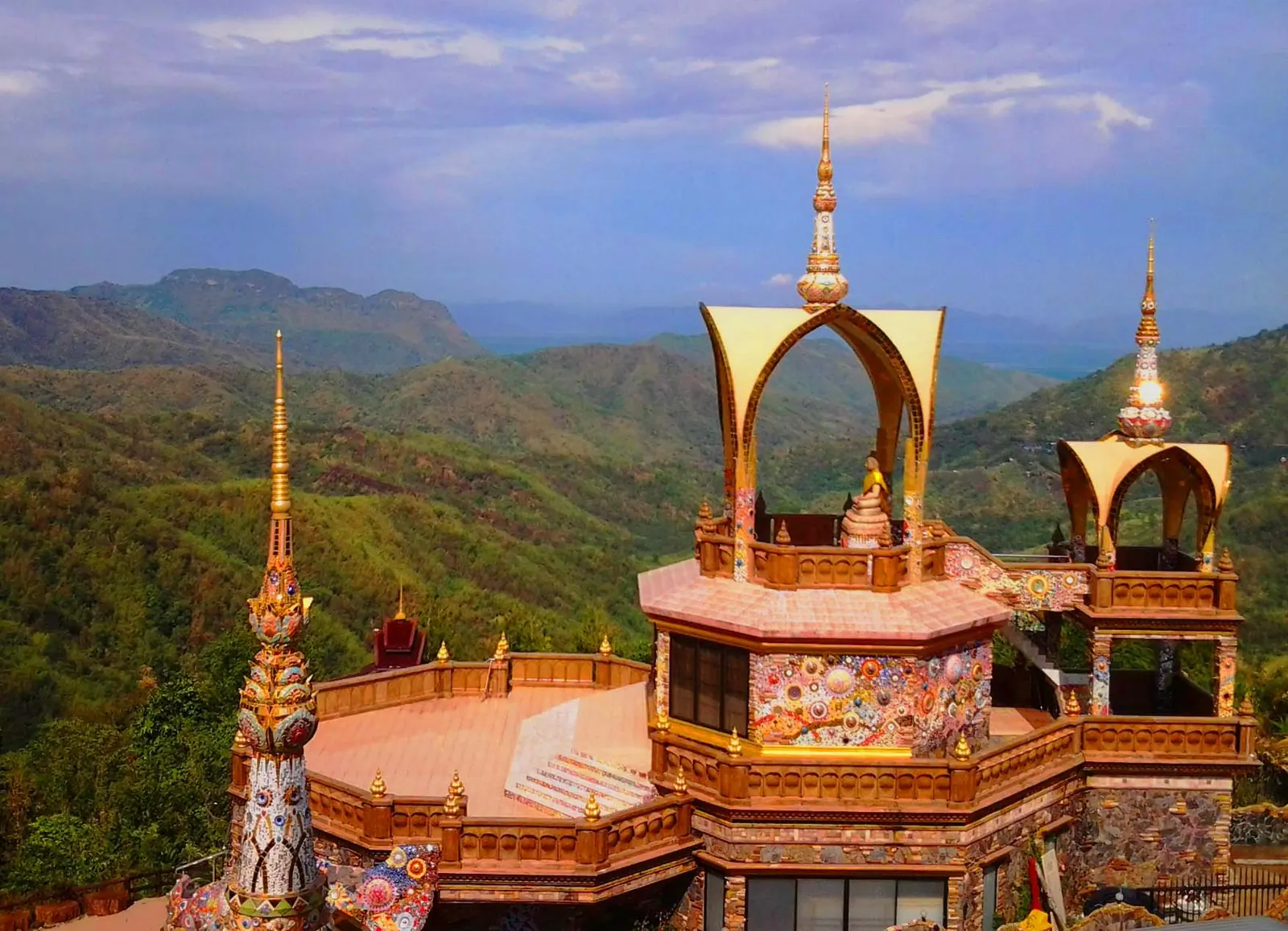
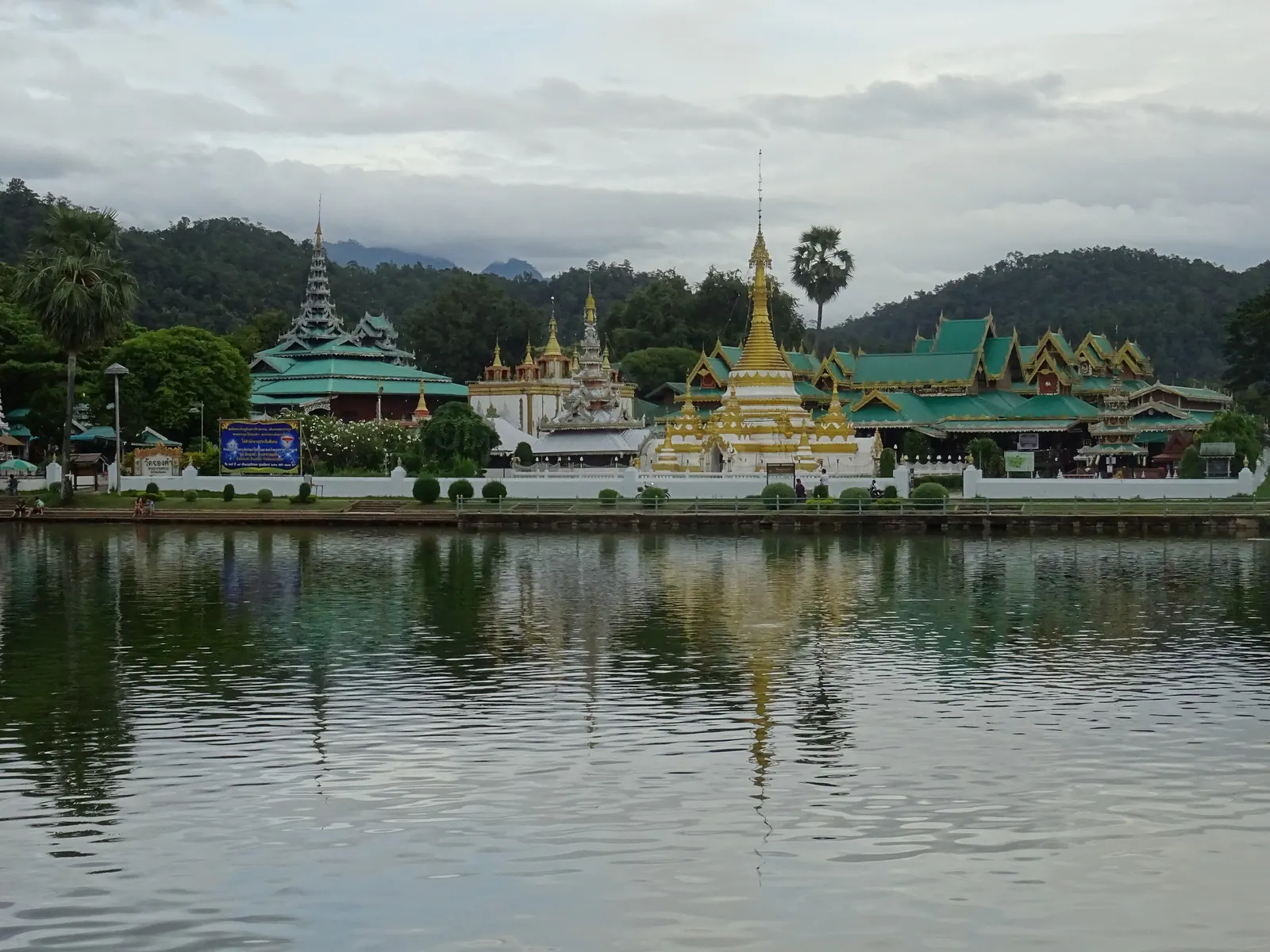
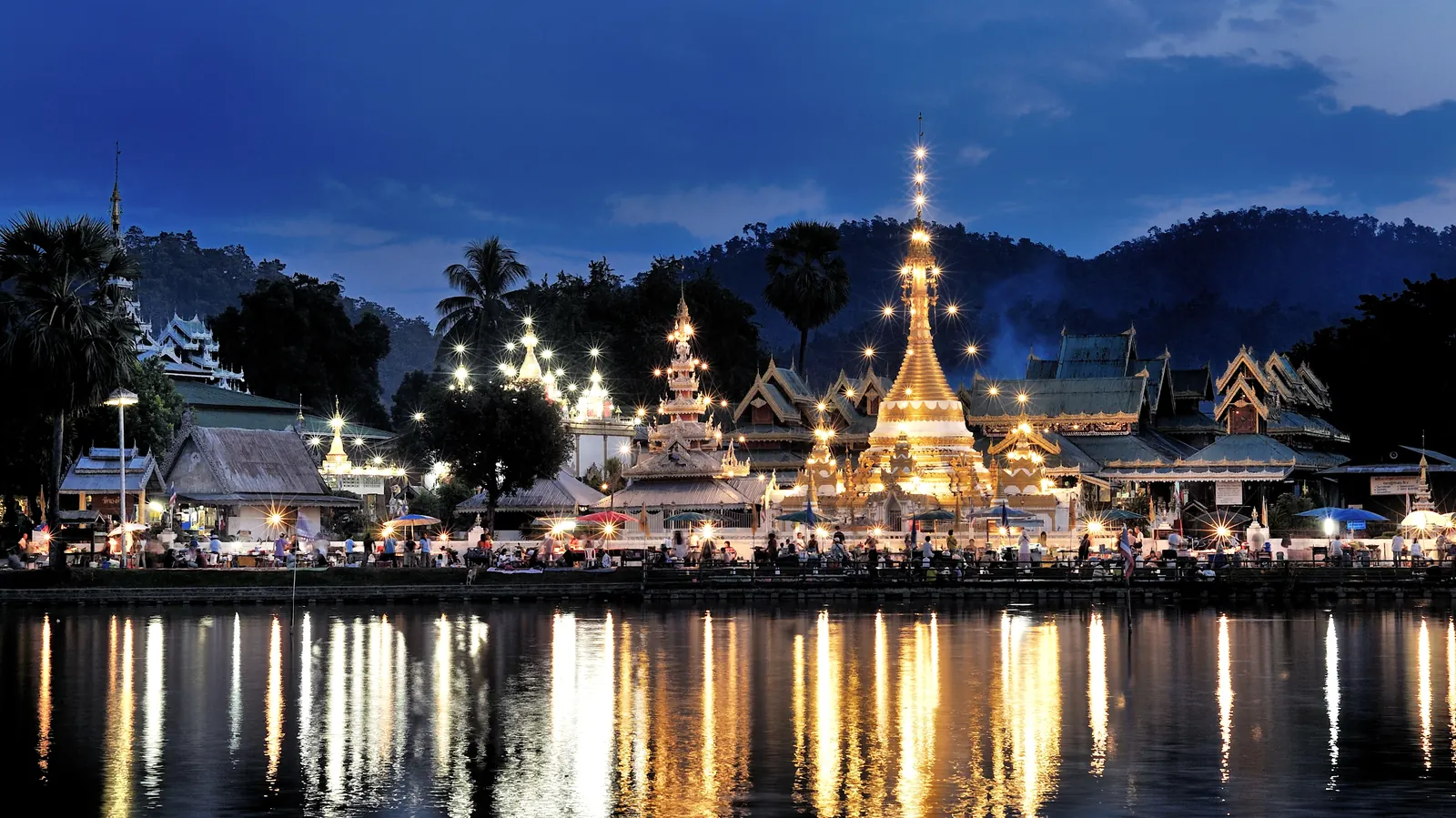
Mae Hong Son town is small, Shan, and still a provincial capital rather than a resort, which is the point. The two Burmese-style temples on the lake, Wat Chong Kham and Wat Chong Klang, are free, best at dawn when the mist sits on Nong Chong Kham and again at night when they are lit and the lakeside market sells khao soi for ฿50. Wat Phra That Doi Kong Mu on the hill is free, ten minutes up, with the whole valley and the runway down the middle. Verdict: two nights, not one, if the loop allows.
Ban Rak Thai (Mae Aw) is 44 km north on a road that ends at Myanmar: a village founded by Kuomintang soldiers out of Yunnan in the 1950s, built round a reservoir, with clay-walled tea houses, oolong on the slopes and Yunnanese food — braised pork knuckle with steamed buns, ฿150–250 — that has nothing to do with the rest of Thailand. Tastings are free if you buy a bag (฿200–600). The road passes Pang Oung, a reservoir in the pines that Thai visitors compare to Switzerland; pleasant, free, packed on cool-season weekends. Verdict: a half day out and back for lunch.
Su Tong Pae, 10 km north, is a 500 m bamboo footbridge built by villagers in 2012 so the monks of Wat Phu Sama could cross the paddies for alms without wading. It is free with a donation box and open year-round — not a cool-season-only bridge, whatever the tour pages imply; what changes is the field beneath it, flooded green from July to October, gold in early November, stubble from December. The monks cross at about 06:30 and that is the only time to be there. Verdict: worth it at dawn in October or November, fine at dawn otherwise, skip it after breakfast. And one correction: Phu Chi Fa, the sea-of-mist cliff in every “loop” photo gallery, is in Chiang Rai province on the Laos border, 350 km east of this road. It is not on the loop and never was.
The quiet half: Khun Yuam, Mae Sariang and the Mae Chaem detour over Doi Inthanon
South of Mae Hong Son the loop empties. Khun Yuam, 67 km on, has a small, odd and rather moving museum about the Japanese army’s 1944 retreat from Burma (around ฿50), petrol, and — from mid-November to early December — the Bua Tong sunflowers on Doi Mae U-Kho, 25 km up the 1263, which turn whole hillsides yellow for three weeks (free, ฿20 to park, a bare hill otherwise). Mae Sariang, 97 km further, is the reward for going the long way round: a teak town on the Yuam river with a handful of guesthouses, three Shan temples (Wat Chong Sung has the white chedis), a promenade where nothing happens and the best sunset on the circuit from the bridge. Verdict: one night, do it, arrive before the sun goes.
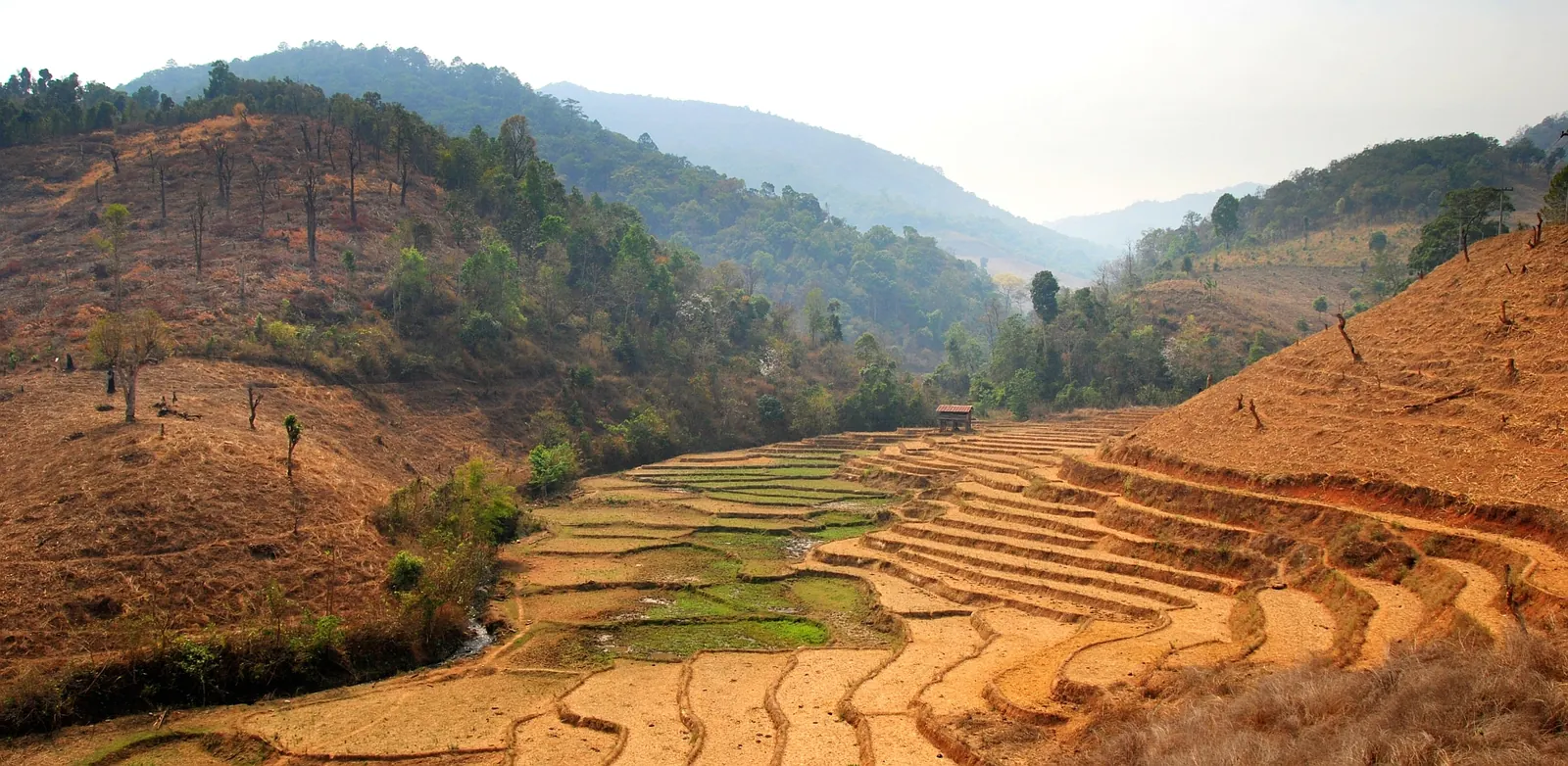
Then the way home. The 108 via Hot is fast and forgettable, with the Ob Luang gorge (฿100 park fee) as the single excuse to get off the bike. The alternative, for riders and drivers only, leaves Khun Yuam on the 1263 and 1088 for Mae Chaem, a valley of Karen villages and the Pa Pong Piang rice terraces, the most photographed in the north: flooded green from July to September, gold in late October, brown steps by December. From Mae Chaem the 1192 and 1009 climb over the shoulder of Doi Inthanon — Thailand’s highest mountain, ฿300 foreigner park fee plus ฿20–30 for the vehicle, cold at the 2,565 m summit — and drop 2,000 m to Chom Thong. It is 215 km, five and a half hours, 20 per cent grades, no fuel for 90 km, and the best day of the loop. Our Doi Inthanon guide has the park itself; the Mae Chaem road is the way to arrive that no day tour gets.
When to do the Mae Hong Son Loop: the cool season, the burning season and the landslides
| Months | Weather | Roads | Crowds and prices | Verdict |
|---|---|---|---|---|
| November–February | Dry and clear, 25–30°C by day, 8–15°C at night, valley mist until 09:00 | Dry tarmac, fog on the 1095 at dawn | Peak; Pai beds double over New Year, vans sell out a day ahead | Go; book ahead |
| March–April | 35–40°C, hazy, PM2.5 regularly over 150 as the hills are burned | Dry; visibility down to a few hundred metres on bad days | Empty and cheap, for a reason | Skip it; the views do not exist |
| May–June | First storms clear the smoke; hot and humid between them | Occasional washouts after big rain | Quiet, rates down a third | Fine for riders who can read a sky |
| July–October | Afternoon downpours, cloud on the passes, green everything | Landslides and lane closures on the 1095 and 108 most years, mud on the 1088 | Few tourists; Su Tong Pae and Pa Pong Piang at their best | Vans and cars fine; scooters for the experienced only |
| Late October | Rain tailing off, air washed clean, fields turning gold | Repairs underway on summer damage | Shoulder; the best-value week of the year | Do it if the dates allow |
The burning season is the one that catches people. From late February into April the north burns its fields and forest floors, Chiang Mai tops the world’s pollution rankings, and the loop’s entire point — the view off the edge of the road — becomes a grey wall; dates and thresholds are in our Chiang Mai burning season guide. The other trap is the monsoon for riders: the roads do not close, but the 1095 and 108 lose a lane to landslides most years, usually in August and September, and a scooter on wet mountain tarmac with a truck behind it is how the loop earned its reputation. The country-wide month-by-month is in best time to visit Thailand; for this road, the first fortnight of November and the first of February are the loop at its best.
Where to sleep on the Mae Hong Son Loop: Pai, Mae Hong Son and Mae Sariang, with prices
Book Pai and Mae Hong Son ahead between November and February and walk up everywhere else. In Pai, Pai Country Hut is the backpacker benchmark, bamboo bungalows by the river from around ฿500–800, and exactly what a rider wants at the end of 762 bends. Pai Village Boutique Resort is the sensible middle, teak cottages in a garden two minutes from the walking street, from around ฿2,500–4,000. Reverie Siam Resort is the one proper hotel in the valley, colonial styling and two pools from around ฿5,000–8,000.
In Mae Hong Son the stay with the reputation is Fern Resort, 7 km south of town: Shan-style bungalows among paddies and streams, a long-running community-tourism project with the village next door, from around ฿2,500–3,500, with a shuttle into town for the night market. In Mae Sariang the two addresses share a bend of the Yuam: Riverhouse Hotel (The Teak House), an old teak building with river rooms from around ฿1,200–1,800, and the newer Riverhouse Resort next door from around ฿1,500–2,500 with a pool; take the Teak House for the balcony. For the start and finish, where to stay in Chiang Mai: the rental shops cluster by the east moat, so sleep near Tha Phae Gate. Sort data before leaving the city — signal on the 1095 is patchy, on the 1088 absent — with our SIM and eSIM guide, and read our northern Thai food guide for what to order in Mae Hong Son that Bangkok cannot do.
The Mae Hong Son Loop: your questions, answered
How many days do you need for the Mae Hong Son Loop?
Four days is the minimum that is not a stunt: Chiang Mai to Pai, Pai to Mae Hong Son via Tham Lod, Mae Hong Son to Mae Sariang, Mae Sariang back to Chiang Mai, roughly 600 km in all. Six days is the comfortable version, with two nights each in Pai and Mae Hong Son and the Mae Chaem and Doi Inthanon detour on the way home. Three-day minivan tours exist and are mostly minivan.
Can you do the Mae Hong Son Loop without a motorbike?
Yes, and most people should. Prempracha minivans from Chiang Mai Bus Terminal 2 run Chiang Mai–Pai (฿150–250), Pai–Mae Hong Son (฿150–260), Mae Hong Son–Mae Sariang (฿150–250) and Mae Sariang–Chiang Mai (฿200–335), so the whole loop is around ฿650–1,000 in fares; go clockwise and book the Pai leg a day ahead. A self-drive car is ฿1,000–1,500 a day, a car with driver ฿2,500–3,500. Only the Doi Inthanon detour has no public option.
Do you need a motorcycle licence to ride the Mae Hong Son Loop?
Legally, yes: a licence with a motorcycle category plus an International Driving Permit. A car licence does not cover a 125cc scooter in Thailand, however readily the shop hands over the keys. Police checkpoints on the edge of Pai and the Chiang Mai exits fine up to ฿1,000 for no licence and up to ฿2,000 for no helmet, and, more seriously, almost every travel insurance policy refuses motorcycle claims from unlicensed riders.
Is it better to do the Mae Hong Son Loop clockwise or anticlockwise?
Anticlockwise for riders: you take the quiet Highway 108 to Mae Sariang first while you learn the bike, and tackle the 762 bends into Pai on the last day with 450 km of mountain practice behind you. Clockwise for public transport: the Chiang Mai–Pai–Mae Hong Son vans are roughly hourly and let you hop, while the 108 side has only a handful of departures a day, so it works better as one long, pre-booked ride home.
When is the best time of year for the Mae Hong Son Loop?
November to February: dry roads, clear air, cold mornings and misty valleys, with the sunflower hills above Khun Yuam in bloom from mid-November. Late October is the value shoulder, with the rice gold under the Su Tong Pae bridge. Avoid March and April, when crop burning turns the north grey and the views vanish, and treat July to October as a trip for vans and cars rather than scooters, because landslides close lanes on the 1095 and 108 most years.
Related guides
- Chiang Mai to Pai: Minivan, Private Car or the Scooter Everyone Regrets (2026)
- Things to Do in Pai Thailand: A Budget 2026 Itinerary (With Real THB Prices)
- Bangkok to Chiang Mai — four ways to travel, honestly ranked
Book the trip
Some links in this guide are affiliate links. If you book through them we may earn a small commission at no extra cost to you — it helps keep Destination Thailand independent.
Hotels: the loop starts and ends in the city, so pick your Chiang Mai hotel on Agoda near the east moat and the rental shops, and browse Mae Hong Son hotels and Pai hotels for the nights on the road. Tours/Boats: GetYourGuide’s Mae Hong Son listings cover the organised loop tours, Tham Lod from Pai and the Doi Inthanon day trips for anyone not driving. Getting there: every Prempracha leg sits on 12Go — Chiang Mai to Pai, Pai to Mae Hong Son and Mae Hong Son to Chiang Mai — with the wider picture in our Getting Around Thailand guide. Not sure the north is your Thailand at all? Our Where to Go in Thailand matcher scores all 77 provinces against your month, your budget and what you actually want.