Nan is what northern Thailand was before the tour buses found it. A small river city in a bowl of mountains hard against the Lao border, Nan, Thailand gets a fraction of the visitors that pour into Chiang Mai, and everything about the place is better for it. Nobody will try to sell you a suit, and the country’s most famous painting hangs on a temple wall you will probably have to yourself.
That painting — a tattooed man cupping his hand to whisper into a woman’s ear — has become shorthand for the whole province, and fairly: intimate, unhurried, quietly seductive. Beyond it, Nan offers a walled old town you can cycle in an afternoon, a mountain road Thais cross the country to drive, and salt wells that have been boiling brine since before Ayutthaya existed.
This guide covers all of it — our Nan province profile has the quick-reference version. One warning: Nan takes effort to reach — no trains, a tiny airport, mountains on every side. That is not a flaw. It is the point.
What Nan really is
Nan was its own kingdom for the better part of six centuries, paying tribute variously to Sukhothai, Lanna and Burma before Bangkok absorbed it less than a hundred years ago, and it shows: Nan never developed the reflexes of a tourist town. It is a provincial capital of teak houses, mural-covered temples and weaving villages that lets visitors in, not a resort wearing a heritage costume.
Geography did the preserving. The railway never came, the highways bend around the province, and until recently most Thais treated Nan as a rumour. The closest comparison is Luang Prabang — the same river-town calm and golden temples, minus the UNESCO coach parties and their prices.
Why go to Nan
Because Nan, Thailand hides the best old-town-and-mountains combination in the country, and almost nobody outside the country knows it. Thai travellers adore it — Bangkok number plates fill the town in December — but foreigners are still rare enough that people occasionally say hello.
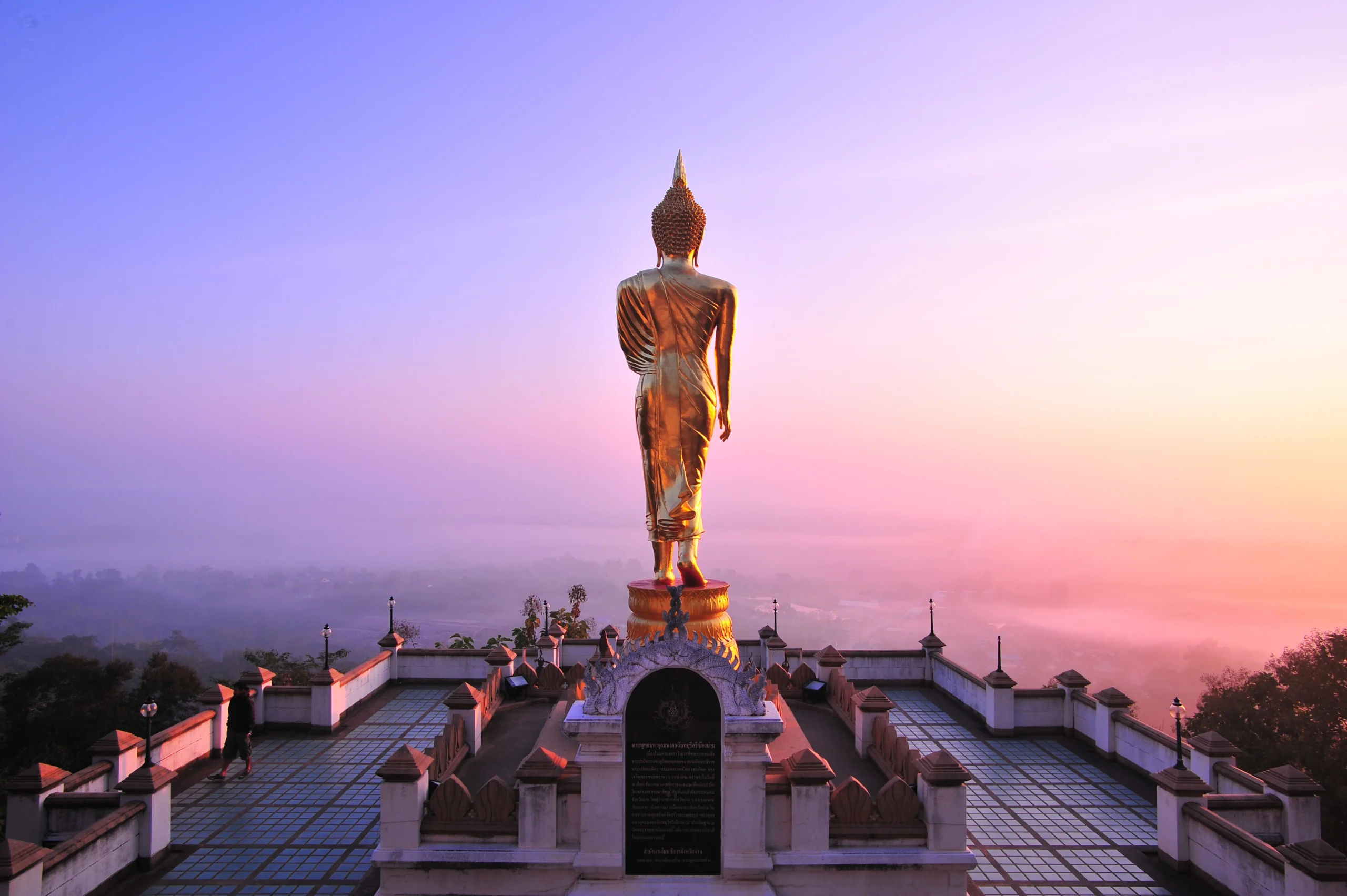
Come for murals you can study in silence, for Route 1256 lifting you above the morning mist, for homestays where dinner is whatever the family is eating. If your idea of Thailand involves beach clubs and buckets, stay away. Nan will bore you senseless, and honestly, it deserves better company.
Getting to Nan, Thailand
There is no railway to Nan and never has been. The nearest station is Den Chai in Phrae province, roughly two hours away by road. The overnight train plus a local bus works but eats a full day.
Flying is the sensible option. Nok Air runs turboprops from Bangkok Don Mueang (DMK) in about 80 minutes — book ahead and expect ฿1,300-2,500 one way. The airport is ten minutes from the old town; a taxi costs about ฿100.
Buses from Bangkok’s Mo Chit terminal take about ten hours, ฿450-800 by class — the overnight VIP sleepers are perfectly civilised. From Chiang Mai it is roughly six hours and ฿250-400; from Phrae, about two.
Once you arrive, get your own wheels. The good stuff — Pua, Bo Kluea, Sapan — sits 60-100 kilometres out, and public transport that way is thin. A motorbike costs ฿200-300 a day, a small car around ฿1,200-1,500, and the roads are excellent and nearly empty.
Where to stay in Nan
Base one: the old town, walking distance from Wat Phumin. Converted teak houses and family guesthouses run ฿400-900 a night; the boutique tier runs ฿1,200-2,500. Nothing needs booking months ahead except December weekends and the boat-race festival.
Base two: the mountains. Pua has small resorts facing the rice fields from about ฿800; Bo Kluea and Sapan do homestays at ฿300-800 a head, often with dinner included. Split your stay — town first, mountains second — rather than day-tripping on winding roads.
What to eat in Nan
Northern Thai food, cooked for locals rather than cameras. Khao soi costs ฿50-70 a bowl and comes without a queue. Look for kanom jeen nam ngiao, rice noodles in a pork-and-tomato broth; coils of sai ua at the morning market; and khao kan chin — rice worked with pork blood and steamed in a banana leaf — a Tai Lue dish Nan does better than anywhere.
In the evening, the row of riverside restaurants near the Nan River bridge does grilled fish and cold beer. Friday to Sunday, the walking street in front of Wat Phumin serves khantoke-style dinners for a few hundred baht — touristy in origin, but the tourists are Thai and the food is real. Up in Bo Kluea everything is seasoned with the local salt, and Sapan grows its own coffee.
Top things to do in Nan, Thailand
1. Stand in front of the whispering lovers at Wat Phumin
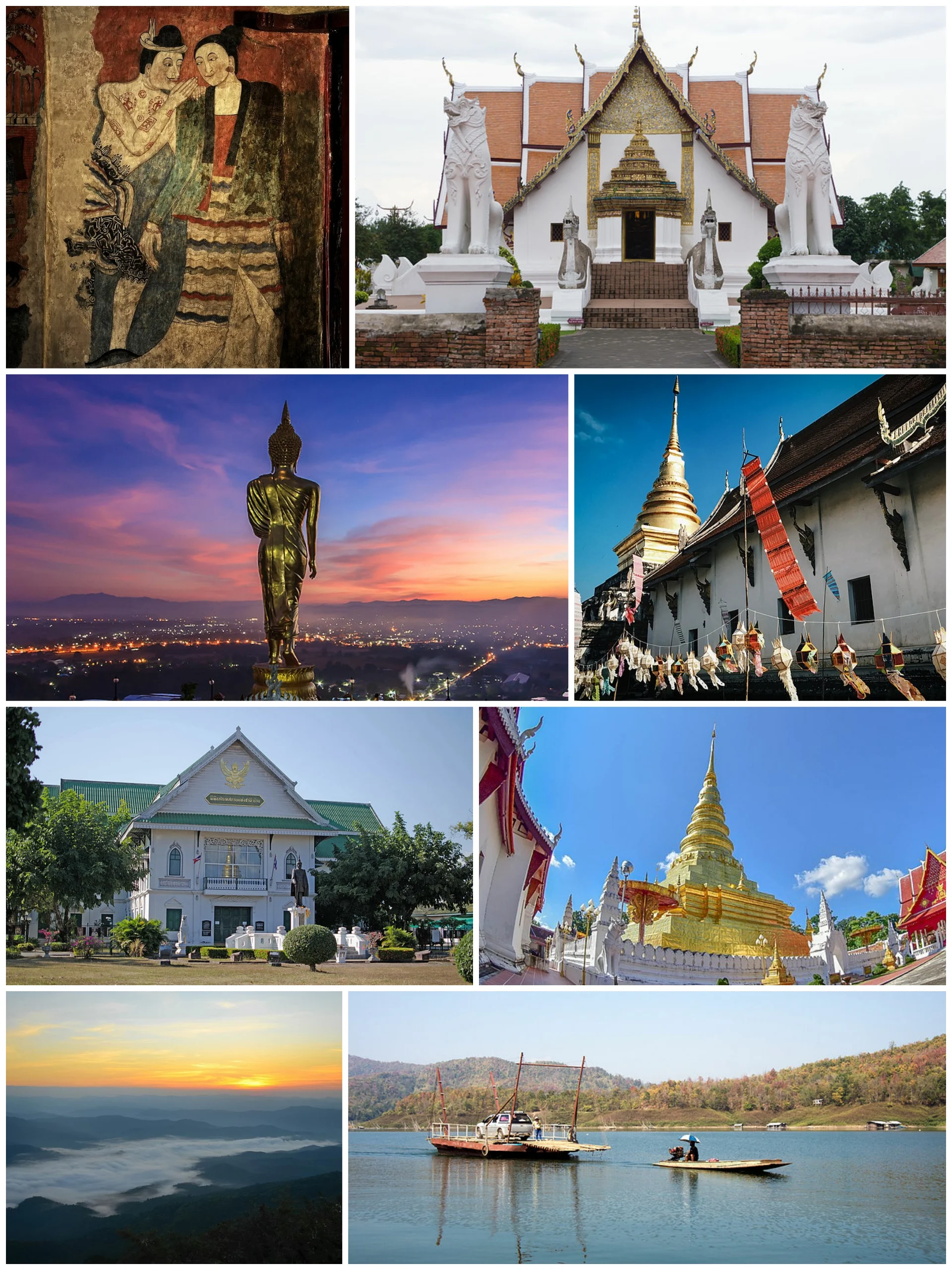
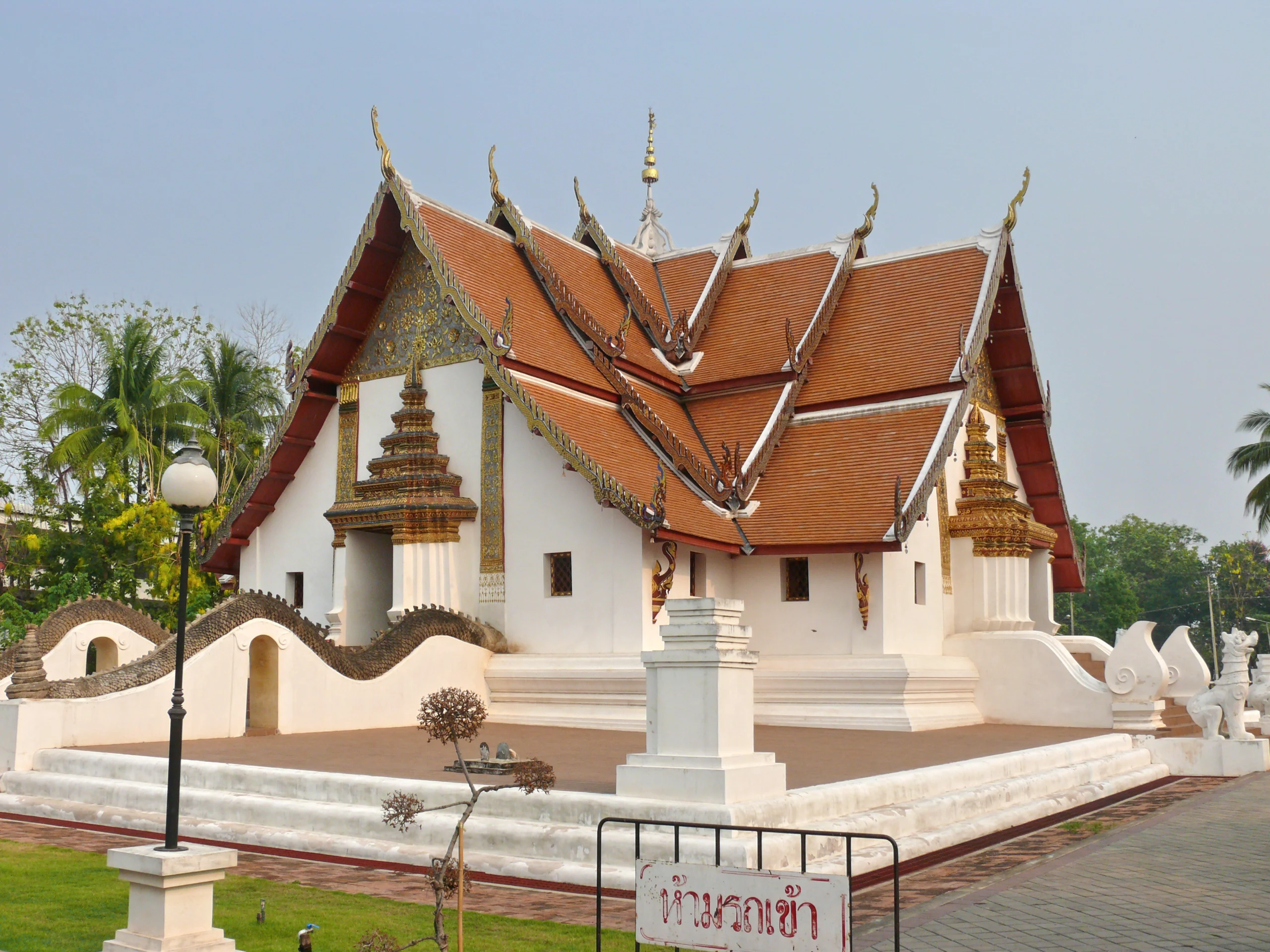
Wat Phumin is Nan’s masterpiece: a cruciform ordination hall from the 1590s where four Buddhas sit back to back and two enormous nagas appear to carry the building on their bodies. The walls were painted in the late nineteenth century by Thit Buaphan, a Tai Lue artist, and one panel — Pu Man Ya Man, the whispering lovers — is now the most famous painting in Thailand. It is on T-shirts, mugs and half the country’s tourism adverts, yet almost nobody visits the real thing. Entry is by donation. Go at opening time, when the hall is empty, and give the murals a full hour.
2. Cycle the old walled town in an afternoon
Nan’s old quarter is flat, compact and made for two wheels. Guesthouses hire bicycles for ฿50-100 a day, and a lazy loop takes in Wat Phra That Chang Kham with its elephant-buttressed chedi, quiet Wat Hua Khuang, surviving stretches of city wall and street after street of teak shophouses. Nothing is more than ten minutes from anything else, and the whole circuit is one unhurried afternoon, coffee stops included.
3. See the black elephant tusk at Nan National Museum
The museum occupies the Hor Kham, the former palace of Nan’s last ruling family, which justifies the entry fee — about ฿100 for foreigners — on its own. The star is the Nga Chang Dam, a black elephant tusk carried into Nan centuries ago and long credited with protecting the city, surrounded by a genuinely good telling of Nan’s centuries as an independent kingdom. It closes early in the week, so plan around it.
4. Drive Route 1256, the sky road, through Doi Phu Kha National Park
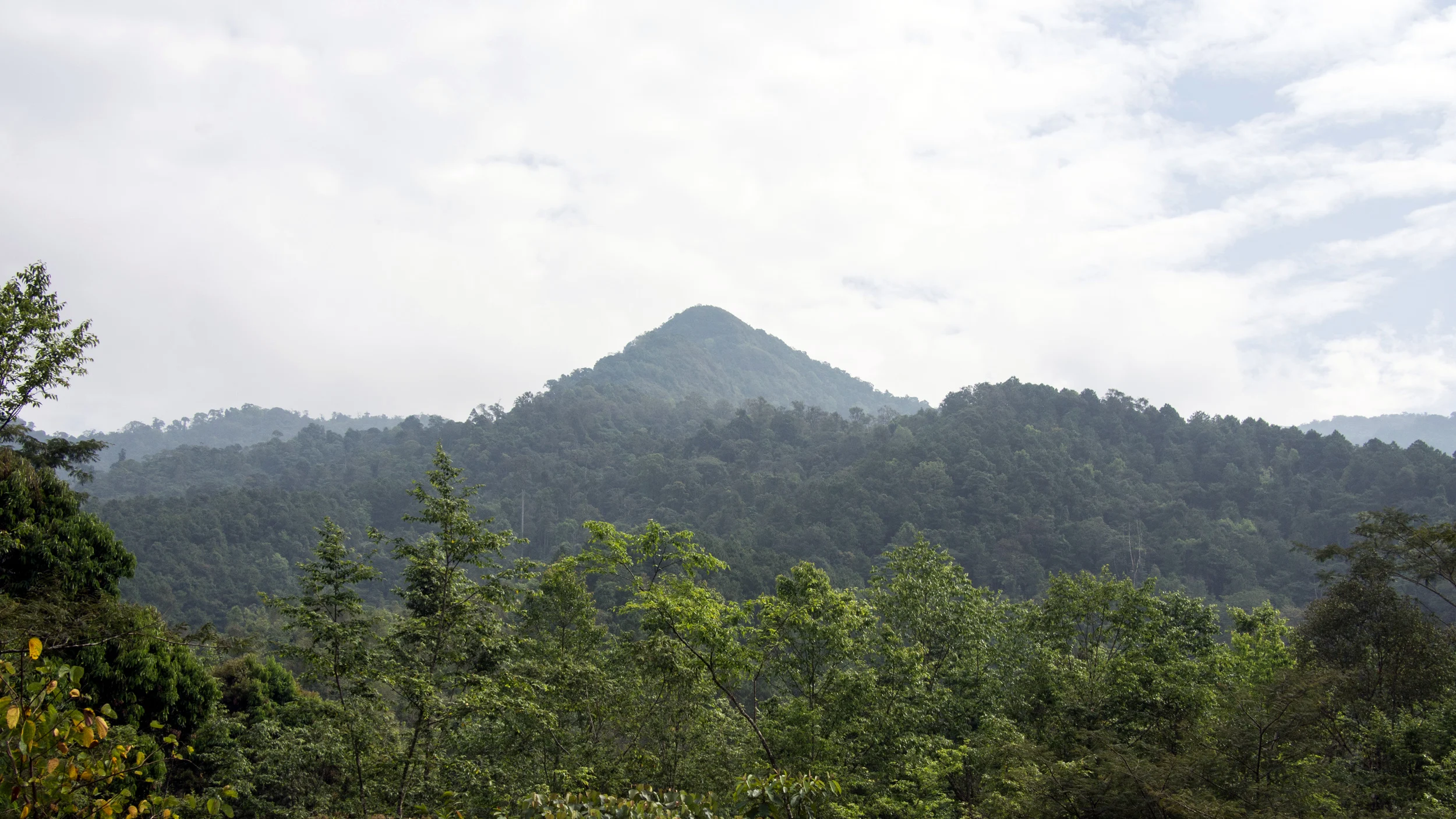
Route 1256 climbs out of the Pua valley into Doi Phu Kha National Park in a run of switchbacks Thais call the sky road, and for once the nickname undersells it. In cool season the first stretch floats above a sea of mist; in February the rare chomphu phu kha trees along the ridge flower pink. Park entry is a couple of hundred baht for foreigners. Drive it eastwards towards Bo Kluea early in the morning, and take the bends seriously — the drops are real and the barriers ornamental.
5. Watch brine boil at the Bo Kluea salt wells
Bo Kluea means salt well, and the village has been doing exactly what the name says for centuries: hauling brine from ancient rock-salt wells and boiling it down in wide pans over wood fires. Mountain salt made Nan rich and fought-over long before anyone here saw a tourist. Walk into the boiling sheds, watch the crust being raked, and buy a bag for ฿20-30 — the best souvenir in the province. Twenty minutes up the road, Sapan village is where you sleep: rice terraces, a river through the middle, homestays from ฿300 and locally grown coffee.
6. Buy Tai Lue cloth at Pua and catch the boat races
The Tai Lue, who migrated south from Sipsongpanna in what is now China, gave Nan its weaving tradition, and around Pua it is still alive rather than displayed. At Ban Nong Bua, weavers work the flowing-water lai nam lai pattern on looms under their houses; buying direct gets you honest cloth at honest prices, from a few hundred baht for a scarf. Wat Nong Bua, the village temple, holds murals by the same school as Wat Phumin — minus any crowd. Time your trip for October or November if you can: the Nan boat-racing festival fills the river with long boats carved from single trunks, fifty-odd paddlers apiece, and lines the banks with the entire province shouting.
What to skip
Doi Samer Dao on any Thai public holiday. The campsite in Sri Nan National Park, about ninety minutes south of town, produces the famous photographs — tents on a grassy ridge, stars, mist at dawn — and midweek in cool season it is genuinely special. On a long weekend it is a car park with a view: tents guy-rope to guy-rope, a queue for the viewpoint, and the same night sky you could have had in peace two days later. If you cannot go midweek, do not go at all.
And skip March and April entirely. Burning season fills the valley with smoke, the mountains disappear, and the sky road becomes a road to nowhere visible. Nan without its views is a hot small town, and no amount of good khao soi fixes that.
Nan travel: practical info
Best season: November to early February — cool nights, clear ridges, mist at dawn. February adds the pink blossom, October-November the boat races. March and April are smoke. The rains, June to October, are green and perfectly workable.
Nan, Thailand deserves four nights minimum: two in the old town, two around Pua, Bo Kluea or Sapan. Moving on, Phrae is two hours south and quietly excellent, Phayao about three hours west, Chiang Rai roughly five over the mountains. There is even a Lao border crossing at Huai Kon, north of town — check the current rules, they shift.
Planning the specifics? The Tourism Authority of Thailand’s official Nan page and its local travel guide carry current opening hours and festival dates, and Wikipedia has the historical background.
FAQ
Is Nan, Thailand worth visiting?
Emphatically yes, if you want old-town temples, mountain roads and village life without crowds — it is the most rewarding low-profile province in the country. If you need nightlife or a beach, it is not your place.
How do you get to Nan from Bangkok?
Fly Nok Air from Don Mueang: about 80 minutes, ฿1,300-2,500 booked ahead. Otherwise it is roughly a ten-hour bus from Mo Chit at ฿450-800, or the overnight train to Den Chai in Phrae plus two hours by road.
How many days do you need in Nan?
Four at a minimum — two for the old town, murals and museum, two for the Route 1256 loop through Doi Phu Kha, Bo Kluea and Sapan. Travellers who give it a week rarely regret it. Travellers who day-trip it always do.
When is the best time to visit Nan?
November to February, for cool clear weather and mist on the mountains. February brings the chomphu phu kha blossom, October-November the boat-racing festival. Avoid March and April for the smoke.
Do you need a motorbike in Nan?
For the old town, no — a bicycle covers it. For everything else, yes: Pua, the sky road, Bo Kluea and Sapan sit 60-100 kilometres out with minimal public transport. Hire a motorbike for ฿200-300 a day.
Related guides
- Phitsanulok travel guide
- Things to do in Chiang Rai
- Pai and what became of northern Thailand’s backpacker trail