Northern · Thailand
Phrae · แพร่
Indigo-dyed Mo Hom shirts, teak mansions, Phae Mueang Phi canyon.
- Region
- Northern
- Population
- 437,000
- Area
- 6,539 km²
- Stories filed
- 1
About Phrae
History
Phrae was a Lanna tributary city whose teak forests made it one of the wealthiest towns in the north during the logging boom of the late nineteenth century. Burmese, Shan, and European timber merchants built the mansions and carved the fretwork viharns that survive in the old walled town — most grandly, the Vongburi House and Khum Chao Luang, a century-old teak manor whose rooms are preserved as a house museum. The province was also one of the first in the north to resist Bangkok's administrative incorporation; a failed 1902 rebellion earned its leaders a place in regional folk memory.
Landscape & geography
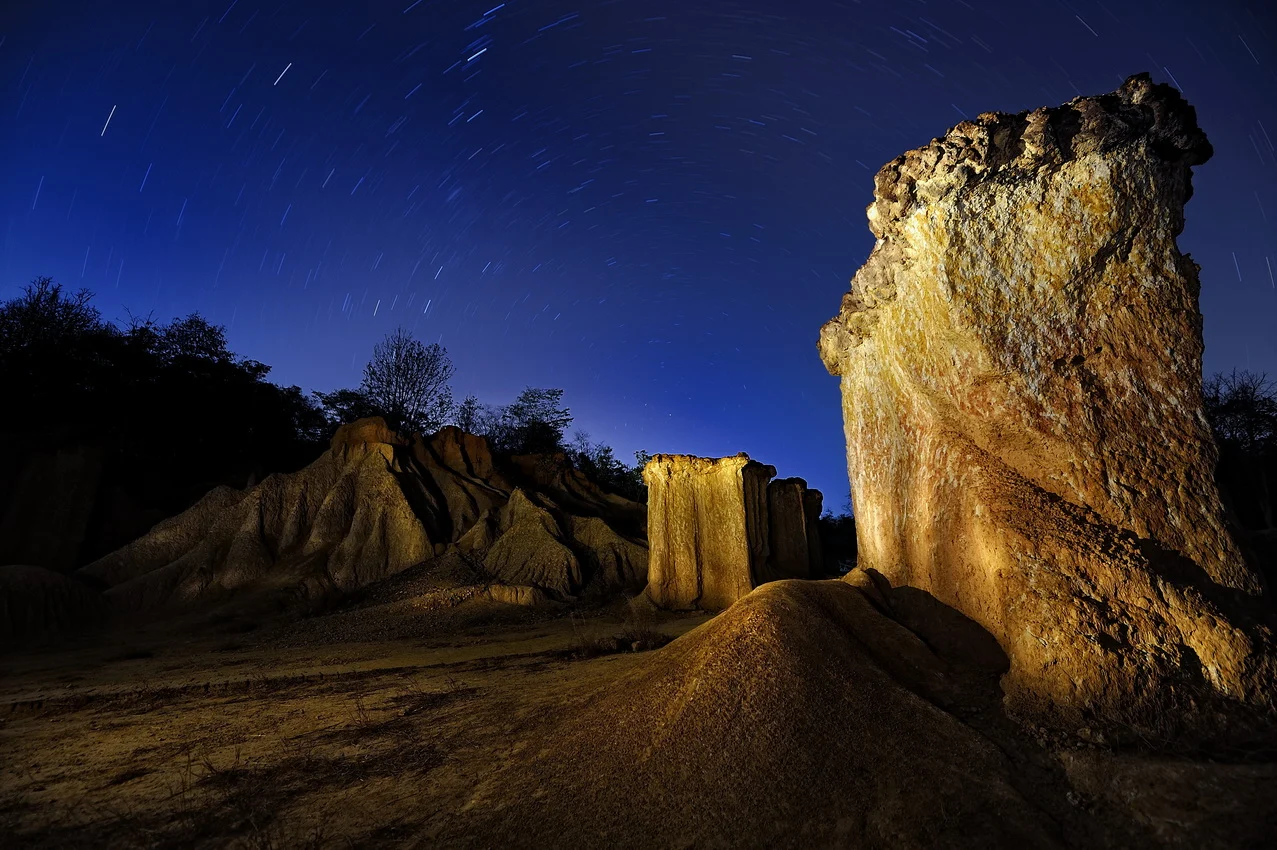
A river valley in the Yom basin, surrounded by forested ridges rising toward the Laotian border in the east. Teak, sugarcane, and tobacco fields fill the flatter middle; Phae Muang Phi — a wind-carved eroded-earth canyon of pale columns and mushroom formations — breaks up the southern hills twelve kilometres from town. Teak plantations largely replaced by eucalyptus and sugarcane still frame the river, though logged teak appears in virtually every shophouse facade in the old quarter.
Why visit
Teak heritage and indigo crafts are the two reasons to linger. Phrae's Baan Prathup Jai teak mansion and the Khum Chao Luang house museum are the grandest surviving examples of northern merchant architecture. The mo hom indigo-dyed cotton shirts are the province's most transferable souvenir — buy directly from the dyeing cooperatives in Ban Thung Hong village, seven kilometres from town. The \"ghost mountain city\" of Phae Muang Phi offers an afternoon walk among eroded columns, and the province works well as a one-night stop between Lampang and Nan on a slow northern loop.
Stories from Phrae
Articles, reviews, and itineraries tagged to this province.