Things to Do in Pai Thailand: A Budget 2026 Itinerary (With Real THB Prices)
Everyone on that minivan thinks they’ve found a secret. You can see it in their faces — the slightly self-congratulatory look of the person who went one town further than the guidebook suggested. They’ve survived 762 curves of mountain road, their knuckles are white, their stomach is somewhere around curve 400, and they’re already composing the Instagram caption. Found my place. The thing is, Pai found them first. This town has been finding backpackers for thirty years. It has a system. It is extremely good at it.None of that means the things to do in Pai Thailand are a myth. It means you have to know which version of Pai you’re looking for — because two very different towns occupy the same patch of Mae Hong Son Province, and only one of them is worth the road it took to get here.This guide finds both. Then it tells you which one to spend your baht on.How to Get to Pai (And Whether the Road Will Destroy You)
Let’s deal with the road first, because ignoring it would be like reviewing a boxing match and skipping the part where someone gets punched.The Mae Hong Son Loop road between Chiang Mai and Pai covers roughly 130 kilometres and contains 762 curves. Not bends. Not gentle sweepers. Curves. The kind that come in sequences of four before you’ve finished processing the last one. The kind that make minivan passengers go very quiet and very pale within the first forty minutes. The kind that have made “Pai road” a compound noun among backpackers the way “Delhi belly” is for another category of travel story.You need to know this going in. Not because it should stop you — it shouldn’t — but because denial is not a motion sickness strategy.Minivan from Chiang Mai Arcade Bus Terminal
The budget option, and for solo travellers or pairs, the only option that makes arithmetic sense.Prem Pracha Transport is the most reliable operator on this route. They run air-conditioned minivans from Chiang Mai Arcade Bus Terminal (Terminal 2) — which sits about 3km east of the Old City moat — with departures roughly every hour from 6:30 AM through to 6:30 PM. The first bus arrives in Pai around 10:50 AM. The last one pulls in close to 11 PM, which, given the road, is an experience you’ll only choose once.Prices in 2025/2026: 150–340 THB per person, depending on operator and booking method. The lower end (150–180 THB) comes from booking counter-to-counter at the terminal or through BusOnlineTicket.co.th. Via 12Go Asia, expect to pay 190–340 THB, but you get the peace of mind of a confirmed seat, which in peak season is not a small thing.| Booking Method | Price (THB) | Best For |
|---|---|---|
| Terminal counter (Prem Pracha) | 150–190 | Flexible travellers, low season |
| BusOnlineTicket.co.th | 150–180 | Budget-first, advance planning |
| 12Go Asia | 190–340 | Peak season, guaranteed seat |
Window seat verdict: Take it in good weather. It will make you grateful and queasy in equal measure. Give it up if the sky looks uncertain — the road is more fun to survive with your eyes on the horizon, not the cliff edge sliding past your cheek.
Private Car vs. Minivan: The Honest Comparison
A private transfer runs 1,500–2,500 THB for the whole vehicle. Split three ways, that’s 500–833 THB each — meaningfully more expensive than the minivan, but you choose when you leave, you stop when you want, and if someone needs a roadside break at curve 312, nobody is judging them.For groups of three or more: the private car wins. Not because the minivan is bad, but because the math changes and your stomach will thank you.For solo travellers: take the minivan, sit near the front, eat nothing heavier than toast before you board, and accept that this is part of the experience now.Check current Thailand entry rules updated for 2026 and your Thailand visa requirements before you book anything — the entry landscape keeps shifting and the minivan terminal is not a consulate.
📌 Book your Chiang Mai to Pai minivan seat in advance — December fills fast[Search and compare seats on 12Go Asia →]
Scooter Rental in Pai: The Only Way to Do This Town Properly
Pai’s town centre takes about eleven minutes to walk end to end. Everything worth seeing is outside it. The canyon is 8km west. The hot springs are 8km east. The good viewpoints are up roads that a tuk-tuk won’t bother with and a taxi doesn’t exist to take you. The scooter is not optional equipment here. It is the operating system.Where to Rent and What to Pay
Standard 125cc scooters run 150–300 THB per day in Pai. That range is real — low season, negotiating in person at a quiet shop, you can get to 150. High season at a busy spot near Walking Street, 250–300 THB is fair and don’t expect them to move much.Pai River Scooter is the name that comes up repeatedly for good reason: well-maintained bikes suited to the hilly terrain, honest service, and — notably — no passport deposit required, which matters more than it sounds. Many shops hold your passport as collateral, which is both legally questionable and practically inconvenient. At Pai River Scooter, your national ID or a copy of your passport documents them; your actual passport stays with you.Shops also cluster near the Walking Street and the bus terminal area. For weekly rentals, ask for a discount — 10–20% off is achievable on a 5–7 day hire, especially outside the November–February rush.Semi-automatic scooters are the right choice for Pai’s roads. They handle the elevation changes without demanding the clutch-work of a manual. The fully automatic 110cc bikes will manage, but they’ll complain on the steeper approach to Yun Lai Viewpoint and they’ll complain loudly.What to Know Before You Ride
This is not fearmongering. This is topography.The roads around Pai are beautiful and they are also mountain roads. Some sections have no guardrails. After rain — and in rainy season (roughly May to October), it rains with genuine commitment — certain road surfaces become decorative. Mud happens. Wet laterite clay is its own category of treacherous.Wear shoes that aren’t sandals. Bring a rain layer even if the sky looks fine at 8am. Check your brakes before you leave the shop. These are the rules.A 300 THB tank of petrol gets you to every major attraction around Pai and back with change. The scooter is also, in this context, a time machine — take the small roads, follow the ones without English signs, and you will find a version of Mae Hong Son Province that doesn’t appear on any itinerary blog.
The Best Things to Do in Pai Thailand (That Aren’t Just Sitting in a Cafe)
There is nothing wrong with sitting in a Pai cafe. The coffee is good and the light in the late afternoon comes through the mountains at an angle that makes even a mediocre cappuccino feel earned. But if you came this far to drink coffee, you made a very expensive miscalculation.Pai Canyon (Kong Lan) at Dawn — Not at 2pm With a Thousand Selfie Sticks
Pai Canyon — known locally as Kong Lan — is free. No entry fee. No national park gate charge. A donation basket and 5 THB for the toilets if you use them. That’s it.It sits 7–8 kilometres west of central Pai, and on a scooter, the road there at 6am is one of the better decisions you’ll make all week.Here’s what nobody puts in their blog post because they visited at the wrong time: at 6am, Pai Canyon is legitimately extraordinary. The reddish-orange ridges catch the early light like something from the American Southwest. The valleys below hold mist. There are maybe eight other people. The trails — narrow, exposed in places, requiring actual attention — feel like they’re meant for you.By 11am, it looks like a school excursion. By 2pm in high season, it is a school excursion. Groups photograph each other on the narrow ridges while someone plays music from a Bluetooth speaker. The mist is gone. The drama is gone.Go at sunrise. This is non-negotiable.The trails take 1.5–2 hours if you explore properly. Wear shoes with grip — the paths are steep and the drop is real. This is not the place for flip-flops and confidence.Tha Pai Hot Springs
Entry: 200 THB for public pools, more for private pools — around 500–800 THB per session depending on the setup.Eight kilometres east of town, the Tha Pai Hot Springs sit where geothermal water emerges at around 80°C and is cooled into pools you can actually enter. The public pools are fine. Communal, warm, the kind of thing you stay in longer than planned.The private pools — small enclosed baths where the temperature is adjustable and the crowd is zero — are worth the premium if you’re travelling as a couple or just deeply antisocial. Book ahead in high season because the wait for a private pool can consume the portion of your afternoon you’d allocated to feeling relaxed.The detail that nobody really talks about: the Pai River runs alongside the hot springs complex, cold and fast. Moving between the 40°C pool and the 22°C river is a sensory experience that makes you feel briefly and completely alive. Do this. Don’t just soak and leave.Mo Paeng Waterfall and Pam Bok Waterfall
Mo Paeng Waterfall: free. 8km from town on a paved road accessible by scooter.It’s a proper, multi-tiered waterfall with natural pools good enough for swimming in. In rainy season (July–September), it is genuinely powerful. In February, it’s gentler but still worth the ride.Pam Bok Waterfall is smaller, rawer, and significantly less visited. It involves a short hike through forest and it will not photograph as dramatically as Mo Paeng. It is also, consequently, far more interesting — the kind of place where you might be the only people there. No entrance fee.The locals sometimes call Pam Bok the “mini Grand Canyon of Pai,” which is ambitious naming, but the gorge section near it has a geology that earns at least a confident look.
Yun Lai Viewpoint and Ban Santichon
Yun Lai Viewpoint is about 4km from town and gives the classic sea-of-fog-over-the-Pai-valley shot that has colonised Instagram since approximately 2014. It costs a small entry fee (around 20–30 THB) and you should visit at sunrise or you’re wasting your time.The bamboo bridge to Ban Santichon — a Yunnan Chinese village that resettled here from the border region generations ago — charges around 50 THB entry and most visitors use it as a photo opportunity and leave.Don’t do that.The Yunnan Chinese community in Ban Santichon grows and processes oolong tea that is genuinely good and costs a fraction of what you’d pay for comparable quality anywhere else. Sit down. Try the tea. Talk to the people serving it. The village has a story — of migration, of cultural preservation a long way from origin — that makes the oolong taste differently once you understand it.The tea costs about 60–100 THB for a pot. It tastes like the most considered decision you made all day.📌 Compare Pai day tours and hot springs packages — prices from 600 THB
Pai Night Market and Where to Actually Eat
The Walking Street (Thanon Chaisongkhram): What’s Good, What’s for Tourists
Pai Walking Street runs along Thanon Chaisongkhram and operates daily from around 5pm to 11pm, with peak activity from 6pm to 9pm. No entry fee. In high season it is wall-to-wall people by 7pm. In December and January, the phrase “wall-to-wall” doesn’t capture it. “Solid” is more accurate. A dense human mass that moves at the speed of someone looking at a fridge magnet.Get there at 5:30pm. This is the window.What to eat:The banana pancake zone — the tourist core of the market — is where Pai performs its greatest trick: convincing people who’ve never been to Thailand that this is Thai food. It’s not. It’s backpacker food with a Thai postcode.Walk to the edges of the market, where the tourist density drops and the grill smoke gets thicker. This is where you find:- Khao soi — Pai’s version runs slightly richer and heavier than the Chiang Mai interpretation. 40–60 THB a bowl from the market stalls. This is one of Thailand’s great dishes and you should eat it more than once.
- Sai ua (northern Thai sausage), grilled over charcoal, herbed with lemongrass and galangal. 30–50 THB for a piece. Don’t share it.
- Muslim roti stalls near the mosque end of town — breakfast-weight roti with condensed milk or egg for 20–40 THB. These stalls run morning and evening and the oil in the pan is always dark and right.
The Local Morning Market — The One That Actually Matters
The Talat Naem Yen (the local morning market near the Tha Pai Hot Springs road) is where actual Pai residents shop for food. It runs from about 5:30am to 8am and by 9am it’s largely over.Pad pak ruam (stir-fried mixed vegetables) for 40 THB. Fresh coconut things. Sticky rice parcels wrapped in banana leaf. Grilled meats that have been over the fire since before sunrise.Nobody at this market is performing Thailand for you. They’re just buying food. Go before your scooter ride, eat standing up, bring exact change, and try not to be the person who holds up the queue photographing every stall.The morning market is not the attraction. The morning market is the city, functioning. That distinction matters.Tipsy Tubing Pai and the Other Things Backpacker Pai Does Loudly
Let’s be honest about what Tipsy Tubing Pai is before we pass judgment on it.It is: a rubber tube, the Pai River, a sequence of riverside bars with DJs and foam parties and the kind of afternoon that either ends in a new friendship or a cautionary anecdote. The whole experience runs 4–6 hours. You float. You stop. You drink. You float again. It costs 200–450 THB depending on the operator — Pai Adventures runs at 200 THB, Pai Authentic Travel and Tipsy Tubing charges 450 THB and puts some of that toward river clean-up initiatives, which is either admirable or expensive depending on your altruism budget. Both converge on the Smile Camp route. Book the day before from Walking Street operators.Is it for everyone? Decisively not. If you are over the age of 35 and haven’t had a rum bucket since your university abroad semester, you may find it less charming than advertised.Is it for someone? Yes. Absolutely yes. And those people are going to have the best Thursday of their year.Here is the angle nobody has written: the Pai River at 6am, before any tube appears, is one of the more peaceful things in northern Thailand. Rent a kayak from operators near the bridge — 400–600 THB for a two-hour session — and you’ll have the river entirely to yourself, mist still on the water, birds making noise in the bamboo, and the specific quiet that only exists before the world remembers to be loud.Other things backpacker Pai sells:
- Cooking classes: 600–900 THB for 3–4 hours. Genuinely good value if you actually want to learn to cook northern Thai food. Not good value if you want to Instagram the apron.
- Elephant sanctuaries outside town: 1,200–1,800 THB, and vet them. Hard. The word “sanctuary” in Thailand covers a spectrum from genuine ethical operations to repainted tourist camps with a website refresh. Ask specifically whether elephants are ridden. Ask about the mahout relationship. Legitimate sanctuaries will answer both questions without hesitation.
- Yoga retreats: Range from 200 THB drop-in sessions to multi-day programs that cost more than your flight. The earnest ones are fine. The ones charging 4,000 THB a day to “reconnect with your authentic self” in a rice field are selling something that doesn’t exist.
📌 Book a vetted Pai elephant sanctuary visit — from 1,200 THB[Browse sanctuaries on Klook →]
Where to Stay in Pai: Real Options Across Real Budgets
Budget (Under 500 THB/Night)
Dorm beds in Pai’s backpacker corridor — around Walking Street and the bus terminal — run 150–250 THB per night. Private rooms at the budget end come in at 350–500 THB. The quality-to-price ratio is better than you’d expect, with the notable exception that “budget” in high season sometimes means “whatever’s left.”KK Hut Guesthouse offers riverside bamboo bungalows near rice fields for under 300 THB per night in low season. It’s 1.4 miles from Wat Phra That Mae Yen and a 17-minute walk to the Night Market. The vibe is genuine rather than manufactured — no Instagram-optimised infinity pool, just bamboo walls and the sound of the river. Scooter rental on-site at 200–300 THB per day.Canary Guesthouse comes in at 300–600 THB per night for simple huts with a central location. It has ratings in the 8/10 range across booking platforms and guests note the staff is useful rather than just polite.Mid-Range (500–1,500 THB/Night)
At this level, you’re getting air conditioning, a proper bathroom, possibly a small balcony. The mid-range options near Walking Street serve their function competently. But here’s the thing:The Rice-Field Guesthouses Nobody Talks About
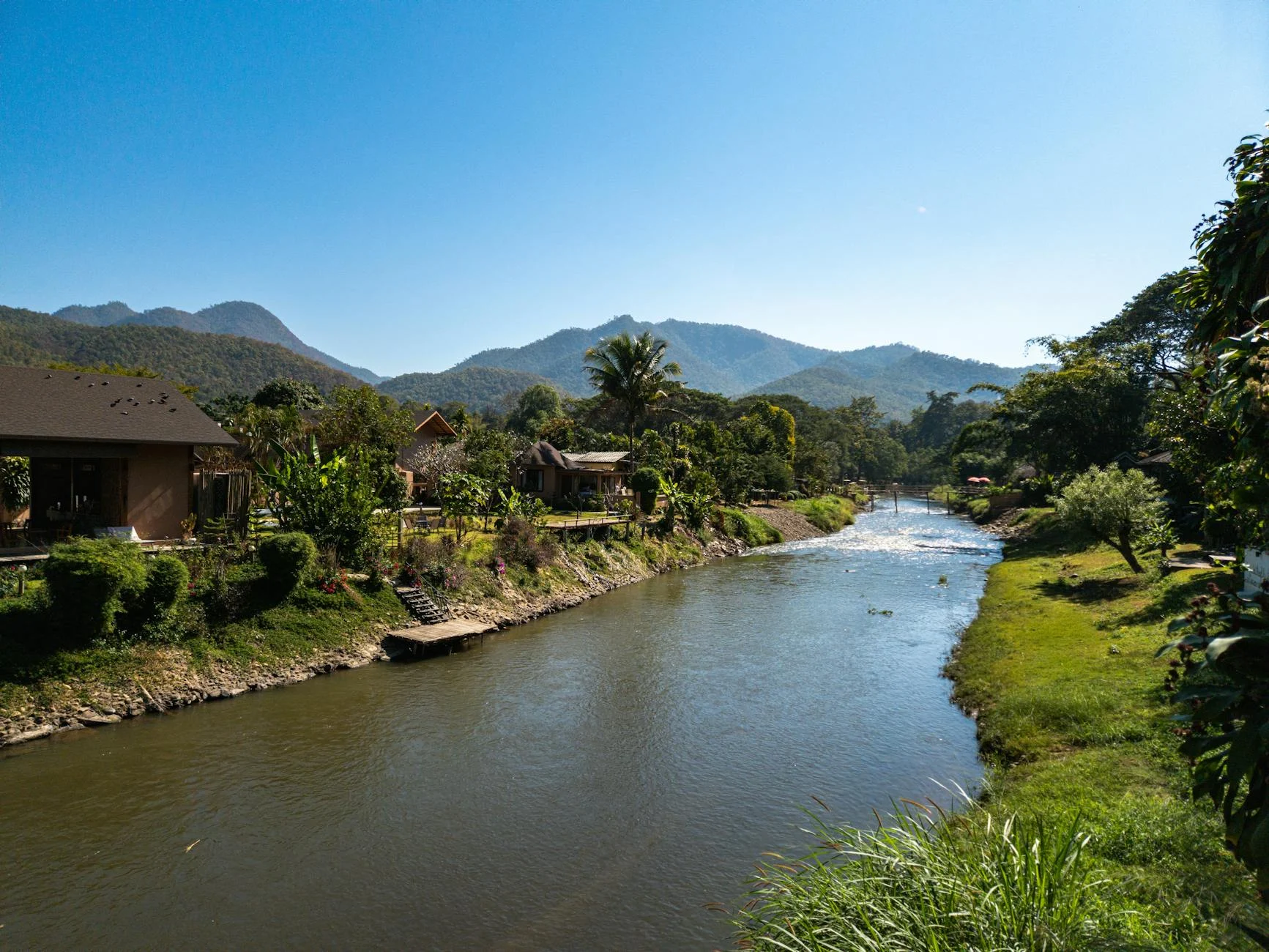
This is the real answer for where to stay in Pai.Two to four kilometres outside town — on the roads toward the hot springs or north toward the hill tribe villages — there is a category of accommodation that the backpacker corridor makes no sense of: rice field bungalows at 600–1,200 THB per night where you wake up to morning mist over paddy fields, roosters at a reasonable distance, and a silence that the town centre cannot produce at any price.This is the specific experience that makes the road from Chiang Mai worth surviving. Not the Walking Street. Not the seventh cafe. The fog sitting in the valley at 6:30am while you drink coffee on a bungalow porch and the rice is still green.High season pricing reality: November to February, prices across all categories jump 30–50%. A room that costs 600 THB in September costs 850–900 THB in December. Book ahead. Not “try to book ahead.” Book ahead. Last-minute in Pai in December means sleeping on a very bad mattress for 800 THB and developing opinions about the booking industry.Use Agoda or Booking.com for high-season advance bookings. For the rice-field bungalow category specifically, search by map view and filter for anything 2km or more outside the town centre — the algorithm buries these properties under the more heavily marketed central options, but they’re there.📌 Check rice field bungalow availability in Pai — high season books out weeks ahead[Search and compare on Booking.com →]
The Pai Beyond the Instagram Version: An Honest Assessment
Wat Phra That Mae Yen — the white Buddha temple on the hill above town — requires 353 steps to reach, costs nothing to enter, and at sunset delivers a view over the entire Pai valley that makes you understand, finally and completely, why people keep arriving here. It is somehow less visited than the canyon, which is baffling until you realise that the canyon is flat and this requires climbing.Climb the 353 steps. This is the only instruction this section needs.The Villages North of Town
North of Pai, past the tourist infrastructure, there are Lahu and Shan communities that have been here longer than the backpacker trail by several generations. A scooter and 400 THB in fuel will take you toward Pang Mapha and into country where the farming culture, the food markets, and the craft traditions exist entirely outside the English-language travel circuit.Nobody has written a definitive English guide to eating in these villages, which means you’ll be navigating by pointing and smiling and genuine curiosity — which is to say, the actual method for finding anything worth eating anywhere.The Shan food tradition in this part of Mae Hong Son Province runs to sour, fermented, and slow-cooked in ways that the Walking Street stalls don’t represent. Find the village morning markets. Eat the food that doesn’t have a sign.Low Season: The Town Gives Itself Back
Pai in May through October has rain. Real rain. The kind that comes in sideways at 3pm and then stops as suddenly as it started. The waterfalls — Mo Paeng, Pam Bok — are at genuine volume. The rice fields are actively, almost aggressively green. And the town, stripped of sixty percent of its visitor numbers, becomes a different place.Room prices drop 30–50% below peak rates. The cafes are less self-conscious. The people running the scooter shops have time to tell you which road to actually take. You can find a table at the night market without navigating anyone.Rainy season Pai is a negotiation — you plan around the weather and the weather occasionally ignores you. Bring a waterproof, keep flexible afternoon plans, and accept that the mud on the canyon trail is a reasonable price for having it mostly to yourself.The Honest Verdict
Pai is not overrated. The version of Pai that most people experience is overrated — a greatest-hits tour of a town that has long since optimised itself for the transient and the content-hungry. The banana pancakes, the Walking Street selfies, the tubing Instagram, the elephant-logo T-shirts.Underneath that version, there is still a town in a valley in the mountains of Mae Hong Son Province that rewards the people willing to wake up early, ride further, eat without knowing what they ordered, and spend their baht on the experience rather than the souvenir.The Lahu villages don’t have a Tripadvisor listing. The morning market doesn’t have an Instagram. The fog over the rice fields at dawn doesn’t have an admission fee.That version of Pai is still there. It’s just not waiting for you — you have to go looking for it.Frequently Asked Questions
How much does scooter rental in Pai cost in 2025?
Standard 125cc scooters rent for 150–300 THB per day in Pai, depending on season, operator, and negotiating confidence. Higher-capacity 150–250cc bikes — better suited to mountain roads — run 400–600 THB per day. Weekly rentals typically earn a 10–20% discount. Most shops require a cash deposit around 2,500 THB and a copy of your licence; the better operators (like Pai River Scooter) don’t hold your actual passport.What is the best time of year to visit Pai Thailand?
November to February is peak season — cool, dry, clear skies, and the fog-over-valley mornings that Pai is known for. It’s also the most expensive and crowded period. March to May heats up and the smoky season from agricultural burning can affect air quality noticeably. June to October brings rain and lower prices — the waterfalls are better, the crowds are thinner, and rooms cost 30–50% less than peak rates. Low season is underrated and deliberately ignored by most travel content.How far is Pai from Chiang Mai and how do you get there?
Pai is approximately 130 kilometres from Chiang Mai by road — 762 curves of mountain road that take 3 to 4 hours by minivan — every option on the road is costed in our Chiang Mai to Pai guide. Minivans depart from Chiang Mai Arcade Bus Terminal (Terminal 2) roughly hourly from 6:30 AM to 6:30 PM, costing 150–340 THB per person. Private transfers run 1,500–2,500 THB per vehicle and are worth considering for groups of three or more. Book minivan seats in advance via 12Go Asia during peak season (November–February).Is Pai Thailand worth visiting or is it too touristy?
It’s both, and neither answer is complete without context. The tourist layer in Pai is thick and well-established — Walking Street in December is genuinely overwhelming. But the surrounding valley, the hill tribe villages north of town, the canyon at sunrise, the rice field bungalows, and the low-season town beneath the backpacker overlay are all genuinely worth the trip. The question isn’t whether Pai is worth it. The question is whether you’re willing to go slightly further than the next person to find the version that is.What are the best waterfalls to visit near Pai?
Mo Paeng Waterfall is the most accessible — free entry, 8km from town, paved road, proper swimming pools beneath tiered cascades. At its best in rainy season (July–September) when the volume is high. Pam Bok Waterfall is smaller, requires a short hike, and sees significantly fewer visitors — the trade-off is rawness for spectacle, and it’s worth making. Both are reachable by scooter in under 30 minutes from central Pai.Check the Chiang Mai travel guide for how to spend your time before the mountain road calls.
Related guides
- Bangkok to Chiang Mai — four ways to travel, honestly ranked
- Why Pai is still worth the winding road
- Best Things to Do in Lamphun Province, Thailand
Tours & activities in Pai
Some links below are affiliate links. If you book through them we may earn a small commission at no extra cost to you.
See more of the north: Browse Pai and Mae Hong Son tours on GetYourGuide.
To sanity-check any quote on the road, The Thailand Price Index tracks 58 real prices across the country — what is fair, what is official, and what tourists get quoted — checked and dated.