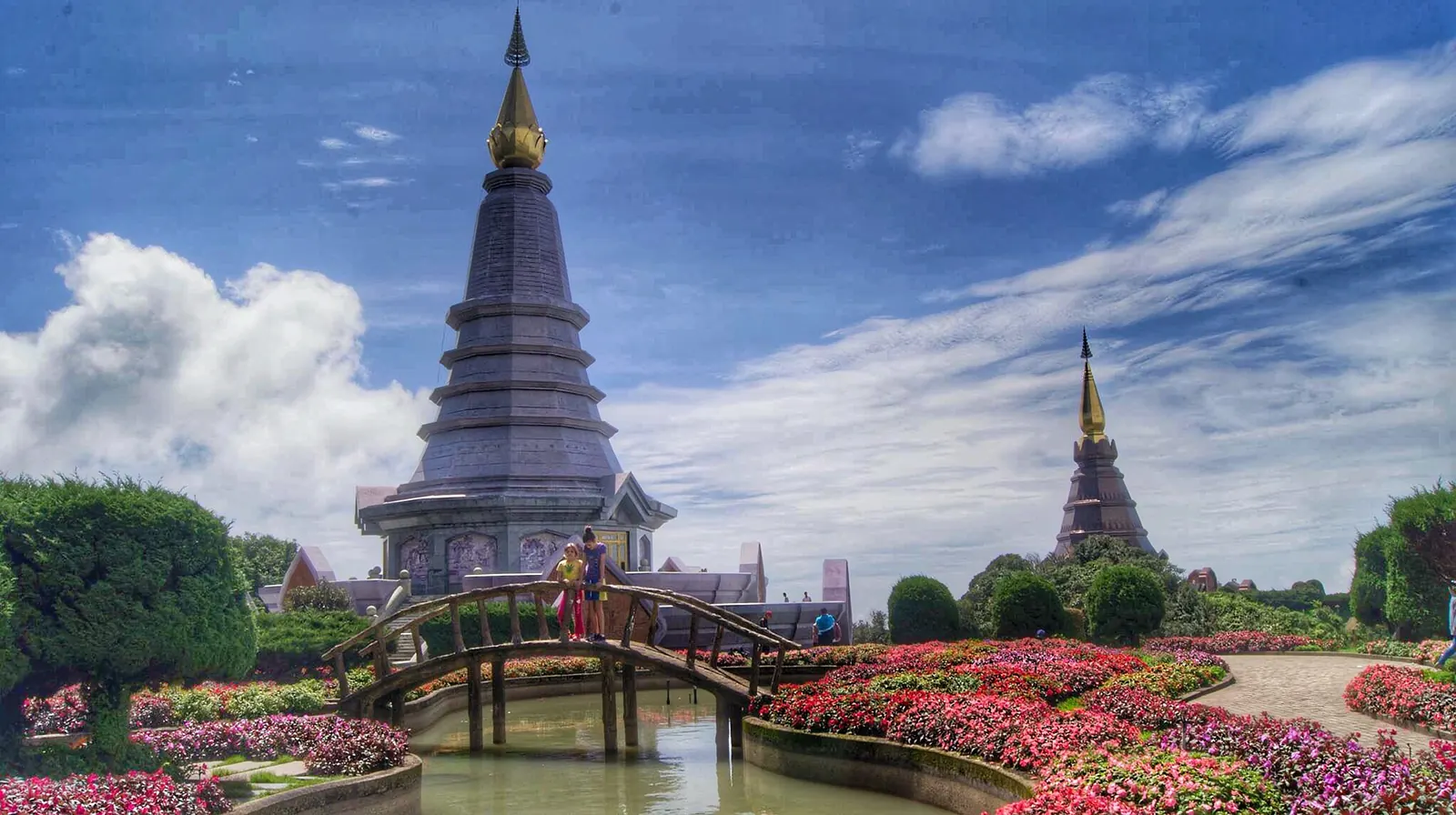
There is no view from the top of Thailand. The highest point in the country is a brown sign in a clearing of moss-hung rhododendron, with a small chedi holding a Lanna king’s ashes, a radar station behind a fence and, by half past ten on a December morning, a forty-person queue to be photographed beside the words “Highest Spot in Thailand”. Doi Inthanon is 2,565 metres, about 100 kilometres and two hours south-west of Chiang Mai, and most of the people in that queue were sold a mountain. What they got is a cloud forest, which is better, if you knew to expect it.
The short version: worth the day, with conditions. Go between November and February, go early, and go for the Kew Mae Pan trail (reopens 1 November after its five-month closure), the twin royal chedis in the mist and the fact of being cold in Thailand, not for a summit. Budget ฿300 park entry, ฿30 for a car, ฿100 for the chedis and a ฿200–220 trail guide, then ฿1,100–1,900 for a shared tour or ฿2,500–3,500 for a car and driver; check any quote against our Thailand price index. With one day in Chiang Mai and the temples still to see, do Doi Suthep instead. The Chiang Mai province page has the map; the city’s other calls are in things to do in Chiang Mai.
What Doi Inthanon actually is, and why there is no view at the summit
Doi Inthanon is the tail end of the Himalaya, which is the only reason a 2,565-metre mountain in the tropics behaves like Scotland. The park covers about 480 square kilometres of Chom Thong and Mae Chaem districts, with Route 1009 climbing from the plain at around 400 metres to the summit car park in 47 kilometres of switchbacks. It was renamed in the 1890s for Inthawichayanon, the seventh king of Chiang Mai, whose ashes are on it, and became a national park in 1972.
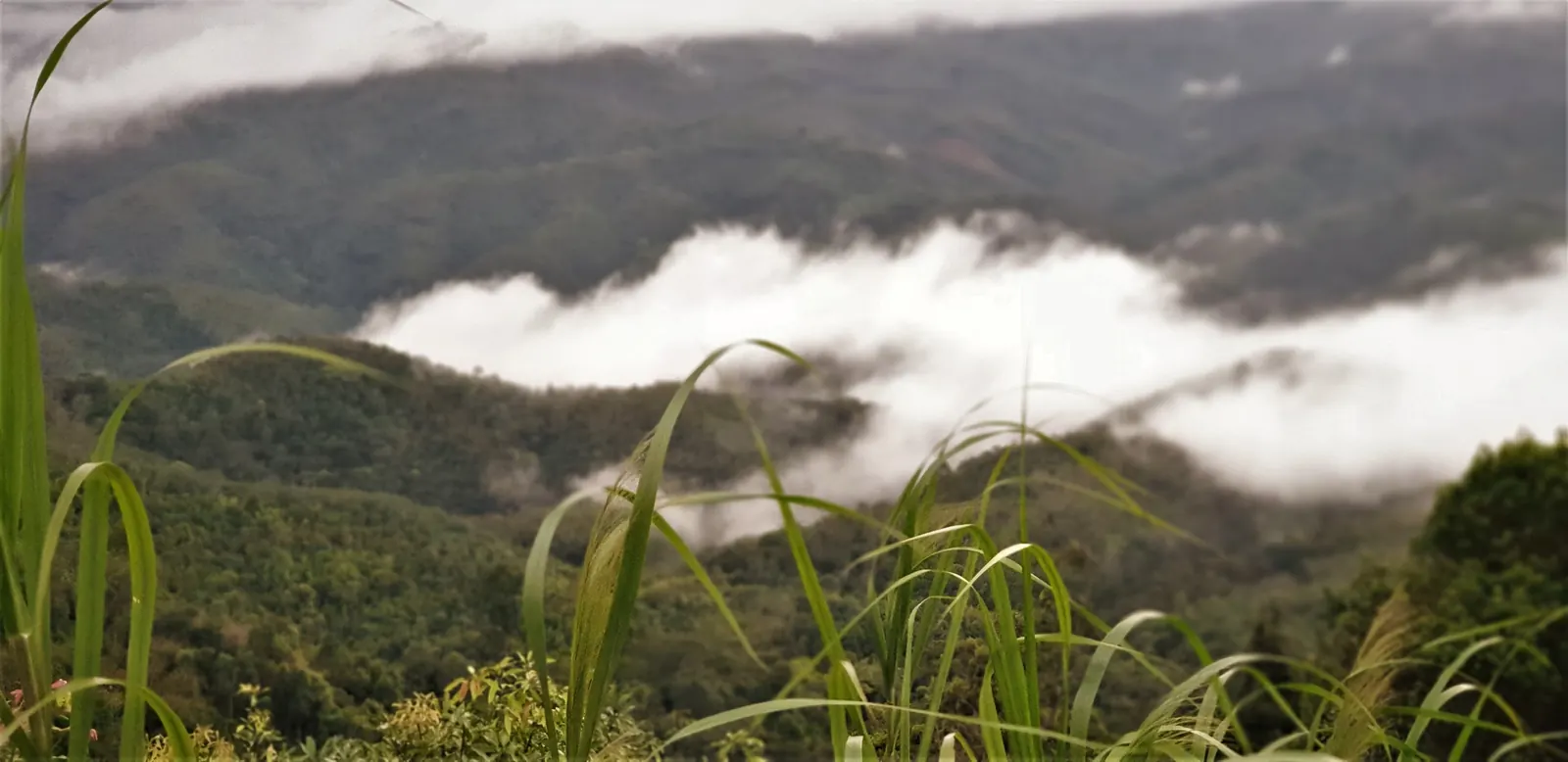
The summit is a forested dome, and the trees are the point: above about 2,000 metres the pine and oak give way to a cloud forest where every branch wears moss and the ferns grow on the ferns. The Ang Ka boardwalk, 360 metres of planking beside the summit car park, free, takes fifteen minutes and is the best thing on the mountain for the least effort. Khao Yai is for animals; Doi Inthanon is for plants, cold and birds, around 380 species and a steady trade in birders with ฿300,000 lenses from December to March.
Doi Inthanon entrance fees in 2026: park, car, chedis and guides
Thailand’s national parks charge foreigners more than Thais, openly and by law, and Doi Inthanon is in the top band. The park fee is cash at the checkpoint on Route 1009 above Chom Thong; the chedis charge separately because the park does not run them; the guided trails charge per group at the trailhead. Figures as of November 2026, from the Department of National Parks’ schedule and the operators who collect them.
| Fee | Foreigner | Thai | Notes |
|---|---|---|---|
| National park entry, adult | ฿300 | ฿60 (some sources ฿50) | Cash at the Route 1009 checkpoint; valid all day |
| National park entry, child 3–14 | ฿150 | ฿30 | Under-threes free |
| Vehicle | Car ฿30; motorbike ฿20 | Same | Included in tour prices |
| Twin royal chedis | ฿100 | ฿100 | Run by the Royal Thai Air Force, not the park; escalators up |
| Kew Mae Pan guide | ฿200–220 per group | Same | Compulsory Hmong guide, up to about ten people; 6am–4pm, 1 Nov–31 May only |
| Pha Dok Siew guide | ฿200 per group | Same | Compulsory Karen guide from Mae Klang Luang; all year |
| Royal Agricultural Station Inthanon | ฿20 | ฿20 | The Royal Project gardens at Khun Klang |
Some operators quote a ฿400 “park fee” because they bundle the chedis into it, which is fair, and some because they can, which is not; ask what it covers. The DNP waives entry on a few public holidays around New Year, a gift until you meet the Thai holiday crowd on a mountain with one road. Our Thailand cost per day budgets treat a park day as a ฿500 line, about right here.
Tour, private driver or self-drive: three ways to do Doi Inthanon, costed
Every hotel desk in the Old City sells the same Doi Inthanon day: 7.30am pickup, Wachirathan, the summit, the chedis, a village, lunch, back by 5pm. The difference is the vehicle, the group size and whether the fees are in, and the gap between the cheapest and dearest version of the same day is about ฿6,000. Prices are what the platforms showed in late October 2026 at roughly ฿34 to the dollar; treat them as ranges.
| How | Cost | What you get | Verdict | Book |
|---|---|---|---|---|
| Shared minivan tour, 8–10 people | ฿1,100–1,900 a head; check if the ฿300 and ฿100 fees are extra | Waterfall, summit, chedis, a village, lunch; Kew Mae Pan on some, Nov–May | Do it, if you want zero decisions; ask for a trail day | GetYourGuide |
| Small-group hiking tour | ฿3,000–3,500 a head | Pha Dok Siew (all year) or Kew Mae Pan, guide and fees in, lunch in Mae Klang Luang | Worth it: the best version of the day | GetYourGuide |
| Private car and driver | ฿2,500–3,500 for the car, fuel usually in, some add a ฿500 Inthanon surcharge; fees extra; with a licensed guide ฿4,500–7,000 | Your order, your timings, a 6am start for frost | Worth it for three or four people; the only way to beat the coaches | GetYourGuide or your hotel |
| Self-drive hire car | ฿900–1,500 a day plus around ฿400 fuel, plus fees | Freedom, and 100 km of Routes 108 and 1009 each way | Do it, with a licence and no plan to drink | Hire desks at Chiang Mai airport |
| Scooter | ฿200–300 a day plus fuel | Two and a half hours each way, 47 km of climb, cloud at the top | Skip it in cool season: fog, frost, lorries | No |
The scooter deserves its own line. People do it, and most come back, but the top 15 kilometres of Route 1009 sit in cloud from mid-morning between November and February, the surface is wet, and the trucks coming down from Mae Chaem brake late. Chiang Mai to Pai explains why we keep saying this about northern roads; this one is steeper and colder. There is no public transport to the top: yellow songthaews from Chiang Mai Gate reach Chom Thong town for around ฿40–60, and a chartered songthaew up from there is ฿1,500–2,000, more than a Chiang Mai driver. For reaching Chiang Mai at all, 12Go’s Bangkok to Chiang Mai page has the night train and the flights; our Bangkok to Chiang Mai guide ranks them.
The Doi Inthanon itinerary that beats the coaches: chedis first, waterfalls last
Every tour does the mountain bottom-up, because that is the order the road presents it, so the summit sign and the chedis are full from 10.30am to 1pm and the waterfall is empty by three. With your own vehicle, invert it: leave Chiang Mai at 6am, pay at the checkpoint, drive straight to the summit by 8am while the moss is frosted and the sign unattended, walk Ang Ka, drop to Kew Mae Pan as the guides start at about 8.30am, chedis at ten with the cloud still below you, lunch at Khun Klang, Mae Klang Luang in the afternoon light, Wachirathan last.
| Stop | Where on Route 1009 | Time needed | Verdict |
|---|---|---|---|
| Summit sign, Inthawichayanon chedi, Ang Ka boardwalk | Kilometre 47, the top | 30–45 min | Do it before 9am; the boardwalk is the best bit |
| Kew Mae Pan nature trail | Kilometre 42, on the Mae Chaem fork | 2–3 hours for the 3 km loop | Worth it: the reason to come; 1 Nov–31 May only |
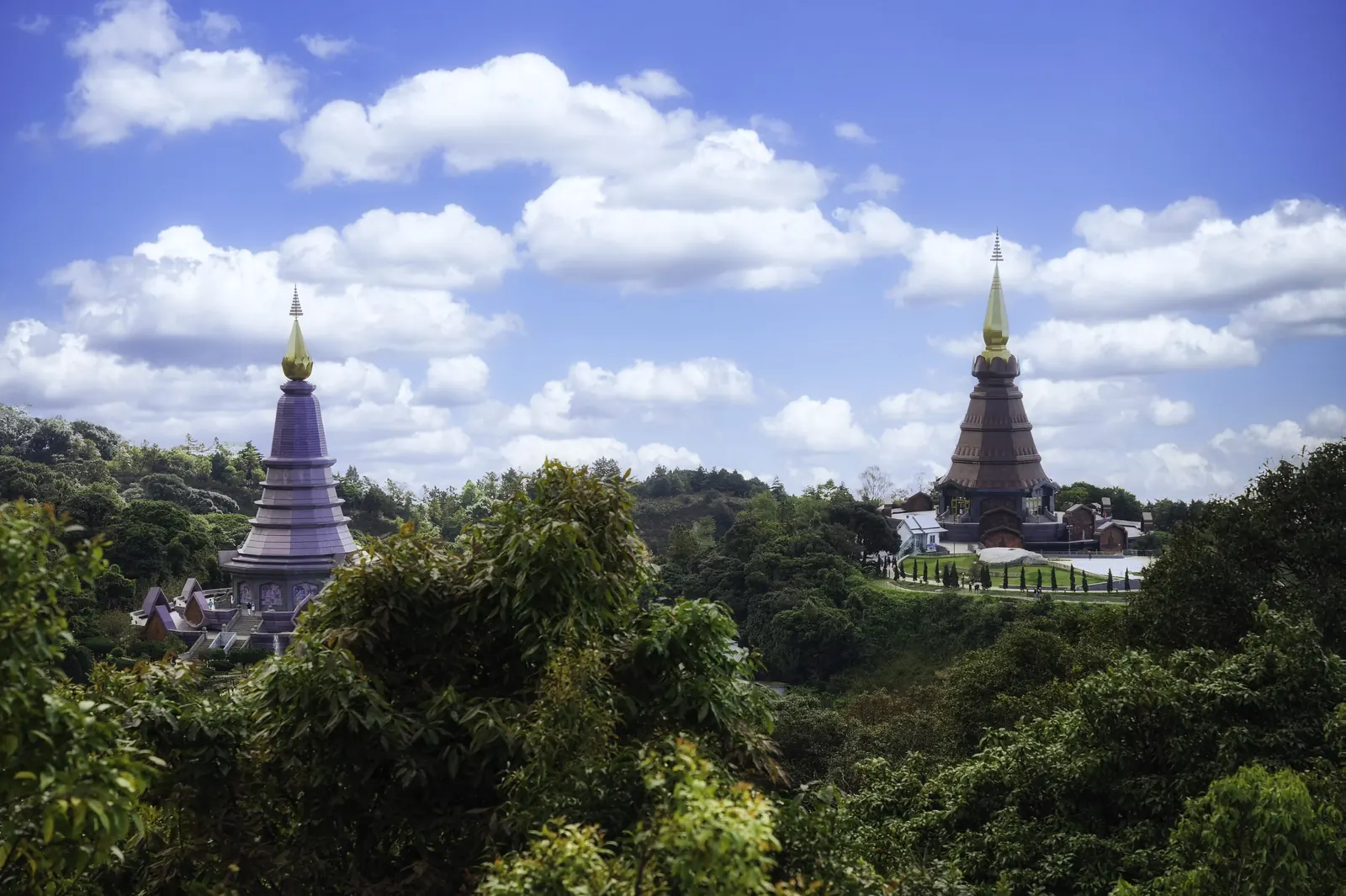
| Twin royal chedis | Kilometre 41.5 | 45 min | Do it, ฿100, before the coaches at 10.30am |
| Khun Klang Hmong market, Royal Agricultural Station, Siriphum waterfall | Kilometre 31, by the park HQ | 1–1.5 hours | Fine: lunch, strawberries in season, coffee, a tidy garden |
| Mae Klang Luang and Pha Dok Siew trail | Kilometre 26, a side road | 2 hours for the trek; 30 min for the terraces | Worth it all year; the Karen village is the real one |
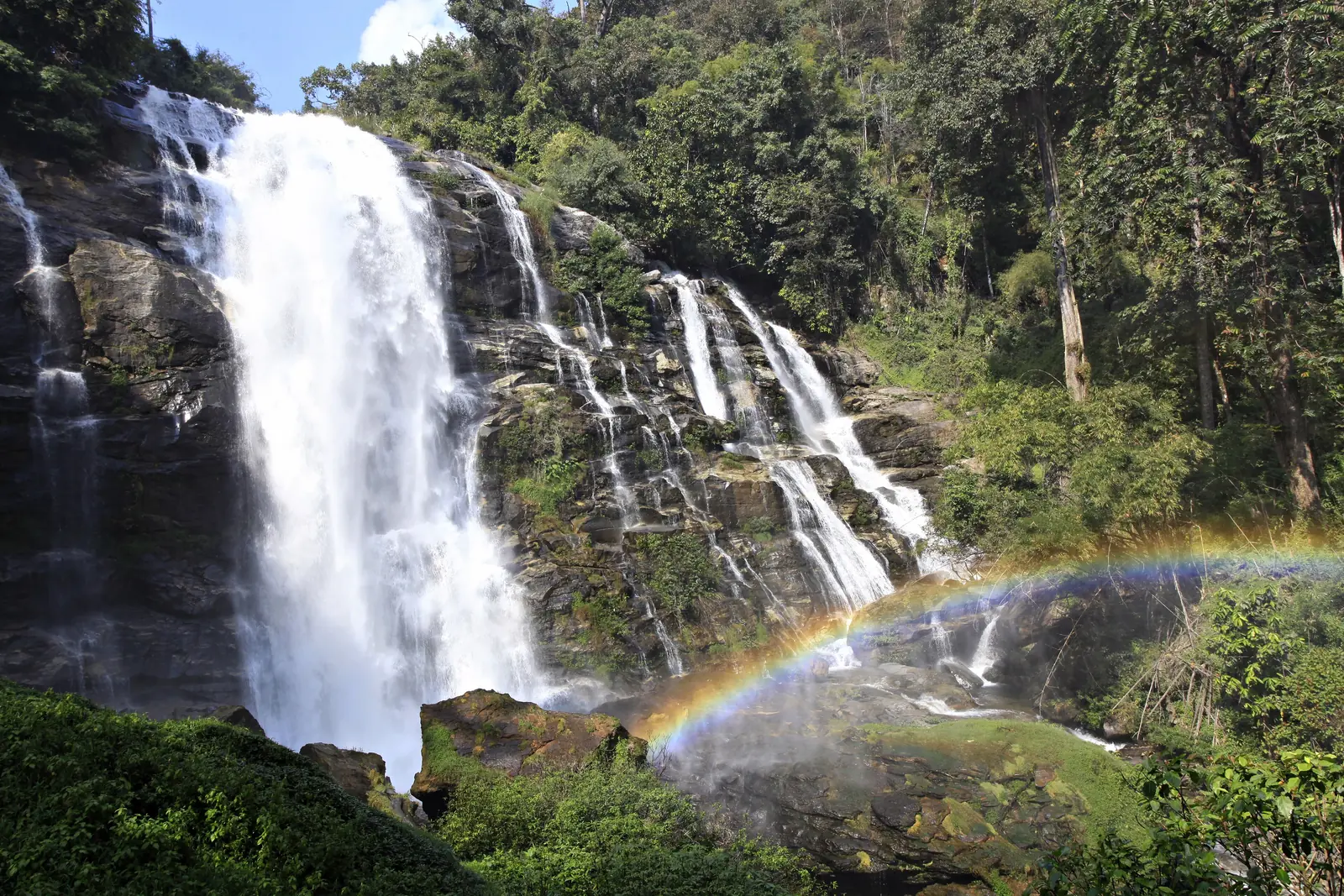
| Wachirathan waterfall | Kilometre 21 | 30 min | Do it last; loud, wet, and the rainbow is a 3pm thing |
| Mae Ya waterfall | Separate road from Chom Thong, 14 km | 1.5 hours with the detour | Worth it on a second day: 260 m, the park’s tallest, almost empty |
Kew Mae Pan is the thing: a 3-kilometre loop that starts in cloud forest, climbs through rhododendron that flowers red in January and February, and comes out onto a grass ridge at 2,200 metres with the Mae Chaem valley 1,000 metres below and, on a clear morning, a sea of cloud in it. The compulsory Hmong guide, ฿200–220 for the group, is from Ban Khun Klang and will stop you treading on the orchids. It shuts every 1 June to 31 October so the trail can recover. Pha Dok Siew, lower down, is the all-year alternative: two hours mostly downhill through forest and a waterfall to the Karen terraces of Mae Klang Luang, with a ฿200 Karen guide who will also sell you the village’s coffee, and should.

Doi Inthanon weather: frost in January, fog in August, haze in March
Doi Inthanon is the coldest place in Thailand, and Thai news treats every frost as an event. The summit recorded 3°C on 2 January 2026 with the grass at minus 2.2°C, 1°C on 26 January, and 43 frost mornings by 1 February, the longest run in a decade; the record is around minus 5°C, from December 2017. From mid-December to late January a summit dawn is 0–5°C and the Kew Mae Pan grass is white until about eight. By noon it is 15°C at the top and 30°C in Chiang Mai, the trick that catches people in shorts. Bring a proper jacket, a hat and closed shoes; the Hmong stalls at the summit sell fleeces and gloves for ฿150–300 to everyone who did not. What to pack for Thailand is written for the beaches; this is the exception. December and January are also peak season for Thai visitors, who come for the cold the way Europeans come for the heat, so weekends and New Year week are a traffic jam with a view.
The other end of the year is the trap. From June to October the summit sits in rain and fog, Kew Mae Pan is shut, the waterfalls are at their loudest and the road is slick; still worth a wet afternoon for the falls and the villages, not on a scooter. March and April are the burning season, when smoke fills the valleys and the sea of cloud becomes a sea of haze; the summit is often above it, but the Kew Mae Pan view is gone. Best time to visit Thailand has the month-by-month; for this mountain it is November to February, November the clearest, January the coldest.
Hmong and Karen villages, the Royal Project and the coffee, honestly
Khun Klang is the Hmong village at kilometre 31 beside the park headquarters, and its market is where every tour stops for lunch: strawberries from November to February at ฿100–150 a box, persimmons, avocados, cabbages the size of footballs, textiles and coffee. The coffee is real. The Royal Project, set up in 1979 to move the Hmong from opium to temperate crops, grows arabica, cut flowers and vegetables for Bangkok supermarkets; its Royal Agricultural Station Inthanon next door is ฿20, a tidy garden with an orchid greenhouse and a trout pond, Fine for forty minutes. A cup of mountain arabica is ฿50–80, better than the ฿120 flat white in Nimman, and the half-kilo bags at ฿300–450 are the souvenir worth buying.
Mae Klang Luang is a Pwo Karen village at kilometre 26 that runs its own homestays at ฿300–500 a person with dinner, its own guides on Pha Dok Siew and its own shade-grown coffee at ฿400–500 a half kilo. The rice terraces are gold in late October and November, green from July, and bare brown from December, which no brochure mentions. The “hill-tribe village visit” on the cheaper tours is often a twenty-minute stop at a stall-lined village with a weaving demonstration and a sales table; not a scam, but a shop. If you want the villages, walk Pha Dok Siew with a Karen guide. Who the Hmong and Karen are is in the ethnic groups of Thailand.
Where to stay on Doi Inthanon or in Chom Thong if you want the sunrise
The case for a night: the summit at 6.30am with nobody on it, first group onto Kew Mae Pan, the mountain done before the first coach clears the checkpoint at about 9.30am. The case against: nothing to do after 5pm, and Chiang Mai is two hours away. The park bungalows at the headquarters run from about ฿1,000 to ฿6,500 a night, 30 per cent off Monday to Thursday, booked by phone through the DNP because the online system was down for much of 2026; camping is ฿30 a head plus ฿225 for a tent and ฿60 for bedding, and at 2°C you will want all of it. Resort rates below are low-season starting points.
| Place | What it is | From around | Best for | Book |
|---|---|---|---|---|
| Touch Star Resort | Garden resort on Route 1009 near the Mae Klang falls, below the checkpoint | ฿1,400 | Families, and the biggest pool on the road | Agoda |
| Doi Inthanon View Resort | Simple bungalows on the Chom Thong side of the mountain | ฿900 | A cheap early start | Agoda |
| Phu Terrace View Resort Doi Inthanon | Hillside rooms with a terrace over the valley | ฿1,200 | Couples who want the morning mist from bed | Agoda |
| Mae Klang Luang homestays | Karen family houses among the terraces | ฿300–500 a person with dinner | The real thing; cold floors, good coffee | Walk in or via your guide |
For most people the right answer is still a bed in town and a 6am driver; where to stay in Chiang Mai and Old City, Nimman or Riverside settle which part of town.
Is Doi Inthanon worth it? The verdict by traveller type
- Hikers and birders: Worth it, and book the trail. Kew Mae Pan from November to May, Pha Dok Siew any month, Ang Ka at dawn; the hiking tour or a private car, not the coach day.
- Families: Do it, in cool season, with a car. Children like the cold, the waterfalls and the strawberries, not three hours of switchbacks in a shared minivan. Kew Mae Pan suits a fit eight-year-old and the chedis have escalators. Chiang Mai with kids has the rest of the week.
- Photographers: Worth it, before nine. The chedis in cloud, frosted moss on Ang Ka and the Kew Mae Pan ridge are morning pictures; by eleven the light is flat and the sign is a queue.
- One day in Chiang Mai: Skip it, do Doi Suthep. Suthep is forty minutes away with a view of the city and a temple that explains the north; Inthanon is a full day for a forest and a cold. Spend it on the temples and a night market.
- Summit-view seekers: Skip it, or recalibrate. There is no view from the top; the view is from the chedis and Kew Mae Pan, before the cloud lifts. For a mountain road with a view, the Chiang Rai side has better ones.
- June to October visitors: Fine, lower your sights. Waterfalls, Pha Dok Siew and the terraces in the green, a wet boardwalk. No Kew Mae Pan, no frost, no ridge, and a ฿300 ticket for a quarter of the mountain.
Doi Inthanon is sold as a peak and is actually a forest, a trail, two chedis and a temperature. On those terms, between November and February, started before dawn, it is one of the three or four best days out from Chiang Mai. On the terms the coach tours sell it, a summit photograph and a village shop between 10am and 2pm, it is a long day in a van for a sign. Pick the first version.
Doi Inthanon: your questions, answered
How much does it cost to enter Doi Inthanon National Park?
As of November 2026, ฿300 for a foreign adult and ฿150 for a child aged 3–14, paid in cash at the checkpoint on Route 1009 above Chom Thong, plus ฿30 per car or ฿20 per motorbike. The twin royal chedis are a separate ฿100 per person, the Kew Mae Pan guide ฿200–220 per group, and the Royal Project station ฿20. Most tours include the park fee; the cheapest often do not, so ask.
Is Doi Inthanon worth visiting from Chiang Mai?
Yes between November and February if you like a cold morning and a walk: the Kew Mae Pan trail, the chedis in cloud and the Ang Ka boardwalk make a full and good day for around ฿1,100–1,900 on a shared tour. No if you have one day in Chiang Mai or expect a view from the summit, which is a forested dome with a sign; Doi Suthep is the better single day.
When is the Kew Mae Pan trail open?
From 1 November to 31 May, roughly 6am to 4pm, with a compulsory local Hmong guide hired at the trailhead for ฿200–220 per group of up to about ten. It closes every 1 June to 31 October so the forest can recover. The loop is about 3 kilometres and takes two to three hours; the rhododendrons flower in January and February and the frost is on the ridge from mid-December to late January.
How cold does Doi Inthanon get?
Colder than anywhere else in Thailand. In the 2025–26 winter the summit recorded 3°C on 2 January and 1°C on 26 January, with grass temperatures below zero and 43 frost mornings counted by 1 February; the summit record is around minus 5°C. Expect 0–5°C at dawn in December and January, 15°C by noon at the top and 30°C back in Chiang Mai. Bring a real jacket, a hat and closed shoes.
Can I do Doi Inthanon on a scooter or without a tour?
Without a tour, yes: a hire car at ฿900–1,500 a day or a private driver at around ฿2,500–3,500 lets you start at 6am and do the mountain top-down ahead of the coaches. On a scooter we would not in cool season: the top 15 kilometres sit in cloud and frost, the road is wet and steep, and the trip is two and a half hours each way. There is no public transport beyond Chom Thong town.
Related guides
- Things to Do in Chiang Mai Beyond the Checklist: Worth It vs Skip It
- Chiang Mai to Pai: Minivan, Private Car or the Scooter Everyone Regrets (2026)
- Where to Stay in Chiang Mai: Best Areas by Traveller Type
Book the trip
Some links in this guide are affiliate links. If you book through them we may earn a small commission at no extra cost to you — it helps keep Destination Thailand independent.
Hotels: the resorts on the Chom Thong road and every bed in the city are on Agoda’s Chiang Mai page. Tours/Boats: the shared day, the hiking day and the private car are all on GetYourGuide’s Doi Inthanon listings; filter for Kew Mae Pan between November and May. Getting there: the night train, buses and flights from Bangkok are on 12Go, the airport-to-town leg on 12Go’s Chiang Mai airport page, and every route is ranked in our Bangkok to Chiang Mai guide. Not sure the north is your Thailand at all? Our Where to Go in Thailand matcher will tell you in about a minute.