Phetchabun is the province Thai holidaymakers have been quietly obsessed with for two decades whilst most foreigners cannot place it on a map. It fills the Pasak river valley between the central plains and Isaan, walled in by mountains on both sides, and it delivers the one thing Thailand supposedly cannot: cold. Proper duvet-at-night, mist-in-the-valley, put-a-jumper-on cold, every December, on ridgelines covered in strawberries and cabbages.
It also owns one of the most photogenic temples in the country, a 1,500-year-old city that UNESCO finally recognised in 2023, and a straight-faced claim to growing the best sweet tamarind on earth. Yet on a weekday you will share nearly all of it with a few Bangkok families and nobody else. The short version lives on our Phetchabun province profile; what follows is the full argument.
What Phetchabun really is
Officially central Thailand, practically its own microclimate. Phetchabun town sits on the valley floor — honest, workmanlike, almost entirely free of tourism, a capital that exists to move tamarind and rice rather than entertain you. The reason anyone visits is the rim of the bowl: Khao Kho to the west, a ridge of resorts and viewpoints at around 1,000 metres, and Phu Thap Boek to the north, a Hmong mountain at 1,768 metres where Thailand farms its highest cabbages.
There is history in these hills, and not the polite kind. Through the 1970s Khao Kho was a shooting war between the Thai army and communist insurgents, and it only ended in the early 1980s. The summit still carries a war memorial and a weapons museum, which lends the Little Switzerland resort scene a strange edge: you sip strawberry smoothies on ground that was a battlefield within living memory.
Why go to Phetchabun
Because it is the closest Thailand gets to a mountain holiday that has not been packaged for foreigners. The dawn sea of mist — a white ocean filling the valley, peaks breaking through like islands — turns up most cool-season mornings. Wat Pha Sorn Kaew is one of the very few modern temples that justifies its Instagram fame. Si Thep quietly rewrote Thai history and collected a UNESCO stamp for it. And the whole trip costs about half of the Chiang Mai equivalent, with a tenth of the crowds.
Getting to Phetchabun
No trains. The railway never came through the valley, and the nearest mainline station is Phitsanulok. Phetchabun technically has an airport, but scheduled flights have been suspended for years, so forget it exists.
By bus: services leave Bangkok’s Mo Chit Northern terminal through the day, take about five hours to Phetchabun town and cost roughly ฿300-400 for a decent air-conditioned seat. Plenty continue to Lom Sak, the junction town at the foot of Khao Kho where Highway 12 crosses the valley.
The smarter route: fly Bangkok to Phitsanulok — about an hour, often under ฿1,000 booked ahead — collect a hire car at the airport and drive Route 12 east; you will hit the Khao Kho turn-offs in around 90 minutes. Driving from Bangkok directly is about 340 kilometres and a solid five hours. Si Thep is the exception: it sits in the far south, roughly 230 kilometres from Bangkok up Highway 21, doable as a long day trip from the capital.
Where to stay
Khao Kho is the obvious base. Resorts are strung along routes 2196 and 2258, and midweek ฿800-1,500 buys a clean room with a valley view and cold morning air. The same room doubles on cool-season weekends and vanishes over New Year, so book ahead from November to January. The tacky end of the strip does Swiss chalets and windmills; the good end simply points your bed at the mist.
Phu Thap Boek is for the sunrise, which means sleeping on the mountain. Expect tent pitches with blanket hire for a few hundred baht, and simple Hmong-run rooms for a little more. Nights get genuinely cold — single digits in a January snap — so pack a proper layer.
Phetchabun town and Lom Sak have functional ฿400-800 hotels. Nobody honeymoons in either, but the town works for Si Thep and tamarind season, and Lom Sak is handy for Nam Nao and Highway 12.
What to eat in Phetchabun
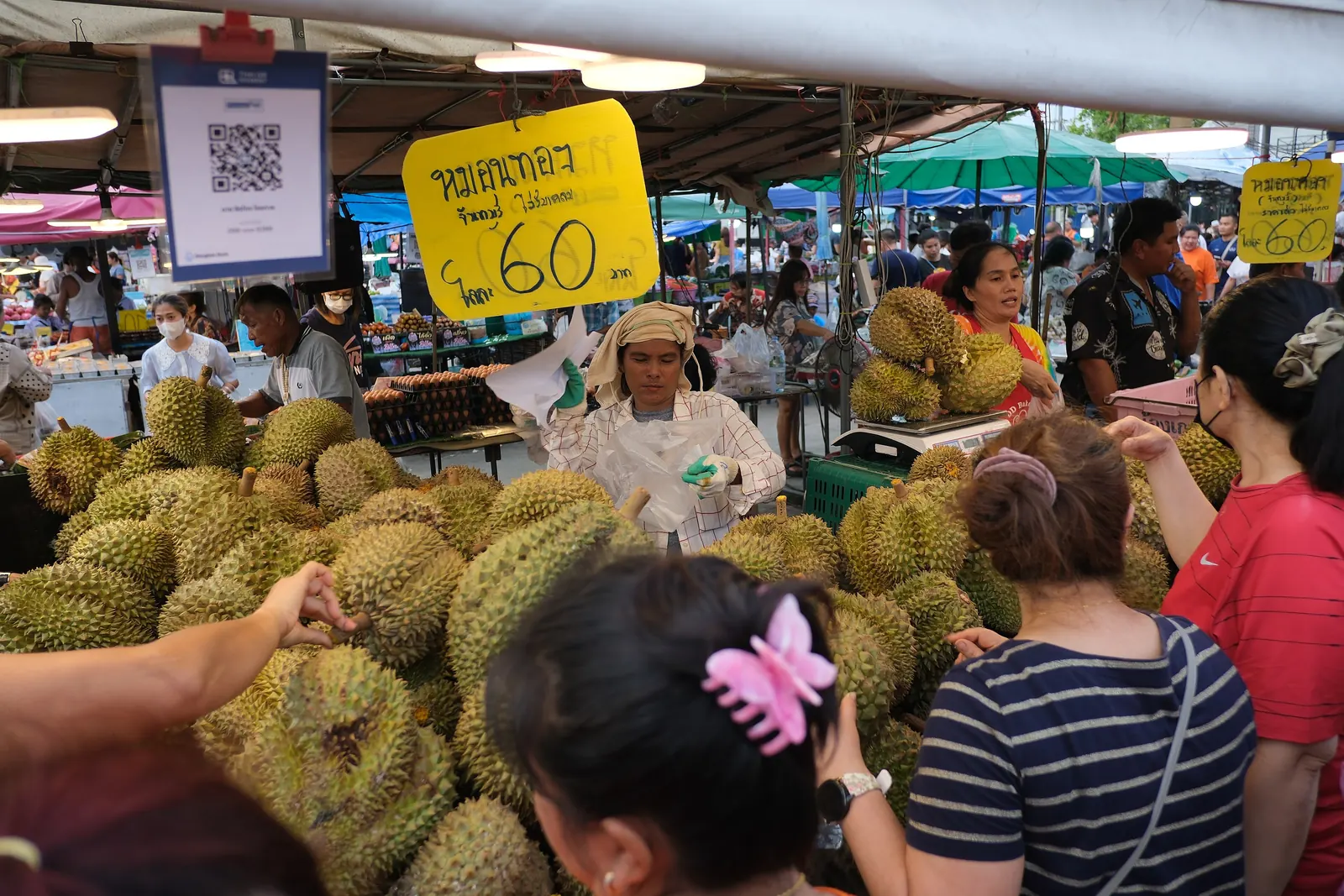
Sweet tamarind is the province’s signature and its actual economy. Phetchabun styles itself the sweet tamarind capital of Thailand, the harvest runs December to March, and orchard-grade pods go for about ฿100-250 a kilo depending on variety. Roadside stalls sell them everywhere, and the town throws an annual tamarind fair around the peak of harvest. Buy the premium grade; the difference is not subtle.
Beyond tamarind: Lom Sak does an excellent line in khanom jeen — fresh rice noodles buried under curries, ฿30-50 a bowl at the morning market stalls. Khao Kho farms sell strawberries through the cool months, and the stalls on the way up Phu Thap Boek deal in avocados and mountain vegetables that would cost triple in Bangkok. Evenings, the night market in Phetchabun town covers grilled chicken, som tam and noodle soups at ฿40-60 a plate, without a tourist menu in sight.
Top things to do in Phetchabun
1. Wat Pha Sorn Kaew
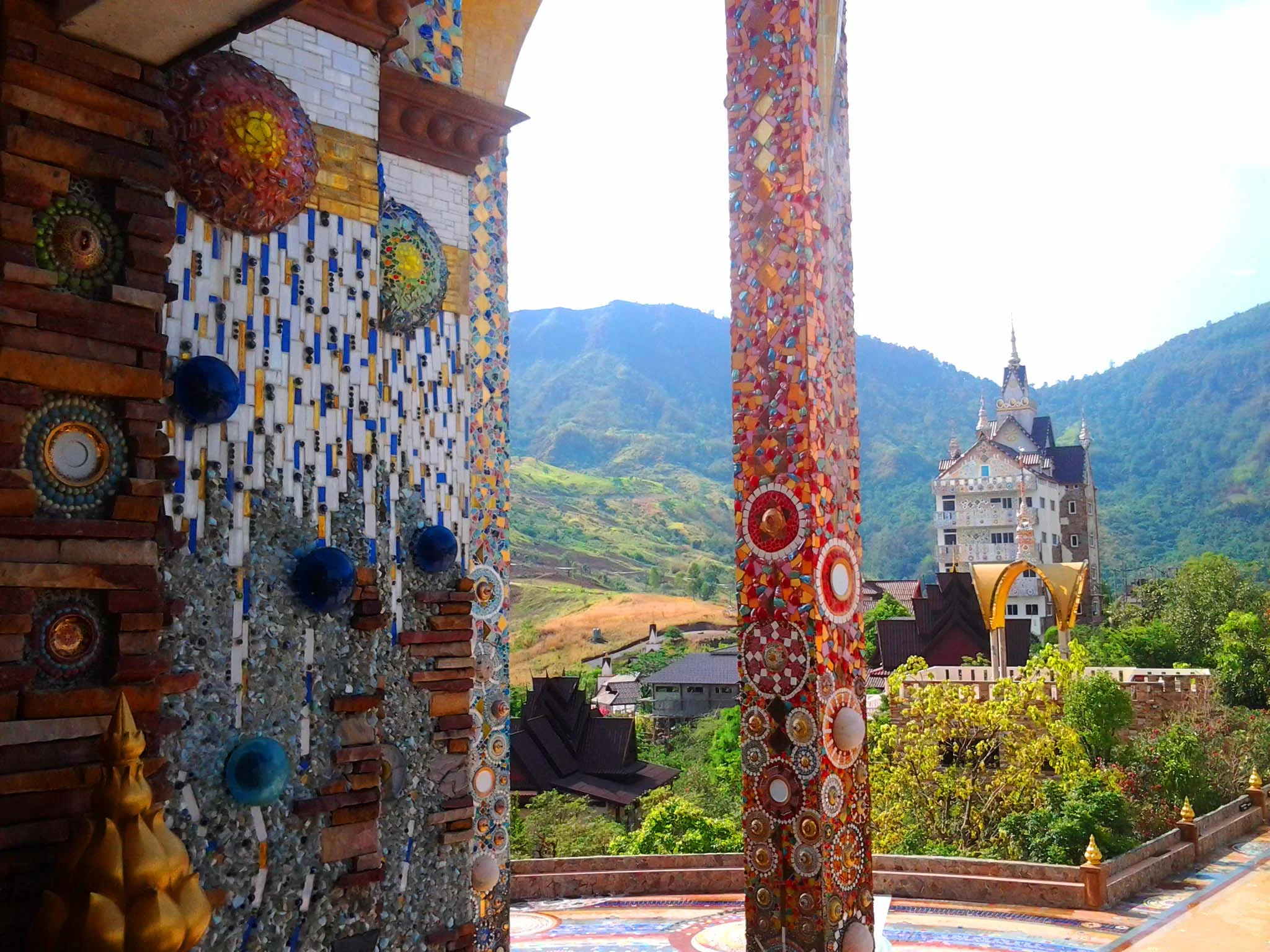
Five white Buddhas seated in a nested row, gazing off a cliff edge at Khaem Son in Khao Kho district — and the complex beneath them skinned in more than five million mosaic tiles and pottery fragments. It sounds like a fever dream and looks like one: the tilework shifts colour as the light moves, and on a misty morning the statues appear to float on cloud. Entry is free, shoulders and knees covered, and arrive before 9am, because the coach parties are not a rumour.
2. The Khao Kho sea of mist
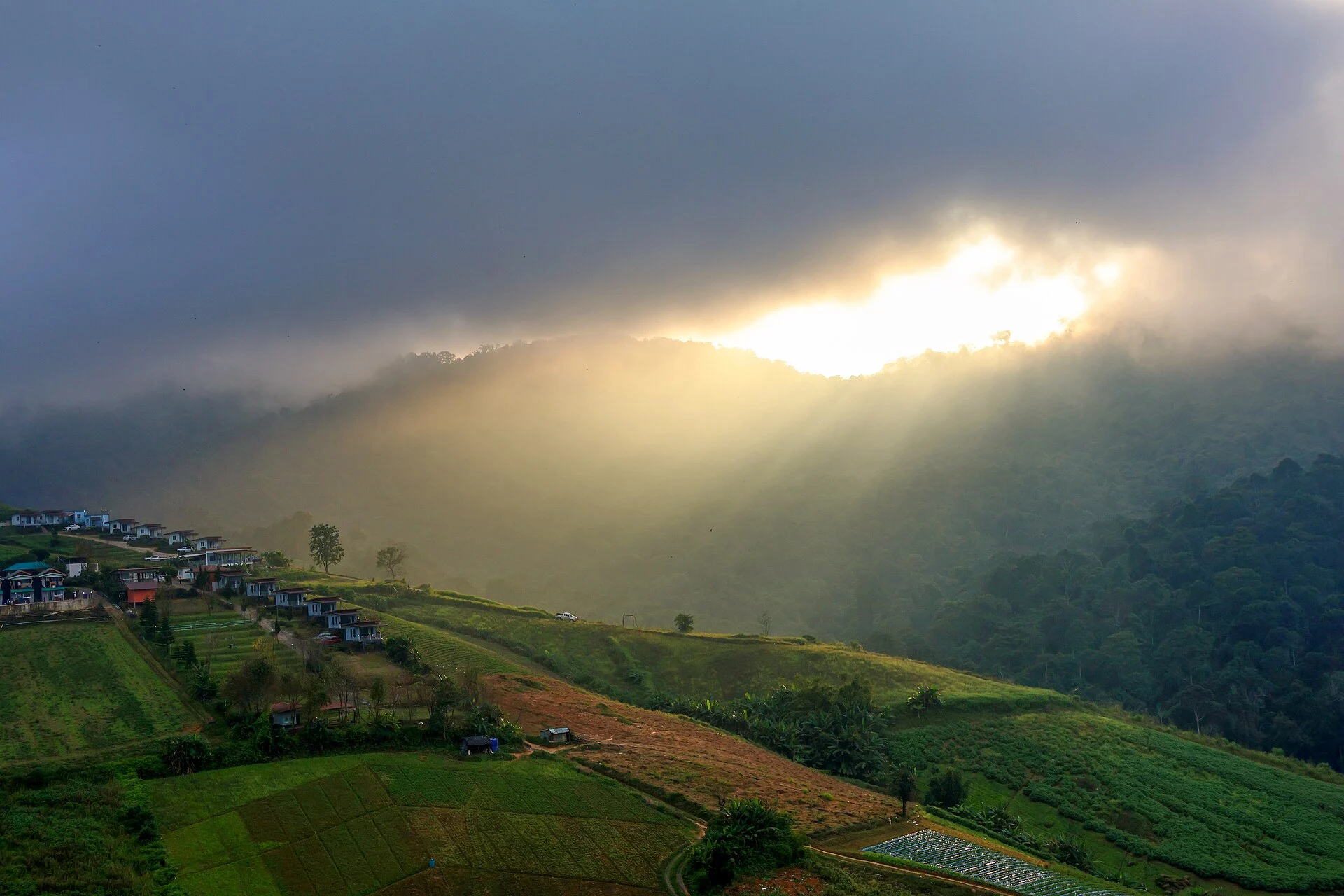
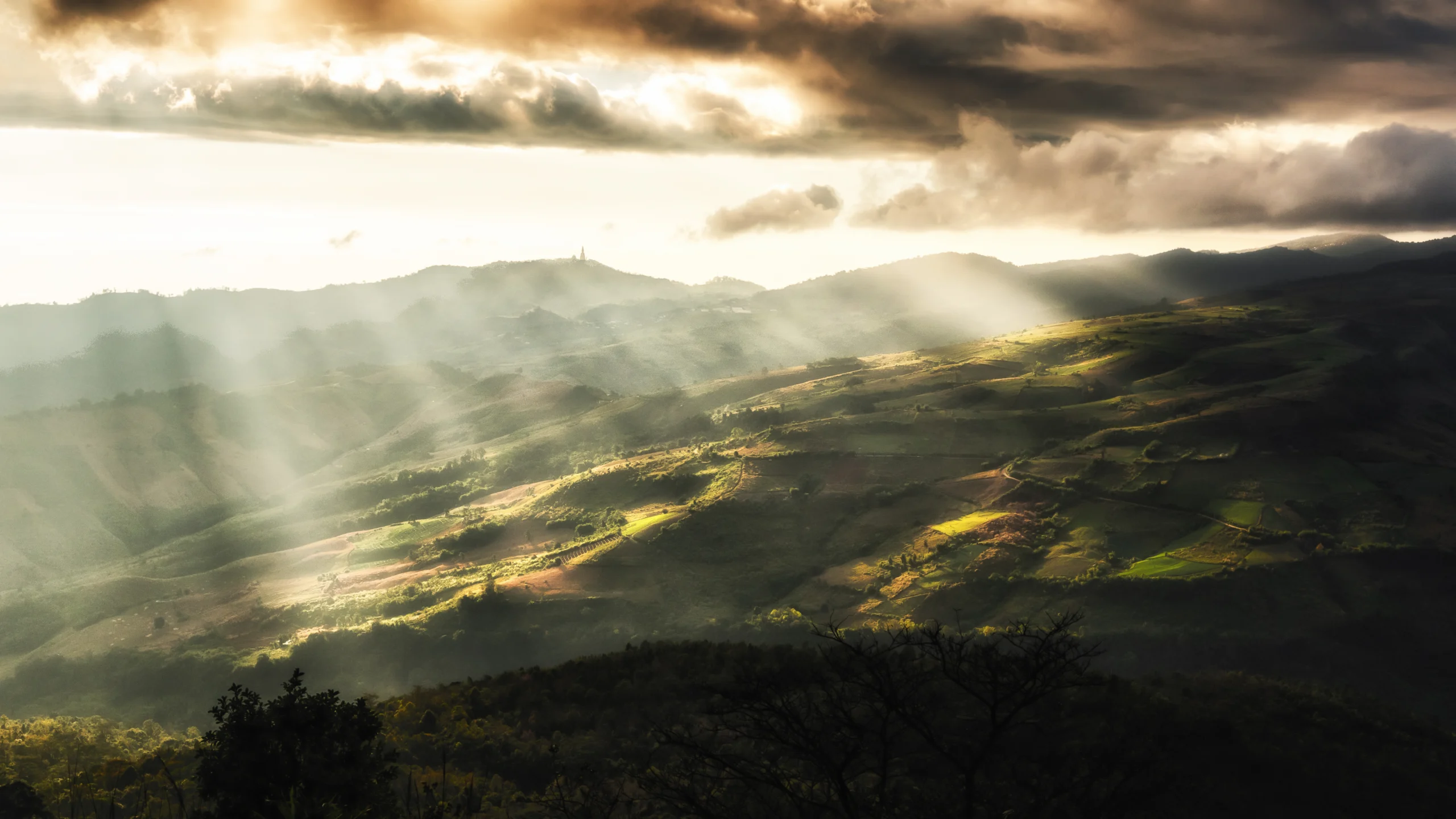
Khao Kho markets itself as Little Switzerland, which is nonsense — it is better than that, because Switzerland does not do dawn like this. On cool-season nights the valley fills with cloud, and from the ridge viewpoints you watch a white sea burn off as the sun climbs. Set an alarm for 5.30am, drive up with a flask of coffee and enjoy the best free show in the province. In daylight the ridge does strawberry farms from roughly December to February, plus a line of giant wind turbines that has become a photo stop in its own right.
3. Sunrise on Phu Thap Boek
Thailand’s highest cabbage fields sit at 1,768 metres on a mountain farmed by Hmong families, and the terraced rows dropping into cloud at first light are worth every degree of the cold. Most people camp; pitches and blanket hire are cheap, and the sunrise crowd is Thai students and photographers rather than tour groups. Respect the road up — steep, narrow, unforgiving in the wet — and if switchbacks are not your idea of fun, arrange transport from below rather than proving a point.
4. Si Thep Historical Park
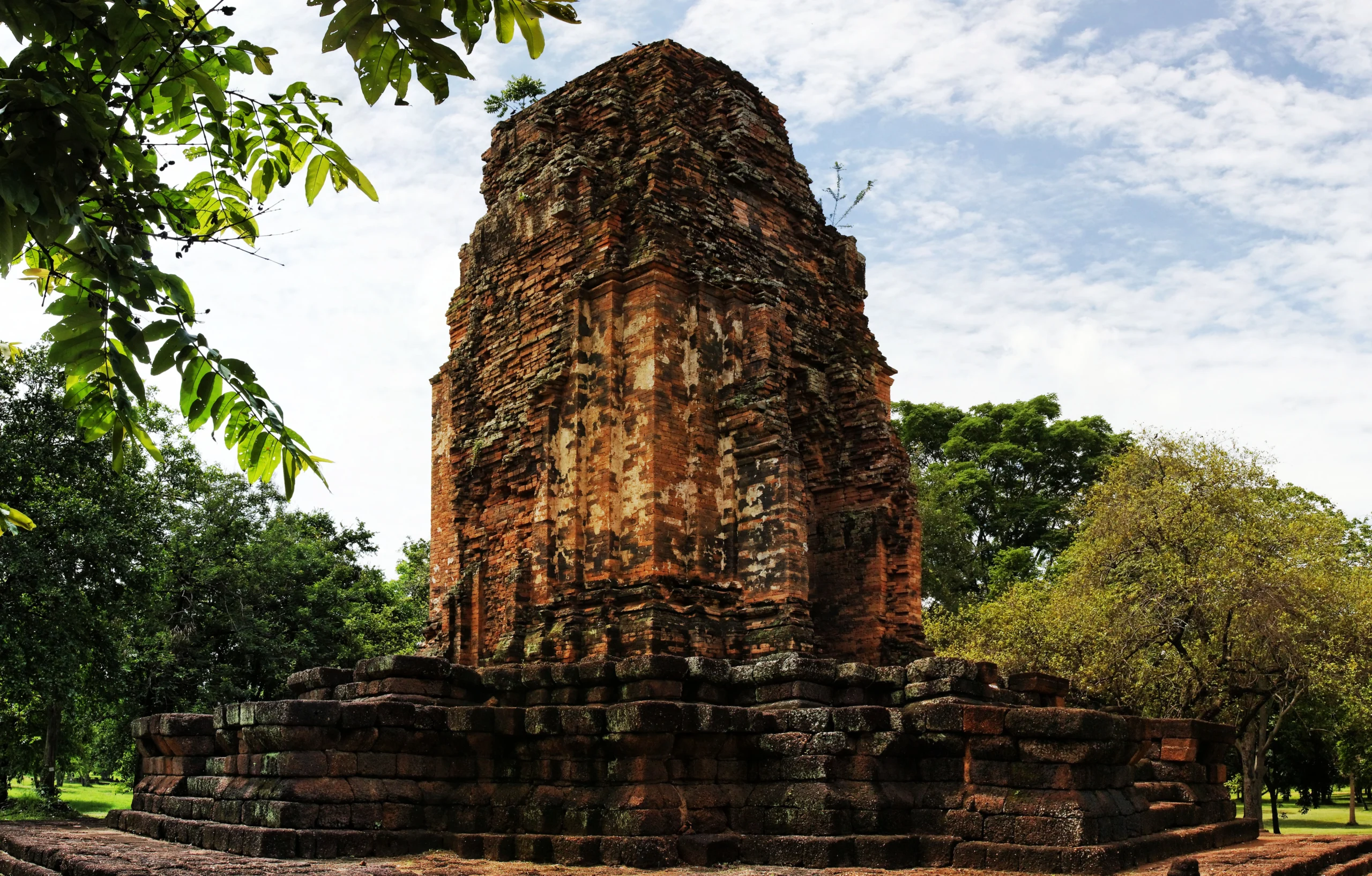
The reason historians now say civilisation in Thailand did not start where the textbooks claimed. Si Thep was a Dvaravati-era city that peaked centuries before Angkor rose, and its twin-town layout, brick sanctuaries and the vast Khao Klang Nok stupa earned it UNESCO World Heritage status in 2023. It is 1,500 years old and you will frequently have it to yourself — a national embarrassment, but your good luck. Entry is about ฿100 for foreigners; go early or late, because the site is open ground with little shade.
5. Nam Nao National Park
East of Lom Sak on Highway 12, Nam Nao is high, cool and covered in pine — closer in feel to a temperate forest than anything you expect from Thailand. Elephants genuinely wander across the highway at night, which concentrates the mind wonderfully on the drive towards Khon Kaen. Entry runs a couple of hundred baht for foreigners; marked trails and a proper campground run from the headquarters.
6. Tamarind season in the valley
From December to March the province gets on with its real business, and it is worth leaning into. Orchards on the valley floor sell straight from the farm, roadside stalls stack pods by grade, and the annual tamarind fair in Phetchabun town is agricultural Thailand at its most cheerfully unpolished — produce competitions, beauty pageants, more tamarind formats than you knew existed. None of it is designed for you, which is exactly why it is good.
What to skip
The Euro-cosplay photo parks. Khao Kho’s success has spawned a rash of attractions where you pay ฿50-100 to photograph plaster sheep in front of a fibreglass chalet, or queue for a windmill that has never milled anything. They exist because the sea of mist does not have a ticket booth, and somebody needed to invent something that did. You are on a 1,000-metre ridge in real mountains with a genuinely strange and bloody recent history — paying to pose with a fake Alp is an act of self-harm. Spend the money on strawberries.
Phetchabun travel: practical info
Come between November and February: mist season, strawberry season, tamarind season and jumper weather all at once. March to May is hot and increasingly hazy as burning-season smoke drifts across the north. The rainy months turn everything luminous green but make the Phu Thap Boek road a lottery.
Three days covers the core — one for Khao Kho and Wat Pha Sorn Kaew, one for Phu Thap Boek, one for Nam Nao or the valley floor. Add a fourth for Si Thep, or fold it into the drive from Bangkok. Onward, Route 12 runs west to Phitsanulok and east through Nam Nao towards Khon Kaen, Route 203 climbs north to Loei, and Highway 21 drops south past Si Thep towards Bangkok.
Planning the specifics? The Tourism Authority of Thailand’s official Phetchabun page and its things-to-do list carry current opening hours and festival dates, and Wikipedia has the historical background.
FAQ
Is Phetchabun worth visiting?
If you want mountains, cold air and a Thailand not performing for foreigners — emphatically yes. If you need beaches, nightlife or English menus, no. It rewards drivers, early risers and people who consider an empty UNESCO ruin a win rather than a warning sign.
How do I get to Khao Kho without a car?
With patience. Bus to Lom Sak or the Camp Son junction, then charter a songthaew for the ridge — expect around ฿1,000-1,500 for a day of viewpoints, agreed up front. Some resorts arrange pick-ups if you ask ahead, but a hire car from Phitsanulok airport is cheaper per kilometre and far more flexible.
When is the best time to see the sea of mist?
Cool-season dawns, November through February, from about 5.45am until the sun burns it off by around 8am. Mist forms most reliably after a still, cold night. Phu Thap Boek and the Khao Kho viewpoints both deliver, but nature does not offer refunds.
Is Si Thep Historical Park worth the detour?
Yes, with calibrated expectations. This is not Angkor — it is older, quieter and more archaeological, and its significance outweighs its spectacle. Give it two hours, include the Khao Klang Nok stupa, and read a little about Dvaravati beforehand so the mounds and prangs mean something.
How cold does it get on Phu Thap Boek?
Cold enough to matter. December and January nights regularly drop below 10°C on the summit, and a proper snap can push things towards freezing. Pack a fleece and a windproof jacket.