Central · Thailand
Lop Buri · ลพบุรี
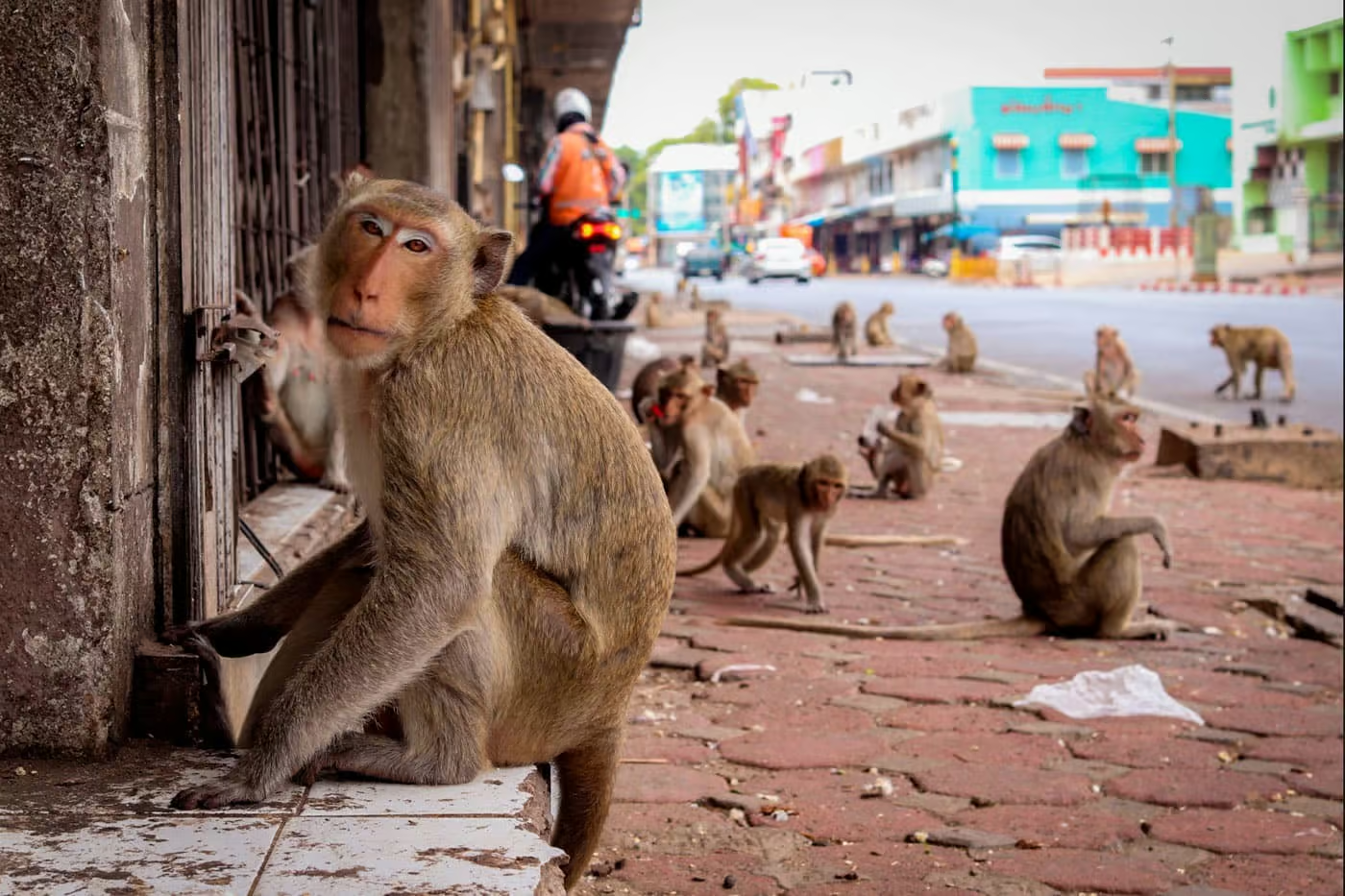
Monkey city — Khmer ruins overrun by hundreds of macaques.
- Region
- Central
- Population
- 745,000
- Area
- 6,200 km²
- Stories filed
- 1
About Lop Buri
History
Lop Buri is one of Thailand's oldest continuously inhabited cities, its roots in the Mon Dvaravati kingdom of the sixth century traceable in inscriptions and temple foundations. Under Khmer imperial rule it became a regional capital, leaving the three-prang Phra Prang Sam Yot at its heart — an eleventh-century Khmer laterite tower complex repurposed as a Buddhist shrine. Its most glamorous era came in the seventeenth century when King Narai made it his second capital, hosting French, Persian, and Japanese ambassadors in grand audience halls whose ruins still stand inside Phra Narai Ratchaniwet palace.
Landscape & geography
The terrain rises gently from the central plain toward the Phetchabun foothills in the east, with volcanic soils around Pattaya Noi producing sunflower fields that turn spectacular gold from November to January. Limestone outcrops break up the rice country and host small cave-temples; the Pa Sak River runs through the provincial lowlands.
Why visit
Phra Prang Sam Yot's resident long-tailed macaques are the headline attraction — hundreds of them, bold and camera-friendly, swarming the Khmer towers daily. King Narai's Palace complex houses an excellent provincial museum of Dvaravati and Lopburi-era sculpture. The November Monkey Banquet Festival, when the town lays out hundreds of kilograms of food for the monkeys in a formal ceremony, is a uniquely Thai spectacle. Combine with sunflower fields at Khao Chin Lae for a full Bangkok weekend loop.
Stories from Lop Buri
Articles, reviews, and itineraries tagged to this province.