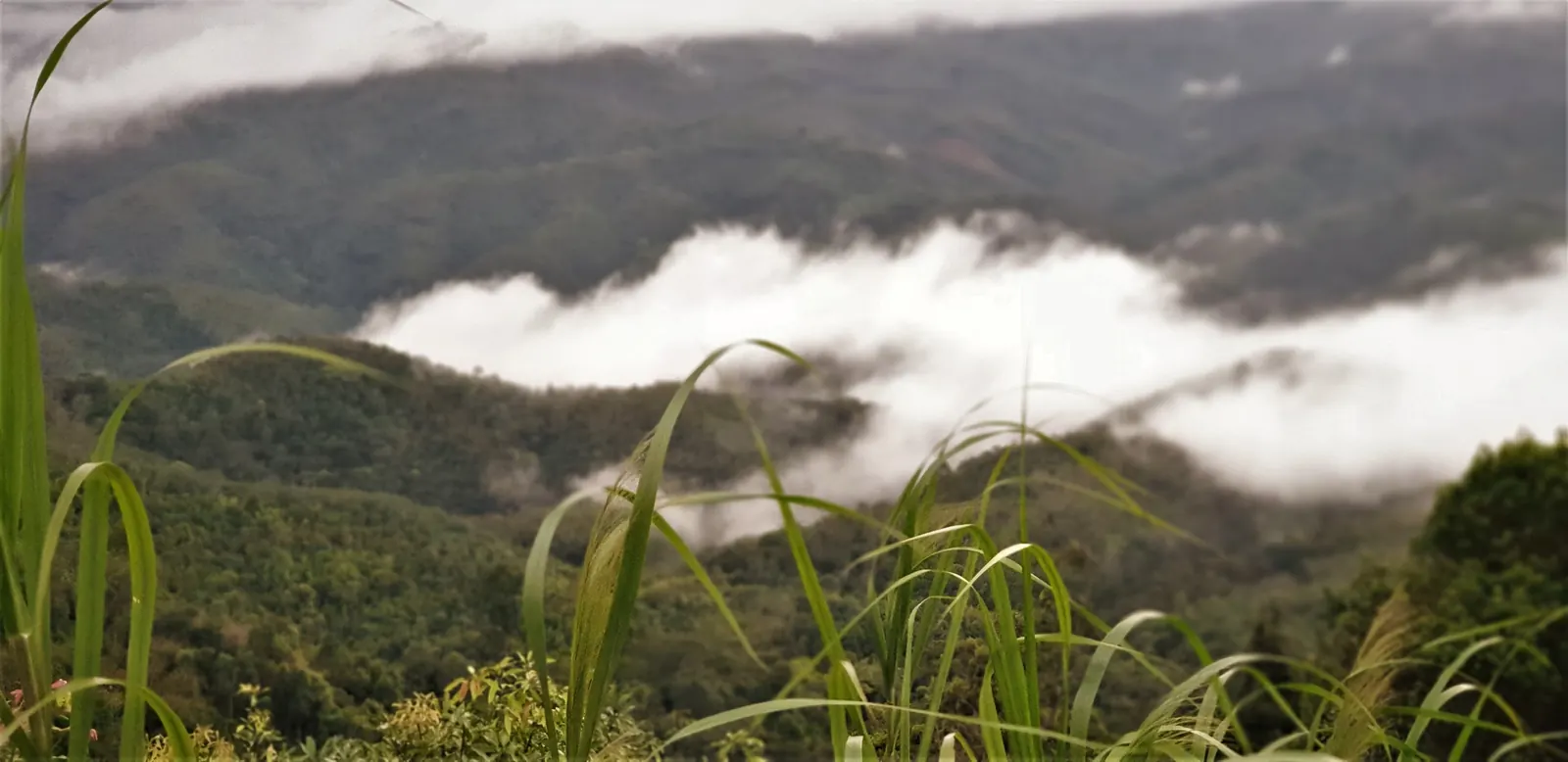
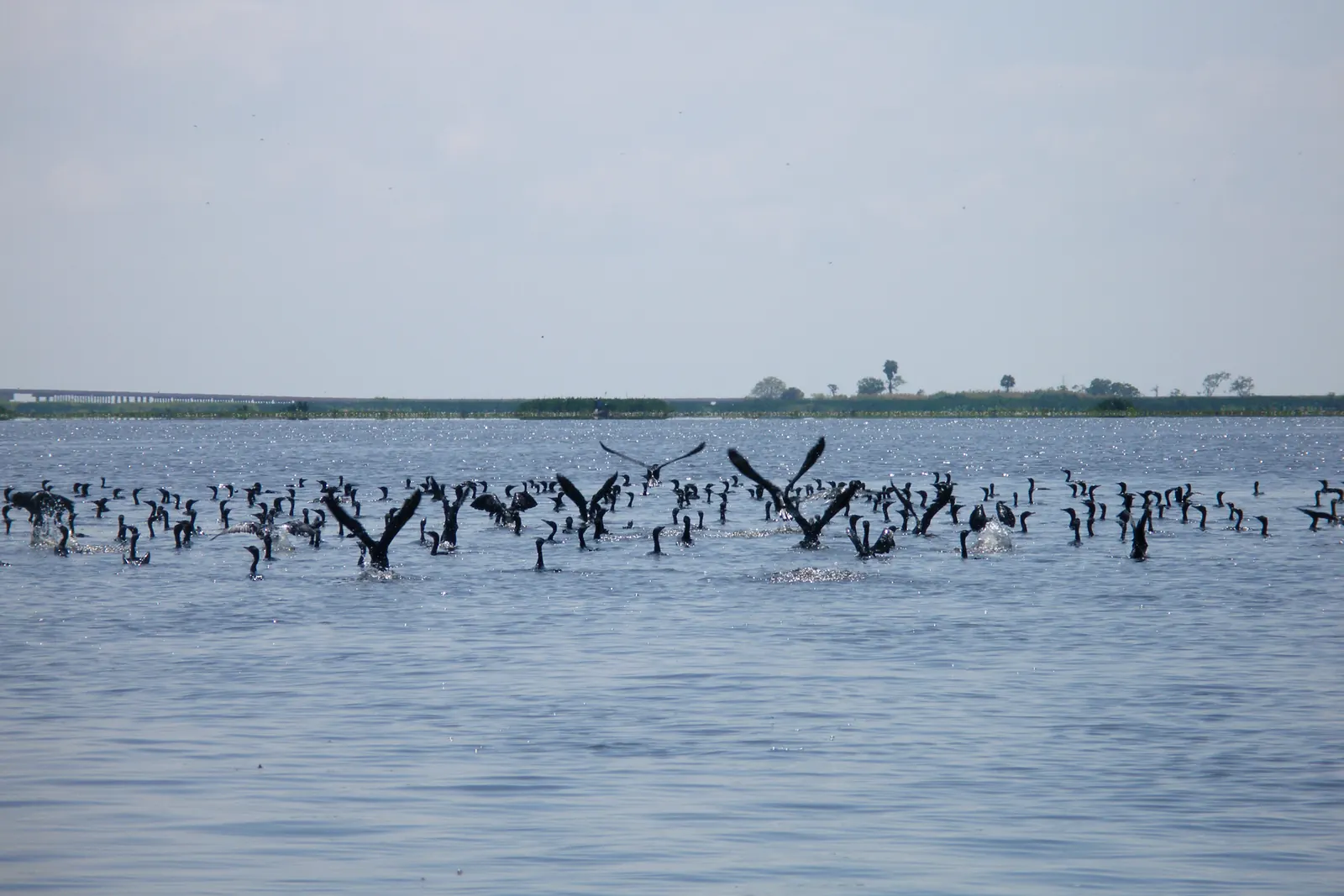
The Red Lotus Sea is one of the few Thai postcards that is not lying to you. For roughly ten weeks a year, from about mid-December to the end of February, Nong Han Kumphawapi, a shallow lake 45 km south of Udon Thani city, turns pink across something like 12,000 rai of water, and you putter through it in a longtail at dawn while the flowers open around the boat. Locals call it Talay Bua Daeng. The catch is timing: the flowers close by late morning, the season moves every year, and arrive at 11am in March and you have paid ฿500 to look at leaves.
This page is the timing, the boats, the piers and the honest caveats, with the money in baht. The province at a glance is on the Udon Thani province page; the costs we quote are cross-checked against our Thailand Price Index. A pedantic note before the purists write in: the “lotus” is a water lily, bua sai in Thai, which is why it floats flat and opens and shuts with the sun. Nobody at the pier cares, and neither, after the first five minutes, will you.
When does the Red Lotus Sea bloom? The 2026–27 season, month by month
The official season is declared each year by TAT’s Udon Thani office once the flowers are thick enough to sell, and it is not a fixed date. Last season, 2025–26, opened on 17 December 2025, a little later than expected; the pier association reported the beds at Ban Diam about a quarter open that day and dense from around 20 December, with the season running into March. For 2026–27 nothing has been announced as of November 2026. Plan on a mid-December opening, check TAT Udon’s Facebook page in the first week of December, and treat anything before that as reconnaissance.
| Month | What the lake looks like | Crowds | Verdict |
|---|---|---|---|
| November | Patchy; leaves and early buds, the odd pink cluster | Light | Skip unless you are passing anyway |
| Mid–late December | Ban Diam side filling in; good by Christmas most years | Heavy over New Year | Fine; do it on a weekday |
| January | Peak: the beds spread south towards Don Khong and Chae Lae | Heavy at weekends, manageable midweek | Do it: the best month |
| February | Still good early in the month, thinning by the end | Chinese New Year spike | Do it in the first half |
| March | Sparse; the season limps on officially | Light | Skip unless it is your only window |
| April–October | Green lake, no flowers to speak of | None | Skip |
The best single fortnight, most years, is the second half of January: the cold-season mornings are at their crispest, the New Year crowds have gone home and the beds are at their widest. For the national picture, see best time to visit Thailand and our month guides for December, January and February.

Why you must be on the water before 10am
The flowers open with the first light and start closing as the sun climbs. By about 10am the show is fading; by 11am, when the boats stop running for the day at most piers, a lot of what you see is closed buds and lily pads. The boats generally run from around 6am to 11am. That is the whole logic of the trip: leave Udon city at 5am, be at the pier before 6.30am, and be in the middle of the lake at sunrise, when there is mist on the water, the light is low and orange, and the egrets have not yet given up on you.
Two more reasons to go early. It is genuinely cold on the water in January, often 13–17°C at dawn with wind chill on a moving boat, so bring a fleece; the vendors at Ban Diam sell knitted hats to the unprepared. And the light at 9am is flat and white, which is why every photograph you have seen of this place was taken at 7am. Cloudy mornings happen; a grey dawn still beats a sunny noon.
Red Lotus Sea boat prices and which pier to use
There is no entry fee. You pay for the boat, per boat, not per person, and in 2025–26 the pier association held prices unchanged at every pier: ฿300 for a small longtail (two passengers, roughly an hour) and ฿500 for a larger boat (around six passengers, roughly an hour and a half, sometimes a few more squeezed in). Expect the same in 2026–27, as of November 2026, but confirm at the ticket table. A couple wants the small boat; a family of five should take the big one and stop doing maths. Some boatmen stop at a floating sala in the middle of the lake for photographs; tipping ฿50–100 for a boatman who finds you the good beds is decent behaviour, not an obligation.
| Pier | Where | Best for | Verdict |
|---|---|---|---|
| Ban Diam (Tha Ruea Ban Diam) | Chiang Haeo subdistrict, Kumphawapi; the main pier | December and early season; the most boats, parking and food stalls | Do it: the default, and the new pier is finished |
| Ban Chiang Haeo | Next door to Ban Diam, Kumphawapi | Same beds, new pier and shelter due December 2026 | Fine; check it is open |
| Don Khong | Um Chan, Prachaksinlapakhom district, south side | January, when the beds spread south; far fewer people | Do it in January |
| Chae Lae | Kumphawapi, south side | January–February | Fine |
Last season Ban Diam ran around 80 large boats and 15 small ones, Don Khong 37 and Chae Lae 35, and the Non Nam Yoi pier did not open at all. The Marine Department has spent ฿19.3 million on new piers and shelters at Don Khong and Ban Chiang Haeo, due to finish in December 2026, after the lake drew around 120,000 visitors in 2025. Life jackets are provided on the bigger boats; put one on, the lake is shallow but the water is cold and the boats are low. If you would rather someone else handled the 5am pick-up, the boat and the timing, compare Red Lotus Sea morning tours on GetYourGuide; check that the boat is included.

How to get to the Red Lotus Sea from Udon Thani city
The lake is about 45 km from the city, around 50 minutes by car: south on Highway 2 towards Kumphawapi, left at around kilometre 26 towards Prachaksinlapakhom, then about 18 km on a quiet road to Ban Diam. The problem is the hour. Public transport does not run to a pier at 5.30am, so the realistic options are these.
- Hire car: around ฿900–1,500 a day from the airport desks. Do it if you can drive in Thailand; it also gets you to Ban Chiang the same day.
- Car and driver, half day: around ฿1,200–1,800 for the return trip with waiting, booked through your hotel the night before. Do it: the default for most people.
- Grab: works to the lake at around ฿500–700 one way; the problem is getting one back from a rural pier at 9am. Fine only if you arrange the driver to wait.
- Bus to Kumphawapi, then a songthaew: cheap, around ฿40–60 for the bus, but the first services will not land you at the pier for sunrise. Skip unless you are sleeping in Kumphawapi.
Getting to Udon itself is easy. Flights from Bangkok take about 70 minutes, around ฿1,000–2,500 one way on the low-cost carriers out of Don Mueang (our Don Mueang guide has the airport end), and the sleeper train and the overnight bus each take nine to ten hours; compare Bangkok to Udon Thani on 12Go. From Khon Kaen it is two hours by bus or van (Khon Kaen to Udon Thani), and Chiang Mai has direct flights (Chiang Mai to Udon Thani). Book the flight the moment you know your dates in January: Udon is also hosting a five-month horticultural expo this season, and that changes the arithmetic.
Where to stay for the Red Lotus Sea: Udon city or the lake?
Most people should sleep in Udon city: better food, more hotels, and the 50-minute drive at 5am is empty road. Nobody comps us, and the rates below are typical asking prices, not quotes. At the top, Centara Udon, next to the Central mall, is the safe business-hotel choice, from around ฿1,800–2,800; VELA Dhi Udon Thani is the newer, design-led alternative at a similar price. Mid-range, Prajaktra Design Hotel and The Pannarai Hotel sit around ฿1,000–1,800, and B2 Udon Premier is the clean, no-surprises budget option from around ฿600–900. Ask any of them to book your driver; they all do it.
Sleeping by the lake makes sense for one type of person: the photographer who wants the first boat and no alarm before 5.30am. Nana Resort Kumphawapi is the option listed in Kumphawapi itself, around ฿600–1,200; expect a small-town resort, not a lakeside lodge, and confirm the driving time to Ban Diam before you book. For everything else, compare dates on Agoda’s Udon Thani page; New Year and Chinese New Year weekends fill early, more so with the expo in town.
Combine it with Ban Chiang and the Udon horticultural expo
The lake is done by 9am, which leaves you a day. The obvious pairing is Ban Chiang, the UNESCO-listed Bronze Age site about 50 km east of Udon city, in Nong Han district (not to be confused with the Nong Han lake you have just been on; Isaan reuses names freely). The national museum holds the red-swirled painted pottery that made the site famous and an excavation pit left open under a roof, burials in situ. Foreigners pay ฿200, Thais ฿30, as of November 2026; it is closed on Mondays and some sources also say Tuesdays, so check before you drive. Allow two hours. Verdict: do it; it is the most interesting museum in Isaan and you will have it largely to yourself.
The other pairing is new. The Udon Thani International Horticultural Expo runs from 1 November 2026 to 14 March 2027 at Nong Dae wetland on the city’s edge, open 08:00–20:00, with day tickets from ฿199. It covers the whole lotus season, and the sensible day is lake at dawn, lunch and a nap, expo from 3pm when the heat goes out of it. Verdict: fine, especially if you have children who have had enough of boats; but it is a big garden show, and on weekends it is busy. In the evening, Udon’s food is the reason to stay a second night: the grilled meat and som tam on the Isaan food page, at Isaan prices, around ฿60–150 a plate. Morning people can run off breakfast round Nong Prajak (best parks for running in Udon).

The honest caveats: haze, dry years, weekends and the photo filters
The season moves. Water level decides the bloom. After a wet year with high water, or a dry one, the beds open late, thinner or in different parts of the lake; 2025–26 started a few days behind schedule. The pier association’s estimate of 12,000 rai in flower is an estimate. Nobody can tell you in November what mid-January will look like, so book refundable.
The haze. Isaan’s cane and stubble burning starts in the dry season, and by February some mornings come up milky rather than gold. It is nothing like Chiang Mai in March, but it flattens the light; another argument for January.
The crowds. On New Year weekend and Chinese New Year the Ban Diam car park fills before sunrise, the boat queue runs to half an hour and the lake has a traffic problem. Midweek in January you will share it with a few dozen boats on a very large lake. Pick the weekday and use Don Khong if Ban Diam looks like a festival.
The pictures. Half of what you have seen online is turned up to eleven, and TAT itself was mocked online for an AI-edited advert of Lisa at the lake. In real life the pink is softer and the flowers come in patches between green stretches, not wall to wall. It is still lovely. Just adjust your expectations from Instagram to reality before 5am, not after.
Is the Red Lotus Sea worth the trip? The verdict
Mid-January, weekday, first boat: do it. It is one of the best ฿300 mornings in Thailand, and paired with Ban Chiang it justifies a flight to Udon on its own. Late December or early February: do it, with the caveat that the beds may be thinner. New Year weekend: fine, if you accept a queue. March, or any visit that starts after 9am: skip it. If you are doing a longer Isaan loop, the lake fits neatly before the Mekong: Nong Khai and Sala Keoku are an hour north, and the Mekong road from Loei to Ubon, Chiang Khan and Three Whale Rock in Bueng Kan are the natural next steps (Udon Thani to Nong Khai on 12Go). The cool-season festival dates that affect hotel prices are on our festivals and public holidays calendar.
Red Lotus Sea: your questions, answered
When is the best time to see the Red Lotus Sea in Udon Thani?
From late December to mid-February, with January the most reliable month. The season is declared each year by TAT’s Udon Thani office; in 2025–26 it opened on 17 December and ran into March, though by then the flowers were sparse. Go on a weekday, be on the water between 6am and 9am, and check the official opening announcement in early December before booking.
How much does a boat on the Red Lotus Sea cost?
You pay per boat, not per person, and there is no entry fee. In the 2025–26 season every pier charged ฿300 for a small longtail carrying two people, about an hour, and ฿500 for a larger boat carrying around six, about an hour and a half. Prices were unchanged from previous years; confirm them at the pier for 2026–27, and tip the boatman if he finds you the good beds.
What time do the red lotus flowers close?
They open at first light and begin closing as the sun gets high, so by about 10am the display is fading and by 11am, when most boats stop for the day, many flowers are shut. The best window is roughly 6.30am to 8.30am. From Udon Thani city that means leaving at about 5am, which is why most people book a car and driver the night before.
How do I get to the Red Lotus Sea without a car?
Book a car and driver through your Udon hotel, around ฿1,200–1,800 for the return trip with waiting time, or join a morning tour that includes the boat. Grab will take you there for roughly ฿500–700, but finding a ride back from a rural pier is hard, so arrange for the driver to wait. Buses to Kumphawapi exist but do not arrive in time for sunrise.
Can I visit the Red Lotus Sea and Ban Chiang in one day?
Yes, and it is the best way to use the day. Do the lake from sunrise until about 9am, have breakfast in Kumphawapi, then drive to Ban Chiang in Nong Han district, roughly an hour and a quarter away. The national museum charges foreigners ฿200 and is closed on Mondays, so check opening days first. You will be back in Udon city by mid-afternoon.
Related guides
- Isaan Food: Som Tam, Larb, Gai Yang and the Fire That Follows
- Sala Keoku: The Surrealist Sculpture Park on the Mekong at Nong Khai
- Thailand in January 2027: Peak Weather, Peak Prices — Worth It?
Book the trip
Some links in this guide are affiliate links. If you book through them we may earn a small commission at no extra cost to you — it helps keep Destination Thailand independent.
Hotels: compare Udon Thani hotels on Agoda, book refundable for a January weekday, and ask the Centara Udon, Prajaktra or Pannarai picks above to line up a 5am driver. Tours/Boats: Red Lotus Sea morning tours on GetYourGuide bundle the pick-up and the boat; Ban Chiang day trips cover the afternoon. Getting there: Bangkok to Udon Thani on 12Go compares the 70-minute flight, the sleeper train and the overnight bus; our BKK vs DMK guide sorts out which airport you leave from. Not sure Isaan is your Thailand this winter? The Where to Go in Thailand matcher scores all 77 provinces against your month, budget and crowd tolerance.