Sakon Nakhon receives approximately none of Thailand’s thirty-odd million annual visitors, and this is one of the great injustices of modern tourism. Here is a province with Isaan’s biggest natural lake, a chedi that has anchored pilgrimages for centuries, a mountain range that hid Thailand’s wartime resistance movement, and an indigo-dyeing tradition so good the fashion world quietly buys it up. And the crowds? There are no crowds. There is you, the monks, and about a million people getting on with their lives.
This is deep Isaan, roughly 650 kilometres northeast of Bangkok, wedged between Udon Thani and the Mekong at Nakhon Phanom. The dry statistics live on our Sakon Nakhon province profile; what follows is the honest version of what to do with them.
Fair warning: if your idea of Thailand involves beach clubs and a man selling you a bucket of Sangsom, Sakon Nakhon will bore you rigid. If you want the country as it exists when nobody is performing for a camera, this is about as pure a dose as you can get.
What Sakon Nakhon really is
Three things at once. First, a farming province that happens to produce the finest natural indigo-dyed cotton in Thailand — kram, a dye tradition with official GI protection and a supply line that runs from village fermentation pots to Bangkok fashion houses and foreign buyers. Second, a religious heartland: Ajahn Mun Bhuridatta, the father of the Thai forest monastic tradition, died here in 1949, and his museum at Wat Pa Sutthawat still pulls Thai pilgrims by the busload. Third, an unexpectedly layered corner of the country, with Vietnamese families who settled here during the independence struggle against the French, and Thailand’s largest Catholic community out at Tha Rae on the lake’s north shore.
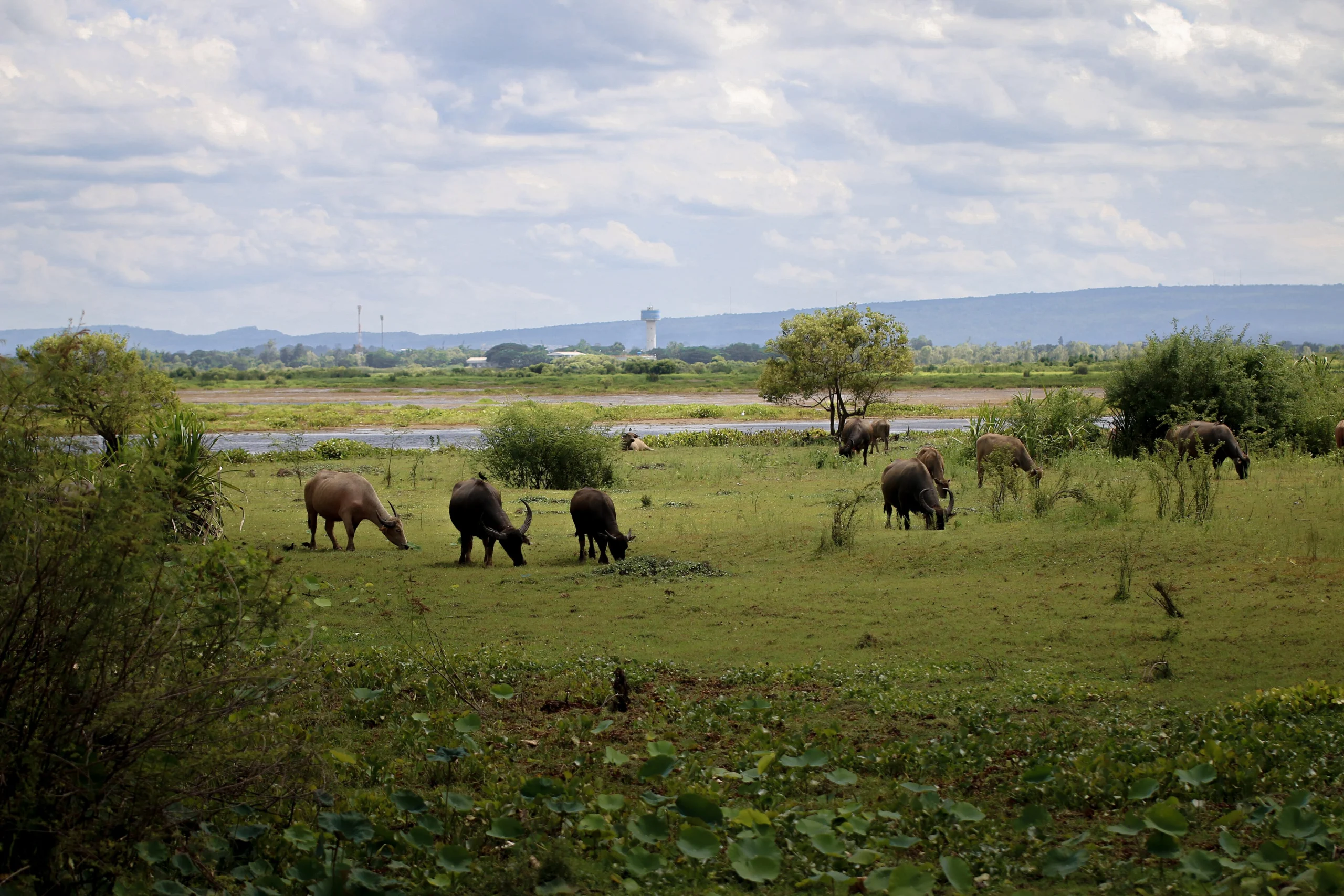
The city itself sits flat against Nong Han lake: low-rise, unhurried, and closed by 9.30pm. That is not a flaw. That is the product.
Why go to Sakon Nakhon
Because it does a handful of things better than anywhere else in Thailand. Nowhere dyes cloth like this. No lake in Isaan comes close to Nong Han’s scale or its naga mythology. Few provinces can offer a royal palace, a resistance-movement cave and dinosaur footprints in a single mountain range. And almost nowhere serves Vietnamese-Isaan food this good at these prices — you can eat extremely well here for ฿150 a day and sleep decently for ฿500. The catch is that you have to make your own fun. There is no tour desk. Good.
Getting to Sakon Nakhon
Flying is the sensible move. Thai AirAsia and Nok Air run daily flights from Bangkok Don Mueang to Sakon Nakhon airport, about 70 minutes in the air, and booked a couple of weeks out you will pay somewhere in the ฿900-1,800 range one way. The airport is a short ride from the centre — expect ฿150-200 in a taxi or hotel shuttle.
The bus is the budget route: 9-11 hours from Mo Chit, ฿500-800 depending on how many degrees of recline you buy, with overnight departures that land you in town at dawn. There is no railway. The nearest station is Udon Thani, about 160 kilometres west, and from there it is a three-hour bus or van for ฿120-180 — a perfectly good routing if you like trains.
Coming along the Mekong, vans from Nakhon Phanom take about 90 minutes and cost under ฿100.
For live timetables and tickets on these routes, compare your options on 12Go before you commit to a departure time.
Where to stay
Stay in the city centre, within walking distance of Wat Phra That Choeng Chum and the night market — everything worth doing on foot happens in that grid. A clean fan guesthouse runs ฿350-500, air-con business hotels sit around ฿700-1,200, and the smartest lakeside hotel in town will still cost less than a mediocre Sukhumvit room.
The interesting alternative is a homestay in one of the indigo-weaving villages west of town, where ฿400-600 typically gets you a mattress, mosquito net, two home-cooked meals and a morning standing over a dye pot. Book through the village weaving groups rather than expecting to rock up unannounced.
What to eat in Sakon Nakhon
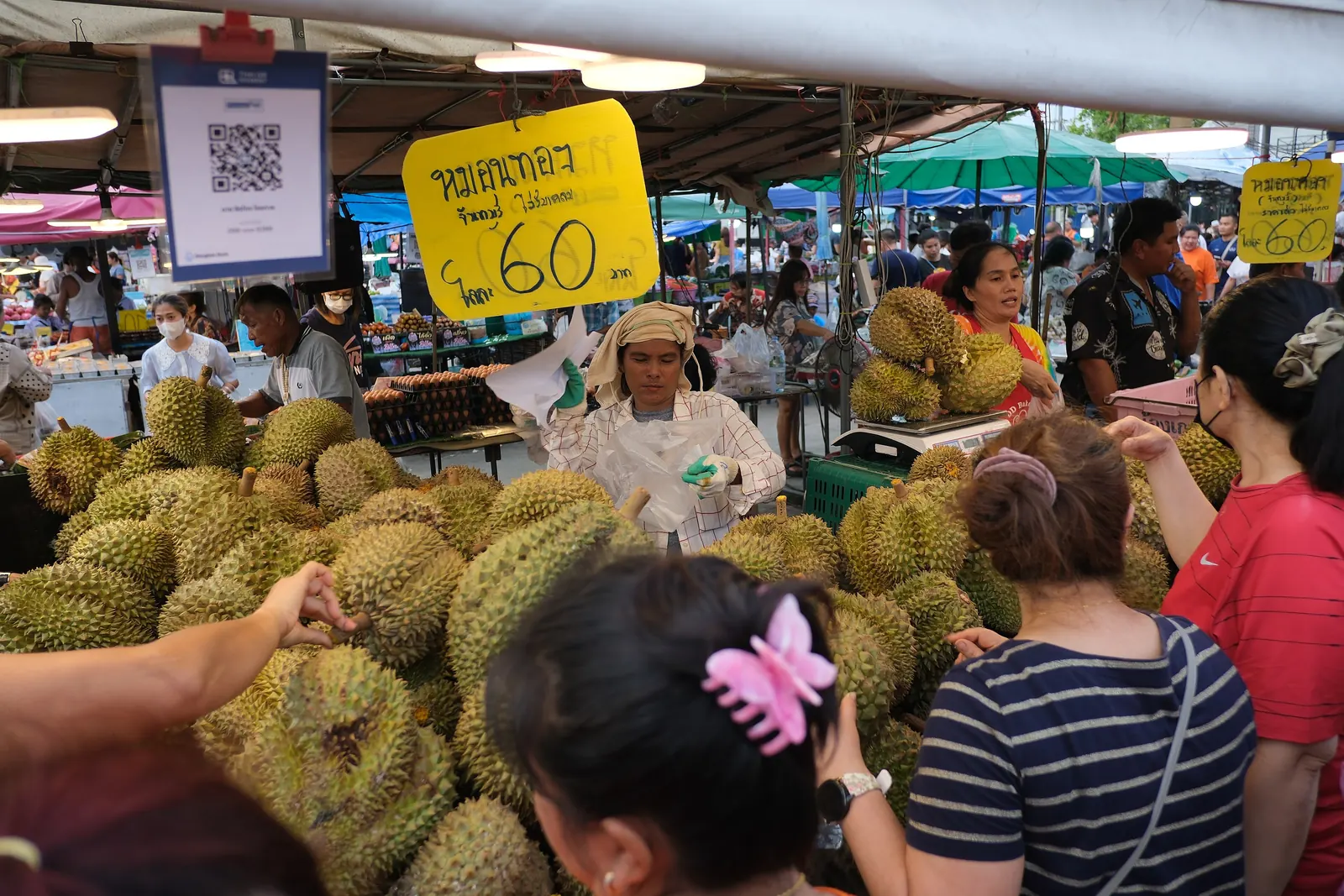
This is one of the best eating provinces in Isaan, and the reason is history: the Vietnamese who settled here brought their kitchen with them. The signature product is moo yor, a Vietnamese-style steamed pork sausage that Thais buy by the boxload as gifts — you will see it stacked in every market, from about ฿50 a roll. Breakfast is khao piak sen, soft rice noodles in a peppery pork broth, ฿40-50 a bowl, and you will find naem neuang — grilled pork balls you wrap yourself in rice paper with a fistful of herbs — done properly here.
Then there is the Isaan canon: som tam, larb, charcoal chicken and sticky rice, ฿60-80 for a serious plateful. Nong Han supplies the fish — whole tilapia or snakehead crusted in salt and grilled over coals, ฿100-150 at the lakeside places near the public park. The night market by Ming Mueang field is the easiest single answer for dinner; the morning market near the main temple is the answer for everything else.
Top things to do in Sakon Nakhon
1. Wat Phra That Choeng Chum
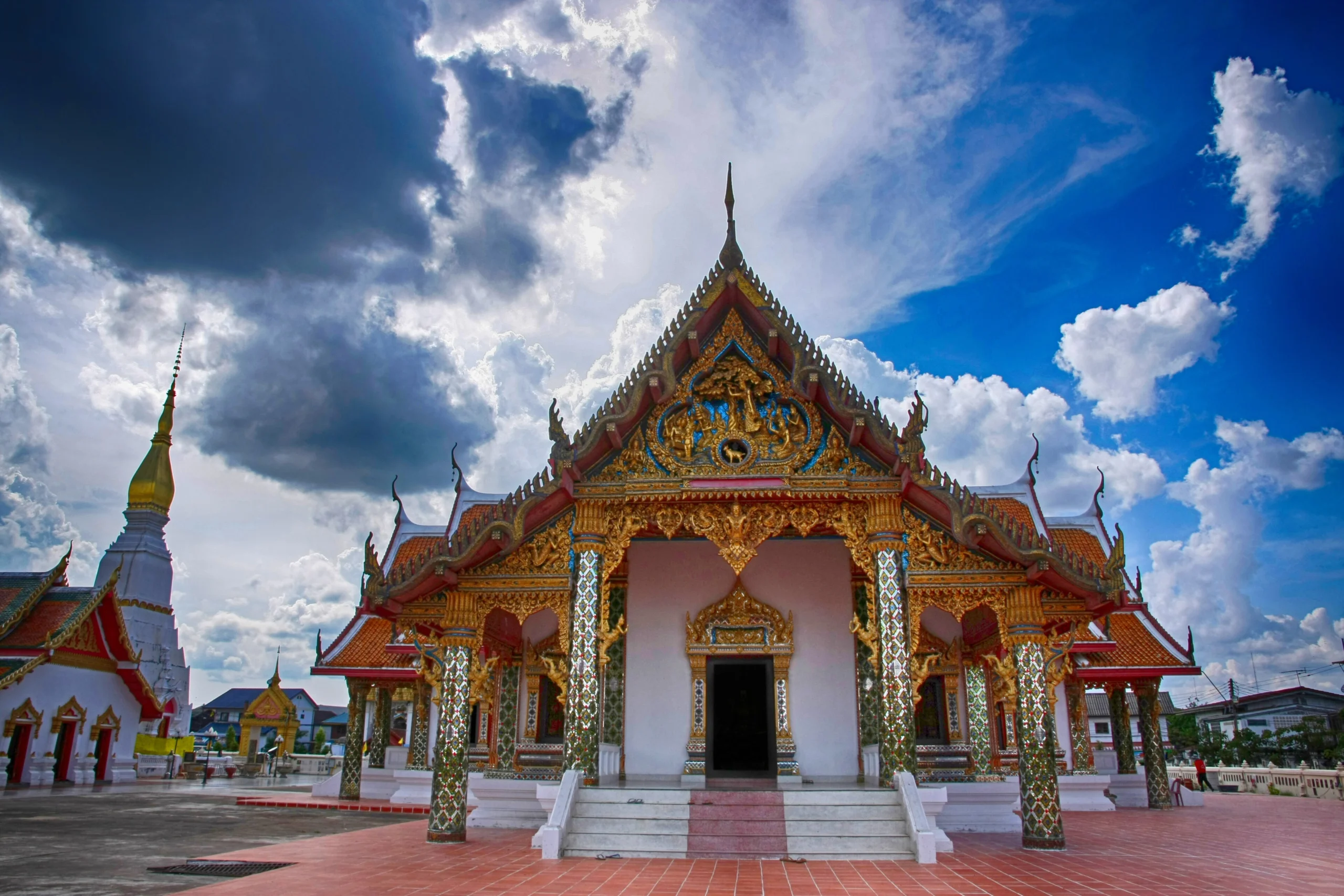
The spiritual anchor of the province: a white Lan Xang-style chedi built over an older Khmer prang, right in the middle of town and a short walk from the lake. It is a working pilgrimage site rather than a photo stop, which means it is busy with actual worshippers at dawn and dusk, and free to enter. Go early, watch the alms round, and notice how much better a temple feels when you are the only foreigner in it.
2. The kram indigo villages
Sakon Nakhon’s indigo is the real thing — a GI-protected natural dye, fermented in clay pots and worked by hand, and the reason buyers from the fashion trade make the trip out here. Villages such as Ban Non Riang run workshops where you can dye your own cotton and watch the whole process from leaf to cloth. A hand-dyed scarf runs a few hundred baht; proper woven lengths cost more and are worth every satang. This is the best craft souvenir in Isaan, and it funds actual village livelihoods rather than a factory in the suburbs.
3. Nong Han lake
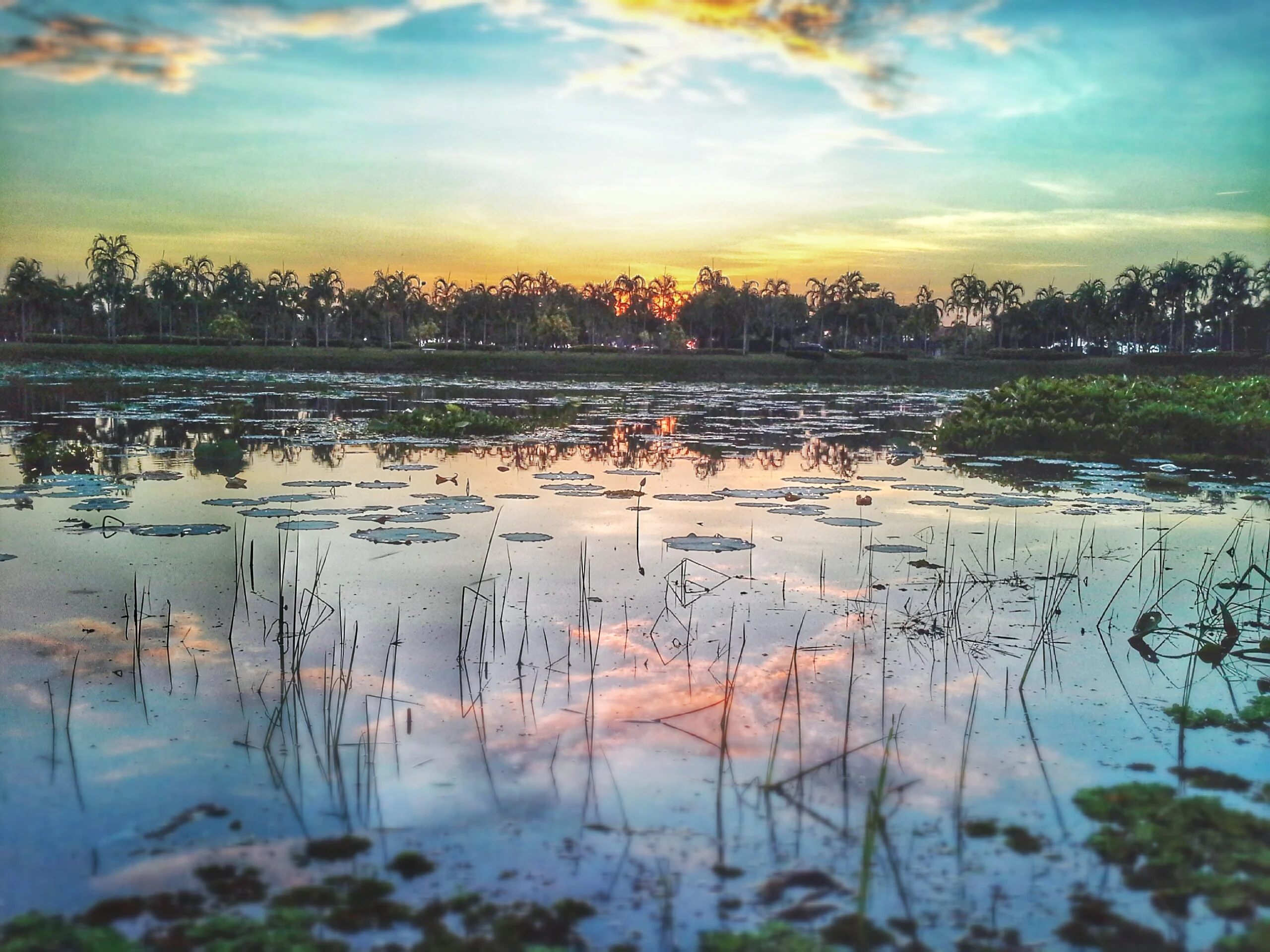
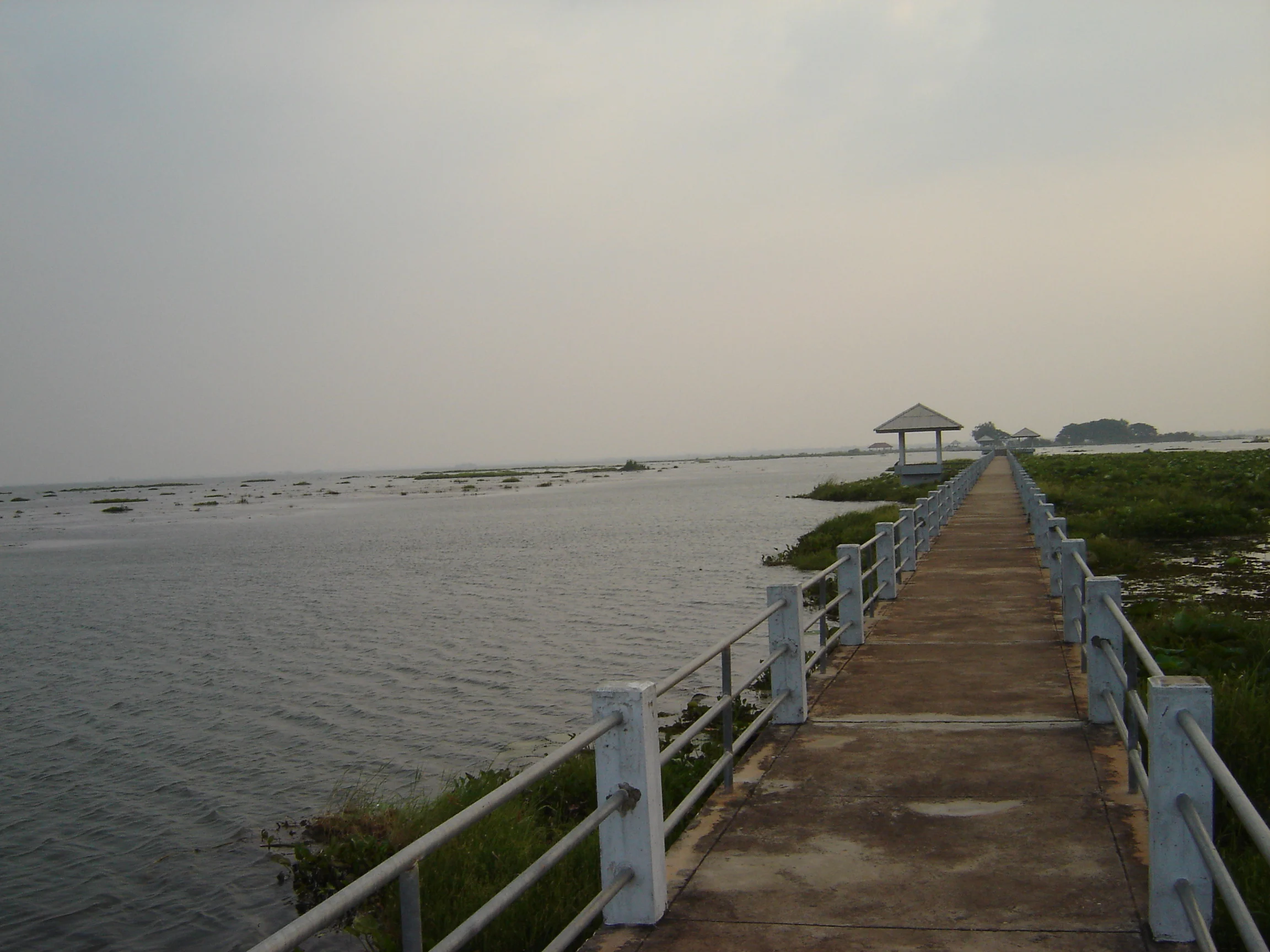
Isaan’s biggest natural lake, and the province’s mythological engine. Local legend says a drowned city lies beneath it, flooded by a vengeful naga king — a story people here take seriously enough that the serpent motif is on everything from lamp posts to temple gates. Practically: walk or cycle the lakeside park at sunset, and hire a boat from the shore for a few hundred baht to putter out among the islands. It is a shallow, moody, enormous body of water and the light on it at 6pm is absurdly good.
4. The Phu Phan mountains
The forested range south of the city is where Sakon Nakhon keeps its secrets. Phu Phan National Park hides Tham Seri Thai, the cave where the Free Thai resistance stashed weapons and supplies during the Second World War, plus waterfalls, viewpoints and a slab of rock bearing dinosaur footprints. The same hills hold Phu Phan Ratchaniwet Palace and the royal agricultural study centre, a working showcase of the late King Bhumibol’s development projects. You will want your own wheels; the twisting road over the range towards Kalasin is a genuinely great drive.
5. The Wax Castle Festival
If you can time your visit for Ok Phansa — the end of Buddhist Lent, usually October — do it. Sakon Nakhon’s Wax Castle Festival is one of Isaan’s best events: intricate miniature temples sculpted from beeswax, paraded through town before being offered to the monasteries, with long-boat racing on Nong Han alongside. It is spectacular, entirely local, and mercifully free of the commercial gloss that has flattened bigger Thai festivals. Dates shift with the lunar calendar, so check before booking.
6. Tha Rae and the Vietnamese-Catholic quarter
On the north shore of the lake sits Tha Rae, home to Thailand’s largest Catholic community — descendants of Vietnamese migrants who crossed the Mekong generations ago. The result is a village of church spires in rice-field Isaan, a cathedral, and in December a Christmas Star Parade: thousands of illuminated stars carried through the streets. Even outside December it is a worthwhile half-day for the architecture and the food.
What to skip
Koi pla — the raw fermented-fish salad that locals will offer you with great warmth. Decline it. This region of Isaan has some of the highest rates of bile-duct cancer on earth, caused by a liver fluke that lives in raw freshwater fish from these very waters, and public-health teams have spent years begging people to cook the stuff. The grilled fish two stalls down is delicious and will not require a hospital. This is not squeamish farang nonsense.
Also, adjust your expectations on nightlife: there is a night market, a handful of beer gardens, and then there is bed.
Sakon Nakhon travel: practical info
Come between November and February, when Isaan is dry and the nights up in Phu Phan actually get cold. October means the Wax Castle Festival and green landscapes; March to May is a 40-degree punishment with no sea to jump into. Two days covers the town, temple and lake; three lets you do the indigo villages and the Phu Phan range properly.
Wikipedia’s Sakon Nakhon entry covers the history.
Their feature on Sakon Nakhon as Isaan’s low-key destination is a decent second read.
TAT’s official Sakon Nakhon page has festival dates — including the Wax Castle.
Getting around: songthaews and motorbike taxis in town, a rented scooter for ฿200-300 a day, or a hire car if you are heading into the mountains. Onward travel is easy — 90 minutes to Nakhon Phanom and the Mekong, three hours to Udon Thani’s trains and flights, and reasonable bus links north to Bueng Kan and southwest to Kalasin.
FAQ
Is Sakon Nakhon worth visiting?
Yes, provided you want culture, craft and food rather than resorts. It offers Thailand’s best indigo textiles, Isaan’s biggest lake and a superb festival, with almost no other foreign tourists. If you need organised activities and nightlife, choose elsewhere.
How do you get to Sakon Nakhon from Bangkok?
Fly from Don Mueang in about 70 minutes with Thai AirAsia or Nok Air, typically ฿900-1,800 one way. Buses from Mo Chit take 9-11 hours and cost ฿500-800. There is no train line; the nearest railhead is Udon Thani, three hours away by bus.
What is Sakon Nakhon famous for?
GI-protected kram indigo fabric, Wat Phra That Choeng Chum, Nong Han lake, the Wax Castle Festival and its lineage of forest-tradition monks, most famously Ajahn Mun. It is also known across Thailand for moo yor pork sausage.
When is the Wax Castle Festival in Sakon Nakhon?
At Ok Phansa, the end of Buddhist Lent, which usually falls in October. The date moves with the lunar calendar each year, so check the current year’s schedule before you book flights. Expect wax castle processions and long-boat races on Nong Han.
How many days do you need in Sakon Nakhon?
Two days is enough for the temple, the lake and the food. Add a third for the indigo villages and Phu Phan National Park, and a fourth if you want Tha Rae as well.
Related guides
- Sala Keoku: Nong Khai’s concrete sculpture park
- Things to do in Kalasin
- Amnat Charoen: Thailand’s least-visited province