Northeastern · Thailand
Kalasin · กาฬสินธุ์
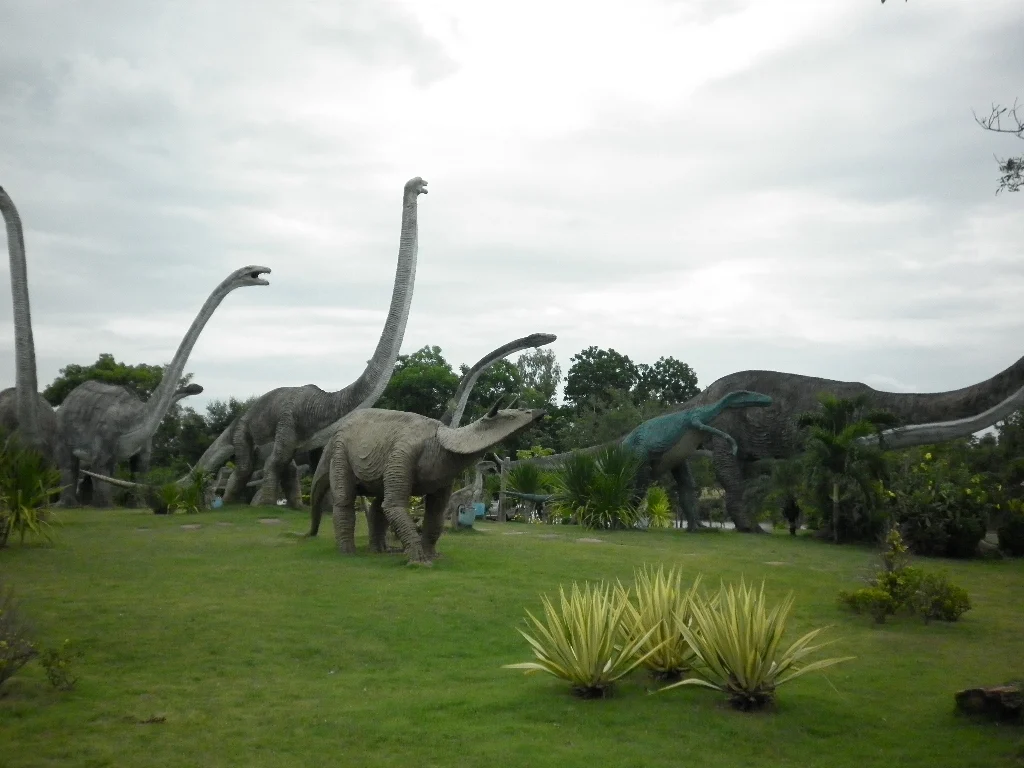
Phu Kum Khao dinosaur museum — Thailand's richest fossil site.
- Region
- Northeastern
- Population
- 982,000
- Area
- 6,947 km²
- Stories filed
- 1
About Kalasin
History
Kalasin — \"black river\" — was settled in the late eighteenth century by Phu Thai migrants from the Mekong's north bank, a community whose distinctive indigo-dyed textiles remain the province's most exportable craft. The Sirindhorn Dinosaur Museum at Sahatsakhan is a research-grade institution built around one of Thailand's richest fossil sites — the non-avian dinosaur Siamosaurus suteethorni was first identified from specimens found here — making the province unexpectedly significant in Asian palaeontology.
Landscape & geography
Rice plain in the south, rising into the Phu Phan range in the north, where broadleaf forests shelter cave temples and forest monasteries. The Lam Pao reservoir and its irrigation canals feed the central farming districts with regulated Mun-basin water through the dry season. Kalasin town sits on the Pam river in the agricultural centre; rolling hills and forest patches to the north give way to flat paddy country in all other directions, broken only by scattered Khmer laterite outcrops in the south.
Why visit
The Sirindhorn Dinosaur Museum at Sahatsakhan — with its full-scale fossil site and mounted sauropod skeletons — is a family highlight and one of Asia's better regional natural-history institutions. Phu Phan national park's forested roads are cool, green, and almost empty; the park's cave monasteries and forest trails reward unhurried exploration. The Phu Thai weaving villages in the Ban Phon area welcome visitors to watch the indigo-dyeing and mat-mi weaving process, and cloth sells directly from the workshop floor at well below Bangkok retail prices. A good off-the-trail overnight between Khon Kaen and Sakon Nakhon.
Stories from Kalasin
Articles, reviews, and itineraries tagged to this province.