Northeastern · Thailand
Surin · สุรินทร์
November elephant round-up, Khmer ruins, silk villages.
- Region
- Northeastern
- Population
- 1,377,000
- Area
- 8,124 km²
- Stories filed
- 1
About Surin
History
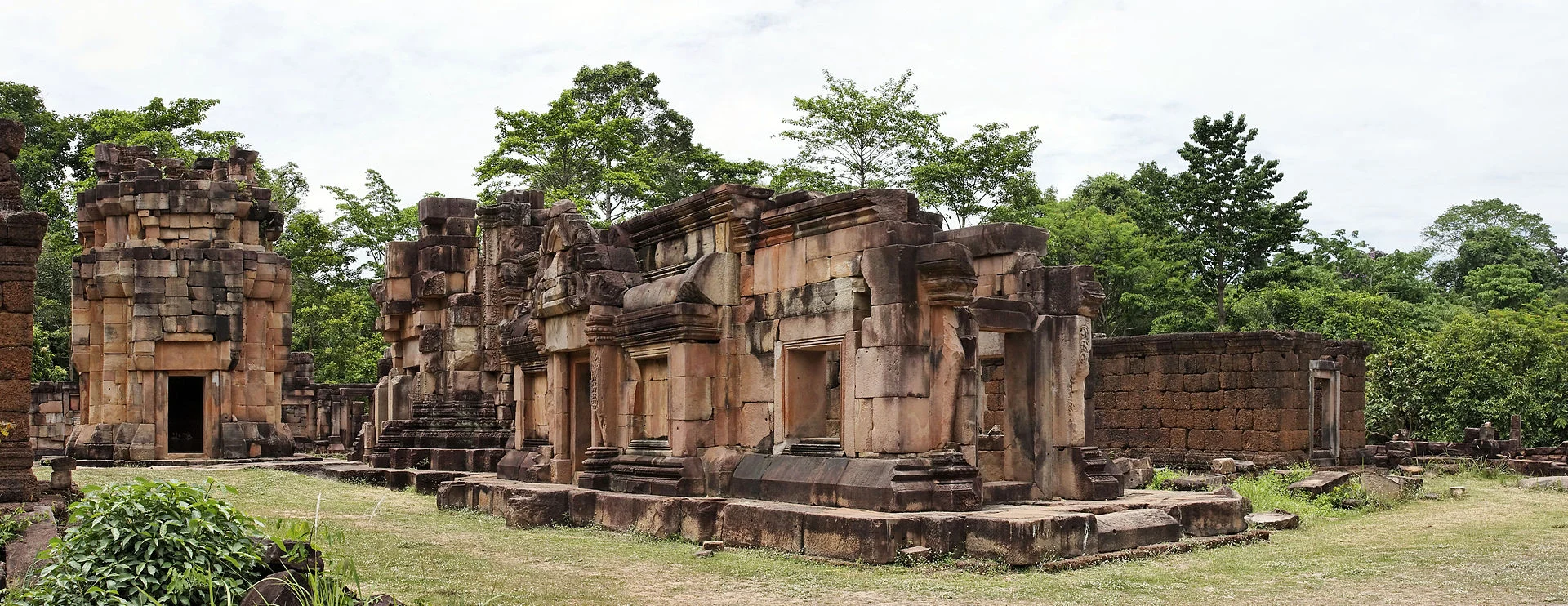
Surin's identity is inseparable from the Kuy people — also called the Suai — who migrated from the Cardamom ranges of Cambodia into the Dongrek foothills over many centuries and became Thailand's master elephant-keepers. The relationship between the Kuy and their elephants is ritual as well as economic: young men traditionally underwent a rite of passage by capturing a wild elephant from the forest alone, and animals were maintained in village herds rather than commercial camps. The annual Elephant Round-Up, established as a formal event in 1960, grew from this living tradition; its parade of costumed elephants through Surin town is one of the largest animal spectacles in Asia. Khmer-era ruins along the Cambodian border trace the old Royal Road that linked Angkor with its western territories.
Landscape & geography
The province is a wide rice plain interrupted by scattered Khmer baray — ancient reservoirs built to irrigate and ceremonially anchor the empire's administrative towns — rising gradually toward the Dongrek mountain range along the Cambodian border. The Mun and Chi rivers drain the northwest, their floodplains broad and seasonally inundated. The southern uplands are drier and more forested, dotted with laterite and sandstone outcrops where Khmer quarries are still visible beside temple ruins. The provincial capital is compact and walkable, with a covered market and a night market centred on the city pillar shrine.
Why visit
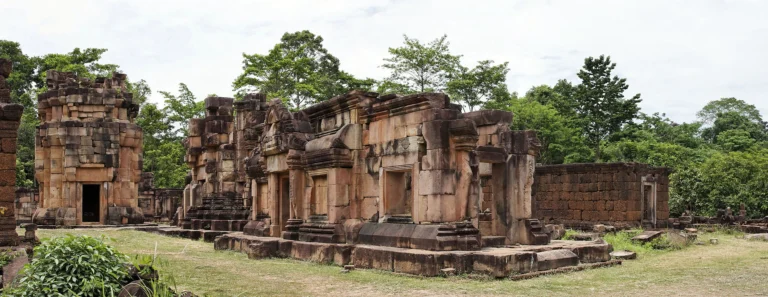
The Elephant Round-Up in November is a full-scale spectacle — hundreds of elephants, mahout families in traditional dress, re-enacted historical battles — but Ban Ta Klang, 58 kilometres north of the city, is the more authentic experience: the elephant-keeping village of the Kuy opens to visitors year-round, and the relationship between mahouts and their animals is visible at close quarters without the theatre. Prasat Sikhoraphum — a twelfth-century Khmer sanctuary with five prangs reflected in a lotus-filled moat — is one of the most photogenic ruins in the region. Surin silk, woven in the narrow-warp style using natural dyes, is sold in village workshops and at the weekly Sunday market.
Stories from Surin
Articles, reviews, and itineraries tagged to this province.