Betong is the final full stop at the bottom of Thailand — a mountain town pushed so far into Malaysia that on the map it looks like a cartographer’s error. It hangs off the end of Yala province down two and a half hours of Route 410 switchbacks, and it is the only place in the country where you can stand on a glass floor before sunrise and watch a genuine sea of fog pour through the valleys under your feet.
Most Western travellers have never heard of Betong. Malaysians certainly have — they cross the border in their thousands every weekend for the chicken, the hot springs and the cool air, which is why the town centre carries more Chinese signage than most of Bangkok. This is a shophouse town of dim sum breakfasts, halal kitchens, communist-era tunnels and geothermal water, minding its own business at the end of a very long road.
It is also in the deep south, so we will deal with the travel advisories properly and early, not in a mumbled footnote. For the wider province, start with our Yala province profile; this guide is about the town at the very end of it.
What Betong really is
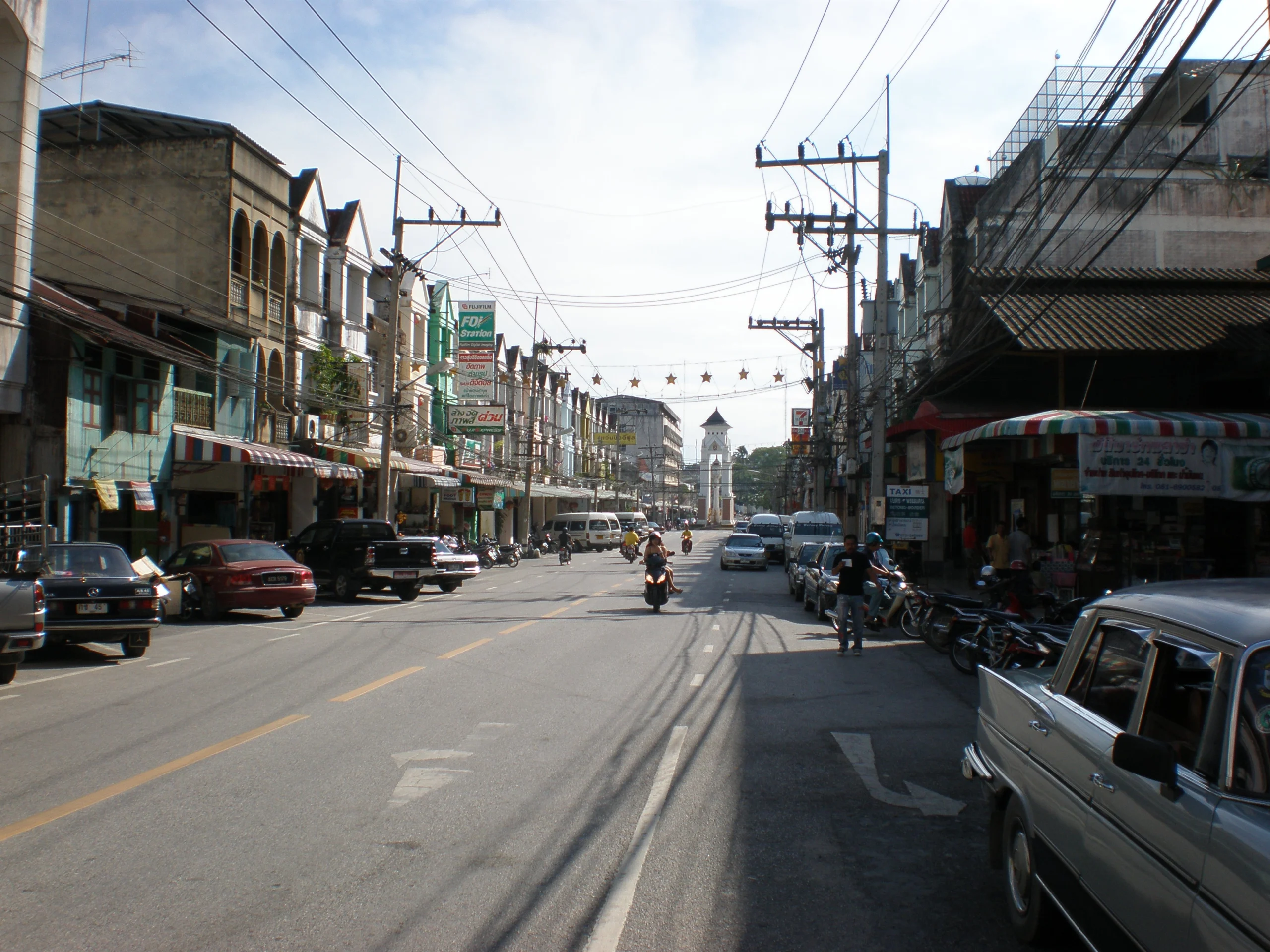
The name comes from the Malay word for bamboo, and the town’s story is written in three scripts on every street: Thai, Chinese and Jawi. Much of the Chinese community traces its roots to Guangxi, which is why breakfast involves steam baskets rather than rice porridge, whilst the surrounding districts are Malay Muslim — so the food scene splits into superb halal kitchens and equally superb pork-laden shophouse restaurants, often on the same street.
Physically, Betong sits in a bowl of green hills high enough that early mornings require a jumper, ringed on three sides by the Malaysian state of Perak. It feels more like small-town Malaysia than small-town Thailand, and that is a compliment to both.
Is Betong safe? Straight talk on the deep south
Facts first. Since 2004, an insurgency in Thailand’s three southernmost provinces — Yala, Pattani and Narathiwat — has killed thousands of people. Several Western governments, the UK’s FCDO among them, advise against all but essential travel here. That has a hard practical edge: most standard travel insurance is void in a province your government tells you to avoid — read the smallprint before you book, because only specialist insurers cover the deep south.
Now the other half of the truth. The violence has overwhelmingly targeted security forces and state infrastructure, not visitors, and it has never targeted Betong’s tourist trade. Betong is the region’s clear outlier: heavily visited, mostly by Malaysians, checkpointed along Route 410, and deliberately staking its future on tourism. Travel in daylight, avoid rural back roads at night, keep half an eye on the news — thousands follow that playbook every week without incident. None of this trivialises a conflict local people live with daily, but confusing rural Pattani with Betong’s morning dim sum queue helps nobody.
Why go to Betong
One of Thailand’s great dawn spectacles. A food culture that took chicken seriously enough to name a breed after the town. A communist guerrilla headquarters you can walk through, and the particular pleasure of reaching a corner of Thailand no one else in your hostel has seen. Betong rewards the effort of getting there — fortunate, because effort is exactly what it takes.
Getting to Betong
There is no easy way in, which is half the point.
- Via Hat Yai — the sensible route. Fly Bangkok to Hat Yai (about 1 hour 25 minutes, ฿1,000-2,500 on the low-cost carriers), then a minivan from the bus terminal: roughly four and a half hours, around ฿300.
- Betong’s own airport. A handsome timber terminal opened in 2022, but commercial service has been on-again, off-again ever since. Check whether anything is actually flying before you build a plan around it.
- By train. The sleeper from Bangkok to Yala is a 17-hour-plus haul — expect around ฿1,000 for a second-class air-con berth — then a minivan down Route 410: nearly three hours of proper switchbacks for a couple of hundred baht.
- From Malaysia. The border checkpoint sits just outside town, opposite Pengkalan Hulu in Perak; Penang is about three hours’ drive. This is how most visitors arrive.
Where to stay
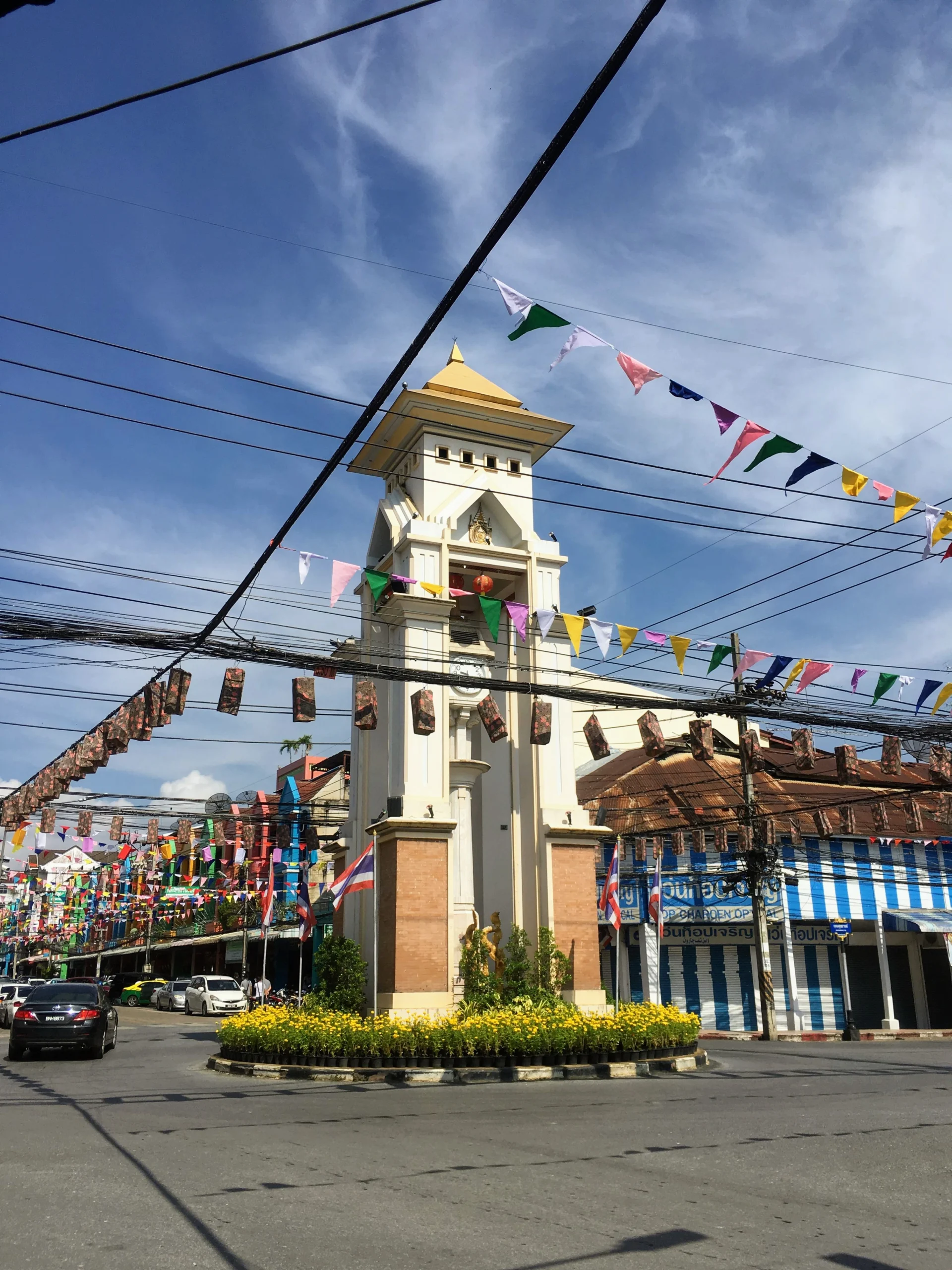
Stay in the centre near the clock tower, where everything worth eating is a ten-minute walk. A clean guesthouse room runs ฿400-800; the bigger hotels catering to Malaysian weekenders sit around ฿1,000-1,800 and are worth it mainly for quieter rooms off the street. Book ahead on Malaysian public holidays, when the town genuinely fills up.
If the fog is the priority — it should be — take a simple ฿600-1,000 homestay around Aiyerweng village, and the 5am journey to the skywalk becomes five minutes instead of forty.
What to eat in Betong
Come hungry.
- Betong chicken. A local breed with firmer, more flavourful meat, typically steamed and dressed with ginger and light soy. A plate over rice runs ฿80-120 at the shophouse places; a half bird for the table costs more and is worth every baht.
- Phak nam — Betong watercress. Grown in cold running spring water and stir-fried with garlic. Sounds dull, tastes remarkable: crisp, sweet, faintly peppery. Expect ฿60-100 a plate.
- Dim sum at dawn. The Guangxi inheritance. Shophouses around the centre start steaming before sunrise; baskets run ฿20-40, and the correct order is far too many of them, with Chinese tea, before the skywalk run.
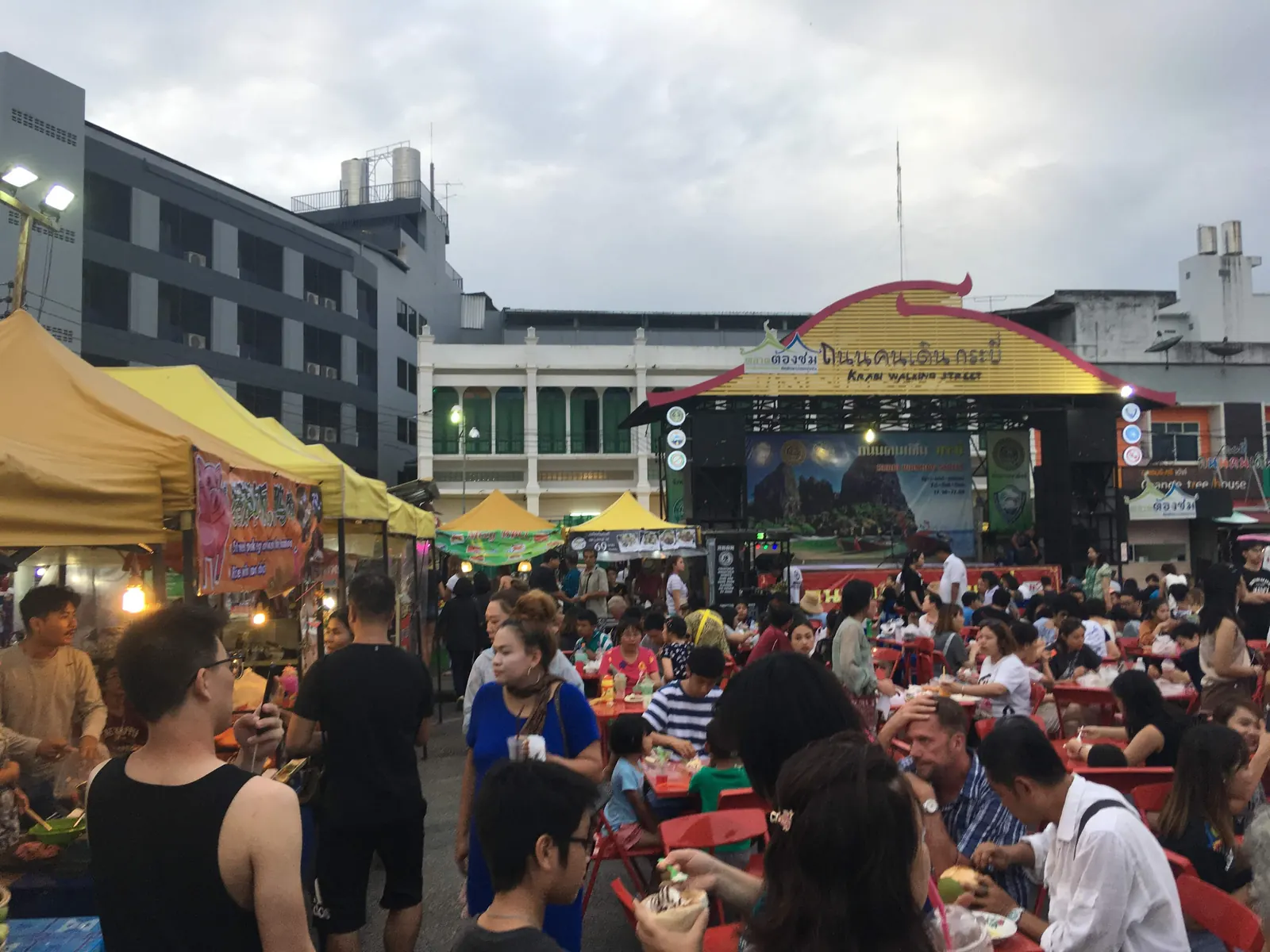
- The halal side. Roti and southern curries from the Muslim-run kitchens, and grilled everything at the night market, where dinner is comfortably under ฿150. This is the real deep-south article, fermented fish sauce and all.
Top things to do in Betong
1. Aiyerweng Skywalk at dawn
The headline act. A steel walkway with a glass-floored deck juts off a ridge above Aiyerweng — the marker gives the elevation as a weirdly precise 2,038 feet — and on cool-season mornings an actual sea of fog fills the valleys below, glowing orange as the sun climbs. You shuffle out over the void in fabric shoe covers, having paid a small fee of a few tens of baht, and feel the glass flex, which is character-building. Be on site by 5.30-6.00am; the fog usually burns off by eight.
2. Piyamit Tunnels
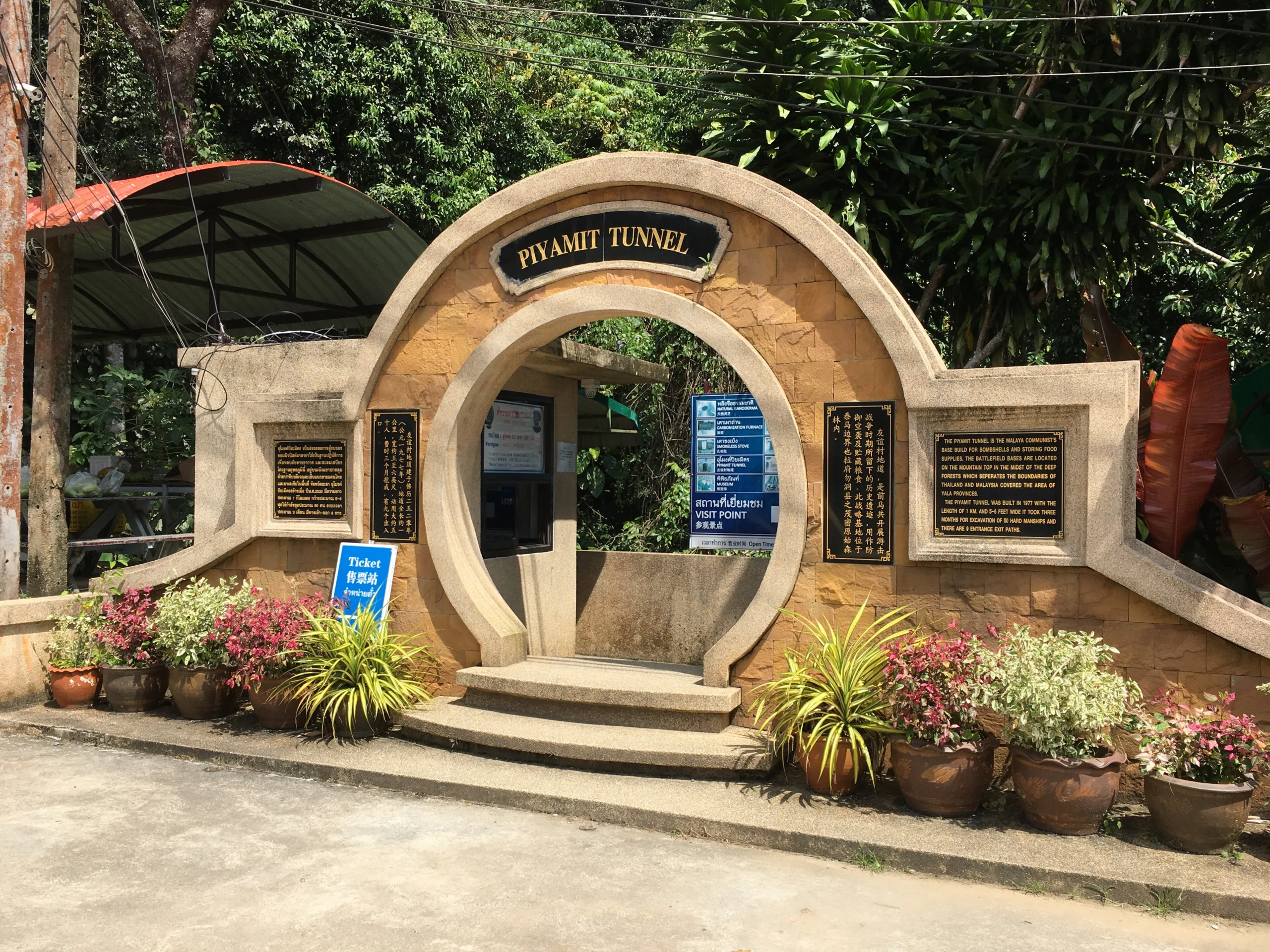
In the mid-1970s the Communist Party of Malaya dug roughly a kilometre of passages into a jungle hillside: dormitories, kitchens, a radio room, multiple escape exits. After the 1989 peace accord the fighters came out of the forest, stayed, and turned their headquarters into a museum. Cold War history you can walk through, cool and dripping, with a properly enormous rainforest tree on the trail in. Entry is about ฿50; go in the morning.
3. The Winter Flower Garden
In the same high country as the tunnels, Piyamit’s cool climate lets locals grow hydrangeas and temperate blooms that have no business surviving in Thailand. In the cool season the terraces are in full colour and full of delighted Malaysian tour groups. Pair it with the tunnels for a half-day; entry is cheap.
4. Betong Hot Springs
About five kilometres from the centre, the springs emerge hot enough to boil eggs — vendors sell baskets of them for precisely that purpose, and ten minutes in the hottest pool does the job. Soaking your feet in the cooler channels costs next to nothing. Go in the evening, when the air is cold enough to make the steam theatrical.
5. The town’s collection of superlatives
Betong hoards small records like a magpie. The giant mailbox near the clock tower dates from 1924 and still takes post; an even bigger modern replica stands at the edge of town. Add the OK Betong sign, the southernmost-point marker, murals across the shophouse walls, and a municipal name sign locals will cheerfully tell you is the longest of its kind in the country. None of it is essential; all of it is likeable on an unhurried afternoon walk.
6. Cross into Malaysia, because you can
The Pengkalan Hulu checkpoint is minutes from town, and popping into Perak for lunch is a legitimate Betong pastime. Most Western passports enter Malaysia visa-free. Check your Thai re-entry position first, though — visa-exempt entries at land borders carry limits, and this is a bad place to discover them.
What to skip
The skywalk at midday. Every day, coachloads arrive at 11am, pay for their shoe covers, shuffle onto the glass and gaze down at a warm grey haze, some treetops and a phone mast. The sea of fog is a dawn phenomenon in the cool season; it is not on tap. If you cannot face a 5am start, save your money and admire the structure from the road. Likewise, do not build the trip around a flight into Betong airport that may not exist when you travel. Hat Yai and a minivan is boring, and it works.
Betong travel: practical info
Best season: November to February — coolest mornings, most reliable fog, flower garden in bloom. The rainy months still produce fog, but Route 410 gets greasy and the clouds sit on the road as often as under the skywalk. Two nights is the minimum; three is comfortable — one dawn for the fog, a day for the tunnels and garden, evenings for the springs and night market.
Wikipedia’s Yala entry covers the province’s layered history.
TAT’s official Yala province page is the place to check current conditions and events.
ATMs are plentiful, some businesses quietly take ringgit, and mobile signal is fine in town, patchy in the hills. Onward travel means retracing the road to Yala and Hat Yai, or crossing into Malaysia towards Penang — which, from Betong, is closer than any Thai city you would recognise.
FAQ
Is Betong safe to visit right now?
Betong sits in Yala province, covered by several governments’ advisories against all but essential travel. In practice it is the deep south’s most-visited town and the insurgency has never targeted its tourist trade. Travel the mountain road in daylight, skip rural roads at night, and make an informed call — with insurance sorted first.
How do you get from Hat Yai to Betong?
Minivans run from Hat Yai’s bus terminal through the day, taking about four and a half hours for around ฿300. Take a morning departure so you arrive in daylight. There is no direct train; the nearest railhead is Yala city.
When can you see the sea of fog at Aiyerweng?
Most reliably from November to February, at dawn — be on the skywalk by 5.30-6.00am. It is weather, not a light switch: even in peak season some mornings produce nothing. Two nights doubles your odds, and a homestay near Aiyerweng makes the early start painless.
What food is Betong famous for?
Betong chicken, steamed with ginger and soy; phak nam watercress grown in hill spring water; dawn dim sum; and halal southern cooking at the night market. Arguably the best small food town in the far south.
Will my travel insurance cover Yala province?
Probably not by default. Most standard policies exclude regions under a government advisory against all but essential travel, which currently includes Yala. Specialist insurers do cover the deep south — read the exclusions line by line before you commit, not after an accident.