Southern · Thailand
Songkhla · สงขลา
Hat Yai shopping, Samila beach mermaid, Ko Yo island textiles.
- Region
- Southern
- Population
- 1,430,000
- Area
- 7,394 km²
- Stories filed
- 1
About Songkhla
History
Songkhla was a Malay-Chinese trading sultanate — Singgora — that submitted to Ayutthayan authority in the seventeenth century while retaining considerable autonomy through its Na Songkhla governing family, whose descendants built the elegant two-storey mansions still lining the old town. The city of Hat Yai — a post-war commercial creation — became Thailand's third-largest city and the Malay peninsula's dominant shopping hub, attracting Malaysian and Singaporean weekenders with its night markets, seafood, and gold shops. Songkhla Lake, at 1,040 square kilometres, is the largest natural lake in Thailand.
Landscape & geography
A long Gulf coast on the east, the brackish Songkhla Lake stretching inland to the north, and a low coastal plain rising toward Malaysia in the south. The lake is brackish in its southern half and fresh in the north (Thale Noi); the transition zone supports Irrawaddy dolphins and a rich estuarine fishery. Koh Yo, a lake island connected by bridge, produces cotton fabric using traditional floor-loom weaving that is the province's signature textile.
Why visit
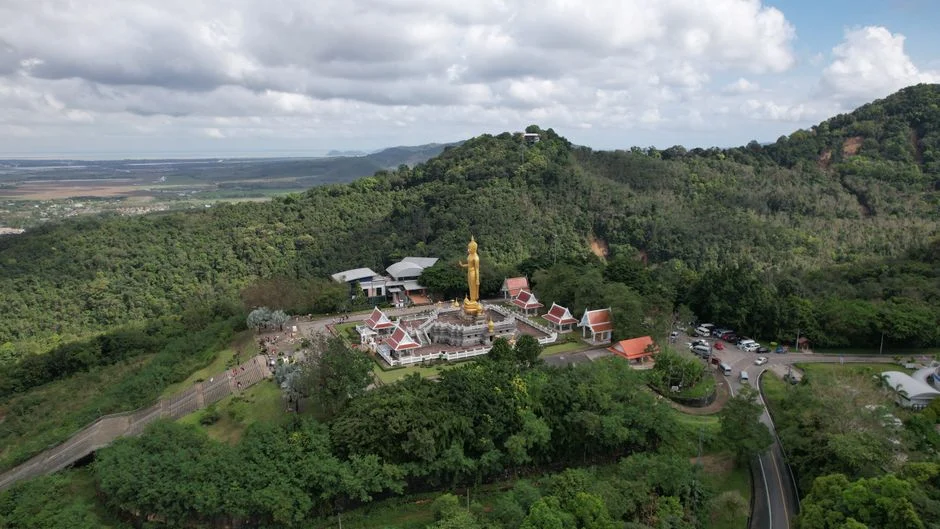
Songkhla Old Town's Sino-Portuguese shophouses and the golden mermaid statue on Samila Beach make a pleasant half-day walk; the Provincial Museum has a good collection of southern ceramics and shadow-puppet artefacts. Hat Yai is Thailand's best city for hawker food — the Sunday night market and the seafood restaurants on Niphat Uthit roads are the culinary draw. The southern border areas have had security advisories in recent years; check current guidance. Thale Noi waterbird sanctuary on the lake's northern shore has flamingos and jacanas visible at dawn from a longtail boat.
Stories from Songkhla
Articles, reviews, and itineraries tagged to this province.