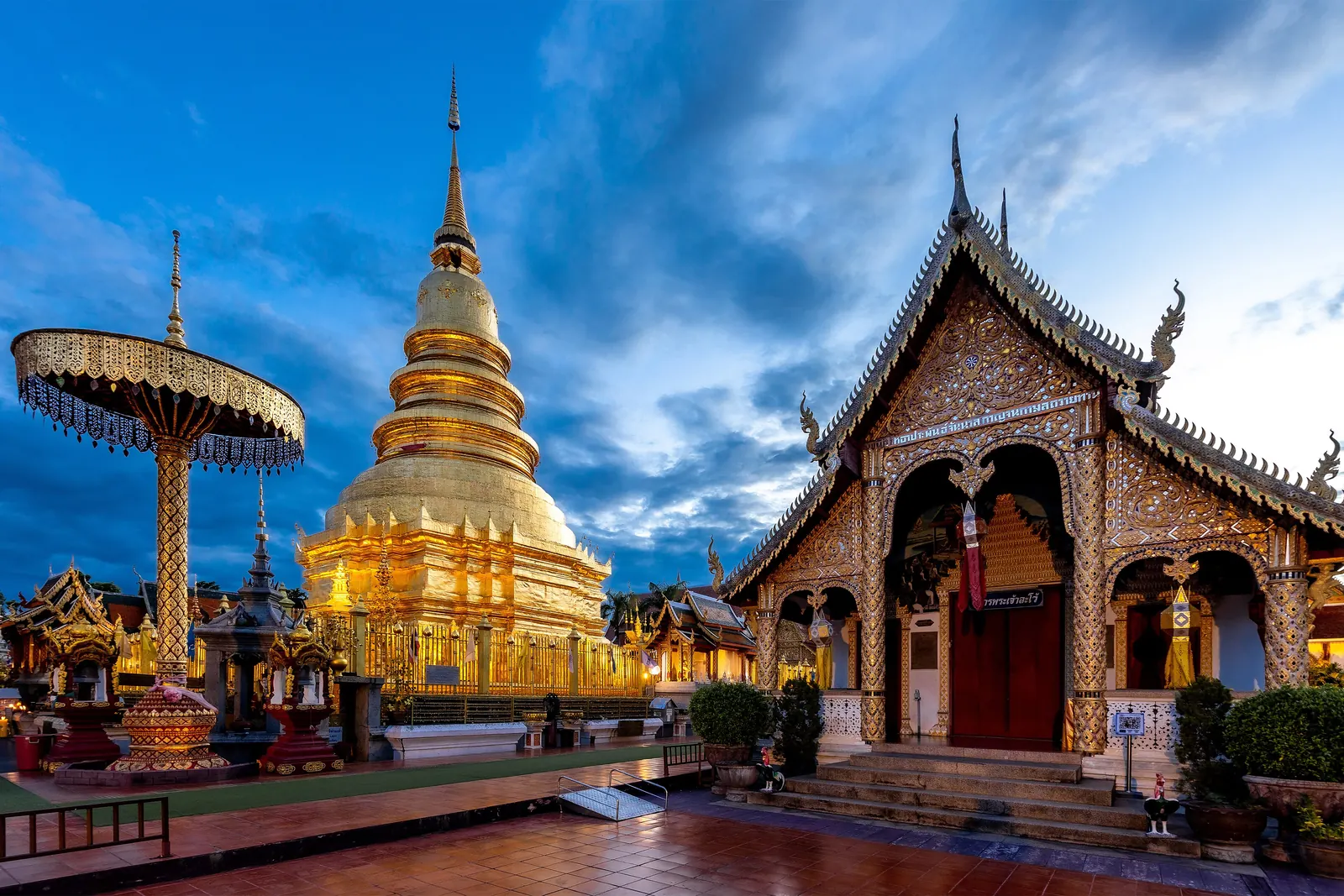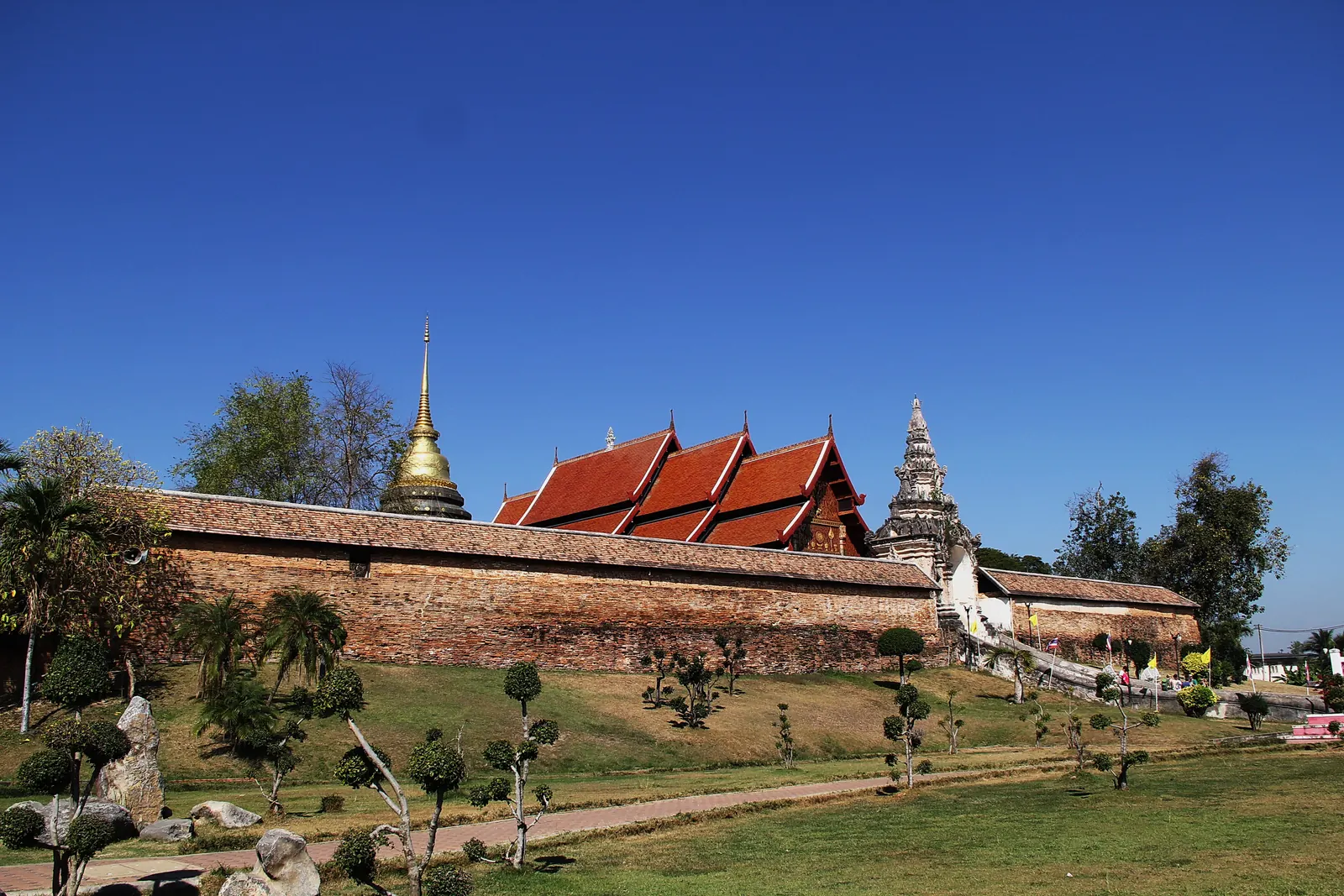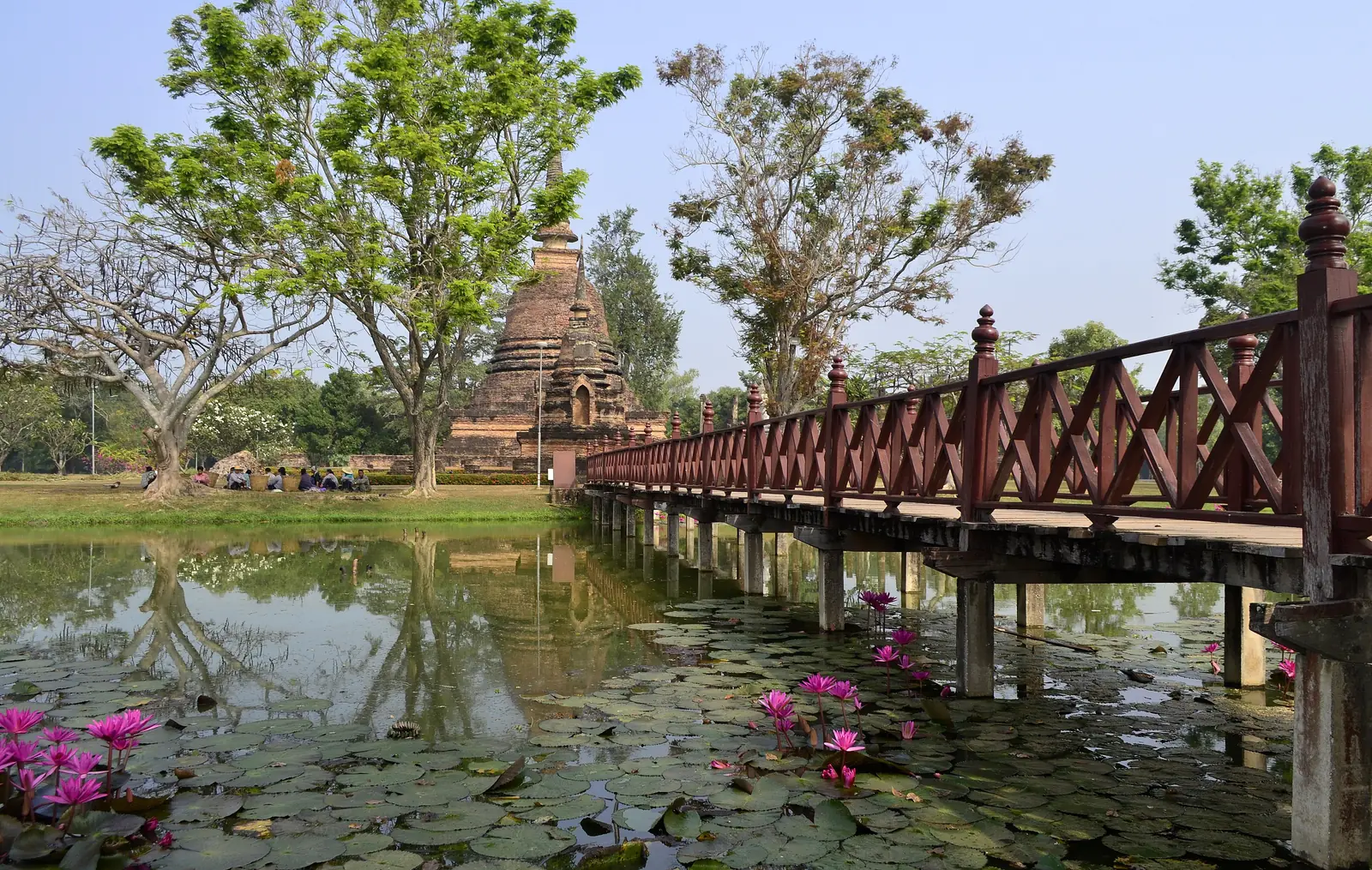
Thailand’s first capital comes in three pieces, and most visitors see only one. The UNESCO listing is called the Historic Town of Sukhothai and Associated Historic Towns, inscribed in 1991, and it covers Sukhothai, Si Satchanalai and Kamphaeng Phet as a single site. The tour buses go to Sukhothai, cycle round Wat Mahathat before lunch and leave. So the real question, Sukhothai vs Si Satchanalai vs Kamphaeng Phet, is less about which is best than about how much of the kingdom you have time for, and which of the other two earns the extra day.
This is a decision page, written by the desk, and nothing was comped. The short version: first-timers with one day do Sukhothai’s Central Zone and nothing else; anyone with two days adds Si Satchanalai, the better ruin in the better setting; and anyone who hates sharing a temple, or is driving between Bangkok and the north anyway, stops at Kamphaeng Phet, the one that gets roughly a tenth of Sukhothai’s foreign visitors. Sight-by-sight detail is in our things to do in Sukhothai and Kamphaeng Phet guide; the map is on the Sukhothai province page.
Sukhothai vs Si Satchanalai vs Kamphaeng Phet: the scorecard, ten rows, one winner each
Foreigner fees below are the Fine Arts Department’s published rates, which went up after a 2023 cabinet decision on historical-park pricing; plenty of blogs (and, until we fix them, two of our own older guides) still say ฿100. Everything else is as of November 2026, rounded, and checked against our Thailand Price Index. Distances are from New Sukhothai, where the bus station and most of the cheap beds are.
| Criterion | Sukhothai | Si Satchanalai | Kamphaeng Phet | Winner |
|---|---|---|---|---|
| Distance from New Sukhothai | 12 km to Old Sukhothai; ฿30–40 songthaew | About 55 km north on Highway 101; about an hour by bus | About 80 km south-west on Highway 101; 1–1.5 h | Sukhothai |
| Foreigner entry | ฿200 Central, ฿120 North, ฿120 West, plus ฿10 per bicycle per zone | ฿200 for the main walled zone | ฿200 per zone, walled city and Aranyik forest | Si Satchanalai |
| Hours | 06:30–19:30; Central Zone to 21:00 on Saturdays | 08:00–17:00 | 08:00–16:30 | Sukhothai |
| Getting round | Flat, paved, bike hire ฿30–50 a day | Bikes and an electric tram at the gate; gentle hills | Bike or car; the two zones are 1–2 km apart | Sukhothai |
| Signature sight | Wat Mahathat’s lotus-bud chedi; Wat Si Chum’s 15-metre Buddha | Wat Chang Lom’s ring of elephants | The eroded laterite Buddhas of Wat Phra Kaeo and Wat Phra Si Iriyabot | Si Satchanalai |
| Setting | Moats, lotus ponds, mown lawns | Forest on a bend of the Yom River | Forest canopy in Aranyik, a riverside town | Si Satchanalai |
| Shade | Almost none in the Central Zone | Plenty | Plenty in Aranyik | Kamphaeng Phet |
| Crowds | Steady; tour groups 09:00–15:00 | Light; often empty on a weekday | Near-empty | Kamphaeng Phet |
| Time needed | Half a day for Central; a full day for all three zones | Half a day with Chaliang and the kilns | Half a day | — |
| Beds nearby | Dozens in Old and New Sukhothai | A handful on Highway 101 | A small riverside town of business hotels | Sukhothai |
Read the crowd row with numbers attached. Ministry of Tourism and Sports figures for 2025, revised in June 2026, put Sukhothai province at 1,479,392 visitors, 298,252 of them foreign; Kamphaeng Phet province had 942,365, of whom 26,599 were foreign, which puts it among the ten least-visited provinces in Thailand. Si Satchanalai sits inside Sukhothai province, so it has no separate count, but anyone who has stood alone at Wat Chang Lom at ten in the morning can make a reasonable guess.
Sukhothai Historical Park: the one everyone does, and rightly does first
Best for first-timers, cyclists, photographers, families and anyone with a single day. Skip unless you can be on a bicycle by 07:00: by eleven the Central Zone is a shadeless lawn at 35°C, and the tour coaches have arrived. The verdict: Do it. It is the reference version of Sukhothai art, the place the walking Buddha and the lotus-bud chedi were invented, and it is laid out so that you can see the whole thing without breaking a sweat if you start early. The honest flaw is the restoration: the Fine Arts Department rebuilt and landscaped the Central Zone in the 1970s and 80s, so it is tidy, mown and a little municipal, more open-air museum than ruin.
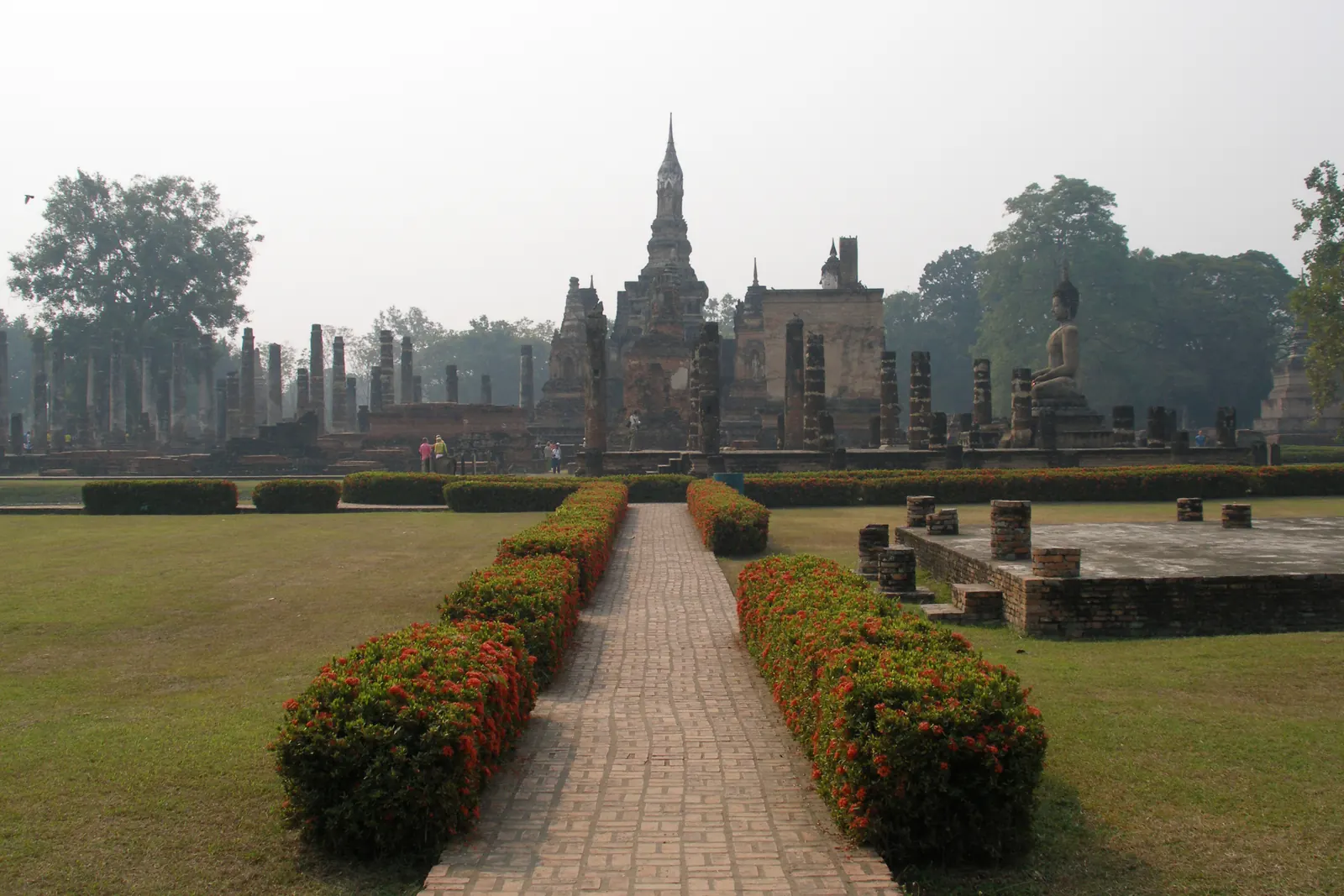
What to see: in the Central Zone (฿200), Wat Mahathat with its lotus-bud chedi and rows of standing Buddhas, Wat Sa Si on its island in the pond, and the three Khmer-style towers of Wat Si Sawai. The North Zone (฿120) is Wat Si Chum, where a 15-metre seated Buddha looks out through a slot in the wall of its mondop: the best single image in the park and the one worth getting up for. The West Zone (฿120) is Wat Saphan Hin, a hilltop standing Buddha up a slate path, worth it only if you have the legs and the time. All three zones with a bike comes to about ฿470 in fees before the bike itself, which costs ฿30–50 a day from the shops opposite the Central Zone gate. On most Saturdays the Central Zone stays open late and there is a free sound-and-light performance at Wat Sa Si; it is in Thai, the floodlit chedis are not. If you would rather someone else did the pedalling and the history, there are guided Sukhothai bike tours on GetYourGuide.
Sleep in Old Sukhothai, next to the park, not in the new town, unless you need the bus station at dawn. Orchid Hibiscus Guest House (from around ฿1,500) is the long-running garden guesthouse a short ride from the gate; Thai Thai Sukhothai Resort (from around ฿1,200) does teak-style bungalows on the road into the park; Le Charme Sukhothai (from around ฿2,000) and Legendha Sukhothai (from around ฿2,000) are the two resorts with pools within cycling distance of the ruins. In the new town, Ruean Thai Hotel (from around ฿1,000) is the courtyard-and-pool favourite near the night market, and Sukhothai Treasure Resort & Spa (from around ฿2,500) is the comfortable choice on the road out. Skip Sukhothai Heritage Resort unless you are flying in or out: it is a handsome hotel by the airport, some 30 km from the ruins.
Si Satchanalai: is the second historical park worth the 55 km?
Best for anyone with a second day, people who found Sukhothai too manicured, and anyone who likes their ruins with trees. Skip unless you have a full day free: by public bus it is an hour each way, the buses are irregular in the afternoon, and the park closes at 17:00. The verdict: Worth it, and in our view the better of the two big parks. Si Satchanalai was the kingdom’s religious centre and its export factory, built on a bend of the Yom River under low hills, and the Fine Arts Department left more forest standing here than at Sukhothai. The result looks like a lost city rather than a municipal park.
What to see: Wat Chang Lom is the reason to come: a bell-shaped chedi on a two-tiered laterite base ringed by 39 elephant buttresses, credited by inscription to King Ramkhamhaeng in the late 13th century and usually yours alone. Across the lane, Wat Chedi Chet Thaeo is a field of small chedis in seven rows, the tombs of the town’s rulers, with traces of stucco Buddhas in the niches. Then cycle or take the tram the 2 km south-east to Chaliang and Wat Phra Si Rattana Mahathat, a Khmer-style prang with a walking Buddha in high relief on the outside wall. Entry to the main walled zone is ฿200 for foreigners; bikes are hired at the gate for around ฿30–50, and an electric tram runs a circuit for a small fee. The Sangkhalok kiln site at Ban Ko Noi, a few kilometres north, is a separate small ticket and worth half an hour if you care about the celadon you will see in every museum shop in Thailand. The honest flaw: there is not much to eat at the park, so bring water and lunch, and in the rainy season the forest brings mosquitoes.
Getting there: buses run north from the Sukhothai bus terminal on the Si Satchanalai and Uttaradit routes, about an hour and around ฿50; ask to be dropped at the historical park (uthayan prawattisat) rather than the new town, which is 11 km further. Book or check the timetable on Sukhothai to Si Satchanalai on 12Go. The easier answer is a car and driver for the day at around ฿1,500–2,000 from New Sukhothai, which also gets you to the kilns. Sleep: most people day-trip, but Sisatchanalai Heritage Resort (from around ฿1,200) on Highway 101 lets you be at Wat Chang Lom at opening, which is the whole point.
Kamphaeng Phet: the third UNESCO park, and the one with the least company
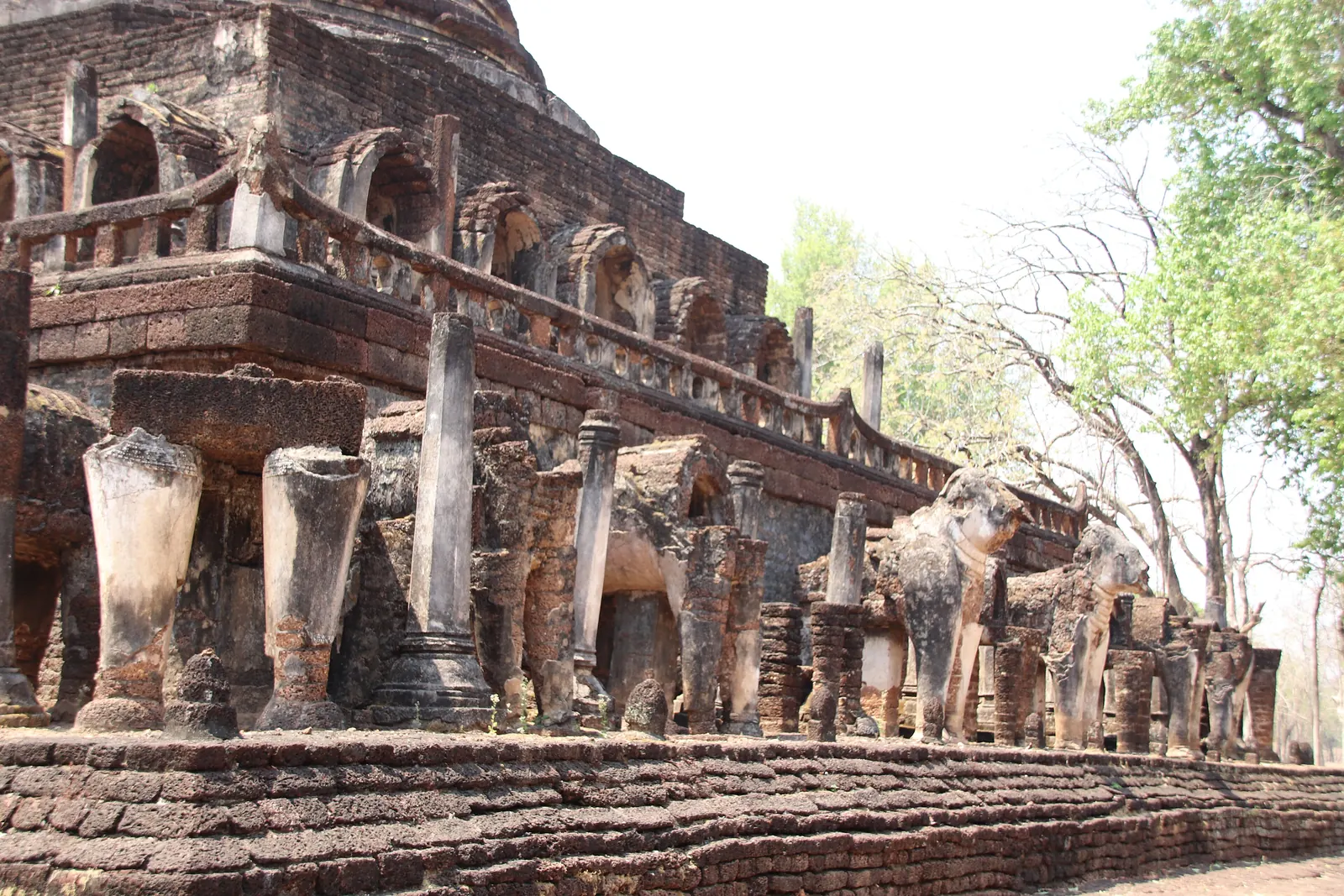
Best for people who dislike crowds, anyone driving or bussing between Bangkok and the north, and photographers who prefer weathered stone to restored brick. Skip unless you can get there: there is no railway and no airport, which is most of the reason nobody comes. The verdict: Do it if it is on your route; a long detour otherwise. Kamphaeng Phet, the “diamond wall”, was the kingdom’s southern garrison on the Ping River, and its builders worked in laterite, a rust-red stone that six centuries of monsoon have worn into gaunt, faceless Buddhas that look closer to modern sculpture than anything in Sukhothai.
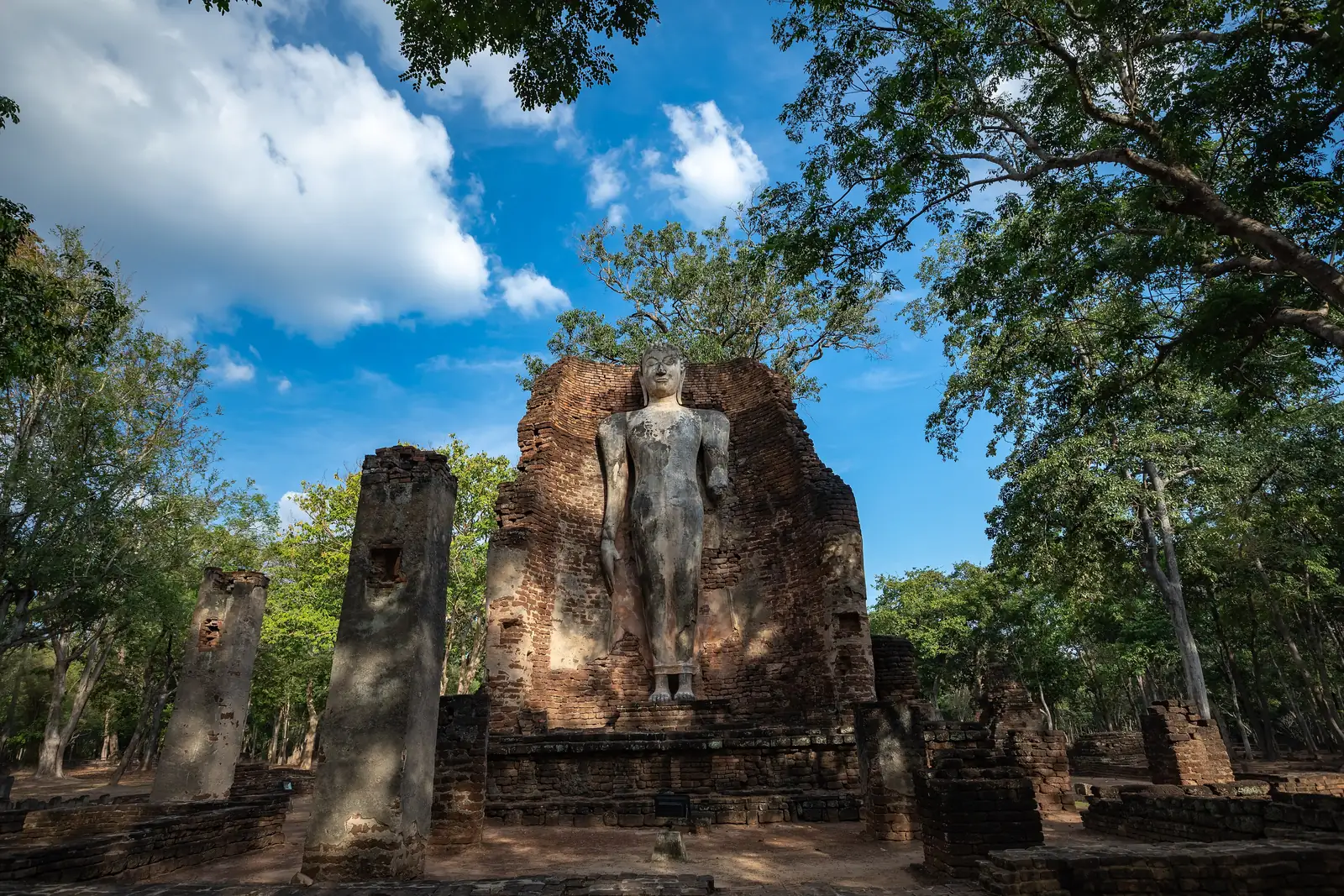
What to see: the park has two ticketed zones, ฿200 each for foreigners, open 08:00–16:30. Inside the walls, Wat Phra Kaeo was the royal temple, with rows of eroded seated Buddhas and a reclining one, and Wat Phra That next door has the town’s big chedi. The better half is Aranyik, the forest-monastery zone north of the walls, where Wat Phra Si Iriyabot keeps a tall standing Buddha in a ruined mondop and Wat Chang Rob’s chedi sits on a base lined with elephant buttresses, under a canopy that keeps the temperature humane. Allow half a day; a bicycle or car is needed between zones. The honest flaw: one day covers it, the town goes to bed early, and you will not meet another traveller to swap notes with. That is also the appeal. Eat kluai khai, the small egg bananas the province is famous for, at the riverside night market for a few baht, and the full rundown, festival dates included, is in our Kamphaeng Phet travel guide.
Getting there: buses on Highway 101 link Sukhothai and Kamphaeng Phet in roughly an hour to an hour and a half for under ฿100 (check Sukhothai to Kamphaeng Phet on 12Go), and Bangkok buses from Mo Chit take around five hours from about ฿400 on Bangkok to Kamphaeng Phet on 12Go. Sleep: Chakungrao Riverview Hotel (from around ฿900) is the town’s long-standing riverside hotel; HOP INN Kamphaeng Phet (from around ฿700) is the chain’s reliable box with a car park; FIG Boutique Hotel (from around ฿900) is the smaller, newer choice in town. The province page is here.
Getting to Sukhothai, Si Satchanalai and Kamphaeng Phet: hours and baht by route
One adult, one way, as of November 2026. There is no railway to any of the three; the train stops at Phitsanulok, 60 km east of Sukhothai, which our Phitsanulok guide covers along with the Buddha most Thais think is the country’s finest. Sukhothai is the obvious stop on the way between Bangkok and Chiang Mai; the wider options for that journey are in Bangkok to Chiang Mai, costed.
| Route | Time | Fare | Book |
|---|---|---|---|
| Bangkok (Mo Chit) to Sukhothai, Win Tour and others | About 7 h; day and night departures | ฿380–460 | Bangkok to Sukhothai on 12Go |
| Bangkok (Suvarnabhumi) to Sukhothai airport, Bangkok Airways | About 1 h 15 in the air; airport is 30 km from town | around ฿2,000–4,000 | same page |
| Bangkok to Phitsanulok by train or flight, then bus | 5–7 h by train; about 1 h flying from Don Mueang | ฿280–1,000 train; then about ฿50–60 bus | Bangkok to Phitsanulok on 12Go |
| Phitsanulok to Sukhothai | About 1 h | around ฿50–60 | Phitsanulok to Sukhothai on 12Go |
| Chiang Mai to Sukhothai | 5–6 h | around ฿250–300 | Chiang Mai to Sukhothai on 12Go |
| Sukhothai to Si Satchanalai | About 1 h | around ฿50 | Sukhothai to Si Satchanalai on 12Go |
| Sukhothai to Kamphaeng Phet | 1–1.5 h | under ฿100 | Sukhothai to Kamphaeng Phet on 12Go |
| Bangkok (Mo Chit) to Kamphaeng Phet | About 5 h | from about ฿400 | Bangkok to Kamphaeng Phet on 12Go |
| Car and driver from New Sukhothai, all day | Your schedule | around ฿1,500–2,500 | Through your hotel |
Three rules save the grief. Bangkok buses arrive at the Sukhothai terminal outside the new town, so budget ฿30–60 for the songthaew or tuk-tuk into either town. The last buses back from Si Satchanalai leave in the afternoon and the timings drift, so do not leave the park at 16:45 and expect to get home. And if you are coming up from Bangkok anyway, a Mo Chit bus to Kamphaeng Phet, a night there and a morning bus on to Sukhothai turns the third park from a detour into a stop.
When to go, and Sukhothai’s Loy Krathong in November 2026
November to February is the season: mornings around 18–20°C, middays near 30°C, dry. March to May is the hot season, near 40°C at noon on ruins with no shade, so cycle from opening until ten and then retreat. June to October is green, wet in the afternoons and cheapest; Si Satchanalai and Aranyik look their best then and bite their worst. The national picture is in best time to visit Thailand.
Loy Krathong is the one date that changes everything. Sukhothai claims the festival as its own, and the 2026 provincial event runs from 15 to 24 November in the historical park, with the full moon and the main candle-lighting night on 24 November. The free side is a dawn merit-making at Wat Traphang Thong, a market and parades from the opening on the 15th; the paid part is the light-and-sound show at Wat Mahathat each night at 19:00, with seats at ฿500, ฿900 and ฿1,200. Rooms in Old Sukhothai fill weeks ahead and prices roughly double around the 24th; if you have left it late, stay in Kamphaeng Phet or Phitsanulok and come in by car. Dates, etiquette and the rest of the country are in our Loy Krathong 2026 guide, and the temple dress code is in eight things to know before entering a Thai temple.
How to combine the three parks in two or three days
One day: Sukhothai’s Central Zone from 07:00, Wat Si Chum at about ten, lunch and a bowl of Sukhothai noodles, and the West Zone only if the heat allows. Two days: add Si Satchanalai on day two, out on the morning bus or with a driver, back by late afternoon; this is the version we would give most people. Three days, or the north-bound route: Bangkok to Kamphaeng Phet on day one, the walled city and Aranyik on day two morning, the bus up Highway 101 to Sukhothai that afternoon, Si Satchanalai on day three, then onwards to Chiang Mai, or east to Phrae and Nan. Hiring a car and driver for the Si Satchanalai day at ฿1,500–2,000 makes sense for two or more people; for one it is the bus.
Ayutthaya is the obvious comparison, and the obvious difference is scale and noise: Ayutthaya is ninety minutes from Bangkok and gets the day-trippers, Sukhothai is a seven-hour bus ride and gets the people who meant it. If you only have room for one old capital on the trip, read temples in Ayutthaya and Bangkok to Ayutthaya first; if you can fit both, do Ayutthaya for the history and Sukhothai for the beauty.
Sukhothai, Si Satchanalai or Kamphaeng Phet by traveller type: the verdicts
First-timers and families: Sukhothai, Central and North zones by bike, with a pool hotel in Old Sukhothai to retreat to by lunchtime. Photographers: Si Satchanalai at opening for Wat Chang Lom, Sukhothai’s Wat Sa Si at dusk, Kamphaeng Phet’s Aranyik for the faces. Crowd-haters: Kamphaeng Phet, then Si Satchanalai. Over-60s and anyone who does not cycle: Sukhothai’s Central Zone by electric tram or golf cart, then Si Satchanalai with a driver; skip the West Zone hill. On a tight budget: Sukhothai’s Central Zone and Si Satchanalai, both by bus, comes to about ฿550 in fees, bikes and fares. History buffs: all three, in the Kamphaeng Phet to Si Satchanalai order, because seeing the garrison, the capital and the religious centre in sequence is the only way the kingdom makes sense.
The default answer: two nights in Old Sukhothai, the main park on day one, Si Satchanalai on day two, and Kamphaeng Phet only if it is on your way. If you are still deciding whether the lower north belongs in the trip at all, the Where to Go in Thailand matcher will tell you.
Sukhothai, Si Satchanalai or Kamphaeng Phet: your questions, answered
Is Si Satchanalai better than Sukhothai?
For most people with two days, yes, as a second stop rather than a replacement. Sukhothai has the famous images and the easiest logistics, but its Central Zone is heavily restored and shadeless. Si Satchanalai is wooded, quieter and less tidied, and Wat Chang Lom’s elephant-ringed chedi is the single finest structure across the three parks. See Sukhothai first, then go north.
How much does it cost to enter Sukhothai Historical Park in 2026?
Foreigners pay ฿200 for the Central Zone and ฿120 each for the North and West zones, plus ฿10 per zone if you bring a bicycle, according to the Fine Arts Department’s published rates. Thai nationals pay ฿20 a zone. Older guides quoting ฿100 are out of date. Si Satchanalai’s main zone and each of Kamphaeng Phet’s two zones cost ฿200.
Can you visit Sukhothai and Si Satchanalai in one day?
You can, but it is a rush. Do Sukhothai’s Central Zone from 06:30 to about 10:00, then take a car north to arrive at Si Satchanalai by late morning; the park closes at 17:00. By public bus it does not really work because of the afternoon return times. Two days, one park each, is the better plan.
Is Kamphaeng Phet worth visiting from Sukhothai?
Only if it is on your route, or if empty ruins matter more to you than anything else. It is about 80 km away, a 1–1.5-hour bus, and needs half a day for the walled city and the Aranyik forest temples. Travellers coming up from Bangkok should stop there on the way rather than doubling back from Sukhothai.
When is Loy Krathong in Sukhothai in 2026?
The Sukhothai festival runs from 15 to 24 November 2026 in the historical park, with the full moon and the main night on 24 November. The light-and-sound show at Wat Mahathat runs nightly at 19:00, with tickets at ฿500, ฿900 and ฿1,200. Book rooms in Old Sukhothai well ahead, or stay in Kamphaeng Phet or Phitsanulok.
Related guides
- Things to Do in Sukhothai, Thailand: The Original Capital That Got Out of the Way
- Kamphaeng Phet: The UNESCO Ruins Sukhothai Tourists Never Reach
- Phitsanulok: The Logistics Hub for Sukhothai and the Buddha Most Thais Consider the Most Beautiful
Book the trip
Some links in this guide are affiliate links. If you book through them we may earn a small commission at no extra cost to you — it helps keep Destination Thailand independent.
Hotels: sleep beside the ruins and compare Sukhothai hotels on Agoda with the Old Sukhothai map open, or Kamphaeng Phet hotels for the quiet third park. Tours/Boats: compare guided Sukhothai and Si Satchanalai tours on GetYourGuide if you would rather not do the buses. Getting there: Bangkok to Sukhothai on 12Go lists the Win Tour buses and the Bangkok Airways flights side by side, and the onward journey north is costed in our Bangkok to Chiang Mai transport guide. Not sure the old capitals are your trip? The Where to Go in Thailand matcher scores all 77 provinces against your month and what you actually want.