Kamphaeng Phet is the best World Heritage site in Thailand that almost nobody bothers to visit. It shares its 1991 UNESCO inscription with Sukhothai — same listing, same era, same civilisation — and gets, at a generous estimate, a tenth of the visitors. You can stand in front of a six-century-old laterite Buddha at ten on a Saturday morning and hear nothing but cicadas and your own footsteps. In Sukhothai, you would be queuing behind forty people on rental bicycles for the same photograph.
The town attached to the ruins is a workaday provincial capital on the Ping River, about 360 kilometres northwest of Bangkok. It grows bananas, trades rice, and goes to bed early. Nobody has built an elephant-pants economy here because nobody has needed to. That is the entire appeal.
Below: the ruins, the bananas, the night market and the two-park itinerary no tour company will sell you. For quick facts and a map, start with our Kamphaeng Phet province profile.
What Kamphaeng Phet really is
The name translates as diamond wall — a wall as hard as diamond — and it was earned honestly. This was the garrison town guarding the southern flank of the Sukhothai kingdom in the 14th and 15th centuries, and when power shifted to Ayutthaya it kept working as a frontier fort on the Burmese invasion routes. Then history moved on, leaving a quiet agricultural province in the lower north where the ruins comfortably outnumber the foreigners.
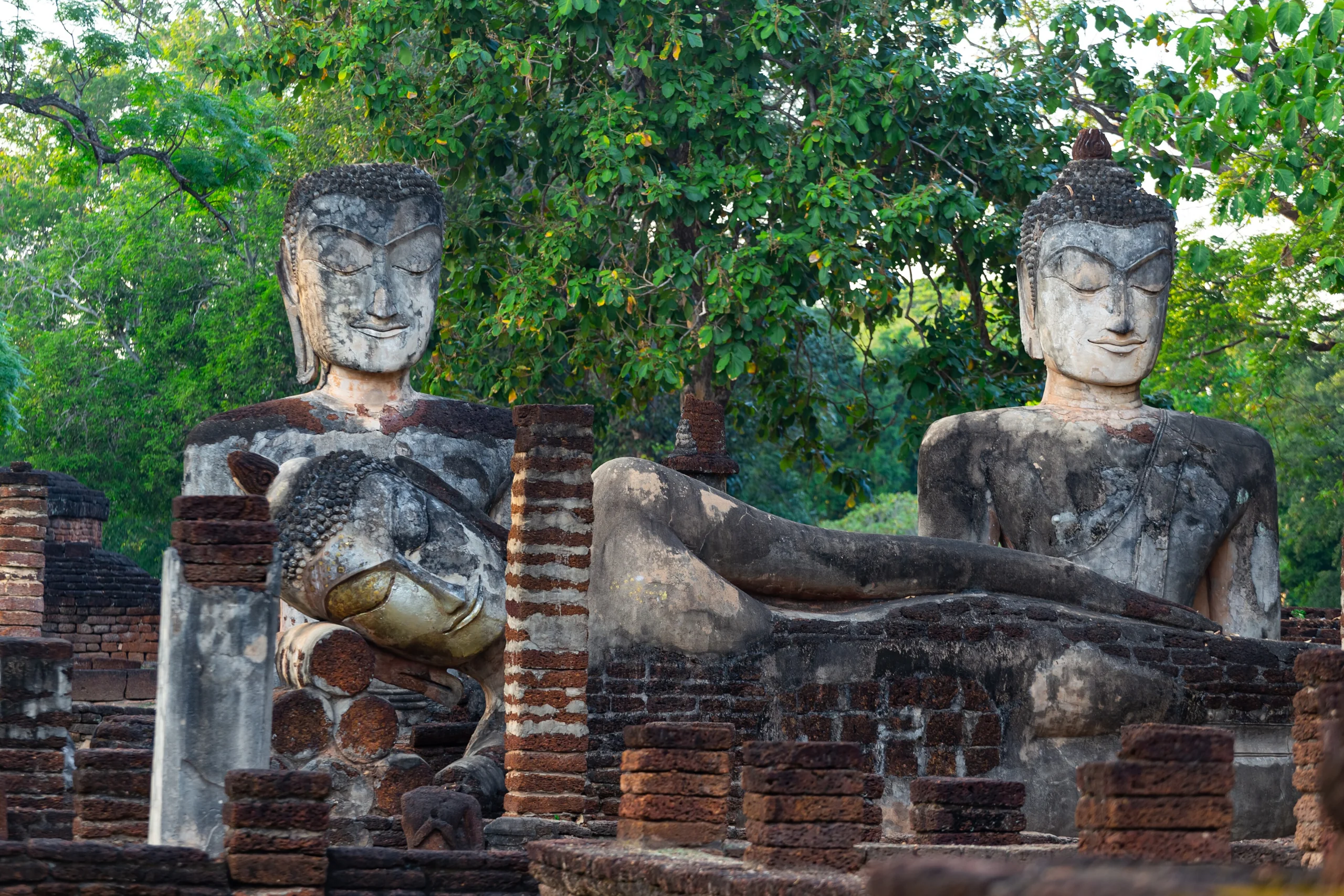
What history left behind is genuinely strange. The builders here worked in laterite, a rust-red, iron-rich stone that pits and erodes like something alive. Six centuries of monsoon have worn the great Buddha images into gaunt, elongated, almost faceless figures — closer to Giacometti than to anything in a Bangkok temple. Sukhothai’s Buddhas were restored to serene smoothness. Kamphaeng Phet’s were largely left as time made them, and the effect is far more haunting.
Why go to Kamphaeng Phet
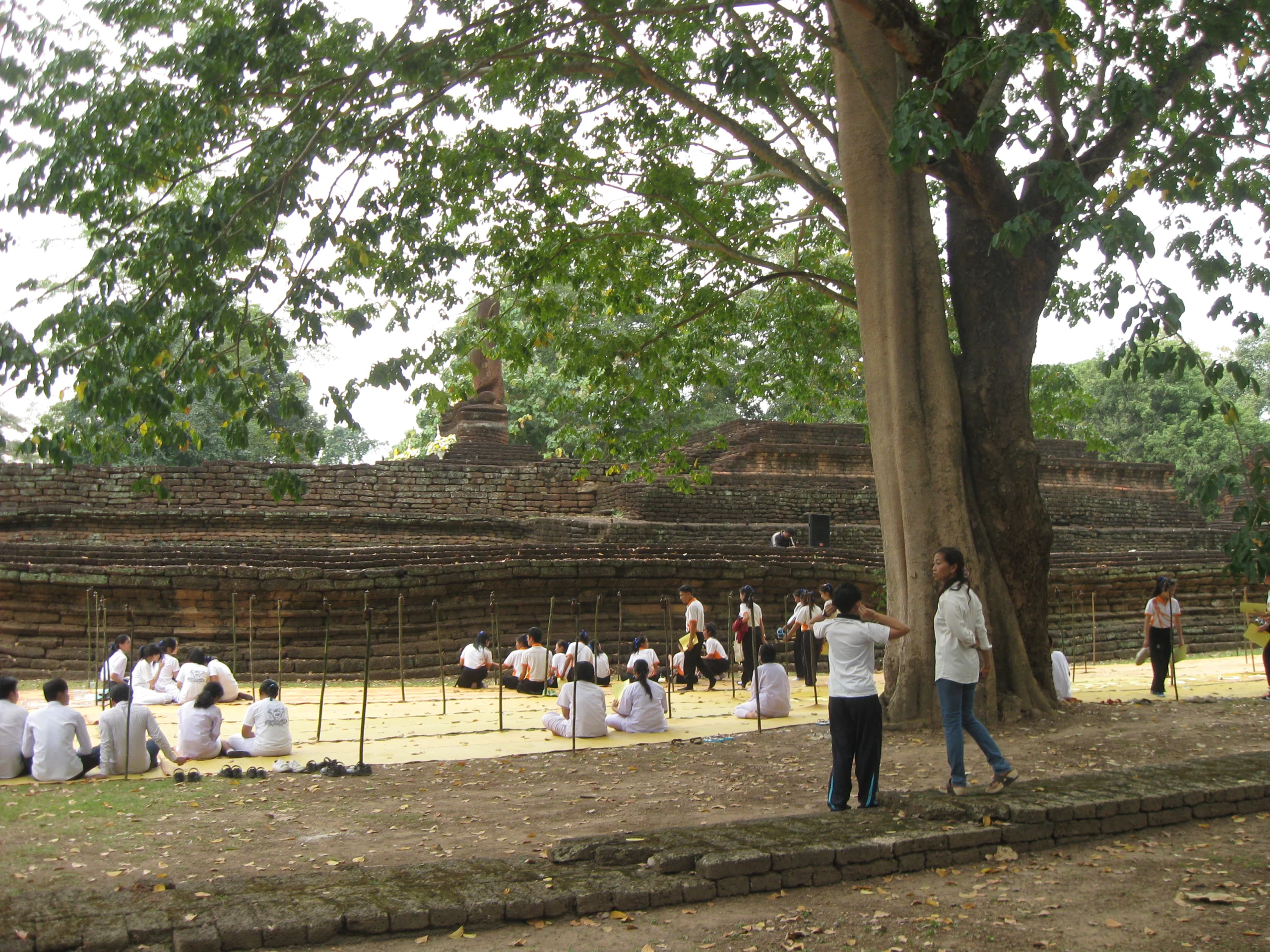
Go because this is the last of the great central-plains historical parks where solitude comes free. Go because the Aranyik forest zone — ruined meditation monasteries under a proper tree canopy — is one of the most atmospheric places in the country, and you will probably share it with a groundskeeper and some squirrels. Go because the province grows Thailand’s best small bananas and throws them a festival every year. And go because it sits about an hour down Highway 101 from Sukhothai, turning Thailand’s most famous ruins trip into a far better two-park itinerary.
Do not go expecting nightlife or other travellers to swap notes with. One honest day covers the headline sights — that is not a flaw, it is the price of having a UNESCO site to yourself.
Getting to Kamphaeng Phet
No railway, no airport — ninety percent of the reason the ruins are empty. Your options:
- Bus from Bangkok: departures from Mo Chit through the day, about five hours, roughly ฿250-400 depending on class. The terminal sits on the west bank of the Ping; a motorbike taxi or songthaew into the old town is ฿40-60.
- Via Sukhothai: Bangkok Airways flies from Suvarnabhumi to Sukhothai’s little airport; from there it is around an hour and a half by road to Kamphaeng Phet. Local buses between the two towns run along Highway 101 in a bit over an hour for well under ฿100.
- Via Phitsanulok: cheap AirAsia and Nok Air flights from Don Mueang, plus the main northern rail line, reach Phitsanulok about 100 kilometres away; onward buses take around two hours.
- Driving: a dull but easy five hours from Bangkok up Highway 1, which runs straight through the province towards Tak.
Where to stay
There is no tourist strip, so think in areas rather than names:
- Riverside, near the night market: small guesthouses and cheap hotels within walking distance of the Ping promenade, ฿400-700 for a clean fan or air-con room. The right call if you are car-free.
- Near the historical park: quieter mid-range places on the north side of town, ฿600-1,000, useful if the plan is ruins at first light before the heat arrives.
- Highway business hotels: the ฿800-1,500 bracket, built for Thai salespeople rather than tourists, with proper mattresses, pools and inexplicable karaoke lounges. Fine if you are driving.
Two nights is the sweet spot. Book ahead only for the banana festival in September-October, when the decent rooms genuinely fill.
What to eat in Kamphaeng Phet
Bananas, obviously — but hold on, because these are not the flavourless supermarket things you know. Kluay khai, egg bananas, are stubby, thin-skinned and taste like custard that grew on a tree. They carry Geographical Indication status — the legal protection France gives Champagne — and the province takes them that seriously. Eat them fresh from the morning market for a few baht a bunch, deep-fried in batter at the night market, or candied into every souvenir format known to Thai packaging science. Around the Sart Thai festival they are traditionally paired with krayasat, a sticky brittle of rice, peanuts and sesame.
Beyond the bananas, eat where the town eats: the night market on the riverbank for grilled river fish, moo ping at about ฿10 a skewer and som tam pounded to order; old-town noodle shophouses for ฿50-70 bowls; and the open-air riverside places for a whole steamed fish with garlic and lime at ฿150-250. Nothing here performs for tourists, because there are none to perform for.
Top things to do in Kamphaeng Phet
1. Wat Phra Kaeo and the walled city
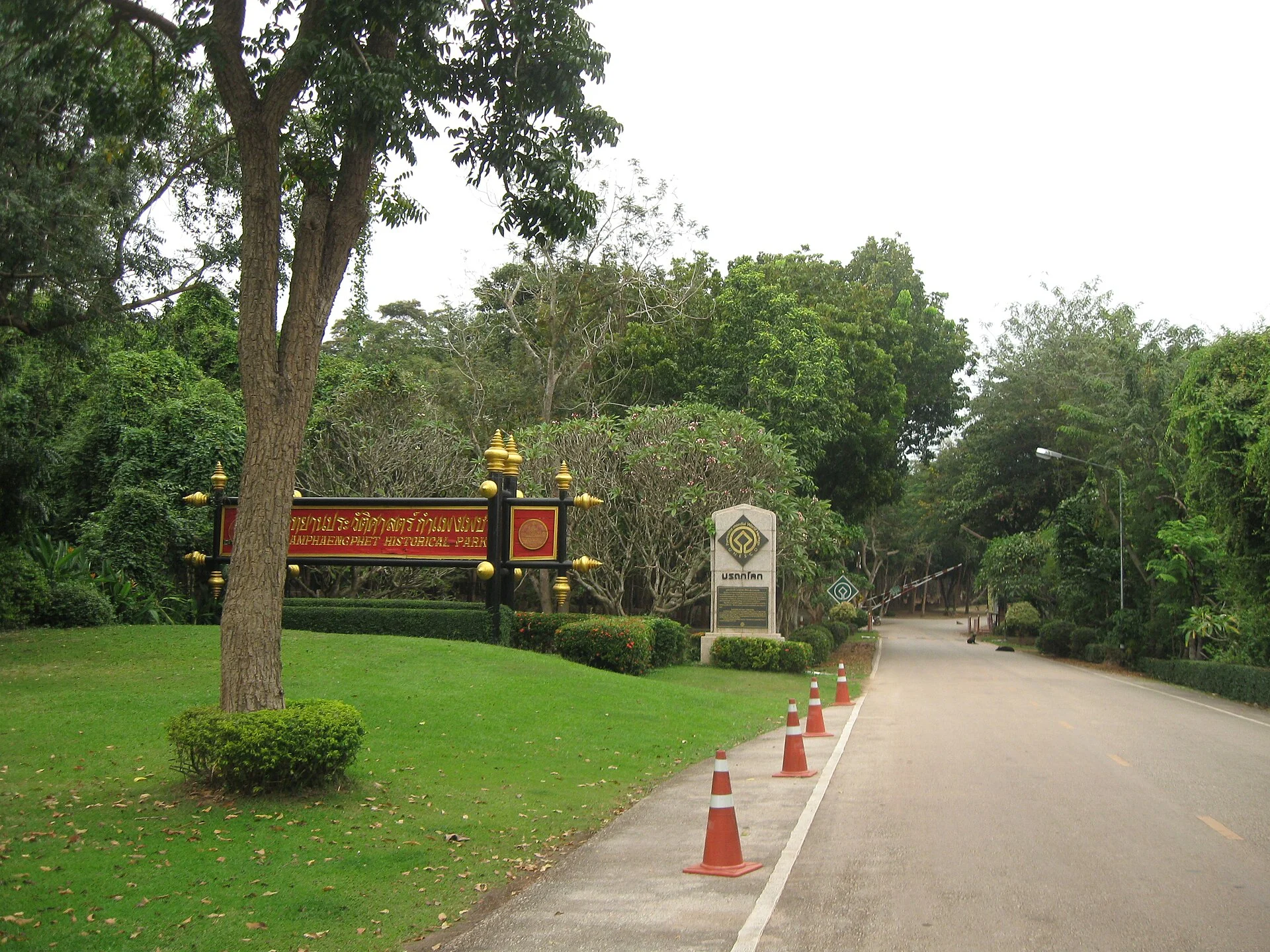
The centrepiece of the historical park’s central zone, inside the old ramparts that gave the town its name. Wat Phra Kaeo was the royal temple — legend insists the Emerald Buddha itself once rested here — and its rows of eroded laterite Buddhas are the province’s defining image: pitted, elongated, faces worn down to suggestion. Go at opening or in late afternoon, when the stone turns copper-red. Entry to the central zone is ฿100 for foreigners, open daily from about 8am to 6pm, and an unhurried hour covers it.
2. Wat Chang Rop and its elephant plinth
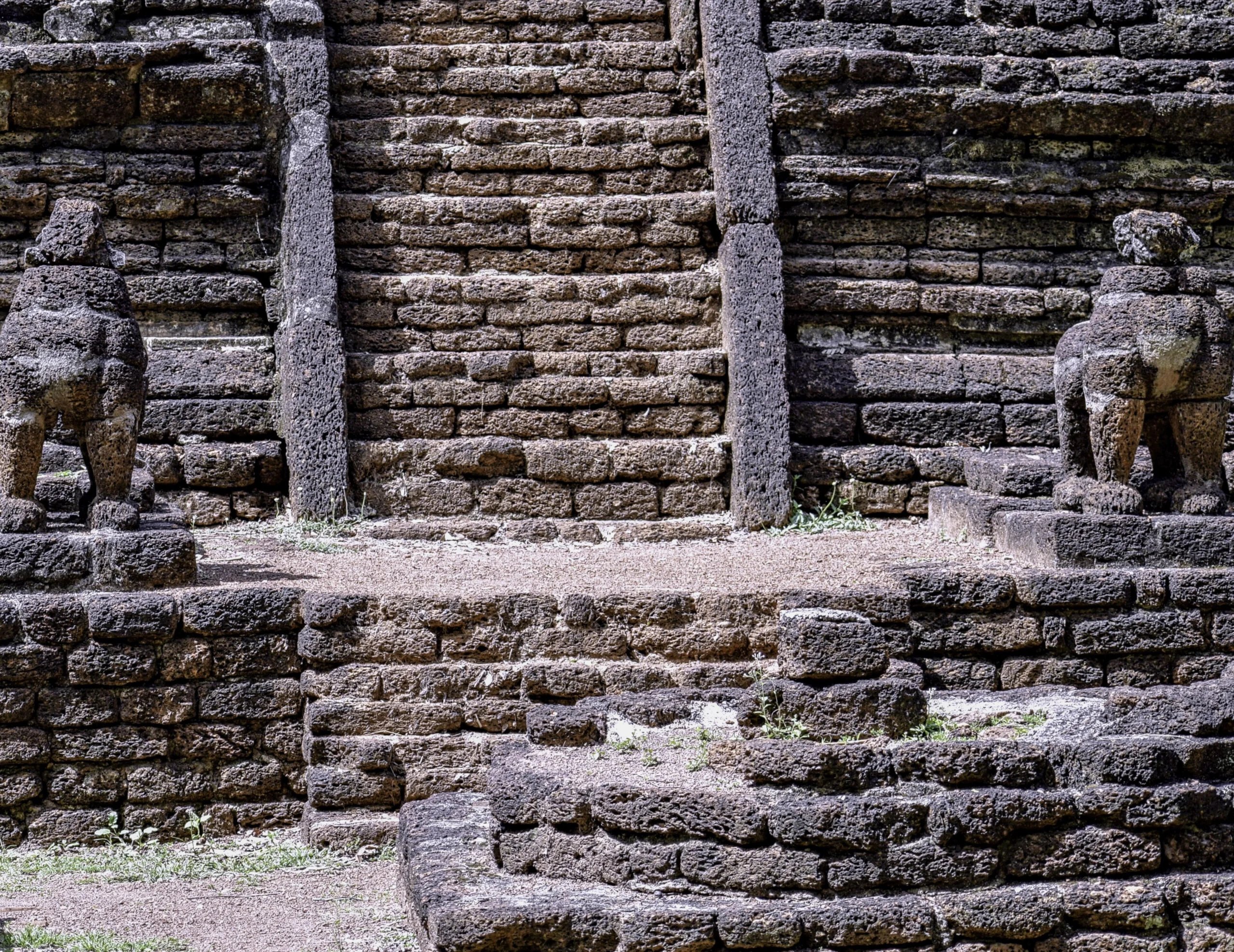
Out in the forested northern zone, a vast ruined chedi stands on a square laterite base ringed by sixty-odd elephants, each emerging chest-first from the stonework as if shouldering the monument skyward. Chang Rop means, roughly, surrounded by elephants, and for once the name undersells it. Weather has worn most of the animals to stumps of trunk and tusk, which somehow makes them more affecting, not less. This is the single most impressive structure in the province, and on a weekday it is entirely yours.
3. The Aranyik forest monasteries
Aranyik means forest-dwelling: meditation monks of the austere, Ceylonese-influenced forest school built these monasteries five centuries ago, deliberately outside the city walls. The ruins of Wat Phra Si Iriyabot, with its tall standing Buddha still upright, and Wat Phra Non, the reclining Buddha temple, now sit under genuine forest: moss on laterite, roots prising walls apart, birdsong instead of megaphones. It is the most atmospheric corner of the whole UNESCO listing, Sukhothai included. A combined ticket covering both zones is sold at the gate; hire a bicycle or bring the car, as the sites spread over a couple of kilometres.
4. The Ping river promenade night market
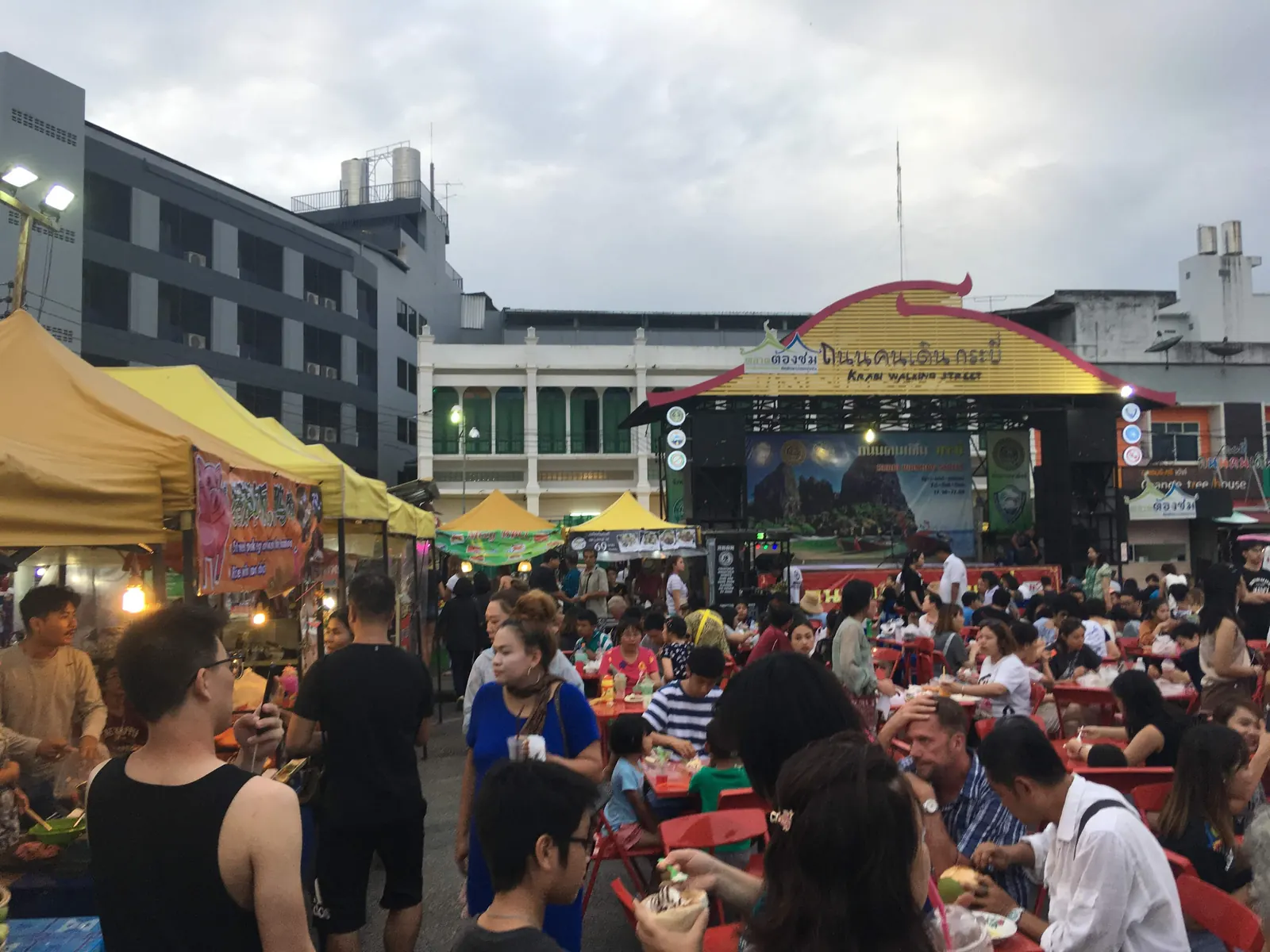
Every evening the riverbank turns into the town’s living room: food carts and folding tables, an aerobics class thumping away by the water, and not a laminated tourist menu in sight. Come hungry, graze from cart to cart for ฿200 all-in, and watch the sun drop behind the Ping. It is not laid on for visitors — it is just Thursday — which is exactly why it is worth your evening.
5. Kluay khai and the banana festival
Every year around late September or early October, tied to the Sart Thai merit-making day, the town throws the Sart Thai Kluay Khai festival for its GI-certified egg bananas: parade floats decorated with the things, banana-eating contests, stages, pageants, the lot. It is small-town Thailand at its most cheerfully unironic. If you miss it, the fruit is in the markets year-round.
6. The two-park itinerary nobody sells
Sukhothai’s historical park is about an hour north by road; its airport, around ninety minutes. Yet almost nobody links the two, because tour itineraries treat Sukhothai as a tick-box between Bangkok and Chiang Mai. Do it yourself instead: a night in old Sukhothai for the scale and the restored set-pieces, then a night in Kamphaeng Phet for the atmosphere Sukhothai restored away. Same civilisation, same UNESCO certificate, two completely different moods — and the second one costs you a ฿100-ish bus ride.
What to skip
Phra Ruang Hot Springs, about 20 kilometres from town, is promoted locally as a wellness attraction. What you get is a tidy municipal park where warm mineral water is piped into concrete basins and tiled foot-baths. It is perfectly pleasant in the way a well-run motorway service station is perfectly pleasant. You came to this province for world-class ruins; do not spend half a day on lukewarm plumbing. Give the hours to the Aranyik zone instead.
Kamphaeng Phet travel: practical info
Best time: November to February, when mornings are cool and the laterite glows in low light. September-October brings the banana festival but also the tail of the rains. March to May is brutal — the stone holds heat like a storage radiator, so if you must come then, do the parks before 9am.
How long: one full day covers both park zones, the National Museum near the central zone (closed Monday-Tuesday, home of the province’s famous bronze Shiva) and the night market. Two nights is right. With a car, add a day for Khlong Lan National Park, about an hour southwest, where a waterfall roughly 100 metres tall drops off the forested escarpment.
Onward: Sukhothai is an hour north, Phitsanulok two hours northeast for trains and cheap flights, Tak and the Mae Sot border route lie up Highway 1, and Bangkok is five hours south by bus.
Wikipedia’s Kamphaeng Phet entry picks up the Chakangrao history the ruins only hint at.
TAT’s official Kamphaeng Phet page keeps park hours and ticket prices current.
FAQ
Is Kamphaeng Phet worth visiting?
Yes — if ruins are the point of your trip north. It holds the same UNESCO listing as Sukhothai with a fraction of the visitors, and its eroded Buddhas and forest-monastery ruins feel unlike anything at the more famous parks. If you need nightlife, it is not for you.
How do I get from Sukhothai to Kamphaeng Phet?
Local buses run along Highway 101 in a bit over an hour and cost well under ฿100. A taxi or arranged car is ฿800-1,200 and takes you park gate to park gate. Self-driving, it is roughly 80 kilometres.
How many days do you need in Kamphaeng Phet?
One full day covers both park zones, the museum and the night market; stay two nights so you can hit the ruins early. Add a third day for Khlong Lan National Park.
What is Kamphaeng Phet famous for?
Two things: its UNESCO-listed historical park, inscribed alongside Sukhothai in 1991, and kluay khai egg bananas, GI-protected and honoured with their own festival every September-October.
Does Kamphaeng Phet have an airport?
No. The nearest are Sukhothai (Bangkok Airways, about ninety minutes away by road) and Phitsanulok (AirAsia and Nok Air from Don Mueang, around two hours). Most travellers take the five-hour bus from Bangkok’s Mo Chit terminal.