The minivan from Chiang Mai stops in the middle of Pai, on Chaisongkhram Road, and you can see most of the town from the step: a grid of six streets, a river along one edge, hills on every side. Deciding where to stay in Pai looks trivial — it is a two-kilometre town — until you notice that the ฿500 bamboo hut by the river is a fifteen-minute walk and a seasonal bamboo bridge from the ฿80 beer on Walking Street, that the resort with the view is up a hill nobody will drive you up after 10pm, and that the room you booked in the centre comes with somebody else’s playlist.
So this guide carves Pai into its five real areas — the Walking Street grid, the river’s east bank, the quieter south end of Wiang Tai, the hills to the north and west, and the outer valley along the hot-springs road — and matches each to a traveller. Every hotel named has a live, checked Agoda listing and is one we’d book with our own money; the rest of the province, including the loop Pai is the first corner of, is on our Mae Hong Son province profile.
The short version: the south end of Wiang Tai for most people — river, walkable, quiet after eleven. The centre for two nights and no scooter, the east bank if a bamboo hut and a hammock are the point (and it isn’t raining), the hills if you ride, the hot-springs road if you’re staying a month. What to do once you’ve unpacked is in our Pai itinerary with real prices.
How Pai is laid out (and which side of the river to sleep on)
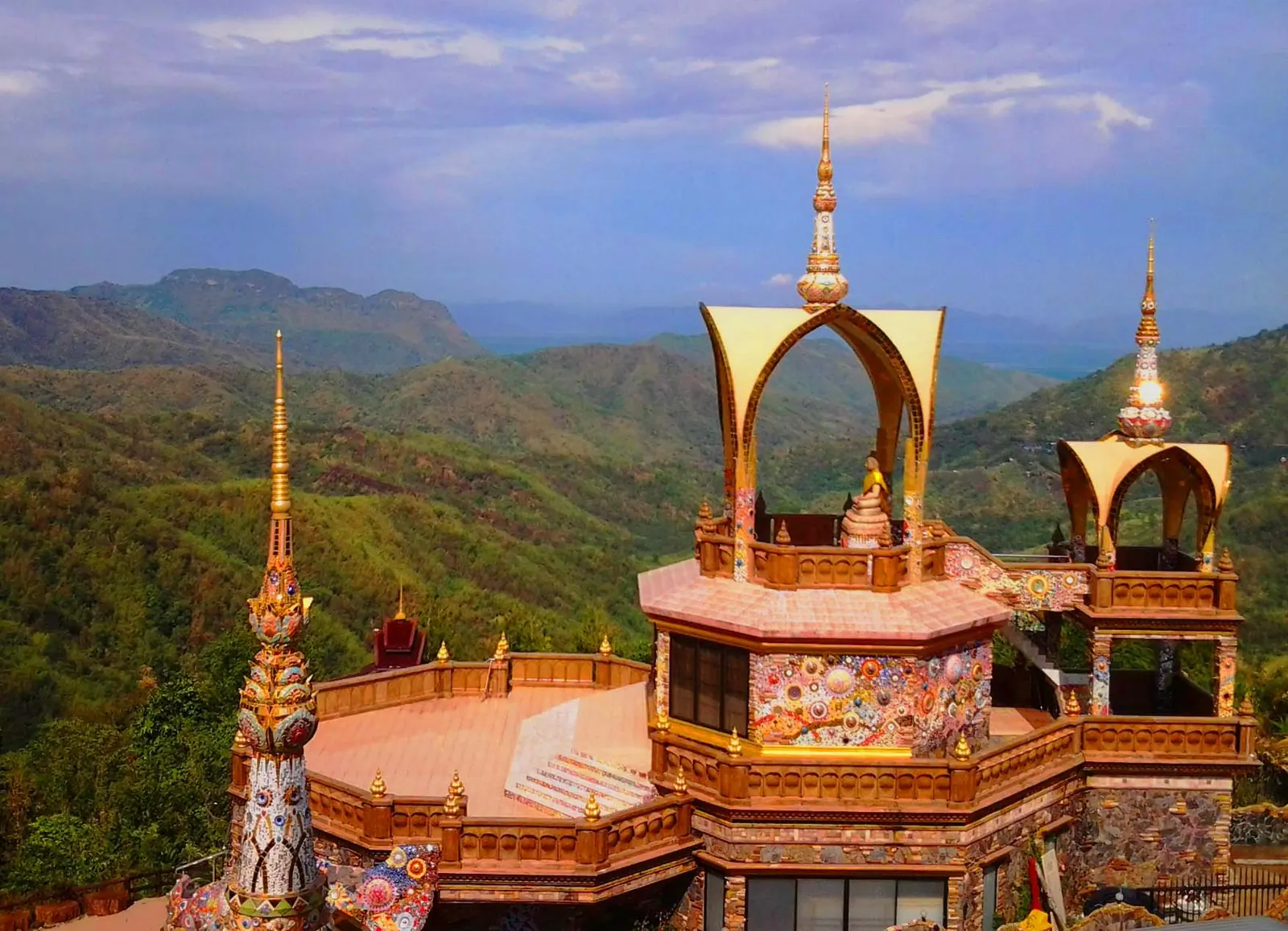
Route 1095 arrives from Chiang Mai in the south-west, passes the hospital and becomes the main road. The grid — Chaisongkhram Road (Walking Street), Rangsiyanon and Ratchadamrong — sits between the bus station and the Pai River on the east side of town. Across the river is Mae Hi sub-district: Ban Mae Yen, the bamboo huts, and the white Buddha of Wat Phra That Mae Yen on its 353-step hill. North, the road passes the airport into Wiang Nuea; north-west, the Huay Pu road climbs to Santichon and Yun Lai viewpoint. South-east, the hot-springs road runs 7 km to Tha Pai; south-west, 1095 passes Pai Canyon at 8 km. Everything you came for is outside the grid.
- Walking Street and the centre — hostels, 7-Elevens, the bus station, the market, the bars. Everything on foot, nothing silent.
- The river’s east bank (Ban Mae Yen) — bamboo huts, hammocks, the seasonal footbridge, a hilltop party hostel. A flood plain in the rains.
- Wiang Tai south and the riverside edge — teak boutique resorts and pools along the west bank. The sensible base.
- The hills north and west — stilted villas over paddies, pools facing the valley, mist at seven, scooter compulsory.
- The outer valley (the hot-springs road) — fishing-lake bungalows, a treehouse, long-stay huts. Quiet, cheap by the month, 1–7 km from a menu.
| Area | Best for | Rooms from | Book |
|---|---|---|---|
| Walking Street / centre | Two nights, no scooter, nightlife | ฿300 fan room / ฿1,500 with pool | The Quarter |
| East bank (Mae Yen) | Bamboo huts, hammocks, budget | ฿250 dorm / ฿500 hut | Pai Country Hut |
| Wiang Tai south / riverside | Couples, most people | ฿1,500 / ฿5,500 resort | Pai Village Boutique |
| The hills | Views, riders, honeymoons | ฿2,500 / ฿4,000 villa | Belle Villa |
| Outer valley | Long stays, families, hot springs | ฿200 dorm / ฿800 bungalow | Bueng Pai Farm |
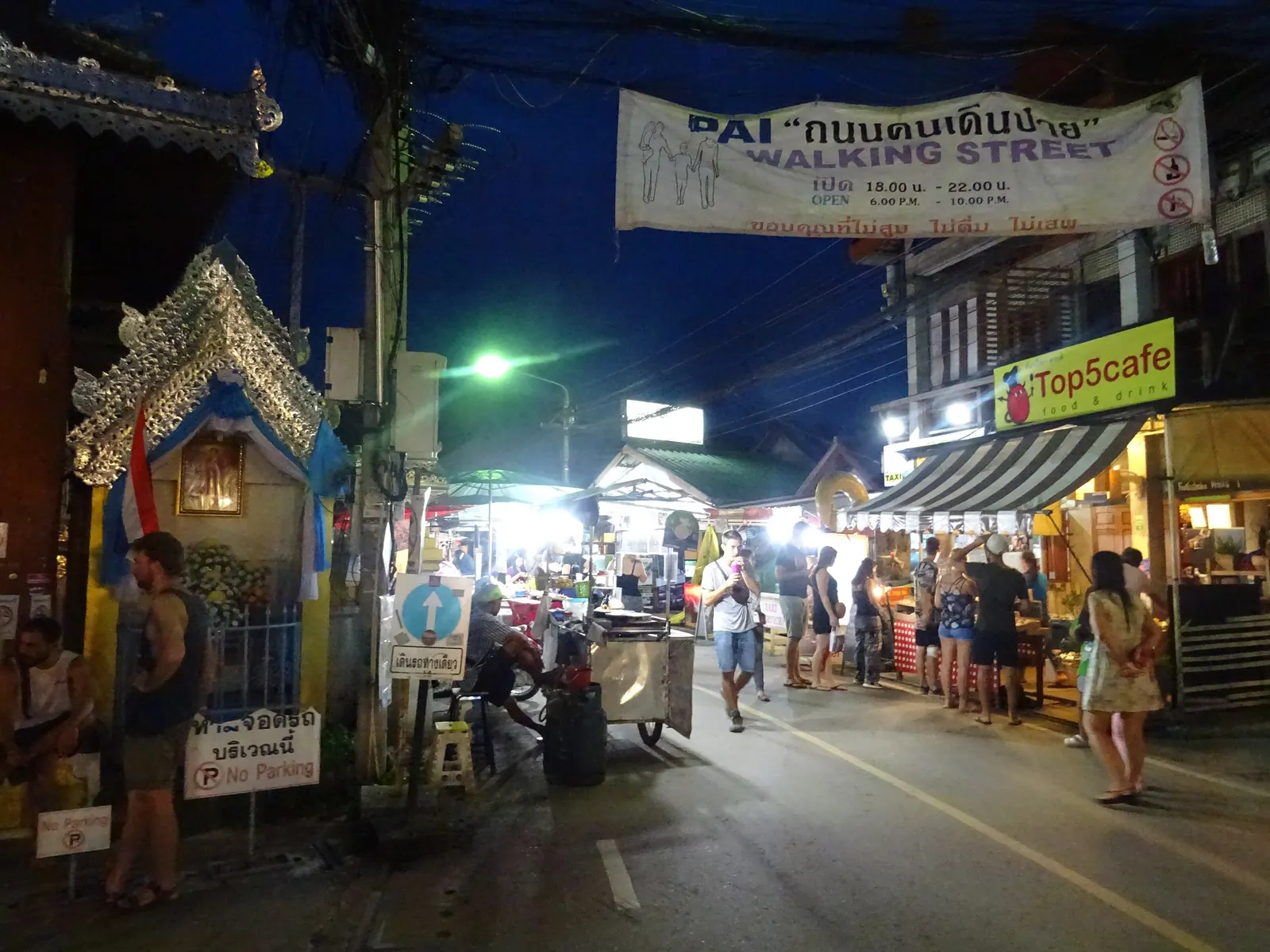
Walking Street and the centre: right for two nights, wrong for a week
The case for the grid is logistics: the bus station, the 7-Elevens and the ATMs (all charging the ฿220 foreign-card fee — see our money in Thailand guide) within 200 metres, Walking Street’s stalls from about six until ten, scooter shops on every corner. The case against is noise. The bars are meant to shut around midnight and mostly do, but the walk home does not, and the cheapest guesthouses — fan rooms from around ฿300, thin walls — are on the lanes it goes down.
Who we’d book: The Quarter Resort (from around ฿1,500) is the sensible centre pick — Lanna-style rooms around a pool on Chaisongkhram, a short walk from the bus station. Hotel des Artists Rose of Pai (from around ฿2,500) is a teak house on the same street with its back to the river; take a river-terrace room, not a street one. Pai River Corner Resort (from around ฿1,500) sits where Walking Street meets the river bridge, pool included, a bit tired, perfectly placed. And the surprise: Pai Island Resort (from around ฿4,500), pool villas on an island in the river 300 metres from the centre — Pai’s quiet top end hiding inside the town. Verdict: Fine for two nights; Skip it for a week.
The river’s east bank: bamboo huts, the bamboo bridge and the flood plain
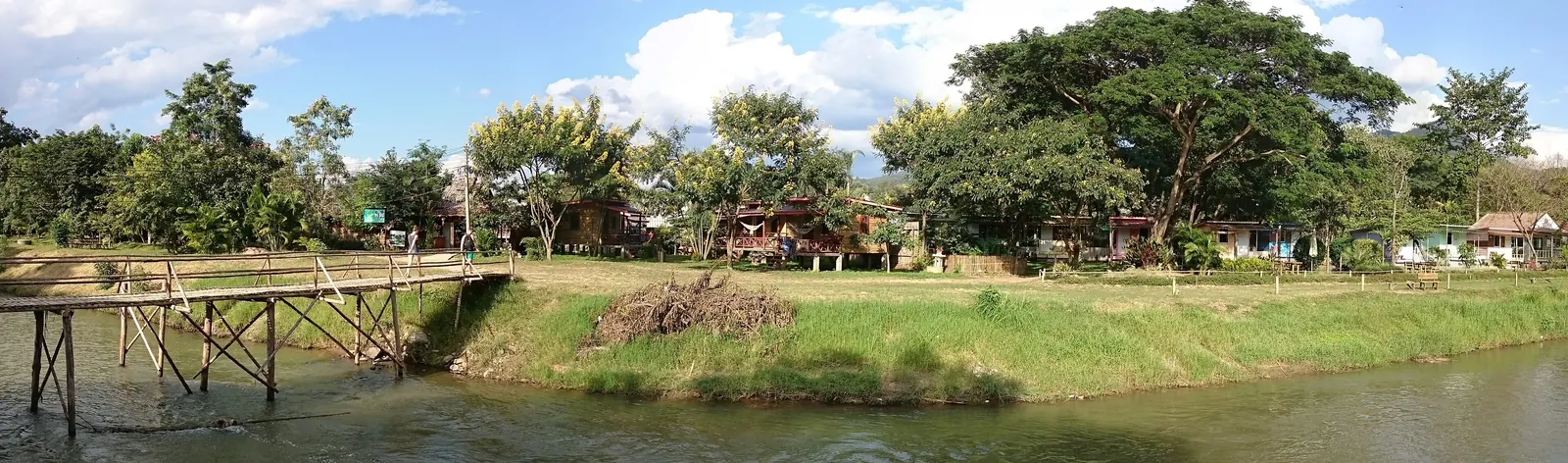
Cross the Pai River from the lanes behind Walking Street — by the seasonal bamboo footbridge in the dry months, by the road bridge once it has gone — and you are in Ban Mae Yen, where Pai’s reputation was made: bamboo huts on stilts with a hammock and a view of the water, for the price of a cocktail in Bangkok. Pai Country Hut (from around ฿500 fan, around ฿900 with a hot shower) is the one to book: a minute from the river, two from the bridge, huts patched since the 1990s and better for it. Pai Chan Cottage & Cuisine (from around ฿600) is the alternative where the kitchen is the point. Up the hill behind them, Pai Circus Hostel (dorms from around ฿250) has the pool, the sunset deck and the loudest nights in the district; it is excellent at being what it is, and if you want to sleep it is the one hostel in Pai to skip.
Two honesty lines. A bamboo hut has no insulation: December and January nights sit around 10–14°C and cold snaps hit 6–8°C, so a hut at 6am in January is a fridge with a view — ask for extra blankets and bring the jacket. And the east bank is a flood plain: the Pai River went over its banks on 25 September 2024 and riverside resorts were evacuated; August 2016 was worse. From June to October, sleep in brick on the west bank. Verdict: Do it, November to February; Skip it in the rains.
Wiang Tai south and the riverside edge: where the mid-range lives
Follow Walking Street to its river end and then south along the west bank, and the town turns from guesthouses into gardens. This is where Pai keeps its teak-cottage resorts: five to ten minutes’ walk from dinner, far enough that the sound system is a rumour. Pai Village Boutique Resort (from around ฿2,000) is the default couple’s pick and deserves to be — wooden cottages in a garden at the end of Walking Street, a river terrace, a pool. Pai Vimaan Resort (from around ฿1,800) is the riverside neighbour with the bamboo bridge off the garden in season. Yoma Hotel (from around ฿1,500) is the modern, poolside, no-bamboo option 400 metres out on the main road, good for families who want a bath.
Then there is Reverie Siam Resort (from around ฿5,500), 640 metres from the centre on the river: 1920s-Siam styling, two pools, a lawn down to the water, and the only place in Pai that behaves like a hotel rather than a guesthouse with ambitions. It is the splurge, mostly adults, and a walk or a ฿50 songthaew from Walking Street rather than a hill. How that compares nationally is in our Thailand luxury hotel price guide. Verdict: Worth it — this is where most people should stay.
The hills north and west: views, cold mornings and a scooter you cannot avoid
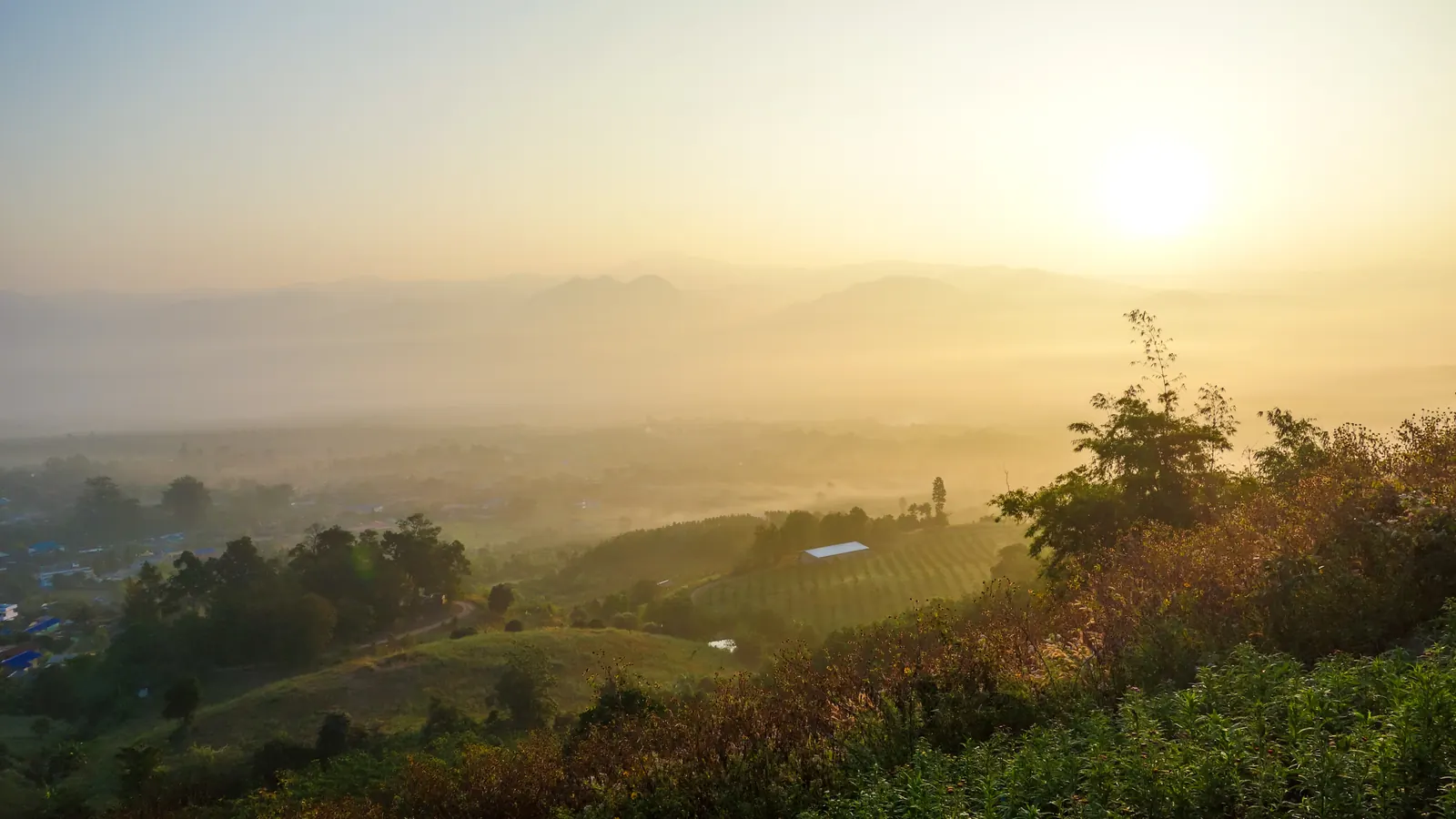
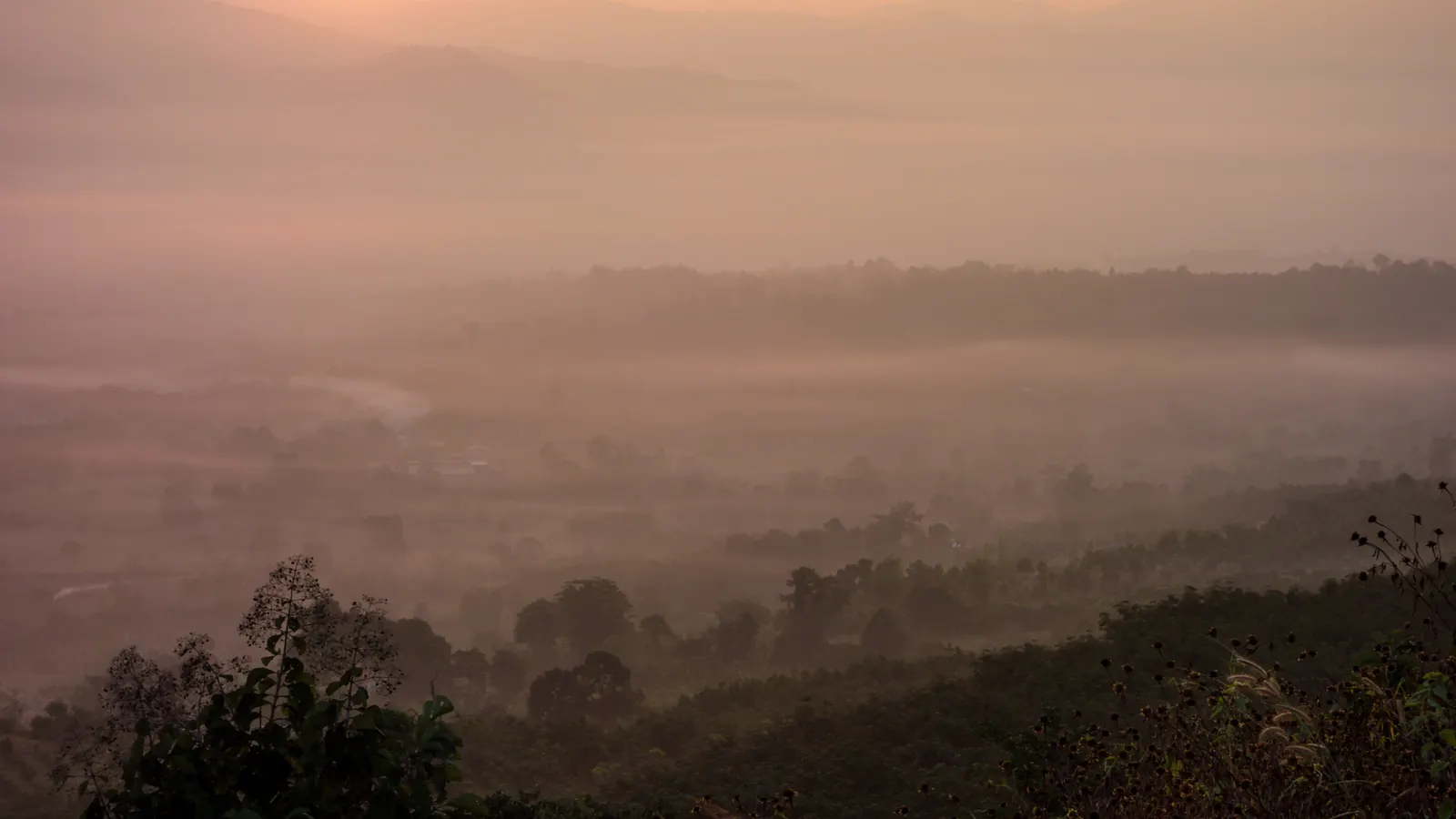
North of the grid the road passes the airport into Wiang Nuea, and the Huay Pu road climbs north-west out of the paddies towards Santichon, the Yunnanese village, and Yun Lai viewpoint, where the whole valley sits under mist until about eight. The stays up here sell the view and deliver it, with one footnote: you will ride. A 125cc scooter is ฿150–250 a day (cash deposit ฿2,500–3,000 — never leave your passport), you need a motorcycle licence or IDP for the insurance to pay, and songthaews do not cruise these roads after dark. If you don’t ride at home, don’t pick a hill.
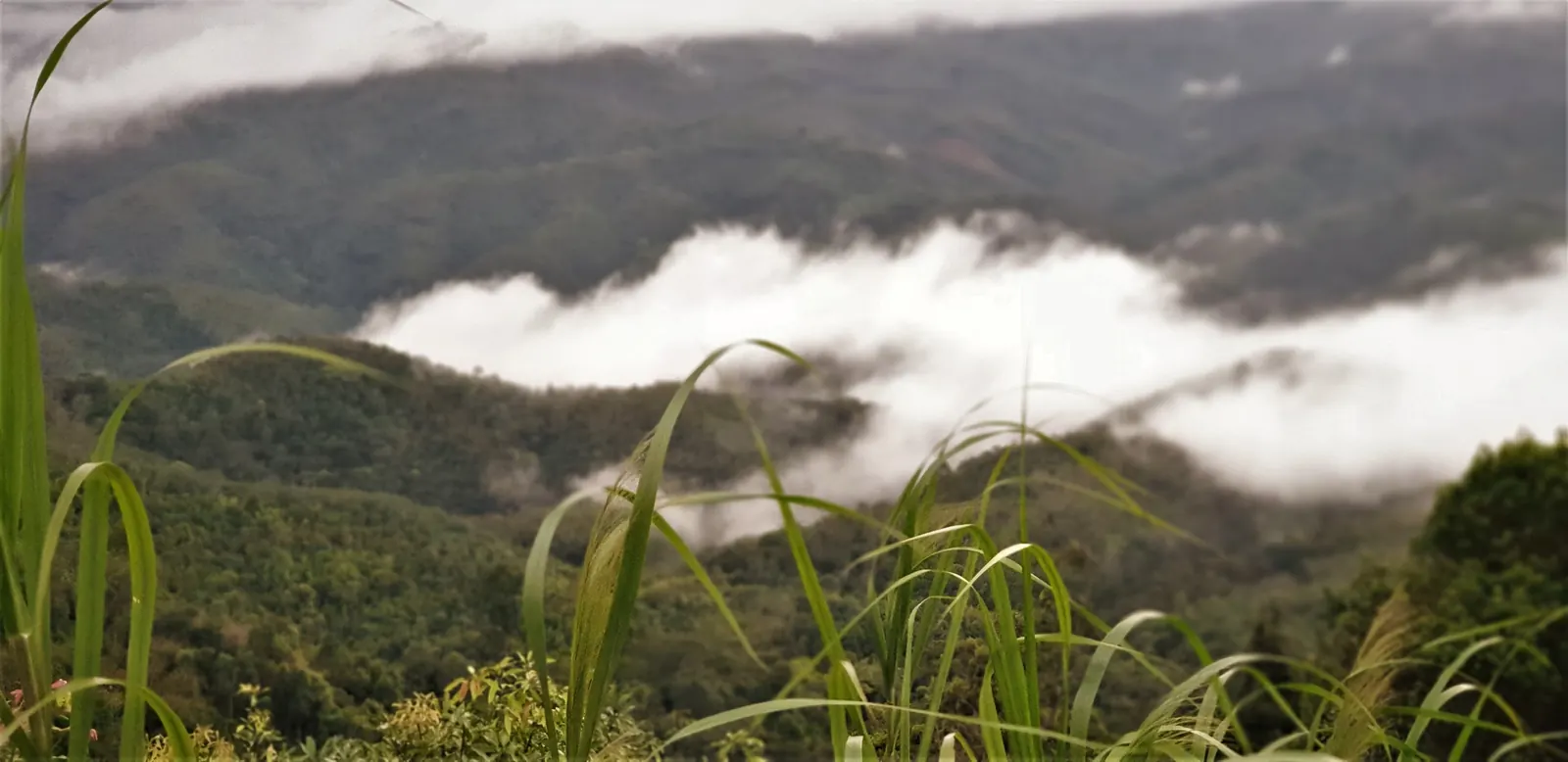
Belle Villa Resort Pai (from around ฿2,500) is the compromise that works: stilted wooden villas over the rice fields on the Huay Pu road, 800 metres from the centre — walkable in daylight, a ฿60 songthaew after dark — with a pool facing the hills. Properly in the hills, Phu Pai Art Resort (from around ฿3,000) at Mae Na Toeng, 3.8 km out, has the pool with the valley in it that every Pai postcard was shot from; Puripai Villa Wellness & Retreat (from around ฿4,000), on a hillside 2.6 km from town, is the honeymoon-and-yoga pick and the one you won’t leave without a key in your hand. Hill mornings are two or three degrees colder than the valley; the rooms have blankets, the balconies have the mist. Verdict: Worth it if you ride; Skip unless you do.
The outer valley: the hot-springs road, a fishing lake and the long-stay huts
Out along the hot-springs road through Mae Hi, Pai thins into paddies, lakes and the places people stay for a month. A kilometre out, Deejai Pai Backpackers (dorms from around ฿200, huts from around ฿400) is the quiet backpacker option, hammocks facing the fields and a bicycle into town. Bueng Pai Farm (from around ฿800) puts bungalows around a stocked fishing lake 1.2 km from the grid and quotes a weekly rate before you ask. Long-stay bungalows along this road run around ฿4,500–8,000 a month in cool season, a scooter ฿900–1,200 a week; our Thailand cost per day guide has the rest of the month.
Further out the stays become destinations. Pai Treehouse Resort (from around ฿1,800) is 6 km down the road on the river, with actual rooms in actual trees and a pool; children lose their minds, adults need the scooter. Pai Hotsprings Spa Resort (from around ฿2,500) sits beside Tha Pai Hot Springs at 7 km with its own mineral pools — which matters, because the national-park gate next door charges foreigners around ฿300 a head as of November 2026 and it is the same water. Verdict: Best for long stays and families with a bike; Skip unless you have transport.
Where to stay in Pai by traveller type
Backpackers: the east bank for the huts, Deejai for a dorm you can sleep in, Pai Circus for a dorm you can’t. Dorms are ฿200–300 and fan huts ฿400–600 year round; the ฿300 rooms on the grid lanes are louder than any of them. Couples: Wiang Tai south — Pai Village Boutique for the garden, Reverie Siam for the pools, Belle Villa for paddies out of the window without a hill to ride. Families: Yoma or The Quarter for a pool within walking distance of ice cream; Pai Treehouse if the children can ride pillion. Long-stay nomads: the hot-springs road or Bueng Pai, a monthly bungalow and a weekly scooter; town Wi-Fi is fine, bamboo-hut Wi-Fi is weather-dependent. Luxury: Reverie Siam if you want to walk, Pai Island for a villa in the river, Puripai or Phu Pai Art for the view — none tops ฿7,000 in cool season, which by the standards of our Thailand Price Index makes Pai the cheapest place in the country to overspend.
What the season does to a Pai room
November to February is the season Pai was built for: dry, cool, mist in the paddies until eight — and Chiang Mai and Bangkok arriving on Friday night. Book a fortnight ahead for weekends and a month ahead for Christmas and New Year, when rates rise 30–50% and the good huts go first; the trade-offs are in our best time to visit Thailand guide, the dates in our festivals and public holidays calendar. December and January mornings are 10–14°C — the one month a Thai hotel room needs a duvet, and the bamboo ones don’t have one.
Late February to April is the smoke. Northern Thailand burns its fields and forests and the Pai valley traps the result: on 1 April 2026 the official 7am PM2.5 reading in Pai was 293 micrograms per cubic metre, some monitors passed 600, and Pai logged more fire hotspots than any district in the north that quarter. Rooms are cheap for a reason — our burning season guide says how to read the numbers. Then Songkran (13–15 April) fills the town for three days and the vans sell out again.
June to October is green season: the paddies flood, the waterfalls work, rooms are 30–40% off. The bamboo footbridge is gone, the east bank goes under in a bad week, and the 1095 occasionally closes for a few hours after a landslide. A fine time for a brick room on the west bank; a bad one for a hut on the flood plain. Long stays get a monthly rate on request — ask on day two, not day one.
Getting to Pai, and getting around once you’re there
There is no train and, as of November 2026, no scheduled flight. The road is Route 1095 from Chiang Mai: 135 km, 762 bends, three to three and a half hours in a Prempracha or Aya minivan — ฿150–250 at the Arcade terminal counter, ฿260–360 online with a hotel pick-up — roughly hourly from about 6.30am to 5.30pm. Vans sell out a day ahead in high season, so book Chiang Mai to Pai on 12Go, take a morning one, sit at the front and read our Chiang Mai to Pai guide for the motion-sickness plan. The return, Pai to Chiang Mai, sells out on Sunday afternoons. From the capital, Bangkok to Chiang Mai is a flight or the night train (ranked in our Bangkok to Chiang Mai guide) and a night in the city — pick the base with our where to stay in Chiang Mai guide. Going on round the Mae Hong Son loop, Pai to Mae Hong Son is another three to four hours of bends.
In town, the grid and the riverside edge are on foot; everything else is a scooter at ฿150–250 a day, a bicycle at around ฿50–100, or a songthaew at ฿50–150 a hop — fewer after dark, none up the hills. Want the sights without riding? A guided day books on GetYourGuide’s Pai page for around ฿1,000–1,500 and saves you the bandage.
The skip list: what not to book in Pai
Anything “glamping” on the river from June to October — a canvas tent on a flood plain is a listing photo, not a plan. Party hostels if you want to sleep — Pai Circus is honest about what it is; be honest about what you are. Scooter shops that want your passport — pay the cash deposit, photograph every scratch, and read our Thailand scams guide for the damage-claim routine. A “mountain view” room with no transport — the view costs a licence. A bamboo hut in January without asking about blankets. Booking the whole trip in the grid — two nights is plenty; the valley is why you came. Nothing here is comped, and the ฿500 hut is still the best-value bed in northern Thailand when the river is where it should be.
Pai stays: your questions, answered
What is the best area to stay in Pai?
The south end of Wiang Tai along the west bank of the river — five to ten minutes’ walk from Walking Street, quiet after eleven, and home to the teak-cottage resorts and the one proper hotel. The centre suits two nights without a scooter, the east bank suits bamboo-hut budgets in dry season, and the hills suit riders who want the view.
How much does a night in Pai cost?
In cool season a dorm bed is ฿200–300, a fan bamboo hut ฿400–600, a mid-range room with a pool ฿1,500–2,500, a teak boutique resort ฿2,000–3,000 and the top end ฿4,500–7,000. June to October knock 30–40% off; Christmas, New Year and Thai long weekends add 30–50%. Monthly bungalows run around ฿4,500–8,000.
Do I need a scooter to stay in Pai?
Not if you stay in the grid or the riverside edge, where dinner, the bus station and the market are on foot and songthaews cover the canyon and hot springs by day. You do need one for the hill resorts and anything beyond two kilometres, especially after dark. Rentals are ฿150–250 a day; bring a motorcycle licence or an IDP for the insurance.
Is Pai cold at night in December and January?
Yes. Valley nights are typically 10–14°C and cold snaps take them to 6–8°C, with hill resorts a few degrees colder; days still reach 27–30°C. Brick rooms have blankets and often a duvet, bamboo huts have whatever you ask for at check-in. Bring a jacket for the 6am ride to the canyon and for the minivan, which leaves before the sun has done anything.
Is it safe to stay by the river in Pai in the rainy season?
Choose carefully. The Pai River overflowed on 25 September 2024 and riverside resorts were evacuated, and August 2016 saw flash floods across the district. From June to October stay in a brick building on the west bank rather than a hut or tent on the east-bank flood plain, and check the forecast if a typhoon remnant is crossing northern Thailand. November to May, riverside is the best address in town.
Related guides
- Things to Do in Pai Thailand: A Budget 2026 Itinerary (With Real THB Prices)
- Chiang Mai to Pai: Minivan, Private Car or the Scooter Everyone Regrets (2026)
- The Mae Hong Son Loop: 1,864 Bends From Chiang Mai, Costed
Book the trip
Some links in this guide are affiliate links. If you book through them we may earn a small commission at no extra cost to you — it helps keep Destination Thailand independent.
Hotels: pick the side of the river first, then compare everything on it — Pai hotels on Agoda. Tours: the canyon-sunset and hot-springs days book up on high-season weekends — Pai day trips on GetYourGuide. Getting there: the minivans are on Chiang Mai to Pai on 12Go, the way back under Pai to Chiang Mai, and the first leg from the capital under Bangkok to Chiang Mai; if you fly in, our Chiang Mai airport arrival guide gets you from the gate to the Arcade terminal. Not sure a cold mountain valley is your Thailand at all? Our Where to Go in Thailand matcher scores all 77 provinces against your month, your crowd tolerance and what you want from the trip.