Phrae, Thailand’s forgotten teak capital, is what Chiang Mai was before the flat whites and the content creators moved in: a small, moated northern city stuffed with century-old teak mansions, where half the town still wears indigo-dyed work shirts because that is what one wears. Google ‘Phrae Thailand’ and the internet practically shrugs. A hundred and twenty years ago this was one of the richest towns in the North, fattened on logging concessions. Then the teak ran out, the roads and railway favoured other routes, and Phrae was left alone with its architecture. Almost nobody comes. That is precisely why you should.
Let me be straight about what Phrae is not. There is no nightlife worth the name, no rooftop bars, no elephant parks with gift shops. What there is: the best-preserved old town in northern Thailand, the leftovers of a Victorian-era timber boom, and the village workshops that dye the nation’s workwear. That is not thin. It is quiet, which is not the same thing.
This guide covers the mansions, the indigo, the ghost canyon and the slightly comic business of actually getting here. For the quick-reference version, start with our Phrae province profile.
What Phrae really is
Phrae claims to be one of the oldest cities in Thailand — the oval earthen ramparts around the old town are said to be over a thousand years old. But the town you see today was built by teak. In the late 1800s, European logging firms floated fortunes down the Yom River, and the local lords and timber merchants spent the proceeds on extravagant mansions in a style best described as Lanna-does-Victorian-gingerbread.
It ended badly, as timber booms do. In 1902 the Shan rebellion tore through the town, Siamese officials were killed, and the last lord of Phrae — implicated fairly or not — fled to Laos and never came back. His house is still here. So are dozens of others. The railway arrived in the early 1910s but only clipped the province’s southern edge at Denchai before bending west towards Lampang; Phrae town never got a station, and the province spent the next century being politely overlooked. The result is a living museum that does not know it is a museum, which is the only kind worth visiting.
Why go to Phrae
Because it is the real thing. The teak houses here are not reconstructions or boutique-hotel conversions — they are lived in, prayed in, and falling apart in the most photogenic way possible. Because you can walk the entire old town in an hour without hearing a tour-group loudspeaker. And because mo hom indigo — the collarless blue shirt worn by farmers, market vendors and every Bangkok creative who wants to look grounded — comes from here, and buying it from the family that dyed it beats any souvenir stall in the country.
Getting to Phrae
Here is the joke at Phrae’s expense: the trains to the North have passed within 24 kilometres of it for over a century without ever quite stopping in it. You ride the northern line to Denchai station, south of the city — roughly eight hours from Bangkok’s Krung Thep Aphiwat terminal, about ฿600-900 for a second-class sleeper berth, a seat considerably less. The overnight Chiang Mai services roll through Denchai at unsociable hours, so check the timetable. From Denchai, local buses and songthaews cover the last stretch into town for ฿40-60; a taxi will want ฿300-400.
The irony is now reversing itself: Denchai is the starting point of the new Denchai-Chiang Rai-Chiang Khong railway, currently under construction. The province Bangkok forgot when the trains got faster is, decades later, back on the map because of one.
Buses are simpler: direct services from Bangkok’s Mo Chit terminal take eight to nine hours, about ฿450-650 depending on class. From Chiang Mai it is roughly four hours and ฿200-300; from Nan, about two hours. Phrae technically has an airport, but scheduled flights have come and gone — check before building a trip around one.
For live timetables and tickets on these routes, compare your options on 12Go before you commit to a departure time.
Where to stay
Stay inside or immediately around the old town, full stop. This is where the teak houses, temples and morning food are, and several old family homes now run as simple guesthouses — expect ฿400-800 for a clean room with a wooden floor that creaks in a way money cannot buy. Mid-range business hotels cluster along the main roads outside the moat at ฿700-1,500, comfortable and characterless in equal measure. The top end is a boutique-ish ฿1,500-2,500, which buys the best room in the province. There is no luxury tier. Phrae does not apologise for this and neither should you.
What to eat in Phrae
This is northern Thai food at local prices with zero tourist tax. Start at the morning market near the old town’s main gate: khao soi from the morning-only noodle shops runs ฿50-70 a bowl, khanom jeen nam ngiao — rice noodles in a pork-and-tomato broth — about ฿40-50. Order lab khua, the northern larb, dark and bitter with dried spices rather than the lime-bright Isaan version; expect ฿60-80 with sticky rice. Grilled sai ua sausage from the fresh market is the correct mid-morning snack.
On Saturday evenings the old town hosts a walking street market — food stalls, mo hom stalls, and grandmothers selling khanom you will not find in Bangkok. Arrange your visit around it if you can.
Top things to do in Phrae
1. Khum Chao Luang
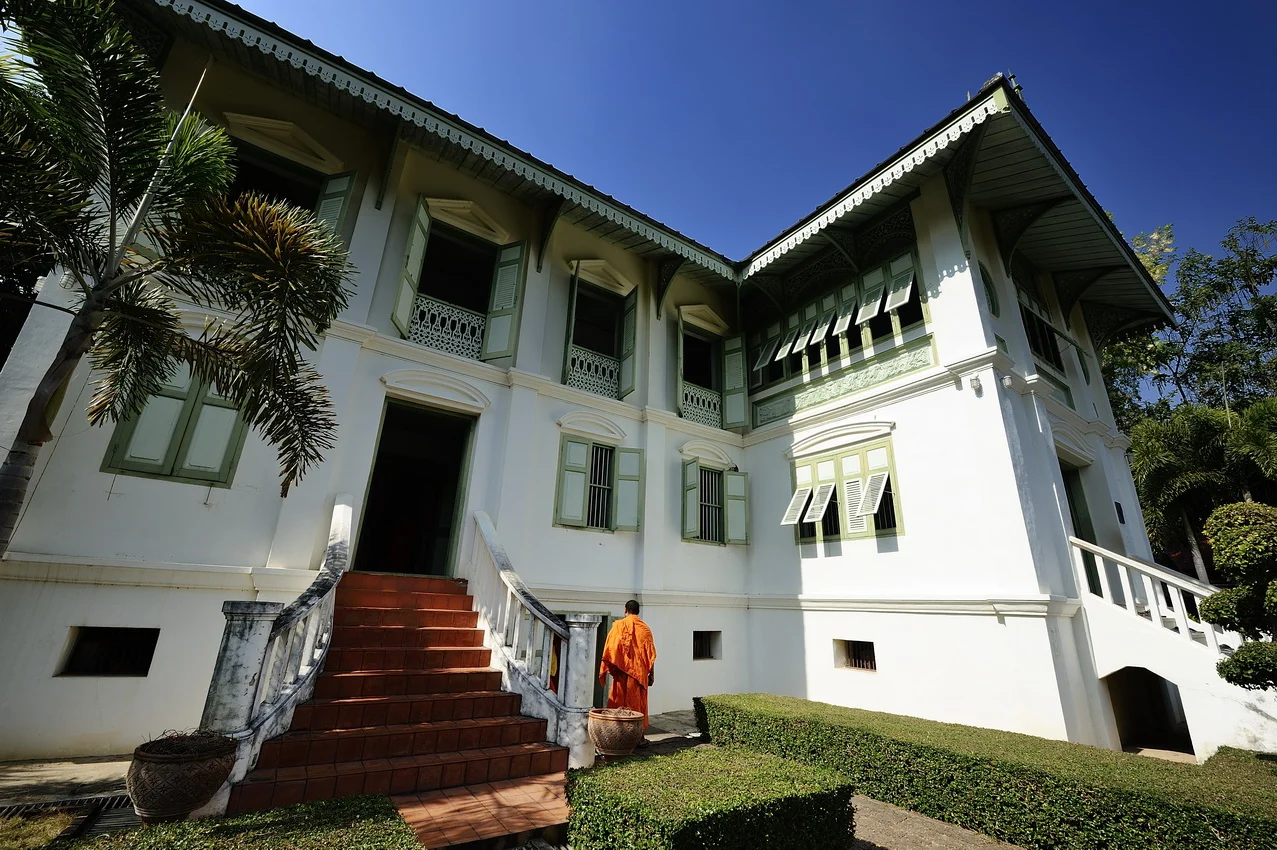
The 1892 mansion of the last lord of Phrae, and the single best building in the province: a two-storey teak-and-masonry pile in gloriously confident colonial-Lanna hybrid style, painted pale and trimmed with fretwork. Downstairs, the basement rooms were used as holding cells — the logging fortune had a dark side, and the house does not hide it. Entry is free or by small donation; it runs as a museum during daylight hours.
2. Vongburi House
A few streets away stands the pink one: a two-storey gingerbread teak mansion built around the turn of the twentieth century for a family grown rich on timber concessions. Inside it is all original — carved gables, period furniture, and the actual documents of the logging trade, including elephant registration papers. Elephants were logging machinery, and they came with paperwork. Entry is a token ฿30-50, possibly the best-value ticket in Thai heritage tourism.
3. Wat Phra That Cho Hae
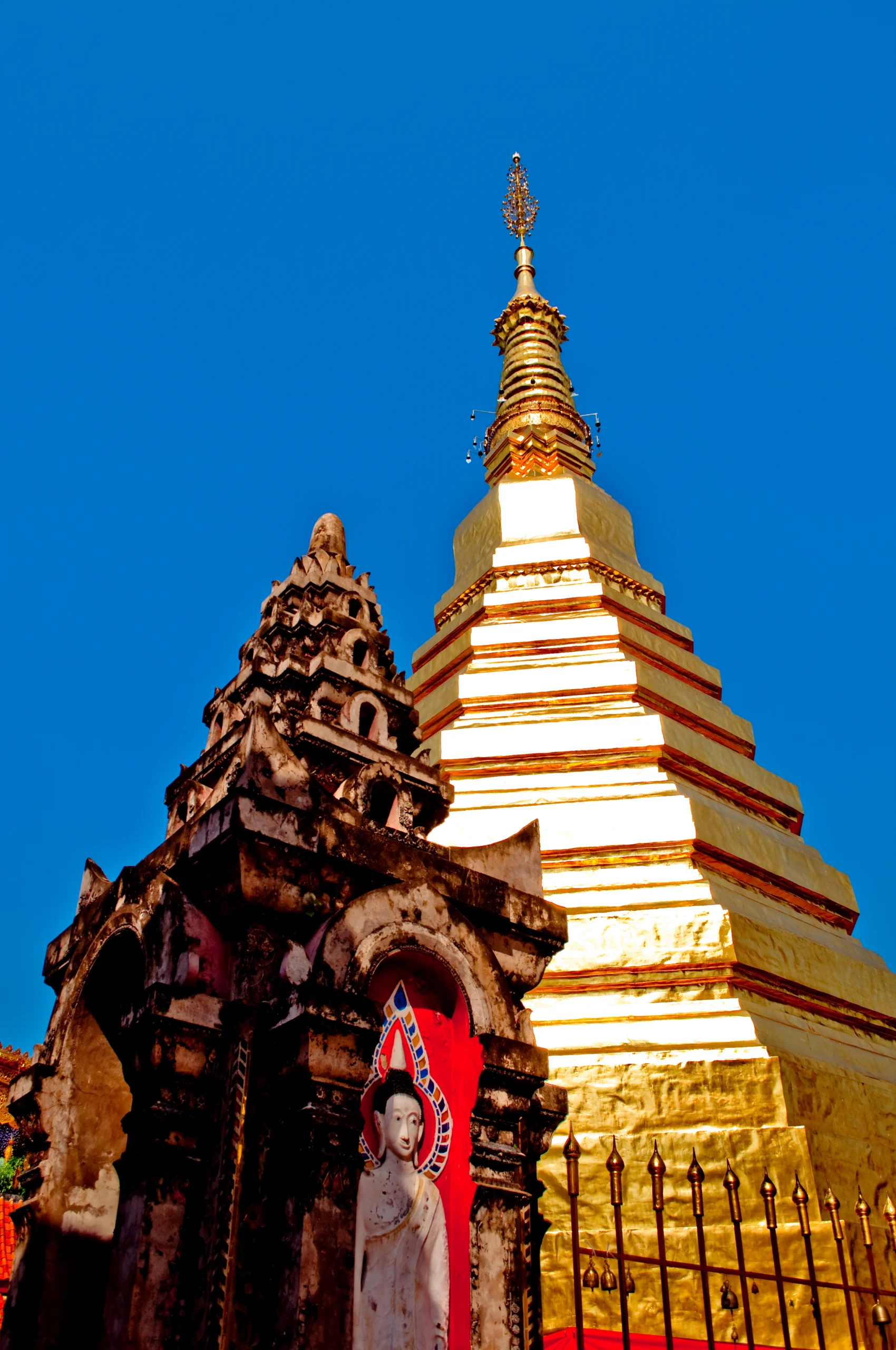
Phrae’s holiest site sits on a low hill about nine kilometres east of town: a 33-metre gilded chedi wrapped, on ceremonial occasions, in the satin cloth that gives the temple its name. In the Lanna birth-year tradition this is the pilgrimage chedi for those born in the Year of the Tiger, so you share the naga staircase with Thai pilgrims rather than tour buses. Go late afternoon when the gold catches the low sun. Entry is free; dress properly.
4. Walk the old town moat
The earthen ramparts and moat enclose an oval old town you can circle on foot in about an hour, and it is the best free activity in the province. Inside the walls: Wat Luang, said to be as old as the city itself; teak shophouses in various states of elegant decay; and a street grid that has not been improved by anyone, thank God. Early morning, when the monks are out and the market is loud, is when the town makes sense.
5. Buy mo hom at the source in Ban Thung Hong
Ten minutes north of town on Highway 101, Ban Thung Hong is the village that dyes Thailand’s workwear. Mo hom is the indigo farmer’s shirt — collarless, hard-wearing, worn from paddy fields to Bangkok design studios — and here you can watch it made, from fermented dye vats to finished shirt. A standard one costs ฿150-300; hand-stitched, naturally dyed pieces cost more and are worth it. Several workshops let you dye your own fabric for a couple of hundred baht.
6. Phae Mueang Phi ghost canyon
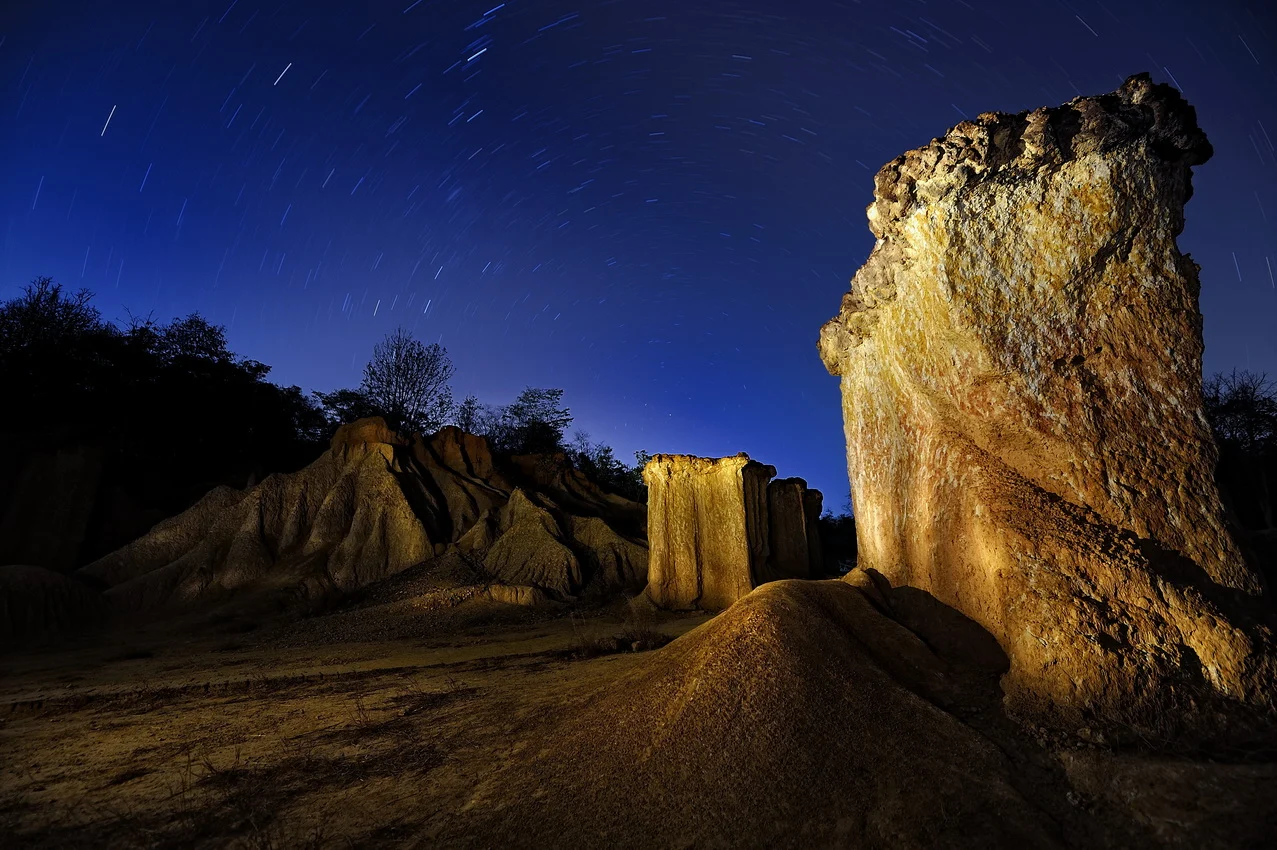
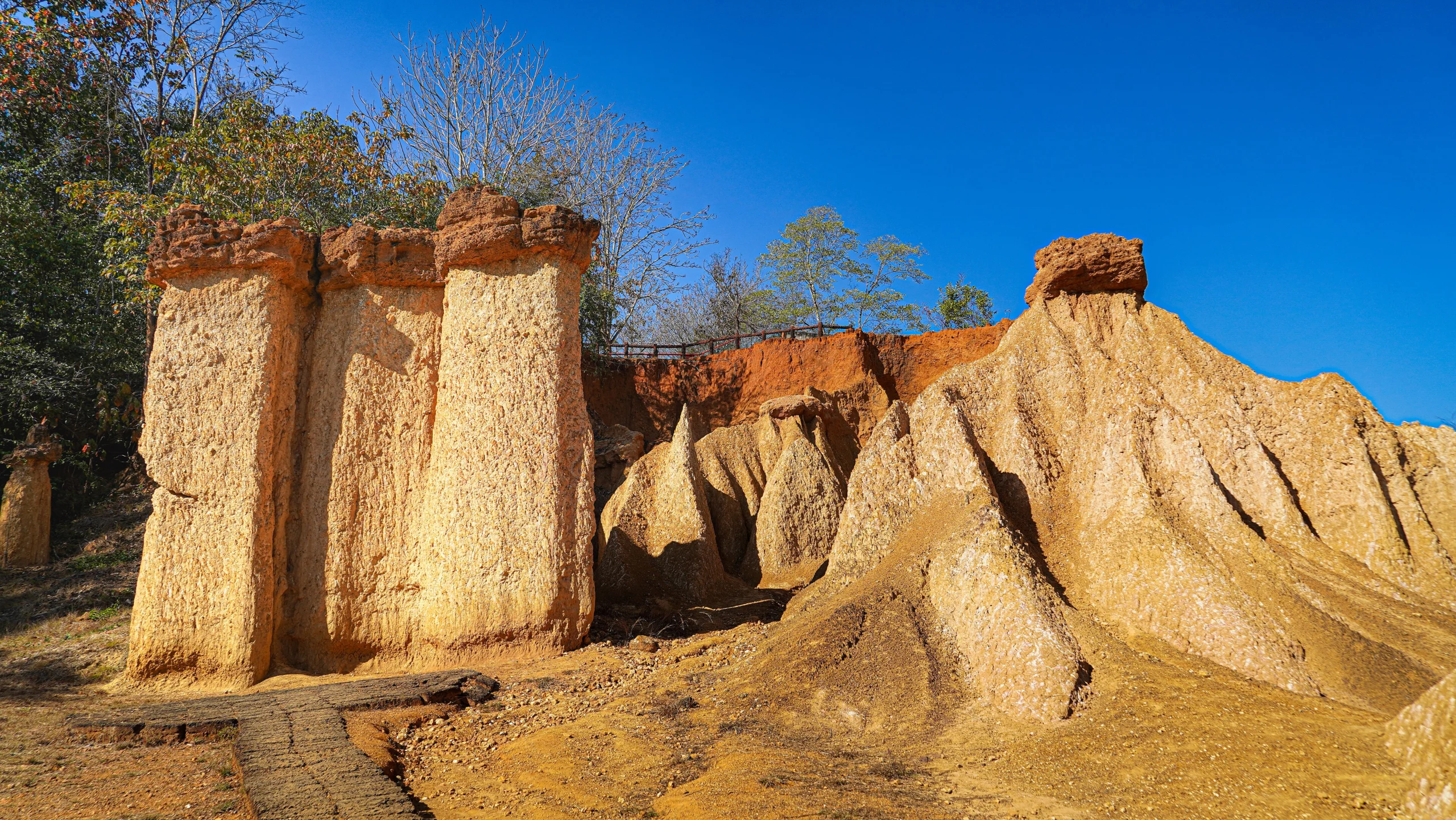
About eighteen kilometres northeast of town, erosion has chewed a patch of forest into ochre pillars and hoodoos — Phae Mueang Phi translates roughly as ghost city, and local legend populates it accordingly. It is a strange, silent, faintly Martian place, superb at golden hour. It is compact — under an hour sees it — so bolt it onto a Cho Hae afternoon rather than treating it as a pilgrimage.
What to skip
Skip the day trip. Every so often someone in Chiang Mai decides to tick off Phrae in a day — four hours there, four hours back, an hour of sweaty mansion-viewing in the middle. This is madness. Phrae’s entire appeal is its pace: the 7am market, the golden-hour chedi, the evening when the old town goes quiet and the crickets take over. Day-tripping it is like ordering a single oyster. Stay two nights or do not come.
Also: do not visit Phae Mueang Phi at midday — no shade, flat light, looks like a building site — and do not buy mo hom from souvenir stalls in other provinces — much of it is chemically dyed imitation. Twenty minutes in Ban Thung Hong gets the real thing for the same money.
Phrae travel: practical info
The season rules are standard northern Thailand. November to early February is the sweet spot — cool mornings, clear skies, mo hom-weather in the evenings. March and April are burning season, when field fires fill the northern valleys with smoke; avoid it then. The rains, June to October, are green and workable.
Wikipedia’s Phrae entry tells the teak-concession story in full.
TAT’s official Phrae page keeps current opening days for the teak houses.
Two nights is right: one day for the old town and mansions, one for Cho Hae, Ban Thung Hong and the ghost canyon. Onward, you are well placed — Nan is two hours east by bus, Lampang about two and a half west, Phayao sits to the north, and Uttaradit and the railway south are just down the road at Denchai. Phrae pairs naturally with Nan for a week of the North that most visitors never see.
FAQ
Is Phrae Thailand worth visiting?
Yes, if you want northern Thailand without crowds. Phrae has the region’s best-preserved old town, genuine teak-boom mansions, and the home village of mo hom indigo. If you need nightlife or resort infrastructure, it is not your province.
How do I get to Phrae from Bangkok?
Take the northern line train to Denchai station (about eight hours, ฿600-900 for a sleeper berth), then a local bus or songthaew 24km into town. Direct buses from Mo Chit take eight to nine hours, ฿450-650. Flights are intermittent — check before relying on one.
What is Phrae famous for?
Teak and indigo. The town grew rich on late-19th-century logging, and its teak mansions — Khum Chao Luang and Vongburi House chief among them — survive intact. Ban Thung Hong village produces mo hom, the indigo shirt worn as workwear across Thailand.
How many days do you need in Phrae?
Two nights covers it properly: one day for the walled old town and mansions, one for Wat Phra That Cho Hae, Ban Thung Hong and Phae Mueang Phi. Add a third to slow down to local speed, which is rather the point.
What should I buy in Phrae?
A mo hom shirt from Ban Thung Hong, bought at the workshop that dyed it — ฿150-300 for a standard one, more for hand-stitched natural-dye pieces. One of the few Thai souvenirs people at home will actually wear.