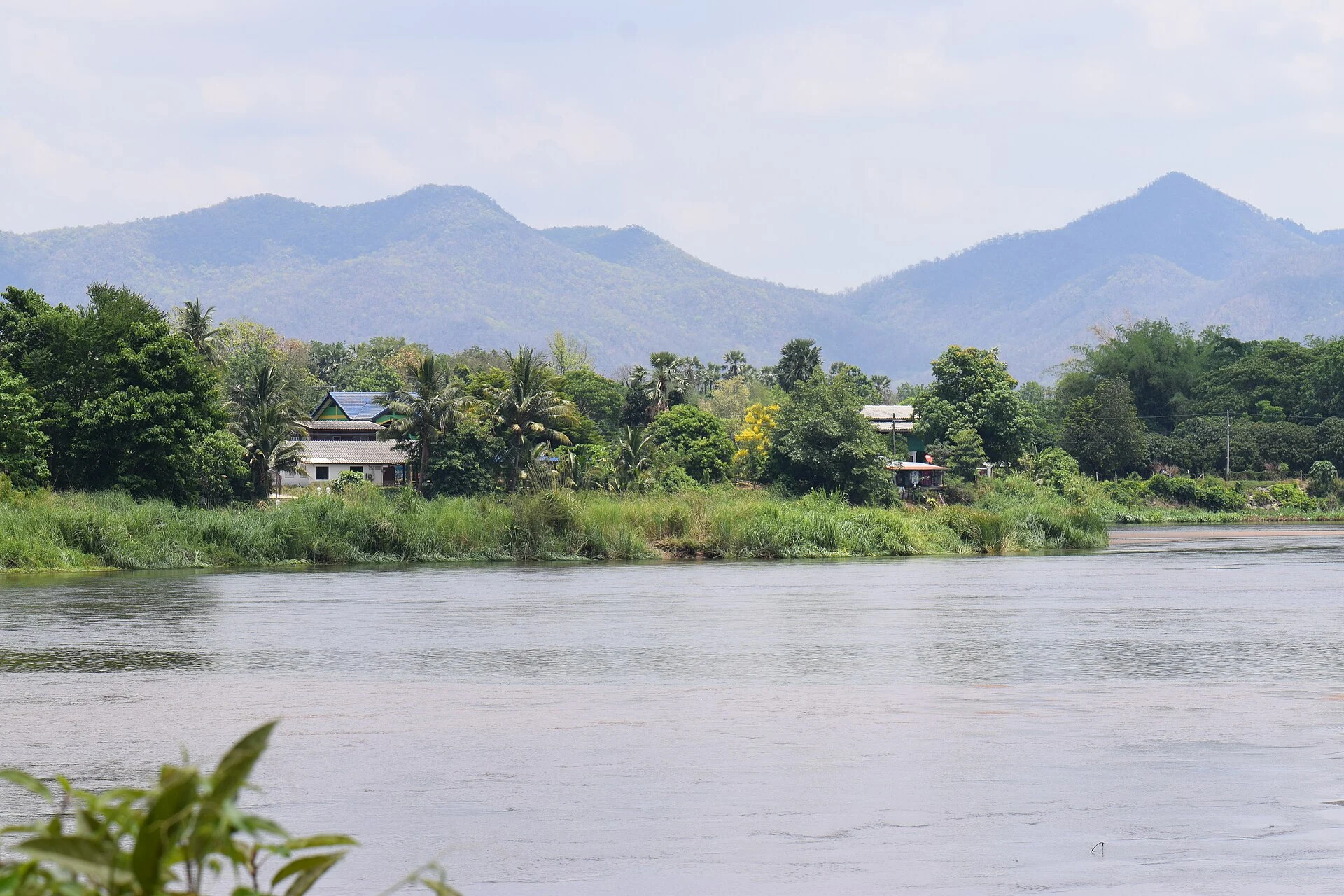
Mae Sot is the most interesting town in Thailand that almost nobody visits on purpose. It sits on the Moei River at the far western edge of Tak province, staring across at Myanmar, neither pretty nor polished and entirely unbothered by either fact. What Mae Sot offers instead is genuinely rare: a real border town doing real border-town business, where two countries blur so thoroughly you occasionally forget which side of the river you are on.
Men wear the longyi, the Burmese sarong, as everyday dress. Women and children wear pale swirls of thanaka bark paste. The morning market smells of mohinga rather than rice porridge, the mosques are full, and half the conversation around you is in Burmese, Karen or Hmong. Thailand has dozens of border crossings. It has exactly one Mae Sot.
This guide covers the town, the border and the rest of the province — the national parks along the mountain road, Bhumibol Dam, and the long pilgrimage south to Thi Lo Su, the biggest waterfall in the country. For the potted version, start with our Tak province profile.
What Mae Sot really is
On paper, Mae Sot is a district of Tak province and a designated special economic zone. In practice it is Thailand’s most Burmese town: a trading post, a refugee hub and an NGO capital rolled into one untidy grid of streets. For forty years it has absorbed people fleeing whatever Myanmar’s generals were doing, and the 2021 coup turned a steady flow into a flood. The Mae Tao Clinic has treated refugees and migrants since the late 1980s, aid organisations run offices out of shophouses, and the resident NGO crowd sustains a small, serious café scene — proper flat whites and Burmese tea shops a hundred metres apart.
None of it is a museum piece. Mae Sot is a working town with warehouses, traffic and an unlovely main road. If you need your destinations photogenic, you will hate it. Give it two days and a little curiosity and it becomes one of Thailand’s most quietly fascinating places.
Why go to Mae Sot
Three reasons. First, the food — the best Burmese cooking in Thailand at prices that barely register. Second, geography: serious mountains on every side and the only sensible gateway to Umphang and Thi Lo Su. Third, the honesty. Nobody here is performing Thainess for your camera, and after the elephant-pants circuit further north, that alone justifies the bus fare.
Getting to Mae Sot
Nok Air flies from Bangkok Don Mueang in about 70 minutes, typically ฿1,200-2,500 one way booked a week or two out. The airport sits ten minutes west of town, practically on the border.
Buses from Bangkok’s Mo Chit terminal take seven to eight hours, roughly ฿450-700 by class; overnight VIP is the civilised option. From Chiang Mai it is about six hours via Tak city.
The final stretch is the point. Route 105 from Tak city crosses a proper mountain range — 80-odd kilometres of climbs and hairpins past the Doi Muser markets — and minivans do it in about an hour and a half for ฿70-80. From Sukhothai, count on three hours and a couple of hundred baht by minivan. There is no train, and there never has been.
For live timetables and tickets on these routes, compare your options on 12Go before you commit to a departure time.
Where to stay
Stay central. The blocks around Prasat Withi Road and the night market put everything that matters within walking distance, and this is a town best consumed on foot at 7am. A clean fan guesthouse runs ฿300-500, air-con rooms with decent wifi sit around ฿600-900, and the few business hotels with pools top out near ฿1,500. Nobody comes here for the sheets.
Doing Thi Lo Su properly means sleeping in Umphang, where simple wooden riverside resorts charge ฿400-800 and the nights get cold enough to justify the blanket. Tak city is a junction: fine for one night near the bus station, no more.
What to eat in Mae Sot
Start with mohinga, Myanmar’s national dish — a turmeric-yellow fish and lemongrass noodle soup thickened with chickpea flour and topped with crunchy fritters. At the municipal market it costs ฿30-40 a bowl and it beats any Thai breakfast for depth and funk. Chase it with sweet Burmese milk tea and whatever fried thing is nearest.
Then work outward: laphet thoke, the fermented tea-leaf salad, all crunch and caffeine; Burmese curries that arrive with a tableful of side dishes; samosas, roti and biryani in the streets near the mosques. The night market handles the Thai standards competently, but ordering pad krapow here is like ordering a burger in Bologna. On the road in or out, stop at the Doi Muser stalls on Route 105, where Hmong farmers sell avocados, coffee and, in season, strawberries at prices Bangkok would weep at.
Top things to do in Mae Sot and around Tak
1. Do breakfast at the municipal market
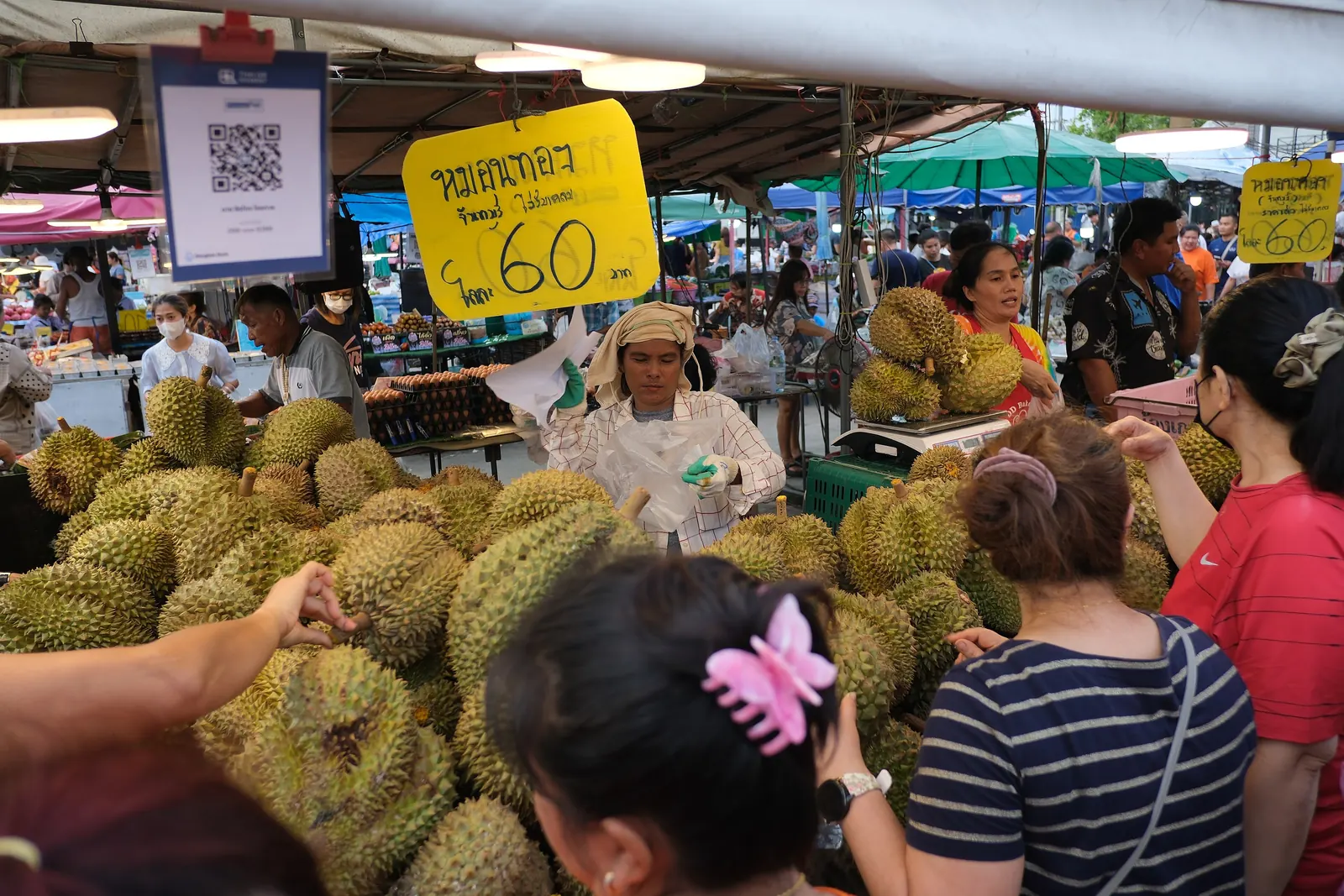
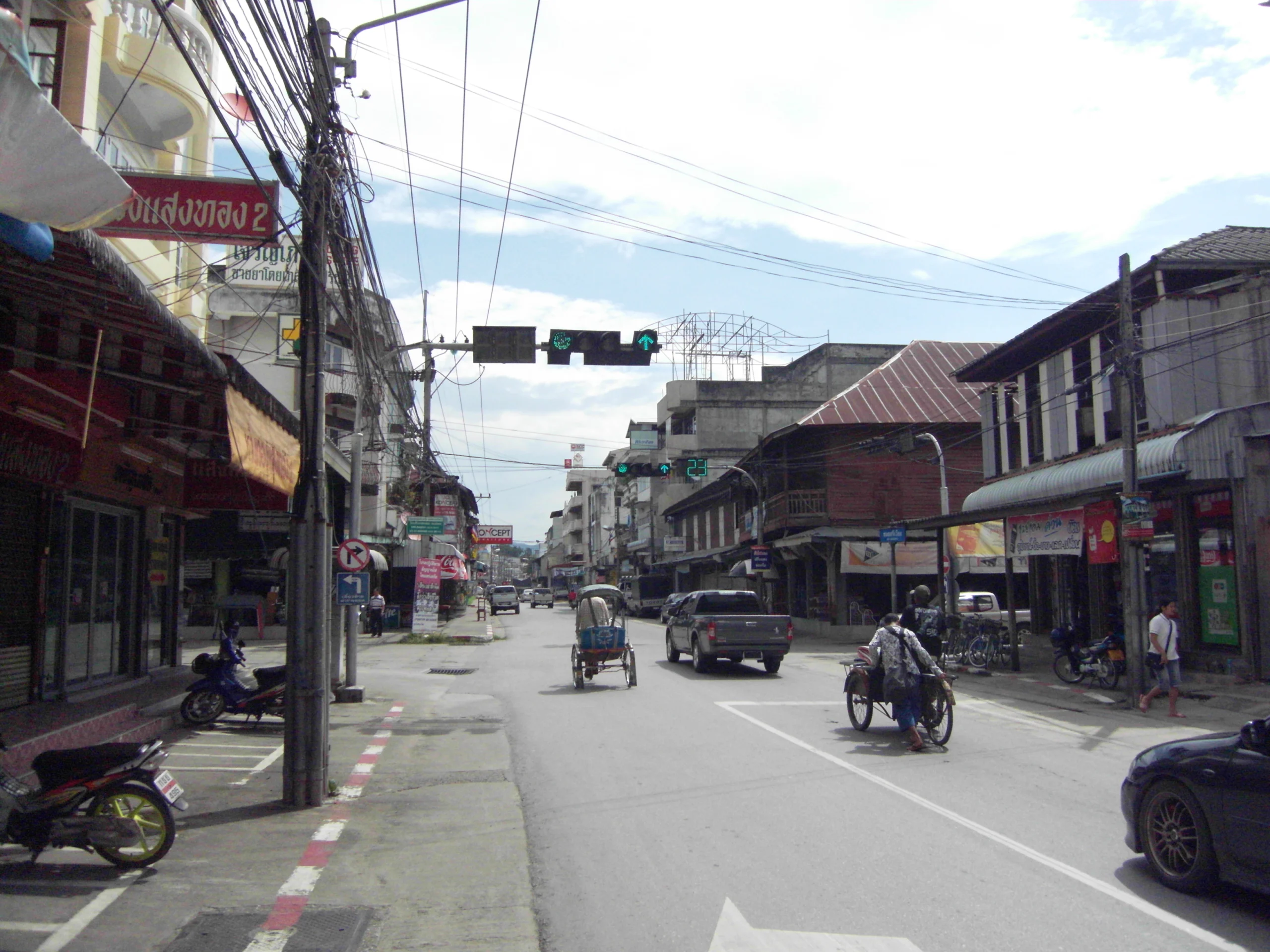
Get there between 6.30 and 8am, when the market runs at full tilt. This is the best single window onto what makes Mae Sot different: longyi-wrapped traders, thanaka-painted faces, monks on alms rounds, river fish and Burmese groceries stacked to the ceiling. Eat mohinga on a low stool, point at anything you cannot identify, and budget ฿100 for a breakfast you will still be describing next week. No tickets, no curation — just turn up hungry.
2. Rim Moei border market and the Friendship Bridge
Five kilometres west, where the highway runs out at the Moei River, Rim Moei market sells dried seafood, blankets, teak carvings, cheroots and a great deal of optimism, in the shadow of the Thai-Myanmar Friendship Bridge, opened in 1997, with Myawaddy on the far bank. Give it an hour for the river and the geopolitics.
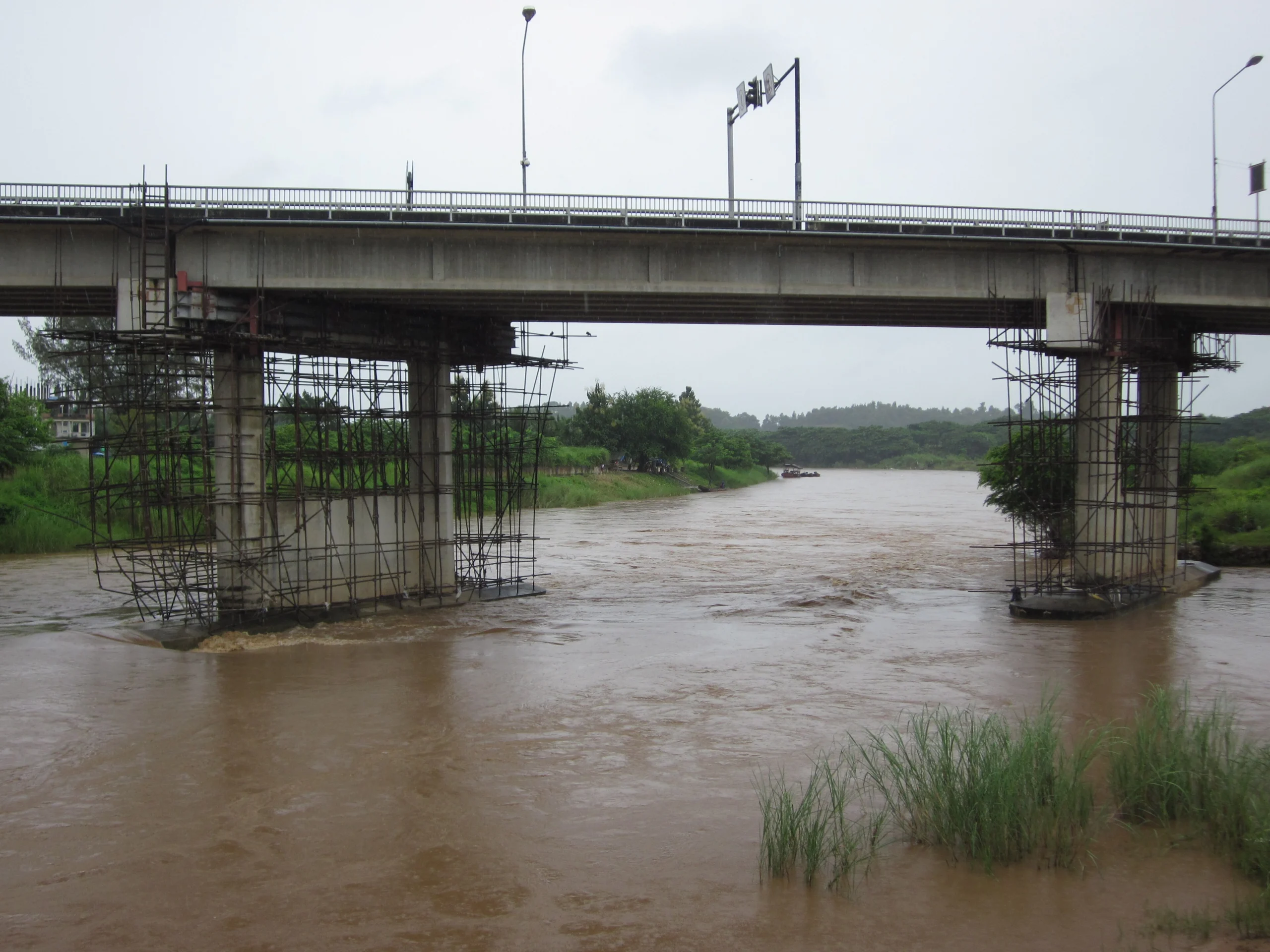
Be under no illusion about that view, though. The boom developments across the water are the centre of South East Asia’s scam industry, built substantially on trafficked labour. That is the dark side of the border economy, and precisely why you enjoy the bridge from the Thai bank and go no further.
3. Wat Phra That Doi Din Kiu
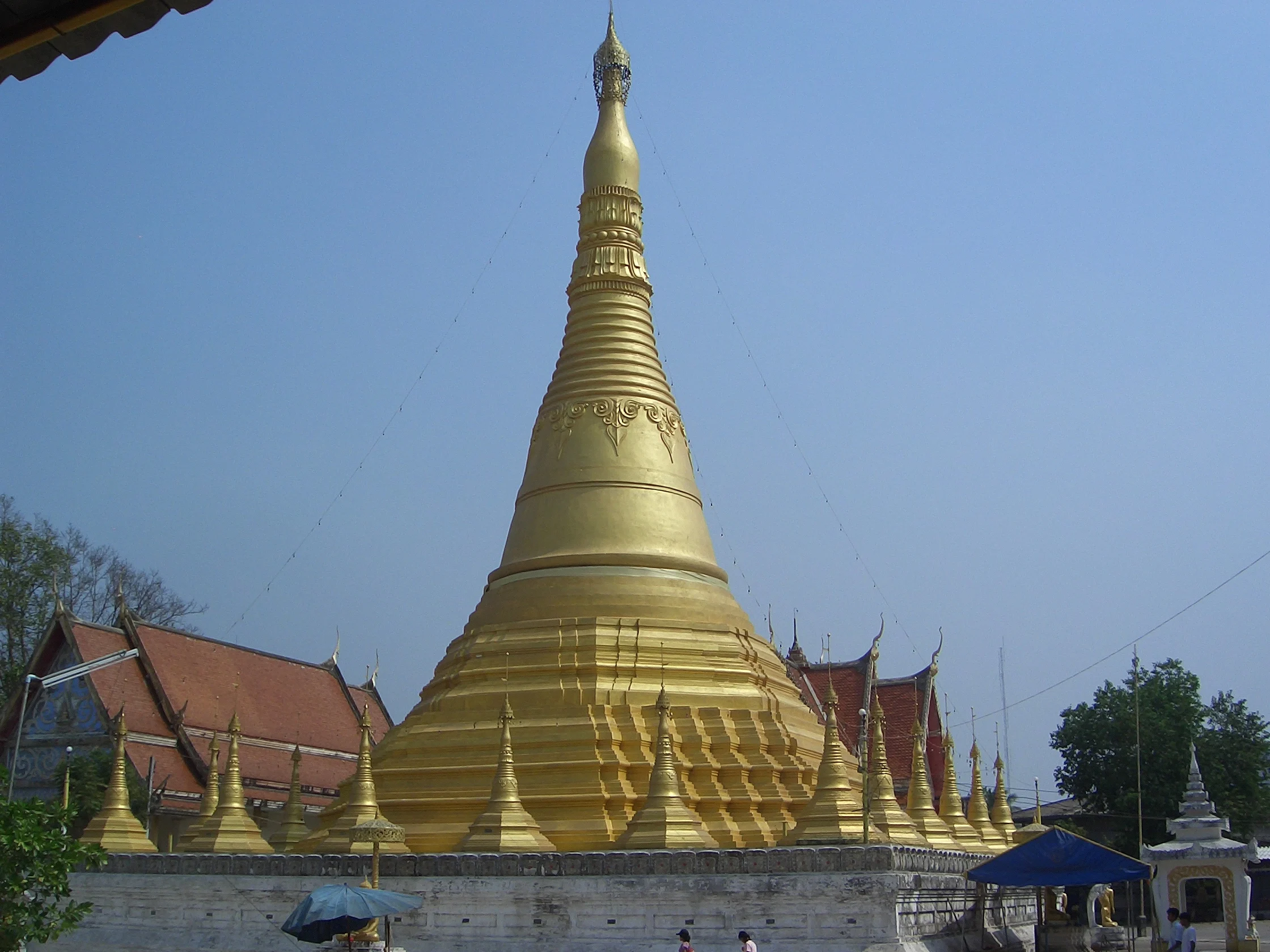
Eleven kilometres north of town, this small hilltop temple is built around a chedi on an overhanging boulder — a pocket-sized cousin of Myanmar’s Golden Rock — with long views over the Moei valley. It is quiet, oddly moving, and occasionally closed when the border is tense, so ask in town before riding out. Back in the centre, the golden chedi at Wat Chumphon Khiri, modelled on Yangon’s Shwedagon, completes the Burmese picture.
4. Thi Lo Su waterfall, via the Death Highway to Umphang
The big one. Route 1090 runs 164 kilometres south to Umphang through 1,219 bends — christened the Death Highway in the insurgency years, a name the corners now earn on their own. Songthaews take about four hours for a few hundred baht. From Umphang, a rough dirt track and a short forest walk deliver Thi Lo Su, Thailand’s biggest waterfall: a limestone amphitheatre roughly 250 metres high inside Umphang Wildlife Sanctuary. In the rainy season the track closes and you go in by raft down the Mae Klong instead, which is arguably better. Book through an agency in Umphang or Mae Sot, allow two nights, and do not attempt a day trip. Best waterfall in the country; not a close contest.
5. Lan Sang and Taksin Maharat national parks
The mountain road between Tak city and Mae Sot threads between two small, underrated national parks. Lan Sang is a granite gorge with a chain of modest waterfalls and good short walks; Taksin Maharat’s party piece is the giant krabak tree, roughly 50 metres tall and 16 metres around, which makes everyone photographing it look like a garden gnome. Between them sit the Doi Muser viewpoint and its Hmong markets. Expect about ฿100-200 foreigner entry at each; treat the pair as a half-day pause rather than a pilgrimage.
6. Bhumibol Dam
An hour north of Tak city, Bhumibol Dam has held back the Ping River since 1964 — a 154-metre concrete arch, still the tallest dam in Thailand, with a vast reservoir snaking into the hills behind it. Walk the crest, take a boat on the lake, picnic with Thai families at the weekend. Grand engineering rather than natural wonder; a rewarding detour en route to Lampang.
What to skip
The gem and jade stalls at Rim Moei. Every table offers rubies of miraculous provenance and jade bangles at once-in-a-lifetime prices, and almost all of it is glass, dye and hope. If you cannot grade jade in an auction room, you will not manage it across a plastic table — and the vendors know that better than you do. Buy the blankets, leave the stones.
Skip crossing into Myawaddy too, even if the bridge reopens to foreigners while this page is live. There is a civil war on the other side of that river and the town opposite has been captured by the scam-compound economy. Treat the border as scenery, not an activity.
Mae Sot travel: practical info
Best season is November to February: cool nights, clear ridgelines, the Umphang road at its most forgiving. March and April bring burning season, and the smoke in these valleys can be genuinely grim for days at a stretch. June to October is green and dramatic, but Thi Lo Su goes raft-only and mountain journeys slow down.
Wikipedia’s Mae Sot entry covers the border town’s unusual history.
TAT’s official Tak page has park fees and seasonal closures.
Two days covers the town and border properly; add three for the Umphang round trip. ATMs are everywhere in town but thin on the ground in Umphang, so carry cash south. Onward, it is three hours to Sukhothai’s ruins, two and a half to Kamphaeng Phet via Tak, six to Chiang Mai. This is a live border and conditions change with the news cycle, so ask locally rather than trusting a two-year-old blog post.
FAQ
Is Mae Sot worth visiting?
Yes — if you want texture rather than beaches. Mae Sot has the best Burmese food in Thailand, a cultural mix no other town can match, and the gateway role for Thi Lo Su. If your trip is strictly temples and islands it will feel like a detour; if you care how countries meet, it is essential.
Can you cross the border from Mae Sot into Myanmar?
Not usefully. The Friendship Bridge crossing to Myawaddy has been closed or heavily restricted for foreign tourists for years, and conditions on the far side make it a bad idea even when the paperwork allows. Enjoy the river from the Thai bank.
Is Mae Sot safe?
The town is calm and safe by any normal standard; the dramas in the headlines happen across the river, not in its streets. Fighting in Myanmar is occasionally audible near the border, and the authorities close riverside spots when needed. Normal travel sense applies; paranoia does not.
How do you get to Thi Lo Su waterfall from Mae Sot?
Take Route 1090 south to Umphang, about four hours over 1,219 bends, then arrange sanctuary access there: a rough track and short walk in the dry season, a rafting approach in the rains. Realistically a three-day, two-night exercise, and worth every hour.
How many days do you need in Mae Sot?
Two full days for the town, markets and border, plus three more for Umphang and Thi Lo Su. A week covers the whole province, including the parks on the Tak road and Bhumibol Dam, without feeling rushed.