Most people who look up things to do in Nan arrive with one picture in mind: a tattooed man leaning in to whisper to a woman, painted on a temple wall some time in the late nineteenth century and now printed on half the tote bags in Thailand. The painting is in Nan, at Wat Phumin, and you can stand in front of it for as long as you like, usually alone. That is the clue to the whole province. Nan has the murals, the mountains and the food of the famous north, and about a twentieth of the visitors. People plan two nights and stay a week, and it is not because there is a lot to do. It is because there is just enough, slowly.
The short version: give the old town two days for Wat Phumin, the National Museum, Wat Phra That Chae Haeng and an afternoon on a bicycle, then hire a car or a scooter and do the mountain loop: Pua, the Route 1256 “sky road” over Doi Phu Kha, the salt wells at Bo Kluea and a night or two in Sapan. Skip Doi Samer Dao on a long weekend and the whole province in March and April. Every entry below ends with a verdict and a November 2026 price.
The background on Nan’s centuries as its own kingdom, and the food, is in our Nan travel guide; the map is on the Nan province page; prices are checked against our Thailand Price Index, and estimates say “around”. Nothing was comped.
How Nan is laid out, and why you need wheels for half of it
Think of Nan as two trips. Nan town, on the Nan River, is a flat, walkable old quarter of temples, teak shophouses and a palace museum, with the airport ten minutes away; you can do it on foot and a ฿50 bicycle. The mountains start about 60 kilometres north at Pua and run east to the Lao border: Doi Phu Kha National Park, Bo Kluea and the village of Sapan. They are joined by two roads that make a loop, Route 1256 over the ridge from Pua to Bo Kluea, and Route 1081 back south to town through Santi Suk. Public transport out there is a few slow songthaews a day. A car or scooter turns it into the best two days in the province.
Things to do in Nan old town: the whispering mural, a palace and a black tusk
1. Wat Phumin and the whispering couple
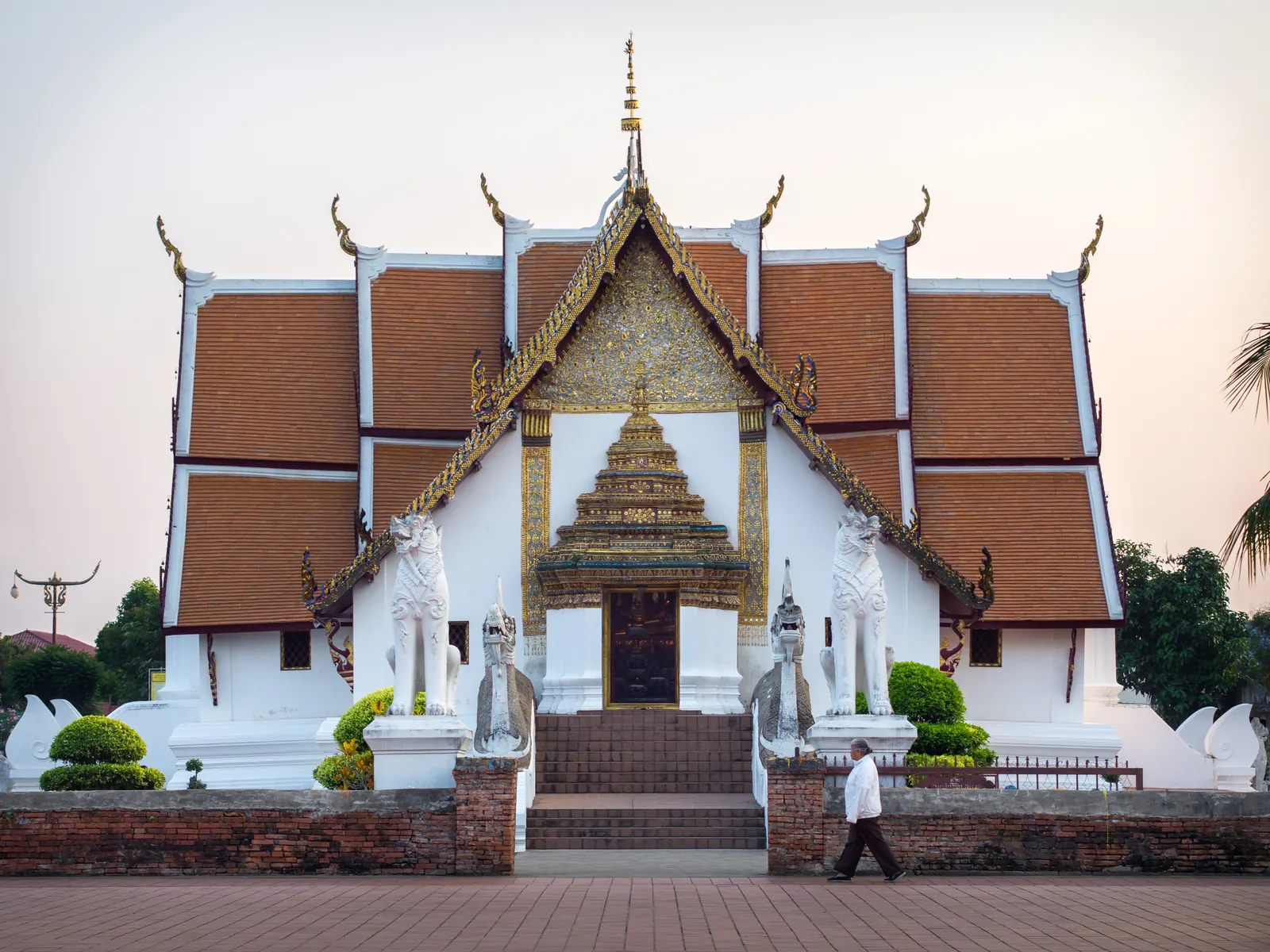
Wat Phumin’s ordination hall dates from 1596, a cross-shaped building with four Buddhas sitting back to back facing the four doors, and two huge nagas running underneath so the whole hall looks carried on their backs. The murals were painted during a restoration in the late nineteenth century, credited to the Tai Lue artist Thit Buaphan, and they are the reason to come: Jataka tales on one level, and on another, daily Nan life of the 1870s, with traders, foreigners, gossips, tattoos and the famous couple, known as Pu Man Ya Man. Entry is free with a donation box; it opens from early morning into the evening, as of November 2026. Go at opening, when the light comes in the doors and there is no tour group, and give the walls a full hour. Shoulders and knees covered; our temple etiquette guide has the rest.
Verdict: Do it, first, and twice if you can. Free.
2. Nan National Museum
Across the road from Wat Phumin, in the Hor Kham, the palace of Nan’s last ruling family. The building alone earns its fee, and the exhibits are a better than average telling of Nan’s six centuries between Sukhothai, Lanna, Burma and Bangkok, plus the Tai Lue and hill peoples of the province. The star is the black elephant tusk, the Nga Chang Dam, credited with protecting the city. Foreigners pay ฿120 and Thais ฿20; it is open Wednesday to Sunday, 9am to 4pm, and closed Monday and Tuesday, the detail that catches people who arrive on a Monday flight. The frangipani arch in the grounds is the photograph Thai visitors queue for.
Verdict: Worth it, for an hour. ฿120; plan your days around the Monday–Tuesday closure.
3. Wat Phra That Chang Kham and the old-town bicycle loop
Next door to the museum, Wat Phra That Chang Kham has a gilded chedi with stucco elephants half-emerging from its base, and it is where the old town’s other temples, Wat Hua Khuang, Wat Ming Mueang and Wat Suan Tan, start to join up into a ride. Guesthouses rent bicycles for around ฿50–100 a day. The old quarter is flat and small, the traffic polite, and a loop through the temples, the surviving stretches of city wall and the teak shophouses takes an unhurried afternoon with coffee stops. Finish on the riverbank at sunset. On Friday to Sunday evenings the walking street in front of Wat Phumin sets out food stalls and seated mats, the tourists are mostly Thai and a plate is ฿40–80.
Verdict: Do it; the best way to see the town. Bike around ฿50–100 a day; temples free.
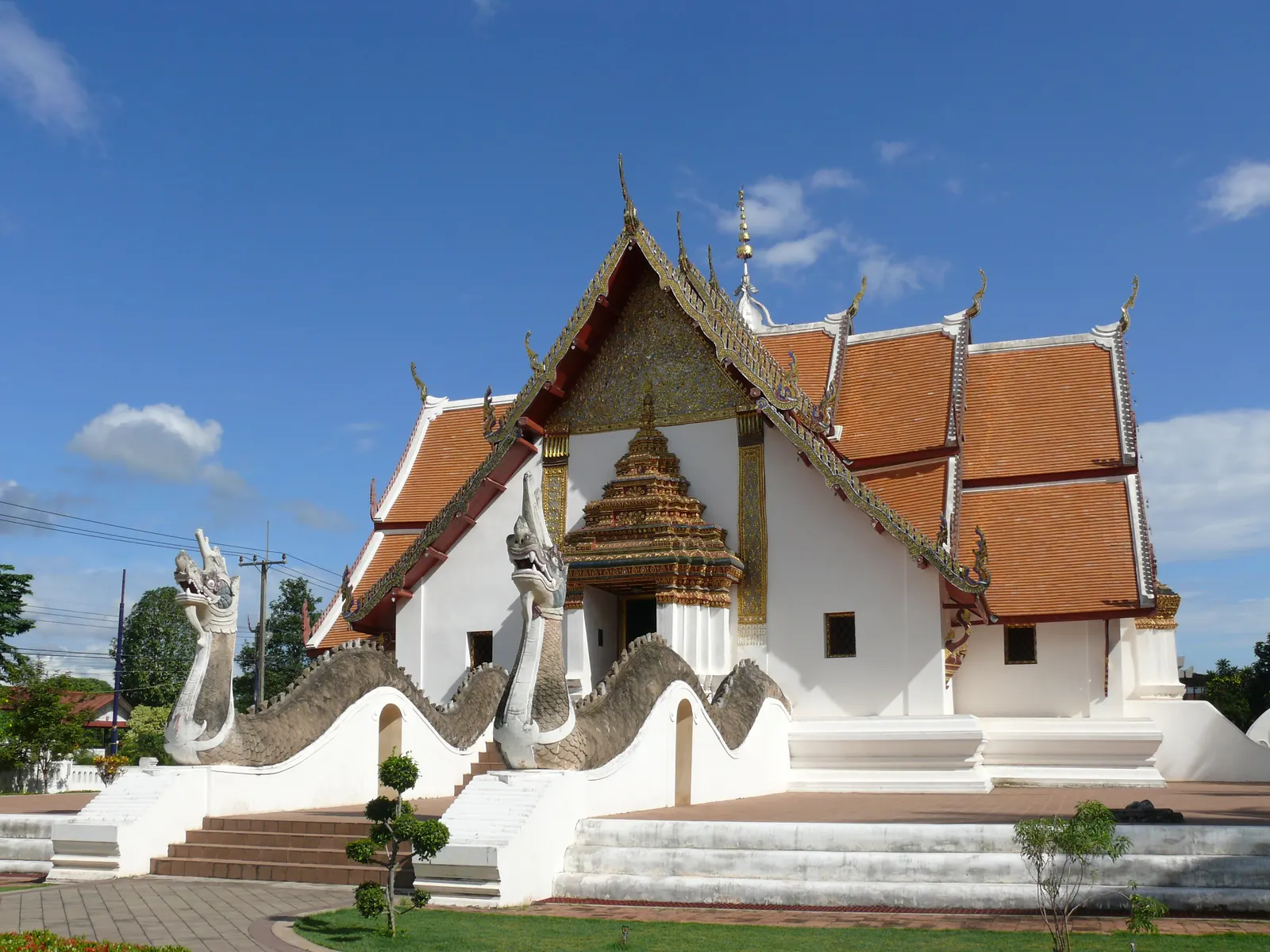
Nan’s hill temples: Wat Phra That Chae Haeng and Wat Phra That Khao Noi
4. Wat Phra That Chae Haeng
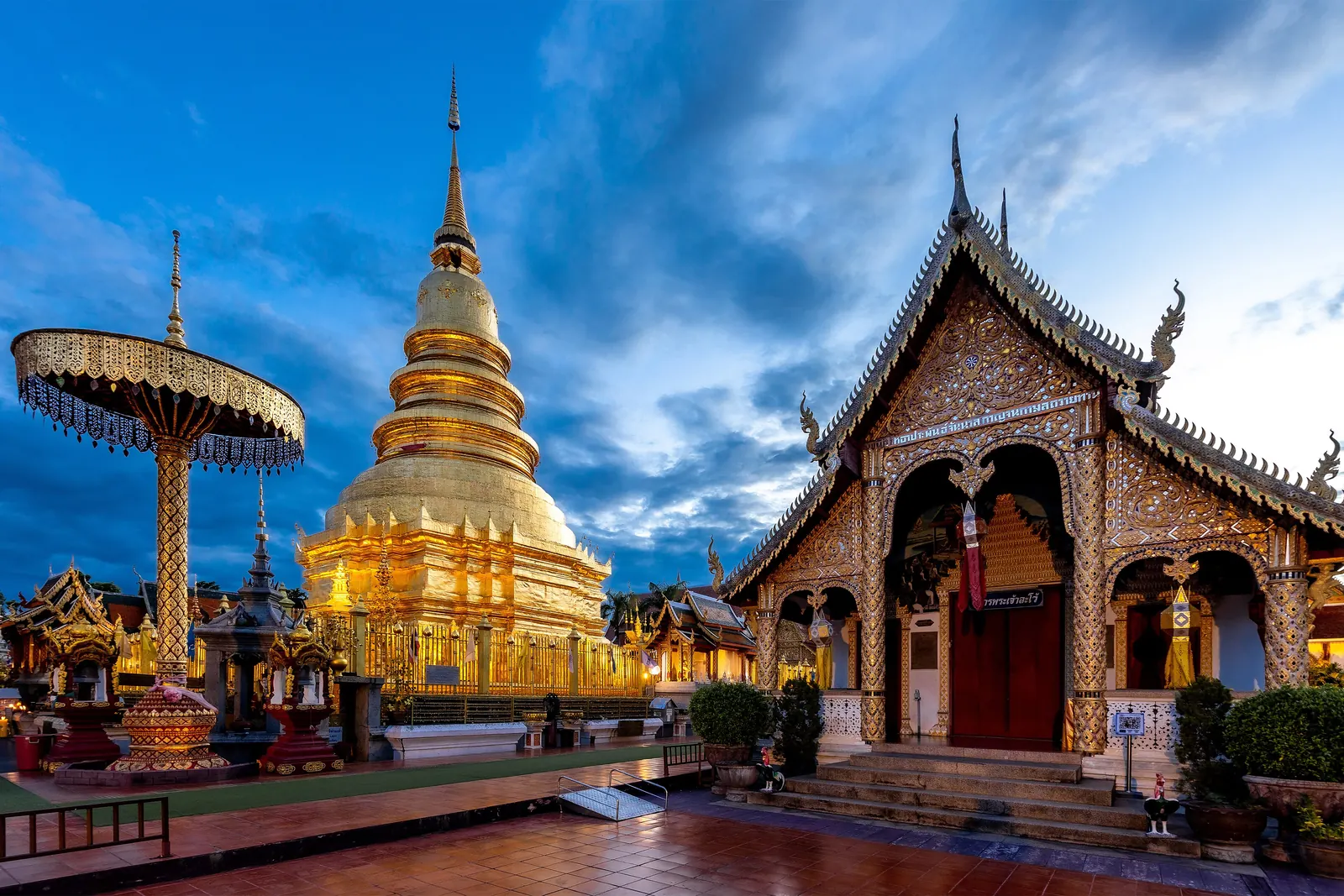
The holiest temple in the province sits on a low hill about 3 kilometres south-east of town, across the river, and its gold-clad Lanna chedi can be seen from the road long before you reach it. A long naga staircase climbs to the viharn, the cloisters are quiet, and Nan families come here to make merit rather than to photograph it, which sets the tone. It is the year temple for people born in the Year of the Rabbit, so expect a few Thai visitors with that in mind. Free; a five-minute scooter ride or a ฿100-ish tuk-tuk from the old town. Late afternoon, when the chedi turns orange, is the time.
Verdict: Do it, at 4pm. Free.
5. Wat Phra That Khao Noi
On a hill just west of town, a large standing Buddha looks out over Nan, and so do you: the valley, the river, the old quarter and, on a cool-season dawn, mist lying over the rooftops. You can drive up or climb the naga staircase. It is the one view of Nan from above, and the sunset there is the town’s free evening entertainment. Free.
Verdict: Do it, at sunrise or sunset. Free.
The mountain day: Pua, Route 1256 and Doi Phu Kha National Park
6. Tha Wang Pha and Pua on the way north
The road north to Pua runs through the Tai Lue country that gave Nan its weaving and its murals. Stop at Wat Nong Bua in Tha Wang Pha district, a small Tai Lue temple with murals from the same school as Wat Phumin and no crowd at all, and at the weaving houses in the village, where cotton in the flowing-water pattern sells direct from the loom from a few hundred baht for a scarf. Pua itself is a farming town of rice fields, cafés and the last fuel station before the climb. Fill up there.
Verdict: Worth it, as the slow start to the loop. Temples free; scarves from a few hundred baht.
7. Route 1256 and Doi Phu Kha
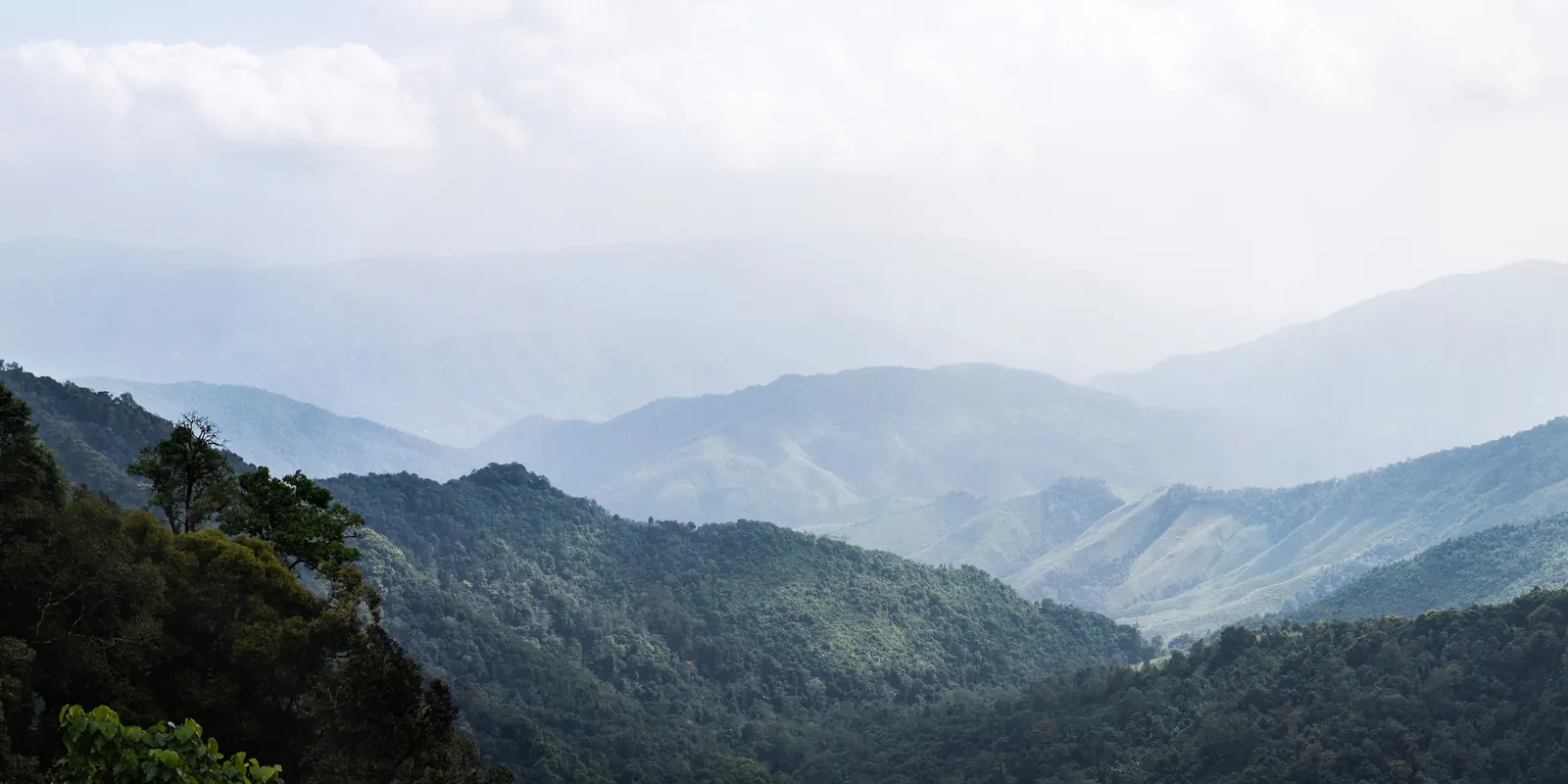
Route 1256 climbs out of Pua into Doi Phu Kha National Park and runs about 47 kilometres along and over the ridge to Bo Kluea, with the park headquarters around kilometre 25 and the 1715 viewpoint, the highest point of the road, a few kilometres further on. On cool-season mornings the valleys either side are full of cloud, and in roughly January and February the rare chomphu phu kha trees by the headquarters flower pink, with a Thai photographer under every one. The park is Thailand’s largest at about 1,704 square kilometres. Foreigners pay ฿200, children ฿100, if you stop at the park facilities, viewpoints or campsite; driving straight through is usually not charged. Allow two to three hours with stops, leave Pua before 7am for the mist, use low gear on the descents and take the bends seriously.
Verdict: Worth it: the best drive in the province. ฿200 park fee if you stop.
Bo Kluea salt wells and Sapan: the part of Nan people stay a week for
8. The Bo Kluea salt wells
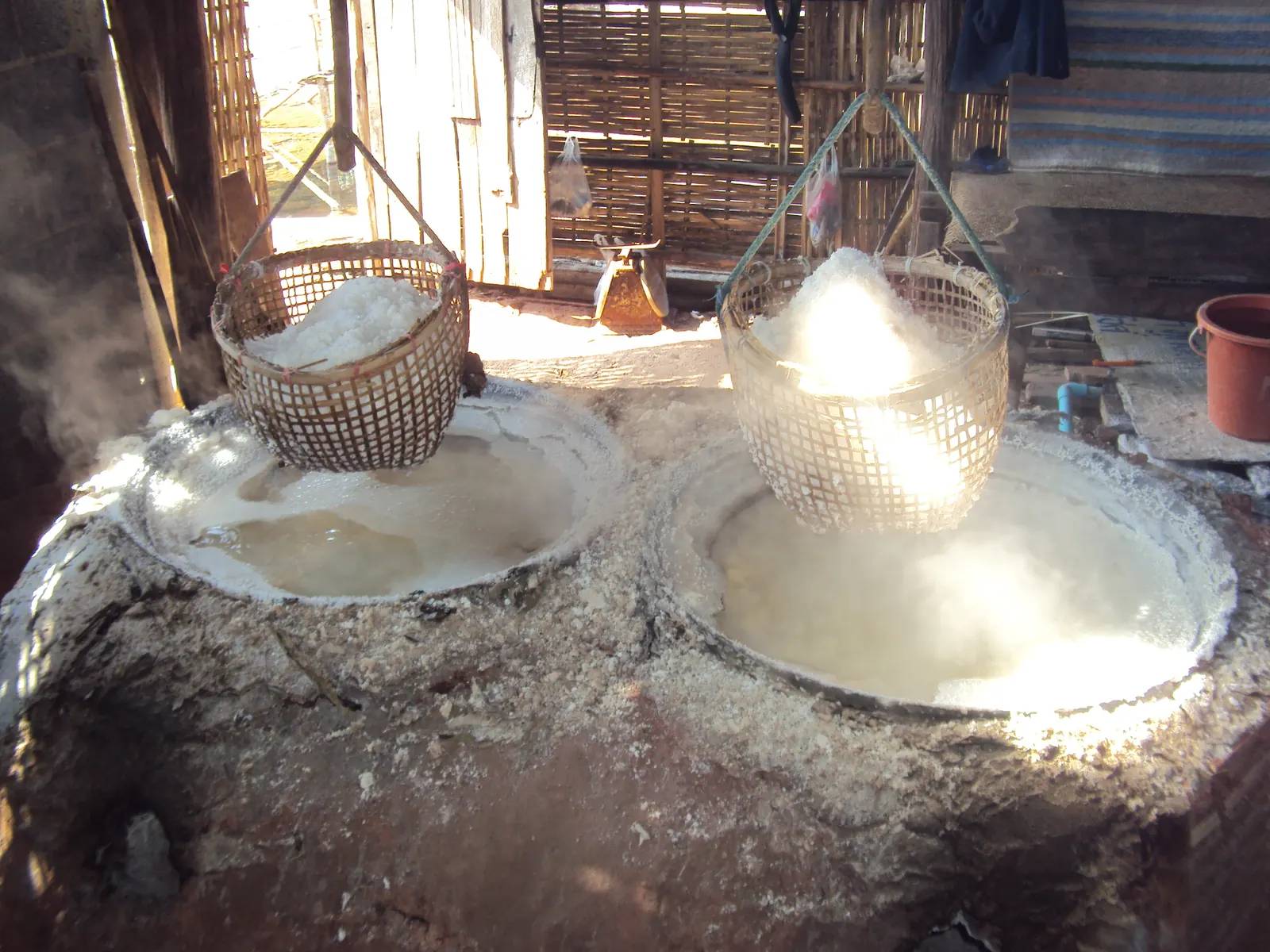
Bo Kluea means salt well, and this mountain village has been hauling brine out of the ground and boiling it down over wood fires for centuries; inland salt is what made Nan worth fighting over long before tourism. The main wells are by the village, with open boiling sheds where you can watch the brine reduce in wide pans and the crust being raked, and nobody minds you looking if you do not stand in the way. Buy a bag for around ฿20–30, the best souvenir in the province and the cheapest. The cafés and restaurants around the wells season everything with it.
Verdict: Do it. Free to look; salt around ฿20–30 a bag.
9. Sapan village
Sapan is about twenty minutes north of Bo Kluea off Route 1081: a valley village of wooden houses, rice terraces and a clear stream down the middle, with a three-tier waterfall a short walk from the village. It is the reason people extend. There is nothing to do except walk the terraces, drink the local coffee at ฿50–80 a cup, eat what the homestay cooks and watch the mist come off the hills in the morning. Homestays run from around ฿300–800 a head, often with dinner. It has been discovered by Thai Instagram, so midweek is better, but it has not been ruined.
Verdict: Worth it: book two nights, not one. Homestays from around ฿300 a head.
From Bo Kluea, Route 1081 runs back south to Nan town through Santi Suk, a winding road of three hours or so; town to Bo Kluea either way is roughly 90–100 kilometres of mountain. Do the loop clockwise, 1256 first, so you climb in the morning mist.
Skip it, or sidestep it: the Nan mistakes we see every season
- Doi Samer Dao on a long weekend: Skip it. The ridge campsite in Si Nan National Park, about ninety minutes south of town, is the famous photograph and, midweek, a very good night. On a Thai holiday it is a car park with tents.
- March and April: Skip the province. Burning season fills the valleys with smoke, the views disappear and the air is bad; see our burning season guide, which applies here too.
- The one-day mountain tour from town: Skip it. Doing Pua, Doi Phu Kha, Bo Kluea and back in a day is six hours of bends for forty minutes at each stop. Sleep up there.
- A first scooter ride on Route 1256: Skip it. Fine for experienced riders; for anyone who learned last week, it is long descents, gravel on the bends and no phone signal. Our Chiang Mai to Pai guide explains why we keep saying this.
Things to do in Nan compared: prices, time and verdicts
| Thing | Cost (foreigner) | Time | Verdict |
|---|---|---|---|
| Wat Phumin murals | Free, donation | 1 hour | Do it, at opening |
| Nan National Museum | ฿120; Wed–Sun only | 1 hour | Worth it |
| Old-town bicycle loop | Around ฿50–100 bike hire | Half a day | Do it |
| Wat Phra That Chae Haeng | Free | 45 min | Do it, late afternoon |
| Wat Phra That Khao Noi | Free | 45 min | Do it, sunset |
| Route 1256 and Doi Phu Kha | ฿200 if you stop in the park | 2–3 hours driving | Worth it |
| Bo Kluea salt wells | Free; salt around ฿20–30 | 1 hour | Do it |
| Sapan village | Homestays from around ฿300 a head | 1–2 nights | Worth it |
| Doi Samer Dao | National park fee plus camping | 1 night | Fine midweek; skip on holidays |
Getting to Nan and getting around: flights, buses and a hire car
There is no railway to Nan. Flying is the sensible option: Nok Air and Thai AirAsia fly from Don Mueang in about an hour and a quarter, with fares from around ฿1,400 booked ahead and more on December weekends; the airport is ten minutes from the old town. Buses from Bangkok’s Mo Chit take about ten hours, from around ฿450 to ฿800 by class, and the overnight VIP coaches are civilised. From Chiang Mai, Greenbus takes about six hours, around ฿300–430; Phrae is two hours down the road and worth a stop, as our Phrae guide explains.
| Route | Time | Cost | Verdict | Book |
|---|---|---|---|---|
| Bangkok (Don Mueang) to Nan, fly | About 1 hr 15 min | From around ฿1,400 | Do it | 12Go |
| Bangkok (Mo Chit) to Nan, bus | About 10 hours | Around ฿450–800 | Fine overnight | 12Go |
| Chiang Mai to Nan, Greenbus | About 6 hours | Around ฿300–430 | Do it, by day | 12Go |
| Phrae to Nan, bus or van | About 2 hours | Around ฿100–200 | Do it, as part of a loop | 12Go |
| Chiang Rai to Nan, bus | About 6 hours via Phayao | Around ฿250–400 | Fine | 12Go |
In town, walk or cycle. For the mountains, a scooter costs around ฿200–300 a day and a small car around ฿1,200–1,500, from the airport desks or agencies in the old town; the roads are well surfaced and nearly empty midweek. Bring a licence that covers what you rent, and an International Driving Permit.
Where to stay in Nan: old town first, mountains second
Split the stay: two or three nights in the old town, two in Bo Kluea or Sapan. Rates below are low-season starting points as of November 2026; December weekends and the boat-race weekends run higher and book out.
| Place | Where | From around | Best for | Book |
|---|---|---|---|---|
| Pukha Nanfa Hotel | Old town, a converted teak building on Sumon Thewarat Road | ฿2,500 | The boutique pick, walking distance to Wat Phumin | Agoda |
| Nan Boutique Hotel | Khaluang Road, edge of the old town | ฿1,200 | Mid-range comfort and parking | Agoda |
| Nan Lanna Hotel | Mahaphrom Road, town centre | ฿700 | A clean, central budget room | Agoda |
| Boklua View Resort | Bo Kluea, on the river near the salt wells | ฿1,800 | The comfortable night on the loop | Agoda |
| Oun I Mang | Sapan village, by the stream | ฿1,500 | Couples who want Sapan with a proper bathroom | Agoda |
| Sapan Good View | Sapan village, Dong Phaya | ฿900 | The terrace view for less | Agoda |
When to go to Nan: cool season, boat races and the smoke
November to February is the season: dry, cool days, cold mornings in the mountains, mist on Route 1256, the chomphu phu kha in flower towards the end. December brings Bangkok number plates and higher prices at weekends, so come midweek. The long-boat races on the Nan River, boats carved from single trunks with fifty-odd paddlers apiece, usually run around October and November and fill the town; check the dates on our festivals and holidays page and book early. The rainy months, roughly June to October, are green and quiet with slick mountain roads. March and April are the smoke. Best time to visit Thailand has the national month-by-month, and our northern Thai food guide explains what to order once you are here. For another cool-season mountain weekend further south, see Khao Kho and Wat Pha Sorn Kaew.
Things to do in Nan: your questions, answered
How many days do you need in Nan?
Four or five. Two nights in the old town for Wat Phumin, the National Museum, the hill temples and a bicycle afternoon, then two nights on the mountain loop: Pua and Route 1256 over Doi Phu Kha, a night at Bo Kluea or Sapan, and Route 1081 back to town. Three days works if you fly in and out, but it means one night on the mountain instead of two.
Where is the whispering mural in Nan?
Inside the ordination hall of Wat Phumin, in the centre of Nan old town, opposite the National Museum. The panel known as Pu Man Ya Man, a man whispering to a woman, was painted during a restoration in the late nineteenth century and is credited to the Tai Lue artist Thit Buaphan. Entry is free with a donation box; go at opening time for an empty hall.
Do you need a car or scooter in Nan?
Not for the old town, which you can walk or cycle on a bike hired for around ฿50–100 a day. For the mountains, yes: Pua, Doi Phu Kha, Bo Kluea and Sapan are 60–100 kilometres out with only a few slow songthaews a day. A scooter costs around ฿200–300 a day and a small car around ฿1,200–1,500; take the car if you are not an experienced rider.
How much does it cost to visit Nan National Museum and Doi Phu Kha?
As of November 2026, the Nan National Museum charges foreigners ฿120 and Thais ฿20, open Wednesday to Sunday from 9am to 4pm and closed Monday and Tuesday. Doi Phu Kha National Park charges foreign adults ฿200 and children ฿100 when you stop at park facilities, viewpoints or the campsite; driving straight through on Route 1256 is usually not charged. Wat Phumin and the hill temples are free.
What is the best time to visit Nan?
November to February, midweek. The days are dry and cool, the mountains have morning mist and the chomphu phu kha flowers on Doi Phu Kha around January and February. December weekends are busy with Thai visitors. Avoid March and April, when smoke from field burning fills the valleys, and expect slippery mountain roads in the rainy months from about June to October.
Related guides
- Nan: Thailand’s Best-Kept Province
- Phrae Thailand: Teak Mansions and Indigo Shirts
- Northern Thai Food: Khao Soi, Sai Ua and the Whole Lanna Table
Book the trip
Some links in this guide are affiliate links. If you book through them we may earn a small commission at no extra cost to you — it helps keep Destination Thailand independent.
Hotels: the old-town guesthouses and the mountain homestays are on Agoda’s Nan page; book December weekends early. Tours/Boats: guided Nan days and drivers are on GetYourGuide; read the newest reviews. Getting there: flights and buses from Bangkok are on 12Go, the Greenbus from Chiang Mai too, and the airport details are in our guide to Bangkok’s two airports. Not sure the north is your Thailand at all? Our Where to Go in Thailand matcher will tell you in about a minute.