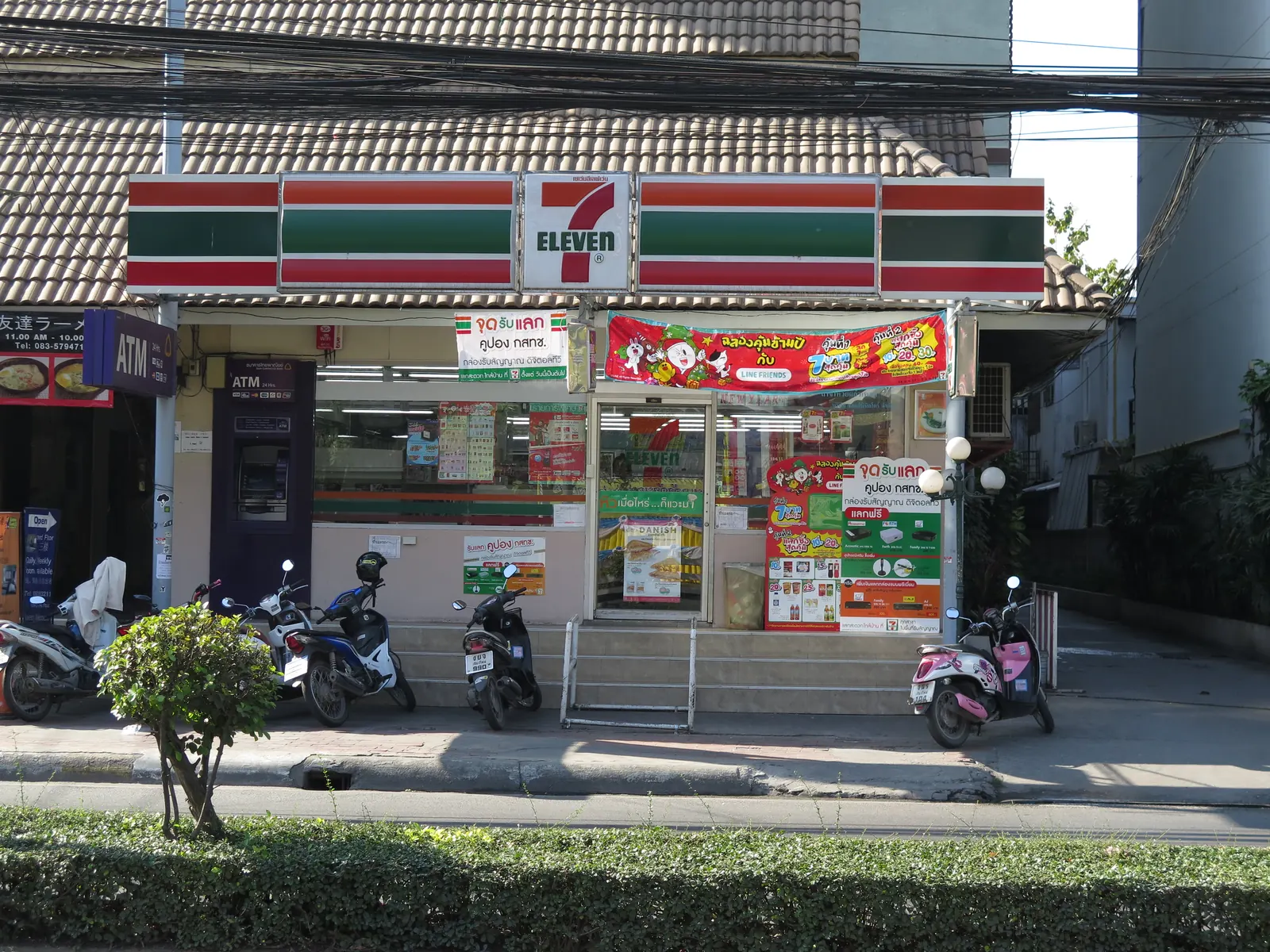
Most Thailand packing lists are written by people who packed for the Thailand in their head: the one where you need a mosquito net, a money belt, a water filter, hiking boots, a travel towel and two weeks of toiletries, as if the country weren’t home to seventy million people and fourteen thousand 7-Elevens. The reality is that almost anything you forget can be bought within an hour of landing, for less than it costs at home, and that the things which actually matter are small, specific and mostly about rules — the plug, the medicines, the vape you can’t bring, the sunscreen the national parks have banned, the licence your insurer will ask about. This is the list we’d hand a friend flying in tomorrow: what to bring, what to buy here instead, what to leave behind, and the handful of documents that decide whether the first hour at the airport is smooth.
The short version: pack light, pack for heat and for aggressive air-conditioning, bring your own sunscreen and any prescription medicines with the paperwork, leave the vape at home, and carry a dry bag because at some point you will step off a boat into the sea with your phone. Everything else is in the 7-Eleven. The arrival paperwork — the digital arrival card and whatever your passport’s entry rule is in the visa tool — is the one part you can’t buy on the day.
The documents that matter more than the clothes
Passport with six months’ validity and a blank page; airlines check this before immigration does. The TDAC confirmation — the free digital arrival card, filed online up to three days before you fly; screenshot it. Proof of onward travel if you’re entering visa-exempt: immigration rarely asks, airlines at check-in sometimes do, and a refundable or cheap onward ticket ends the conversation. Travel insurance with the policy number saved offline, and a read of what it says about motorbikes — most exclude riding without a licence for that category. An International Driving Permit with your home licence if you intend to drive or ride anything; the checkpoints ask and so does the insurer. Copies: a photo of your passport’s photo page and entry stamp on your phone, and one paper copy in the other bag; hotels want the passport at check-in and you’ll want it back. Two cards from different banks (one gets swallowed, frozen or cloned at some point) — the money guide covers the ฿220 ATM fee and the over-the-counter trick — and a small amount of your own currency as a fallback for the exchange booths.
The rules people pack wrong
Vapes and e-cigarettes. Illegal to import, sell or possess, with fines and arrests that are real and reported — leave it at home, and read our vaping guide if that sentence surprised you. Sunscreen. Since 2021 Thailand’s national parks — every marine park, every island you’ll snorkel at — ban sunscreens containing oxybenzone, octinoxate, 4-MBC and butylparaben, with a fine of up to ฿100,000 on paper. Bring a reef-safe mineral one from home: it’s the one toiletry that is genuinely expensive and hard to find here, and much local sunscreen is whitening as well. Prescription medicines. Bring them in original packaging with the prescription or a doctor’s letter; ordinary medicines are fine, but ADHD stimulants, strong opioid painkillers and some sleeping pills are controlled substances in Thailand and need either a permit or are limited to a personal supply — check the Thai FDA’s list before you fly rather than at the red channel. Cannabis and CBD. The rules have tightened again since 2025; don’t bring any in, and never fly out with it — several of your connecting countries will jail you. Drones. Must be registered with the Thai authorities before flying; if you won’t do the paperwork, leave it. Power banks go in hand luggage only, as everywhere, and the low-cost domestic airlines enforce the 100Wh limit. The plug. Thailand is 220V with hybrid sockets that take the two flat US pins and the two round European ones; British three-pin and Australian plugs need an adapter, which is ฿60 in any 7-Eleven if you forget.
Clothes: heat outside, winter inside
The weather is hot and humid for most of the year almost everywhere, the buildings are refrigerated, and temples require covered shoulders and knees — those three facts write the list. Light, quick-dry, loose: linen and technical fabrics, not jeans, which never dry and are miserable by 10am. One pair of long light trousers and one top with sleeves for temples, for mosquitoes at dusk and for the air-conditioning on every bus, train, cinema and mall. A light jumper or fleece: the overnight trains and VIP buses are arctic, and the north in cool season (November–February) is 8–12°C at 6am — people are always surprised. Sandals you can walk in and get wet, plus one pair of closed shoes with grip for waterfalls, the Railay viewpoint, scooters and any hike; flip-flops from the 7-Eleven for ฿100 do the beach. Shoes come off constantly — temples, homes, many guesthouses, some shops — so slip-ons beat laces. Swimwear, plus a sarong (towel, temple cover, beach mat, curtain; ฿150 at any market if you don’t own one). A hat and sunglasses. A light rain jacket rather than an umbrella — May to October it rains hard for an hour, and a ฿40 poncho from the 7-Eleven is the local solution if you’d rather not pack one. Laundry is ฿40–70 a kilo, washed, dried and folded overnight, in every town; pack for five or six days and wash, whatever the trip length.
Tech and the small things
An unlocked phone — a Thai SIM or eSIM is ฿300–600 for two to four weeks of data and is the single biggest quality-of-life item on this list; our SIM and eSIM guide covers the options, and an eSIM like Simbye can be live before you clear immigration (code DESTTHAI15 takes 15% off). A dry bag (10–20 litres): longtail landings, ferry spray, waterfalls, Songkran. Non-negotiable if islands are in the plan. A power bank, a universal adapter, and a padlock for hostel lockers and the zips on a bag left in a bus hold. A small day bag that zips shut and sits in front of you on a scooter or in a tuk-tuk — bag-snatching from motorbikes is the one urban theft that actually happens. An e-reader over books. Earplugs and an eye mask for the trains, the roosters and the hostel. A reusable bottle: refill stations exist but the ฿7 bottle at 7-Eleven is what most people do. Mosquito repellent is the one thing you should buy here, not bring: Thai brands (Soffell, Sketolene) are ฿60–90, work, and are in every 7-Eleven; dengue is real in the rainy season and the repellent matters more than any net.
What to buy here instead
Nearly all toiletries — shampoo, toothpaste, razors, soap, contact-lens solution, basic first aid, painkillers, rehydration salts, antihistamines, plasters. Pharmacies are everywhere, cheap, and sell a great deal over the counter that needs a prescription at home (use that responsibly; antibiotics for a cold aren’t a souvenir). Tampons and Western deodorants exist in the bigger Boots and Watsons but the choice is thin outside cities — bring a supply of the exact brand if it matters. Rain ponchos, flip-flops, sarongs, hats, sunglasses, phone waterproof pouches (฿50, essential at Songkran), N95 masks for the northern burning season (฿30–60), umbrellas, adapters, cheap swimwear, a whole wardrobe of elephant-print trousers if you must. The one counter-example, again, is reef-safe sunscreen — bring it.
What to leave at home
The mosquito net (every room has screens, fans or both). The water filter (bottled water is ฿7; the tap isn’t drunk by anyone). Hiking boots, unless you’re doing real trekking in the north. Jeans. A towel, unless you’re staying in the cheapest dorms. A hairdryer (every hotel has one; yours may not like 220V). The money belt — a zipped front pocket and not flashing a roll of notes does the same job without announcing that you’re worried. More than one “nice” outfit; Bangkok’s smart restaurants are smart, but “covered and clean” gets you into everything else. A second pair of anything you can buy for ฿100. And half of whatever is currently in the bag.
Season and region adjustments
Rainy season (May–October): the rain jacket or poncho, quick-dry everything, a second pair of sandals, the dry bag, more repellent. Cool season in the north (November–February): the jumper and a pair of socks — Pai, Chiang Rai and the mountain parks are genuinely cold at dawn. Burning season (late February–April): an N95 if you’re going north, bought there. Islands: reef-safe sunscreen, a rash vest for snorkelling (sun, not jellyfish), reef shoes if you’ll walk rocky shallows, cash. Songkran (13–15 April): a waterproof phone pouch and clothes you don’t mind living in wet for three days. Temples and the Grand Palace: the long trousers and sleeves in the day bag, always — the temple etiquette guide has the detail. Our month-by-month guide tells you which of these your dates hit.
The list
- Documents: passport (6 months), TDAC screenshot, onward ticket, insurance details offline, IDP if driving, passport copies, two cards, a little home currency
- Health and rules: prescription medicines in original packs with paperwork, reef-safe sunscreen, any specific-brand items (deodorant, tampons, contact lenses) — and no vape, no cannabis, no unregistered drone
- Clothes for 5–6 days: light quick-dry tops and shorts, one long light trousers, one sleeved top, a light jumper, swimwear, sarong, hat, sunglasses, light rain jacket (or buy a poncho)
- Shoes: walkable sandals, one closed pair with grip, slip-on friendly
- Tech: unlocked phone, eSIM or airport SIM plan, power bank (hand luggage), universal adapter, e-reader, earplugs and eye mask
- Gear: dry bag, zipped day bag, padlock, reusable bottle
- Buy on arrival: mosquito repellent, poncho, flip-flops, toiletries, waterproof phone pouch, N95 in burning season
Packing for Thailand: your questions, answered
What plug adapter do I need for Thailand?
Thailand runs 220V on hybrid sockets that accept two flat US-style pins and two round European pins without an adapter. British, Irish, Australian and South African plugs need one; a universal adapter is ideal, and a basic one is about ฿60 in any 7-Eleven if you forget.
Can I bring my medication to Thailand?
Ordinary prescription medicines, yes — keep them in original packaging with the prescription or a doctor’s letter. ADHD stimulants, strong opioid painkillers and certain sleeping pills are controlled substances here and need a permit or are capped at a personal supply; check the Thai FDA’s list before you travel.
Can I buy toiletries and clothes in Thailand?
Almost everything, cheaply and within an hour of landing — 7-Eleven, Boots, Watsons, markets and pharmacies are everywhere. The exceptions worth bringing: reef-safe sunscreen, specific brands of deodorant or tampons, and anything you need in a large size.
Do I need warm clothes for Thailand?
One light jumper, yes: the air-conditioning on buses, trains and in malls is fierce, and the north is 8–12°C at dawn from November to February. You won’t need more than that anywhere except a mountain campsite.
Can I bring a vape to Thailand?
No. E-cigarettes and vapes are illegal to import, sell and possess in Thailand, and the fines and arrests are real. Leave it at home.
Related guides
- Thailand Digital Arrival Card (TDAC): The 5-Minute Form Everyone Panics About
- SIMs & eSIMs in Thailand: 10 Minutes at the Airport, Sorted
- Money in Thailand: ATMs, Cards and the ฿220 Fee (2026)
Before you fly
Some links in this guide are affiliate links. If you book through them we may earn a small commission at no extra cost to you — it helps keep Destination Thailand independent.
Data before you land: a Thailand eSIM from Simbye installs at home and switches on at the gate — code DESTTHAI15 takes 15% off. The first two nights: book them — immigration and airlines occasionally ask, and arriving tired into Bangkok without a bed is the one thing not to improvise; compare Bangkok hotels on Agoda by area first using our Bangkok stay guide. The airport-to-city leg: the BKK vs DMK guide covers the train, taxi and bus, and 12Go books the onward legs once you know where you’re going. Not sure where that is? Our Where to Go in Thailand matcher scores all 77 provinces against your month and what you actually want from the trip.