Ranong is Thailand’s wettest, emptiest province, and both of those facts work entirely in your favour. Four metres of rain a year keeps the hills an almost aggressive shade of green, feeds the country’s best natural hot springs, and frightens off the package-holiday machine so thoroughly that fewer than 200,000 people live in the whole province. Locals call the climate eight months of rain, four months of sun, and they are not exaggerating.
For years the only foreigners who came here were visa runners, shuttling across the estuary to Myanmar and back for a fresh stamp. Then the rules tightened, the runners stopped, and Ranong quietly became what it should have been all along: a half-Burmese, Hokkien-Chinese port town with free mineral springs, a genuinely interesting old street, and boats to two islands that time has politely ignored. Our Ranong province profile has the vital statistics; this is the how and the why.
What Ranong really is
A tin town, first. Ranong got rich in the nineteenth century digging tin under Khaw Soo Cheang, a Hokkien immigrant who did so well the king made him the province’s first governor. His descendants still carry the name Na Ranong, and the legacy survives in the rows of Hokkien shophouses along Ruangrat Road and a breakfast culture — dim sum baskets and thick sweet kopi — that feels closer to Penang than to Bangkok.
Second, a border town. Kawthoung, the southernmost tip of Myanmar, sits just across the Kraburi estuary. The fishing fleet at Saphan Pla, one of the biggest on the Andaman coast, is heavily crewed by Burmese workers, and the day market sells thanaka paste and longyi. Ranong without the Burmese influence would be a different, duller town.
Why go to Ranong
Because it is the Andaman coast with the volume turned down. The springs at Raksawarin are free and hotter than anything you will pay ฿500 for elsewhere. Koh Phayam is what Samui was forty years ago, with better coffee. The food is a three-way collision of southern Thai, Hokkien and Burmese cooking. And the whole place runs at fishing-port pace: nobody here is selling you a fire show, a beach club or a suspiciously cheap suit.
It is not for everyone. If your idea of Thailand involves infinity pools and DJs, you will be bored within an hour — Phuket is five hours south and full of people exactly like you. This province rewards travellers who like their towns working and their beaches empty.
Getting to Ranong
Flying is the painless option. Nok Air flies from Bangkok Don Mueang to Ranong most days; it takes about an hour and twenty minutes and costs ฿1,200-2,500 if you book ahead. The airport sits roughly 20 kilometres south of town, and a taxi in is a few hundred baht.
Buses from Bangkok’s Southern Terminal take nine to ten hours and cost ฿450-800, depending on how many seats the operator has bothered to remove. Night departures land at dawn, in time for the first boat to Koh Phayam.
There is no railway here. The nearest station is Chumphon, on the opposite coast — seven to eight hours from Bangkok by train — and from there minivans cross the peninsula’s narrowest neck in about two and a half hours for around ฿150. Coming up from the south, buses run along Highway 4 from Phuket (five to six hours, about ฿250) and Khao Lak.
For live timetables and tickets on these routes, compare your options on 12Go before you commit to a departure time.
Where to stay
In town, base yourself around Ruangrat Road and the night market: clean guesthouses run ฿400-800, with the morning market and dim sum shops walkable. A small cluster of hotels out by the Raksawarin springs charges ฿800-1,500 if you would rather soak at 7am than walk ten minutes.
On Koh Phayam, choose your beach. Ao Yai, the long west-facing sweep, has the sunsets, the surf and most of the bungalows — ฿500-1,500 in high season for something wooden and perfectly pleasant. Ao Khao Kwai, Buffalo Bay, to the north is calmer and quieter. On Koh Chang — the Ranong one, not the big one near Cambodia — expect bamboo bungalows at ฿300-600, solar power and precisely zero ATMs. Bring cash to both, and note many island places shut from roughly June to September.
What to eat in Ranong
Start at breakfast, because that is when this town is at its best. The Hokkien coffee shops along Ruangrat Road do dim sum from before dawn: steamer baskets at ฿15-30 apiece, eaten with sweet dark kopi alongside off-duty fishermen. Order too much; it still will not cost ฿200.
The Burmese side of town shows up around the day market — look for fish noodle soups in the mohinga style — while the southern Thai side shows up everywhere else: khua kling that will hurt you, sour gaeng som, khanom jeen with wild ferns. Down at Saphan Pla, the row of seafood places near the fishing port grills whatever came off the boats that morning; a whole fish, rice and a beer lands around ฿250-400. Take home Koh Phayam cashews; roasted with salt they are absurdly good.
Top things to do in Ranong
1. Soak in the Raksawarin hot springs
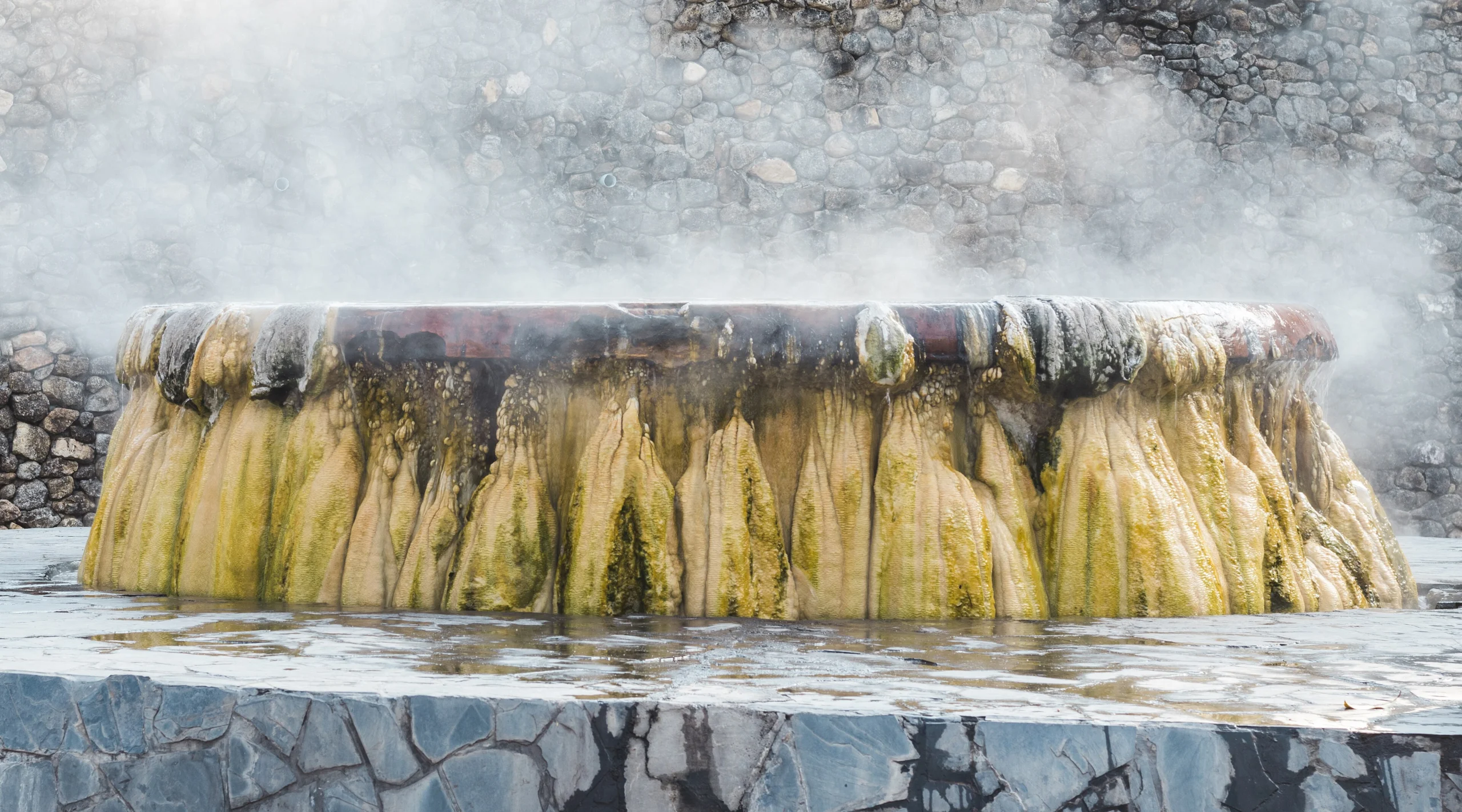
Thailand has plenty of hot springs, and most are a lukewarm puddle with a car park. Raksawarin is the real thing: mineral water emerging at around 65 degrees, cooled through a series of public pools in a park on the edge of town — and the public pools are free. Come at dusk, when half the town turns up to boil the day off, and do what the locals do: feet first, then commit. Paid private pools exist across the road, but the free ones are the experience.
2. Take the slow boat to Koh Phayam
Boats leave the piers near Saphan Pla daily — about ฿200 and two hours on the slow boat, or ฿350-400 and 45 minutes by speedboat. The island has no cars to speak of; you rent a motorbike for ฿200-300 a day and ride concrete lanes through cashew orchards, with oriental pied hornbills flapping overhead like they own the place, because they do. Ao Yai catches proper surf in the monsoon and proper sunsets all year. It is the best easy island escape on the northern Andaman coast, full stop.
3. Go quieter still on Koh Chang
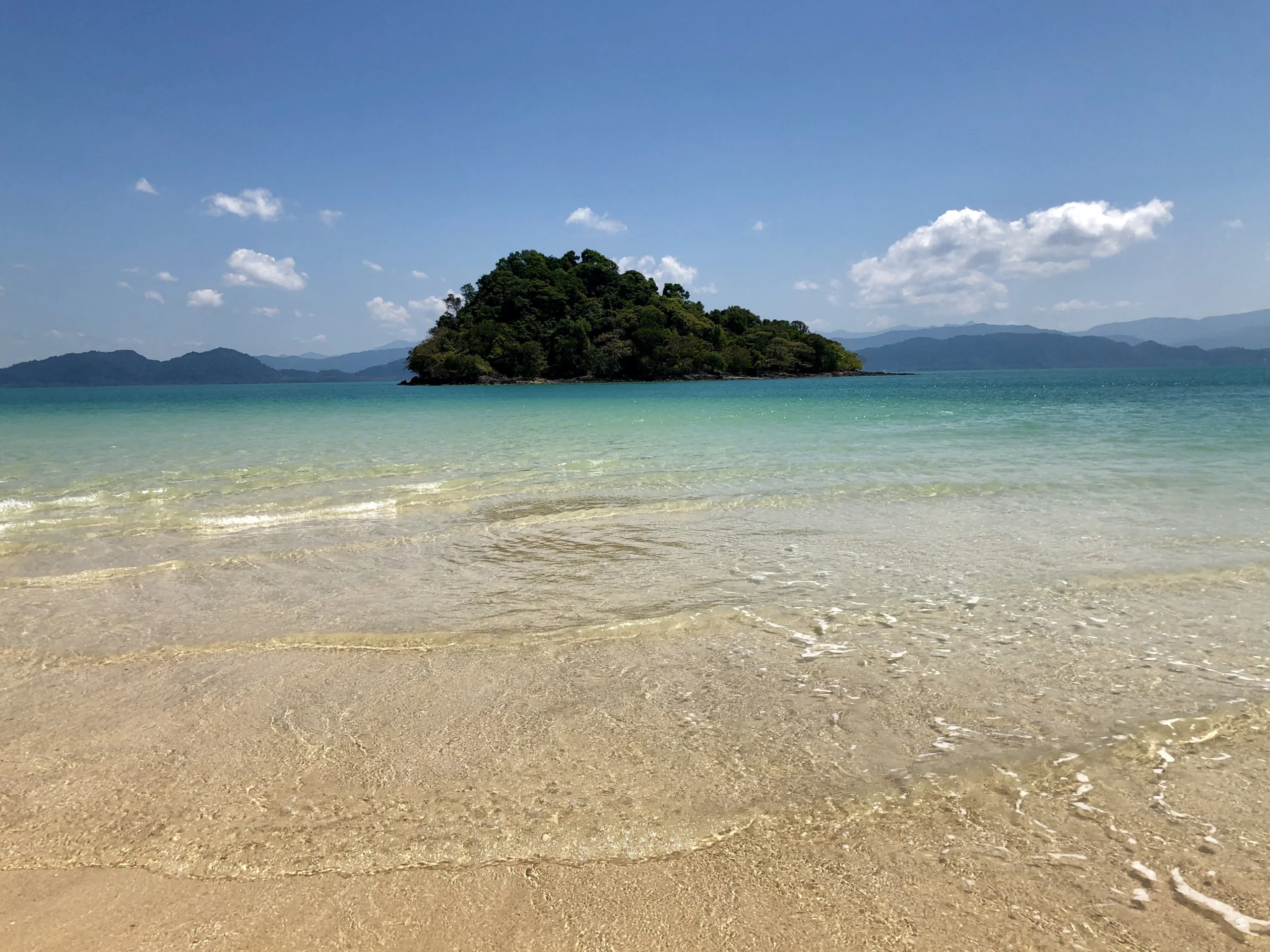
If Koh Phayam sounds too developed — and there are people for whom it now is — its neighbour Koh Chang is the correction. Small, solar-powered and blissfully underachieving, it gets a slow boat taking about an hour and a half, bamboo bungalows, and evening entertainment consisting of the tide. Go for a few days with cash, books and no plans whatsoever.
4. Cross the estuary to Kawthoung, Myanmar
The longtail run from Saphan Pla across the Kraburi estuary to Kawthoung is one of Southeast Asia’s stranger commutes: 30-45 minutes of open water, a swap of flags, and you step off in Myanmar’s southernmost town among golden stupas and Indian-influenced tea shops. This was the classic visa-run route for a generation. One honest caveat: the crossing opens and closes with Myanmar’s politics, so check at the pier before planning a day around it, and carry your passport and US dollars.
5. Ngao waterfall and the mangrove biosphere
About 13 kilometres south of town, Namtok Ngao National Park earns its keep in the rainy season, when the falls come down the cliff face like a burst main. Standard two-tier national park fees apply — expect ฿100-200 as a foreigner. Nearby, the Ngao mangrove research centre anchors a UNESCO biosphere reserve, with a raised boardwalk winding through some of the oldest and tallest mangrove forest left in Thailand. It is quietly one of the most impressive things in the province.
6. Walk the Hokkien old town, then catch Punyaban from the highway
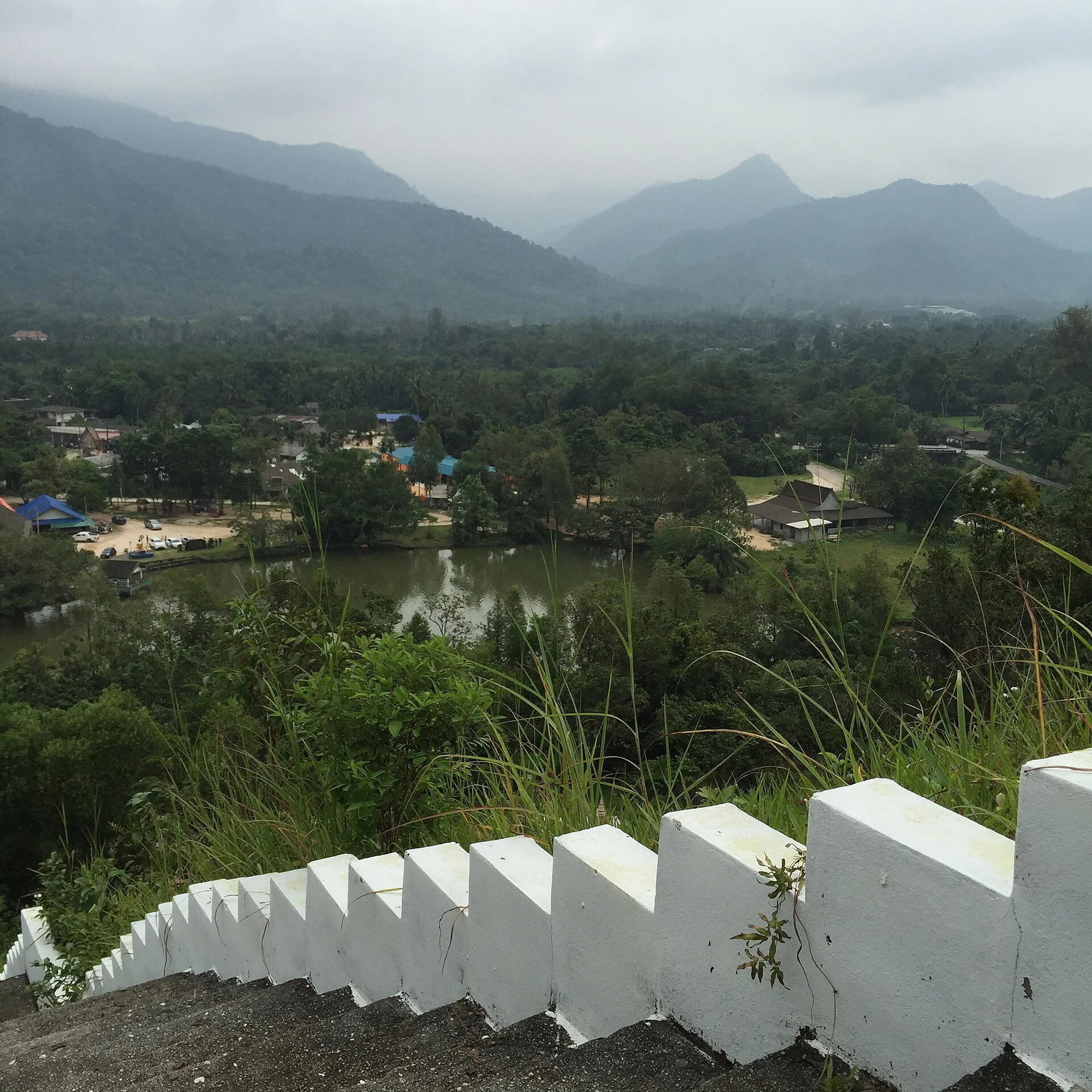
Give Ruangrat Road an unhurried morning: shophouse facades, clan houses, the heritage home of the province’s first governor, and coffee that has not changed recipe since the tin era. Then, heading north on Highway 4, watch for Punyaban waterfall — it pours down the hillside in plain view of the road about 15 kilometres out of town, and a short free trail with a viewing platform gets you close. It may be the only waterfall in Thailand you can inspect properly without leaving second gear.
What to skip
The casino island. Off Kawthoung sits a resort-casino aimed squarely at people who find fluorescent lighting romantic, and day-trip packages to it still get touted around the piers. It combines the charm of a departure lounge with the odds of, well, a casino, and it has nothing to do with either Thailand or Myanmar. Cross the estuary for Kawthoung’s markets and stupas, not for blackjack.
Ranong Canyon, meanwhile, is a pleasant reservoir photographed with lenses that flatter it beyond recognition; the mangroves and the springs beat it comfortably.
Ranong travel: practical info
The dry window runs December to April, when the islands fully wake up and boats run at full frequency. May to October is the deluge — dramatic and green, but plan around downpours and expect island boat services to thin out. Give the town a day or two for the springs, the old town and the mangroves, then three or four days on Koh Phayam or Koh Chang.
For the tin-mining and Hokkien back-story, Wikipedia’s Ranong entry goes deeper than we can here.
TAT’s official Ranong province page keeps current festival dates and opening hours.
Onward travel is easy in three directions: minivans east to Chumphon connect with trains and the night boats to Koh Tao; Highway 4 runs south past Khuraburi — the jump-off for the Surin Islands — towards Phang Nga and Phuket; and buses reach Surat Thani for Khao Sok and the Gulf islands.
FAQ
Is Ranong worth visiting?
Yes, if you want the Andaman coast without the crowds. Free hot springs, a proper working old town and two of the most relaxed islands in Thailand make it comfortably worth two to five days. Skip it if you need nightlife or luxury resorts — it has neither.
How do you get from Ranong to Koh Phayam?
Boats leave from the piers near Saphan Pla, a short songthaew or motorbike-taxi ride from town. The slow boat costs about ฿200 and takes two hours; speedboats cost ฿350-400 and take about 45 minutes. Services are frequent from November to April and reduced in the monsoon.
Can you cross from Ranong to Myanmar?
Historically yes — longtails run from Saphan Pla to Kawthoung in 30-45 minutes. Since 2021 the border has opened and closed with Myanmar’s political situation, so confirm the current status locally before building plans around it.
When is the best time to visit Ranong?
December to April, when the rain mostly holds off. The other eight months are seriously wet — this is Thailand’s rainiest province — though the waterfalls and springs are arguably at their best, and Ao Yai on Koh Phayam picks up surfable waves.
Does Ranong have good beaches?
The mainland coastline is mostly estuary and mangrove, so no — the beaches are on the islands. Ao Yai on Koh Phayam is a genuinely great three-kilometre sweep of sand, and Koh Chang’s west coast is quieter still. Treat the town as the gateway and the islands as the payoff.
Related guides
- Seven days on the Andaman coast: a realistic itinerary
- Koh Lanta and the slow road south
- Southern Thai cuisine: what to eat and where