Let us get the uncomfortable part out of the way first, because any Pattani Thailand guide that buries it in paragraph twelve is lying to you by omission. Most Western governments — the British FCDO among them — advise against all but essential travel to Pattani, Yala and Narathiwat. An insurgency has simmered since 2004; the violence overwhelmingly targets security forces rather than travellers, but bombs have gone off in markets and town centres. Crucially: that advisory almost certainly voids your standard travel insurance the moment you cross the provincial line. If your policy excludes regions under a do-not-travel advisory — and most do — you are travelling uninsured unless you buy specialist cover. That is not fearmongering. That is the arithmetic.
Now the other half of the truth, which the advisory pages never print. Pattani is one of the most fascinating places in the country — the seat of a Malay sultanate that traded with China, Japan, Portugal and the Dutch for five centuries before Siam swallowed it in 1902. The result feels nothing like the Thailand of the brochures: green-domed mosques instead of golden chedis, Yawi script on the shopfronts, painted kolae fishing boats hauled up on brown-sand beaches, and a rice dish stained blue and dressed with fermented fish sauce that will rearrange your understanding of Thai food.
Almost nobody comes; in a week you may not see another foreign face. If our Pattani province profile left you curious, this is what you are actually walking into.
What Pattani really is
Pattani is a Malay-Muslim province wearing a Thai administrative uniform. Roughly eight in ten people are Malay Muslims whose first language is Patani Malay, not Thai. The capital, Pattani town, sits where the Pattani River meets the Gulf, and for around 500 years that river mouth was one of Southeast Asia’s great entrepots — a port kingdom whose rulers — including a run of famous queens in the 1600s — dealt with European trading companies as equals.
Siam annexed the sultanate in 1902, and the century since has been a long argument about identity — sometimes political, sometimes armed. The insurgency flared in 2004 and has killed thousands, most of them locals. Day to day that means army checkpoints on the main roads, razor wire around some government buildings, and a population that is warm, curious and slightly astonished to see you. It is not a war zone — life carries on, markets, weddings, football on the beach — but you should know what the checkpoints are for.
Why go to Pattani
Because this is the closest Thailand comes to time travel. The sultanate’s story is still physically present — in a 400-year-old brick mosque the legend says can never be finished, in a Chinese shrine to the woman who supposedly cursed it, in villages where men still paint their boats like fairground carousels because their grandfathers did. Add southern food culture at its most uncompromising and zero tourist infrastructure — no banana pancakes, no touts — and you get travel with all the padding removed. It is not for everyone. That is rather the point.
Getting to Pattani
No commercial airport in Pattani itself. The realistic options:
- Via Hat Yai: the standard route: fly Bangkok to Hat Yai (about 1 hour 25 minutes, typically ฿1,000-2,500), then a minivan to Pattani town — about 2 hours, around ฿120-150.
- Via Narathiwat airport: useful if working through the deep south; about an hour and a half by road.
- Train: the southern line passes through Khok Pho in western Pattani en route to Yala — a 20-hour-plus haul, and Khok Pho is a fair way from town. The romantic option, not the practical one.
- Bus: direct from Bangkok’s Southern Terminal, around 15-16 hours, roughly ฿700-1,000. Only if you enjoy suffering.
Highway checkpoints are routine: passport handy, smile, thirty seconds.
Where to stay
Pattani town is the sensible base, and the CS Pattani Hotel is the base story in itself — the province’s long-standing proper hotel, host to every visiting journalist and academic for decades, with rooms generally in the ฿1,000-1,600 range and a kitchen that takes local food seriously (more on its khao yam below). Stay here for air conditioning that works and staff used to explaining the province.
Below that: clean Chinese-Thai budget hotels and guesthouses in the ฿400-800 band around the centre and river — firm beds, cold Fanta in the lobby fridge, honest prices. Out in Saiburi and Panare accommodation is thin, so most people day-trip from town.
What to eat in Pattani
This is budu country. Budu is the region’s fermented anchovy sauce — darker, funkier and more honest than anything in a Bangkok supermarket — and its signature vehicle is khao yam, the southern rice salad: a plate of rice (often tinted blue with butterfly pea flower) buried under shredded herbs, toasted coconut, pounded dried fish, green mango and pomelo, with budu dressing poured over the lot. You toss it yourself. It costs ฿40-60 at morning markets and is one of the great breakfasts of Asia — closer to Malaysian nasi kerabu than to anything most visitors call Thai food, which is the history lesson on a plate.
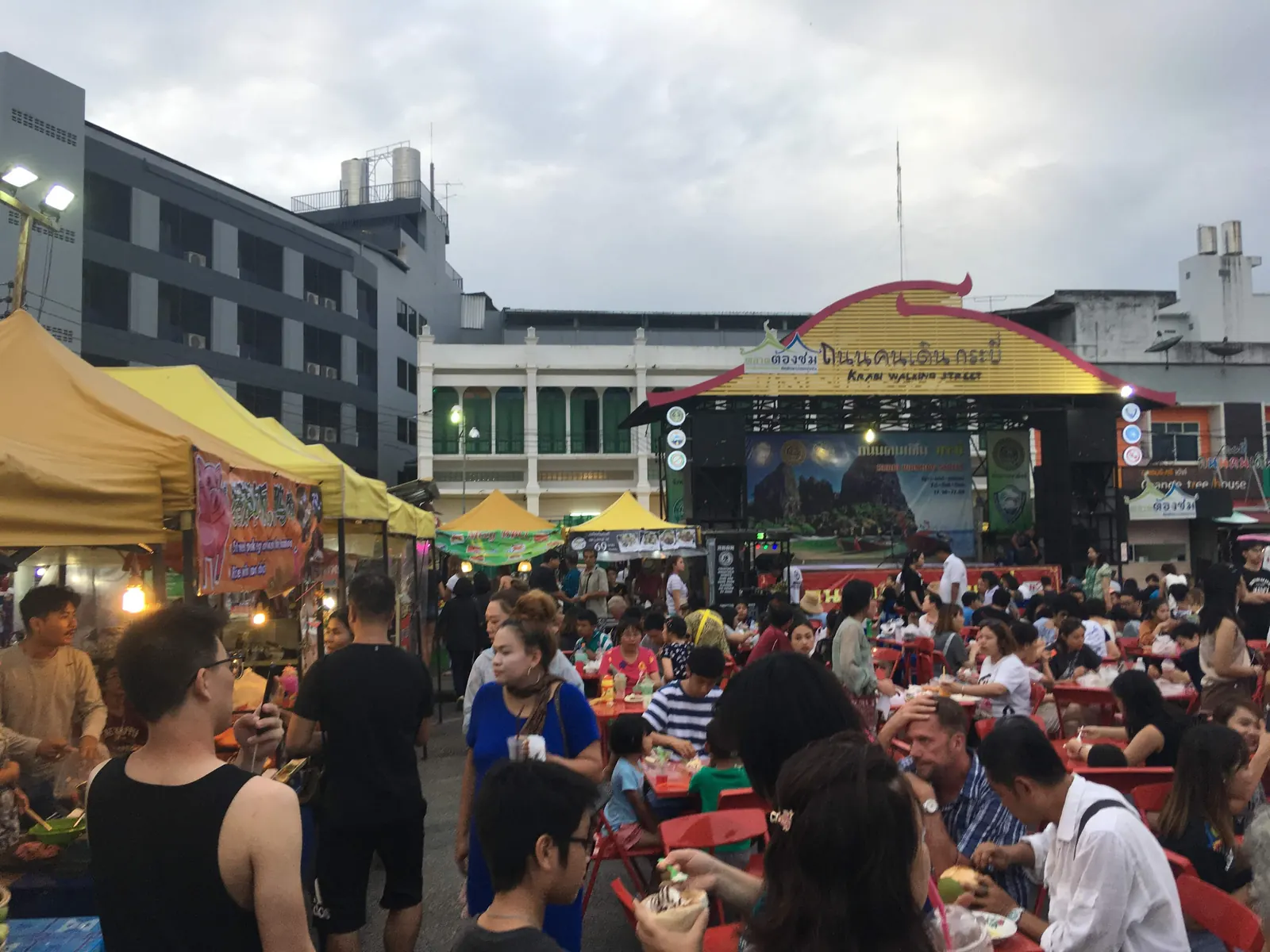
Beyond that: slow-braised beef and goat curries, morning roti with dhal, grilled fish off the kolae boats, and superb halal kuih (sweets). Pattani town’s night market and the morning market near the river are your hunting grounds; ฿100-150 feeds you embarrassingly well. Alcohol is scarce — this is a conservative Muslim province, and outside a couple of Chinese-Thai restaurants and hotel fridges you will not find beer.
Top things to do in Pattani
1. Krue Se Mosque
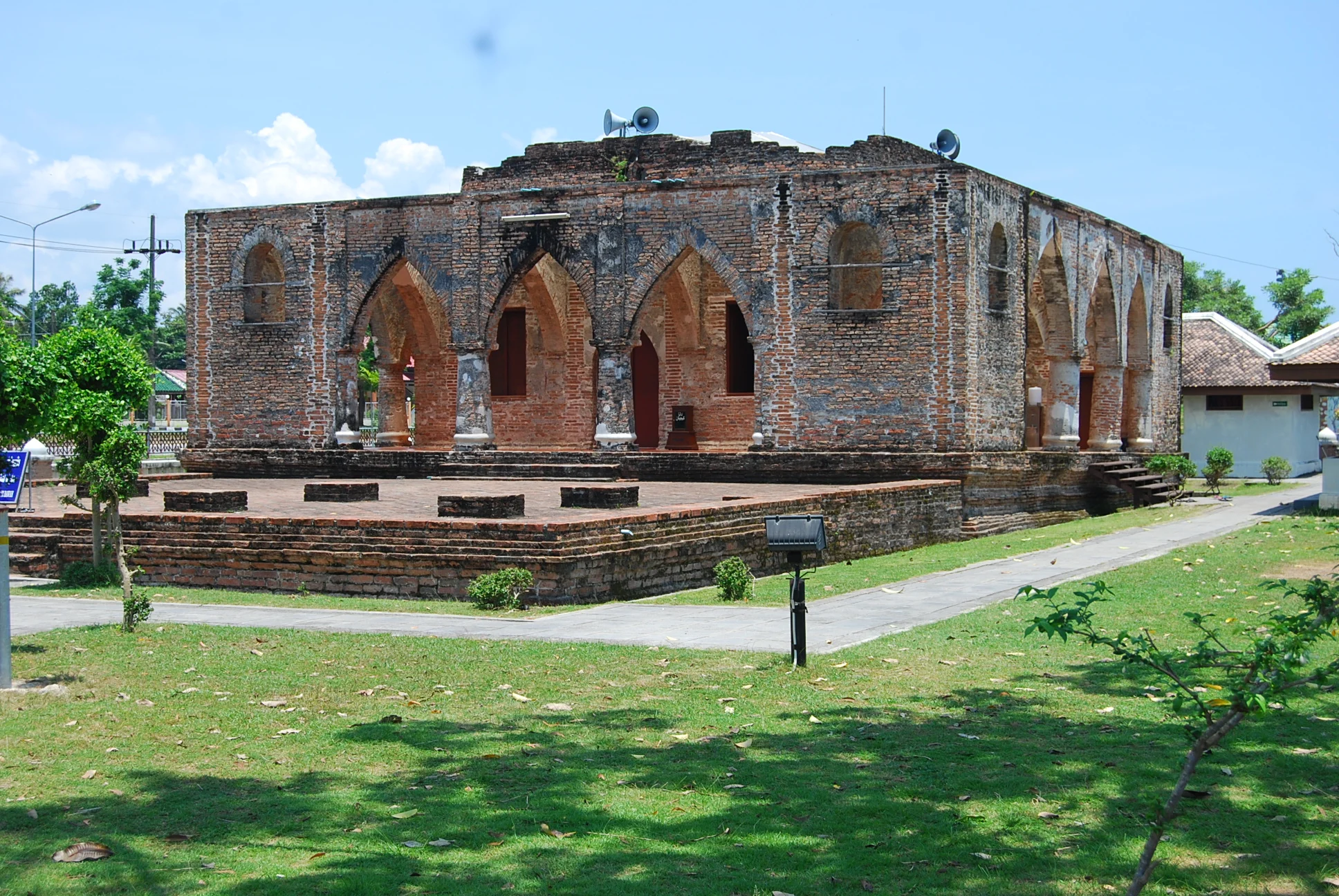
A squat, arch-fronted brick mosque about seven kilometres east of town, begun in the late 1500s and — according to legend — impossible ever to finish. It is the most freighted building in the deep south. On 28 April 2004, insurgents retreated inside after dawn attacks on security posts; the army stormed the mosque and killed all 32 men inside, an event that ignited the modern conflict. Visiting is free and the site is calm; locals still pray here. Come respectfully dressed and understand you are looking at both a 400-year-old monument and an open wound. It matters that outsiders see it.
2. Pattani Central Mosque
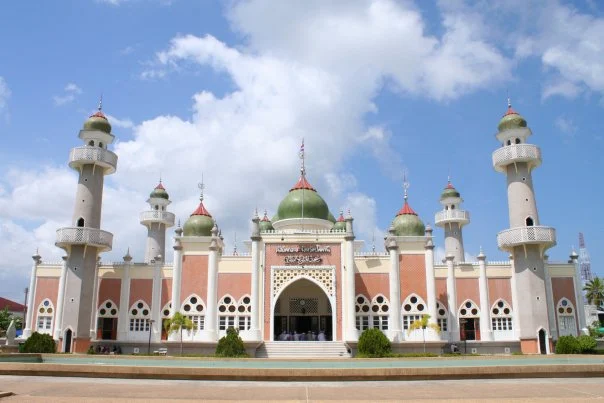
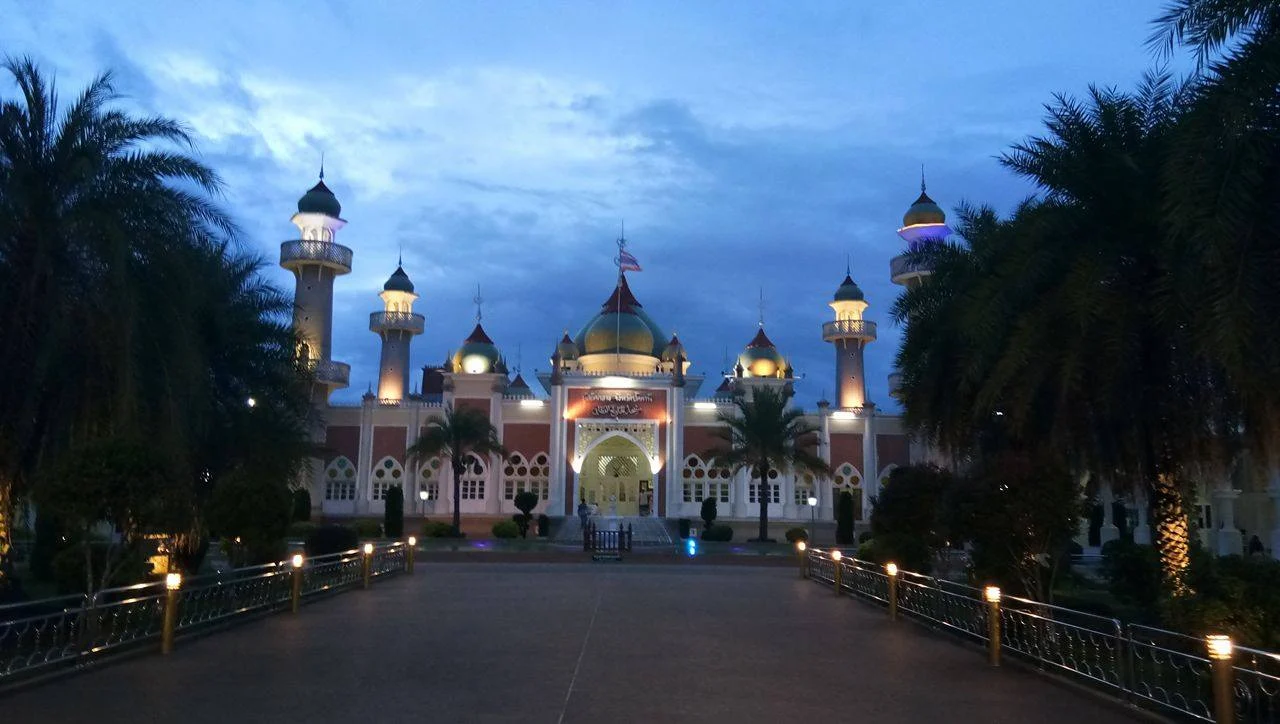
Regularly called the most beautiful mosque in Thailand, and for once the consensus is right. Built in the late 1950s and early 1960s with a nod to Taj-Mahal symmetry, its green domes and minarets double themselves in a long reflecting pool out front. Sunset is the hour — the tiles go gold, the call to prayer rolls across the water, and you will have it to yourself. Dress modestly and ask before wandering inside.
3. The Lim Ko Niao shrine and the cursed-mosque legend
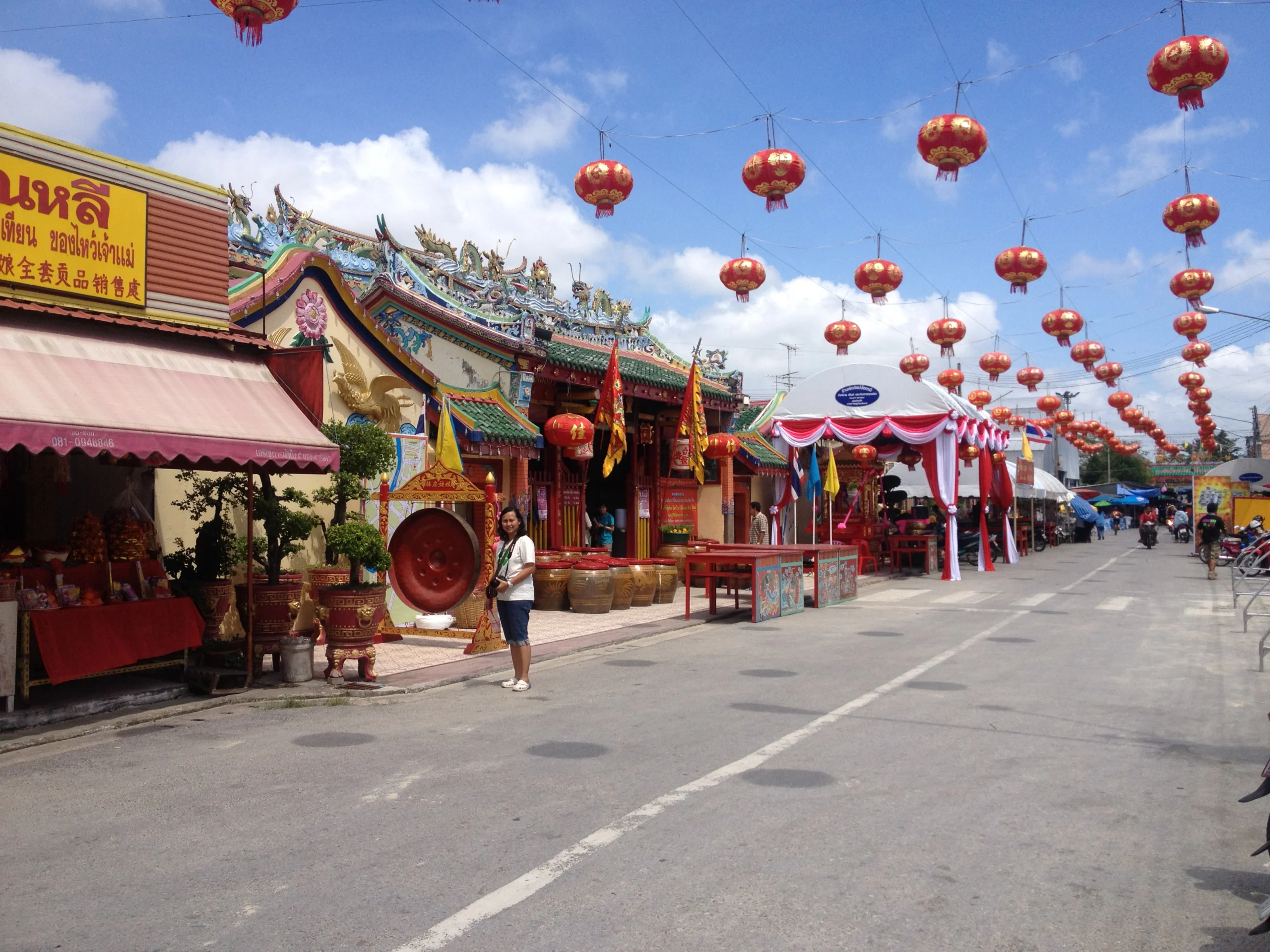
The Leng Chu Kiang shrine in town honours Lim Ko Niao, a Chinese woman who, the story goes, sailed to Pattani in the 1500s to retrieve her brother — a convert to Islam then building Krue Se Mosque. He refused; she cursed the mosque to remain forever unfinished and hanged herself from a cashew tree. That the Chinese community and the Malay Muslim majority share one intertwined origin legend tells you everything about what this port city once was. Around the third lunar month the shrine erupts into a festival of processions and fire-walking worth planning around.
4. Kolae boat beaches at Panare and Saiburi
The kolae is the deep south’s painted fishing boat — high-prowed, hand-built, covered stem to stern in motifs that owe more to Malay court art than to anything else in Thailand. The working fleets haul up on the beaches of Panare district and around Saiburi, 40-odd kilometres east of town; late afternoon, when the boats come in, is some of the best photography in the country. There is no ticket booth and no show. Buy fish, say hello, ask before pointing a camera at anyone, and you will likely end up invited to tea.
5. Khao yam done properly, CS Pattani style
Food as sightseeing. The CS Pattani Hotel has spent years championing the province’s budu rice culture, and its khao yam is the dish’s dressed-up ambassador — a gentle first encounter if fermented anchovy sauce sounds alarming. Then graduate to the morning-market version at ฿40-60, assembled by a woman who has made nothing else for thirty years, and compare. Doing both is the best crash course in southern Malay-Thai food.
What to skip
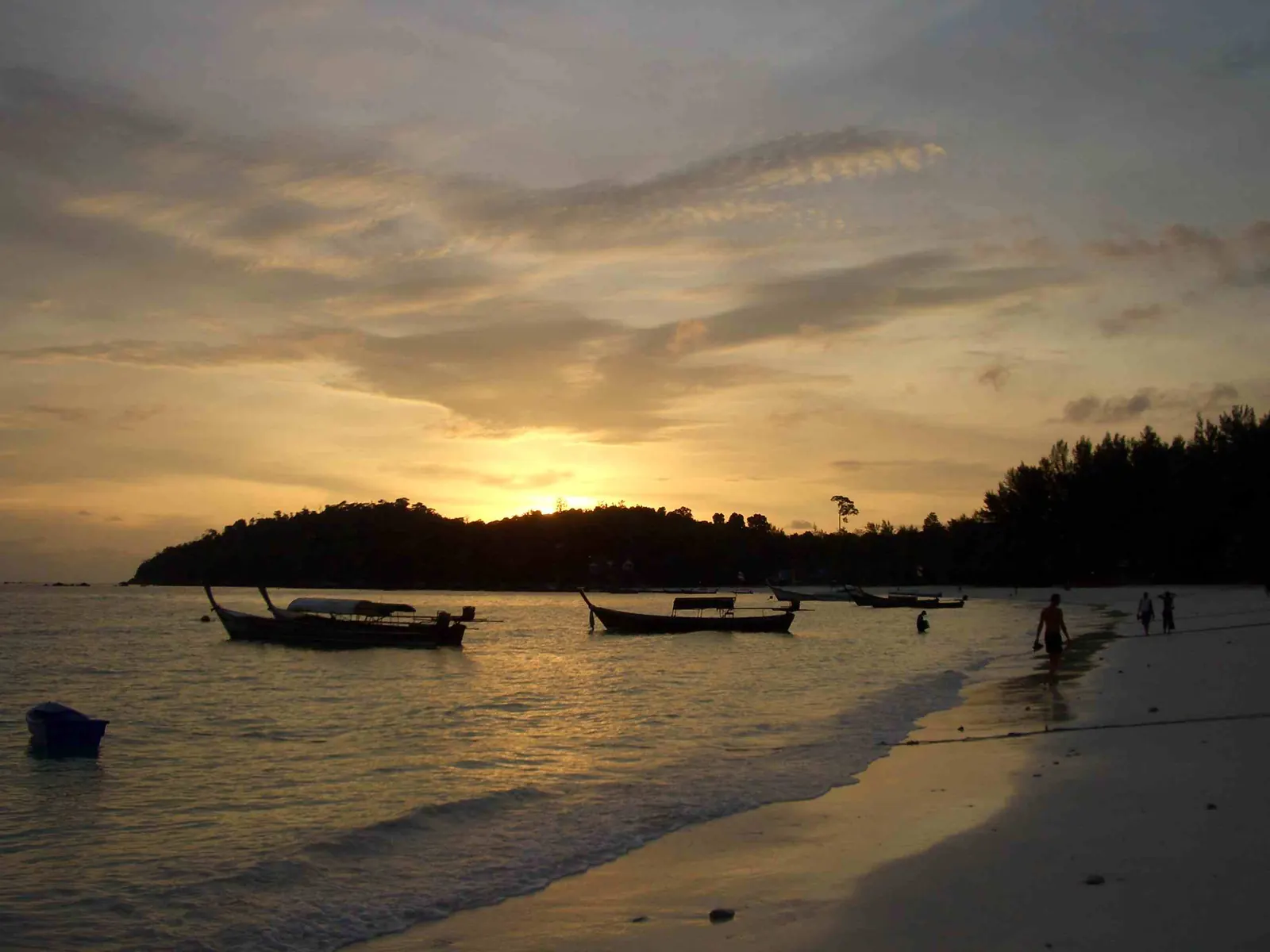
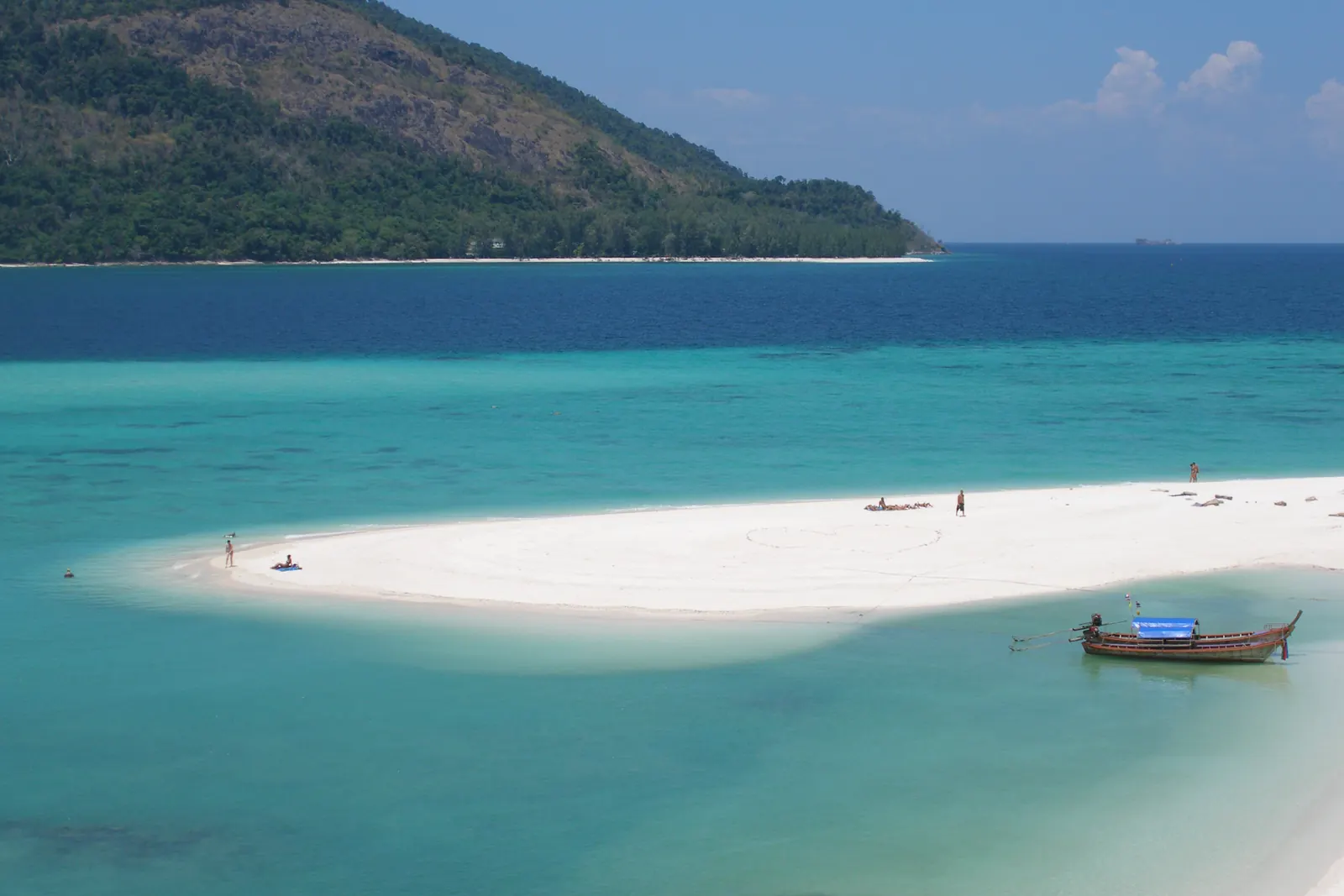
Skip the idea of Pattani as a beach holiday. Some listicle will tell you its sands are undiscovered paradise. They are not. They are working shorelines — handsome, atmospheric, strewn with nets and the occasional heap of engine parts — and the Gulf here is brown-green, not turquoise. Turning up with a snorkel and swimwear expectations is pointless and, in a conservative province, mildly offensive. The beaches are magnificent as culture; as a tan-and-cocktails product they are a one-star review waiting to happen. If you want that Thailand, it is 300 kilometres north and you already know its name.
Pattani travel: practical info
When: February to April is driest; the Gulf monsoon soaks the coast from roughly October to December. How long: two full days covers town, Krue Se, the Central Mosque and one boat-beach run; three lets you slow to local speed. Getting around: no ride-hailing; arrange a car and driver through your hotel (฿1,500-2,000 a day) or self-drive from Hat Yai. Culture: dress conservatively, expect Friday afternoons to shut down, and a little courtesy in Malay lands well. Security: avoid being out late in town centres, do not photograph checkpoints or soldiers, and monitor local news; conditions shift. Onward: Yala and Betong lie south, Narathiwat east along the coast, and Songkhla’s old town makes a gentle decompression stop two hours north.
Wikipedia’s Pattani entry covers the sultanate history this guide can only sketch.
TAT’s official Pattani page keeps travel practicalities current.
FAQ
Is Pattani Thailand safe to visit?
Safer than the headlines suggest, less safe than anywhere else you have been in Thailand. Violence is overwhelmingly aimed at security forces and foreign travellers have very rarely been affected, but attacks in public places do happen. Most governments advise against all but essential travel — a personal risk decision only you can weigh.
Does travel insurance cover Pattani province?
Almost certainly not under a standard policy, because insurers typically exclude regions under a government do-not-travel advisory. Some specialist insurers will cover the deep south at a price. Check the exclusions clause before you go.
How do I get from Hat Yai to Pattani?
Minivans run through the day, taking about two hours for roughly ฿120-150. A private car costs around ฿1,200-1,500 and is worth it for two people. Expect a couple of brief army checkpoints en route.
Can non-Muslims visit the mosques in Pattani?
Yes, respectfully. The grounds of both Krue Se and the Central Mosque are open to visitors; dress modestly, avoid prayer times, and ask before entering interiors or photographing worshippers.
What food is Pattani famous for?
Khao yam — budu-dressed rice salad closely related to Malaysian nasi kerabu — plus Malay-style beef and goat curries, roti, grilled fish from the kolae fleet and halal market sweets. Alcohol is very hard to find outside a few hotels and Chinese-Thai restaurants.
Related guides
- Southern Thai cuisine: budu, bitterness and the food of the deep south
- Songkhla Old Town guide
- The ethnic groups of Thailand explained