Phichit is the province everyone on the northern train line sleeps through, somewhere between Nakhon Sawan and Phitsanulok, and that is precisely why you should get off. This is flat, green, river-fed rice country where the biggest celebrity is a mythical crocodile king, the social event of the year is a longboat race, and the tourism industry consists of approximately nobody. Just Thailand, getting on with being Thailand.
Here is the honest pitch. Phichit will not fill a week. It will, however, fill two very good days with things you cannot get anywhere else: a folktale you can walk inside, a regatta that predates almost every festival foreigners have heard of, and pomelo orchards along a slow brown river. If your idea of travel involves being the only foreigner at the noodle stall, this is your province. Start with our Phichit province profile for the quick facts, then read on for the opinionated version.
What Phichit really is
Phichit sits in the lower northern plains on the Nan River, about 40 minutes south of Phitsanulok by train. It is farm country: rice paddies to every horizon, pomelo orchards near the river, and a provincial capital of modest size that empties out by nine in the evening. The riverfront has genuine charm and the pace is a tonic.
Culturally, Phichit punches oddly far above its weight. This is the setting of Krai Thong, one of Thailand’s best-known folktales, in which a giant crocodile lord named Chalawan drags a merchant’s daughter down to his underwater cave before a crocodile hunter from Nonthaburi sorts him out. Every Thai schoolchild knows the story, and the province has leaned into it completely. It beats another mascot in a durian costume.
Why go to Phichit
Go because it is real. The lower plains are the engine room of Thai rice farming, and Phichit is what most of Thailand actually looks like when nobody is staging it for visitors. Go for the early-September longboat races if you can time it, because they are one of the great undersold spectacles in the country. Go for temples with genuine history and zero coach parks. And go because it is absurdly cheap: you can eat well for ฿150 a day and sleep clean for ฿500 a night, and nobody will try to sell you a suit.
Do not go expecting nightlife, English menus or anyone to entertain you. Phichit assumes you can entertain yourself. If you can, it rewards you.
Getting to Phichit
The train is the obvious move. Phichit sits on the Northern Line between Bangkok and Chiang Mai, so a dozen or so trains a day stop here in each direction. From Bangkok (Krung Thep Aphiwat) it is roughly five to six hours; an ordinary third-class seat costs well under ฿100, while a second-class seat on a rapid or special express runs around ฿300-500. From Phitsanulok it is a 30-45 minute hop for pocket change.
Buses run from Bangkok’s Mo Chit terminal, taking five to six hours for ฿300-400. There is no airport in Phichit; fly to Phitsanulok from Don Mueang (about an hour in the air, often ฿1,000-1,500 booked ahead), then take a bus, train or an hour’s drive south. Once in town, hire a motorbike or bicycle; everything worth seeing sits along flat, quiet roads.
Where to stay
Stay in Phichit town. The choice is small but serviceable: a handful of Thai-style hotels and guesthouses clustered between the train station and the river, and a few more out by Bueng Si Fai lake. Expect ฿350-600 for a clean fan or basic air-con room near the station, ฿600-1,000 for the better air-con places with hot water and parking, and ฿1,000-1,500 for the nicest thing in town.
During longboat race weekend in September the town genuinely fills up, so book ahead. Every other week, walking in and asking works fine.
What to eat in Phichit
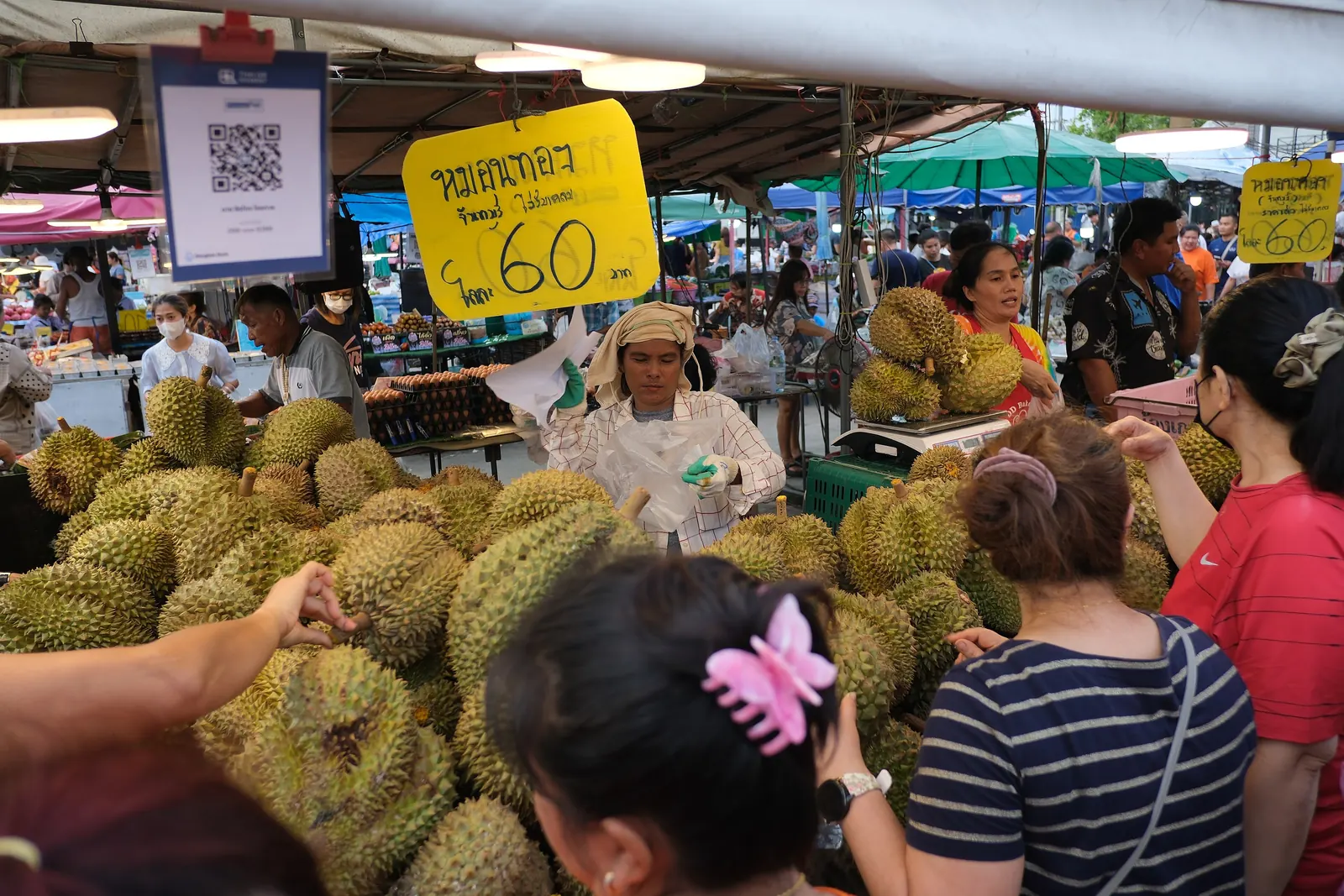
Phichit’s signature crop is the pomelo, specifically the ones grown in the orchards around Ban Wang Krot on the Nan River. In season you will find them stacked at roadside stalls and in the market for ฿40-80 a fruit, and a good one is a revelation: dense, sweet-sharp segments that make supermarket grapefruit taste like wet cardboard. Buy two.
Beyond that, this is river and rice-plain eating. The morning market near the riverfront does the full Thai breakfast repertoire: jok (rice porridge) for ฿40-50, patongo with sweetened condensed milk, and grilled river fish later in the day. The night market near the station covers the evening for ฿50-80 a dish, with the usual heavyweights: khao man gai, pad kaprao, som tam and freshwater fish. There is no famous single restaurant to chase here; eat where the plastic stools are fullest.
Top things to do in Phichit
1. Bueng Si Fai and the giant Chalawan crocodile
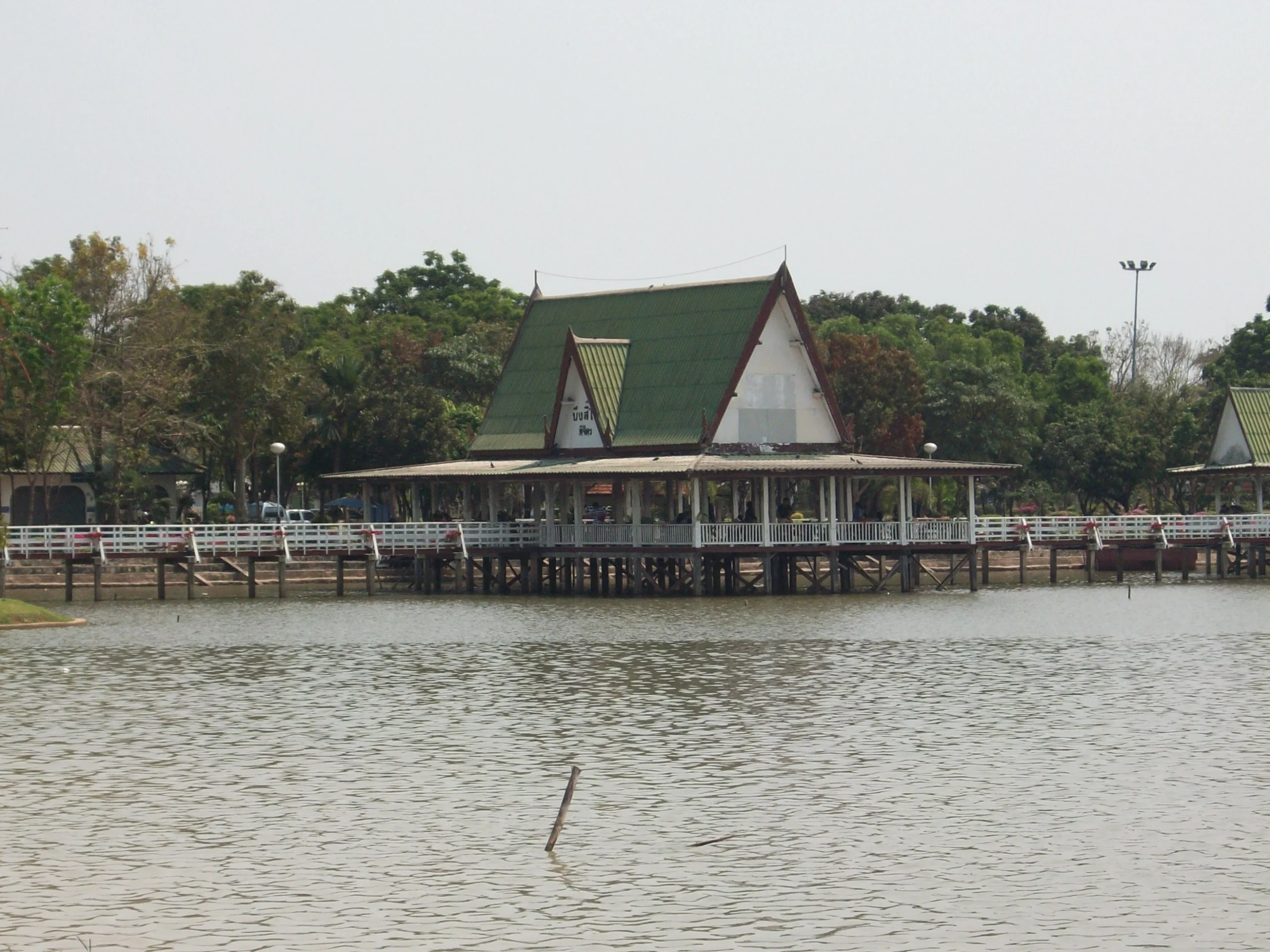
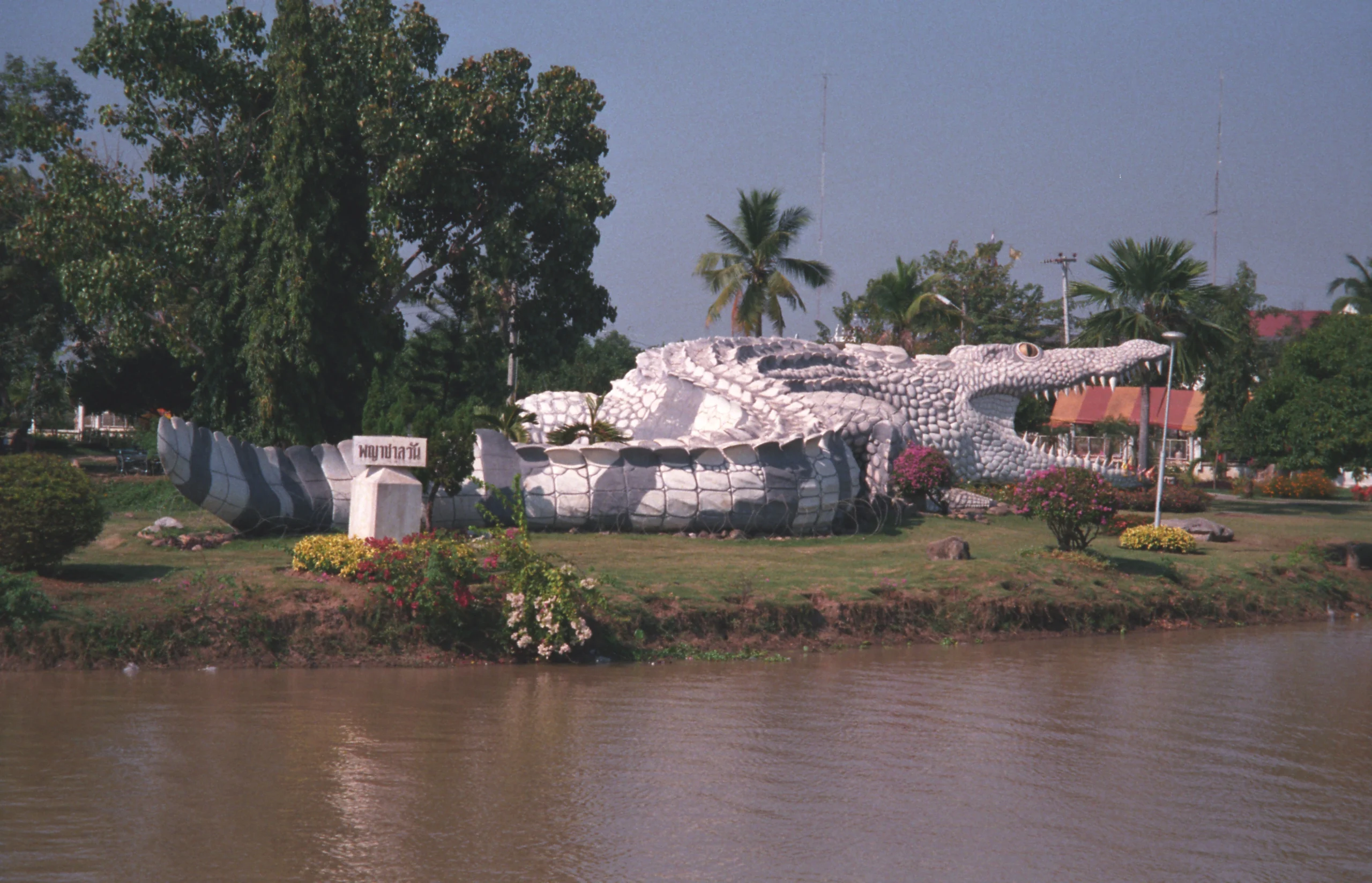
Bueng Si Fai is a large freshwater lake on the edge of town, ringed by a park where Phichit does its jogging, courting and evening snacking. The headline act is an enormous concrete crocodile, several dozen metres of grinning reptile that you can actually walk inside, built in honour of Chalawan, the crocodile king of the Krai Thong legend. It is gloriously unsubtle and completely charming. Come an hour before sunset, when the light goes gold across the water and half the town turns up. Free to wander; small fees for the extras.
2. The September longboat races on the Nan River
If you do one thing in Phichit, time your visit for early September, when the traditional longboat races take over the Nan River in front of Wat Tha Luang. This is one of Thailand’s oldest and most prestigious regattas: narrow wooden boats the length of a bus, dozens of paddlers apiece, drummers pounding the stroke rate, and riverbanks packed with people cheering and eating. It is loud, chaotic and genuinely thrilling in a way that curated cultural shows never are. Turn up early for a riverside spot; it costs nothing.
3. Wat Tha Luang and Luang Pho Phet
Wat Tha Luang is Phichit’s principal temple, sitting right on the Nan River in the middle of town, and it houses Luang Pho Phet, a bronze Buddha image in the Chiang Saen style that is among the most revered in the lower north. Thai visitors travel specifically to pay respects here; foreigners are a rarity, which means you get an actual working temple rather than a photo set. Go in the morning when merit-makers are about, dress properly, and put ฿20 in the box.
4. Wat Pho Prathap Chang, King Suea’s birthplace temple
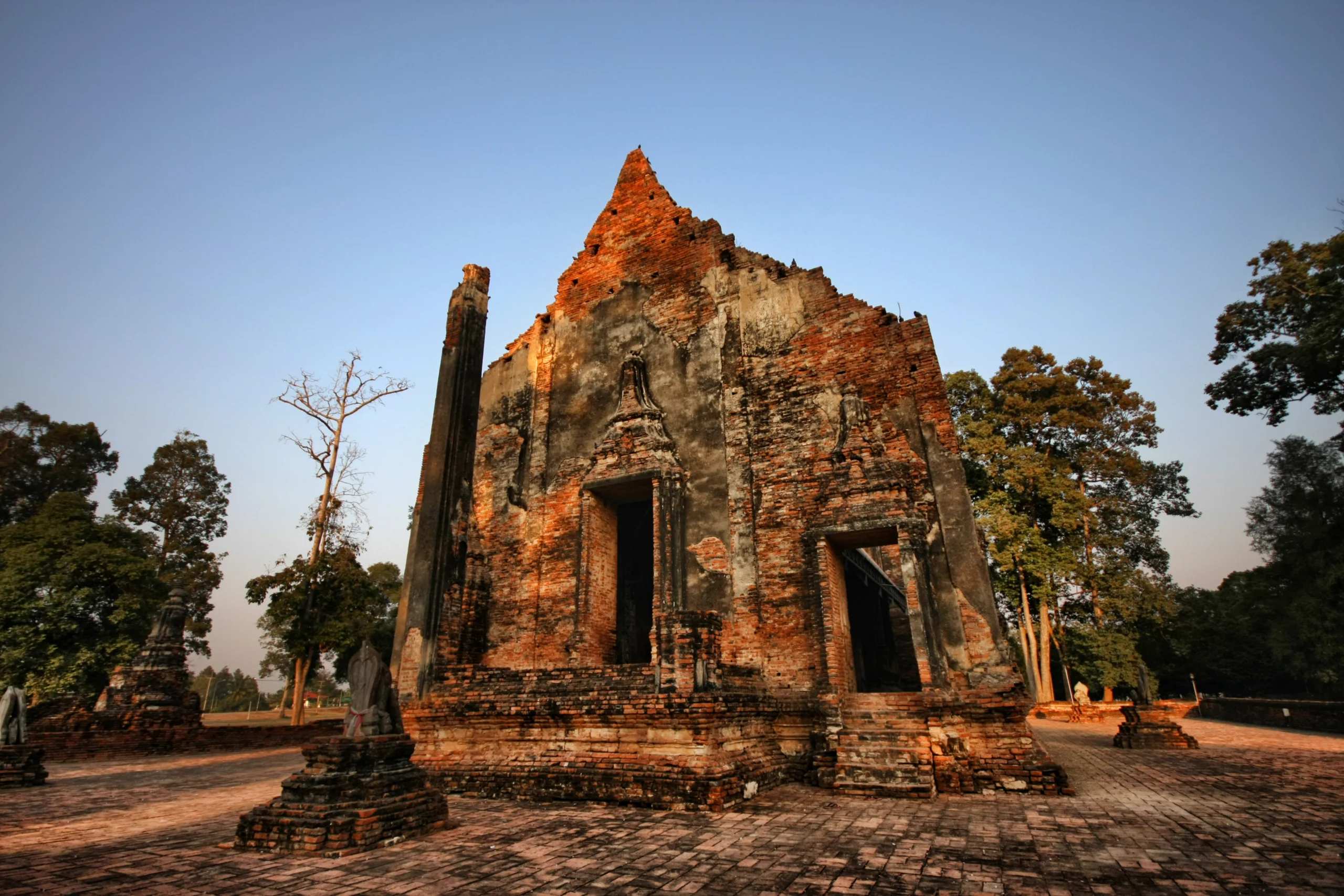
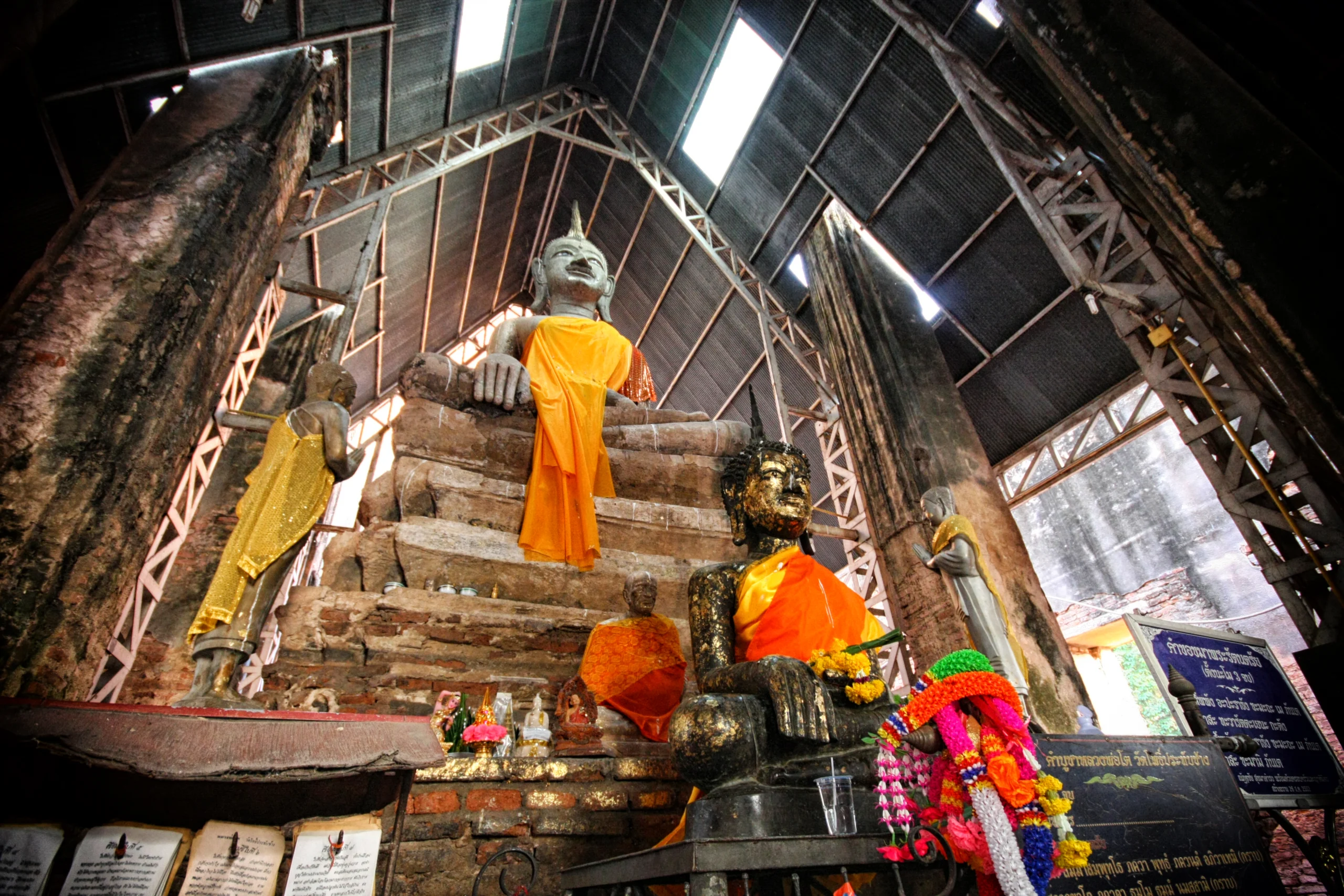
About 30 minutes south of town in Pho Prathap Chang district stand the remains of a temple built around the turn of the eighteenth century by King Suea of Ayutthaya, the famously hot-tempered Tiger King, on the site of his own birth. What survives is a huge brick ordination hall wrapped in thick walls, standing alone among the fields. As Ayutthaya-era ruins go it is a footnote in scale, but you will likely have the entire site to yourself, which the actual Ayutthaya has not offered anyone since about 1987. Free entry; go by hired motorbike.
5. Ban Wang Krot pomelo orchards and the old riverside market quarter
The Nan riverbank around Ban Wang Krot is pomelo country, and several orchards let you wander among the trees, buy fruit at farm prices and, in season, eat it under the canopy with chilli-sugar dip. Pair it with the century-old market quarter by the river: a strip of ageing wooden shophouses where the commerce has thinned but the atmosphere has not, with old-style coffee and Thai sweets if you time it for a weekend morning. An unhurried half day covers both.
6. Cycle the rice plains
Phichit is pancake flat, laced with quiet lanes between paddies, canals and villages, which makes it one of the easiest cycling provinces in Thailand. Hire a bicycle in town for ฿50-100 a day, pick a direction along the river, and just go. In the green season the paddies are an almost aggressive shade of emerald, egrets stalk the ditches, and every third villager will wave at you. This is the cheapest good day out in the entire lower north.
What to skip
The crocodile show. Where there are crocodile statues there is usually a crocodile farm, and where there is a crocodile farm there is a man putting his head in a torpid animal’s mouth for applause. Phichit’s captive crocs are the least interesting version of the Chalawan story: concrete pens, murky water, and reptiles with all the vitality of handbags-in-waiting. The legend, the lake and the giant statue give you everything good about the crocodile mythology without the sad zoo economics. Walk inside the statue, skip the pens, and spend the hour you saved eating pomelo.
Phichit travel: practical info
Best season: November to February for cool, dry weather, or early September specifically for the longboat races, accepting some rain as the price of admission. March to May is brutally hot on these shadeless plains; cycle at dawn or not at all. How long: one full day covers the town, lake and Wat Tha Luang; two days adds Wat Pho Prathap Chang, the orchards and a proper ride through the paddies. Onward connections are excellent for such a quiet province: Phitsanulok is 40 minutes north by train, which opens up Sukhothai’s ruins an hour beyond that, while the same line runs south to Nakhon Sawan and Bangkok.
For official attraction listings and festival dates, the Tourism Authority of Thailand’s Phichit province page and its things-to-do guide are useful official starting points.
FAQ
Is Phichit worth visiting?
Yes, for one or two days, and especially during the September longboat races. It is not a headline destination and does not pretend to be one. It is a genuine slice of rice-plain Thailand with a strong folktale identity, near-zero tourism and very low costs, ideal as a stop on the northern rail line.
How do I get to Phichit from Bangkok?
Take a Northern Line train from Krung Thep Aphiwat station; the journey runs five to six hours and costs from under ฿100 in third class to around ฿300-500 in second class on faster services. Buses from Mo Chit take a similar time for ฿300-400. There is no airport; fly to Phitsanulok and connect south.
When are the Phichit longboat races?
The traditional longboat races are held on the Nan River in front of Wat Tha Luang in early September each year, with exact dates varying slightly. It is the province’s biggest event and one of Thailand’s oldest regattas, so book accommodation ahead for that weekend.
What is Phichit famous for?
Three things: the Chalawan crocodile king of the Krai Thong folktale, celebrated with a giant walk-in crocodile statue at Bueng Si Fai lake; the September longboat races; and pomelos from the orchards around Ban Wang Krot. Wat Tha Luang’s Luang Pho Phet Buddha is also a major draw for Thai pilgrims.
Can I visit Phichit as a day trip from Phitsanulok?
Easily. Trains take 30-45 minutes each way and run throughout the day, costing very little. Leave in the morning, cover Wat Tha Luang, the riverfront and Bueng Si Fai, and be back in Phitsanulok for dinner. Stay overnight only if you want the orchards and Wat Pho Prathap Chang too.