Chumphon has a strange claim to fame: it is the Thai province that hundreds of thousands of travellers cross every year without actually seeing. You stagger off a night train from Bangkok at four in the morning, get funnelled onto a catamaran, and by breakfast you are on Koh Tao having registered nothing of Chumphon beyond a pier, a queue and a mediocre toastie. That is the standard experience, and it is a mistake.
Because here is what nobody tells you: Chumphon has a couple of hundred kilometres of Gulf coastline, a national park with more than forty islands, and beaches that would be wall-to-wall resorts anywhere else in Thailand — yet they sit nearly empty. Thung Wua Laen alone is four kilometres of clean sand where the biggest crowd you will fight is a kitesurfing class. For the quick numbers, see our Chumphon province profile.
Stay a night or two. Worst case, you lose 48 hours to good seafood and an empty beach. There are worse fates in Thai travel.
What Chumphon really is
A working southern province that happens to own the main gateway to Koh Tao. The capital is a compact grid around the railway station — a proper Thai provincial town with a night market, rice-and-curry shops and zero tourist infrastructure beyond the ferry booking offices. The economy runs on fishing, fruit and coffee, not tourism — nobody is performing Thainess at you here, because nobody expected you to get off the train.
It is also, quietly, Thailand’s robusta heartland. The hills of Tha Sae and Sawi districts grow a huge share of the national crop, and the old-school kopi shops — sock-filtered coffee, condensed milk, a chaser of weak tea — are a southern institution done particularly well here. A ฿30 glass of the local stuff will recalibrate anyone raised on ฿120 Bangkok flat whites.
Why go to Chumphon
Three reasons. First, the beaches: long, quiet, and priced like Samui fifteen years ago. Second, the islands: Mu Ko Chumphon National Park covers the same Gulf reefs people pay Koh Tao prices to dive, with a fraction of the boats. Third, convenience: you are passing through anyway, and turning a pier wait into a two-day stopover costs nothing but a rebooked ferry.
What you will not get is nightlife, shopping or postcard limestone karsts. If you need a beach club, keep moving south. If you want Thailand as it functions when tourists are not looking, this is the good stuff.
Getting to Chumphon
By train: around a dozen services a day from Bangkok’s Krung Thep Aphiwat station, taking seven to nine hours. The daytime special express is quickest; the night sleepers land between about 04:00 and 06:00, timed for the morning boats. Expect ฿250-350 in third class and roughly ฿700-950 for a second-class air-conditioned berth, the sensible choice.
By bus: from Bangkok’s Southern Terminal, seven to eight hours, about ฿400-550. Fine, marginally quicker than the train, less romantic.
By air: direct flights from Don Mueang take about an hour and typically cost ฿1,200-2,500 booked ahead. The airport sits 35 kilometres north of town, so factor in a shuttle van.
From the south: Surat Thani is roughly three hours by bus or train, and buses cross the peninsula’s narrowest point to Ranong in about two.
Where to stay
Town centre: clean guesthouses within walking distance of the station and night market run about ฿350-700. The right base for a one-night stopover before a morning ferry.
Thung Wua Laen beach: a low-rise strip of small resorts and bungalows along the sand, mostly ฿700-1,800 a night. This is where you stay if the beach or the kitesurfing is the point.
Near the piers at Paknam: a handful of plain, functional places for people catching brutally early boats. Do not expect charm.
What to eat in Chumphon
This is a serious fishing province, and seafood is the headline. The row of restaurants near the Paknam river mouth serves crab, squid and whole grilled fish straight off the local fleet — a proper blowout runs ฿300-500 a head, which would barely buy the prawns on Samui. In town, the night market on Krom Luang Chumphon Road covers everything from grilled chicken to southern curries at ฿40-80 a plate.
Order southern: khua kling, the dry-fried curry that arrives angrier than you expect, and gaeng som, the sour turmeric curry that defines this coast — both ฿50-80 over rice. Wash it down with robusta kopi at ฿25-40 a glass, and take home a bag of kluai lep mue nang, the lady-finger bananas the province is famous for, sold fresh and sun-dried in every market. They sound like a gimmick; they are excellent.
Top things to do in Chumphon
1. Have Thung Wua Laen beach almost to yourself
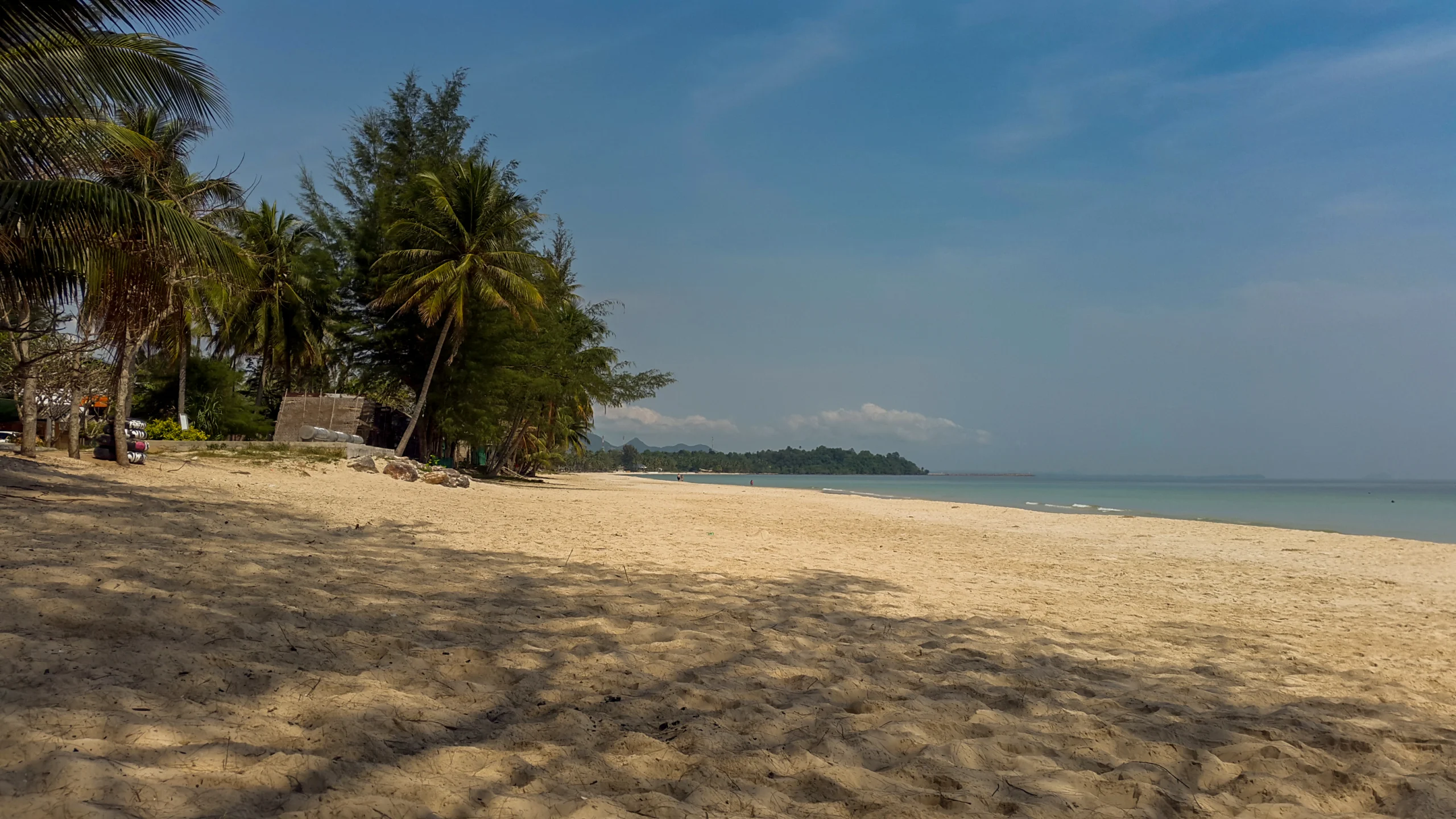
Four kilometres of pale sand about 15 minutes north of town, backed by casuarinas and a thin line of low-key resorts instead of concrete. On a weekday you can count fellow foreigners on one hand. From roughly November to March the northeast monsoon delivers steady wind, making this one of the Gulf’s better kitesurfing beaches, with schools on the sand. A rented motorbike gets you there in 20 minutes; a songthaew costs a few tens of baht.
2. Dive or snorkel Mu Ko Chumphon National Park
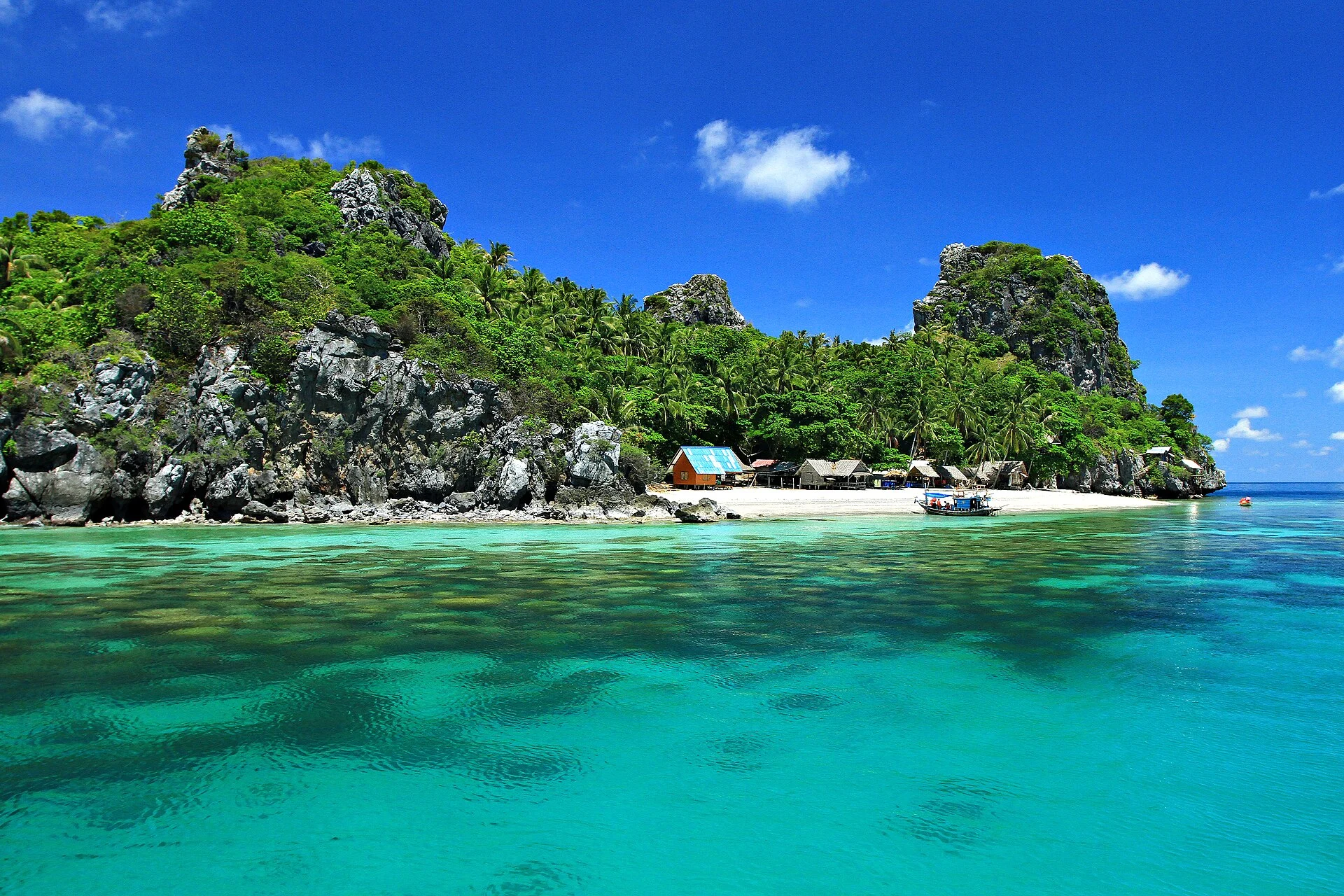
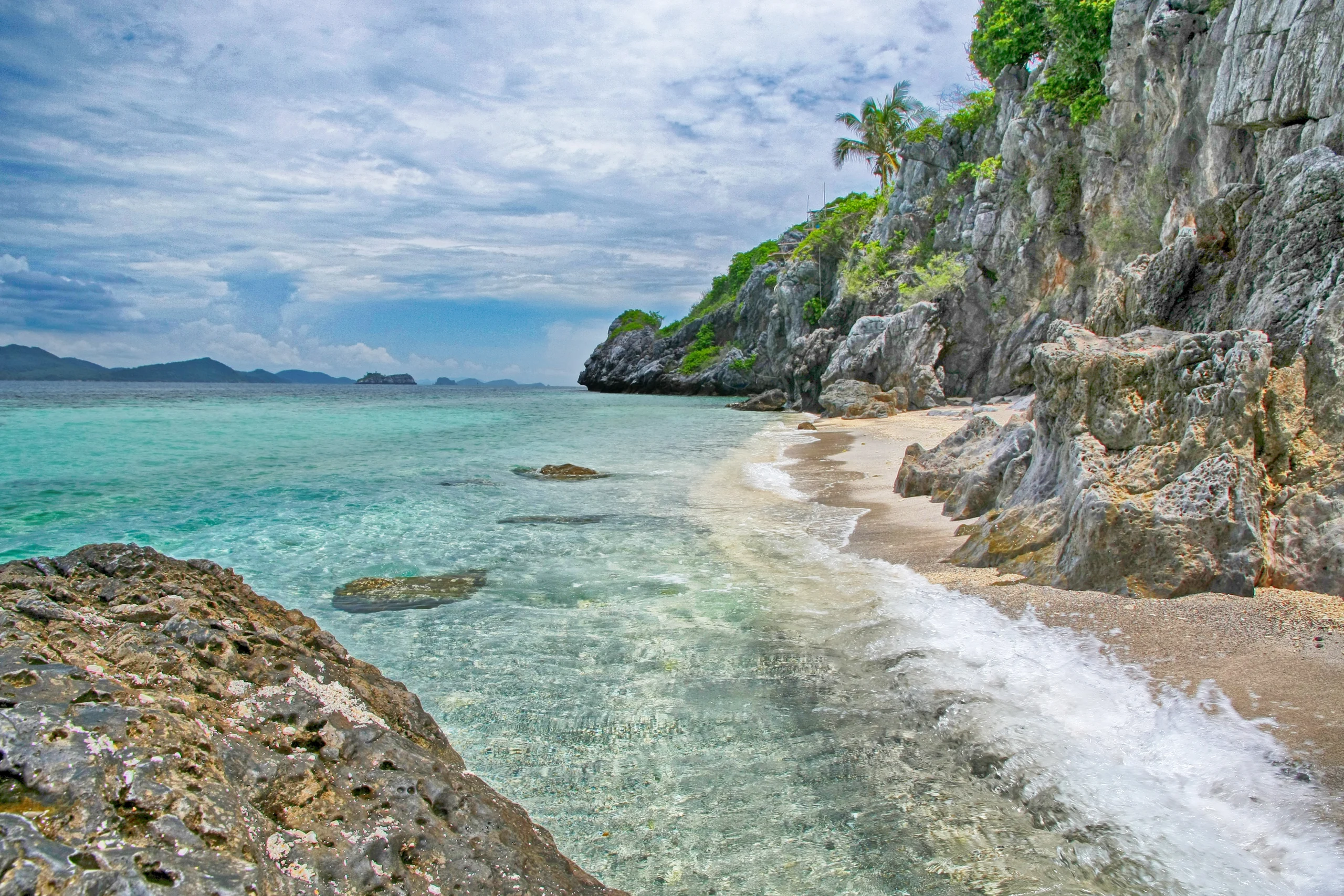
More than forty islands scattered off the coast, from limestone lumps run as guarded swiftlet-nest concessions to reef islands like Ko Ngam Yai and Ko Ngam Noi with coral in properly good condition. Day trips and dive boats run from Thung Wua Laen and the piers south of town; foreigner entry to the park is about ฿200, and visibility peaks from roughly February to May. It is the same ecosystem that made Koh Tao famous, without forty boats moored over a single pinnacle.
3. Visit the Prince of Chumphon shrine and HTMS Chumphon
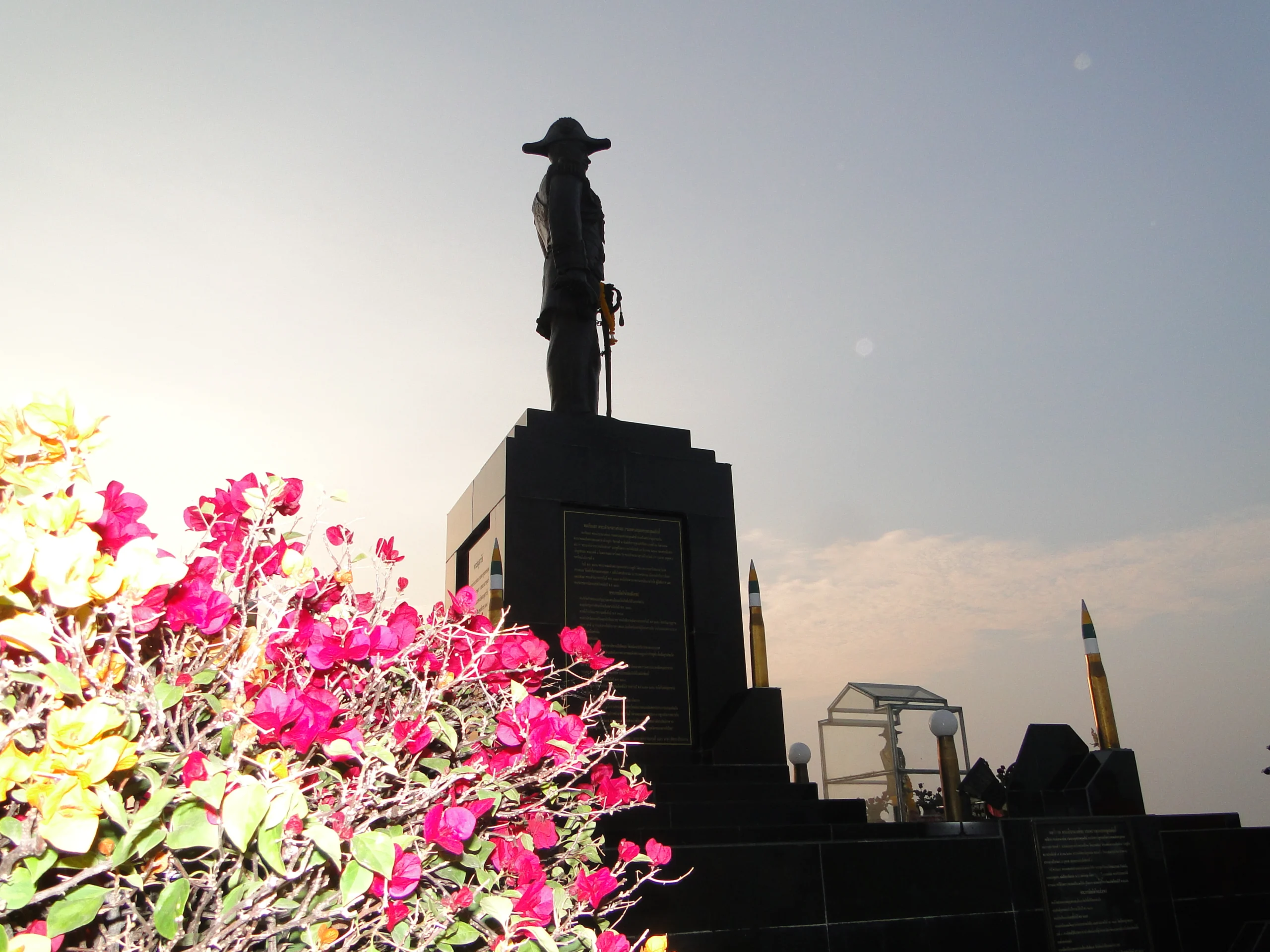
At Hat Sai Ri, about 20 kilometres south-east of town, stands the shrine of Prince Abhakara — Krom Luang Chumphon, revered as the father of the Royal Thai Navy, who died here in 1923. It is a genuine pilgrimage site: naval officers and Thai families arrive all day with garlands and incense. Beached beside the shrine sits HTMS Chumphon, a decommissioned torpedo boat you can walk around. Entry is free; late afternoon, when the light goes gold over the Gulf, is the time.
4. Ride up to Khao Mattree viewpoint at sunset
A hill just outside town, also written Khao Matsee, with a near-360-degree view over the river mouth, the fishing fleet heading home and the park’s islands strung across the horizon. The road up is a short, steep motorbike ride and costs nothing. The province does not do grand set-pieces; this is what it does instead — green hills, working water, islands, almost no people.
5. Time it for the Lang Suan boat races, then drink the coffee
An hour south by train or minivan, Lang Suan hosts traditional long-boat races on its river every October, around the end of Buddhist Lent — a tradition running back more than a century, crews dozens of paddlers deep, a festival wrapped around the water. If you are anywhere near in October, go. Outside race season, Lang Suan and the hills behind it are the core of the robusta country: old shophouse kopi joints, roadside roasters and fruit orchards. This is where that ฿30 glass of coffee comes from.
6. Do the Koh Tao transit properly
Yes, the boats count as a thing to do — done right. Your options: the high-speed catamaran, morning and early-afternoon sailings, about an hour and three quarters for roughly ฿600-700, transfer to its pier included; a slower, slightly cheaper ferry; or the night boat from Paknam, leaving around 23:00 and arriving near 05:00 for about ฿450-600. The night boat is a floating dormitory — a numbered mattress in a row of numbered mattresses — genuinely fine, and it saves a night’s rent. The one unforgivable move is arriving at midnight for a 07:00 catamaran and sleeping on a plastic chair at the pier. Sleep in town or take the night boat. There is no third way that ends with dignity.
What to skip
The Khao San Road joint-ticket combo. It is sold as a seamless VIP bus-and-boat package, and what you actually get is a cramped coach leaving Bangkok around 21:00 that dumps you at a shuttered pier in the small hours to sit on concrete with the mosquitoes until the boat office opens. You save perhaps ฿200 against booking the train and ferry yourself, and you pay for it in sleep, spinal alignment and self-respect. Book the sleeper train and arrive like an adult.
Also skip beach plans from October to December. The Gulf monsoon hits this coast hard: brown churn, debris on the tideline, some years serious flooding. Chumphon in the wet season is a transit stop, not a holiday.
Chumphon travel: practical info
Best season: January to April brings the driest weather and calmest sea; November to March adds the wind kitesurfers want at Thung Wua Laen. October to December is the monsoon.
How long to stay: one night makes the ferry civilised; two lets you do the beach, the shrine and the viewpoint; three or four earns you the islands and a dive trip.
Onward travel: boats to Koh Tao connect on to Koh Phangan and Koh Samui. The rail line continues south to Surat Thani in around three hours, buses cross west to Ranong in about two, and Prachuap Khiri Khan is a few hours back up the line towards Bangkok.
Planning the specifics? The Tourism Authority of Thailand’s official Chumphon page and its things-to-do list carry current ferry times and beach details, and Wikipedia has the historical background.
FAQ
Is Chumphon worth visiting or just a transit town?
It is a transit town that rewards anyone who stays. Two nights gets you a four-kilometre beach with nobody on it, a 40-plus-island national park and seafood at honest prices. It will not out-glamour the islands further south, but as a stopover it beats a pier bench by several thousand percent.
How do you get from Chumphon to Koh Tao?
Three ways: the high-speed catamaran in about an hour and 45 minutes for roughly ฿600-700, a slower conventional ferry for a little less, or the night boat leaving around 23:00 and arriving about 05:00 for ฿450-600. The night boat doubles as a bed — best value if you can sleep through engine noise.
How long is the train from Bangkok to Chumphon?
Seven to nine hours depending on the service. The daytime special express is fastest, while the overnight sleepers arrive around dawn. Fares run from about ฿250 to ฿950 depending on class.
When is the best time to visit Chumphon?
January to April for dry weather and calm water. Kitesurfers should aim for November to March, when the northeast monsoon brings reliable wind to Thung Wua Laen. Avoid October to December if the beach is the point — that is peak wet season on this coast.
Does Chumphon have good beaches?
Yes, and they are empty, which is the entire pitch. Thung Wua Laen is four kilometres of clean sand with a handful of low-key resorts; Hat Sai Ri and Ao Thung Makham further south are quieter still. The sand is a shade greyer than the Andaman postcard stuff, but you will have it almost entirely to yourself.