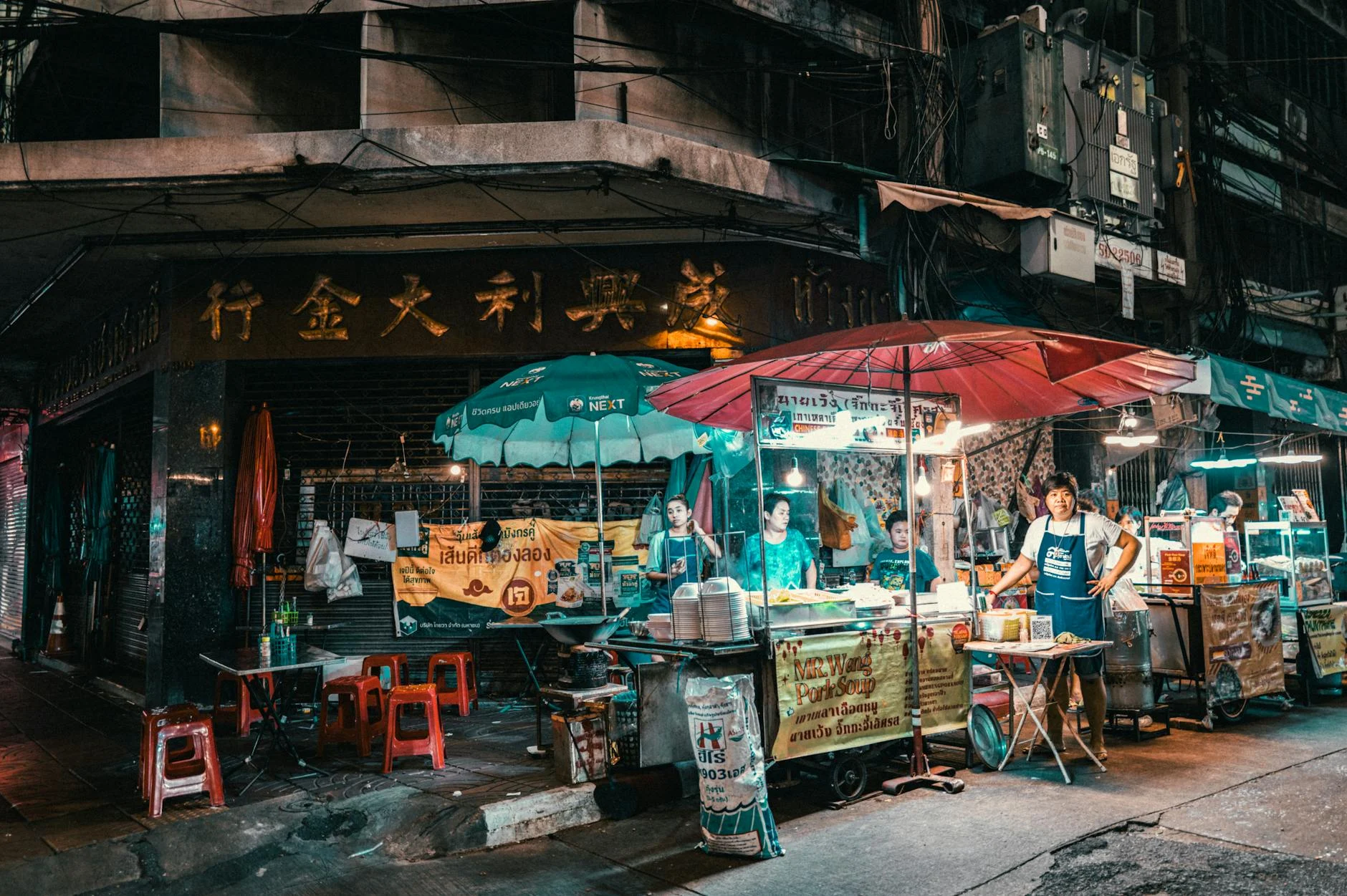
Eat & Drink in Thailand
Street food, markets, cafés, restaurants, cocktail bars. The food culture is one of the most extraordinary on earth — this is where we map it.
Thai food is regional before it is national
The Thai food most people meet abroad is one region’s cooking — central plains, coconut-heavy, sweetened up and cooled down for export. Inside Thailand the dish list changes every few hundred kilometres. Cross from Chiang Mai into Isaan and the coconut milk mostly disappears, replaced by fermented fish and lime. Go south and the chilli count doubles while turmeric and Malay-Indian spicing arrive. Four kitchens, one country, and a lot of people ordering the same three dishes for two weeks because nobody told them otherwise.
This is the hub for everything we’ve written about eating and drinking here: the four regional kitchens, the dishes worth crossing town for, how to order at a stall without getting the tourist edit, what things actually cost in 2026, and how to eat well if you’re vegetarian, vegan, halal or allergic to something.
Start where everyone actually starts: our Bangkok street food guide walks the city neighbourhood by neighbourhood, and Thai noodles, decoded untangles the bowls the menus never explain.
The four kitchens
Central: the one you already know
Bangkok and the rice plains around it. Coconut milk, palm sugar, a softer chilli profile, and the dishes that became Thailand’s culinary passport — pad thai (ผัดไทย), green curry (แกงเขียวหวาน), tom yum goong (ต้มยำกุ้ง), khao man gai (ข้าวมันไก่). It’s also the home of boat noodles (ก๋วยเตี๋ยวเรือ), the small dark bowls sold five at a time, and of khao gaeng (ข้าวแกง) — the curry-over-rice shops that feed most of working Bangkok for under ฿80.
Bangkok is the easiest place in the country to eat brilliantly for very little money. Our guide to Ari covers one of the best neighbourhoods to do it in, and the Luk Kaithong review is an honest look at what happens when a street-food dish moves into a mall.
North: Lanna, and the coconut mostly stops
Shan and Burmese influence, sticky rice instead of jasmine, herbs and a pleasant bitterness where the centre would use sugar. The famous one is khao soi (ข้าวซอย) — curried broth, soft egg noodles, a nest of crisp ones on top, pickled mustard greens and a lime wedge on the side. Also here: sai ua (ไส้อั่ว), the lemongrass-heavy northern sausage; nam prik num (น้ำพริกหนุ่ม), a roasted green-chilli dip eaten with sticky rice and vegetables; and gaeng hang lay, a slow pork curry with ginger and tamarind that borrows its spice mix from Myanmar.
Breakfast in the north deserves its own treatment — see what to eat for breakfast in Chiang Mai, which is mostly an argument against your hotel buffet.
Isaan: the northeast, and the food most Thais actually crave
Rooted in Lao cooking, built on sticky rice, lime, chilli and fermented fish (pla ra). Som tam (ส้มตำ) is the anchor — green papaya pounded to order, and there are far more versions than the sweet one sold to tourists. Larb (ลาบ) is minced meat with toasted rice powder and herbs. Gai yang is the grilled chicken that comes with both. Order all three together with a basket of sticky rice and you have the standard Isaan table.
This is also the food of Bangkok’s migrant workforce, which is why you can eat it superbly in the capital. For it on home ground, see the Khon Kaen night market guide.
South: chilli, turmeric, and the sea
Malay and Indian influence, the highest heat in the country, and the best seafood. Gaeng som (แกงส้ม) is a sour orange curry that will genuinely hurt if you’re not ready. Khua kling is dry-fried minced meat with a curry paste and almost no liquid. Massaman (แกงมัสมั่น) came up through the Muslim trading communities and is the gentlest thing on a southern menu. Roti and Muslim-style chicken biryani (khao mok gai) are everywhere below Surat Thani.
We’ve written this one up properly: southern Thai cuisine, and the Nakhon Si Thammarat night market is a good place to eat your way through it.
How the flavour balance actually works
Thai cooking balances sweet, sour, salty, spicy and — less discussed — bitter, and it does it dish by dish rather than course by course. That’s why a table gets ordered as a set: something sour, something rich, something grilled, something plain to cool it all down. Understanding the logic is the difference between ordering three dishes that fight each other and ordering three that work.
Full explanation: the five tastes of Thai cuisine. For where the modern repertoire came from, ahan boran — ancient Thai recipes traces the dishes that predate the chilli’s arrival from the Americas.
Twenty dishes worth knowing by name
Point at the Thai if the English isn’t landing. Prices are typical 2026 street and shophouse ranges — restaurants and malls run two to four times higher.
| Dish | Thai | What it is | Typical |
|---|---|---|---|
| Pad krapao | ผัดกะเพรา | Minced meat, holy basil, chilli, fried egg on rice. The national fallback. | ฿50–70 |
| Khao man gai | ข้าวมันไก่ | Poached chicken, chicken-fat rice, ginger-chilli sauce. | ฿50–70 |
| Khao soi | ข้าวซอย | Northern curry noodles, crisp noodle nest on top. | ฿60–90 |
| Som tam | ส้มตำ | Pounded green papaya salad. Specify your chilli count. | ฿50–70 |
| Larb | ลาบ | Minced meat, toasted rice powder, mint, lime. | ฿60–90 |
| Gai yang | ไก่ย่าง | Isaan grilled chicken, usually sold by the half bird. | ฿80–140 |
| Tom yum goong | ต้มยำกุ้ง | Hot-sour prawn soup, lemongrass and galangal. | ฿90–180 |
| Tom kha gai | ต้มข่าไก่ | The coconut one. Mild, for when tom yum is too much. | ฿80–150 |
| Gaeng keow wan | แกงเขียวหวาน | Green curry — the hottest of the coconut curries, despite the sweetness. | ฿70–120 |
| Massaman | แกงมัสมั่น | Slow, mild, cardamom and peanut. Muslim-Thai origin. | ฿80–130 |
| Panang | พะแนง | Thick, sweet, low-liquid curry. Easy entry point. | ฿70–120 |
| Gaeng som | แกงส้ม | Southern sour curry. Genuinely fierce. | ฿70–120 |
| Khua kling | คั่วกลิ้ง | Dry-fried southern curry, minced meat, no sauce. | ฿70–110 |
| Kuay teow reua | ก๋วยเตี๋ยวเรือ | Boat noodles — small dark bowls, ordered in fives. | ฿15–25/bowl |
| Khao gaeng | ข้าวแกง | Point-and-pick curry over rice. Cheapest good meal in Thailand. | ฿50–80 |
| Khao kha moo | ข้าวขาหมู | Braised pork leg over rice with pickled greens and egg. | ฿50–80 |
| Moo ping | หมูปิ้ง | Grilled pork skewers. Breakfast, with sticky rice. | ฿12–20 each |
| Khanom jeen | ขนมจีน | Fermented rice noodles under curry, with a free herb tray. | ฿40–70 |
| Jok | โจ๊ก | Rice congee with pork, ginger, egg. The breakfast of choice. | ฿40–60 |
| Sai ua | ไส้อั่ว | Northern herb sausage, sold by weight at markets. | ฿30–60 |
How to order without getting the tourist edit
Stalls quietly adjust for foreign faces. The chilli comes down, the fish sauce comes down, sometimes the sugar goes up. Four phrases fix most of it:
- ไม่เผ็ด — mai pet — not spicy. Means what it says.
- เผ็ดนิดหน่อย — pet nit noi — a little spicy. What most visitors actually want.
- เผ็ดมาก — pet mak — very spicy. Say this only if you mean it; the calibration is not the one you’re used to.
- ไม่ใส่น้ำตาล — mai sai nam tan — no sugar. Useful with som tam and most drinks.
With som tam you can also just name a chilli count — hold up fingers. Two is polite-hot for most visitors, five is a statement, ten is a dare that the vendor will absolutely honour.
One structural tip: at a khao gaeng shop you point. There’s no menu, the trays are the menu, and “song yang” (two items) over rice is the standard order. Nobody expects you to speak Thai to do this.
And know what it should cost before you point: our Thailand Price Index tracks 58 real prices — a plate of khao gaeng, a som tam, a bag of mango sticky rice — fair local rate against the tourist quote, checked and dated.
Eating with dietary restrictions
Vegetarian and vegan
The word that unlocks Thailand is เจ — jay. It’s a Buddhist vegan standard: no meat, no fish sauce, no egg, no dairy, and no pungent vegetables like garlic or onion. Yellow-and-red jay signage marks shops that cook to it year-round, and during the October Vegetarian Festival it appears across the whole country. Mangsawirat (มังสวิรัติ) is the looser “vegetarian” — usually allows egg and dairy.
The trap is fish sauce and shrimp paste, which are in almost everything by default, including most curry pastes and som tam. “Jay” solves it in one word where “no meat” does not.
Halal
Thailand has a large Muslim population, concentrated in the south but present nationwide, and halal certification is well established — look for the green Halal Thailand mark. Southern Thai cooking overlaps heavily with Malay food, so khao mok gai, roti, massaman and grilled fish are all naturally in range. Bangkok has established halal clusters around the Nana and Phrom Phong areas and near the city’s mosques.
Allergies
Peanuts appear in pad thai, satay sauce and massaman; shellfish paste hides in curry pastes; soy and wheat are common in noodle sauces. Carry a written Thai allergy card rather than relying on a spoken translation — kitchen staff at a busy stall are not in a position to parse an unfamiliar accent mid-service.
Where to eat, and what it costs
Four tiers, and the quality does not rise in a straight line with the price:
- Street stalls and carts — ฿40–80 a dish. One thing done all day for years. Usually the best food-to-money ratio in the country.
- Shophouses and khao gaeng shops — ฿50–120. Sit-down, fan-cooled, a longer menu, still cheap.
- Night markets — ฿150–300 to graze properly. Variable quality; follow the queues of locals rather than the signage in English.
- Restaurants and malls — ฿150–400 a main, air-conditioned, English menus, and often a milder version of the same dish.
Bangkok also holds a serious Michelin-listed street-food scene where a Bib Gourmand meal runs ฿200–500 — a different proposition from the fine-dining rooms, and much better value.
If you want the whole thing decoded in one sitting by someone who does it professionally, a Bangkok food tour on your first or second evening pays for itself in everything you order for the rest of the trip. A cooking class — most start with a market walk — does the same job more slowly and you get the recipes.
Is street food safe?
Broadly, yes, and the risk is usually misjudged. High turnover is the thing that matters: a stall selling one dish to a constant queue is cooking fresh and running out before anything sits. A quiet stall with a full tray at 3pm is the one to skip.
Practical version: eat where there’s a line, prefer food cooked to order in front of you, be more careful with pre-cut fruit and raw shellfish than with anything from a hot wok, and drink bottled or filtered water — ice from commercial machines (the cylinders with the hole through the middle) is made from treated water and is fine. Our wider is Thailand safe guide covers the rest.
Fruit, sweets and the drinks list
Thai fruit is a genuine reason to time a trip — mangosteen, rambutan, longan and durian all run to a calendar. See the Thai fruit guide and what’s in season month by month.
On the sweet side, mango sticky rice is the famous one and by no means the best one: Thai desserts beyond mango sticky rice makes the case for the coconut custards, the pandan things and the shaved-ice bowls that Thais actually order.
To drink: Thai iced tea (cha yen) and oliang, the dark iced coffee, are the classics. Thailand also grows serious arabica in the north — Chiang Mai and Chiang Rai now support a specialty coffee scene that stands up internationally. Beer is Chang, Leo and Singha, all lager, all served over ice without apology. Alcohol sales are legally restricted to roughly 11:00–14:00 and 17:00–24:00, and are banned outright on major Buddhist holidays.
Where to go next
- Every food article we’ve published — the full archive, newest first.
- Reviews — restaurants and places we’ve paid for and been to.
- All 77 provinces — each profile lists where locals actually eat there.
- Best time to visit — which matters more for fruit and festivals than people expect.
Some links in this guide earn us a small commission at no extra cost to you — it is how the site stays independent. Full disclosure.
Eating in Thailand: your questions, answered
What is the national dish of Thailand?
There isn’t an official one. Pad thai is the international ambassador, but if you asked Thais what they eat most often the answer would be pad krapao or a bowl of noodles. Som tam with sticky rice and grilled chicken is the closest thing to a shared national meal.
Is Thai food always spicy?
No. Whole categories are mild by design — khao man gai, massaman, tom kha gai, most noodle soups, nearly every dessert. The heat is concentrated in Isaan and southern cooking and in the fresh chilli dips. You can eat extremely well here without ever ordering something hot.
How much should I budget for food in Thailand?
Eating street and shophouse food, ฿300–500 a day covers three good meals plus drinks. Mixing in restaurants, ฿800–1,200. Eating exclusively in hotels and malls will run ฿1,500 and up, for food that is usually worse.
Can vegetarians eat well in Thailand?
Yes, but you need the word jay (เจ) rather than “no meat” — fish sauce and shrimp paste are default ingredients in most savoury dishes, including vegetable ones. Jay-certified shops cook to a full vegan standard, and the October Vegetarian Festival turns much of the country vegan-friendly for nine days.
What should I eat on my first day in Thailand?
Pad krapao with a fried egg, from a stall with a queue. It is cheap, it is everywhere, it is what Thais eat when they can’t decide, and it tells you immediately how your tolerance for chilli is going to hold up.