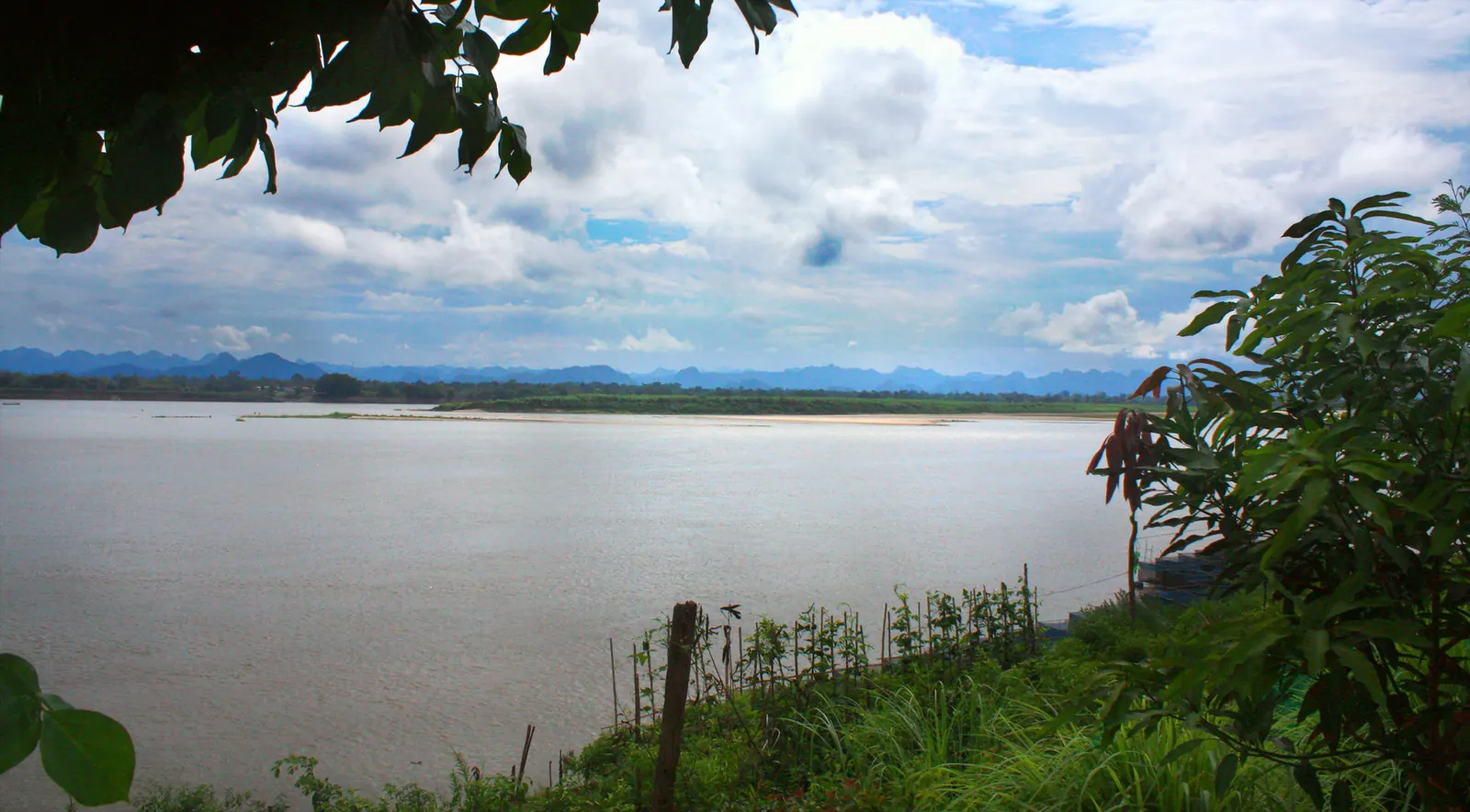
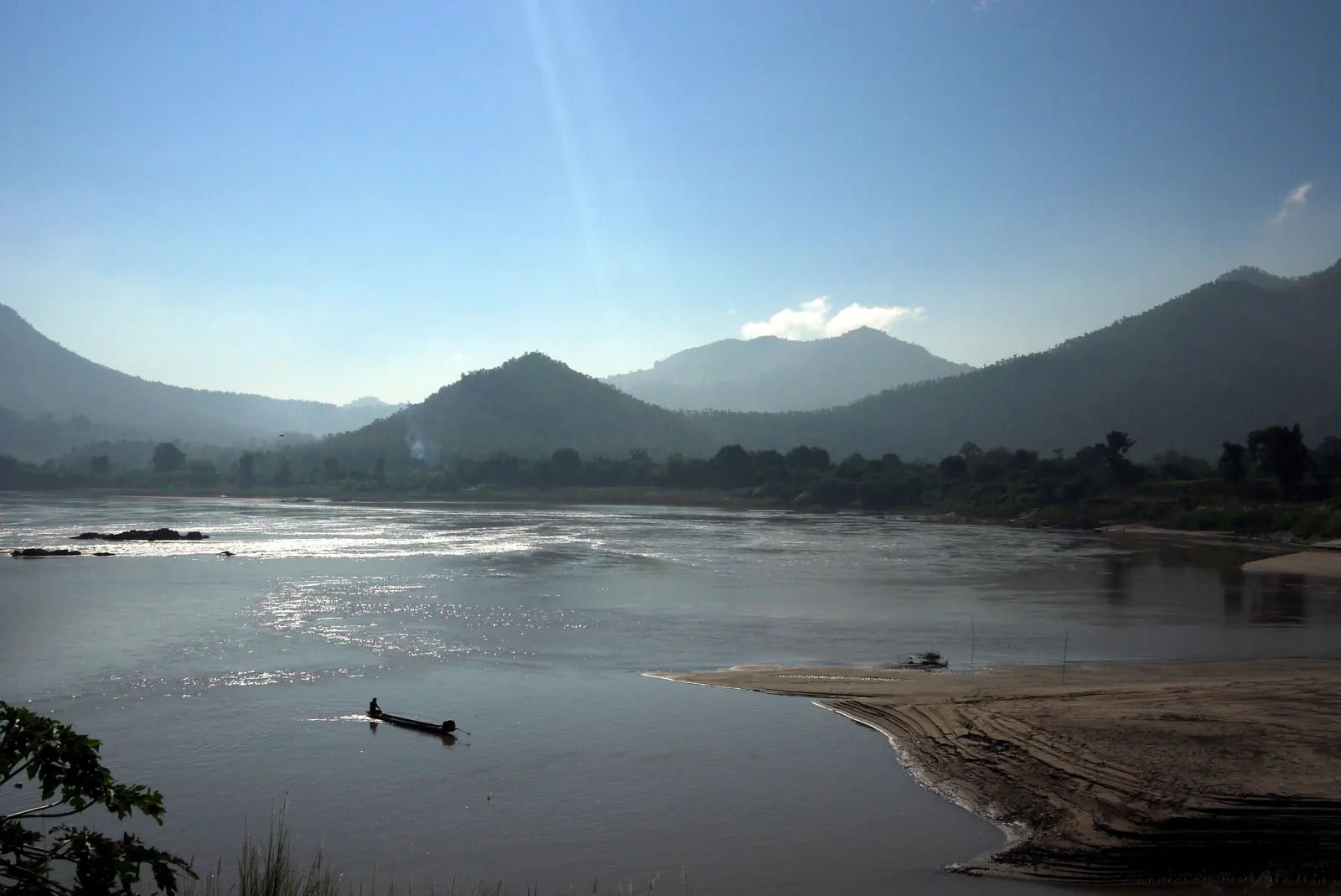
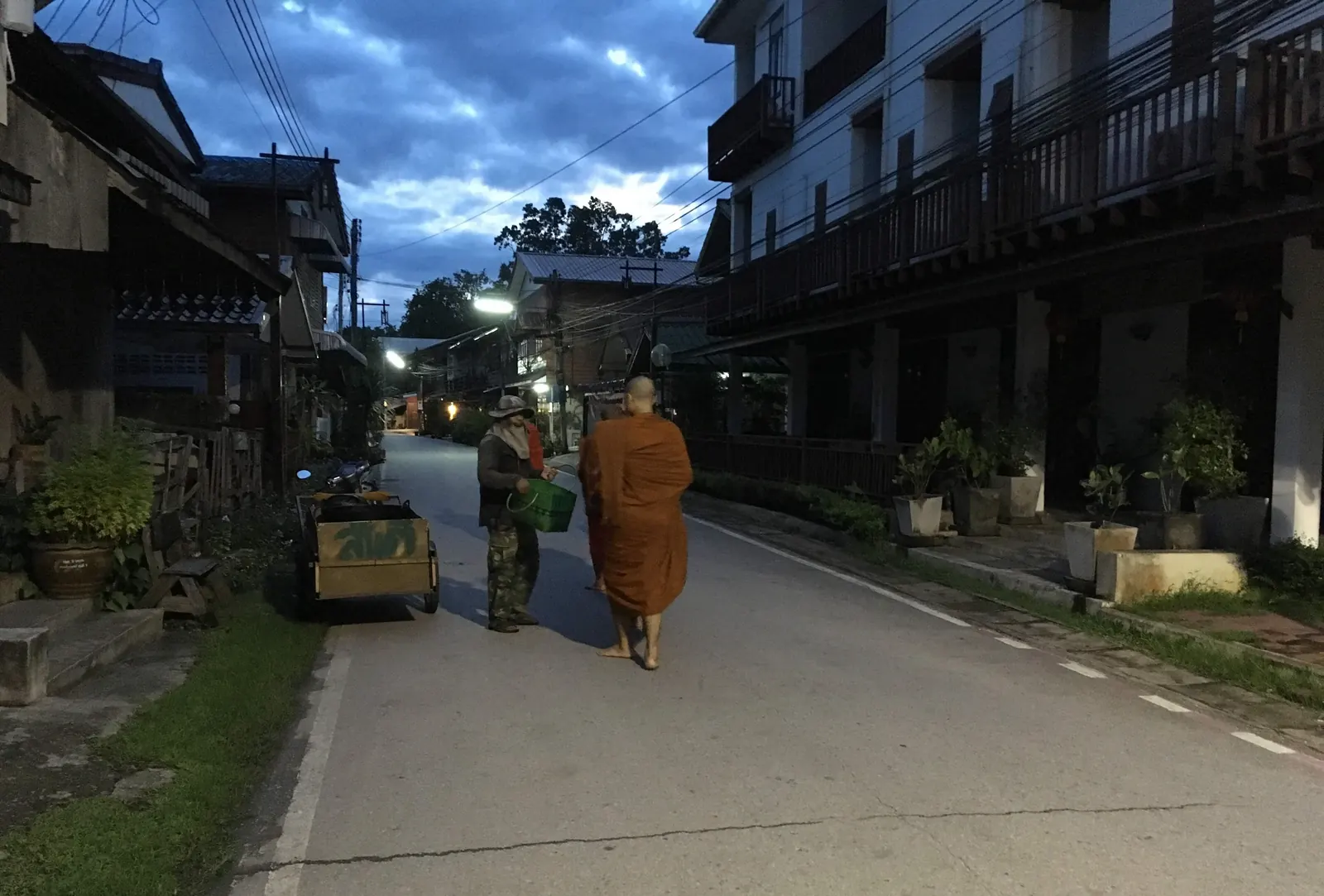
At six in the morning Chiang Khan looks exactly like its postcards: a line of saffron robes moving down a street of weathered teak shophouses, the Mekong grey and flat behind them, Laos a dark ridge on the far bank. At seven on a Saturday in December it looks like a queue. Chiang Khan, a small district town 50 kilometres north of Loei city, is the most photographed place on the Thai Mekong and one of the most visited weekend towns in Isaan, and almost all of its visitors are Thai. That is not a complaint. It does mean the question is not whether Chiang Khan is pretty, which it is, but when to go so that it is still a town.
The short version: worth it, midweek. Two nights, Sunday to Tuesday or any weekday pair, give you the dawn alms, the sea of mist from Phu Thok (around ฿25–40 for the songthaew up), the Kaeng Khut Khu rapids by bicycle and the walking street at a pace where you can see the houses. On a Friday or Saturday night from November to January it is a festival crowd on a 1.5 km street, rooms cost more and the coffee shops have queues. Budget ฿400–1,800 for a riverside room, ฿40–50 for khao piak sen at breakfast, and check any other quote against our Thailand Price Index. The Loei province page has the map.
What Chiang Khan actually is: a teak street, a river and a weekend economy
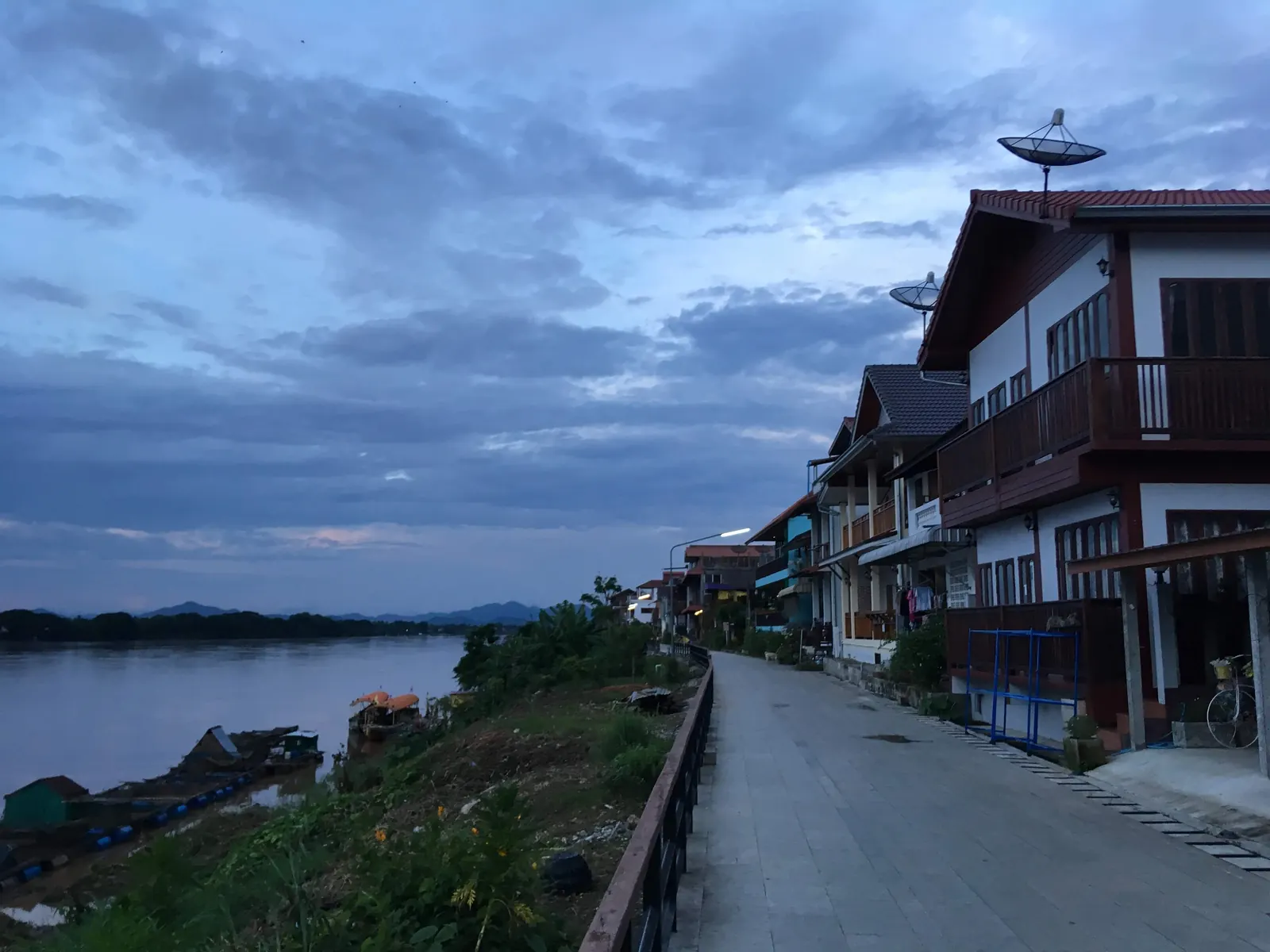
Chiang Khan is essentially two parallel streets along the Mekong. Chai Khong Road, the river one, is the walking street: roughly 1.5 km of two-storey wooden shophouses from about Wat Si Khun Mueang at Soi 6 to Wat Tha Khok at Soi 21, with numbered sois running down to a riverside path between them. Behind it, Route 211 carries the town’s real business: the 7-Eleven, the bus stop, the market. The houses are the point, old Lao-style timber with folding plank shutters, many still family homes downstairs, and the river view between them is Laos at a few hundred metres.
Domestic tourism found the town in the 2010s and rebuilt its ground floors around visitors: guesthouses in the old houses, cafés with hanging plants and a slogan on a chalkboard, souvenir T-shirts reading “Chiang Khan” in eleven fonts, and a lot of quilts, because Thais come here to be cold. The sameness is real. Count the near-identical coffee shops on Chai Khong Road and you will stop at about thirty. What survived is the scale: no building over two storeys on the river, no chain hotels on the street, and a morning that still belongs to the monks and the market. Loei’s wider picture, Phu Ruea and Phu Kradueng included, is in our Loei province travel guide.
Chiang Khan on a weekday or a weekend: the honest difference
| When | Walking street | Alms and Phu Thok | Rooms | Verdict |
|---|---|---|---|---|
| Weekday, any month | Half the stalls, room to walk, quiet by 21:00 | A few dozen people on the mats; songthaews up Phu Thok fill slowly | Walk-in; riverside rooms from around ฿500–1,000 | Do it: the town you came for |
| Weekend, February–October | Busy 18:00–21:00, manageable | Busy, fine if you are seated by 05:45 | Book a day or two ahead | Fine |
| Weekend, November–January | Shoulder to shoulder from 17:00 | Long lines of visitors on mats, queues for the Phu Thok trucks before dawn | Book weeks ahead; rates up by roughly a third to a half | Skip it unless you like crowds |
| New Year and long weekends | Peak Thailand; traffic jams on Route 201 from Loei | Hundreds on the street | Sold out early, rates at their highest | Skip it |
The cool season is when Chiang Khan is at its best and its fullest, because a dawn at 12°C is the product. Thai visitors come for the cold the way Europeans come for the heat, and December and January are the peak; see Thailand in December and Thailand in January for the rest of the country’s version of that crowd. Arrive on a Sunday afternoon as the weekend leaves and you get the same weather, the same mist and half the people.
Things to do in Chiang Khan: alms, Phu Thok, Kaeng Khut Khu and the river road, rated
| What | Where and when | Cost | Verdict |
|---|---|---|---|
| Sticky-rice alms (tak bat) | Chai Khong Road, from about 06:00 | Alms set ฿50–100, often lent by guesthouses | Worth it, done properly |
| Phu Thok sea of mist | A few km out; trucks from about 05:00, sunrise around 06:30 | Songthaew ฿25–40 return; parking ฿20 | Do it, November–January or after rain |
| Kaeng Khut Khu rapids | 3 km downstream, best late afternoon | Free; snacks ฿20–60 | Fine, better by bicycle |
| Cycling the river path | Any time but midday | Bicycle ฿50–100 a day; scooter ฿200–300 | Worth it: the best way to see the town |
| Chiang Khan Skywalk, Phu Khok Ngio | 20–30 minutes’ drive from town, 07:00–18:00 | Around ฿40–60 with shuttle and shoe covers | Skip unless you have a car and an hour |
| Longtail boat on the Mekong | From the riverbank by the walking street | Around ฿100–200 a head, negotiable | Fine, at sunset |
| Walking street at night | Chai Khong Road, about 17:00–22:00 | Snacks ฿20–80 | Do it midweek; skip it on a December Saturday |
The alms round is Chiang Khan’s signature, and the most changed. Monks from the town’s temples walk Chai Khong Road from about 06:00, and visitors kneel on mats with baskets of sticky rice. What used to be a handful of rice per bowl has, at weekends, become instant noodles, crisps and bottled water bought from vendors who set up the mats, because the more you hand over the better the photograph. Be seated by 05:45, offer only sticky rice, shoes off, kneel lower than the monks, say nothing, and do not touch a monk or his robes, which applies to women in particular; the rest of the etiquette is in our guide to Thai temple manners. Verdict: worth it done that way, and a weekday morning is the version that still feels like a ritual.
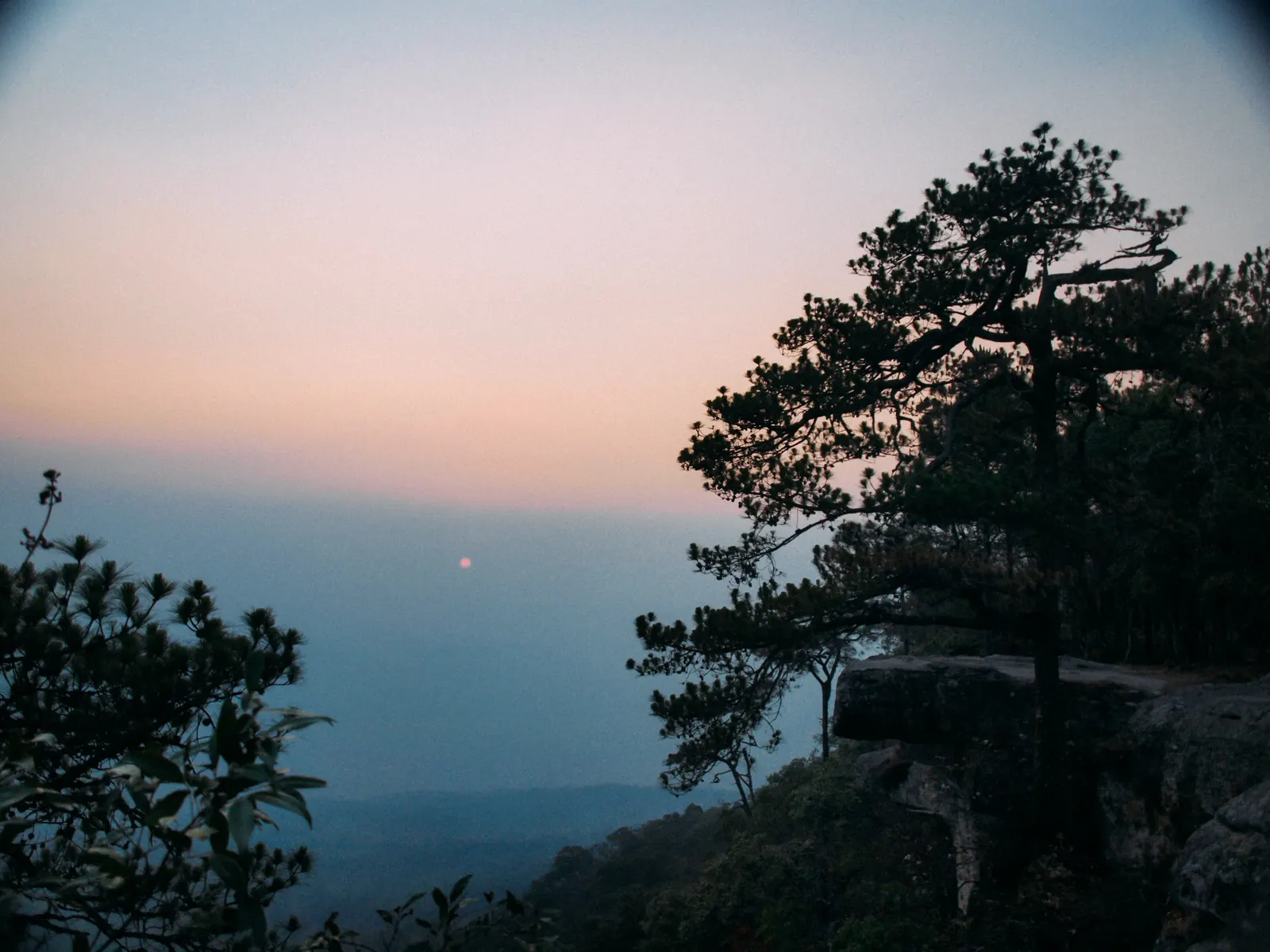
Phu Thok is the small hill a few kilometres from town where the mist settles over the Mekong bend at dawn. Private cars are not allowed up; park at the bottom for around ฿20 and take the community songthaew, around ฿25–40 return, which leaves when it has about ten people. The mist is a cool-season and post-rain thing, best from November to January, and gone by eight; on a clear dry morning in March you get a sunrise over a river, which is fine but not why you got up. There are stalls at the top for khao piak and coffee. Verdict: do it once, early, on a weekday; on a December weekend the truck queue starts before five.
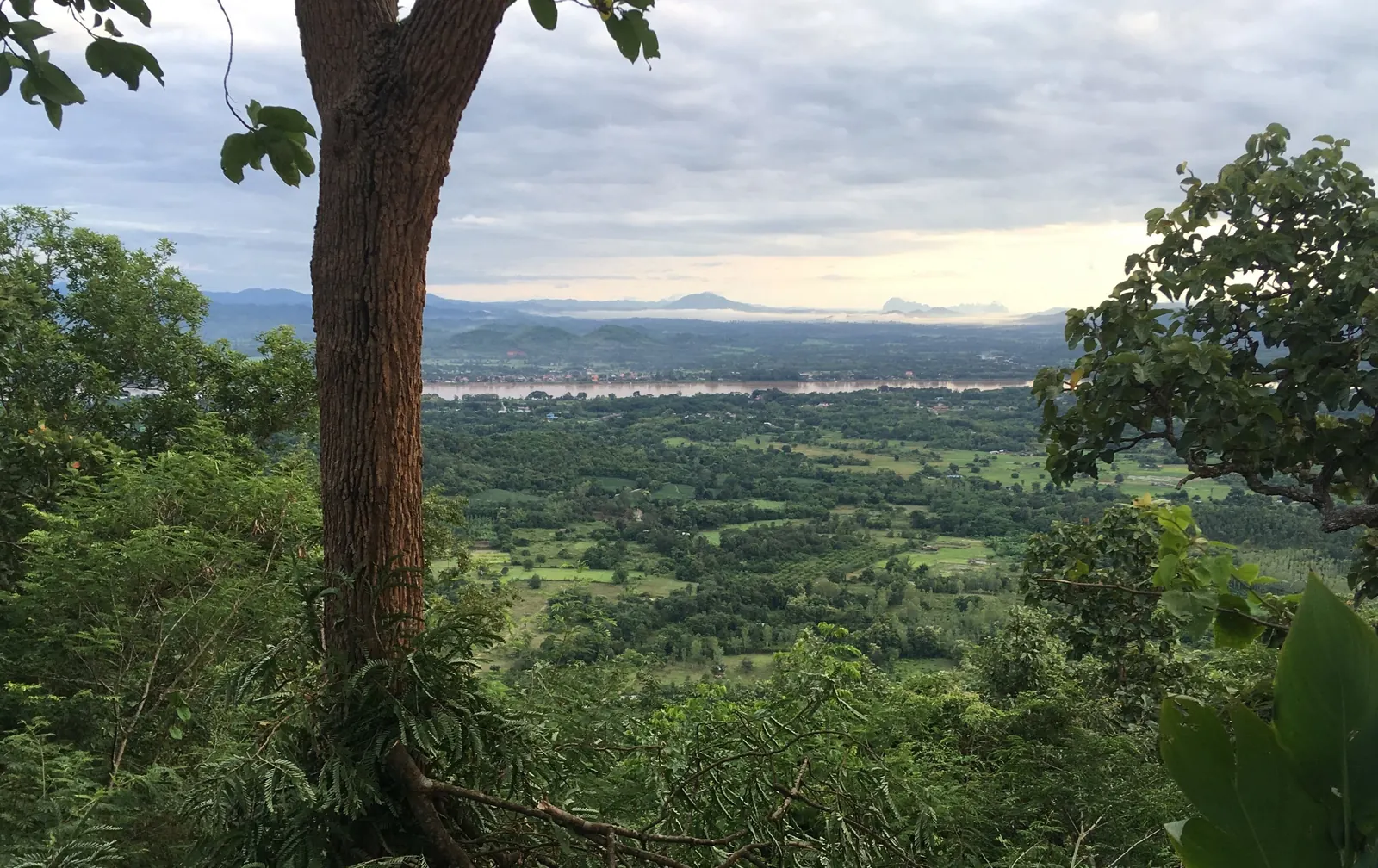
Kaeng Khut Khu, 3 km downstream, is a set of rapids where the Mekong runs over a rock bar, exposed from about December to April and under water in the rains. On the bank is a car park, a temple and a strip of stalls selling the two local specialities: kung ten, tiny live river shrimp in lime and chilli that “dance” in the bowl, and maphrao kaew, sweetened coconut strips sold by the bag for around ฿50–100. The rapids are modest; the ride there along the river is the better half. Verdict: fine, by bicycle in the late afternoon, then back for sunset on the riverside path. The skywalk on Phu Khok Ngio, a glass walkway over the river with a large Buddha behind, is pleasant, timed-entry and twenty minutes of photographs; worth it only if you have your own wheels and a spare hour.
Cycling is how Chiang Khan should be done. Bicycles are ฿50–100 a day from the guesthouses and shops on the sois; the riverside path and the quiet sois between Chai Khong Road and Route 211 are flat, and you can do the length of the town, Kaeng Khut Khu and back in two unhurried hours. Wat Si Khun Mueang, at the western end, is the temple to stop at: a Lao-style ordination hall with old murals, free, quiet once the alms round is over. Verdict: worth it, and the one thing on this list that is better at weekends, because everyone else is in the cafés.
What to eat in Chiang Khan, and what it should cost
Breakfast is khao piak sen, the thick, slippery rice-noodle soup of the Lao Mekong, ฿40–50 a bowl at the morning market and the shophouses near it, ideally after the alms round. Lunch is grilled river fish with sticky rice and jaew, ฿150–300 a fish depending on size, at the simple places on the river; ask what came out of the Mekong that morning and what came from a farm, because both are sold as river fish. In the evening the walking street is a grazing line of grilled pork, sai krok sausages, coconut sweets and sticky-rice snacks at ฿20–80 each. The cafés charge Bangkok prices, ฿70–120 for a latte; the coffee is fine and the view is the product. For the dishes behind the menu, read our Isaan food guide.
How to get to Chiang Khan from Bangkok, Udon Thani and Loei
| Route | Time | Cost | Verdict | Book |
|---|---|---|---|---|
| Overnight bus, Bangkok Mo Chit → Chiang Khan | 9–10 hours, arrives around 05:00 | ฿511–941 by operator and class | Do it: you arrive in time for the alms | 12Go |
| Fly Bangkok → Loei, then road | About 1 h 10 min flying, 50 km by road | Fares from around ฿1,200–2,500; taxi to Chiang Khan around ฿600–900 | Fine if the flight times suit | 12Go |
| Fly to Udon Thani, bus to Loei, local bus on | About 1 h flying, then 3.5–4 hours | Bus ฿100–130 to Loei, ฿30–70 on | Worth it: more flights, cheaper fares | Flights, bus |
| Loei → Chiang Khan | About 1 hour, 50 km | Local bus or big songthaew ฿30–70 | Do it; leaves from Loei bus terminal | At the terminal; return on 12Go |
| Hire car from Udon Thani airport | About 3 hours, 200 km | From around ฿1,000–1,500 a day plus fuel | Worth it for Phu Ruea and the river road | Desks at Udon airport |
The night bus is the classic arrival and the right one: several operators run Mo Chit to Chiang Khan via Loei, leaving between about 19:00 and 20:00 and dropping you on Route 211 before dawn, as of November 2026. Going home, the same buses leave Chiang Khan in the early evening; book Chiang Khan to Bangkok on 12Go well ahead for a Sunday night, when every Bangkok office worker in Loei is on it. Flying into Udon gives the most choice of times and fares; the airports in Bangkok are compared in BKK vs DMK. Chiang Khan is also the natural starting point of the river road east: our Mekong road from Loei to Ubon costs every leg from here to Pha Taem.
Where to stay in Chiang Khan: on the river, on the street or out of town
Sleep on Chai Khong Road, ideally in a river-side room, because the dawn and the alms are on your doorstep and you will not need transport for anything but Phu Thok. The wooden guesthouses in the old houses run from around ฿400–1,200, thin walls and shared verandas included; pay the extra ฿200 for the river side over the street side. Low-season starting rates below; weekends from November to January cost more and sell out.
| Place | What it is | From around | Best for | Book |
|---|---|---|---|---|
| Norn Nab Dao Rimkhong Hotel | Wooden rooms on Soi 3 between the walking street and the river | ฿1,000 | Couples who want the river at the door | Agoda |
| Saneh Loei Chiang Khan | Small modern guesthouse just off the walking street | ฿900 | A clean room and a short walk to everything | Agoda |
| Chiang Khan Hill Resort | Resort by the Kaeng Khut Khu rapids, 3 km out | ฿1,500 | Families and drivers who want quiet and parking | Agoda |
| Riverside teak guesthouses on the sois | Family-run rooms in the old houses | ฿400–1,200 | The real thing; bring earplugs | Walk in midweek |
How long to stay in Chiang Khan, and when to go
Two nights. The first evening for the walking street, the first dawn for the alms, then the second dawn for Phu Thok, with a day of cycling and Kaeng Khut Khu between. One night works if you arrive on the night bus at 05:00, which hands you the alms on day one. Three nights is for people who like doing nothing by a river, a respectable reason; add a day trip to Phu Ruea, about 90 minutes south, for the higher mountain and the wine. Weekdays are the rule; the town is the same on a Wednesday as a Saturday, minus most of the crowd.
November to January is the season: dry, clear, dawns that can drop to around 10–12°C, and the mist. February is the sweet spot, still cool, crowds thinning. March and April are hot, sometimes hazy, and quiet. The rains, June to October, bring a green valley, a full river, fewer visitors and, after a night of rain, some of the best mornings on Phu Thok; Loei’s Phi Ta Khon ghost festival in Dan Sai, about two and a half hours’ drive away, falls in late June or early July. Dates for that and the long weekends to avoid are in our Thailand festivals and public holidays guide, and the month-by-month is in best time to visit Thailand.
Is Chiang Khan worth it? The verdict by traveller type
- Slow travellers and couples: Worth it, midweek. Two nights in a river room, a bicycle, the alms and the mist. It is the most pleasant small town on the Thai Mekong when it is not full.
- Photographers: Do it, at dawn. Phu Thok in mist, the alms in low light, the teak fronts before the shutters open. By nine the light is flat and the street is a café strip.
- Families: Fine. Children like the bicycles, the dancing shrimp and the cold; they do not like a 05:30 start, and the walking street at weekends is no place for a pushchair.
- Weekend visitors from Bangkok: Fine, if you book early and accept that you are part of the crowd. Do the alms and Phu Thok anyway; skip the walking street on Saturday night.
- Anyone looking for “undiscovered Thailand”: Skip it. Chiang Khan was discovered years ago, by Thais. Keep going east along the river to Sangkhom, Bueng Kan or Nakhon Phanom.
Chiang Khan is sold as a time capsule and is actually a well-kept wooden town that earns its living from people who come to look at it. On those terms, on a Tuesday in January with a bicycle and a river-side room, it is one of the nicest two days in Isaan. On a Saturday night in December, it is a queue with fairy lights.
Chiang Khan: your questions, answered
Is Chiang Khan worth visiting?
Yes, on weekdays. The teak shophouses on Chai Khong Road, the dawn alms, the sea of mist from Phu Thok and the Mekong cycling make two very good days for little money: rooms from around ฿400–1,200 and breakfast at ฿40–50. On Friday and Saturday nights from November to January it is crowded with Thai weekenders, prices rise and the walking street is hard going.
What time is the alms giving in Chiang Khan?
Monks walk Chai Khong Road from about 06:00, so be seated on a mat by 05:45. Many guesthouses lend a mat and a basket of sticky rice, or vendors sell alms sets for around ฿50–100. Offer only sticky rice, take your shoes off, kneel, stay silent and do not touch the monks. Weekday mornings are calmer and closer to the original ritual than weekends.
How do you get to Phu Thok in Chiang Khan?
Ride or take a tuk-tuk a few kilometres out of town to the Phu Thok car park, where parking is around ฿20, then take the community songthaew up, around ฿25–40 return per person; private cars are not allowed on the hill. Trucks start at about 05:00 and sunrise is around 06:30. The sea of mist is most likely from November to January and after rain.
How do you get from Bangkok to Chiang Khan?
The simplest way is the overnight bus from Mo Chit, 9–10 hours for ฿511–941 depending on operator and class, arriving before dawn. Alternatively fly to Loei and take a taxi the last 50 km, or fly to Udon Thani, bus to Loei for ฿100–130 and take a local bus or songthaew for ฿30–70. Book the Sunday-night bus back well ahead.
How many days do you need in Chiang Khan?
Two nights is right: one dawn for the alms, one for Phu Thok, an evening on the walking street and a day cycling to Kaeng Khut Khu. One night is enough if you arrive on the night bus and do the alms on arrival. Add a third night for Phu Ruea National Park, about 90 minutes south, or keep going east along the Mekong to Nong Khai.
Related guides
- Loei Province Travel Guide 2026: Thailand’s Coolest Corner Nobody Warned You About
- The Mekong Road: Loei to Ubon Along Thailand’s Quietest Border, Costed
- Isaan Food: Som Tam, Larb, Gai Yang and the Fire That Follows
Book the trip
Some links in this guide are affiliate links. If you book through them we may earn a small commission at no extra cost to you — it helps keep Destination Thailand independent.
Hotels: the riverside guesthouses and the resorts out of town are on Agoda’s Loei page; filter for Chiang Khan and book weekends early. Tours/Boats: GetYourGuide’s Chiang Khan and Loei listings cover the guided trips for anyone not driving. Getting there: the night buses are on 12Go’s Bangkok to Chiang Khan page and the Udon connection on Udon Thani to Loei, with the wider picture in our Getting Around Thailand guide. Not sure Isaan is your Thailand at all? Our Where to Go in Thailand matcher will tell you in about a minute.